We’ve see this movie before, and it ain’t The Bells of St. Mary!

The Fishwrap (aka National Schismatic Reporter) is having a spittle-flecked nutty about the upcoming Synod’s Instrumentum Laboris.  Ho hum.

They are, I think, afraid that the Synod is not going to relax the “rules” (read: doctrine) about Communion for the remarried without declarations of nullity, inter alia. They see that support for the Kasperite position is falling away and they are scared.  We have had indications that His Holiness himself, and some of the left-leaning power brokers near him, are moving away from the untenable proposal: “tolerated but not accepted”.

People have asked me what I think is going on, what is going to happen.

As the Kasperite position crumbles watch what will happen on the catholic Left.  They will start whipping up fear among bishops whom they think desire the Kasperite Non-Solution.

They will work to create the same sort of rebellion among priests and bishops that the catholic Left did around the time of Humane vitae.  They will stir mutiny against the Church’s clear doctrine and against ecclesial authority.  What they want is that when the Holy Father upholds the Church’s teaching, as many priests as possible, and bishops with them, will criticize the Pope and will ignore the the Church’s doctrine and law when dealing with the divorced and remarried.  Just as liberals told people, after Humanae vitae, to go ahead and contracept as they pleased, so too they will tell the remarried to do as they please and receive Communion.  Then they, in defiance fueled by what they will claim is compassion and mercy, will stop submitting marriage cases to diocesan tribunals.

Anyone who upholds the Church’s doctrine (who won’t give a pass to adultery, etc.), will be vilified by the Left as being against mercy, lacking in compassion.

We’ve see this movie before, and it ain’t The Bells of St. Mary!

Humanae vitae: The Sequel

Posted in Liturgy Science Theatre 3000, One Man & One Woman, Our Catholic Identity, The Drill | Tagged , , ,
7 Comments

Special Treatment in Manhattan: “Where is the charity for this priest?”

Even the New York Times (usually aka Hell’s Bible… but not today!) has taken notice of what is going on in New York City with the parish of Holy Innocents in midtown Manhattan’s Garment District.

My emphases.  I would post many comments, but I fear retribution for my friends.

Manhattan Parish Draws Attention of Conservative Catholics and the Church
Church of the Holy Innocents, Home of the City’s Only Daily Latin Mass, Might Close

As the Rev. Justin Wylie took the pulpit at the Church of the Holy Innocents in Manhattan last month, anger and anxiety emanated from the pews. Parishioners, who rely on the church to offer a daily traditional Latin Mass, were about to meet to discuss an archdiocesan panel’s recommendation to close their church, and some were talking about schism.

“I worry about the situation of traditional Catholics in the archdiocese,” Father Wylie, a visiting priest, said in his sermon, articulating their concerns. “No longer, I say, should you think of yourselves as squatters in the mighty edifice of the Holy Church, nor should you find yourselves turned out like squatters.”

It was an unusual moment of open criticism by a Roman Catholic priest of church policy in New York. And the reaction was swift. Within two weeks, Father Wylie was reprimanded by the New York Archdiocese and in short order dismissed from his job as attaché at the Mission of the Holy See at the United Nations, where he negotiated human rights issues on the Vatican’s behalf.
The actions taken against Father Wylie offer a glimpse of how sensitive the New York Archdiocese is to dissent, particularly from inside the church, as it weighs the closing of potentially dozens of churches in a sweeping consolidation of its parishes. But the episode has also taken on broader significance, because the parish involved is Holy Innocents, the only church in New York City to offer the 444-year-old Tridentine, or Latin, Mass daily, making it a beloved institution among a small but vocal [GROWING] community of traditionalist Catholics across the country.

[…]

At Holy Innocents, the Latin Mass helped bring a renaissance, parishioners said. The church, which dates back to 1869 [1866 for the founding of the parish and the church was build, I think in 1870…] and has about 300 registered parishioners, operates at a surplus, driven in part by generous collections and a thriving thrift shop in the basement, according to church documents. Attendance at Sunday Mass has nearly tripled since 2009, and the church recently paid $350,000 to restore a mural behind its high altar that was painted in the 1870s. [The painting is by Brumidi.  The fundraising and restoration was recent.  They did a good job of it, too.]

[…]

While [Fr. Wylie] urged [the Holy Innocent’s parishioners] to be obedient to any decree, Father Wylie also told them in his sermon that he believed the archdiocese had a responsibility to provide them a stable place to worship, according to a transcript made by a parishioner from a recording.

Some other dioceses dedicate a priest and a parish for the celebration of the Latin Mass. But in New York the laity have to organize traditional Masses themselves, seeking out volunteer priests “hither and thither as though we were seemingly still living in Reformation England or Cromwellian Ireland,” Father Wylie said, calling it an “injustice.”

“Isn’t it high time for the church to take pastoral responsibility also for these sheep?” he said.

Edward Hawkins, a parishioner, said he felt Father Wylie’s intent had been to encourage traditionalists to stay loyal to the wider church. “He was very specific to say that we have to understand that choices have to be made, but don’t be afraid to ask for care,” he said. “Where is the charity for this priest?”

Posted online, Father Wylie’s words ricocheted through the traditionalist community. Then someone sent the New York Archdiocese a link to an Internet radio program on which the host read the transcript aloud.

On May 30, Bishop-elect John O’Hara of New York, who is overseeing the parish consolidation process, sent Father Wylie a stern reprimand for criticizing the archdiocese, with copies to Father Wylie’s superior at the Vatican Embassy in New York, Archbishop Francis A. Chullikatt; Father Wylie’s archbishop in Johannesburg; and Cardinal Timothy M. Dolan of New York, said a spokesman for the diocese, Joseph Zwilling.

“It reminded the father that he is a visiting priest, that we need priests who don’t criticize or attack the local diocese, that we need priests who work to build up the church rather than try to bring disunity,” Mr. Zwilling said, adding that Father Wylie should have shared his concerns with the archdiocese privately. 

The letter also threatened to revoke Father Wylie’s ability to celebrate Mass in New York, a rare punishment, according to a person who had seen the letter but spoke on the condition of anonymity for fear of retribution from church officials. But Mr. Zwilling said he did not know whether the letter went that far.

Archbishop Chullikatt dismissed Father Wylie after receiving the letter in early June and told him he should immediately cease all public appearances in New York. Archbishop Buti Tlhagale in Johannesburg is now recalling him back to South Africa.

Regarding the Latin Mass, Mr. Zwilling said that lay groups in the diocese were welcome to organize such Masses but that the diocese did not think a special parish needed to be assigned. He said it was premature to discuss what would happen to the parishioners of Holy Innocents until Cardinal Dolan, who is the archbishop of New York, made the final decisions on church closings in September.

The archdiocesan priest who officiated at the Latin Mass at Holy Innocents on a recent Sunday asked not to be identified for fear of retribution.

Father Wylie, reached by email, said, “I am confident of having tried faithfully at all times to serve the best interests of the Archdiocese of New York.”

Read the rest over there.

Everyone: Do not be discouraged.  Do not flag.  Do not rest.  Do not relent.

Continue to work, cheerfully and with great respect, so that your “legitimate aspirations” as St. John Paul called them, will be realized with harmony in each and every place you are.

Furthermore, pray diligently for all ecclesial authorities.  They have difficult mandates in troubling times.

Combox moderation is ON.

Posted in Hard-Identity Catholicism, Liberals, Liturgy Science Theatre 3000, Mail from priests, Our Catholic Identity, Pò sì jiù, Priests and Priesthood, Self-absorbed Promethean Neopelagians, SUMMORUM PONTIFICUM, The Coming Storm, The Drill, The future and our choices, The Last Acceptable Prejudice, The Olympian Middle, You must be joking! | Tagged , , ,
27 Comments

ASK FATHER: Criticizing a priest’s homilies

From a reader…

QUAERITUR:

Father, our parish priest is a good man, well versed in Scripture, in the encyclicals. He is also charismatic.

However, his preaching is dreadful. He uses the homily as an opportunity to teach and goes on far too long. Yesterday, he preached for 35 minutes; this in addition to confirming 16 candidates so that Mass took a total of 2 hours.  [Imagine!  2 hours out of your week… in church!]

One could see people getting impatient and quite a few had to leave; their small children simply could not remain any longer.

How does one tell a priest that his preaching needs to be short, succinct, to the point, and leave the theological teaching to another time?

I sense that my priest wants to share everything on a subject with us, thinking that something will stick to someone. But the result is the opposite. He loses the majority and those who listen at first, and wish to listen, tune out after he goes on and says the same thing in three different ways.

How does one kindly tell one’s priest that he needs to learn to preach? thank you.

Criticizing a priest’s homiletic skills is generally as easy as criticizing one’s wife’s weight gain. One can take the Subtle Approach™, suggesting, “Hey, hon, let’s have a walk after dinner!”, or perhaps buying a new exercise bike for oneself, but making it clear that she can use it anytime she wants.  You might suggest the arugula salad, again, and you can hope the hints are picked up.  One use the More Direct Approach™ and leave a diet book on the coffee table, or comment on how much better the lady down the street looks since she lost all that weight. One could use the Blunt Approach™ and say, “You’ve put on a lot of weight lately.”

Any approach is a potential minefield, and just as likely to reap a huge negative reaction as it is to bring about positive change.

Me, I’d take the Cushioned Direct Approach™. “Father, I love what you have to say in your homilies and would definitely sign up and come if you had a mid-week scripture/apologetics/catechesis class.  I’m concerned though that the length of your homilies is turning people away from the parish. I wish you would tighten it up a bit.”

Now, having no responsibility whatsoever for the results of your attempts (unless it works), with the wife or the parish priest, I bid you adieu.

(And Fathers, remember, you don’t have to get all of it into every single sermon.)

Posted in "How To..." - Practical Notes, ASK FATHER Question Box, Priests and Priesthood | Tagged , , ,
42 Comments

INDULGENCE ALERT – Feast of the Sacred Heart

Today, the Feast of the Sacred Heart, the faithful can gain a plenary indulgence by the public recitation of Iesu dulcissime (Act of Reparation) (Ench. Indulg., al. conc., 3). All other recitations gain a partial indulgence.

Priests and Bishops! Have PUBLIC recitation!

Do not be afraid to bend yourself down before God especially and also to the angels and saints our intercessors and patrons and be simply pious.

Man was made to be pious.

This is the essence of religion, without which we are empty shells: to give due reverence to God. The sin of our first parents came from trying to be the opposite of pious: self-sufficient self-gods. That was defiance of due piety.

We can drift into the same emptiness of life by neglect of piety and devotion, neglect of fostering the habits of devotion.

Posted in "How To..." - Practical Notes, ACTION ITEM!, Hard-Identity Catholicism, Liturgy Science Theatre 3000, Our Catholic Identity | Tagged , ,
16 Comments

Signatures of Saints

I am in Chicago… well… north of Chicago.

Yesterday, I visited for the first time the campus of Mundelein Seminary, the University of St. Mary of (by?) the Lake. As part of the visit I was able to see some of their treasures in their library vault. Card. Mundelein was, as many people were back in the day, a great collector of signatures of famous people. The collection is in the library of the seminary. Among the treasures are handwritten letters of many saints and secular figures. Here are a few of the saintly signatures I saw.

First, St. Teresa of Avila:

20140627-091607-33367540.jpg

And because there are lots of trade reading the blog, and fans of Dominicans, St. Pope Pius V.  Enjoy and imagine what that “nel suo pristino stato” might refer to.

20140627-091812-33492521.jpg

And here is the great St. Robert Bellarmine.

20140627-091821-33501840.jpg

There was also a letter from St. Julianna Falconieri to her sister, to which she actually affixed one of her teeth.  Yes… teeth.  I didn’t get to read the letter, so I don’t know the back story on that.  I don’t think she thought that her sister was the… you know….

Posted in Just Too Cool, On the road, Saints: Stories & Symbols, What Fr. Z is up to | Tagged , ,
8 Comments

Lutherans call for Latin Liturgy as an aid to identity and unity

I saw a post at a Lutheran blog calling for  – wait for it – more Latin in their liturgy.

As a convert to Holy Mother Church from Lutheranism, I found this pretty interesting.  I am aware that there exists a Lutheran liturgical service of some sort which is more like Mass and which involves Latin.  If memory serves it was used at least once a year at the large Luther Northwestern Seminary in my native place in Minnesota.  That said: when we think of Lutheran services, Latin doesn’t leap to mind.

Here are a couple excerpts from the post at the blog The Jagged Word.  As a former Lutheran, I could add more of my usual red intertextual comments than I often do, but I shall restrain myself.  Read the whole thing THERE.

It’s been roughly 500 years since Martin Luther introduced the language of the people to the Mass – the Divine Liturgy of the Church. 500 years since the historic language of the Western Church was purged from the worship of God’s people. As a student of history, I understand why Luther thought this was necessary. Indeed, there is goodness in hearing and understanding the Liturgy in one’s native tongue. But Luther’s experiment with language should end. It’s time to restore Latin to the Mass of the Western Church. [The true Mass of the Western Church is the Mass of the Catholic Church…. but let’s go on…] It’s time to reintroduce the language of the Church to her people. [Bruthuhs n Sistuhs do I hear an “Amen!”?]

For those bristling at such a suggestion, I offer the following observations:

1) The Lutheran Reformers did not seek to abolish the Mass. Our confessions, contained in the Book of Concord, make this abundantly clear. These are the same confessions that every ordained Lutheran pastor swear to uphold and affirm. In other words, the Lutheran Church is a Liturgical Church and our worship is properly called the Mass.  [Mass is a Sacrifice… but let that pass.]

[…]

3) While the Lutheran Church affirms sola scriptura, it does not reject Tradition or the importance of ritual. Catholicity is not adiaphara (optional/indifferent), [Nice phrase, though I would write adiaphora.] especially with respect to worship. And nothing affirms our catholicity like the Mass. It is, I believe, THE defining characteristic of what Lutherans confess.  [That’s not quite what I remember hearing… but let’s move on.]

But why ditch the vernacular in our worship and relearn – reintroduce – and re-embrace Latin in the Mass? What possible benefits can come from such a change? I’m glad you’re curious…  [Amen!]

[As an exercise, swap in the word “Catholic” here and there.] 1) Despite that the fact that the Lutheran Confessions affirm the Mass, many Lutheran [Catholic] churches today reject it altogether and embrace a worship style that is more akin to what one would find in a non-denominational church. Lex orandi, lex credendi [!]

CLICK ME!

(the law of prayer is the law of belief) is absolutely true and those who reject the Mass or think they should arrogantly rewrite it based on what they think their congregation wants/needs, [Tell it!] I believe, reject the very substance of Lutheranism. [Catholicism.] Can you imagine a contemporary Latin Mass? Neither can I. They are mutually exclusive, which is why the use of Latin in our Mass will help restore our catholicity in matters of worship, and affirm what our Confessions already do.

2) Our clergy and our people are very educated on matters of faith these days, much more than those prior to the Reformation. The Holy Scriptures, the Book of Concord, the writings of the church fathers, etc., are almost all in our native tongue. But with the expulsion of Latin, there is no longer a common language of the Church catholic. I know, very few clergy and even less laymen know Latin. But what a powerful educational tool the Church could be if it took it upon herself to educate her people in this language. As we relearn this language, some of our hymns, the assigned readings, and the sermon, could remain in the vernacular, along with a translation of the Latin in the hymnal or worship folder. But once again Christians could have a language that unites every congregation around the world – regardless of time or location.

3) Finally, re-embracing Latin in our Mass will further solidify the Lutheran Church as a communion that embraces the catholicity of the Christian faith. This embrace, I believe, will allow us to refocus our efforts on ending our schism with Rome. [Do I hear an “Amen!”?] Sadly, most Lutherans have no desire for reconciliation with those in fellowship with the Bishop of Rome. However, this runs contrary to the intent of the Reformation and to the spirit of the Augsburg Confession. But how can our communions be reunited if our worship is so radically different? Let’s embrace the language from whence we came and in it, find a new platform for dialogue and reconciliation.

It’s time. For the sake of the church and our faith – restore Latin to the Mass.

And this from a Lutheran blog.

Fr. Z kudos.

I would also like to remind everyone that Benedict XVI, who promoted Latin liturgical worship in our Holy Catholic Church, is the Pope of Christian Unity.


Posted in Brick by Brick, Fr. Z KUDOS, Just Too Cool, Liturgy Science Theatre 3000, New Evangelization, Our Catholic Identity, Pope of Christian Unity | Tagged ,
28 Comments

SCOTUS DECISIONS: strikes down “buffer zones” at abortion clinics

I just heard that the Supreme Court of the United States, in a unanimous decision, struck down “buffer zones” around the clinical profit centers of big-business abortion.

I also heard that SCOTUS found that Pres. Obama’s so-called recess appointments to the National Labor Relations Board were not lawful.

Apparently POTUS can’t just do anything it pleaseth him to do.

Now we will wait to see what actually happens.

Posted in Just Too Cool | Tagged , , , ,
16 Comments

Card. Collins: “receiving communion is not obligatory at Mass”

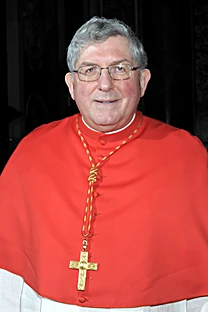
The Archbishop of Toronto, His Eminence Thomas Card. Collins has said something that I have been hammering at for years.  HERE

It is NOT obligatory to receive Communion at Mass.

Also, people who may not receive Communion are STILL OBLIGED to attend Mass on Sundays and Holy Days of precept.

The Cardinal said:

Many people who are divorced, and who are not free to marry, do enter into a second marriage. There are various reasons that can lead to this, and their fellow parishioners should not occupy themselves speculating about them. [But they will.  This is the nature of scandal, I’m afraid.] Catholics in that tragic situation [His Eminence doesn’t candy coat it.] can be involved in many ways in the life of the community, but they may not receive the sacraments, such as Holy Communion, since whatever their personal disposition is or the reasons for their situation, known perhaps only to God, they are continuing in a way of life which is objectively against the clear command of Jesus. [Objectively… that is manifestly… openly… in way that is known.] That is the point. The point is not that they have committed a sin; [Well… it kind of is… no?] the mercy of God is abundantly granted to all sinners. [When they repent and amend.] Murder, adultery, and any other sins, no matter how serious, are forgiven by Jesus, especially through the Sacrament of Reconciliation, and the forgiven sinner receives communion. The issue in the matter of divorce and remarriage is one’s conscious decision (for whatever reason) to persist in a continuing situation of disconnection from the command of Jesus. Although it would not be right for them to receive the sacraments, we need to find better ways to reach out to people in this situation, to offer them loving assistance.

[NB] One thing that would help would be if all of us realized that receiving communion is not obligatory at Mass. [YES YES YES!  Do I hear an “Amen!”?] There are many reasons why a Christian might choose not to receive communion. If there were less pressure for everyone to receive communion, it would be some help to those who are not in a position to do so.  [THEREFORE… let us restore a longer Eucharistic fast (at least 3 hours) and let us phase out row by row Communion.]

Often, people in this situation decide no longer to continue as members of the Catholic community, as they are not able to receive sacramental communion at Mass, even though they can experience a kind of spiritual communion through prayerful adoration, although abstaining for good reason from receiving communion; [A good option, though it remains unclear how one who has not confessed her sins and received absolution can receive more than certain prevenient actual graces.  But hey!  That’s a lot!] that, for a Catholic can be a truly penitential act. It is a great tragedy if they leave the Church. It is likely that they, and their children, and their descendants, will become disconnected from the source of life in Christ that is found in the Church. We need to think of what we can do to reach out to people in this situation, in a loving and effective way. But as we do so, we also need to be attentive to the command of Christ, and the necessity of not undermining the sanctity of marriage, with even more dire consequences for all, especially in a world in which the stability of marriage is already tragically compromised. If we proclaim in actions, even though not in words, that the marriage covenant is not really what Jesus says it is, then that offers short term comfort at the cost of long term suffering. As the sanctity of the marriage covenant is progressively weakened, it will ultimately be the children who will suffer most.  [Well said.]

So although fidelity to the teaching of Christ on the indissolubility of marriage is not open to change, [Not. Open. To. Change.] there may be things that we can change to assist our brothers and sisters in Christ who are in this difficult and painful situation. Real assistance can be given through improvements in the way the Church examines the validity of marriages, and through efforts to give spiritual support to Catholics who are divorced and remarried, encouraging them to be engaged in their parish as much as they can, and offering them ways of prayer appropriate to their situation. We need to consider what the Church community can do to assist the couple with their children, often living in combined family situations. But over-riding the explicit teaching of Jesus on the unbreakable nature of marriage is not an option. Nobody has the authority to do that.

[…]

Read the rest there.

Fr. Z kudos to Card. Collins.

Posted in "How To..." - Practical Notes, Fr. Z KUDOS, Hard-Identity Catholicism, Liturgy Science Theatre 3000, New Evangelization, One Man & One Woman, Our Catholic Identity | Tagged , , ,
31 Comments

Seeking Jesus outside Church? Pope Francis says: “Dangerous and harmful”

His Holiness Pope Francis said during his last Wednesday audience before the summer break that those who believe that they can have a relationship with Jesus outside the Church are on a harmful and dangerous path.

From AsiaNews, which has more text than most of the other reportage out there.  My emphases. My comments.

Vatican City (AsiaNews) – “We are not isolated and we are not Christians individually, each on his or her own”. Instead, we are all part of the Church, “a large family, where one is welcomed,” where “one learns to live as believers and disciples of the Lord Jesus,” Pope Francis said. [That sounds nice and fluffy, right.]

Speaking in the last general audience before the July break, the Holy Father devoted his catechesis to the Church before a crowd of 35,000 in St Peter’s Square. Despite a few drops of rain, he walked extensively among the assembled faithful.

In his address, he warned against those who “think they can have a personal, direct, immediate relationship with Jesus Christ outside of the communion and the mediation of the Church.” [QUAERITUR: How is one in communion with the Church and how does one receive the mediation of the Church?]

In the Church, he noted, there is no “do it yourself”, no “free agents.”  [“But Holy Father! But Holy Father!,” some are shouting, “I’m spiritual but not religious!”] For him, “Our Christian identity is belonging! We are Christians because we belong to the Church. [How?  Is this the Catholic Church we are talking about?  I assume so, since this is the Pope of Rome talking.] It is like a surname. If the name is ‘I am a Christian’, the surname is ‘I belong to the Church’.” Such sense of belonging was born from the alliance between God and Abraham, to whom he donated a great people for his loyalty.

“God’s relationship to his people comes before all of us, it comes from that time,” and thus, “in this sense, our thoughts go first, with gratitude, to those who have gone before us and who welcomed us into the Church. No one becomes a Christian by himself! Is this clear? Nobody becomes a Christian by himself. Christians are not made in a lab. [Folksy, but incomprehensible.] Christians are part of a people that has come a long way. Christians belong to a people called the Church and the Church makes us Christians on the day of our Baptism. Of course, then comes the catechesis and so many [other] things. But no one, no one becomes a Christian by himself. ” [Tell that to christians who are less doctrinally formed, who have little to no catechism with which to catechize.]

[…]

“There is no ‘do it yourself’ in the Church, no ‘free agents’. How many times did Pope Benedict describe the Church as an ecclesial ‘us’! [Francis Reading Himself Through Benedict.] Sometimes one can hear people say, ‘I believe in God, I believe in Jesus, but I do not care for the Church . . . ‘How many times have we heard that? And that is no good. ” [Not good at all.]

Some “think they can have a personal, direct, immediate relationship with Jesus Christ outside of the communion and the mediation of the Church. Such temptations are dangerous and harmful. They are, in the words of the great Pope Paul VI, absurd dichotomies.”  [And I don’t think that Benedict or Paul were talking about some vague church out there.]

[…]

Read the rest there.

Remember, Benedict XVI is the Pope of Christian Unity.   Pope Francis, with talk like this, is following in his footsteps.


Posted in Benedict XVI, Francis, New Evangelization, Our Catholic Identity | Tagged , ,
27 Comments

Deep pockets undermine Catholic teaching through bribes

What a cheery day.

I direct the attention of the readership to this piece from the aptly-named Crisis:

Marginalizing Catholic Teaching One Grant at a Time

George Soros’ Open Society Institute is most often blamed for attempting to neutralize the abortion issue for Catholics by donating large amounts of money to progressive organizations like Catholics in Alliance for the Common Good to promote pro-choice politicians. Yet the recent attack on San Francisco Archbishop Salvatore Codileone by Faithful America demonstrates that the real assault on the teaching authority of the Catholic Church is now coming from two gay billionaires—Tim Gill and Jon Stryker—who are doing everything they can to discredit Church teaching on sexual morality by directly attacking the Magisterium.

Unlike Soros, whose attack on the teachings of the Church was indirect and somewhat secretive, Stryker’s Arcus Foundation and the Gill Foundation have made their aims explicit in their grant making materials and on their IRS 990 reporting forms. In their 2012 filing to the IRS, the Arcus Foundation described itself as a private grantmaking foundation that supports nonprofit organizations around the world working in two areas: lesbian, gay, bisexual and transgender human rights; and conservation of the world’s great apes.

In the former area, Arcus provides money to those organizations—including Catholic colleges as well as progressive faith-based organizations—who are working toward “full inclusion” of gays and lesbians, including access to same sex marriage. For example, hundreds of thousands of dollars has been awarded to Women’s Alliance for Theology Ethics for seeking to achieve social justice through the Arcus LGBT Rights Program. The goal of the $70,000 grant to Women’s Alliance for Theology Ethics in 2010 was identified by Arcus as intending to “create a cadre of Catholic, lesbian, bisexual and transgender women and their allies that would assume a leadership role within the Catholic community.” Escalating their attack in 2011, in their IRS 990 form, filed on December 31, 2012, Arcus disclosed that the $180,000 awarded to the Women’s Alliance for Theology and Ethics that year was to be used to: “Identify, network, train and amplify the voices of lesbian feminist Catholics and in so doing, create a counter-voice to the Catholic hierarchy that respects, values and affirms people of all sexual orientations and gender identities.”

Arcus Buys a “Counter Voice” to the Catholic Hierarchy
The Arcus strategy is to help progressive Catholic organizations to convince Catholics of the goodness and morality of gay and lesbian behavior by providing large sums of money to them. For example, Fairfield University was a perfect choice for funding from Arcus since it houses theology professors like Paul Lakeland, an embittered ex-priest, and current head of Fairfield’s Catholic Studies Department. Lakeland, whose books Liberation of the Laity, and Catholicism at the Crossroads, demand dramatic changes in the Church—including the abolition of the College of Cardinals, and changes in Church teachings on reproductive rights, women’s ordination, and the inclusion of gay and married priests—received a $100,000 grant from the Arcus Foundation in 2010 “to hold and disseminate information from a series of forums at four academic institutions in order to expand the current discussion on homosexuality within Roman Catholicism to include the diverse opinions of progressive Catholic thought leaders and theologians.”

[…]

Read the rest there.

The Olympian Middle will surely say that this is all an exaggeration.

St. Michael the Archangel…

Posted in The Coming Storm, The Drill, The future and our choices, The Last Acceptable Prejudice, The Olympian Middle | Tagged , , ,
39 Comments