10 May: St. Job

Many of the figures in the Old Testament are commemorated by Holy Church as saints.

Here is the entry in the 2005 Martyrologium Romanum:

1. Commemoratio sancti Iob, admirandae patientiae viri in terra Hus.

We could talk about Job all day and into next week or next year.


Posted in Saints: Stories & Symbols | Tagged
5 Comments

“The Latin Mass of years gone by is becoming more popular again”

I think we have to pretty much give up on correct terminology now.  It seems that the bifurcation is nearly complete.  Latin has been isolated from the Novus Ordo, partly because those on the traditional side of thing perpetually called the Extraordinary Form, or whatever we are calling it, “the Latin Mass”, thus creating a conceptual ghetto.

That said…

I saw this at Fox News, though it seems to be from Laura Ingraham’s site,  A lot of the piece is a review of the situation as it stands now, which could be helpful for people who are not as familiar with the state of affairs as regular readers of this blog probably are by now.   But… do have a look…

Celebrating the Latin Mass

Veiled women, incense, Gregorian chants, kneeling, standing, kneeling again, long periods of silence — think all of this is a scene from a Catholic Mass in 1950?

It was then, to be sure — but it is now also happening every Sunday, and in some places every day, in churches all over the United States. The Latin Mass of years gone by is becoming more popular again.


[…]Alfonso DiGirolamo, a lifelong Catholic, started a website, GetTLM.org, to help parishioners bring the Traditional Latin Mass to their own parish. The website includes videos that explain what to expect when attending the Extraordinary Form of the Mass, and it shares resources to help formally introduce parishes to the TLM.

DiGirolamo has been attending the TLM in Philadelphia for more than four years. He learned how to serve as a master of ceremonies for it, which means he’s the adult male altar server who responds in Latin on behalf of the congregation during the Mass and helps direct the altar boys. He explained, “Between the reverence, the prayers, and the adoring respect for the Holy Eucharist, it has become an essential part of my and our prayer life, which is just not available, even in the most reverent, in the Ordinary Form.”

His wife, Brenda, also a lifelong practicing Catholic, started attending the TLM with her husband just two years ago. “To be honest, I wasn’t a fan at first, but now I love it,” she told LifeZette. “There is a reverence shown toward the Mass, but most especially toward the Holy Eucharist. Also, it helps me to remain focused and pay attention to the prayers so I don’t get lost.”

A dear friend of mine, Catherine Adair, and her family attend Mass at St. Benedict Center in Still River, Massachusetts. “The first time we attended the Tridentine Liturgy [the TLM], we felt like we were as close to heaven as we could get on Earth,” she shared. “We felt, as a family, so connected to our faith and to the Holy Sacrifice of the Mass that we just felt this is where God truly wanted us to be.”


[…]

Read the rest there, and check out the comments.  Some of them reveal some serious spiritual voids, as is usual in the interwebs.  But people are talking.

Finally, again, I contend that no initiative of renewal in the Church will succeed unless there is first and foremost, an ongoing revitalization of our sacred liturgical worship of God.  That is why Summorum Pontificum was such a great gift.  The impact is going to grown.

Posted in Brick by Brick, Liturgy Science Theatre 3000, Our Catholic Identity, SUMMORUM PONTIFICUM | Tagged , ,
43 Comments

PODCAzT 146: Spinello: Does Amoris Laetitia Retreat from Absolute Moral Norms?

16_05_10_Crisis_Spinello

Click!

I direct the readership’s attention to a piece at Crisis about Amoris laetitia, the controversial and ambiguous Post-Synodal Apostolic Exhortation… that is, if any of you still care to read about it.

Or listen to it!  Hopefully busy priests and seminarians will benefit from being able to hear it as well as read it.


Richard A. Spinello, Associate Research Professor at Boston College and a member of the adjunct faculty at St. John’s Seminary in Boston. asks: Does Amoris Laetitia Retreat from Absolute Moral Norms?

He sets the stage:

We can begin to better appreciate the potential problems with Amoris Laetitia if we recall why Pope John Paul II felt it necessary to devote a whole encyclical [Veritatis splendor – which is not cited in AL] to the theme of moral theology and natural law. Many encyclicals written by John Paul II’s predecessors dealt with specific moral issues, but John Paul II was more concerned about the proper foundation of moral theology. After Vatican II,  dissent on moral issues was rampant in the Catholic Church. [After what?  After Vatican II?  I’m shocked.] Moral theologians proposed novel theories such as the “fundamental option,” which claimed that a single evil act need not reverse one’s “option” for God and therefore could not be classified as a mortal sin. They promoted proportionalism—making moral choices based on whatever option yields the optimal proportion of benefits to harms. Reflecting the postmodern flight from truth and certitude, they discarded the doctrine of specific moral absolutes in favor of formal norms such as “Love your neighbor.[All you need is love, love… love is all you need!] John Paul II witnessed the confusion spread by the revisionists and decided to intervene by writing this encyclical in 1993. The philosopher-pope dissected the shallow arguments underlying these new theories with exquisite care.

Most U.S. Catholic seminaries have been faithful to the traditional doctrines reinforced by Veritatis Splendor. Of course, there has been residual discord at a number of Catholic universities. Some moral theologians continued to teach and defend these revisionist creeds such as the fundamental option.

That helps to put AL in a context.   Going on…

[QUAERITUR…] But what will happen to moral theology in the wake of Amoris Laetitia, which seems to disregard and perhaps even oppose the highly principled reasoning of Veritatis Splendor? Will more moral theologians and clergy come to see that encyclical as an irrelevant relic of the John Paul II papacy? [I think that it was part of the agenda of the managers of the last two Synods to frame John Paul’s magisterium as something that belongs to the past and as no longer relevant.]

Supporters of Pope Francis’s approach to moral theology might contend that Amoris Laetitia does not rebuke the work of his predecessor. This may be true, but the language of this exhortation, especially in Chapter Eight, seems to suggest that Pope Francis is distancing himself from St. John Paul II.  It seems likely that some theologians will perceive Francis’s exhortation as a vindication of the revisionist moral theologyVeritatis Splendor sought to dismantle. In an article called “In Good Conscience,” one moral theologian has already proclaimed that Pope Francis “clearly believes there are few, if any, ‘one-size-fits-all’ concrete absolute norms.” He also applauds the expansive role for conscience presented in the exhortation.  [It’s in Jesuit-run Amerika Magazine.  Are you surprised?]

The writer goes on to show how the use of Aquinas in AL doesn’t hold up very well.

Be sure to tune your ears for his explanation of the fundamental  option (which is wrong), proportionalism (which is wrong). Also, listen for his explanation of absolute moral norms. Finally, follow carefully his own exposition of Thomas Aquinas which show the flaw in how Aquinas is employed in AL.

Amoris Laetitia fails to point out the critical distinction between different types of moral norms.

I hope this might be of use especially to busy priests and seminarians  who may be able to listen to it on their way to class or while running  or driving somewhere.

Gentlemen, we need to know this stuff inside and out.

Posted in PODCAzT, The Coming Storm, The Drill | Tagged , , , , , , ,
22 Comments

New Oratory of St. Philip Neri to form

I received today a press release from the Diocese of Portsmouth, England, which says that the great Bishop Philip Egan has “has invited Fr Dominic Jacob CO (co-founder of the Oxford Oratory) and Fr Peter Edwards and Fr David Hutton, generously released by the Archbishop of Southwark for this project in his Province, to begin an Oratorian Community of St Philip Neri as part of a major evangelisation drive.”

That is wonderful news.

It seems that Oratories are springing up all over the place.

I wonder…

… if there are traditionally-minded priests out there who might be having a tough go of it in their respective liberally-minded dioceses who have thought about banding together to form an Oratory.

I wonder….

Posted in Mail from priests, Priests and Priesthood | Tagged , ,
20 Comments

ASK FATHER: Obligations and Daily Mass

From a reader…

QUAERITUR:

For those in the lay apostolate that committed to go to daily Mass: is it better to go to a daily Mass full of violations of rubrics that maybe even exhibits a different understanding of what the Mass truly is; or is it better to avoid those Masses and attend less frequently, and seek out a more reverent Mass? Only in regards to daily Mass.

This question would best be directed to the superior or chaplain of that lay apostolate. The charism of the apostolate potentially has some impact on the matter. The superiors are in the best position to provide direction.

That said…

For those asking this question without a specific commitment, concerning daily Mass, everyone should remember that, while attendance at daily Mass is A Good And Fruitful Thing™, for most it is not an obligation. One need not feel guilty for skipping Mass on Tuesday.

Say Fr. Bruce Hugalot at “Sing A New Faith Community Into Being Faith Community” over in the Diocese of Libville, who preaches in a sing song voice and always wears the same “Children of the World” stole regardless of the feast day, is always scheduled for Mass – ooops – “liturgy” on Thursdays. On Thursdays one need not subject herself to the tension headache which will inevitably result.

However, unless Fr. “Just call me ‘Bruce'” egregiously violates the rubrics or attempts the consecration of Cheerios and Zima, it may be beneficial to one’s soul to attend the valid celebration of the Holy Mass and, while there, do his level best to keep his nose in the missal and to ignore the irritating externals.

A lot will depend on up with how much one is willing to put.

Keep in mind that no matter how beautiful it is to be able to hear the Holy Mass read each day, for most of the faithful, there is no obligation to do so.

Pray for those priests who offer Mass sloppily, or regularly violate the rubrics, either out of carelessness or willfulness. Pray for those in places who have few alternatives other than slipshod Masses with heterodox homilies. A petition which may be offered during Masses such as these, coined, or at least popularized by the late Fr. John Buchanan at afternoon Masses at St. Agnes many years ago,…

“Let us pray for this unfortunate archdiocese, that it may soon be returned to obedience, orthodoxy, sanctity and sanity.”

Posted in "How To..." - Practical Notes, ASK FATHER Question Box, Liturgy Science Theatre 3000 | Tagged , ,
15 Comments

ASK FATHER: Do we violate obligations to territorial parish by attending Mass elsewhere?

16_05_09_registerFrom a reader…

QUAERITUR:

My family and I are members of the territorial parish that we live near, attend Mass regularly there, and are involved in social events in the parish as well. On occasion, however, we attend Mass at the parish in the next town over, because we are friends with the priest there and enjoy seeing him every so often. Additionally, we go to this other parish almost exclusively for Confession because the time at which it is offered is more convenient (it would not be impossible for us to attend at our territorial parish, just inconvenient).

Are we violating any of our obligations to our territorial parish by occasionally attending Mass elsewhere for what amount to social reasons, and receiving Confession elsewhere for the sake of convenience?

Not in the slightest.

All Catholics are members of a parish, either by virtue of their domicile, or by their ethnicity or other characteristic (if the diocese has established personal parishes for identifiable groups).

No Catholic is required to attend his canonical parish. No one is required to register as a “member” of his canonical parish.

BTW… registering at a parish – filling out a form or card – doesn’t do much except smooth out many questions and procedures when something is needful.  You don’t lose your status at your territorial parish just because you filled out a card at another parish.  One of these days, however, this matter of territories will need some rethinking.

Pastors, parish priests, need occasional reminders that their obligations extend to all their parishioners, registered or not. Pastors should not refuse the sacraments (that includes baptism, marriage, anointing) to those who are not “registered” in the parish. Pastors should instruct their secretaries not to turn away phone calls from parishioners who are not registered who want to know about funerals or other needful services.

That also means that pastors need to know the boundaries of their parishes!

Finally, remember that if you are receiving benefits and services at a parish, you should support that parish financially and/or by other means.  We have an obligation to see to the material support of the Church and her entities that touch our lives.

Posted in "How To..." - Practical Notes, ASK FATHER Question Box | Tagged
19 Comments

Of Prophets, Priest Holes, Persecution and You

Many people don’t realize that Holy Church considers some Old Testament figures to be saints with their own feast days.

We don’t celebrate them at the altar, but they have their day.

Actually, if there were no other saint in the liturgical calendar taking precedence, we are told that we indeed could celebrate a saint from the Martyrology.  But I digress.

In any event, today is the commemoration of the 8th c. BC St. Isaiah, the prophet of the Old Testament.

The Martyrologium Romanum has this entry for him.

1. Commemoratio sancti Isaiae, prophetae, qui, in diebus Oziae, Iotham, Achaz et Ezechiae, regum Iudae, missus est ut populo infideli et peccatori Dominum fidelem et salvatorem revelaret, ad implementum promissionis David a Deo iuratae. Apud Iudaeos sub Manasse rege martyr occubuisse traditur.

You readers can give your own polished and flawless renderings of this brief but interesting text.

There is a Jewish tradition that Isaish was ultimately sawed in two but Scripture itself is silent about his earthly end.

We also learn from the Martyrology that today is the feast, or rather “commemoration” – but let’s not be too fussy – of St. Hermas, from the New Testament, whom St. Paul greets in Romans 16.  The 3rd c. Origen of Alexandria thought that he was the author of the ancient Christian word The Shepherd of Hermas.

Among others we also give honor to God today through the martyrdom, in London, of Bl. Thomas Pickering, a Benedictine monk, a simply and pious soul, who was it seems falsely implicated in a plot against Charles II.  He died “ad Tyburni patibulum“.

From more modern times we also learn that today is the day that Bl. Stephan Grelewski, a priest and martyr, died in Dachau concentration camp. The Martyrology uses the dire phrase “diris tormentis extenuatus“.  Brrrrr.

Many around the world today suffer at the hands of others precisely the profess Christ as their Lord and God.

Give some thought today about your state in life as it is here and now.

Think also for a little while about what you may have to do and endure if an when your time comes to be challenged to give witness to your Faith and then suffer negative consequences.

I have thought about this a lot recently.  Today I was prompted again to reflect on our present problems when I received photos from a friend in England who visited a house with a priest hole at Coughton Hall built by St. Nicholas Owen.

IMG_2747

Beneath the one hole there is another!

IMG_3735

St. Nicholas Owen was eventually captured and then mercilessly tortured in the Tower. On 22 March 1606 his entrails burst out when he was on the rack, and he died.

You, dear reader, may not be challenged with the threat of death, but perhaps you will risk losing your job or some relationship or other worldly good.

That said, and circling back to the Prophet Isaiah, those who would persecute the Lord’s anointed, especially, will be subject to the wrath of God.

Posted in Hard-Identity Catholicism, Liberals, Saints: Stories & Symbols, Semper Paratus, Si vis pacem para bellum!, The Coming Storm, The future and our choices, The Last Acceptable Prejudice, The Religion of Peace | Tagged , , ,
11 Comments

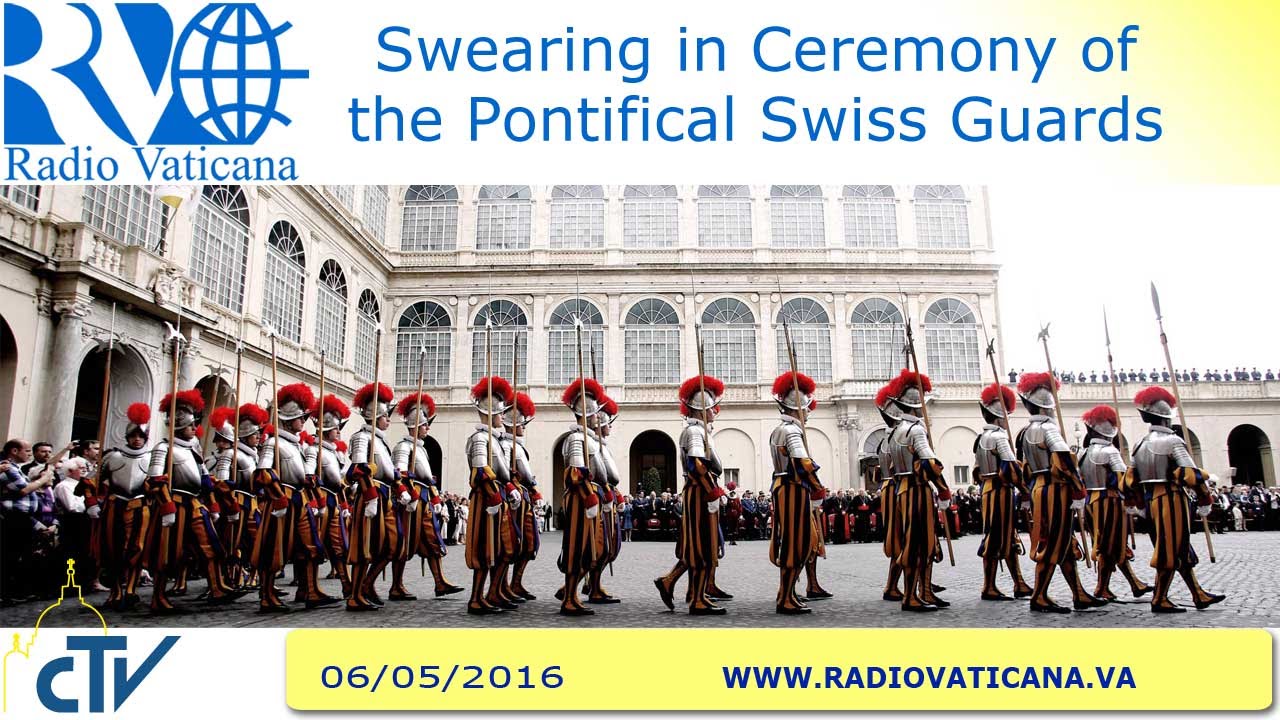
The Swiss Guard and the “Combat Rosary”

ORIGINAL Published on: May 7, 2016

Here is something extremely cool.

First, you may recall that last year we had a project to help one of the Swiss Guard have custom armor made.  HERE   I’ve stayed in touch with the Guard and his wife.

Then I got another project going, with the essential aid of my good friend Fr. Richard Heilman, who has been featured in these electronic pages often.   He took his parish to ad orientem worship and the numbers of attendants increased.  He put in an altar rail and moved his people to receive on the tongue.  He implemented Summorum Pontificum.  We just had the bishop there for Ascension Thursday.  He is the state chaplain of the Knights of Columbus and has many other things going, including something advertised on this blog on the side bar, his “combat” Rosaries, which he has made.  Super-tough Rosaries.

Now to the project.

At my prompting Fr. Heilman sent the gun-metal rosaries to all of the Swiss Guards.

Today, during his address to the new recruits about to be sworn in, the Commandant held up one of them during his address and told them that training and arms are necessary, but “the most important weapon is the ‘combat rosary'”.  (Some of the speech – below.)

Is that not cool?

16_05_07_Swiss_Guard_Rosary_01

Yes, that’s cool.

More later on this.

Meanwhile…

YouTube thumbnailYouTube icon

Start at about 18:00.  The Rosary itself is held up at 20:37.

And…
16_05_06_Swiss_Guard_Rosary_03From ACISTAMPA:

CITTÀ DEL VATICANO , 07 maggio, 2016 / 11:00 AM (ACI Stampa).-
“Al momento giusto, all’inizio dell’anno, un generoso donatore ci ha sorpresi con un regalo. Egli ha fatto pervenire alla Guardia Svizzera Pontificia l’arma più efficace che esista sul mercato: il “combat Rosary”, letteralmente, il rosario per il combattimento. Subito è stato dato in dotazione a tutte le guardie. È importante che ritroviamo la via della preghiera,soprattutto la preghiera del Rosario.

La nostra vita, le nostre opere e le nostre azioni sono nelle mani di Dio. Questo però non significa che possiamo rinunciare alle armi e alle esercitazioni. Dio ci usa come strumenti per scongiurare il male in alcune situazioni. Per questo servono una fede salda, fiducia in Dio e preghiera”. Così il Colonnello Christoph Graf, Comandante della Guardia Svizzera Pontifica, ha salutato il Giuramento delle nuove reclute, ieri pomeriggio nel Cortile di San Damaso.

[My translation…] In the right moment, at the beginning of the year will a generous donor surprised us with a gift. He had shipped to the Pontifical Swiss Guard the most powerful weapon that exists in the market: the “Combat Rosary”…. They were immediately given to all the guards.  It is important that we recover the way of prayer, especially the prayer of the Rosary. Our life, our works and our actions are in the hands of God. This doesn’t mean, however, that we can give up arms and drills. God uses us as instruments to thwart evil in certain situations. For this we need a firm faith, trust in God and prayer.

[Here’s a bit more of his speech, which I transcribed from the video.]

During a morning Mass in the chapel of his residence, Pope Francis said, “faith is victory”. Last year in an audience granted in the occasion of the swearing of the new guards, the Holy Father invited the young men to dedicate themselves evermore to prayer even during their duty time. There is always time for this.  I assure you that this invitation is being followed. And we will help them to pray to God from our hearts and entreat the Blessed Virgin Mary, especially in this month dedicated to her, that they keep far from us every evil.

Cindy Wooden of Catholic News Service tweeted…

On another note…

This is great, but even greater would be YOU praying the rosary, whatever your rosary looks like.

If you don’t pray it, it’s just … there.  Right?

And…

GO TO CONFESSION!

UPDATE:

Great image…

Combat Rosary GI black and white

Posted in Just Too Cool | Tagged , ,
34 Comments

ASK FATHER: Going to another diocese of First Communion and Confirmation

12_04_27_confirmationFrom a reader…

My wife and I live in the Diocese of ___ and are devotees of the Extraordinary Form of the Holy Mass. Unfortunately, there are no viable EF Masses available in the Diocese on a regular basis, so we are members of our local Novus Ordo parish and support it financially.

However, we regularly attend an EF Mass on Sunday in the Diocese of ___ about an hour away. As of now, we have five children (Praise God!) – one of whom is ready to receive First Holy Communion next year. My question – are there any restrictions for receiving the sacraments in a diocese that is not the one that you reside in? If so, would I need my current Ordinary’s permission? I ask because our EF Priest doesn’t know, and we haven’t gotten any answers definitive elsewhere.

There should be no problem with your child receiving First Holy Communion in another diocese.  In this day and age of great mobility, this not infrequently done.  As long as the priest/chaplain in the other diocese is amenable to it, there should not be an issue.

Canon law states that it is the duty of the parish priest (i.e., the pastor) along with the parents to make sure that children who have reached the age of reason are suitably prepared for the reception of Holy Communion (can. 914). The law does not give the parish priest the absolute prerogative to be the one who gives a child his First Holy Communion.

As in all things, it’s best to be above board with this. Your pastor cannot prevent you from taking your child to another parish, or another diocese, for First Holy Communion, but ideally, he should be aware that you are doing this.

Confirmation gets a little (but not much) more complicated.

The law seems to favor a diocesan bishop confirming his subjects within his diocese. However, a diocesan bishop can confirm those who are not his subjects, but are in his territory (can. 886, 1) unless there is an express prohibition by the ordinary of the one being confirmed.

Posted in "How To..." - Practical Notes, ASK FATHER Question Box, Liturgy Science Theatre 3000 | Tagged , , ,
2 Comments

What a busy Novus Ordo day!

Look at what was on the calendar of the Roman Curia today.


Posted in SESSIUNCULA |
7 Comments