Brilliant discussion on the Catholic Church and Western Civilization

This video is great. It was forwarded to me by the Rush of Madison, the great Vicki McKenna.

Watch or listen to this video. It has many points which could be broken into individual discussion. There is a apologia Christianity in the West. They point out that the modern fads of global warming and black lives matter, etc., are actually a return to irrational paganism. Racism and bigotry now masquerade as progressivist rationalism. Listen for their reference to man as “a poor, bare forked animal” (King Lear) or as a “rational amphibian”. Note the passing references to the Church’s role in the development of economics and international law. They point out the relationship of reason and faith, and what happens when reason and faith are delinked (hint: bad things). Etc. Etc.

Oh… and they refer to Dante. If you don’t know your Dante… well… pffft.

Play video

I’d really like a transcript of this.

Posted in SESSIUNCULA | Tagged , , ,
4 Comments

CLOSE ASTEROID FLYBY

CLOSE ASTEROID FLYBYOne of these days… one of these days….

From SpaceWeather:

ASTEROID DOUBLE FLYBY:  On Sept. 7th, a newly discovered asteroid about the size of a large grey whale flew over the south pole of Earth only 25,000 miles away. For scale, that’s only a few thousand miles above the orbits of typical geosynchronous satellites. After the Earth flyby, the space rock turned and headed in the general direction of the Moon, executing a wider flyby of 179,000 miles on Sept. 8th. Where will this asteroid go next?

[…]

Where to next? This asteroid spends all of its time in the inner solar system. In Oct. 2017 it will fly by Venus. In March 2020 it will fly by Venus again before returning to Earth in June of the same year. Not one of these encounters is expected to result in an impact. [So they tell us.] This table from NASA lists the many close approaches of 2016 RB1.

Asteroid 2016 RB1 was discovered on Sept. 5th by astronomers using the 60-inch Cassegrain reflector telescope of the Catalina Sky Survey, located at the summit of Mount Lemmon in the Catalina Mountains north of Tucson, Arizona.  [How many more are out there which they haven’t discovered, I wonder.]

Visit http://spaceweather.com for answers and photos of today’s encounter with Earth.

To the Moon, huh?

Play video

Posted in Look! Up in the sky!, TEOTWAWKI | Tagged
6 Comments

Rutler on Luther and Islam

lutherAs  a former Lutheran, I won’t look forward to Catholic-Lutheran hoopla in 2017.  I, for one, won’t celebrate theological revolt and the shredding of the fabric of Christendom.

A must read is to be found at Crisis from the keyboard of Fr. George Rutler.  Today he makes observations about Martin Luther.

Luther Looks at Islam

Martin Luther cut a figure of such massive importance that reflections on him are a Rorschach test for theologians and historians alike. In few instances have personality and principle been so melded. If the Dominican Aquinas argued contra and sed contra, the former Augustinian would settle his case by slapping the table: “Dr. Martin Luther will have it so!” Aquinas spoke syllogisms while Luther shouted slurs. Interpreting the Rorschach blots his own way, Chesterton, no lightweight himself, resented that though Luther’s intellect was negligible in comparison with that of the Angelic Doctor, “his broad and burly figure has been big enough to block out for four centuries the distant human mountain of Aquinas.” With new attention focusing on Luther for the fifth centenary of his revolution, he still looms in Chesterton’s summary as “one of those great elemental barbarians, to whom it is indeed given to change the world.”

This barbarism consists in a proto-modern confusion of conscience with ego which, as Maritain wrote in his “Three Reformers,” is “something much subtler, much deeper, and much more serious, than egoism; a metaphysical egoism. Luther’s self becomes practically the center of gravity of everything, especially in the spiritual order.” Those sparring partners, Calvin and Luther, were both young when they made their mark: Calvin wrote his Institutes at the age of 25 and Luther was 33 when he advertised his 95 theses. And the emperor Charles V was 21 when he faced Luther at the Diet of Worms. But the personality of Calvin does not loom over his works as in the case of Luther. The difference shapes hasty caricatures of Calvin as a Pecksniffian ectomorph and Luther a Rabelaisian endomorph. [niiiiice] Saint Thomas More parodied Luther’s scatological diction when he called him a “buffoon … (who will) carry nothing in his mouth other than cesspools, sewers, latrines…” But on the whole, the Catholic humanist reformers distinguished themselves from Luther by the astringency of their Aristotelian disdain, More’s friend Erasmus being a prime example of this protocol, along with such as Cajetan, Caisius, and Giberti.  [When I read lots of Latin with Fr. Reginald Foster, we spent time on the works of Erasmus and St. Thomas More and we looked at the correspondence between the three.  Guess which one’s Latin was inelegant.]

One of Luther’s Ninety-Five denunciations of Rome was, “Those who believe that they can be certain of their salvation because they have letters of indulgence will be eternally damned, along with their teachers.” Obviously Luther was not the sort to ask, “Who am I to judge?” [Heh.] But his judgment courted an equation of the authentic teaching of the Church on indulgences with the corruption of those who crassly sold indulgences. The theses, many of which were reasonable in themselves, risked faulting not just the disease of the limb, but the limb itself. This is awkward as the 500th commemoration of Luther’s movement follows upon the Holy Year of Mercy for which Pope Francis announced various ways to receive indulgences. Francis has said with measured diplomacy: “I think that the intentions of Martin Luther were not mistaken. He was a reformer. Perhaps some methods were not correct.”  [Perhaps, indeed.]

If the intentions were honest, it is a fact that, even apart from psychoanalysis of Luther’s immoderate temperament, “The road to Hell is paved with good intentions.” That aphorism is a variant of Vergil: facilis descensus Averno. According to Johannes Aurifaber, the last words penned by Luther on February 17 in 1546, the day before he died, were in praise of Vergil’s Aeneid. Luther wrote his lines in the same dactylic hexameters Vergil used; but more poignantly, the warning about good intentions paving the road to Hell was given by Saint Bernard of Clairvaux who was a moral hero and spiritual giant in Luther’s estimation. As a profound scholar of the Wittenberg reformer, Pope Benedict XVI gave Luther his due especially for parts of the German catechisms, but, he also held, as Father Aidan Nichols has written in his

Rutler on Luther and Islam

US HERE – UK HERE

The Theology of Joseph Ratzinger,

that Luther was a “radical theologian and polemicist whose particular version of the doctrine of justification by faith is incompatible with a Catholic understanding of faith as co-believing with the whole Church, within a Christian existence composed equally of faith, hope, and charity.” 

[…]

In various ways, Islam and the Protestant schools had some affinities. Recognizing Islam as an Arian heresy, Luther thought that any Pope of Rome was worse than the Prophet of Medina. Theologically, Allah as pure will had a certain cogency for Luther who called Reason “that pretty whore.” After Luther, once marriage was described as a non-sacramental civil union, divorce could be a reasonable solution, albeit with more strictures than in Islam. Luther saw no problem with Henry VIII taking a second wife, just as he had advised Philip of Hesse. There was something of a scandal when it was found out that Luther had told Philip to lie about his bigamy, but the logic was consistent with the Shi’a practice of “taqiyya,” or lying to promote the faith.

[…]

There is more to this Must Read™.

You might also want to read about Benedict XVI’s amazing Regensburg Address.

US HERE – UK HERE

Rutler on Luther and Islam

Posted in Benedict XVI, Hard-Identity Catholicism, Mail from priests, The Drill, The Religion of Peace | Tagged , ,
17 Comments

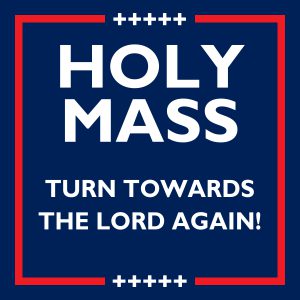
Bp. Morlino (D. Madison) will say Sunday Masses ‘ad orientem’

Francis_Ad_Orientem

“We become a mighty army marching toward the place of the rising sun to meet the Lord led by the priest. That’s who we really are. As we offer the Eucharistic sacrifice, we march together toward the East to go run and meet the Lord who comes from the East at the end of history.

Now, no general ever led his troops by facing them and walking backwards. He would trip pretty soon. And if he’s built like me, it would be particularly not pretty.”

His Excellency Most Reverend Robert C. Morlino, the Extraordinary Ordinary, the Bishop of Madison, has announced that he is going to say Holy Mass ad orientem at the church of the Cathedral parish.

NB: The Cathedral of Madison burned down some years ago and so the Bishop has been using a downtown church that was clustered with the Cathedral for his regular Sunday Mass.

Here is the Bishop’s sermon.  Note how he weaves in reflection also on the Four Last Things.

Just after 8:00 in the sermon he starts to speak about the change to Masses ad orientem.

Bp. Morlino (D. Madison) will say Sunday Masses 'ad orientem'

CLICK!


Posted in Liturgy Science Theatre 3000, Turn Towards The Lord | Tagged , ,
12 Comments

Your Good News

Do you have any good news to share with the readership?  Let us know.

Posted in SESSIUNCULA |
31 Comments

“Catholics Come Home!” videos – then and now

In the past I have been impressed favorably by the short, inviting videos made by Catholics Come Home!

REMEMBER: If you are a fallen away Catholic, or you have strayed a bit, all 99.9% of you have to do to “come home” is to examine your conscience and make a good confession.  That’s it.   You will be able to receive Communion again (in the state of grace) and start working (with the help of grace) on those bad habits or problems you make have picked up.

Today I received this email:

Subject:
Catholics Come Home….newer versions??

Message:
Fr. Z, you need to see this:

Here is the original video of Catholics Come Home from a few years ago. Very well done:

Play video

B) Now…..this was released the other day:

Play video

C)….And this:

Play video

Anyone can see there is a radical difference between the original, and the latter two newer versions:

(latter two)
-Eschatological sense is missing, eternal life with God? Salvation?
Repentance of sins?
-No mention of Jesus
-Greater focus on earthly/temporal happiness
-Environment, tolerance….??
-Promoting “human rights”, “We want a better life”, care for the
environment, dream of a better world…..??
*Shocking this was on the EWTN page.

Yes, the spirit, if we can call it that, of the first and then more two more recent videos is different.

Discuss: Do we dumb things down or deemphasize important and central characteristics of the Faith in order to get people into the door? Is that how we proceed with the New Evangelization?

Posted in New Evangelization, Our Catholic Identity, The Drill | Tagged
68 Comments

Literate: “What, Papa, is ‘Jesuit’?” Papa: “I think you’d better ask your Mother.”

From the erudite digital pen of Fr. Hunwicke’s Mutual Enrichment:

September 3 Anno Domini 2116: a family dialogue

An old favourite of some appreciative readers, reprinted by request with one or two tinkerings. 

Literate and Latinate six-year-old: Papa, why was the psalmody of this morning’s Mass of St Pius X so odd? I mean, in the psalmus of the Introit, why did we have Gratias Domini in aeternum cantabo, rather than Misericordias …? And why has ecclesia been replaced with coetus?
Papa: Well, my child, when that Mass was added to the Missal, the Holy See was rather keen on the Bea psalter.  [pronounced BAY-ah – BOOO!]
Literate …: What was the Bea, Papa?
Papa: It was an evil German Jesuit who …
Literate …: What, Papa, is ‘Jesuit’?
Papa: I think you’d better ask your Mother … not many people nowadays know the answer to that question … I’m not sure I do … but the Bea had acquired the confidence of Pius XII …
Literate … (fiercely): Ah, the pope who appointed Hasdrubal Bugnini who engineered the Great Liturgical Deformation of the twentieth century?
Papa: Exactly, best beloved, except that his name was Hannibal … Hasdrubal was his brother … sort of … perhaps I allow you to read too much Livy … and the Bea began its evil work by doing a new translation of the Psalter into Classical Latin and …
Literate …: But surely, Papa carissime, St Christine Mohrmann, the great Dutch Latinist and Doctrix of the Church, had just demonstrated that Liturgical Latin was an exquisite deeply Christian form of Latin expressly crafted to convey in all its transcendent beauty the Catholic Faith?
Papa: Indeed she had, but Pius XII, a weak and foolish pope, ignored her scholarship and allowed the Bea to do its worst. And …
Literate …: But why was today’s Mass not subsequently corrected when St Benedict XVII completed the Great Liturgical and Doctrinal Restoration in 2066 by promulgating the anathemas against Kasperism?
Papa: Because the liturgy, learned offspring, bears within it marks of all the periods through which, in its triumphant march across the centuries, it has passed. These harmless if profoundly eccentric details provide a powerful incentive to historical research such as that upon which you, after your Seventh Birthday, will embark. Now run along and finish your doctoral thesis on the de Beatificatione et Canonizatione of St Benedict XIV. Then you can ask your Mother what ‘Jesuit’ means before I read you your bed-time story from the newly recovered Hecaleof Callimachus.
Literate …: Thank you, Papa. I warmly anticipate each of those three agenda.

I’ll close comment here, so that you can comment over there.

Posted in HONORED GUESTS, Lighter fare, Liturgy Science Theatre 3000, Mail from priests | Tagged , ,
Comments Off on Literate: “What, Papa, is ‘Jesuit’?” Papa: “I think you’d better ask your Mother.”

Catholics! WAKE UP!

millard-fillmoreThis leaves me disappointed and, frankly, disgusted.

From The Spectator:

Hillary’s Catholic Con

Barack Obama won a majority of the Catholic vote both in 2008 and 2012. Hillary Clinton, according to pollsters, is poised to do the same. She is leading Trump among Catholic voters by over twenty points. In an age of secularism and a secularized Catholic Church, Democrats have never found it easier to con Catholics. The more they promise to persecute them, the more they can count on their vote.

Trump says that he will lift Obama’s contraceptive mandate; she promises to enforce it. Trump says that he will appoint justices who would vote to overturn Roe v. Wade; she promises to protect it. Trump says that he won’t force taxpayers to pay for abortions; she promises to ensure that they do. She is implacably opposed to every tenet of the natural moral law. Yet it appears that Catholics stand ready to vote for her.  [Putting aside what one might think about Trump, I cannot fathom how any even partially well-formed Catholic could stomach the thought of a Hillary Clinton presidency, much less voting for her.  I’ve been pretty clear about what my position is: I would vote for the corpse of Millard Filmore if someone ran it, if that meant keeping Clinton out of the White House.]

At the convention, Hillary engineered the most extreme platform ever. Her representatives wrote into it a proposal to undo the Hyde Amendment: “We will continue to oppose — and seek to overturn — federal and state laws and policies that impede a woman’s access to abortion, including by repealing the Hyde Amendment.” “Access” is Hillary’s euphemism for forcing Americans to pay for abortion. If she wins, she will work to turn Obama’s contraceptive mandate into an abortion mandate. Her Catholic running mate, Tim Kaine, who symbolizes the secularization of the Catholic Church in America, has said that he is determined to get “comfortable” with Hillary’s position on the Hyde Amendment.

[…]

One of the overriding issues for me are appointments to the Supreme Court.  I am pretty sure I know what sort of person Hillary Clinton would nominate.  And while we don’t know one way or another whether he would stick to the list, the list that Trump proposed for potential nominees is by far better than the sort of person I am pretty sure Clinton would put forward.   I don’t know about the other candidates – whose names escape me at the moment.  Putting aside her lying and playing fast and loose with National Security and the integrity of the State Department, etc. etc., etc., think about the long-term consequences for this nation and for the world were Hillary’s picks to pack the SCOTUS.

Catholics!  WAKE UP!  

Given the sort of liturgical worship and horrid catechesis we have had since the ’60’s none of this is a surprise.  But it sure is sad to see.

Sigh.  Where are the brightest and the best?   It is hard to blame the people we would hope to see run, and who don’t.  Who would be eager to put themselves and their families through the election meat grinder?

The moderation queue is ON.

Posted in Cri de Coeur, Emanations from Penumbras, One Man & One Woman, Our Catholic Identity, Sin That Cries To Heaven, The Coming Storm, The future and our choices | Tagged , ,
77 Comments

ASK FATHER: Can “General Absolution” be scheduled in advance?

From a reader…

QUAERITUR:

Our Dean plans to hold ‘The Rite of Reconciliation of several
penitents with General Confession and Absolution‘ as part of the Jubilee Year of Mercy. In a note inserted in our parish newsletter, [Good… it’s in print.] he writes: ‘Pope Francis encourages us to experience this jubilee first-hand as the favourable time to heal wounds by offering everyone the way of forgiveness and reconciliation. The symbolism of opening the doors to God’s mercy and throwing the net wide is well provided for in this Rite… ‘Those wishing to received sacramental absolution in this form will be required to bow their heads in quiet prayer. In this way we are confessing that we are all sinners, and acknowledging together our vital need of God’s grace. The Service (lasting slightly less than an hour) will consist of the Liturgy of the Word, a homily and an examination of conscience. A litany of repentance then encourages us to renew out love in a heartfelt desire to amend our lives. We say together the ‘I confess’ and then General Absolution is bestowed by the laying on of hands as the priest prays over us. [No individual confession?] ‘A proclamation of praise and thanksgiving expresses our joy of forgiveness and we conclude by joining hands to say the Our Father, before sharing with each other a sign of peace. ‘Should anyone wish to speak with a priest about any matter, we will be available at the end.’  [This does not seem to include individual confession of sins (aka auricular confession).  Not good. NB: Pope Francis encourages people to GO TO CONFESSION, not to go to General Absolution (aka Form Three).]

My understanding of CCC 1480-1484 tells me that this… it’s not so good. I feel it would be a sin of omission for me to do nothing but what can I, a housewife, do about this other than beg St Teresa of Calcutta’s intercession? If you advise speaking to him, I’m happy to, but how on earth do I go about phrasing it?

I hope that the priest in question has good intentions, but this is just plain wrong.  You are right to be concerned.  It is also your right and duty to make your concerns known to your pastors. Canon 212 § 3 says that the faithful (which includes both lay people and clerics) have the right and, sometimes, the duty to make heir concerns know to their pastors. about those things which pertain to the good of the Church, according to their knowledge, competence, and dignity.   With regard to liturgical worship and the sacraments, Redemptionis Sacramentum 183 and 184 strengthen the explanation that the faithful can, and sometimes must, make their concerns know about abuses.

General Absolution (absolution given without individual confession of sins) is to be given in cases of grave necessity, emergencies (e.g., airplane about to crash, earthquake traps people under rubble, listeners are around in a hospital ward, battle is about to begin, 1000 people show up in the village when the missionary arrives on his circuit, etc.).

Canon 961 establishes that a grave necessity exists (outside of the clear case of danger of death) when…

“given the number of penitents, there are not enough confessors available properly to hear the individual’s confessions within an appropriate time, so that without fault of their own the penitents are deprived of sacramental grace or of Holy Communion for a lengthy period of time.”

All those conditions would need to be present for general absolution to be given licitly.

Telling people to “come back next week” would NOT deprive them of sacramental grace for a “lengthy period of time,” which most manualists – and we like manuals – would say is a month or more.

Furthermore, the Motu proprio of 7 April 2002 Misericordia Dei, 5 clarifies that

“judgment as to whether there exists the conditions required by canon 961 is [Note bene] not a matter for the confessor, but for the diocesan bishop who can determine cases of such necessity in light of the criteria agreed upon with other members of the Episcopal Conference.”

The local bishops lay down the conditions.  They may vary from place to place.  In Africa, for example, a missionary priest might arrive at a place to find a thousand people waiting.    That conference will lay down the proper conditions for the priest.  In the USA, these problems don’t exist.  Bishops have laid down the conditions (which repeat the point about a month or more – HERE).

The scheduling of General Absolution is, therefore, as wrong wrong wrong as wrong can be.  You cannot schedule an emergency in advance!

Since you don’t say when this is scheduled emergency is scheduled to take place (next week? next month? etc.), depending on your time frame you might try the following.

We are reminded in Redemptionis Sacramentum 183 and 184 that we should, ideally and if possible, bring concerns first to our  local pastors.  While we always have immediate recourse to the Holy See, it is fair and fitting first to address concerns to your parish priest, then to your local bishop, then to the Holy See.

However, and keep this in mind, all of us, no matter who we are – layman or priest – have the right always to address ourselves first, directly, to the Holy See!  No one can accuse us of cutting someone out or going over their heads.  Again, it’s usually better to work up the ladder, but it isn’t obligatory.

If there is a space of time to work in, you might ask this Dean to clarify whether or not there are going to be individual confessions before absolution is imparted.   It doesn’t seem like there is.  Also, it may be that he simply doesn’t know that the bishop, not he, lays down the conditions of General Absolution.  You might say something along the lines of, “What you described in the bulletin does not seem to include confession of sins before absolution.  However, that doesn’t seem to be permitted except in the case of emergencies. Otherwise the Bishop has to approve it before hand.  This isn’t an emergency that warrants General Absolution.  Is the bishop on board with this?”  If you can get a response from the Dean in a letter of some kind, that would be best.

If he blows you off, write to the bishop if there is time.

Otherwise, you could bring your concern directly to your local bishop without talking to the Dean.  If time is short, you could send, immediately, by fax or scanned attachment to an email, or by hand delivery (best), the printed material with the description of what is scheduled to the office of your diocesan bishop. Keep copies of everything.  Include a brief (one side of one sheet of paper), respectful cover letter. Include a question along the lines of: “Have you (i.e, the Bishop) given permission for this scheduled General Absolution according to can. 961 and according to the Motu proprio of 7 April 2002 Misericordia Dei, 5?  Is it permissible to attend such a scheduled General Absolution?”

If this is a very short time frame before the scheduled event, as you approach the bishop, you can also send a fax of the same to the Congregation for Divine Worship in Rome, with a brief (one side of one sheet of paper) description of where this is to take place.  You might say in such a letter something like, “I send this information for the Cardinal Prefect’s opportune knowledge.  This scheduled ‘General Absolution’ has caused questions and wonder.”

When writing to a Congregation (or any Vatican office) you always write directly to its head.  In this case…

His Eminence
Robert Card. Sarah
Prefect of the Congregation for Divine Worship and Discipline of the Sacraments
Palazzo delle Congregazioni
00120 VATICAN CITY

Fax: 06.69.88.34.99  (from these USA 011-39-06-69.88.34.99)

Always, when writing to Church authorities, be brief and be kind.  Do not write angry words about anyone.  Keep it simple and stick to facts.  Include any and all printed matter, etc.) which will support your claims.  Assure them of your respect and promise of prayers.

The moderation queue is ON.

Posted in "How To..." - Practical Notes, ASK FATHER Question Box, GO TO CONFESSION, Liturgy Science Theatre 3000 | Tagged , , , ,
6 Comments

“I ask St. Teresa of Calcutta to intercede with God for…”

On this first day on which Mother Teresa of Calcutta has been elevated to the altars of the whole Church, let us all ask her intercession for some pressing needs for our respective nations, especially for these USA.

In particular I ask St. Teresa of Calcutta to intercede with God for the conversion, or the failure, of Fishwrap.  I ask St. Teresa to intercede with God for the conversion, or the failure, of the dems’ presidential candidate.  I ask St. Teresa to intercede with God for the conversion, or the utter failure, of Islamic terrorists.

Posted in SESSIUNCULA | Tagged
19 Comments