Earth at Night

At Astronomy Pic of the Day there is a great image of your planet at night.

Explanation: This remarkably complete view of Earth at night is a composite of cloud-free, nighttime images. The images were collected during April and October 2012 by the Suomi-NPP satellite from polar orbit about 824 kilometers (512 miles) above the surface using its Visible Infrared Imaging Radiometer Suite (VIIRS). VIIRS offers greatly improved resolution and sensitivity compared to past global nightlight detecting instrumentation on DMSP satellites. It also has advantages compared to cameras on the International Space Station, passing over the same point on Earth every two or three days while Suomi-NPP passes over the same point twice a day at about 1:30am and 1:30pm local time. Easy to recognize here, city lights identify major population centers, tracking the effects of human activity and influence across the globe. That makes nighttime images of our fair planet among the most interesting and important views from space.

Click the image for a much larger version.

It is interesting to compare the Northern Hemisphere and the Southern.  Compare North Korea to the South.


Posted in Just Too Cool, Liturgy Science Theatre 3000 | Tagged ,
7 Comments

NYC 7 December: 1st Friday @ Holy Innocents – all night vigil with Masses and devotions

Anyone in the New York City area should want to know that at the Church of the Holy Innocents an all night vigil is held on 1st Fridays.

Holy Innocents is 128 West 37th Street (between Broadway and 7th).  It is close to Penn Station and several subway stops.

The vigil is sponsored by the traditional Knights of the Regina Coeli and Agnus Dei Councils of the Knights of Columbus.  It is great that there are Councils of the Knights of Columbus which are focused on the traditional Roman Rite.

The 1st Friday vigil begins at 6 p.m. with a Solemn Votive Mass of the Sacred Heart  according to the 1962 Missale Romanum, followed by Stations of the Cross, Exposition and Solemn Vespers and Compline coram Sanctissimo.

Throughout the night, they will also pray a full scriptural rosary, recite or sing all six Litanies approved for public use by the Church and sing the Divine Mercy Chaplet (at 3 a.m.).  The vigil concludes with a procession of the Blessed Sacrament and Mass at 5 a.m. in the Usus Antiquior for the Feast of the Immaculate Conception.

If you are in or near New York City, you have a great spiritual opportunity on 1st Fridays.

For those in the area who prefer to fulfill their obligation to attend Mass for the Immaculate Conception a little later in the day on Saturday, there will also be a Solemn Mass at Holy Innocents at 1 p.m.

Beautiful church.  Beautiful devotions.  Beautiful Masses.  Great location.

Over the years it has been great to see what use of the traditional forms has done to bring more people and spiritual benefits to this centrally located parish.  If only more pastors of souls would be open to what the Extraordinary Form could bring to their communities.

Posted in "How To..." - Practical Notes, Liturgy Science Theatre 3000, Our Catholic Identity, The Campus Telephone Pole | Tagged ,
1 Comment

QUAERITUR: Should I, a deacon, go on “strike” when I see liturgical abuses?

From a deacon:

Dear Father Z,
my parish priest is leftist and modernist (like the vast majority of priests and bishops here in ___) and always changes the words of the Missal, adding his personal opinions. His homilies are more about ___ than the Gospel. My question is: as a permanent deacon, would I sin if I went on strike and quit acting as a deacon at Mass?

I strongly advise against any cleric going on “strike.” You are ordained for the Church – it’s not a job. You are a deacon, you should always act as a deacon, whether at Mass or elsewhere.

That said, let’s make distinctions about what “acting as a deacon” means.

As a deacon, you need not function as the deacon of the Mass at every Mass you’re at. It is acceptable for you to sit in choir.  Even sitting in choir, you can assist with the distribution of Holy Communion if there are not enough priests present to do so.

If you have serious and well-founded questions about the validity of the Mass being offered, you should certainly abstain from serving at it.  Then you should take other steps in keeping with the last part of Redemptionis Sacramentum.

If you are reasonably sure the Mass is invalid, document what you see and in private bring your concerns to the priest.  If the priest will not address your concerns, bring your concerns to the bishop with copies to the diocesan vicar for clergy, or your regional vicar.  If you are still not satisfied with the response, send what you have to the Congregation for the Doctrine of the Faith.

If the questions go to liceity, but not validity, again, document your concerns and bring them to the priest in private.  If that does not produce results, write to the bishop, again with copies, etc. If you’re still not satisfied with the response, write directly to the Congregation for Divine Worship.

Posted in "How To..." - Practical Notes, ASK FATHER Question Box, Liturgy Science Theatre 3000 | Tagged ,
27 Comments

Metropolitan Museum Visit

A beautiful image for your day.

Mother and Daughter in Prayer

20121206-130514.jpg

Ludwig Ferdinand Schnorr von Carolsfeld (+1853) with Julius Schnorr von Carolsfeld (+1872)

Posted in What Fr. Z is up to | Tagged
6 Comments

QUAERITUR: Priest at Mass as mere “presider”?

From a reader:

I have attended a spiritual recollection of cathechesis assistants of ___. The augustinian frater who led the sessions concentrated on the Vatican II, said in his presentation about the SC constitution: “We all celebrate the Mass, the priest presides”, as if we the lay folks were taking part in the job of the priest, actually. Since this was not a place for a debate, I did not respond, but I am seriously thinking about some reaction now. There were about 50 people present. I would be most grateful for a response or suggestion from you.

If the Augustinian told you that there is no difference between what a lay person does in offering spiritual sacrifice at Mass and what a priest does, then what he told you is wrong.

There is a sense in which “presider” can work well for an ordained person at Mass.  Say, for example, a priest is saying Mass and a bishop is present in choir.  The bishop can, in a sense, “preside”, though the priest is saying Mass.  When John Paul II could not say Mass easily anymore, he could preside while another said the Mass.   Otherwise, a person might “preside” at a Communion service or the recitation of one of the liturgical hours, which is a true liturgical service.

When it comes to Mass, we can use “celebrate” for laypeople in an equivocal way. What the priest does at Mass is entirely different. We can loosely use “celebrate” for both lay and priest, but let’s not get confused into thinking that what they do is the same.

There is a qualitative difference in how all the baptized participate in the priesthood of Christ the High Priest and how the ordained priest participates in Christ’s priesthood (Lumen gentium 10). The sacrament of Holy Orders confers a qualitatively different priesthood on the man ordained. Holy Orders changes the priest ontologically. The baptized offer spiritual sacrifices acceptable to God because they participate in Christ’s priesthood in their way. But what the priest does is different.

Put in blunt terms, when the priest says Mass, transubstantiation takes place. This takes place whether the priest is alone or there are other people present. A lay person, saying the same words over bread and wine, effects no change whatsoever. A hundred, a thousand, a million laypeople saying the words does precisely nothing. What lay people can do is, with all their mind, heart and will, unite their spiritual sacrifice to what the priest is doing.   The priest renews Christ’s saving Sacrifice.  Laypeople participate in that renewal by uniting themselves with what the priest does.  That is a real participation, too!

Let not the dignity of how laypeople offer sacrifice be denigrated by trying to dumbdown the concept of the ordained priest’s role.  And, similarly, let not the dignity of laypeople be besmirched by the condescending permission some cleric might grant them to do something that he should be doing.  That is the worst sort of clericalism there is.  The dumbing down of the priest’s role to that of a mere presider is the flip side of the same coing.

When you hear of this blurring of distinctions between the priesthood of the baptized and the priesthood of the priest, remember that if there is no priest, there is no Mass.

We should avoid the description of priest as mere “presider” when it comes to Mass.  “Presider” can mean just about anyone running anything.  “Priest”, however, is connected inextricably from the concepts of sacrifice.  Priests are for sacrifice.  No priest.  No sacrifice.  No need for sacrifice, no need for priesthood.  Priests exist for offering sacrifice.  That is their primary purpose.

When liberals start talking about the priest as mere “presider”, you can bet that they either don’t believe in or they are dangerously deemphasizing the sacrificial nature of Holy Mass.

Yes, the priest is a “presider” in the sense that he stands as the head of the body of the congregation.  Fine.  But he is the head of the body of the congregation because he is the mediator who offers sacrifice.  That is a special role.  Remove the concept of sacrifice and make the priest into a mere “presider” then you remove the need for ordained priesthood. No renewal of Christ’s Sacrifice on Calvary?  No need for ordained priests.  Anyone can stand up there and say the prayers.  Indeed, it makes no difference at that point if the person is male or female.  A community could pick any person whom they deemed to be competent or appropriate at that moment.  It would hardly make a difference, since Christ’s Sacrifice would not be the point of why they were there.

When you hear “presider” instead of “priest”, your metal sirens should sound.

Posted in ASK FATHER Question Box, Liturgy Science Theatre 3000, Our Catholic Identity, Priests and Priesthood | Tagged , , , , , ,
19 Comments

QUAERITUR: Can girls choose male saints’ names at Confirmation?

From a reader:

My younger sister is going through Confirmation classes and, God-willing, will be confirmed next year. She seem to have her heart set on Maximilian Kolbe as her Confirmation Saint/name.
Interestingly enough, the Confirmation class teacher (of 25 years) says that the Church teaches that one MUST choose a saint of the same gender. I cannot find any such law, tradition etc. Can you help?

Sure I can help.

The teacher is wrong.

Your sister can choose whatever saint’s name she desires. If you need some analogy of names and opposite sex saints, mention the many male religious who have “Mary” as one of their names in religion. Mention the many women religious whose names in religion were often “Mary” and then a male saint’s name. Off the top of my head, I knew a Sr. Mary Peter Alcantara. In the TV comedy “Bless Me Father” there was the ominous Mother Stephen. Lot’s of women had male names in religion.

The teacher is wrong.

Your sister can choose St. Maximilian.  May he be a good patron for her.

Posted in "How To..." - Practical Notes, ASK FATHER Question Box, Our Catholic Identity, Saints: Stories & Symbols | Tagged , , ,
53 Comments

Did you get coal and sticks?

Happy Feast of St. Nicholas!

Did Black Peter come to visit?

A reader sent this.  Fun!

You well-informed readers can fill in the blanks for those who might not know what is going on here.

In the meantime here is his very terse entry in the 2005 Martyrologium Romanum.

1. Sancti Nicolai, episcopi Myrensis in Lycia, sanctitate et intercessione apud thronum gratiae divinae praeclari.


Posted in Lighter fare, Saints: Stories & Symbols | Tagged ,
27 Comments

QUAERITUR: Do I fulfill my 8 December Holy Day Mass obligation on Saturday and my Sunday obligation by going to Mass on Saturday evening?

Go HERE for an important follow-up post.


I am getting a lot of questions about fulfilling the Mass obligation on the upcoming Saturday afternoon, the Solemnity of the Immaculate Conception.

For example,

Would it fulfill my obligation for the Solemnity to attend vigil Mass on Saturday afternoon/evening even though the vigil is considered to replace Sunday Mass? In other words, could I attend vigil Mass Saturday evening to fulfill my obligation for the Solemnity and then attend Sunday morning Mass to fulfill my obligation for Sunday?

The Code of Canon Law for the Latin Church says:

can. 1248 1. The precept of participating in the Mass is satisfied by assistance at a Mass which is celebrated anywhere in a Catholic rite either on the holy day or on the evening of the preceding day.

As I read this, yes, you fulfill the obligation for both by attending the one Mass on Saturday evening.  The law does not specify that you have to attend Mass according to a certain formulary to fulfill the obligation.  It says you have to attend Mass.  Period.  Given that we must interpret law in such a way that we favor people and give them more flexibility rather than less, I would say, yes, you fulfill the obligation.  First, you are attending Mass on the Holy Day, which is Saturday.  Second, since it is in the evening, the law says you fulfill your obligation for the Sunday.

That said, prevailing interpretation of canon law goes against my opinion.  I refer you to the great Prof. Ed Peters, for example, with whom – on this point – I disagree.  I think the USCCB goes with the prevailing opinion.  I disagree… but I will defer.

I believe the opinion that that one Mass on Saturday does not fulfill the obligation for both overcomplicatiplexifies the simple text of the canon.  Again, I defer to proper authority on this one.

That said… do not get me wrong… it is far better to go to Mass in the morning on Saturday, fulfill your obligation, and then go to Mass on Sunday morning and, thereby fulfill your obligation and keep your Sunday as Dies Domini.

I don’t happen to like the Saturday evening Mass being used regularly as the Mass of obligation.  The Church permits the obligation to be fulfilled on Saturday evening.  Fine.  Let it be so.  But it seems to me that it is better to let Saturday be Saturday and Sunday by Sunday.

His scriptis, I would, if I were you, plan to go to Mass on Saturday morning and again on Sunday.  Let us defer to those who are the better interpreters of canon law.

Finally… everyone…. GO TO CONFESSION!

There.  I got that off my chest.

Posted in "How To..." - Practical Notes, Liturgy Science Theatre 3000, Our Catholic Identity | Tagged , , ,
34 Comments

QUAERITUR: Winter Solstice Mass?

From a reader:

In [a parish bulletin] bulletin, they are announcing a “Winter Solstice Mass” on Dec 22nd. I have never heard of such a thing. Please advise! This is considered a “solstice” mission with the window aligned with the sun, however it sounds rather pagan to me.

Neither have I heard of a “Winter Solstice Mass”.

Keep in mind that the main door of St. Peter’s Basilica in Rome and the main altar within is exactly aligned with the rising of the sun on the Vernal Equinox.   On the Winter Solstice, if memory serves, the Egyptian obelisk relocated to the center of St. Peter’s Square would have lined up with the obelisk and the rising Sun on the Winter Solstice and with the obelisk at Piazza del Popolo on the Summer Solstice.  Popes such as Sixtus V placed these obelisks very precisely according to a urban renovation plan.  The obelisk at St. Peter’s serves as the spina of an enormous sundial.  The great churches of Christendom served also as accurate clocks and sometimes you see on the interior pavement an analemma where a shaft of sunlight darts to the floor.  There is a great example of this in Rome at Santa Maria degli Angeli.

Since the very earliest times, Christians observed the turning of the seasons and the changing direction of the sun’s apparent risings and settings. For example, we make much of St. Lucy’s Day in December (Latin for light is lux), and we have in the traditional calendar the Ember Days, which tie us in the Northern Hemisphere closer to the seasons, we celebrate St. John the Baptist in the summer at the solstice.

But a Winter Solstice Mass smacks of sometime … New Age? The New Age thing is a mishmash of the pagan and gnostic. Or it could be secularizing, in the sense of “Winter Festival” rather than “Christmas”.

Maybe this is a special observance of the religion adhered to by the LCWR or the Fishwrap?

It could be purely astronomical and calendrical, but … what sense would that make for a Mass?

Unless some information is missing, this seems a little strange.


Posted in ASK FATHER Question Box, Liturgy Science Theatre 3000 | Tagged , , , , ,
26 Comments

QUAERITUR: Are we now in the end times?

From a reader:

Are we now in the end times?

Yes, we are.

We have been in the end times ever since Our Lord ascended to the right hand of the Father.

Because of Our Lord’s promises to return even before the generation had passed (whatever that meant!), devout Christians have felt as if we were living on the edge of a knife.  This tension is good for us.  It must be intended by the Lord, as a matter of fact.

It seems that, watching the signs of the times through history, the Lord must be about to return to unmake the world and act as Judge and submit all creation to the Father.  As Christians we want the Lord to return.  As Christians our prayer was directed Eastward as a manifestation of our belief that the Lord would return and out of our fervent desire that He come … and soon.

Every generation at some point feels or senses itself to be the last.  Sometimes this sense is stronger, sometimes vaguer.  It may be that the conditions which are apt for the Lord’s return develop and then, because of the prayers of some or the sacrifices of others, the Lord delays.  We don’t know how this works.

All we know is that one day we will be face to face with the Judge.

One day  Our Lord will come either for the whole world, or just for us personally.  We are all going to die, in the natural course of things, unless the Lord makes the big return first!

Yes, we are in the “end times”.

You might want to do some reading about the Catholic view of the end times in comparison to the thoughts of some fundamentalist Christians who believe in “the rapture”.

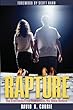
A helpful book for this is David Currie’s Rapture: The End-Times Error That Leaves the Bible Behind.  He is the author of Born Fundamentalist, Born Again Catholic.

We should always keep the Four Last Things in the forefront of our minds.  That means we should also know what pitfalls to avoid.  There is a lot of confusion about the end times.

Posted in ASK FATHER Question Box, Four Last Things, Our Catholic Identity | Tagged , , ,
44 Comments