From my email:

The Religious Liberty battle is NOT over.
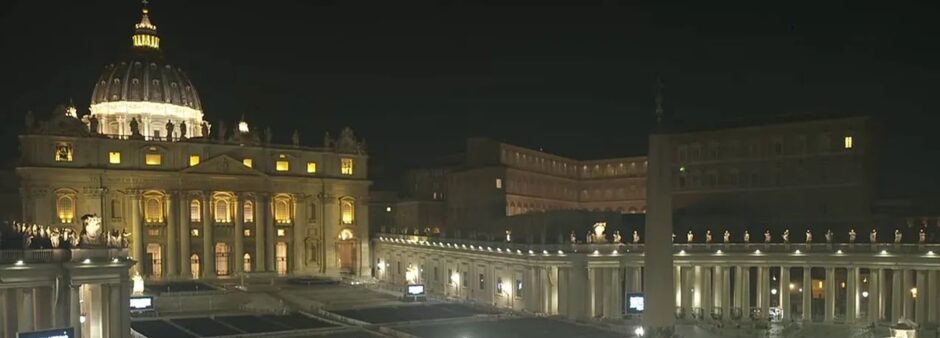
Because of my travel and the need for a little down time, I didn’t do much with the Holy Father’s visit to Lebanon.

However, a few things have come to mind after some recent conversations and some reading.
First, even though there were a lot of risks, the Holy Father did not once consider not going on this trip.
After the terrorist attacks in Egypt and Lebanon, there were rapid press releases from the Holy See’s Press Office (which I didn’t especially care for at the time). The first of the releases aimed at the Middle East, surely made it possible for the Pope to go on that trip to Lebanon.
While I was not entirely pleased with the statements that came from the Holy See’s Press Office after those terrorist attacks, and while some might say that the Holy See should use a less temporizing voice, the Pope’s trip to Lebanon had a very important objective: let Christians of that region that they are not completely alone.
Christians there are vastly outnumbered, virtually forgotten, and in danger of the loss of their very lives. Christians are fleeing the region. Those who remain are in a tenuous position. Governments don’t give a damn about the basic human rights of Christians anywhere, much less in that region.
The only person those poor people have in their corner is Pope Benedict XVI and he traveled to be with them, even if briefly and under tight security. The trip was an act of physical and moral and pastoral courage. Some high level chess made it happen.
Some retrospect prompts me, again, to breathe deeply and read the press releases again and consider broader views. Not all press releases need to be subject to a deeper consideration, but these did.
This image is clearly aimed at discouraging panhandling.
However… could it have another application?

This morning I decided to take a bit of a stroll rather than go out to Castel Gandolfo for the Audience and other events. Instead, I went to look at a few places I hadn’t seen for a while and are of note in my life’s stroll.
Is it possible that I have developed a shred of sentimentality?
Breakfast was in the Borgo Pio, at a very good old fashioned bar. My usual.

My stroll brought me past the shop where I had my chalice made.

The shop happens to share the palazzo where Pius XII was born and grew up.

Around the corner to the Chiesa Nuova.

To consult with Pipo Buono, St. Philip Neri, a patron.

Down the street to Sant’Andrea della Valle

After admiring Pius II, the great humanist, in the church which is the setting for Act I of Tosca…

… into a back chapel to consult with another saint, Giuseppe Maria Tomasi (di Lampedusa).

Around the corner, past where invader soldiers had carved their names into the bricks of the building during the Sack of Rome, to the street where my Roman seminary is and, beyond it, the place where Julius Caesar was killed.

Then I headed over to the Ghetto on my way to another church.
Here I had a great experience. I was walking past the doorway to one of the synagogues (not the big one). The synagogue was very busy today, as you can imagine, since it is Yom Kippur. There was a bench full of old Jews outside. Men were going in and out, with their shawls and tzitzit. One of the old men on the bench hailed me, and we had a long cordial conversation about a variety of things, back and forth. I asked some questions about Yom Kippur and their prayers. I could see directly into the building, could see the ranks on ranks of men praying in their shawls, could hear the chanting of the prayers. I listened for a while. There was huge security in the area. The police and other services were not letting people into the main street of the Ghetto but they had let me pass through. Thus, I had this great experience. I really couldn’t take photos, alas.
And so I continued on to San Nicola in carcere, where I was ordained to the diaconate and where I directed an all-female Gregorian chant schola. They sang chant ethereally.

Off then to the Capitoline Museums. Here is a view from the opening arches of the ancient Tabellarium.

The section of the museums where the paintings are is dreadfully behind the times, primitive compared to great museums of the world. There are some interesting paintings, however.
Among the collected works, here are two by Guido Reni, a Lucretia and a Cleopatra. I think I have mentioned before how during a certain period there Cleo, Lucretia and Mary Magdalene can often receive a similar treatment. This is a good example: knife v asp. You decide.

If memory serves, a nice Annunciation by Dosso Dossi.

A gallery.

By now I am hungry. I went to another favorite old haunt, l’Angoletto.
Caprese.

Spaghetti alle vongole.

At this point a “certain Roman curial prelate” came by and we had a nice long talk about the inner workings of some places. Nice to see him and catch up.
After lunch, I stopped at Sant’Agostino and had a chat with St. Monica, whose bones are interred here. I have no doubt that she was remembered at the altar by her son.

Down the Via dei Coronari, my old neighborhood, I stopped to visit the great guys at the best bonsai shop you will ever see. These men are experts. They still have my bonsai, too! I had a bonsai for years, perched high above the Piazza Navona, and it spent a lot of time in my window. Whenever I left Rome, they would take it and give it TLC in my absence. Very dedicated. Truly nice men. I hope all the seminarians from the NAC and any priests or religious living in Rome would stop by. I used to give bonsai’s as gifts when I was here.
Via dei Coronari 16 – alberoantico.it

At San Salvatore in Lauro there was/is a display of relics of St. Pio. A shot of his stole.

The Blessed Sacrament was exposed, and therefore I stayed to consult and adore for a bit. Some neighborhood women had a litany going, but the point, the constant phrase after each invocation was “Send us more priests, send us holy priests”. Humbling. Inspiring. I don’t doubt but that the Lord will reward them.
This evening I went to have some supper nearby at a favorite place. I settled into a plate of bucatini and read some of a novel on my Kindle. And before someone asks, yes, I have two mobile phones. Actually, I have three. I feel like a drug dealer.

At this point, three priests came in, two of whom I knew. There was a priest from a big city on the East Coast, a fellow who works in Rome in a great role (which I rather envy) and a “certain highly placed Curial official”. We got caught up and/or acquainted. It was pleasant to hear their views and find out what they were up to and exchange some ideas. Along the way I heard some things that actually left me feeling rather uplifted, which I did not expect.
My first full day back here was pretty good, all in all. It was full and it was fruitful.
In my prayers at the tombs of saints I did not forget to keep in mind Your Urgent Prayer Requests. I especially asked the saints to intercede for the special needs of those of you who have been benefactors along the way.
Since I am in Rome for a few more days, and since I will be saying Mass, and since I will be visiting the tombs of many saints, I will start another Urgent Prayer Request thread HERE. I’ll look at it as I am going about my day. I ask a prayer for myself.
This is too cool not to post.
You might remember that I posted about blessing basil in honor of the Cross? Basil is from the Greek word for “king”.
A priest reader breathing mainly from the Eastern lung sent me great photos of the blessing of basil. I will share three.


Think of the smell of the church, with the candles and incense and basil.
Our Holy Father on what Mass means during his General Audience. I have read the Italian, but the English isn’t available and I am not going to translate it right now. Video HERE.
<font color=”#ff0000″><b>[UPDATE: I found a translation.]</b></font>
Vatican Radio translation of the Holy Father’s catechesis:
Dear Brothers and Sisters,
in recent months we have made a journey in the light of the Word of God, to learn to pray in a more authentic way by looking at some great figures in the Old Testament, the Psalms, the Letters of St. Paul and the Book of Revelation, but also looking at unique and fundamental experience of Jesus in his relationship with the Heavenly Father. In fact, only in Christ, is man enabled to unite himself to God with the depth and intimacy of a child before a father who loves him, only in Him can we turn in all truth to God and lovingly call Him “Abba! ! Father. ” Like the Apostles, we too have repeated and we still repeat to Jesus, “Lord, teach us to pray” (Lk 11:1).In addition, in order to live our personal relationship with God more intensely, we have learned to invoke the Holy Spirit, the first gift of the Risen Christ to believers, because it is he who “comes to the aid of our weakness; for we do not know how to pray as we ought,”(Romans 8:26).
At this point we can ask: how can I allow myself to be formed by the Holy Spirit? What is the school in which he teaches me to pray and helps me in my difficulties to turn to God in the right way? The first school of prayer which we have covered in the last few weeks is the Word of God, Sacred Scripture, Sacred Scripture in permanent dialogue between God and man, an ongoing dialogue in which God reveals Himself ever closer to us. We can better familiarize ourselves with his face, his voice, his being and the man learns to accept and to know God, to talk to God. So in recent weeks, reading Sacred Scripture, we looked for this ongoing dialogue in Scripture to learn how we can enter into contact with God.
There is another precious “space”, another valuable “source” to grow in prayer, a source of living water in close relation with the previous one. I refer to the liturgy, which is a privileged area in which God speaks to each of us, here and now, and awaits our response.
What is the liturgy? If we open the Catechism of the Catholic Church – an always valuable and indispensable aid especially in the Year of Faith, which is about to begin – we read that originally the word “liturgy” means ” service in the name of/on behalf of the people” (No. 1069) . If Christian theology took this word from the Greek world, it did so obviously thinking of the new People of God born from Christ opened his arms on the Cross to unite people in the peace of the one God. “service on behalf of the people ” a people that does not exist by itself, but that has been formed through the Paschal Mystery of Jesus Christ. In fact, the People of God does not exist through ties of blood, territory or nation, but is always born from the work of the Son of God and communion with the Father that He obtains for us.
The Catechism also states that “in Christian tradition (the word” liturgy “) means the participation of the People of God in “the work of God.” Because the people of God as such exists only through the action of God.
The very development of the Second Vatican Council reminds us of this. It began its work, fifty years ago, with the discussion of the draft on the Sacred Liturgy, solemnly approved on December 4, 1963, the first text approved by the Council. The fact that document on the liturgy was the first result of the conciliar assembly was perhaps considered by some a chance occurrence. Among the many projects, the text on the sacred liturgy seemed to be the least controversial, and, for this reason, seen as an exercise in the methodology of conciliar work. But without a doubt, what at first glance seemed a chance occurrence, proved to be the right choice, starting from the hierarchy of themes and most important tasks of the Church. By beginning, with the theme of “liturgy” the primacy of God, his absolute priority was clearly brought to light. God before all things: the Council’s choice of starting from the liturgy tells us precisely this. Where God’s gaze is not decisive, everything else loses its direction. The basic criterion for the liturgy is its orientation to God, so that we can share in His work.
But we may ask: what is this work of God that we are called to participate in? The answer offered us by Conciliar Constitution on the sacred liturgy is apparently double. At number 5 it tells us, in fact, that the works of God are His historical actions that bring us salvation, culminating in the death and resurrection of Jesus Christ; but in number 7, the Constitution defines the celebration of the liturgy as “the work of Christ. ” In reality, the two meanings are inseparably linked. If we ask ourselves who saves the world and man, the only answer is Jesus of Nazareth, Lord and Christ, Crucified and Risen. And where does the Mystery of the Death and Resurrection of Christ, that brings salvation it becomes present and real for us, for me today ? The answer is the action of Christ through the Church, in the liturgy, especially in the Sacrament of the Eucharist, which makes real and present this sacrificial offering of the Son of God, who has redeemed us, in the Sacrament of Reconciliation, through which we pass from the death of sin to new life, and in the other sacramental acts that sanctify us (cf. PO 5). Thus, the Paschal Mystery of the Death and Resurrection of Christ is the centre of liturgical theology of the Council.
Let’s take a step further and ask ourselves: how is this re-enactment of the Paschal Mystery of Christ made possible? Blessed John Paul II, 25 years after the Constitution Sacrosanctum Concilium, wrote: ” In order to reenact his Paschal Mystery, Christ is ever present in his Church, especially in liturgical celebrations. (27). Hence the Liturgy is the privileged place for the encounter of Christians with God and the one whom he has sent, Jesus Christ (cf Jn 17:3). “(Vicesimus quintus annus, n. 7). Along the same lines we read in the Catechism of the Catholic Church: ” A sacramental celebration is a meeting of God’s children with their Father, in Christ and the Holy Spirit; this meeting takes the form of a dialogue, through actions and words.” (n. 1153). Therefore, the first requirement for a good liturgical celebration is that both prayer and conversation with God, first listening and then answering. St. Benedict, in his “Rule”, speaking of the prayer of the Psalms, indicates to the monks: mens concordet voci, “may the mind agrees with the voice.” The Saint teaches that the prayer of the Psalms, the words must precede our mind. Usually it does not happen this way, first one has to think and then what we have thought, is converted into speech. Here, however in the liturgy it is the inverse, the words come first. God gave us the Word and the Sacred Liturgy gives us the words, and we must enter into their meaning, welcome them within us, be in harmony with them. Thus we become children of God, similar to God. As noted in the Sacrosanctum Concilium, to ensure the full effectiveness of the celebration ” it is necessary that the faithful come to it with proper dispositions, that their minds should be attuned to their voices, and that they should cooperate with divine grace lest they receive it in vain “(n. 11). The correlation between what we say with our lips and what we carry in our hearts is essential, fundamental, to our dialogue with God in the liturgy.
In this line, I just want to mention one of the moments that, during the liturgy calls us and helps us to find such a correlation, this conforming ourselves to what we hear, say and do in the liturgy. I refer to the invitation the Celebrant formulates before the Eucharistic Prayer: “Sursum corda,” we lift up our hearts outside the tangle of our concerns, our desires, our anxieties, our distraction. Our heart, our intimate selves, must open obediently to the Word of God, and gather in the prayer of the Church, to receive its orientation towards God from the words that it hears and says. The heart’s gaze must go out to the Lord, who is among us: it is a fundamental requirement.
When we experience the liturgy with this basic attitude, it is as if our heart is freed from the force of gravity, which drags it down, and from within rises upwards, towards truth and love, towards God. As the Catechism of the Catholic Church recalls: ” In the sacramental liturgy of the Church, the mission of Christ and of the Holy Spirit proclaims, makes present, and communicates the mystery of salvation, which is continued in the heart that prays. The spiritual writers sometimes compare the heart to an altar. “(No. 2655): altare Dei est cor nostrum.
Dear friends, we celebrate and live the liturgy well only if we remain in an attitude of prayer, united to the Mystery of Christ and his dialogue as the Son with the Father. God Himself teaches us to pray, as St. Paul writes (cf. Rom 8:26). He Himself has given us the right words to hear to Him, words that we find in the Psalter, in the great prayers of the liturgy and in the same Eucharistic celebration. We pray to the Lord to be ever more aware of the fact that the liturgy is the action of God and man; prayer that rises from the Holy Spirit and ourselves, wholly directed to the Father, in union with the Son of God made man (cf. Catechism the Catholic Church, n. 2564).
The other day I watched the live stream of the consecration of the new Bishop of Portsmouth, England, Most Rev. Philip Egan, who was a collaborator with the outstanding Bishop of Shrewsbury, Mark Davies.
At the end of the Mass in Portsmouth, the newly minted Bishop Egan gave a brief address that quickly had me sitting up straight. Here is the transcript:
Dear fellow pilgrims on life’s journey, we inhabit a remarkable century, the 21st, which despite the current economic distemper, is witnessing momentous advances in every domain of human knowledge and endeavour, with new discoveries and new applications in science and engineering, in computing and cybernetics, in medicine and bio-technology, in the social sciences, arts and humanities, all of which manifest the limitless self-transcending reach of human experience, understanding and judgement and the cloud of burgeoning possibilities for human deciding, undreamt of by those who’ve gone before.
Indeed, even as we speak, Curiosity is roving among the sand-dunes of Mars, in anticipation of a manned space-voyage to the Red Planet. [I like this reference to Curiosity. I’ll bet some of the people listening thought they were on Mars during what the Bishop says a little farther along…] With all these exhilarating developments, the Catholic Tradition must engage, the old with the new, in a mutually-enriching critical-conversation.
Yet the ordination of a Bishop, as Successor of the Apostles, in communion of mind, will and heart with the Pope, as the chief Shepherd, Teacher and High Priest of the diocese entrusted to him, who, like the Master, must lay down his life for his flock, reminds us that human needs ever remain essentially the same: [This is a mistake liberals make: they think man has evolved beyond certain things, such as humility before God.] the need to love and to be loved, the need for a purpose and vocation in life, the need to belong to family and community, the need for mercy and forgiveness, for peace and justice, for freedom and happiness, and most profoundly, the need for immortality and for the Divine.
All these fundamental desires, hard-wired into the human heart: theology expresses in the word ‘salvation,’ and we profess that every child, woman and man on this planet can find that salvation. [The goal of the Church is not to promote an earthly utopia.] There is a Way – and it’s the Truth! It’s the true Way that leads to Life, real life, life to the full, a life that never ends. There is a Way, and it’s not a strategy, a philosophy or a package-deal. This Way has a Name, because it’s a Person, the only Person in human history who really did rise from the dead, a Person alive here and now: Jesus of Nazareth, God the Son Incarnate. He alone can save us. He alone can give us the salvation our spirits crave. He alone can reveal to us the Truth about God and about life, about happiness and humanism, about sexuality and family values, about how to bring to the world order, justice, reconciliation and peace.
This message of Good News, and the civilisation of love it occasions, [v. Culture of Death] we Catholics must now communicate imaginatively, with confidence and clarity, together with our fellow Christians, and all people of faith and good will, to the people of England, this wonderful land, Mary’s Dowry. We must offer this salvific message to a people, sorely in need of new hope and direction, disenfranchised by the desert of modern British politics, wearied by the cycle of work, shopping, entertainment, and betrayed by educational, legal, medical and social policy-makers who, in the relativistic world they’re creating, however well-intentioned, are sowing the seeds of a strangling counterculture of death.
My brothers and sisters, today, the Feast of Our Lady of Ransom, of England’s Nazareth, let’s go forth from this Mass with joyful vigour, resolved in the Holy Spirit, to help bring about the conversions needed – intellectual, moral and spiritual – for everyone-we-meet to receive Jesus Christ, the Gospel of Life…. Please pray for me to the Lord Jesus, whose Heart yearns for us in the Blessed Sacrament, that I might be a humble and holy, orthodox, creative and courageous, Bishop of Portsmouth, one fashioned after the Lord’s own.
WDTPRS kudos to Bp. Egan!
In other news, as I watched the live stream of the Mass with a priest friend who knows Portsmouth well, I was told that during the time of the former bishop Marian hymns were not allowed during Mass. What did we hear during the Mass of consecration? Marian hymns. The order of service book is HERE.
I am sure that a video of the whole Mass will eventually be available. In advance, however, there had been some discussion of the challenge Bp Egan’s appointment would bring for the liturgical mafia of Portsmouth, including the celebrated composer of the Alleluia Cha Cha, Paul Inwood. Inwood wrote a new Te Deum for the occasion of the consecration. Te Dium. But that’s another topic altogether.
A friend sent a link about the audience Benedict XVI granted to Enda Kenny of Ireland at Castelgandolfo last Saturday.
In this brief video from Corriere della Sera you can see that Kenny is so engaged that, while sitting in the front row, he decides to do some urgent texting in the Holy Father’s and the world’s full view as his host is speaking.
Lesson: If you are a major political figure, and you don’t have the slightest interest in what the Pope says or thinks, let your aide have your phone during papal audiences where you are sure to be recorded on video for the news.
Although I transferred the flag to Rome this morning at Oh-Dark-Hundred…

… I wanted to catch up with the few pics and news about what has been going on.
On Sunday, after some time with Fr. Finigan at Blackfen, we went off to Chistlehurst to sing Vespers for the Feast of the Dedication of their parish church. This is the place where the late Michael Davies is buried. He was a real gentleman.

Afterwards we priests went out for some supper and clerical talk.
The other day I met with friends at The Cork and Bottle near Leicester Square and had Ham and Cheese Pie. Very good. Extremely filling. You might need only this meal in the course of the day.

After the super-hot spicy Chinese soup a few days ago, I went for some calmer, soothing soup with wontons and seaweed. Good Jasmine Tea.

Dunno… I think I would prefer London Pride.
Great name, though.

Off to the National Gallery again. Since the sickening loss of my commonplace book, and I wandering again in familiar galleries trying to reconstruct some of my thoughts and note them in a new edition. Sigh.

This morning I set foot once again in the Eternal City. That weird thing happened that always happens. It is like a switch being clicked. It is like I never left.
A dear friend picked me up at Fiumicino and brought me into town. We went to lunch in the Borgo Pio at a place I like a lot. On the board today was rigatoni con coda. I had hoped to have room for the orata, too. This was filling!

You can tell that I have switched mobile phones. The photo quality is really bad. I think I have dropped this phone too many times.
Tonight the conference on Augustine’s City of God begins at the Augustinianum with introductory remarks and then an address by my friend Prof. John Rist.
In The Catholic Times, the newspaper of the Diocese of Springfield in Illinois with my emphases and comments:
Think and pray about your vote in upcoming election
by Bishop Thomas John PaprockiMy dear brothers and sisters in Christ:
Much attention was given at the Democratic National Convention held recently in Charlotte, N.C., to the fact that all references to God had been purged from the draft version of the party platform. After outcries of protest from outside as well as within the Democratic Party, the sentence with the same reference to God used in 2008 was restored to read, “We need a government that stands up for the hopes, values and interests of working people, and gives everyone willing to work hard the chance to make the most of their God-given potential.”
Before anyone relaxes and concludes that all is well now that the Democratic Party Platform contains a single passing reference to God, [thus throwing God a little handful of dirt.] the way that this was done should give us pause. Convention chairman Antonio Villaraigosa had to call for the voice vote three times because each time the sound level for the “ayes” and the “nays” sounded about even, far short of the two-thirds necessary according to convention rules to amend the platform. That did not stop the convention chairman from declaring, “The ayes have it!” [Goat rodeo.]
What is troubling about that is the blatant disregard for the rules and for the apparent wishes of about half the delegates. The reference to God is back in the platform apparently because President Obama wanted it back in. [No doubt because of his deep belief in God.] That may be fine for now, but if a future president wants references to God taken out, apparently that can be done regardless of the wishes of the delegates if that is what The Leader wants. That does not bode well for democracy in the Democratic Party. [That’s about right. That is also where the whole country is headed, more quickly, if such leaders remain in power. But wait! There’s more…]
Even more troubling is that this whole discussion about God in the platform is a distraction from more disturbing matters that have been included in the platform. In 1992 Presidential candidate Bill Clinton famously said that abortion should be “safe, legal and rare.” That was the party’s official position until 2008. Apparently “rare” is so last century that it had to be dropped, because now the Democratic Party Platform says that abortion should be “safe and legal.” [And they know that Planned Parenthood doesn’t want it to be rare… and neither, really, do many of the queenpins of that party.] Moreover the Democratic Party Platform supports the right to abortion “regardless of the ability to pay.” [Ergooooo…..] Well, there are only three ways for that to happen: either taxpayers will be required to fund abortion, or insurance companies will be required to pay for them (as they are now required to pay for contraception), or hospitals will be forced to perform them for free. [Which do you think will be the case?]
Moreover, the Democratic Party Platform also supports same-sex marriage, recognizes that “gay rights are human rights,” [This is NOT… NOT… a civil or human rights issue!] and calls for the repeal of the Defense of Marriage Act, the federal law signed by President Clinton in 1996 that defined marriage as the legal union of one man and one woman. [Which The First Gay President refuses to enforce.]
Now, why am I mentioning these matters in the Democratic Party Platform? There are many positive and beneficial planks in the Democratic Party Platform, but I am pointing out those that explicitly endorse intrinsic evils. [LibDems are, right now, having a nutty with little flecks of spit jetting from the corners of their mouths to either side of their monitors as they prepare to label Bp. Paprocki, and me, a Republican partisan. BUT…] My job is not to tell you for whom you should vote. But I do have a duty to speak out on moral issues. I would be abdicating this duty if I remained silent out of fear of sounding “political” and didn’t say anything about the morality of these issues. [NB:]People of faith object to these platform positions that promote serious sins. I know that the Democratic Party’s official “unequivocal” support for abortion is deeply troubling to pro-life Democrats.
So what about the Republicans? I have read the Republican Party Platform and there is nothing in it that supports or promotes an intrinsic evil or a serious sin. [Get that? We can disagree about the best ways to solve many burning social issues, but we cannot support things that are intrinsically evil.] The Republican Party Platform does say that courts “should have the option of imposing the death penalty in capital murder cases.” But the Catechism of the Catholic Church says (in paragraph 2267), “Assuming that the guilty party’s identity and responsibility have been fully determined, the traditional teaching of the Church does not exclude recourse to the death penalty, if this is the only possible way of effectively defending human lives against the unjust aggressor. If, however, non-lethal means are sufficient to defend and protect people’s safety from the aggressor, authority will limit itself to such means, as these are more in keeping with the concrete conditions of the common good and more in conformity to the dignity of the human person. Today, in fact, as a consequence of the possibilities which the state has for effectively preventing crime, by rendering one who has committed an offense incapable of doing harm — without definitely taking away from him the possibility of redeeming himself — the cases in which the execution of the offender is an absolute necessity are very rare, if not practically nonexistent.”
One might argue for different methods in the platform to address the needs of the poor, to feed the hungry and to solve the challenges of immigration, but these are prudential judgments about the most effective means of achieving morally desirable ends, not intrinsic evils. [LibDems, read that again slowly.]
Certainly there are “pro-choice” Republicans who support abortion rights and “Log Cabin Republicans” who promote same-sex marriage, and they are equally as wrong as their Democratic counterparts. But these positions do not have [NB] the official support of their party.
Again, I am not telling you which party or which candidates to vote for or against, but I am saying that you need to think and pray very carefully about your vote, because a vote for a candidate who promotes actions or behaviors that are intrinsically evil and gravely sinful makes you morally complicit and places the eternal salvation of your own soul in serious jeopardy. [I will add that I think that it is better to vote than not to vote in this election.]
I pray that God will give you the wisdom and guidance to make the morally right choices.
May God give us this grace. Amen.
WDTPRS kudos to Bp. Paprocki.

Coat of Arms by D Burkart









A Daily Prayer for Priests


They find you a pro-life agent in your area who commits to giving a portion of the fee to a pro-life group!

PLEASE subscribe via PayPal if it is useful. Zelle and Wise are better, but PayPal is convenient.
A monthly subscription donation means I have steady income I can plan on. I put you my list of benefactors for whom I pray and for whom I often say Holy Mass.
In view of the rapidly changing challenges I now face, I would like to add more $10/month subscribers. Will you please help?
For a one time donation...



Help Monks in Wyoming (coffee – UPDATED LINK) and Norcia (beer) and the wonderful "Soap Sisters" of Summit, NJ!


Please follow me on Twitter!










Visits tracked by Statcounter
since Sat., 25 Nov. 2006:

