Attention Priests, Canonists! 2011 Canon Law Conference at Shrine of O.L. Guadalupe

Last year I attended a Canon Law Conference at the Shrine of Our Lady of Guadalupe near LaCrosse, WI hosted by now-Card. Burke.  It was great!

Card. Burke is again hosting a conference this year!  9-10 August.

I received this from the Communication Director of the Shrine where the conference will be held.

Priests, canonists, Catholic lawyers… pencil your calendar now.

The 2011 Canon Law Conference at the Shrine of Our Lady of Guadalupe will be held on Tuesday, August 9 and Wednesday, August 10. The conference will be hosted by Raymond Leo Cardinal Burke, Founder of the Shrine of Our Lady of Guadalupe and Prefect of the Supreme Tribunal of the Apostolic Signatura. Topics will include Procedural Law, the Theory of Property in Canon Law, Natural Law vs. Positive Civil Law, Penal Law, Fundamental Rights in Canon Law, and Matrimonial Law. Speakers will include Cardinal Burke, Reverend John J. Coughlin, O.F.M., Dr. Charles E. Rice and Dr. Edward Peters. The conference fee will be $250.00 and includes six formal presentations, question and answer sessions following each presentation, continental breakfast and lunch both days, and dinner on Tuesday evening with special guests and a panel discussion.

Online registration will be available in the coming weeks.

Posted in The Campus Telephone Pole | Tagged , ,
Comments Off on Attention Priests, Canonists! 2011 Canon Law Conference at Shrine of O.L. Guadalupe

REVIEW UPDATE: Confession app for iPhone now for Android

Remember that iPhone app intended to help people make a good confession?

It is now released for Android as well.

The developer wrote to say that they had added the ability to add a “count” for the sins, to help people confess sins in both kind and number… extremely important.

Not sure if that applies also to the iPhone version.

And don’t forget …

Posted in Linking Back | Tagged , , , ,
16 Comments

Archbp. Gullickson: “ad Orientem” will be our saving grace

Archbishop Thomas Gullickson, Nuncius to the Antilles, has a blog called Island Envoy.

We have heard from His Excellency before, when he had sharp words about bishops who resist Summorum Pontificum.

Here is something from Archbp. Gullickson’s latest entry:

What is Liturgy?

All of the positive signs notwithstanding, that for the English speaking world we stand (thanks be to God) on the threshold of a rupture-healing liturgical reform, I am anxious about doing more to insure that we restore the continuity in our prayer to the Lord and our solemn praise of the Living God. Again and again I am confronted first off with the well-meaning of the laity, but also of priests and bishops, who don’t see as a break with the past, which needs to be healed, the didactic form of liturgy with all its discursive elements as it has commonly been executed over the last four decades. [Do I hear an “Amen!”?  This has been a huge problem since the Novus Ordo went into effect, not only with the vernacular but also with the additional readings and everything spoke aloud.  Didacticism!  Grrrrr.] But it must be said: For weekdays we are too far from our roots in the essential liturgy of the Latin Low Mass; for Sundays we are leagues from the once common consciousness that worship by God’s People took place before His Throne.  [Home run so far.]

Can I say to a popular and loving pastor that he should have said “no” to an Ash Wednesday flash crowd, carefully orchestrated for and enthusiastically executed by the children of his grade school? What about that YouTube video of a priest from down in these parts (he’s got a great singing voice for belting out those Gospel/charismatic hymns!), vested for Mass, with wireless microphone, who has the whole congregation singing and swaying? [QUAERITUR:] What is liturgy? At some point, we lost all measure making that weekly “hour of power” and those occasional conference gatherings and special events the communal supplement to somebody’s Bible reading and prayers punctuating their quilt making, needlepoint and rocking in that chair handed down from somebody purported to have made the crossing on the Mayflower.

[…]

Sunday-go-to-meeting” is not our tradition
and represents a clear rupture in need of healing.

The simple sung propers (entrance antiphon, responsorial psalm, communion antiphon) might be the agreeable “purge” which will enable us to look at a limited role for hymnody, [Do I hear an “Amen!”?] let us say as an enhancement of certain moments of silence (a processional, a Eucharistic hymn of thanksgiving as a post-communion, perhaps? For pilgrimages and devotions?). With the ordinary parts of the Mass sung (Kyrie, Gloria, Credo, Sanctus, Great Amen, Pater Noster, Agnus Dei) we might find ourselves relishing a lot less all the syncopated stuff in the hymnals presently in usage.

Respect for rubrics and adherence to published texts
is at no one’s discretion
[tris!]

We owe it to our children and to all who enter the Lord’s House to let them know, to assure them that what Joel Osteen does or Bennie Hinn does at a tent revival has nothing in common with what the Church in God’s Name has called the priest to do at the head of God’s People each Sunday. Father did not and cannot simply “make up” what we do in praise of God.

[And here we go!] A return to worship “ad Orientem” is or will be our saving grace. [OOH-RAH!]

I hope no one misreads me. I would only formulate the wish that EWTN would simply exercise a legitimate option and start celebrating the daily TV Mass “ad Dominum”, so as to give folks from the comfort of their home an idea of what can be. [I’m hearing the “Amen!”s brothers and sisters!] The wood furnishings of that daily Mass chapel in Alabama could be rearranged in lovely fashion in the course of a single day. I am not advocating in parishes and religious houses of the more permanent sort another “barbarian invasion” of the temple to right wrongs with sledge hammer or pick ax. In church buildings, where possible, continuity with the past should be recovered, but some churches (even Santa Sabina in Rome, where the Holy Father celebrated on Ash Wednesday) cannot be changed. The great liturgists of all time, St. John Chrysostom for the East and St. Gregory the Great for the West, agree: we must physically focus together on the Lord when we pray the Eucharistic Prayer.

Just now I absent-mindedly touched my bishop’s ring and was reminded that with my titular see of Bomarzo I have a “Bride” who doesn’t talk back and who cannot not understand. For this I bow my head to all bishops with real “brides” and parish priests more familiar than I will ever be with “domestic” life. Be assured of my prayers that you might find ways, like our Holy Father Pope Benedict XVI, to open this loving dialog as Christ Himself would do, washing her clean and healing every spot and blemish.

PROPERANTES ADVENTUM DIEI DEI

Super-sized WDTPRS KUDOS to Archbp. Gullickson!

Posted in "How To..." - Practical Notes, Mail from priests, Our Catholic Identity, The future and our choices | Tagged
29 Comments

Lenten Soup

Vegetable broth
Chopped up vegetables
Ginger root, shaved
Soy sauce and rice vinegar
Rice noodles

Bring broth to a boil with the ginger.
Put in the noodles and cook for a minute.
Put in the veg and cook for half a minute.

Season to taste.

= Lunch on Friday of Lent

Posted in Fr. Z's Kitchen, Lighter fare | Tagged
17 Comments

WDTPRS Friday of the 1st Week of Lent (2002MR)

In the ancient Gelasian Sacramentary today’s Collect was used on the Friday after Quinquagesima. I assume it was dragged into Lent because of the themes present in the vocabulary.

However, the redactors of the Novus Ordo made a substitution. They substituted observatio for ieiunium.

COLLECT
Da, quaesumus, Domine, fidelibus tuis
observationi paschali convenienter aptari,
ut suscepta sollemniter castigatio corporalis
cunctis ad fructum proficiat animarum.

In the so-called Veronese Sacramentary, also revealing ancient Roman usage, we have interesting differences. In the prayers during September we find: Tribue, quaesumus, domine, fidelibus tuis, ut ieiuniis paschalibus convenienter aptentur, et suscepta sollemniter castigatio corporalis ad fructum cunctis transeat animarum.  So, today’s prayer is certainly Roman in its expression. It is closer to that of the pre-Lenten Quinquagesimal oration in the Gelasian Sacramentary. It is also not unlike the Collect for Saturday after the 2nd Sunday of Lent in the 1962MR but a close match is not to be found in the pre-Conciliar Missale Romanum.

So, why substitute ieiunium with observatio??

What is going on?

Our brilliantly assembled Lewis & Short Dictionary lets us in on the fact that observatio means, in the first place, “a watching, observing, observance” and thereafter “an office, duty, service” in ecclesiastical Latin. Perhaps “observance” is the best way to get at the moral dimension of the word. The dictionary of liturgical Latin Blaise suggests that a good way to render apto “interiorly dispose”. That sounds right to me. The concept of aptum with pulchrum in Latin thought (from rhetoric), is profound, but my time here is short. It is all part of decorum theory: that which is fitting, suitable, even beautiful. Consistent with this concept inhering in the prayer is the adverb convenienter, which is “fitly, suitably, conformably, consistently (synonyms: congruenter, constanter“.

One gets the sense of an over all theme to the prayer today.

Castigatio, which concept is now familiar from the prayers of this last week, is “a correcting, chastising, punishment, correction”. We used to use the word castigatio and related forms for the correction of our Latin homework.

A deep word, and one explored much by the late Pope John Paul II in his early writings about the dignity of the human person, is fructus, from the verb fruor. Fruor, one of the words which goes with the ablative, is “to derive enjoyment from a thing, to enjoy, delight in (with a more restricted meaning than uti, ‘to make use of a thing, to use it’).

Sollemniter is a very cool word. It is an adverb from sollemnis. Sollemnis has to do with the sun, sol. Thus, sollemnis points to an annual event, something appointed to take place, such as a festival or sacrifice or games in honor of the gods. Thus it also signifies usual or customary religious ceremonies. Sollemniter has a deep religious overtone to it in which one needs to hear an echo of the earth whirling around the sun.

LITERAL TRANSLATION
We beseech (You), O Lord, grant to Your faithful
to be interiorly disposed for the paschal observance in the fitting way,
so that the stern bodily correcting which has been solemnly undertaken
may be advantageous for all unto the intended fruitful benefit of souls.

Think of the Gospel phrase, “you know a tree from its fruit”. The tree produces something of value by which it can be judged. The tree is apt for the sake of a good outcome, a reason to be. The tree is suitable for its final goal, its purpose for existing, when it bears fruit which is destined for our enjoyment. This is more than just use, since it points to the proper end, the good end and purpose for which the fruit is destined.

“Use” in the sense of utor can be neutral. When it concerns moral issues, mere utor can be negative, since it doesn’t consider the deeper dimension of the final cause (to use philosophical language). Love and ResponsibilityFruor, on the other hand, connects enjoyment with “use”, in the sense of a harmony between the final end of the thing and the reason why we as subjects of actions are involved with the thing in question. This enters into human relationships.

The late Pope wrote about relations between men and women, making the distinction that one cannot “use” someone else in the sense of utor because that other person is the dignified subject of actions. The other person cannot be reduced to the object of actions in the sense of utor. Fruor, however, can take into consideration the other person’s final end and reason for being.

Today, our fructus isn’t quite so involved, but it nevertheless points to the fact that what we do during Lent has a reason behind it, or rather in front of it. To neglect this reduces the observance of Lent to something empty, a formal practice without any real reason. One might think of “cultural Catholicism” in this light.

We return to the question above. So, why substitute ieiunium with observatio?? What is going on?

It just occurred to me that Pope Paul VI in 1966 published an Apostolic Constitution (the most weighty legal document a Pope promulgates). It was called “Paenitemini” and it concerned how and why Catholics were to practice penance and mortifications.

With Paenitemini Paul VI shifted the emphasis of penance from physical practices to also an interior spirit of penance. Some criticize this move, since it is human nature to be lazy in this regard. In relaxing the emphasis on physical penance, fasting and abstinence, the impression was given that Catholics don’t have to do penance any more. Mind you, Paenitemini still imposes obligations, but there is a clear shift in the document. Furthermore, Paul VI provides for commuting or dispensing penance more widely.

You decide.

NEW CORRECTED ICEL VERSION:
Grant that your faithful, O Lord, we pray,
may be so conformed to the paschal observances,
that the bodily discipline now solemnly begun
may bear fruit in the souls of all
.

And I am not making this up.

LAME-DUCK ICEL:
Lord,
may our observance of Lent
help to renew us and prepare us
to celebrate the death and resurrection of Christ
.

Posted in LENT, WDTPRS | Tagged , ,
14 Comments

WDTPRS: Thursday in the 1st Week of Lent

Today’s prayer is unchanged from the Veronese Sacramentary and the Gelasian and so-called “Gregorian“.
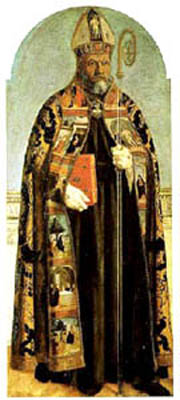
It was in the 1962 Missale Romanum too. It was the used on the 8th Sunday after Pentecost. I cannot fathom why the redactors of the Novus Ordo thought there were not enough ancient lenten prayers in the available venerable sacramentaries.  I wasn’t consulted.

In our prayers this week we find a theme of the mind developing. We have seen a mens / corpus paring this week.

COLLECT
Largire nobis, quaesumus, Domine,
semper spiritum cogitandi quae recta sunt,
promptius et agendi,
ut, qui sine te esse non possumus,
secundum te vivere valeamus.

Augustine of HippoOne of the meanings of secundum found in the prestigious Lewis & Short Dictionary is “agreeably to, in accordance with, according to”. Largire is an imperative of a deponent verb, not an infinitive. The famous verb cogito is more than simply “to think”. It reflects deeper reflection, true pursuit in the mind: “to consider thoroughly, to ponder, to weigh, reflect upon, think”.

LITERAL TRANSLATION
We beg you, O Lord, bestow upon us
the spirit of thinking always things which are correct,
and of carrying them out promptly,
so that we who are not able to exist without You
may be able to live according to Your will.

In St. Augustine’s commentaries on the Gospel of John (Io. eu. tr. 51,3):

“For Christ, who humbled Himself, made obedient unto death, even the death of the Cross, is the teacher of humility. When He teaches us humility He doesn’t thus let go of His divinity: for in it (His divinity) He is the equal of the Father, while in this (His humility) He is like unto us; and in that He is the Father’s equal He created us in order that we might exist; and in that He is like to us, He redeemed us so that we would not perish.”

In God, we live and move and have our being. We are made to act as God acts: knowing, willing, loving. When we cleave to God, seeking what is good and true and beautiful through the tangle of our wounded intellect, we are seeking God. Once we know what is good, true and beautiful either because we reasoned to it or authority helped us, then we must act in accordance with the good, truth and beauty we have found.

Today we are praying to God to give us the actual graces we need in order to live more properly according to His image He placed within us. For we are even more ourselves, even more free when, eschewing our own varying wills, we embrace Him who is Goodness, Truth and Beauty.

Yet there are times when we purposely (and thereafter habitually) choose against what reason and authority point to as good, truth and beauty. We make the choice to stray and sin. In doing so we diminish ourselves, who have our very existence from the One whom we have defied. We must return to the correct path, like Dante who has strayed into the dark woods after leaving the path of the right reason.

So often, we could avoid straying and sinning if we would just act on that first proper of our minds and consciences. Sometimes, of course, we must ponder to discern the correct path in difficult situations.

But most of the time, we get into trouble when we hesitate in doing what we know is right. We mull and pick and dawdle and get ourselves into a whole hornet nest of problems.

Prompt action helps us to avoid many problems and many sins. In a way, the phrase of the Nike commercial (and Nike means “victory” in ancient Greek) sums it up: Just Do It.

NEW CORRECTED ICEL:
Bestow on us, we pray, O Lord,
a spirit of always pondering on what is right
and of hastening to carry it out,
and, since without you we cannot exist,
may we be enabled to live according to your will
.

I promise I am not making this up.   This is what we have been using all these years.

LAME-DUCK ICEL:
Father, without you we can do nothing.
By your Spirit help us to know what is right
and to be eager in doing your will
.


Posted in LENT, WDTPRS |
4 Comments

Dr. Peters, Fishwrap, and non-excommunications

I have written about the great example set by Norma Jean Coon, who has rejected all involvement in the whole ordination of women thing.  I have also written about the Fishwrap writing on Mrs. Coons.

Now Canonical Defender has jumped in, Dr. Peters himself, on his blog In the Light of the Law.   Apparently he had given Fishwrap an opinion about the canonical status of Mrs. Coon, which they begged on a deadline and then ignored.

What I found fascinating was Dr. Peters opinion that Mrs. Coon had not incurred an excommunication!

Posted in Linking Back, The Drill | Tagged , , ,
8 Comments

The Feeder Feed: SURPRISE!

First, I would like to give you your second cardinal photo of the day.  This is a new visitor, coming several times a day now.  He has a bit of molt action going on.  I’ve heard him singing up a storm nearby.  Hopefully he’ll find a missus and settle down right here.

But then, as I was writing something I will be posting later, I caught something out of the corner of my eye.

This is Mr. Pileated Woodpecker.  He is the size of a small Pterodactyl.

Behold Dryocopus pileatus.

This is about ten feet away from me at my desk.

SLOWLY I reach for the camera and start shooting.  I also used a flash and that is how I got this one.

That suet cake was paid for by your donations.  As a matter of fact the only way they eat is by your donations.

THANKS DONORS for this heart-attack!

Posted in Just Too Cool, The Feeder Feed |
25 Comments

Albany: Clowning around with Stations of the Cross

Why can’t Stations of the Cross just be Stations of the Cross?

A reader alerted me to this event posted (at the time of this writing) on the website of The Evangelist, the official publication of the Diocese of Albany.

Here is a screenshot, since that page will eventually scroll off.  I added the red arrow.

Albany

On the website of the Shrine Church of Our Lady of the Americas we read with my emphases:

    Events

  • Stations of the Cross Schedule: Beginning Friday, March 11th: (18, 25, April 1st, 8, 15)
    • English-Speaking Community: Soup and salad and Scripture reflection begins at 5:30 pm. Stations of the Cross in English at 7 pm.
    • Spanish-Speaking Community: Stations of the Cross in Spanish at 6pm. Soup and salad and Scripture reflection begin at 7pm.
    • On March 18th during the English-Speaking Station of the Cross at 7pm, Father O’Connor and the Clown Ministry will lead the Stations.

Okay… to be fair, this doesn’t say that the people leading this will be doing so in clown costumes.  Is it safe to assume that the people involved in Clown Ministry have volunteered to serve at Friday Stations in, say, cassock and surplice?  It’s possible.  You know… Archconfraternity of St. Stephen takes a turn… Knights of Columbus take a turn… Boy Scouts take a turn… Clown Company takes a turn… Holy Name Society takes a turn….

But my suspicion is that there may in fact be clown make-up and costumes involved in this case.  Just a guess.

I don’t think that’s a good idea.

I also don’t think it’s a good idea to open the combox.

Meanwhile…

[CUE MUSIC]

When you are completely steamed about blasphemous portrayals of the Our Lord’s act of our salvation through unjust condemnation, brutal torture, and agonizing death,  I urge you immediately – instead of commenting in the combox here – to order some Mystic Monk Coffee!

They don’t yet have a “Reparation for Blasphemy Blend”, but I assure you that, if they did, it would be their darkest roast.

Mystic Monks!

They don’t clown around.

UPDATE: 18 March 01:33 GMT:

From a reader:

A little be of Googling and I found this from the Albany Evangelist archives. Looks like it’s a tradition: “…performing the Way of the Cross since 1987.” There is not enough Mystic Monk in the world to get me into a church while this is going on.  HERE.

Clowns’ Stations touching audiences
By KATE BLAIN
Assistant Editor
A sad-faced clown sits on a white bench, eyes downcast.
“Say hello to Marmeldook,” a narrator’s voice instructs, beginning a presentation unique to the Albany Diocese: The “Way of the Cross in the Company of Clowns.”
The Clown Ministry Associates — a group of 20 Catholics from around the Diocese — have been performing the Way of the Cross since 1987. That was when three professional clowns and a transitional deacon at St. Patrick’s parish in Ravena got together to find a way to use clowning in a “spiritual vein.”

[…]

Yah… no… not my sort of thing, really.

Posted in Liturgy Science Theatre 3000 | Tagged , ,
Comments Off on Albany: Clowning around with Stations of the Cross

Former Anglican Bishops now Monsignors

Anna Arco of the UK’s best Catholic weekly, the Catholic Herald has this report:

Pope makes former Anglican bishops monsignori

By Anna Arco

The Pope has honoured three former Anglican bishops, the first members of the Ordinariate of Our Lady of Walsingham, with the title of monsignor.

Fr Keith Newton, the leader of the Ordinariate who has most of the functions of a bishop, and Fr John Broadhurst, the former Bishop of Fulham, have been granted the papal award of Apostolic Pronotary, the highest ecclesial title for non-bishops. Fr Andrew Burnham, the former Bishop of Ebbsfleet, has been granted the papal award of Prelate of Honour, and is therefore also a monsignor.

The three men became the first clergy of the world’s first personal ordinariate set up for groups of former Anglicans as a result of the Apostolic Constitution Anglicanorum coetibus in January.

Groups of former Anglicans will be received into the Church in Holy Week and the priests for the ordinariate will be ordained around Pentecost.

The ordinary expects that about 900 people will become members of the ordinariate in Holy Week, including 61 members of the clergy. A majority of the laity entering the ordinariate took part in Rite of Election ceremonies across the country last weekend.

Fr Newton said: “I am really delighted by the numbers of Anglican laity who have begun the journey into the full Communion with the Catholic Church in Holy Week. It has not been an easy journey for many but I know they will be greatly blessed. The Rites of Election (or Enrolment for ordinariate members) around the dioceses marked a very moving and important part of the journey so far.”

Posted in Just Too Cool, Pope of Christian Unity | Tagged
23 Comments
























