
The UK’s best Catholic weekly (which still has its digital subscription special going, a year for a “tenner”!) the Catholic Herald has an article by William Oddie about the proposal made by Bp. Athanasius Schneider about a Syllabus both of errors and of guidelines concerning the interpretation of Vatican II.
My emphases and comments.
The call for a new Syllabus of Errors, this time on Vatican II, should be heeded
Pio Nono’s Syllabus Errorum has had an undeservedly bad press: it is still relevant today
By William OddieThe recent declaration of the beatification of Pope John Paul II reminded me of one attack on him sparked off by another beatification, that of Pius IX. One of the articles of indictment in John Cornwell’s [a peddler of codswallop] very hostile book about the late pope was that this was “an early item of poor judgment”, since Pio Nono “was chiefly famous for calling the First Vatican Council, which declared the dogma of papal infallibility and papal primacy, although he was known for his infamous syllabus of errors which denounced democracy, pluralism, workers’ unions and newspapers. A fine exemplar for the 21st century to be sure!”
Cornwell, of course, got it wrong about papal primacy, [and pretty much everything else he says] which had from the earliest centuries been taken for granted: it was no purpose of the Council to “declare” it. As for papal infallibility, that, too, was widely believed; Vatican I simply defined it formally. But he also got the Syllabus of Errors wrong: not one article of it mentions democracy, workers’ unions or newspapers, and if it rejects “pluralism” (not a concept anyone at the time was familiar with) it is mostly in the sense that any religion which claims to be true rather than a matter of opinion rejects it.
The Syllabus of Errors has had a bad press over the years: but this should not deter the present Pope from responding positively to a recent request for another Syllabus, this time one spelling out the errors that have circulated within the Church about the Second Vatican Council. This request was made by the patristics scholar Bishop Athanasius [excellent name for a theologian bishop] Schneider [You can listen to it in its entirety HERE.] at an important conference held last December in Rome, “for a correct hermeneutics of the Council in the light of Church Tradition”. I quote simply the passage in which Bishop Schneider calls for a document clearly spelling out the errors of the post-conciliar years:
“In recent decades there existed, and still exist today, groupings within the Church that are perpetrating an enormous abuse of the pastoral character of the Council and its texts… Keeping in mind the now decades-long experience of interpretations that are doctrinally and pastorally mistaken and contrary to the bimillennial continuity of the doctrine and prayer of the faith, there thus arises the necessity and urgency of … a sort of “Syllabus” of the errors in the interpretation of Vatican Council II.
“There is the need for a new Syllabus, this time directed not so much against the errors coming from outside of the Church, but against the errors circulated within the Church by supporters of the thesis of discontinuity and rupture, with its doctrinal, liturgical, and pastoral application.
“Such a Syllabus should consist of two parts: the part that points out the errors, and the positive part with proposals for clarification, completion, and doctrinal clarification.”
This seems to me so obviously a good idea that no more needs to be said by me here. I would like to add just one thing, however. A century of modernist propaganda against Pio Nono has left the impression that the original Syllabus Errorum was so laughably reactionary a document that any attempt to repeat such an exercise should be rigorously avoided. The fact is that almost nobody today has read it, so how do they know? When I was preparing my Spectator review of Cornwell’s book (quoted above), I thought, in view of his contemptuous remarks about it, that I ought to look at this notorious text. [Imagine! Actually reading the text!] What I found was a document of mostly impeccable [wait for it…] Catholic common sense, designed to defend Christian theology in a time of heavy rationalist attacks. Here, for instance, are extracts from the opening section. I haven’t space to quote it all: read it for yourself, [a good idea… so I will cut out his quote, below] here; all the following items, remember, are what Pio Nono is declaring to be errors:
[…]
Pio Nono was fighting for the Church’s life. Under the circumstances, the famous article 80 of the Syllabus – which condemns as an error the proposition (with which, presumably, most Tablet liberals would enthusiastically agree) [Tabula delenda] that “The Roman Pontiff may and ought to reconcile himself to, and to agree with, progress, liberalism and modern civilisation” – seems not only reasonable enough but beyond any question; it might be added that it is also entirely relevant to our own times: as Pope John Paul often said, Christians today are called on to be “signs of contradiction” in the face of secular culture. Article 80, in fact, sums up succinctly the real point at issue, even today, between the Church and the modern world.
It is particularly relevant to the erroneous interpretations of the Second Vatican Council which Bishop Schneider has called on Pope Benedict to correct in a new Syllabus. I very much hope the Pope responds to this call; and that the new Syllabus will be as relevant to the Church in this new post-conciliar situation as the original Syllabus of Errors was in its own day and remains even now. I also hope that one day quite soon he will announce the forthcoming canonisation of that great and holy man, Blessed Pius IX.
Such a Syllabus would be useful.
No? Yes?

 Behold the skull of Agnes.
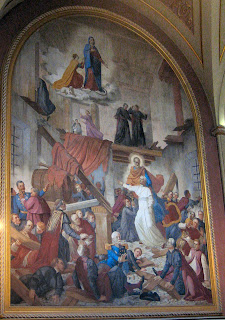 h by Bl. Pope Pius IX.
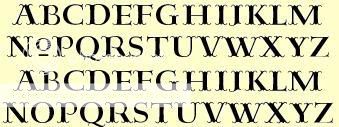 Pope St. Damasus composed a panegyric, an elogia, inscribed in gorgeous letters on marble (designed and executed by Dionysius Philocalus) in honor of Roman saints, including Agnes. This was the period when the Roman shifted from Greek to Latin. Damasus was also trying to make a social statement with these great inscriptions, set up at various places about the City. The panegyic of St. Agnes was placed in the cemetery near the saint’s tomb, but through the ages it was lost. Amazingly, it was at last rediscovered in 1728 inside the basilica, whole and complete: it had been used upside down, fortunately as a paving stone!

 The full accounting of President Obama’s track record on abortion goes on for eight typed pages, a very sad and discouraging litany.
  There was an interesting observation in his post:





























