 From a reader:
I am a graduate student at ___, and over the past few weeks have received two emails (one related to the tragedy this past weekend) for “Healing Masses” in which (quoting the one) “priests…will be available to administer the Sacrament of the Sick–a special anointing to those who wish to receive it.”
Maybe I’m wrong but shouldn’t a person actually /be sick/ in order to receive the sacrament? The idea of a come one, come all approach to a sacrament like that seems…wrong. Are there any rules on who can or should receive the anointing?
The law is pretty clear.
Can. 1004 §1. The anointing of the sick can be administered to a member of the faithful who, having reached the use of reason, begins to be in danger due to sickness or old age.
In danger? Danger of what? Danger of… feeling bad? I think not. You don’t just throw around words like “danger”. This means in danger of death.
And there is the Catechism of the Catholic Church:
1514 “The anointing of the sick is not a sacrament for those only who are at the point of death. Hence, as soon as anyone of the faithful begins to be in danger of death from sickness or old age, the fitting time for him to receive this sacrament has certainly already arrived”
Common point? Danger of death!
Sacrosanctum Concilium says:
SC 73. “Extrema Unctio”, quae etiam et melius “Unctio infirmorum” vocari potest, non est Sacramentum eorum tantum qui in extremo vitae discrimine versantur. Proinde tempus opportunum eam recipiendi iam certe habetur cum fidelis incipit esse in periculo mortis propter infirmitatem vel senium.
In periculo mortis… in danger of death.
The recent and widespread practice of anointing anyone who is “not feeling well”, or even “along with a sick person but who doesn’t want to be left out”, is not consistent with a plain reading of the law of the CCC.
One can be in danger of death for many reasons. For example, someone who is about to undergo some surgery requiring a general anesthesia could be in danger of death. Someone about to be executed or go into battle are in danger of death, but those are not considered occasions for the sacrament because they are external to the person. Once damage is inflicted through a wound and danger of death is obvious, that’s another matter.
Moreover, there are also persistent, chronic conditions which, while they may not lead to immediate death, nevertheless put one in danger of death (e.g., the onset of Alzheimer’s).
The sniffles, or having the collywobbles or being crapulous do not fit the criteria. Neither do certain illnesses which, while debilitating, are not usually causes of death (e.g., arthritis, obsessive-compulsive disorders, being a liberal – okay… I slipped that in there for fun…).
In addition, I will remind everyone that, unless you are incapacitated, the Sacrament of Anointing should be received in the state of grace!
If you are not in the state of grace, and if you are not incapacitated (unable to communicate sorrow for your sins) it is doubtful that you benefit from the sacramental graces the sacrament is to confer (i.e. strengthening in body and soul, possible forgiveness of sins).
Therefore, go to confession before being anointed.
If you are lying on the sidewalk, unconscious after a bomb attack, you don’t have to go to confession first. Right?
Anointing is not like the Sacrament of Baptism, which removes the stain of original and actual sins and confers an indelible character. Confirmation and Holy Orders can be received in the state of sin and they still confer an indelible character. If, however, they are received in the state of sin, the recipient doesn’t benefit from the graces of the sacrament until he returns to state of grace. Morever, the recipient has committed a sacrilege in knowingly receiving a those sacraments while in mortal sin. If you get married while not in the state of grace, you are still married! The sacrament which is supposed to help you live a good married life more or else “dormant” in you until you are again in the state of grace. You receive prevenient graces, of course, to help you repent of your sins and seek confession. The same idea applies to the Sacrament of Penance: if you purposely withhold mortal sins during confession or you are not truly sorry, you don’t receive the graces the Sacrament of Penance is intended to impart (forgiveness of sins, habitual grace, strength against sinning in the future, deeper sorrow for sin, reconciliation with God and neighbor, etc.) and you commit the sin of sacrilege. If you know you are surely not in the state of grace when receiving the Eucharist in Communion, you are not only not receiving graces from reception of the Body and Blood of the Lord, you bring on yourself even greater condemnation. You commit the sin of sacrilege by knowingly receiving Communion while in mortal sin.
There is a helpful distinction of “sacraments of the living” and “sacraments of the dead”. The “sacraments of the dead” are Baptism and Penance (because you are dead in sin and they bring you to life again). All the others are “sacraments of the living” (because you must be alive in the state of grace to receive them).
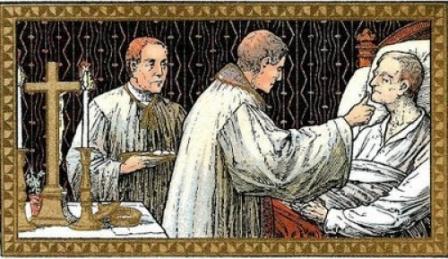
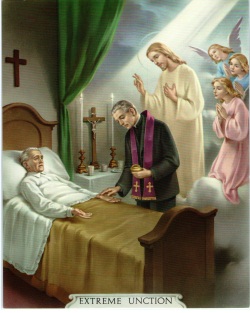
The Sacrament of Anointing straddles these two categories in one instance: when the person cannot express sorrow for sins and receive absolution from the priest. If a priest anoints a person who is incapable of response and in danger of death, the sacrament can not only possibly heal (according to God’s will), and strengthen the soul in the last moments of life, but also forgive sins.
Again, from the CCC:
1532 “The special grace of the sacrament of the Anointing of the Sick has as its effects: the uniting of the sick person to the passion of Christ, for his own good and that of the whole Church; the strengthening, peace, and courage to endure in a Christian manner the sufferings of illness or old age; the forgiveness of sins, if [IF] the sick person was not able to obtain it through the sacrament of penance; the restoration of health, if it is conducive to the salvation of his soul; the preparation for passing over to eternal life”.
Remember: You commit a sacrilege by receiving a sacrament (of the living) in the state of sin! That includes Anointing (unless you are incapacitated). The two sacraments you can receive when not in the state of grace are Baptism and Penance (’cause that’s what they’re for). Anointed, in certain circumstances, crosses over.
Another point, as long as I am on this.
The fact that the Sacrament of Anointing, in some circumstances, forgives mortal sins, then the only valid and licit minister of the sacrament is a sacerdos, a priest or bishop.
- DEACONS CANNOT CONFER ANOINTING OF THE SICK.
Neither can nuns in pantsuits with a lapel pin. Neither can a parish volunteer. Therefore, they cannot validly anoint even when there is not danger of death. Period. If they attempt to anoint in the manner of a priest, they commit the sin of sacrilege for abusing the sacrament and they can incur a censure for simulation of a sacrament.
Only a priest or bishop validly administers the sacrament of anointing.
These Masses wherein everyone is invited to come forward seem to be quite widespread. I think the argument that “everyone is sick in some way” is an abuse the sacrament.
There is such a thing as sacrilege. Sacrilege is a sin. It is the improper use of something or someone sacred.
Let the Sacrament of Anointing be used, and be used properly! It need not be conferred only when danger of death is immediate. Even the older form of the sacrament, the traditional form, can be conferred in the situations when the newer form can be, but for the right reasons.
A brave bishop should address this matter of anointing in a pastoral letter in the near future.



 From a reader:
 If you are not in the state of grace, and if you are not incapacitated (unable to communicate sorrow for your sins) it is doubtful that you benefit from the sacramental graces the sacrament is to confer (i.e. strengthening in body and soul, possible forgiveness of sins).



 APX on 10 November – St Andrew Avellino (Vetus Ordo). Wherein Fr. Z rants.: “Many priests live alone, with no one to notice if they fail to rise, suffer a fall, or become suddenly…”




























