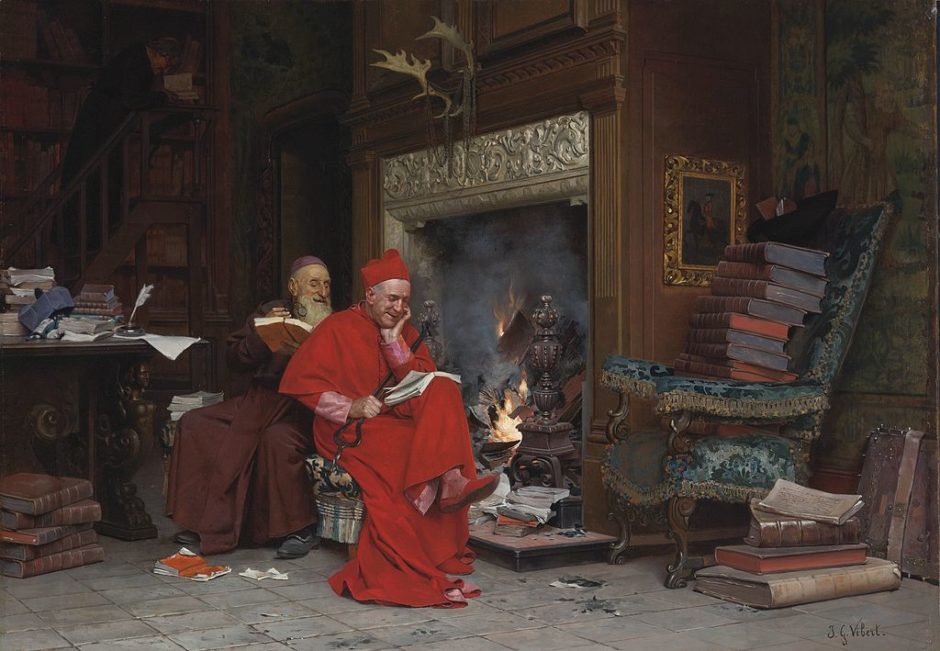
Bp. Tobin speaks powerfully about unnatural marriage

His Excellency Most Reverend Thomas Tobin, Bishop of Providence, has something to say in the Rhode Island Catholic.

The usual methods of social re-engineering include what I call "creeping incrementalism".  You start slowly, not trying to attain everything you aim for in one fell swoop, but rather strive merely to bump the paradigm a degree or two in the direction you want it to go.  Eventually, what seemed once to be inconceivable comes to be remotely possible, then plausible, then probably a good idea, and then obligatory.

There is an phrase in Latin… in finem citius… things go faster toward the end.

My emphases and comments.
 

WITHOUT A DOUBT
“Rhode Island, Most Catholic State, Welcomes Gay Marriage”

Posted Apr 23, 2009

BY BISHOP THOMAS J. TOBIN

That’s a headline we haven’t seen yet, dear readers, but probably will in the next couple of years. And, make no mistake about it – that’s exactly what the headline will say as the story makes its way around the state and across the nation.

The march toward gay marriage across our nation is relentless, [without doubt] and liberal New England is leading the way. The supporters of gay marriage in Rhode Island are well-organized and well-funded. They’re fiercely determined to impose their politically correct agenda on all the citizens of the state – human history, culture and moral principles not-withstanding. Anyone who opposes them is quickly labeled a bigot.

And what’s the typical response of Catholics in Rhode Island? “As long as it doesn’t affect me, I really don’t care what other people do,” you say. “We shouldn’t judge other people,” you demur. “The Church is losing its influence. I don’t think there’s anything we can do,” you rationalize.  [This is the problem with those who embrace polling data rather than Catholic teaching.]

Well, my friends, gay marriage will affect you and you should be concerned. And there’s a lot we can do. But first, let’s review the principal reasons why we’re opposed to gay marriage.

[1] First is our firm belief – based on the natural law, the Bible and consistent religious tradition – that homosexual activity is unnatural and gravely immoral. It’s offensive to Almighty God. [In CCC 1867 the Church reaffirms that there are sins which "cry to God for vengeance".] It can never be condoned, under any circumstances. Gay marriage, or civil unions, would mean that our state is in the business of ratifying, approving such immoral activity. And as I’ve written previously: “The state shouldn’t be placed in that position, and as a citizen of the state I don’t want that imposed on me and my conscience. Neither should you.”

[2] Second is the fact that gay marriage seeks to radically redefine the most fundamental institution of the human race, the building block of every society and culture. From the beginning, marriage has been defined as the stable union of man and woman, designed by God to continue the human race through the procreation of children. Homosexual relationships are not marriage – never have been, never will be.

Here let me explain the “champagne principle.” Not every wine is champagne. Champagne has certain very specific, universally recognized characteristics. If someone were to take a bottle of Chianti, label and sell it as champagne, they’d be arrested for fraud. In the same way, those who seek to redefine marriage – with its specific characteristics – and to usurp the title “marriage” for their morally bankrupt relationships, are committing an act of fraud. It’s insulting to those who have entered the authentic, sacred and time-honored institution of marriage over the years.  [In Dante’s vision, these sinful acts must be punished also because they tear apart the bonds of society.]

The gay culture continues to seep [incrementally] into our popular culture, cleverly claiming credibility. Did you see that President Obama issued special invitations to gay families to participate in this year’s Easter Egg Hunt at the White House? [?!?!] Just another not-too-subtle attempt to ignore the objective immorality of the situation and present gay couples as normal and happy as every other couple.

The [3] third way in which gay marriage will affect you is its impact on religious freedom, including that of the Catholic Church.

A recent headline in the Washington Post demonstrates the problem: “Faith groups losing gay rights fights.” It goes on to give some examples of how the gay agenda is imposing itself on religious beliefs: a Christian photographer in New Mexico was fined because she refused to photograph a gay couple’s commitment ceremony; Christian doctors in California were obliged to artificially inseminate a lesbian patient; A Christian student group was punished because it denied membership to anyone involved in sex outside of marriage.

We’re familiar with other examples of the gay agenda infringing on religious freedom. In Massachusetts, the Catholic Church was required to place children for adoption with gay couples; and in some countries, clergy preaching the Christian doctrine about homosexual practices have been accused of hate crimes[It is today inconceivable that, in the USA, priests and bishops will be hunted down.]

Proponents of gay marriage say that the Church won’t be forced to witness such marriages. Don’t believe it. And other related problems will inevitably arise. Will the Church be required to admit gay couples as sponsors for baptisms; to rent its facilities for gay wedding receptions; to hire employees despite their immoral gay lifestyles; to grant family benefits to gay couples? For simply maintaining its teachings in these and many other possible scenarios, the Church will be accused of bigotry and unlawful discrimination. The threat to our religious freedom is real, and imminent.

The fact that Rhode Island has successfully avoided the gay marriage phenomenon is a credit to our Governor, the Speaker of the House and the President of the Senate. They – along with a number of other legislative leaders – have been consistent and courageous in deflecting the onslaught of gay activists and in upholding the traditional definition of marriage. We hope and pray they’ll continue to do so.

“The Church is losing its influence,” you say, “and there’s nothing we can do.” “Bull feathers,” I reply. I don’t know if we have 600,000 Catholics in the state or 500,000 or 400,000. But if even ten percent of our Catholic population got actively involved in this issue – even five percent – we could have an enormous impact and help Rhode Island maintain its moral sanity.

Lots of things you can do about this issue. First, you can be aware of the legislation as it’s introduced in the General Assembly. You can contact your state senator and representative and insist that they oppose gay marriage and defend marriage and family values. You can exert your influence with letters to the editor and calls to talk shows. [They will try to lock down the tools of social communications.  Use them well now.] You can join and support organizations like NOM-RI that’s leading the charge on this issue. And you can pray fervently that God will help us in this critical struggle on behalf of morality and common sense.  [Prayer, with fasting and almsgiving.]

The Church teaches us that it’s the responsibility of the laity to get involved in public life, to transform the secular order into the Kingdom of God. Therefore, if someday a headline reads, “Rhode Island, Most Catholic State, Welcomes Gay Marriage,” people across the nation will ask, “How did that happen?” And it’ll be our fault, fellow Catholics – not necessarily because we approved of gay marriage – but simply because our abysmal apathy allowed it to happen.

God Bless this bishop.  Please stop and say a prayer to St. Michael the Archangel to defend him in the trial he will be subjected to because he published this.

Furthermore, once the stage of "same sex marriage" is passed, there is no reason no to approve your marriage with your dog or legalize child abuse.

Posted in The future and our choices |
69 Comments

Little Sisters of the Poor, Newcastle – TLM

From a reader:

Mass at the Little Sisters of the Poor, Newcastle
Tonight there will be a Missa Cantata in the Extraordinary Form of the Roman Rite at the chapel of the Little Sisters of the Poor, Westmorland Road, Newcastle at 7pm. This is in response to a request from a group of residents in the home. It has taken two and a half years of negotiation to bring this about so we hope all goes well. Thanks to David O`Neill for working to bring this about

Two years….

Why should it have to be so hard.

Oh well.

Brick by brick, folks!

UPDATE:

A biretta tip  o{]:¬)   to Forrest Murmurs

Posted in Brick by Brick |
34 Comments

SPAIN: Pro-lifers assaulted while collecting signatures against abortion

From CNA:

Pro-lifers assaulted while collecting signatures against abortion

Madrid, Spain, Apr 28, 2009 / 03:24 pm (CNA).- On Saturday, April 25, three volunteers of the Right to Life organization and a Chilean in the town of El Ferrol were victims a brutal assault by a group of seven young people who attacked them as they were collecting signatures against the law on abortion sponsored by the Socialist government.

Gador Joya, the organization’s spokeswoman, is demanding the attack be condemned by federal officials in the province of Galicia and that they bring the assailants to justice.

“Once again we see the lack of arguments of those who defend the most radical positions: intolerance and violence have no place in a state based on the rule of law,” she said.
 
“Unfortunately, these acts have taken place after the Minister of Equality herself (Bibiana Aido) expressed scorn for those of us who civilly express our rejection of their legal reform of abortion and who have been labeled ‘fundamentalists.’”  [Remember… she is a Spaniard not a Napolitana.] This poor example by Aido, said Joya, “speaks very little of the prudence that every leader ought to have, especially in order to discourage violence by the most extreme groups, such as that which we suffered today in El Ferrol.”
 
The president of the watchdog website HazteOir.org, Ignacio Arsuaga, expressed solidarity with the pro-life activists and said, “No matter how much they threaten us, hit us or insult us, they will not stop us.  Acts like these only reaffirm our convictions, which we defend with absolute civility and in accord with our right to freedom of expression, in response to those who make violence their only argument.
 
Jaime Dias, one of the victims of the assault, said from the hospital where he is recovering that he was not disheartened by the incident. “I am fine, I did my duty by following what my conscience told me,” he said.  “Whenever they let me know, I will go back on the streets to collect signatures. Nobody is going to silence me with violence,” he said.

Posted in The future and our choices |
Comments Off on SPAIN: Pro-lifers assaulted while collecting signatures against abortion

QUAERITUR: no Asperges or Vidi aquam

From a reader about the Vidi Aquam and Asperges… not to be confused with the wonderful vegetable:

At nearly every single High Mass I have attended, whether FSSP, ICR or SSPX, including most diocesan TLMs, the High Mass is preceded with the Asperges or Vidi Aquam.

However, I have noticed some parishes do not use either the Asperges or Vidi Aquam ever even though they always offer High Mass?

Is there a good reason for depriving the laity of this sacramental?

What is the proper protocol?

First, I am a little puzzled at the spin put on this question. You frame it in terms of finding a justification for "depriving" people of a sacramental.  I am all for sacramentals, but let’s be a little less aggressive.

You simply ask the priest why he didn’t do it.  I can imagine a few reasons.  For example…

The priest is still new at this old stuff and doesn’t know what to do.

The choir is still learning and doesn’t know the chant.

There is a Mass immediately after this one and it can’t go too long.

Remember that the Asperges and Vidi aquam are not part of the Mass.  This is why the priest doesn’t wear Mass vestments.  He usually wears a cope if there is one.  The ministers don’t wear their maniples, etc. 

Customarily this rite was done before the principle Mass in a place.  The rite is an option, and wasn’t nornally done before Low Masses…. except for a time in England, I think, where it was mandatory at Masses.  It probably grew out of cathedral Masses and churches with chapters where there were clergy in choro.  Something similar is done in the monastic office, at compline, I believe.

I think the Asperges and Vidi aquam are very good to do, and a priest does well to explain the significance so that people can better understand how valuable sacramentals are.  Still, if it is an option it can be left out without people snarling at the priest and asking for good reasons or justifications.

Posted in "How To..." - Practical Notes, ASK FATHER Question Box | Tagged , ,
35 Comments

Ziegelstein auf Ziegelstein

From a reader:

I’m happy to pass along to you something in the brick-by-brick category. The administration of the International Theological Institute, an ecclesiastical theological faculty in Austria, invited a priest of the congregation Servi Jesu et Mariae to offer a solemn high Mass according to the 1962 Missal on Easter Thursday. The Mass was beautifully celebrated and well attended (considering the small size of the institute). The liturgical life of the little community here at the I.T.I. is really a unique blessing. There are four priests of Byzantine rite here who offer the holy sacrifice daily in the beautiful liturgies of the East. The daily celebration in the ordinary form of the Roman rite is done according to the black and the red, and once weekly in Latin with Gregorian chant. And as of this past Fall, a once weekly low Mass in the extraordinary form has been added thanks to the good will and hard work of a young priest here who undertook to learn how to say it without any previous experience. I have even been learning right along with him, how to serve the low Masses – a very rewarding experience for me!


Posted in Brick by Brick |
12 Comments

QUAERITUR: I was supposed to love the TLM, but I hated it!

From a reader with my emphases and comments:

I’ve been following your blog quite attentively for a few months now and all my reading convinced me that I needed to give the Extraordinary Form of the Mass a try ASAP. This Sunday I attended a High Mass at the EF here in ____. I loved the sense of reverence, mystery, and sacred space that filled the church. I really appreciated the symbolism of ad orientem posture. Praying in Latin is something I always enjoy since I studied that language from age 11 into my college years.

Still, the Mass was overall a very frustrating experience for me. I thought I was prepared – I had researched the order of the Mass beforehand, I knew my participation would be mostly interior. [very good] Even following along in my little Latin-English booklet, though, I often had no clue what was going on before me. This was mostly due to the fact that I could not hear anything the priest said for most of the Mass. I understand that some prayers are "secret" or whispered, but I honestly heard about 5 sentences after the homily. Is this normal for an EF Mass, or was I just stuck in a back pew with poor acoustics[I obviously can’t answer that!  o{]:¬) ] By the end I was so frustrated that I began to understand the attraction of Vatican II reforms and even Protestant tent revival services.

Anyway, here is my question. Afterwards I discussed my impressions with my roommate, who has her master’s in sacred music but is much more liberal than I. I told her about the attack of Catholic guilt I was experiencing – "I’m supposed to love this [the EF] because it’s all sublime and profound, but mostly I hated it!" She told me that she opposes the EF – not a big surprise. Her reasoning is that we believe the Holy Spirit is at work in Church councils. If the Church ultimately rejects the Novus Ordo and goes back to the  older form of the Mass, doesn’t that claim the Holy Spirit was somehow absent at Vatican II?

How would you answer her?

There are several things to address here.

First, I wonder if you didn’t experience Catholic growing-pains?  You might have made an important step in your own liturgical/spiritual growth.  On the one hand you were tuned in to all the right things (reverence, the sacred, mystery)!  On the other you were frustrated because you were being called upon to participate in a way different from your previous and habitual experience.  You are young and have not had this older, traditional experience yet.  You are used to sensory things being fed to you in easy to swallow form.  You are used to the chattier nature of the newer form of Holy Mass.  It is understandable that, not being familiar with the higher form of the older Mass you might have been a little overwhelmed.   The next time you go, it may be a very different experience for you.. or the time after that.

About your roommate’s comments I must say that while we of course believe that the Holy Spirit is at work in the Church’s Councils, the documents of the Councils were not written by automatic writing while the Spirit guided the pen.  They are the work of men aided by grace.  Pope Benedict in the past described the work of a Council or conclave in healthy terms saying that the role of the Holy Spirit was to make sure that we, in our own efforts, didn’t bring about a mortal disaster for the Church. 

Secondly, the Church gets to decide how we pray as a Church.  Changes are necessary at times.  Even abrogation of the Novus Ordo would not mean that the Holy Spirit wasn’t involved in the Council.  It would only mean that the proper authority recognized that our times require something else.

Thirdly, the Council Fathers mandated that some changes be made to reform the Church’s prayerlife.  However, the changes we actually got went far far beyond what the Council Fathers ordered.  The history of this is pretty complicated but those who were put in charge of the reform had their own agenda.  The central characters involved, in their own subsequent books describing what they hoped to do, expose their motives, their goals and their methods. 

In short, the reform the Council mandated is not the reform we got!

Pope Benedict is working to help the Church return to a better understanding of liturgy and liturgical reform.  He is trying to bring our liturgical life into continuity with our millennial tradition of prayer.  He is trying to heal the rupture that took place as a result of the distortion of the Council’s mandates.

You are fortunate to be the age you are, for you missed the truly bitter years.  That doesn’t not mean that their won’t be challenges.  You experienced some growing pains, as we all must.

Finally, I have posted here a couple entries whereunder people gave their own accounts of their first impressions of the older form of Mass.  I don’t have the links handy at the moment.  Perhaps a reader can dig them up.  There were many responses and some of them might be helpful.  I’ll add the link here when I get it.

Posted in "How To..." - Practical Notes, ASK FATHER Question Box, Brick by Brick, Classic Posts, Linking Back, SUMMORUM PONTIFICUM | Tagged , ,
138 Comments

A CALL TO PRIESTS who implemented ad orientem worship

Here is a call to priests who have implemented ad orientem worship in their parishes.

The renowned liturgical scholar Fr. Klaus Gamber – who influenced also the liturgical theology of Joseph Ratzinger – thought that perhaps more than any other change after the Council, the turned around versus populum Mass did the greatest damage.

His Holiness Pope Benedict has for years developed a liturgical theological view of Holy Mass ad orientem versus, turned to the liturgical (not necessarily geographical) East.  WDTPRS has presented his thought many times in entries and PODCAzTs (for example here and here and here).

I found this interesting "pastor’s page" on the site Printed As Preached, by a Fr. Cávana Wallace in San Diego.  Also, I was recently at a parish where ad orientem worship has been gently implemented on occasion in what was a real "AmChurch" style parish.  It seems to be working well!

Brick by brick.

This got me thinking.

From time to time I have reported on WDTPRS about priests who have implemented ad orientem worship in their parishes.  They have generally started some catechesis beforehand.  They have had successes.  They have had problems. 

There are always bound to be people who don’t like something, no matter what it is that is done in a parish.  They complain to the bishop or try to rouse people up against the priest (perhaps forgetting to be grateful that their parish has a priest).

I suggest that ONLY PRIESTS who have implemented ad orientem worship in their parishes, occasional or frequent or exclusive, share here their experiences… the obstacles and positives, the complaints and the kudos, together with the practical details of what they have done and what happened afterward.

I hesitate to leave the combox open on this. No matter how many times I say that I want to hear from priests, the whole world will start posting.  Thus, I ask the Reverend Fathers to e-mail me with their comments, which I was post for them.  You can request anonymity, of course. 

I would like to get some meaty, focused information here, including practical tips and strategies for implementing ad orientem worship.

Once I get some offerings from priests, then I can open the combox for priests to discuss what the priests posted… if you get my drift.

Posted in "How To..." - Practical Notes, Brick by Brick, Mail from priests, SUMMORUM PONTIFICUM | Tagged , , ,
9 Comments

A great image

Archbishop Burke in Lourdes

Posted in Brick by Brick, SUMMORUM PONTIFICUM | Tagged ,
59 Comments

QUAERITUR: Can I attend an SSPX ordination

From a reader (edited):

     I wanted to ask you about attendance at relative’s ordination.  My relative is going to be ordained a priest for the SSPX
     We have not gone to the weddings which have been in the Society, only to the receptions.  This is of course not understood by our relativesHalf of them attend the Society chapels, and the other half are average American Catholics
     We would like to go if we can, to this ordination.  However, it is our understanding that while the excommunications have been lifted, the priests and bishops are still suspended, and that attending Mass with them would be like it has been.
     Finally, if we cannot go to the ordination, can we go to the first Mass, and should we give him a present?

These are always hard questions because I never know the dynamics of the family, etc.

In general it is best not to attend weddings which are clearly contrary to the Church’s teachings and disciplines about marriage.   Attendance indicates approval.  Ordinations are much the same.

On the other hand, sometimes the dynamics of a family are such that great harm can be done by not attending.  Sometimes you risk losing the good influence you might have to bring people over to the right side of things over time. 

Many people simply can’t understand these days why it would make a difference if you attend or not – that is how deeply rooted relativism is now.  Twenty years ago, it was easier to explain – not easy, just easier.  On the other side, with a few of the attendees of the SSPX chapels, some will look down their ever so traditional noses at you because they, after all, are the true defenders of Tradition, blah blah blah, never mind that this is a matter of your conscience.  They would question if you should go to a legitimate ordination in the newer Rite by the local bishop.

That said, if you think that your not attending would cause serious harm to this ordinand, then you can go. 

On the other hand, if this guy is being ordained for the SSPX then in all fairness he should tell you not to go!  That is what his moral theology formation would suggest to him, though he would also try to reason as I am if his head is screwed on in the right direction!  

But I suspect that it is the family you are more worried about. 

If you choose to go to the ordination, I would not receive Communion.  Some people would say you should, but you are asking me.  I say well… you can… but I think it best that you don’t.

Surely you can go to the reception and give him a gift.  You can go to the first Mass, but I would not receive Communion.  You fulfill your obligation if the first Mass is a Sunday or Holy Day of Obligation.

On another point from a different angle.  I don’t think it is necessary wrong to want to attend an ordination from a point of view of curiosity.  Yes, it is sacred event and not merely the stuff of curiositas.  Still, it is okay to attend an ordination if you have never been to one before.  I think it is a good idea for people to have seen an ordination in the older Roman Rite.   I would prefer – as with all the sacraments – that they be licit.

So, there are many factors here.  Search your heart according to your circumstances.  I tend to suggest the path of kindness in these situations when it is really unclear what must be done.

Perhaps you might let me know what you chose and how it went.

I will close the com box on this.  Otherwise this will descend into knuckle-headed grandstanding. Most reasonable people are, by now, bored to tears by the usual "Am NOT! Are TOO!" discussions that erupt.  

People can send e-mail and, if I think it opportune, I might post some of them.

Posted in ASK FATHER Question Box | Tagged , , ,
Comments Off on QUAERITUR: Can I attend an SSPX ordination

Feast of St. Mark: procession and litany

From a reader:

How many parishes observed this feast day of St. Mark with the traditional procession chanting the litany of the saints?

Ours followed a sung ad orientem Novus Ordo Mass with incense and Kyrie (Gr.), Sanctus, Mysterium Fidei, Per ipsum, Agnus Dei, and Regina Caeli (at end). After our priest had changed from his red Roman vestment to a violet Roman cope, the chant began at the foot of the altar. The procession exited up the main aisle and out through the narthex, around through the parking lot to the back entrance to our perpetual adoration chapel, where the Litany of the Saints (in Latin) concluded with the traditional supplications, and was followed by a brief Benediction of the Most Blessed Sacrament.

The copyright restrictions on Novus Ordo materials (thankfully) forced us to duplicate the traditional Latin "In Litaniis Majoribus et Minoribus" from the Liber Usualis for the people to use.

Here is a question…

How many of you have never even heard of this tradition before now?

Posted in ASK FATHER Question Box, SUMMORUM PONTIFICUM | Tagged , , ,
34 Comments
























