QUAERITUR: A priest says he offers confessions, but there are long lulls.

From a priest:

Blessed Christmas to you. Thanks for your response today to the person asking about writing the bishop about having priests here more confessions.

“However, don’t forget to ask the parish priest, the pastor of your parish, to hear confessions more often. Keep in mind that he might be up to his eyeballs already in administrative tasks and other busy work which relentlessly drain his energy and time.”

We hear confessions Saturday morning, Saturday afternoon (3 priests hearing), Sunday before 3 Masses and Wednesday evenings before and after 7pm Mass. We have a lot of folks coming, but sometimes we sit for long stretches of time with no penitents. And people still complain I don’t have enough confessions.

I would rather sit in the box waiting to hear confessions any time than sit in my office working on “administrative tasks,” but then they’d complain about my poor administration of the parish.

God bless em all. I’m glad they want confessions, but I’m glad you helped put it in perspective. Thanks again.

I have no idea of Father’s situation. However, perhaps a couple things will increase confession frequency.

First, a series in the bulletin about the four last things, mortal sin, the confessional.

Second, mentioning it often in preaching.

Third, confessions for a few minutes before week day Masses.

Fourth, schedule a penance service with lots of confessors (invite the bishop). Perhaps some communal experience will be an opportunity to teach and to engage.

In other words, work in something about confessions all the time and everywhere.

Otherwise, Father, be happy that your flock is so holy!

In any event… I am confident that soon those lulls will fill up. Soon he’ll be writing to ask about how he can slow them down!

Posted in SESSIUNCULA |
34 Comments

Wheatless Hosts… Noooooooooooo.

Holy Church’s Canon Law closely follows Holy Church’s infallible teaching when it comes to discipline of the sacraments.
The Church’s doctrine holds that valid matter for the Eucharist is a form of bread made from wheat.  In the Latin Church this means a wheaten bread, unleavened, without additives.

Several centuries ago, when Jesuits were experimenting with inculturation in Eastern Asia. it was reaffirmed that we cannot use rice cakes or wafers. We must use wheat.

More recently, when we began to understand more about the celiac condition some few people suffer from, we developed extremely low-guten hosts which are still valid matter for the Eucharist.  They are extremely low in gluten, but they are from wheat.  If they were not from wheat, they would not be valid matter.

Recently I learned that a company is peddling hosts which not of wheat, they are bereft of wheat, they are wheatless, there ain’t no wheat in ’em, they are ex-wheat hosts.

Here are the ingredients:

Filtered Water, Sweet Rice Flour, Potato Flour, Organic Palm Fruit Oil, Potato Starch, Methylcellulose, Sunflower Lecithin.

Were I to learn that these non-wheat wafers were being used in my parish, for anyone at anytime, I would send a list of the ingredients to the pastor of the parish, with copies to the local bishop and the Congregation for the Doctrine of the Faith.

It is absolutely imperative that any use of these things be stopped.

UPDATE:

Fr. Kirby at Vultus has more on this.  He must have been the source of what I received.

Posted in Our Catholic Identity, The Drill | Tagged , ,
71 Comments

Of Atheists and Inebriation. Fr. Z rants with the help of the Catholic League. A great book recommendation.

My visit yesterday to the Catholic League’s Nativity Scene on 5th Ave and 59th (by Central Park) reminded me of their advice for attending parties at this time of year.  In case you didn’t see their excellent suggestions, here they are:

Catholic League president Bill Donohue offers seasonal advice:

There is no shortage of advice on how to throw an office Christmas party. For example, Helene Wasserman, a Los Angeles labor-law attorney, warns it is important to call the Christmas party a “holiday party.” Human Relations specialist Suzan Sturholm is even more sensitive: she suggests naming it an “end-of-the-year celebration” (good idea—that way no one will know what they are celebrating). Attorney Duane Morris advises, “Assign certain managers to keep their eyes and ears open for individuals who appear intoxicated at the party.”

We demur. Here’s what the Catholic League counsels:

  • Have an open bar
  • Start with Champagne laced with Chambord
  • Assign managers to keep their eyes and ears open for individuals who don’t drink
  • Assign bouncers to keep an eye on the managers
  • Sing “Joy to the World”
  • Put a nativity scene in one corner for Christians; a Christmas tree in another for recovering Christians; a menorah in the third corner for Jews; and leave one corner empty. The latter is for atheists.
  • Proselytize
  • Invite everyone to join the Catholic League’s “Adopt An Atheist” campaign

Regarding our timely campaign, I couldn’t help noticing that a writer at Salon.com, Tommi Avicolli Mecca, found our initiative to be puzzling. “It’s uncertain whether it’s an attempt at satire or a real call to arms. Donohue is not known for his sense of humor about these things.”

Don’t you just love these guys? Can’t make it up! Let’s keep him guessing again about our Christmas Party rules. Maybe he’ll see that as a “real call to arms” as well.

Speaking of atheists and inebriation, I must share a quote.

The successes of the movement to recognize “same-sex marriage” have been nothing if not sudden. Just over a decade ago the very idea would have been laughed off as crackpot or extremist; now it is those who oppose it who are frequently labeled crackpots and extremists. But equally sudden has been the rise of ostentatious unbelief as the de riguer position of the smart set. Mainstream progressives and non-conformists of earlier generations would have found it necessary to profess belief in at last a “social gospel” and to hide their doubts about the metaphysical claims of religion behind a haze of pseudo-theological psychobabble. Yet atheist chic is now, out of the blue as it were, the stuff of best sellers, celebrity endorsements, and suburban reading groups. It is as if the urbane cocktail hour secularist liberalism of the twentieth century has, by way of the slow but sure inebriation produced by an unbroken series of social and judicial triumphs, now become in the twenty-first century fall-down-sloppy drunk and lost all inhibition, by turns blaspheming, whoring, and otherwise offending against all sane and decent sensibilities as the mood strikes it.

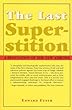
This was penned by Edward Feser and is found in The Last Superstition: a reputation of the new atheism.

Stop what you are doing and order this book.

I am reading a borrowed copy and… holy cow.  It is now on my wishlist.

Here is the opening paragraph from the “Acknowledgements”. First he quotes Plato’s Phaedrus about confusing the ass and horse. Then:

At the time of this writing, exactly one week has passed since the Supreme Court of the State of California decreed that homosexuals have a “basic civil right” to marry someone of the same sex. Whether these Golden State solons will follow up their remarkable findings with a ruling to the effect that an ass is the same as a horse, it is too early to say; but they have already gone well beyond the sophistical orator of Plato’s dialogue in “confounding good with evil,” not to mention reason with insanity.

Brilliant.

Have a college student in the family?  Get this book.

The whole book is like this.

Posted in Lighter fare |
22 Comments

QUAERITUR: Ringing bells during Mass

From a priest:

I’m looking for the reference, which I once read, about the option of ringing a bell as a signal for receiving Holy Communion during the Mass. In the past, I’ve always instruted the altarboys to ring the bell once when the priest starts consuming the Precious Blood.

Is this correct?

God bless you and all your good work. I hope you had a holy and merry Christmas.

And Merry Christmas to you, reverend and dear Father.

You can also check this entry HERE.

I believe custom governs a lot of these bell choices. Most of the time a bell will ring during Low Mass when the priest stretches his hands over the bread and wine before the consecration, and again at the genuflections and elevations. Some ring at the uncovering of the chalice. Some ring at the Sanctus (which is why the bells are called “Sanctus Bells”.). Some ring when the priest has consumed the Precious Blood. It is not necessary to have a bell during a Solemn Mass.

You are probably thinking of the ring when the priest consumes the Precious Blood as a signal to people in the congregation to start coming forward. That works. I have seen it done and it is fairly effective.

No bells on Holy Thursday after the Gloria is intoned, however!

I am going to ask the readers to chime in on this.

If there are specific rubrics for this, nothing … rings a bell.

Posted in "How To..." - Practical Notes, Liturgy Science Theatre 3000, Our Catholic Identity | Tagged
29 Comments

‘Did you see that hoopoe?’ cried the man in the black coat.

I posted about my mediated encounter in a gallery of the Metropolitan Museum of Art with a story-telling Hoopoe. HERE.

All of a sudden, the memory swarmed into my my, like an able-seaman into the foretop.

A Hoopoe makes an important appearance at a critical stage in the story told by Patrick O’Brien in Master and Commander. Which it’s the first book of the series near to the very beginning!

Stuck in Port Mahon, Stephen Maturin, embarrassed and down on his luck in his shabby black coat, has just met Jack, who, instead of fighting a duel with Stephen in which Jack surely would have died – thus making the series pretty short – they almost fight one later, too – but I digress – asks Stephen to come aboard as the surgeon in his new command HMS Sophie.

As they are walking along:

‘Did you see that hoopoe?’ cried the man in the black coat.
‘What is a hoopoe?’ cried Jack, staring about.
‘A bird. That cinnamon-coloured bird with barred wings. Upupa epops. There! There, over the roof. There! There!’
‘Where? Where? How does it bear?’
‘It has gone now. I had been hoping to see a hoopoe ever since I arrived. In the middle of the town! Happy Mahon, to have such denizens. But I beg your pardon. You were speaking of wetting a swab.’

I am even more eager now to see a Hoopoe, or as its Linnean name has him: Upupa epops, which suggests to me that that is why O’Brien got him into the book.

The great thing is that this sighting of birds by Stephen and Jack invariably missing them becomes a motif through all the books.

There are several other recurring events in the books, but I will keep them to myself.

If you don’t know the books, treat yourself. USA HERE and UK HERE.

And listen to them read by Simon Vance. Some like Tull. I don’t. Yes, I tried.

20111227-195525.jpg

Posted in Just Too Cool, Linking Back, O'Brian Tags |
4 Comments

More on the Archd. Detroit v Real Catholc TV dust-up

You heard about the dust-up between Michael Voris’ initiative, Real Catholic TV, and the Archdiocese of Detroit.  The Archdiocese is saying that Mr. Voris cannot use the word “Catholic”.  I have been puzzled by the actual canon law of this dispute.  I am not a canonist, but I was wondering how does the Archdiocese have the right to restrict the activity of a web-based initiative which is not in the Archdiocese?

I saw this at Catholic World News.

RealCatholic TV responds to Detroit archdiocese on use of ‘Catholic’ name
December 26, 2011

After the Archdiocese of Detroit announced that RealCatholic TV should not identify itself as “Catholic,” the broadcast apostolate has responded by pointing out that it is not legally based within the Detroit archdiocese.

The Detroit archdiocese issued a public statement cautioning RealCatholic TV, saying that it “does not regard them as being authorized to use the word ‘Catholic’ to identify or promote their public activities.” But the owner of RealCatholic TV, Marc Brammer, has said that he is prepared to respond to any canonical question about the organization’s name “through competent ecclesiastical authority.” Since RealCatholic TV has its corporate base in South Bend, Indiana, that authority would be Bishop Kevin Rhoades—who has not made any comment on the question.

Brammer said that he has a contractual arrangement with Michael Voris to produce content for RealCatholic TV. Voris does his work from within the bound of the Detroit archdiocese, in Ferndale, Michigan. Both Brammer and Voris report that they have asked for a meeting with officials of the Detroit archdiocese to discuss their activities, but have received no reply.  [No doubt they will.  In time.]

Posted in Linking Back, The Drill, The future and our choices | Tagged , ,
61 Comments

Catholic League’s 5th Ave Nativity Scene

I posted some time ago about the Catholic League’s Creche or Nativity Scene in New York City.

I went to find it today.

20111227-145946.jpg
Many people stopped to look qt it and take photos.

20111227-165158.jpg
I added a FourSquare location when I saw that nobody else had.

20111227-165436.jpg
Go see it if you are around. It is up until 3 January.

20111227-165552.jpg
The closest subway is probably the NRQ entrance on 59th.

Posted in Just Too Cool, Linking Back, New Evangelization, On the road, Our Catholic Identity, What Fr. Z is up to | Tagged ,
8 Comments

QUAERITUR: Should I write to the bishop about urging priests to hear confessions?

From a reader:

Would it be appropriate to write a bishop asking if diocesan priests
under his leadership be encouraged to hear confessions more regularly? Most parishes seem to only have confessions on Saturday afternoons. I know our priests are busy, but I read your entries asking priests to beef up their confession schedule, and I know I’m not the only one who would appreciate more opportunities. How does one go about making this a reality? Should we go straight to the top, as it were?

Sure, you can always write to the local bishop to express your concerns or aspirations.  I encourage you to take a look at my tips for writing to ecclesiastical authorities.

However, don’t forget to ask the parish priest, the pastor of your parish, to hear confessions more often.  Keep in mind that he might be up to his eyeballs already in administrative tasks and other busy work which relentlessly drain his energy and time.

And if you are really interested in helping to promote more opportunities for confession, then you have to get involved all the way.  In for a penny, in for a pound.

You also have to help promote vocations to the priesthood.

Get involved with the local Serra Club or other organization which supports seminarians and promotes vocations to the priesthood.  I don’t mean promotion of some vague program for “vocations”, whereby every possible Christian walk of life is being praised.  Work to promote vocations to the priesthood.

Priests hear confessions, not deacons, not women religious, not married people. Priests.

If we want more priests to hear more confessions, we need more priests.

That is the concern of every Catholic.

Posted in "How To..." - Practical Notes, ASK FATHER Question Box, Liturgy Science Theatre 3000, The future and our choices, Wherein Fr. Z Rants | Tagged , , ,
30 Comments

Mystic Monk Coffee: December Selection!

The Wyoming Carmelites have a little dialogue to describe their December “Coffee of the Month”

Mystic Monk Coffee

Choir Monk: I can tell this coffee is a blend – the different sizes and colors of the beans tell me that there are a few different types of coffee in this roast.

Lay Monk: Yes, the African coffee is roasted a little lighter, and the South American coffee is darker. Br. Roaster made several roasts and combined them for this special blend.

The Tasting:

Choir Monk: I must admit, I always look forward to our Christmas Blend – We’ll evaluate it in the usual categories: Aroma, Acidity, Aftertaste, Body/Mouthfeel, Complexity and Darkness.

Choir Monk: Here’s what I thought of the Christmas Blend:

Aroma: Complex – there was many notes – charred cedar, vanilla and stewed peaches.
Acidity: The acidity was roast-muted; the darker tones helped take the edge of the acidity, resulting in a mildly acidic coffee.
Aftertaste: Like the aroma, I thought aftertaste was complex, with hints of chocolate and lemon citrus.
Body/Mouthfeel: Full.
Complexity: Very rich – vanilla, chocolate, and citrus tones were all evident to me.
Darkness: Medium-Dark.
Choir Monk: I thought the Christmas Blend was a veritable tapestry of flavors! What did you think, Lay Monk?

Lay Monk: I thought it was pretty good too! I observed many of the same things as you:

Aroma: Dark and sweet, smoky, chocolate notes.
Acidity: Mild.
Aftertaste: I thought the aftertaste was very good; rising chocolate tones with hints of grapefruit.
Body/Mouthfeel: I also thought the body was nice and full.
Complexity: The complexity was very good, hints of plum, grapefruit, chocolate and smoky wood.
Darkness: Medium-Dark.

Conclusion:

Choir Monk: Every year, we put a lot of effort into our Christmas Blend, and this year’s Blend reflects the effort put into it – Rich, deep, bold and complex. I greatly enjoyed it!

Lay Monk: I really liked the Christmas Blend too! I found it very smooth and complex. Although it is much darker than our previous coffees offered, I didn’t find it bitter or pungent. The sweet notes carry through nicely into a fine aftertaste.

Choir Monk: Our final assessment:

Building on a Mystic Monk tradition, the Christmas Blend 2011 is an exquisitely crafted blend that draws out complex notes from coffees around the world, resulting in a tapestry of flavors, with chocolate, citrus fruit and charred cedar as the main threads. The sweet aftertaste lingers, finishing what is a sophisticated Christmas Blend for 2011.

Mystic Monk Coffee!

It’s swell!

Posted in SESSIUNCULA |
5 Comments

“the time has come for us to be courageous in working for a true reform of the reform and also a return to the true liturgy of the Church”

A friend and I have been talking about the provisions of Summorum Pontificum and the need to press press press them forward again.  We need to keep pressing and working.

On that note, I was delighted to read at NLM that Card. Ranjith, Archbishop of Colombo (former secretary of the CDW) sent a letter to a meeting of Una Voce in Rome, voicing much the same sentiment.  Here is the body of the text of the letter from Card. Ranjith.  My emphases and comments.

I wish to express first of all, my gratitude to all of you for the zeal and enthusiasm with which you promote the cause of the restoration of the true liturgical traditions of the Church.

As you know, it is worship that enhances faith and its heroic realization in life. It is the means with which human beings are lifted up to the level of the transcendent and eternal: the place of a profound encounter between God and man. [It’s nice to see him use that word “encounter”.  I am forever harping about encountering mystery, experiencing the transcendent in our liturgical worship. If our worship doesn’t bring us to an encounter with mystery, it has failed in an important way.]

Liturgy for this reason can never be what man creates. For if we worship the way we want and fix the rules ourselves, then we run the risk of recreating Aaron’s golden calf. [Classic Ratzinger, by the way. He wroe with that same image in one of his books. When we make it up, and what we turn out reflects ourselves, we are engaged in idolatry. The problem is that the Jews KNEW their golden calf wasn’t a “god”. They KNEW it was less than the Most High. They made it because they didn’t want the challenge of what the TRUE God asked. That is what happens when we stray from our true liturgical worship or distort it into something easy, comfortable, familiar. Liturgy should also involve the extremely difficult, the apophatic, something frightening which remains nevertheless alluring.]

We ought to constantly insist on worship as participation in what God Himself does, else we run the risk of engaging in idolatry. Liturgical symbolism helps us to rise above what is human to what is divine. [WATCH THIS!] In this, it is my firm conviction that the Vetus Ordo represents to a great extent and in the most fulfilling way that mystical and transcendent call to an encounter with God in the liturgy.

Hence the time has come for us to not only renew through radical changes the content of the new Liturgy, but also to encourage more and more a return of the Vetus Ordo, as a way for a true renewal of the Church, which was what the Fathers of the Church seated in the Second Vatican Council so desired. [Did you see that?  A renewal not just of our worship but of the Church! This is EXACTLY what I have been talking about for years! The Holy Father’s “Marshall Plan” must begin with a revitalization of our worship. Not initiative of renewal can be successful without a revitalization of our worship. I think, and apparently Card. Ranjith thinks, that the Extraordinary Form, the Vetus Ordo, is a key o that renewal.]

The careful reading of the Conciliar Constitution on the Sacred Liturgy, Sacrosanctum Concilum shows that the rash changes introduced to the Liturgy later on, were never in the minds of the Fathers of the Council.

Hence the time has come for us to be courageous in working for a true reform of the reform and also a return to the true liturgy of the Church, which had developed over its bi-millenial history in a continuous flow. I wish and pray that, that would happen.

May God bless your efforts with success.

+Malcolm Cardinal Ranjith
Archbishop of Colombo
24/8/2011

WDTPRS kudos to Cardinal Ranjith!

Posted in "How To..." - Practical Notes, Brick by Brick, Fr. Z KUDOS, Just Too Cool, New Evangelization, Our Catholic Identity, SESSIUNCULA, SUMMORUM PONTIFICUM, The future and our choices, Universae Ecclesiae, Wherein Fr. Z Rants | Tagged , , ,
15 Comments























