Anthony Esolen on new, corrected translation. Some of the best comments I have seen.

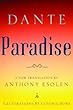
On ZENIT there is an interesting interview with Anthony Esolen, about whom I have written before.  For example, Prof. Esolen has translated the whole of Dante’s Divine Comedy.  When it comes to translation, this guy’s got game.

My emphases.

The Mass in All Its Glory

Literature Professor Offers Insights Into the Poetry of the New Translation
By Kathleen Naab

PROVIDENCE, Rhode Island, SEPT. 29, 2011 (Zenit.org).- Literature professor and translator Anthony Esolen has written what could be called a doorway to the new translation of the Roman Missal.
A commentary by Esolen can be found in the Magnificat Roman Missal Companion, a 200-page booklet that costs less than $4, and that offers a profoundly insightful introduction to the prayers the faithful are about to have on our lips, and hopefully, in our hearts.
As the new translation is set for implementation in less than two months, ZENIT spoke with Esolen about his insights into the new translation and how we can better understand the reasons behind the changes.

ZENIT: To serve as introduction, why did Magnificat pick you to give a commentary on the new translation?

Esolen: That’s a good question. I said to them, “I’m not a professional theologian!” But they wanted instead someone whom they could trust to speak about the beauty and the subtlety of the sacred poetry that the prayers of the Mass are. I’ve spent my adult life, after all, reading and teaching poetry, from the ancient world through the Middle Ages and the Renaissance to modern times. I’ve also worked a great deal as a translator myself, rendering poetry from Latin, Italian, and Anglo Saxon into English poetry. That work includes editions of Lucretius’ De Rerum Natura, Torquato Tasso’s Gerusalemme Liberata, and the three volumes of Dante’s Divine Comedy. I’m also somewhat conversant in New Testament Greek and in Hebrew. So I suppose those considerations helped to determine the choice.

ZENIT: You suggest that a translator is hired to be humble, [Do I hear an “Amen!”?] regardless of what he’s translating. Explain this and how it applies to the liturgy.

Esolen: The translator, I believe, must adopt as his motto the words of St. John the Baptist, referring to Jesus: “He must increase, and I must decrease.” It wasn’t my job, when I was translating Dante, to intrude my personality into the poem. It was rather my job to bring out Dante’s personality, his concerns, his acerbic wit, his devotion, his passions.
Now if this is true of what Dante called his “sacred poem,” [then] it is all the more true of the liturgy. Here, we must consider the words of the Mass not simply as the work of excellent human poets, but as a gift of God, mediated through the Church, to his people. At all costs, then, the translator must wish to render the words of the Mass with precision and power, respecting the literal and figurative meaning, the poetic and rhetorical form, and the beauty of the original. For instance, it is not the job of the translator to omit words simply because they strike him as too redolent of the Church rather than of the street corner [Do I hear an “Amen!”?] — to translate words such as “sacratissimam” and “sancte” and “venerabiles” as simply nothing. [cf. Roman Canon.] It is a sin against the whole community, thus to impose one’s individual taste.

ZENIT
: People have complained that the sentences in the new translation are unwieldy, with many phrases strung together. You defend this practice. Why?

Esolen: I do not defend unwieldy sentences. This complaint has as its basis one sentence in the first Eucharistic Prayer, which is long and complex in the Latin, and now also in the English. What I defend are well-constructed sentences, as elements of oral poetry. All the old prayers are so constructed. [To translate for people in Fridley, “the old prayers are constructed like that.] When you break up those sentences into three or four separate sentences, [parataxis] the effect is to be disjointed; the essential relations between words and images and Scriptural allusions are lost. These phrases are not “strung together.” Anyone who makes that allegation has a wholly mistaken, and I may say a childish, [OOH-RAH!] understanding of the Latin.

For example, one of the prayers for the Feast of the Holy Family is built upon the image of the “domus,” the house or home. We consider first the home of Jesus, Mary and Joseph, and we pray that we will imitate them in our own homes — in “domesticis virtutibus,” which the translators happily render as “the virtues of family life” [In a happier day we might have said “homely virtues”.] — so that we may enjoy the glories of the house of God. To translate that three-part prayer, which is one tightly constructed sentence, into a three-part prayer in one tight English sentence, is not to “string phrases together,” but to reflect artistic unity by artistic unity.

ZENIT: You also offer three defenses for preferring a literal translation of the Latin. One of those you describe as “unlocking the figurative meaning beneath.” Could you give an example?

Esolen: Every translator of poetry knows that the choice is not between the literal and the figurative, but between a loose or general rendering and one that is both literal and therefore sensitive to the figurative meaning also. It is a constant concern. Take the word occurrentes in the collect for the First Sunday of Advent. The loose paraphrase from 1973 merely grasps for the general idea behind the text, that Jesus will meet an “eager welcome” when he comes again. But the literal, concrete meaning of the word is rich in Scriptural allusion. The root of the word comes from the verb currere, to run. [cf. WDTPRS commentary.] If we keep the notion of running in mind, we recall — as the prayer intends us to recall — the parable of the five wise virgins, their lamps filled with oil, who ran forth to meet the bridegroom as he came. The translators have now rendered the line in such a way as to bring out both the literal and the figurative meaning, and thus also the Scriptural allusion: We pray to the Father for “the resolve to run forth to meet your Christ.” That’s what I call a translation. The other was a paraphrase.

ZENIT: You frequently note the vast difference that comes with a seemingly slight change in wording. For example, in the Creed, we will express faith in God, creator of all that is “visible and invisible,” which you say is quite different than “seen and unseen.” How so?

Esolen: The 1973 text was often deaf to the precise meanings of English words. [Because it was dumbed-down? Or was it intentional?] It wasn’t simply that the paraphrasers misconstrued the Latin. They misconstrued the English also, or they were not paying close attention to the English. The example above is a case in point. The Latin visibilium et invisibilium is not the same as visorum et insivorum. When we say “seen and unseen” in English, we mean those things we happen to see and those things we happen not to see. So, for instance, I have not seen a certain planet in the heavens, nor have I seen the mother of St. Peter, or the stone rolled before the tomb where Jesus was buried. But all those things are visible, provided there be someone at hand to see them. When we declare that the Father is the creator of all things visible and invisible, we are affirming the existence of things that no one can see with the eyes of the body, unless God chooses to make them manifest: angels, for instance; but also such immaterial objects as the moral law. [That is a great point.  I almost always limit myself to consider the angelic realm in invisibilia.]

ZENIT: How would you suggest using this commentary?

Esolen: The Mass must increase, and I must decrease! I’d read the commentary as a way of becoming familiar with the beauties and the subtleties of the text — as if walking through a doorway — and then I would put the commentary aside and meditate upon the prayers of the Mass themselves in all their glory.

WDTPRPS kudos both to ZENIT and to Dr. Esolen for this interview.

It sounds as if that commentary could be worth looking at.

Posted in Brick by Brick, Fr. Z KUDOS, Our Catholic Identity, The Drill | Tagged , ,
17 Comments

Bp. Thomas Doran (D. Rockford) on kneeling for Holy Communion… heh heh…

In this last week’s edition of The Wanderer, we read a reprint of a column by Most Rev. Thomas Doran, Bishop of Rockford.  I believe it was originally on the site of the diocese on 2 September 2011.

My emphases and comments.

Reverence and Respect of The Blessed Sacrament

From time to time people make inquiries of the Bishop’s office that demand more than a private answer. One of the things that disturbs practicing Catholics more and more is the seeming lack of reverence and respect for our Lord in the Blessed Sacrament in our liturgy and in our devotions.

As I go about in the various parishes and observe people, a surprising number of people do not genuflect toward the Tabernacle on entering or leaving church and many more do not know how to do it (it is the right knee, not the left that touches the ground when genuflecting). Benediction of the Blessed Sacrament has almost completely disappeared because neither clergy nor laity know how to perform it, and the beautiful hymns that we used to sing on that occasion, all of them replete with deep meaning about the Holy Eucharist, are largely forgotten.

One lady recently wrote me that she had just been informed by a deacon that to receive the Holy Eucharist while kneeling was in disobedience to the Bishops’ Conference and to me as bishop directly. I am grateful for this reminder that this is a subject that we all should take to heart.  [In other words, this dopey statement by that deacon was the last straw?]

First of all, bear in mind that many people have difficulty genuflecting and would have difficulty kneeling for Holy Communion. Obviously, if doing so imperils health or wellbeing, one is not obliged to do it. Reverence for the Blessed Sacrament starts in the heart. Whether it is reflected in our posture depends on many things. [In other words, we use common sense.  If you can’t genuflect, don’t genuflect.]

One thing that matters much to me is the practice of the Holy Father, Pope Benedict, when he gives Holy Communion. His practice is to distribute Holy Communion on the tongue of recipients who kneel as they receive communion. That should say something to all of us. [NB] I would make this personal observation that I usually do not distribute Holy Communion when I say Mass in the parishes because every parish has its own peculiar way of ordering Holy Communion and I am confused by such a variety of practices, [“Peculiar!”  ROFL!  We see Bp. Doran’s excellent sense of humor.  For those of you not in Rio Linda, but in, perhaps, Eden Prairie, “peculiar” can mean both “strange” and also “belonging exclusively to some person, group, or thing”.] and so since discretion is the better part of valor, I do not get involved in it.  [Imagine your Bishop coming to your parish and then he doesn’t distribute because of the strange things you do there… and then hearing about it later.]

Then there is the fact that many of us identify unity with uniformity. The two are distinct. We are bound to unity in faith, not necessarily to uniformity and how we receive Holy Communion. Now, the Third General Instruction of the Roman Missal now in force, at n. 160, permits receiving Holy Communion kneeling or standing, on the tongue or in the hand. [And let us not forget Redemptionis Sacramentum.] That same instruction allows the United States Conference of Catholic Bishops to establish norms for this practice. This was done by Archbishop Wilton Gregory when he was President of the Conference in 2002. The bishops decided that standing was the normative posture. [I recall some discussion about that norm being more descriptive than prescriptive.]

It is, therefore, permitted to Catholics to receive Holy Communion standing, receiving the Blessed Sacrament on the tongue or in the hand, depending on their choice, and this is the usual way in which Holy Communion is to be distributed in our churches. [NB: That was a description rather than a prescription.] Cardinal George asked about this in 2003 and the Holy See responded that posture at Holy Communion is not to be so rigidly regulated as to interfere with the freedom of people receiving Holy Communion. If you have to read this two or three times to understand what is being said, that is alright. The whole matter is somewhat confusing. [Read it again and again not only to understanding it, but to remember it.  Repetita iuvant.]

I am old enough to remember when, in a flurry of “me-too-ism,” communion rails were ripped out of our churches, something that was never advised, commanded or imposed. Most churches had suitable communion rails with padded cushions upon which communicants could kneel. And it seems to me looking back on the early days of my priesthood, that communion was distributed more reverently and was received more reverently when people knelt for Holy Communion. [Do I hear an “Amen!”?] A few found it difficult and even then those who had difficulty kneeling could stand. Few did, but it was allowed. It would seem that if anyone who wanted to go back to this method of receiving Holy Communion, they would find that communion would be received more reverently, in a more orderly fashion and in less time than it now takes. [Do I hear another “Amen!”?] But time is not the most important thing and order is not a virtue, but rather a convenience. [ROFL!  And with this Bp. Doran also reminds us that most of the time we don’t need EMHCs either.  Is that what he was referring to with the “peculiar” way in which Communion is distributed in some parishes?]

[And now…] One thing that should be clear is that at present, to receive Holy Communion kneeling is not a sign of disrespect to all the bishops or to anyone. I would add, however, that practicing Catholics generally like to follow the reasonable requests of their pastors so that Holy Communion may be distributed reverently and in a dignified fashion. It is also true that among those in Holy Orders, bishops and priests are our teachers. [And… and…. are you waiting for the other shoe to drop here?  And…]

WDTPRS kudos to Bp. Doran.

“But Father!  But Father!”, some of you are saying even as you pound with your witto fists on the table.  “Don’t keep us in suspense!  What ‘other shoe’?  Telllll us!”

Bp. Doran said: “It is also true that among those in Holy Orders, bishops and priests are our teachers.”

And the Holy Father is their teacher as well as our teacher.  And the Holy Father distributes to people who kneel.  He is teaching by example, just as Bp. Doran is teaching by clarity, innuendo, and humor.

Are you left at the end of the article doubting what he prefers concerning the Blessed Sacrament?

Posted in "How To..." - Practical Notes, Brick by Brick, Fr. Z KUDOS, Liturgy Science Theatre 3000, Mail from priests, Our Catholic Identity, Pope of Christian Unity, The Drill, The future and our choices | Tagged , , , , ,
23 Comments

QUAERITUR: Do we have to pray the Luminous Mysteries of the Rosary?

From a reader:

I have a kind of…confused question for you here, im told that i dont need to say the Luminous Mysteries, im told Pope John Paul II “suggested” it, not declared that it must be said, i wonder this because i just read somewhere that heresy/schism is excommunicatable…id really like to think that not saying them wouldnt grant such a punishment……i know its completly valid and accept by The Church….but im sure you already know the claims for it, and against it….i really dont know what i should do, and i realllllllyyyyyy dont want to be excommunicated..haha and if its all the same to you Father, if im lucky enough for you to read this…please edit most of this out if your putting it on the front page :p

?!?

Well.. no.  I don’t think I will edit most of this out. I shouldn’t have to do your work, too.

But to the question.

We are not obliged to pray the Rosary.  It is a devotion we are free to embrace.  If we do pray the Rosary, we are not obliged to use the Luminous Mysteries.  You can feel free to use just the three, classic, sets of mysteries.

As Pope John Paul reminded us in his Letter for the year dedicated to the Rosary, praying the Rosary redirects us back to the Lord.  Mary teaches us how to gaze at the face of Christ.  The Rosary is a power means of intercessory prayer as well.

I highly recommend praying the Rosary.  And please, dear readers, pray for me right now as well.

And you don’t have to use the Luminous Mysteries, either.

Posted in "How To..." - Practical Notes, ASK FATHER Question Box, Our Catholic Identity | Tagged ,
54 Comments

New Kindles coming

I have been enjoying my Kindle enormously. I have the Kindle 3g which has a keyboard. I was sceptical at first but I have been won over. It is especially useful for books I don’t especially want to keep on a shelf for reference. It is perfect for more ephemeral book. I use it for periodicals.

I use both the text and text to voice options. I plug it into my stero when I am doing chores. The reading is machine-like but it ain’t bad.

Did you know that you can lend books from one Kindle to another? You can highlight something you read on your Kindle and then tweet it to your followers?

The newest Kindles amazon is putting out run on a new technology. There is new generation of Kindle, Kindle Touch, and a new Kindle Fire with color. The Kindle Fire is more like a tablet, like an iPad, and it has a new browser that runs on cloud technology which is apparently very fast.

KindleThe new generation Kindle Touch, however, without a keyboard is 30% lighter and weighs less than 6 ounces and is 18% smaller body but with the same 6″ screen size. It also allows one to borrow books from the local library. Gotta see how that works. [see UPDATE, below]
In any event, if you are going to take the plunge into a Kindle, it might be good to do it now (and do your very early Christmas shopping). I received my Kindle as a gift from a reader here and I have really enjoyed it.

I now have a Kindle wishlist, by the way. Do you?

Did you know you can lend books to another person’s Kindle?

USA only, click HERE to pre-order a Kindle Fire.
To order a simple Kindle Touch HERE or the top end with free 3g HERE.
For the Kindle 3G with the keyboard (the one I have now) click HERE.

UPDATE 2031 GMT:

I did some checking and found that a zillion libraries in the USA, which can lend e-books via Overdrive, can now lend to Kindles. Very cool. I have done this with some library books using Overdrive in the past on my iPad. Having the option for Kindle is great.

The college text book option would be revolutionary, no?

Many of Pope Benedict’s book are available on Kindle, by the way.

Posted in "How To..." - Practical Notes, Just Too Cool, The Campus Telephone Pole | Tagged ,
8 Comments

NCFishwrap getting it wrong about abortion and capital punishment.

Over at the National catholic Fishwrap, Jamie Manson has flung herself headlong into another error.

I won’t torment you with a fisking of the whole article.  Suffice it to say that Supreme Court Justice Antonin Scalia is said to have defended, as Jamie puts it, a “pro-death penalty position” during a speech at Duquesne University’s Law School.  What Scalia said was,

“If I thought that Catholic doctrine held the death penalty to be immoral, I would resign. … I could not be a part of a system that imposes it.”

There are many and good reasons to argue against capital punishment.  Jamie found a bad one: defense of abortion.

Jamie tries to argue – obviously thinking that she is getting in a good dig at conservatives and Catholics – that if we are supposed to deny Communion to supporters of abortion then we have to deny Communion to supporters of capital punishment.  Get it?  Huh?  Get it?  Turn the sock inside out. Admitting supporters of capital punishment to Communion means that we have to admit supporters of abortion.  She is, in effect, defending pro-abortion politicians.

Jamie and, therefore, Fishwrap paint Justice Scalia as – and I am not making this up – a “cafeteria Catholic”.  Think about that for a moment.  If that isn’t ironic, I don’t know what is.

Nice try.

Keep in mind I am not herein so much defending Justice Scalia as I am showing how bad Manson’s argument is.

First, you cannot label Scalia’s position as “pro-death penalty” from that quote. Keep in mind that Supreme Court Justices make distinctions.  Justice Scalia is surely not unaware of the Church’s teaching on capital punishment.  Surely, Justice Scalia knows that there is a general moral norm against capital punishment.  But when we begin to make distinctions, we see that there are exceptions to this moral norm.  Second, abortion and capital punishment are not equivalent.  Again, the Church’s moral norm against capital punishment is not an exception-less norm.

Jamie could spend some useful hours with the Catechism of the Catholic Church.

Shall we have a look?

CCC 2267 was revised after the release of John Paul II’s Evangelium vitae 56.

2267 Assuming that the guilty party’s identity and responsibility have been fully determined, the traditional teaching of the Church does not exclude recourse to the death penalty, if this is the only possible way of effectively defending human lives against the unjust aggressor.

If, however, non-lethal means are sufficient to defend and protect people’s safety from the aggressor, authority will limit itself to such means, as these are more in keeping with the concrete conditions of the common good and are more in conformity to the dignity of the human person.

Today, in fact, as a consequence of the possibilities which the state has for effectively preventing crime, by rendering one who has committed an offense incapable of doing harm – without definitely taking away from him the possibility of redeeming himself – the cases in which the execution of the offender is an absolute necessity “are very rare, if not practically non-existent.

So, Holy Church takes a strong position against capital punishment.  However, the Magisterium does NOT exclude the possibility of capital punishment.  There is a general moral norm is against capital punishment, but the Church foresees contingencies which could permit it.  The Church does not, indeed cannot, list what those exceptions could be.  Under certain circumstances the Church does not describe, capital punishment is not immoral, as Scalia suggested.

Thus, the Church’s opposition to capital punishment is not as iron clad as its opposition to abortion, for the moral norm against capital punishment is not an exceptionless norm.  Even Card. Bernardin, beloved of liberals, correctly affirmed that capital punishment was not as iron clad as abortion and euthanasia.  He upheld the state’s right to impose it.

You have to work your imagination pretty hard to come up with, in the USA at least, an exception to the Catholic Church’s moral norm against capital punishment.  Let’s give it a try.

Let’s imagine for a moment that someone commits 1st degree murder and is sentenced to life, not the death penalty.  While in prison he kills another prisoner.  He is determined not to be insane.  His freedom of movement is restricted even more.  Then he kills a guard.  He goes into maximum security.  He manages to kill another guard.  Despite the many precautions taken, he is dangerous to anyone he is near.  Can the state not execute him?  Should the murderer be kept alive at state expense chained at six points points to a wall and fed through a straw in a Hannibal Lector style mask?  This mind exercise is way out there, but the Church says that the exceptions to the moral norm “are very rare, if not practically non-existent.”

In any event, the Catholic Church foresees that there could be exceptions to the moral norm against capital punishment.  Justice Scalia was right.  The Church doesn’t forbid capital punishment.  Jamie was wrong us use his words as a way to defend Catholics who promote immoral acts.

We must bring in also the important issue of scandal given by Catholics who openly deny and defy the Church’s teachings.  For example, pro-abortion Catholic VP Biden and Rep. Pelosi – and many more – give public scandal to the point that they should not receive or be given Communion.  The teaching about abortion is exceptionless.  NY Gov. Cuomo is living in open concubinage and is therefore clearly acting against undeniable Catholic teaching.  He should not receive or be given Communion.  Justice Scalia correctly indicated that capital punishment is “not immoral”, provided, I – I – hasten to add, the right circumstances apply.  We can argue, based on CCC 2267 and EV 56, that most instances of capital punishment are immoral, but  at the end of the day the Church teaches that there are exceptions.  To say that capital punishment is not immoral is, when we make necessary distinctions, not at the degree of scandal that would preclude reception of Communion.

On the other hand, active, open, public advocacy of other immoral acts, say for an example, homosexual acts or “lifestyle”, would be grounds for exclusion from Holy Communion.

Who, again, is the cafeteria Catholic?

Posted in Emanations from Penumbras, Our Catholic Identity, The Drill | Tagged , , , , ,
36 Comments

QUAERITUR: Kissing the priest’s hand

From a reader:

I was coerced into attending a church function tonight with a number of the other Latin Mass members and the priest (a member of the FSSP).

When the priest arrived and the greetings started, I noticed everyone kiss the priest’s hand when he reached out to shake people’s hands.

I’ve heard of this before, but I’ve never seen it. Quite honestly, I’m not particularly comfortable with doing it (it’s also not very practical either, given that I’m a young woman who likes to wear her lip gloss). I understand that it’s a sign of respect and veneration for the priest’s hands that can consecrate the host, and I don’t mean any disrespect by not doing it, but I’m really not comfortable with the whole hand-kissing thing. I got a weird reaction when I stood and just gave the priest a good firm handshake, so I’m wondering if it’s expected among traditional priests, or if it’s just something that the people at my parish do on their own and the priest has grown accustomed to it. I’m kind of the odd one out, and many of the trads at the parish look down on me as it is (I’m kind of dumb and awkward when it comes to Clerical Etiquette, but I was raised in the “Just call me Fr. Bob” era, so I don’t know what they can expect from me).

So what’s the deal with the whole kissing the priest’s hand? Am I expected to do it, or is it perfectly fine for me to just stick to what I’m doing? I still stand when the priest enters the room, or gets up to leave the table, and I don’t dare call him by his first name.

Does this suffice, or should I be doing something more?

A couple things occur to me as I read this.  First, it may be that you are too concerned about what other people think or that you might be imagining that others are seeing you negatively.  Maybe they are, I don’t know for sure.  But I raise the point.

The whole hand kissing, or baciamano “thing” is an old custom which shows respect for the priest as mediator.  It actually shows respect more for what we receive from the priest, rather than for the priest himself.

I don’t know any priests who expect that people should kiss their hands.  It may be that there are a few out there, but I haven’t met them.  I sure don’t expect it, but I accept it as graciously as possible when it occurs. It is sometimes a bit of a surprise.

If you are not comfortable kissing the priest’s hand, then don’t.  Don’t worry about what others do.  I am fairly sure that the priest doesn’t think you have to.  As a matter of fact, I am pretty sure the priest will be okay with not having – what did you call it? – lip gloss? – on back of his hand.  Blech.

On second thought, perhaps we should start a movement of people kissing the hands of liberal priests.  And the more liturgical abuses they perpetrate or ad libbing they inflict, the more lip gloss should be applied to their hands.

Posted in ASK FATHER Question Box, Our Catholic Identity | Tagged , ,
57 Comments

QUAERITUR: Latin and languages in seminary

From a seminarian:

I am a seminarian from the southern region of the US. Here at seminary, there are many guys, I myself included, who are more traditionally minded who enjoy Latin and orthodoxy. Others however, see that the hispanic populations are rapidly growing and they say that Latin has no place in the Church, but rather, spanish should be learned and used in many parishes in every diocese. Personally, I do not see a problem with Spanish. I am favorable to Latin, but I am very open to Spanish. I do not see a reason for conflict.

My first question is, “Why do you think many people prefer one language over another instead of realizing that both can be learned? Is one better than the other?” My second question is, “What are your thoughts? What do you think should be practiced in seminaries to prepare us for the priesthood?”

I circle back to this topic from time to time.  The Code of Canon Law can. 249 requires… it doesn’t suggest… it requires that all seminarians be taught both Latin so that they are very proficient and also any other language useful for their ministry.  In your case that would be Spanish. So, as far as the law is concerned for the program of formation, this is not an either/or question, this is a both/issue.

The problem is, by the time men come to seminary, and men are often older today than once upon a time, it is a little late to bring them from zero to 60 in four years.  So, what do we do?  Add a couple more years of formation?  Have a couple propaedeutic years for Latin and Greek, other basics of a classical liberal education which they ought to have had and which a Catholic seminary formation presupposes?  What do we cut from the curriculum to make room?

The fact is that men have to have a foundation in Latin long before they get to major seminary.  This simply has to happen.

That doesn’t mean we should give up at the major seminary level.  Start with Latin and keep it going all the way through.  It just has to be done.  If the men need Spanish, and that need will be greater in, say, Texas than in Maine, then have them learn Spanish.  Spanish and Latin aren’t quantum mechanics, they are just languages.

And, yes, some of you have been saying “But Father! But Father! Remind people that if you learn Latin first, Spanish comes more easily!”

Okay.  If you learn Latin first, Spanish comes more easily.

A focus on Latin is better for seminarians than Spanish, because a) they are being trained to be priests of the Latin Church, b) it is the language of their Rite, c) they need Latin for their academics, d) it helps them learn English (which more more can’t be assumed), e) the law requires it and, at their ordination, someone has to attest that ordinands were properly trained and f) armed with Latin they can learn Spanish more easily.  I am sure you can think of other reasons to obey the Church’s law about this matter.

Why do people prefer one language over another?  I assume you mean “how could Latin Church seminarians prefer some inferior language to Latin”?

How about … maybe they just don’t know any better?  Maybe they have misplaced priorities?  Nah… because they are silly, that’s why.  They are silly, and dim, and probably killed their pets when young.

I don’t know.  My psychic powers are weak today.

What do I think you should do during seminary?

Since major seminary is big-boy-underwear time,

  • smile a lot,
  • say very little,
  • don’t whine,
  • read WDTPRS,
  • pray lots,
  • confess often,
  • and study until blood pours out of your eyes.
Posted in "How To..." - Practical Notes, ASK FATHER Question Box, Brick by Brick, Our Catholic Identity, The future and our choices, Wherein Fr. Z Rants | Tagged , , , ,
43 Comments

Benedict XVI “walked through the ferocious pack of media dogs without losing his composure”

Read this whole thing.

From CNA comes this about the Pope’s visit to Germany.

A highlight:

“(D)amage to the Church comes not from her opponents but from uncommitted Christians.”

And also,

“The Pope gave appropriate directions. The fate of the Church and of the faith, he clearly said, is determined in the context of the liturgy and the Eucharist….”

My emphases and comments.

Peter Seewald: The Pope triumphed over the media war in Germany

Lima, Peru, Sep 28, 2011 / 01:59 pm (CNA).- In an interview with the Kath.net news agency sent to CNA for publication, German Catholic reporter Peter Seewald said the recent papal trip to Germany was a victory for the humility and message of the Pope.

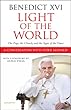
In the interview, Seewald, author of “Light of the World,” described the Pope’s visit as “a small miracle” because “shortly before there was a very aggressive, anti-clerical assault by the media.”

“All of this brings to mind George Orwell’s ‘1984,’ in which an imaginary enemy, a nightmare, is created in order to scare people.”  “And yet,” Seewald noted, “despite all of this incredible effort by the media, an innumerable amount of people stood up and refused to be deceived.”

“They said the Germans would turn their backs on him and all kinds of other stupidities. There appears to be nothing more offensive in our times than being Catholic.  As the magazine ‘Stern’ said, ‘The brief euphoria at the outset was followed by an irreparable distancing between the majority of Germans and their fellow countryman.’  It’s as if they were saying that everything would be wonderful and orderly in the world if the Vatican just ceased to exist.”

However, Seewald continued, “We were all witnesses to something much greater.  Where were all the masses of critics and protesters?  They never showed up.  And yet 350,000 people made great sacrifices in order to personally listen to the Pope and to attend Mass with him.  Millions watched on television.  The Pope’s books are selling faster than ever … And undoubtedly never before has so much intelligence, wisdom and truth, so much of what is fundamental, been heard in Germany.”

According to Seewald, whose own conversion to Catholicism came after meeting then-Cardinal Ratzinger, “(t)hese words can no longer be ignored. They are the measure and the touchstone for the subsequent debates and the renewal of the Catholic Church in Germany.”  The only “shadows” of the Pope’s trip to Germany were the massive attacks against him by the media, he said.

We were often reminded of the people of Nazareth who did not want to listen to the Prophet from their own land. ‘He performs no miracles.’ That was the complaint of many in the media[Great comment.] They work like crazy in a state of antagonism against the Pope, they preach a new faith without values, and at the same time they air all these complaints that people are turning their backs on the Catholic Church.  In reality, the percentage of those who leave (the Church) is much smaller than those who leave political parties, industries or associations, or even the protestant church,” Seewald said.

On the other hand, he continued, to see Benedict XVI “walk through the ferocious pack of media dogs without losing his composure for one second” was amazing.

“Indeed it was sad that many did not take advantage of this opportunity to express for once authentic Christian fraternity,” Seewald said.  There is a part of Protestantism that still continues to see itself as an anti-papal faction.  Before, the man in Rome was considered the anti-Christ. Today he is seen as anti-modern. Nevertheless, what is more significant is this: that after the encounter with the Pope, not only Orthodox, Jewish and Muslim representatives were extremely content, but also the president of the Evangelical Church in Germany, who after the meeting with Benedict XVI said, quote, ‘I am pleased.”

The Kath.net interviewer asked Seewald who the Pope was referring to when he said during the vigil with young people, “(D)amage to the Church comes not from her opponents but from uncommitted Christians.” Seewald replied, “Probably you and me. The Pope is an encourager and a builder of bridges, [pontifex] but he also warns us. Every Christian needs new impulses to keep from becoming stagnant in his development, in his journey, his witness and his Christian conduct.”

Later in the interview Seewald said the Pope came to Germany to draw attention to problems, because “he does not want a fictitious peace but rather one that is genuine. He is anything but someone who covers things up with nice words or tries to put make-up on the seriousness of the situation with massive events, contrary to what (Hans) Kung and his friends assert.”

Seewald also lamented that as a preamble to the youth meeting in Freiburg, local organizers gave young people the chance to vote on various topics such as women priests and homosexuality, leaving out any spiritual preparation for the event.

“Someone who does this does not understand how things are today,” he said. “It also displays a lack of perception of the seriousness of the situation. By doing such things, one becomes an ally of the opinion leaders who for decades have been using second or third-rate issues to lead the Church according to their whims and have basically caused a spiritual stagnation. Today things are so bad that many people know absolutely nothing about their faith.  They know nothing about the Gospel and the Sacraments,” Seewald said.

Nevertheless, he added, “The Pope gave appropriate directions. The fate of the Church and of the faith, he clearly said, is determined in the context of the liturgy and the Eucharist. [Get that?  Liturgy.  As I have been saying, whatever we do for a “New Evangelization”, anything to renew our Catholic identity, must begin with our liturgical worship.] True change is only possible through the transformation of the heart.”

Put simply, the successor of Peter wants to lead us to the sources.  And they do not belong to him or to the Vatican, but rather, out of them flows the ‘living water.’  And that a Church exists that protects and cares for these sources should make us feel happy and secure,” he said.

Can you believe that a journalist wrote that?

BTW.. those book images are links.

Posted in Biased Media Coverage, New Evangelization, Our Catholic Identity, Pope of Christian Unity, SESSIUNCULA, The Drill, The future and our choices, The Last Acceptable Prejudice | Tagged , , ,
6 Comments

LATINUM ITER MONTANUM … WYOMINGENSE

My friend Prof. Nancy Llewellyn of Wyoming Catholic College sent the following:

Since you’re a fan of Wyoming and a strenuissimus fautor of Latin, I thought you might be interested to know that the Latin Program here at WCC has taken a big step forward with the successful conclusion last Saturday of our first-ever Latin Immersion Outdoor Weekend.  Nine students and four faculty spent four days backpacking through a portion of the Bridger-Teton National Forest in central Wyoming, in a trek that included a climb to the spectacular summit of East Temple Mountain.  All participants spoke only Latin for the entire duration of the trip.  I’ve included a few photos illustrating our experience.

All cordial greetings to you, Father.
Nancy Llewellyn

Omnia vobis quaeque optima exopto omnibus!

Very cool!

And since this was in WYOMING I will put in a shameless plug for Mystic Monk Coffee because they are in Wyoming.  They are in a different part of Wyoming, but they are there.

So, refresh your coffee or tea supply now.

But… a couple shots from the Latin fun in the mountains of Wyoming.  This is what students get to do there!

Posted in Brick by Brick, Just Too Cool, Lighter fare, The future and our choices | Tagged
4 Comments

Taking it to the street

Over at Catholic Vote I saw this photo of a Greek Orthodox priest trying to stop a protester from throwing a Molotov cocktail.

Impressive.  I wonder if I would launch myself in like that.

BTW… I might have a chance to find out if things in the USA keep going the way they are going.

For more about the USA following in the steps of Greece, see Mark Steyn’s brilliant After America: Get Ready for Armageddon.

USA book click here.
USA Kindle book click here. (Text-to-Speech enabled)
UK book click here. UK doesn’t have a separate Kindle version yet.

Posted in Just Too Cool | Tagged , ,
18 Comments