Do you have good news for anyone?
Also, is there some good point from the Sunday sermon you heard to pass along?
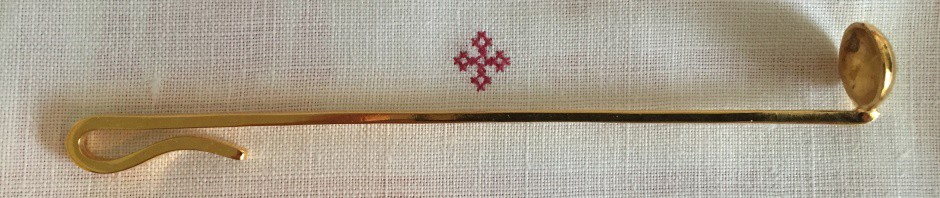
Do you have good news for anyone?
Also, is there some good point from the Sunday sermon you heard to pass along?
Put down your WDTPRS mug of Mystic Monk Coffee for a moment.
From a reader:
For the past 11 years, our pastor has never said the correct words for the Ecce Agnus Dei, he loves to ad lib, and we are used to it. But today my head snapped up when he said, “This is Jesus, the Ground Zero of love…”
Okaaaay, perhaps I should buy him a mug!
Yes, dear reader, perhaps you should. Click, below.

According to one reckoning, today, 12 September, could be the anniversary of the Battle of Marathon (490 BC). They are probably wrong, but… who cares?
Marathon is, of course, a Greek word (Mάραθον or modern Greek Μαραθώνας and ancient Μαραθών, Latin marathrum) meaning “fennel”. The famous battle (related by Herodotus +425 BC) was likely fought in a fennel field, which grows wild in the in the eastern part of Attica.
This was one of the most significant event of ancient history.
You would have had to guess that if there are, 150 years after the fact, Civil War reenactors, then there are Marathon reenactors, 2500 years after the fact.
History brought to life as Battle of Marathon re-enacted
By John Hadoulis (AFP)
MARATHON, Greece — Sweating beneath heavy armour, a group of die-hard archaeology fans [Gotta be, at this time of the year. But the Greeks don’t have jobs, for the most part, so that have some extra time.] brought the Battle of Marathon to life this weekend on the coastal plain where the fate of Europe dramatically changed 2,500 years ago.
Gathering from Europe, North America and Australia, [Hmmm… not Greeks after all.] the re-enactors staged a three-day event of combat, archaic culture revival and commemoration at Marathon Bay never before seen in Greece despite its rich archaeological heritage.
For many of the participants, it was also a personal pilgrimage after long years of arduous preparation and unfulfilled hope.
“It’s a dream come true after 10 years,” said Hywel Jones, a printer from Wales who came to Marathon with his wife Stephanie to fight as a Greek hoplite, the heavily armed infantry soldier of ancient Greece.
Most of the re-enactors had spent thousands of euros (dollars) on travel expenses just to get to this small town 40 kilometres (25 miles) northeast of Athens that is better known for the long-distance race held here every year.
They brought with them family members as well as hand-made armour and kit crafted over the years at great personal cost.
“I don’t think I’d be exaggerating to say that standing around is $1 million in kit and travel fare,” said Christian Cameron, a Canadian novelist and former US navy career officer who headed preparations for the event.
“What you see today is the product of 11 years of work,” added Andy Cropper, a university lecturer from England’s Sheffield region and member of a British historical revival association who arrived with several sets of Greek, Persian and Scythian armour in tow.
“It was worth spending the money because it’s such a unique event, as a Greek re-enactor, to be able to be on the field of Marathon,” he told AFP.
The re-enactors initially had to persuade their hosts in Greece that this was the correct moment to commemorate the 2,500-year anniversary of the 490 BC battle in the bay of Marathon.
“Originally everybody thought it was last year, and of course it wasn’t, as there’s no year ‘zero’,” Cropper noted.
Few in number but no less determined, the group showed they meant business from the start, setting up camp near the presumed battlefield, sleeping on straw-filled mattresses and serving up a simple diet of vegetables, fruit, cheese and water in wooden bowls and cups. [I think I would have preferred a hotel and airconditioning in which to polish my greaves.]
Spare armour was quickly put to good use among the combatants as a set of last-minute cancellations and the loss of a large contingent from Bulgaria left the event badly short of Persian adversaries. [Bulgarians! PAH!]
“We would have had 15 more hoplites but what we really missed is that the Bulgarians were Persians, and that would have helped us a lot,” Cameron said. [It still takes two to have a battle, I think. Though if they are going for the PC outcoming, they wouldn’t be keeping score this time.]
Organisers had initially hoped for a turnout of 200 but had to settle for 50 battle-ready Greek hoplites and a handful of Persian archers. [Reminds me of that scene in Gladiator: “The barbarian hoard!“]
They were also refused permission from the Greek culture ministry to access archaeological sites such as the tomb of the Athenian warriors slain in the battle, and the ancient Agora and Acropolis in Athens. [First question. Was that because it would have required a government worker to, I dunno, work?]
But the municipality of Marathon was more amenable, providing logistical support [and open shops and restaurants and hotels] and allowing the group to hold a memorial ceremony to honour the Greek and Persian fallen at the battle’s victory monument.
“I think the town would like us to come back every year,” Cameron said, though the cost to the participants makes an immediate re-run unlikely.
“I think it would be three years,” he notes. “They want to do it again, we’ll do it better. Fifty people is a start, 500 is an achievable goal.” [Now that the word is out!]
One of history’s most famous military engagements, the Battle of Marathon is also one of the first to be recorded by chroniclers.
It gave its name to the world’s premier long-distance running event, inaugurated during the first modern Olympics in 1896 in honour of an Athenian messenger believed to have run back to the city to deliver news of the victory, and subsequently dying of exhaustion. [What was it Pheidippides gasped before he died? “Just Do It!”? Something like that. Maybe that’s the lame-duck ICEL version of Νενικήκαμεν!.]
Although only the citizen armies of Athens and Platea fought against the Persian levies that day, the battle galvanised the warring Greek city-states and demonstrated that the Persian Empire, the superpower of the age, could be defeated.
“People argue that it is the battle where the Greeks saved Western civilisation. People can equally argue that it was the moment at which a great civilisation, the Persian civilisation, lost control of the West,” Cameron said.
Battle of Marathon. Very cool. A great maneuver was involved and great discipline by the Greeks. To make a long story very short, just as the much large Persian forces were shifting their position and loading their cavalry back into ships, the Greek general Miltiades sent the Greeks on a frontal attack charging over a mile in a tight formation to sweep through the Persian flanks. As they collapsed, the Greeks focused on the center and as the Persian wings retreated, the Greeks forced an envelopment. The Athenians sent a runner Pheidippides to Athens. 21.4 miles away. He ran the distance, gasped “Νενικήκαμεν! Nenikékamen! We were victorious!”, and died.
Robert Browning, by the way, wrong about Marathon in his 1879 poem Pheidippides.
So, when Persia was dust, all cried, “To Acropolis!
Run, Pheidippides, one race more! the meed is thy due!
Athens is saved, thank Pan, go shout!” He flung down his shield
Ran like fire once more: and the space ‘twixt the fennel-field
And Athens was stubble again, a field which a fire runs through,
Till in he broke: “Rejoice, we conquer!” Like wine through clay,
Joy in his blood bursting his heart, he died – the bliss!
One man’s bliss…
Note the reference to fennel. Also the reference to the God Pan, who instilled “panic”, they say, in the enemy Persians. I’m all for that, given who is running Persia now.
This was the poem which inspired Baron Pierre de Coubertin and other founders of the modern Olympic Games to invent a running race called the Marathon.
It’s Sunday Supper time. What did you have?
I picked some berries earlier today.

I prepared a pre-prandial martini, very dry.

Time for a stroll, martini in hand. Touches of color are appearing.

I checked on my mini beef roast and vegetables.
This is about enough for four good-sized portions.

I checked on my Yorkshire puddings. They didn’t rise very much, but they were tasty and moist inside while nice and crunchy outside. I don’t think I put enough batter into the searing hot ramekins. Some day I will make it in a pan.

Here is my beverage for our carvery fare.

Baked potato, Yorkshire pudding, roast beef, roasted vegetables, horseradish. I made gravy from the leavings in the pan and added fresh thyme and a little Malbec languishing in the bottom of a bottle.

Followed by nap.
Berries to follow nap.
And you? What did you prepare for your Sunday Supper.
Pope Benedict XVI’s Prayer at Ground Zero, 20 April 2008
O God of love, compassion, and healing,
look on us, people of many different faiths
and traditions,
who gather today at this site,
the scene of incredible violence and pain.
We ask you in your goodness
to give eternal light and peace
to all who died here—
the heroic first-responders:
our fire fighters, police officers,
emergency service workers, and
Port Authority personnel,
along with all the innocent men and women
who were victims of this tragedy
simply because their work or service
brought them here on September 11, 2001.
We ask you, in your compassion
to bring healing to those
who, because of their presence here that day,
suffer from injuries and illness.
Heal, too, the pain of still-grieving families
and all who lost loved ones in this tragedy.
Give them strength to continue their lives
with courage and hope.
We are mindful as well
of those who suffered death, injury, and loss
on the same day at the Pentagon and in
Shanksville, Pennsylvania.
Our hearts are one with theirs
as our prayer embraces their pain and suffering.
God of peace, bring your peace to our violent world:
peace in the hearts of all men and women
and peace among the nations of the earth.
Turn to your way of love
those whose hearts and minds
are consumed with hatred.
God of understanding,
overwhelmed by the magnitude of this tragedy,
we seek your light and guidance
as we confront such terrible events.
Grant that those whose lives were spared
may live so that the lives lost here
may not have been lost in vain.
Comfort and console us,
strengthen us in hope,
and give us the wisdom and courage
to work tirelessly for a world
where true peace and love reign
among nations and in the hearts of all.
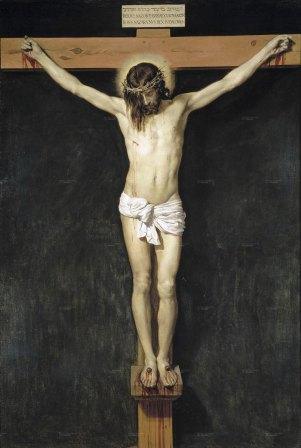 This is a classic Roman prayer, terse, balanced. Note the elegant repetition of propitiare. These two petitions are followed by two more, set off by an et…et construction. On the page of your Missale Romanum you may not immediately see the parallel construction, but when it is separated into different lines and arranged as below, you can see how it was crafted.
SECRET (1962MR):
Propitiare, Domine, populo tuo,
propitiare muneribus,
ut, hac oblatione placatus,
et indulgentiam nobis tribuas,
et postulata concedas.
Lot’s of alliteration.
Our illustrious Lewis & Short Dictionary says that postulo is “to ask, demand, require, request, desire”. The verb propitio means “to render favorable, appease, propitiate” or “look propitiously.” In this prayer the form resembles an infinitive. It has imperative force. In later Latin infinitives are sometimes used as imperatives, but I don’t think that is the case in our prayer today. In the Biblical Latin of the Vulgate, the passive form of propitio means, “to be propitious” (cf. Vulgate Leviticus 23:2 – propitietur vobis Dominus … may the Lord be propitious to you). So, propitiare looks like an infinitive but is really a 2nd person singular present passive imperative.
LITERAL WDTPRS VERSION:
Look propitiously, O Lord, on Your people,
look propitiously on these gifts,
that, having been appeased by these offerings,
You both may bestow on us forgiveness,
and You also may concede to us our requests.
ANOTHER SLAVISHLY LITERAL WAY TO DO IT:
Be appeased, O Lord, toward Your people,
be appeased by these gifts,
that, having been appeased by these offerings,
You both may bestow on us forgiveness,
and You also may concede to us our requests.
Roman Catholic Daily Missal (Angelus Press):
Look, graciously, O Lord, upon Thy people:
graciously look upon our gifts:
and, appeased by this offering,
mayest Thou grant us pardon
and give us what we ask.
This prayer was in the Gelasian Sacramentary and the Liber sacramentorum Engolismensis. It did not survive the creators of the Novus Ordo and is not in any post-Conciliar edition of the Missale Romanum.
On Calvary Our Savior fulfilled the perfect act of propitiation for our sins. Our Sacrifice of the Mass renews Christ’s act of propitiation and, while adding glory and thanks, raises our petitions to the Father. We unite our own prayers and acts of propitiation to what the Lord has done for us.
It may be that “modern man”, all grown up now, who doesn’t want to kneel in God’s presence, who takes rather than receives, who prefers to be busy and voluble rather than still and silent, is unsettled by the concept of “propitiation”, of “appeasement”. It is easier to think about God as smiling friend, beneficent sky father, rather than omnipotent creator and judge whom we offend by our sins. Thinking about judgment and propitiation reminds us all that we are going to die one day.
It is a fearful puzzle that in justice, even though our Lord conquered death, we still have to die. This reality must be reflected in our liturgical worship.
As the Feast of the Exaltation of the Cross approaches, be still and consider what the Lord has done and the great mystery we yet face.
From a reader:
Lately, with your help, I have had much higher expectations and a greater appreciation for the liturgy at my parish. I expect to see the altar servers with black shoes, and the music and Mass settings appropriate and approved, which is almost always the case. However, I still hear (pretty frequently) “Come as you Are” and “Companions on a Journey”, see way too many extraordinary ministers on the altar and witness some pretty irreverent behaviour from those ministering. I’ve found that I’ve been becoming increasingly annoyed with people who act irreverently or play that terrible music. Is this a righteous annoyance or am I being too fussy? Is it even possible to be too fussy with something as precious as the Mass? Or should I just put up with it and be grateful that we don’t have liturgical dance in my parish?
I think you are right to be annoyed with bad liturgical practice. Also, I think you should put up with it even as you patiently, prudently, charitably, work for improvements.
I don’t think you are being too fussy. We should have exceptional liturgical worship.
Also, it may be that you were always annoyed. It is just that now, you know why you were annoyed.
From ZENIT comes the text of a pastoral letter by the Bishop of Shrewsbury, England, Most Rev. Mark Davies. He issued it for the 1st anniversary of Pope Benedict’s visit to England. This pastoral letter is supposed to be read at all Masses in the Diocese of Shrewsbury on Sunday, 11 September.
My emphases and comments.
My dear brothers and sisters,
The extraordinary scenes as they unfolded on the streets of London and Birmingham would disturb public opinion, shock media commentators and prompt a statement from the Prime Minister. I write to you today not of the rioting [this year] which brought violence to so many cities this summer but of the visit of our Holy Father, Pope Benedict, 12 months ago. In cities where mobs momentarily brought fear, much greater crowds gave witness to their faith and joy with Pope Benedict.
Today I wish to mark this happy anniversary of the Pope’s visit to our country and to draw inspiration from those days last September.
Just as so many Catholics from many different backgrounds stood together in public witness with the Holy Father so this September in two small ways we are being called to stand together in that same witness of faith and unity. [As I am constantly harping, I think Pope Benedict has a Marshall Plan for the revitalization of our Catholic identity. If we don’t know who we are and what we believe and then believe it, then we have nothing to offer as Catholics to the rest of society.]
From Friday this week, the Bishops of England and Wales have restored the practice of abstinence from meat every Friday. We are familiar with this act of penance on Ash Wednesday and Good Friday but now it is extended to every Friday other than Feast Days like Christmas Day.
For a number of years we have been asked to choose our own act of self-denial on Fridays to mark the day on which Our Lord gave His life for us. But we know this obligation has in practice been often forgotten. So abstinence from meat each Friday (and for those who do not eat meat, abstinence from some other food) will become a weekly reminder that we are a people called to penance and to conversion of life together. It will become a small but significant weekly witness to our Catholic life and identity. And so I wish us to embrace this in a positive way despite the practical difficulties we may encounter. The very fact this will be an act of penance shared by all Catholics will be a witness to our faith in the midst of our working and family lives.
I am also conscious we have just begun to use the new translation of The Roman Missal which unites us in worship. At the heart of Pope Benedict’s visit to our country was always the Holy Eucharist celebrated with great dignity and adored with love and reverence. [He was giving an example to follow.] The Holy Father asked that the introduction of this revised English translation would be something more than simply a change of wording: “I encourage you now to seize the opportunity that the new translation offers,” he asked, “for in-depth catechesis on the Eucharist and renewed devotion in the manner of its celebration.” As we become more familiar with this fresh translation, I hope it will enrich our prayer and understanding, help us to recognise more clearly in the Liturgy the words and images of Scripture and, by the beauty and richness of its language, express our wonder at the mystery and reality of the Mass. I hope we will always go beyond the translated words to the reality they express at the heart of the Mass: Jesus Christ, His Sacrifice and His Real Presence with us as we come together with all the Church.
We recall a year ago those extraordinary moments in London’s Hyde Park when more than 80,000 people knelt with the Pope in silent adoration of Christ, [Remember that? TV coverage with the “dead air” that was anything but dead air?] God and man who, “makes himself wholly and entirely present,” in the most blessed sacrament of the Eucharist (CCC 1374). “Together,” Pope Benedict invited us, “in the silence of common adoration let us open our minds and hearts to his presence, his love, and the convincing power of his truth.” May the newly translated prayers of the Mass be such an invitation for us; and may the renewed practice of Friday penance become a weekly reminder of the people we are called by daily conversion to be. In all our homes, working lives and communities, by coming together each Sunday in the Mass, may we always give witness to the unity and joy of our faith seen so wonderfully during Pope Benedict’s visit to our country 12 months ago.
Nice letter. He presents challenges in a positive way while bring back to mind Pope Benedict’s important visit.
WDTPRS kudos.
We shall keep an eye on Bp. Davies.
Keep in mind that Bp. Davies allowed the Institute of Christ the King into his diocese to take care of the so-called “Dome of Home” in Wirral.
Sometimes you have greater bandwidth by mailing a CD or DVD or by sending a little USB drive by FedEx.
From XKCD:

It is a synchronicity that this came up. The other day I had to send someone a large batch of big photos. After the first couple attempts with different email accounts, I remembered I had one old account permitting huge attachments. I wound up compressing the folder and sending it off. It worked.
 I am reading Mark Steyn’s brilliant After America: Get Ready for Armageddon.
USA book click here.
USA Kindle book click here. (Text-to-Speech enabled)
UK book click here. UK doesn’t have a separate Kindle version yet.
Readers in the USA, this is a good book. I suggest you read it. There are reasons for people on the other side of the Atlantic to read this book. Steyn analyzes the state of Europe’s economy and culture and prospects for the future in tandem with what is going on the USA. He is brutally clear, but his prose and sense of dark humor are rich, the word play so far ranging, that you can’t help turning page after page in anticipation of the next witty turn of phrase. His skill is, in itself, a reason to read it.
One of the important things he tackles is the falling birth rate in nations with vast debt being shoved along to future shrinking generations. He looks at the issue not only from point of view of economic implications but also social, cultural.
He is talking about the death of a civilization, not just problems in the USA or Europe.
In this, it seems to me that he is giving voice, from another point of view, to Pope Benedict’s concerns for the identity of Europe and, of course, the West.
Here is a sample of the end of one of Steyn’s chapters.
I was struck by this little section because I had just read a story on Roma Sette about vandalism of the Trevi Fountain and also a fountain in the Piazza Navona.
Here is Steyn on the defacing of monuments, et al., with my emphases:
Europe is already dead—in the short run. Linger awhile, how fair thou art. It’s nice to linger at the brasserie, have a second café au lait, and watch the world go by. At the Munich Security Conference, President Sarkozy demanded of his fellow Continentals, “Does Europe want peace, or do we want to be left in peace?” To pose the question is to answer it. But it only works for a generation or two, and then, as the gay bar owners are discovering in a fast Islamifying Amsterdam, reality reasserts itself.
We began this book with some thoughts from Bertie Wooster and Jonathan Swift regarding Belshazzar’s feast and “the writing on the wall.” But sometimes there’s so much writing you can barely see the wall. On my last brief visit, Athens was a visibly decrepit dump: a town with a handful of splendid ancient ruins surrounded by a multitude of hideous graffiti covered contemporary ruins. Sit at an elegant café in Florence, Barcelona, Lisbon, Brussels, almost any Continental city. If you’re an American tourist, what do you notice? Beautiful buildings, designer stores, modern bus and streetcar shelters…and all covered in graffiti from top to toe. The grander the city, the more profuse the desecration. Go to Rome, the imperial capital, the heart of Christendom: the entire city is daubed like a giant New York subway car from the Seventies. Look at your souvenir snaps: here’s me and the missus standing by the graffiti at the Trevi Fountain; there we are admiring the graffiti at the Coliseum.
A New York Times feature on Berlin graffiti reported it as an art event, a story about “an integral component of Berliner Strassenkultur.” But it’s actually a tale of civic death, of public space claimed in perpetuity by the vandals (like graffiti, another word Italy gave the world, as it were). At the sidewalk cafés, Europeans no longer notice it. But it is in a small, aesthetically painful way a surrender to barbarism—and one made even more pathetic by the cultural commentators desperate to pass it off as “art.” And it sends a signal to predators of less artistic bent: if you’re unwilling to defend the civic space from these coarse provocations, what others will you give in to?
It’s strange and unsettling to walk through cities with so much writing on the wall, and yet whose citizens see everything but. Bertie Wooster’s Aunt Dahlia is right: once upon a time, you were certainly an ass if you didn’t know where “the writing on the wall” came from. It was part of the accumulated cultural inheritance: in the old Europe, Handel and William Walton wrote oratorios about it. Rembrandt’s painting of Belshazzar’s Feast hangs in the National Gallery in a London all but oblivious to its significance. Instead of paintings and oratorios and other great art about the writing on the wall, Europeans have walls covered in writing, and pretend that it’s art. Today, I doubt one in a thousand high-school students would have a clue whence the expression derives. And one sign that the writing’s on the wall is when society no longer knows what “the writing on the wall” means. (p. 124)
Turn to any page in the book and you find stark commentary on what we face in the not distant future.
I hope a perfectly sane Steyn is more successful than poor Cassandra. We had better start listening and doing something soon. If it is not too late already, it is nearly too late.


Coat of Arms by D Burkart
 ProfessorCover on Daily Rome Shot 1116: “This reminds me of something Thomas Pink said in a response to a question fromAndrew Cusak: Many European Bishops are…”
 on Continue the Rome shot posts? I dunno.: “Sometimes I wonder if people who champion for abortion have ever had anything charitable done for them in their entire…”
 on Daily Rome Shot 1116: “We should remember this poor man in our prayers – God still loves him, but will hold him to account…” on 10 November – St Andrew Avellino (Vetus Ordo). Wherein Fr. Z rants.: “Don’t forget to pray daily to your guardian angel. The reality is, you are never alone. From the moment of…”
 on Continue the Rome shot posts? I dunno.: “Thank you for that great talk with Professor Pink. I listened to it once and am halfway through my second…”
 on Daily Rome Shot 1115 – Different St. Martin today: “It is no mere happenstance that your post found me pondering in my heart some grave deficiencies in both architecture…”
 on Daily Rome Shot 1115 – Different St. Martin today: “The interior of this church is breathtaking. It almost looks too nice to be real. Are these churches well attended…”

A Daily Prayer for Priests








They find you a pro-life agent in your area who commits to giving a portion of the fee to a pro-life group!

PLEASE subscribe via PayPal if it is useful. Zelle and Wise are better, but PayPal is convenient.
A monthly subscription donation means I have steady income I can plan on. I put you my list of benefactors for whom I pray and for whom I often say Holy Mass.
In view of the rapidly changing challenges I now face, I would like to add more $10/month subscribers. Will you please help?
For a one time donation...



Help Monks in Wyoming (coffee – UPDATED LINK) and Norcia (beer) and the wonderful "Soap Sisters" of Summit, NJ!


Please follow me on Twitter!










Visits tracked by Statcounter
since Sat., 25 Nov. 2006:

