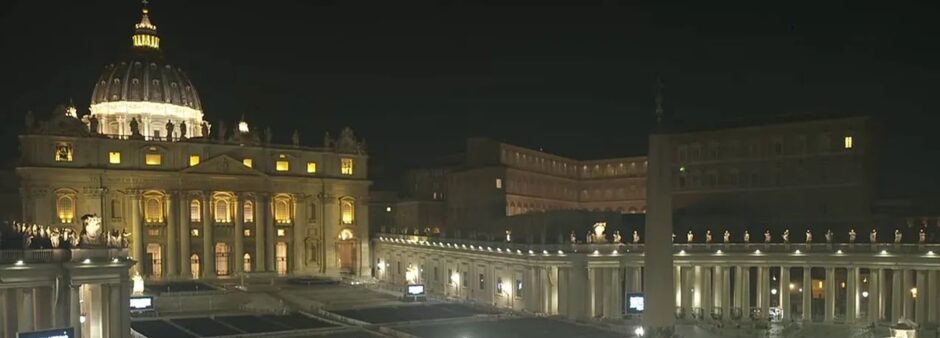
C-FAM: US Castigates Holy See over “Family Planning”

The always useful C-FAM site – may they thrive – has this.

Volume 14, Number 18
April 14, 2011

US Castigates Holy See over Family Planning

By Lauren Funk

NEW YORK, April 14 (C-FAM) The contrast between the priorities of the developed and developing world was as clear as night and day.

“It is detrimental to not have adequate family planning resources,” a visibly US delegate told the room.  “Why is there a resistance to acknowledging access to family planning as a necessity?”

The soft-spoken delegate from the small island nation of St. Lucia replied, “How do we get our fertility rate to rise? We were told we needed to reduce our fertility rate –now we have an aging population.”

Both voices spoke out during a UN panel hosted last week by the Holy See, Honduras, and Malta called “Secure Human Development: Marriage, Family, Community.” Laurie Shestack-Phipps, a US representative to the UN, castigated the Holy See and other organizers for not being “comprehensive” in their approach to the panel, specifically mentioning family planning and abortion. She [There’s a surprise.] complained further about high fertility rates in the poor countries of Africa.

Shestack-Phipps said, “How can you say that you value family, community, and marriage, but not bring into the picture that both men and women have a right to a healthy life, to be able to avoid unsafe abortion, and have access to the highest attainable standard of reproductive health, and to decide how many children they should have?”  [Get that?  Note the language about “rights”.  The “right” to “avoid unsafe abortion”.  The assumption is that abortion is a right.]

The exchange between Shestack and Sarah Flood-Beaubrun of St. Lucia points up an irony at the UN. On the one side are rich countries demanding poor countries reduce their fertility rates, and on the other, the poor countries saying they need higher fertility rates for not just development, but survival. Almost half the countries in the world are facing what has come to be known as demographic winter, where fertility rates have fallen so dramatically that populations are rapidly aging.

The US delegate’s castigation on family planning, which ignored the demographic realities and actual desires of developing countries, is a microcosm of the current UN debates on population and development.  The documents that guide this year’s Commission on Population and Development admit that most nations have achieved low fertility, yet the UN continues to ask donor nations for more and more money for family planning services [US taxpayer money at work around the world!] and for what the UN euphemistically calls commodities: condoms, pills, and injectibles that prevent pregnancy. [“commodities”…. Orwellian.]

Wendy Wright, President of Concerned Women for America, further underscored the incongruity. She has visited many medical clinics in Africa and the doctors there told her of medicine cabinets that are empty of essentials like penicillin but overflowing with condoms [Get that?] – so many that children have taken to blowing them up like balloons and playing with them as toys.  “So much attention is given to family planning that it drains resources away from what the desperate needs are,” she explained.

Archbishop Francis Chullikatt of the Holy See Mission also strongly warned against such warped priorities.  “International programs of economic assistance aimed at financing campaigns of sterilization and contraception, as well as the subordination of economic assistance to such campaigns, are affronts to the dignity of the person, the family, and the human community,” he said.

The panel was organized and hosted by C-FAM (publisher of the Friday Fax, Focus on the Family, and Concerned Women for America). The UN Commission on Population and Development ends this Friday.

Did L’Osservatore Romano cover this?

I wonder if they still think Pres. Obama really wants to to find common ground, really wants to dialogue.

Posted in Emanations from Penumbras | Tagged , , , , ,
28 Comments

If it is Easter…

Watch the main stream media for an uptick in stories, articles, and programs which aim at making the Catholic Church look bad.

Easter is coming and then the Beatification of John Paul II.  We will see…

  • Stories about priests who hurt kids.
  • Articles about rigid and backward bureaucrats want to impose an awkward translation without consultation of “the people”.
  • Pieces about women who feel called to the priesthood in spite of Vatican “policy” imposed by old men.

I suspect that editors have been sitting on stories, waiting to publish them at this time of the year.

Watch for the uptick.

Posted in Biased Media Coverage |
22 Comments

WDTPRS Friday 5th Week of Lent: “My days are swifter than a weaver’s shuttle”

LoomCOLLECT
Absolve, quaesumus,
Domine, tuorum delicta populorum,
ut a peccatorum nexibus,
quae pro nostra fragilitate contraximus,
tua benignitate liberemur.

In the pre-Conciliar Missale Romanum this prayer was the Collect of the 23rd Sunday after Pentecost. In the ancient Veronese Sacramentary it was found in the month of September, a fast time, but it was a bit different: Absolue, domine, quaesumus, tuorum delicta populorum, et quod mortalitatis contrahit fragilitate purifica; ut cuncta pericula mentis et corporis te propellente declinans, tua consolatione subsistat, tua graita promissae redemptionis perficiatur hereditas.

A nexus, from necto (“to bind, tie, fasten; to join, bind, or fasten together, connect”), is “a tying or binding together, a fastening, joining, an interlacing, entwining, clasping” and thence, “a personal obligation, an addiction or voluntary assignment of the person for debt, slavery for debt”. Nexus is used to indicate also “a legal obligation of any kind”. It is not uncommon to find somewhere near nexus the word absolvo, which is “to loosen from, to make loose, set free, detach, untie”. In juridical language it means “to absolve from a charge, to acquit, declare innocent”. Here is a truly fascinating piece from the mighty Lewis & Short Dictionary: “to bring a work to a close, to complete, finish (without denoting intrinsic excellence, like perficere; the fig. is prob. derived from detaching a finished web from the loom”

Contraho in this context is “to bring about, carry into effect, accomplish, execute, get, contract, occasion, cause, produce, make”. Blaise/Dumas indicates that contraho means “to commit sin”.

Loom ShuttleLITERAL TRANSLATION
Unloose, O Lord, we implore,
the transgressions of Your peoples,
so that in Your kindness we may be freed
from the bonds of the sins
which we committed on account of our weakness.

Think of sin as a web which we both weave and then get caught it. As Hamlet says the engineer is “hoist with his own petard”. When our First Parents committed the Original Sin, they contracted (contraho) the guilt and effects for the whole human race. At that point our race was bound by justice. To be “justified” again, and to be unbound from our guilt and set to right with God, reparation had to be made. Thus, the New Adam allowed Himself to be bound by His tormentors, and be bound to the Cross, and then unbind His soul from His Body and die.

The Sacrifice of the Lord was aimed not just at a few chosen or privileged people. It was for all peoples. The Sacrifice was “for all”, though “all” will not accept its effects. Some will refuse what Christ did to free us from our sins and the punishments of eternal hell they deserve. “Many” will be saved as a result of Christ’s Passion and Death. Which side of the reckoning will you be on.

Returning to the image of the loom, which is woven into today’s vocabulary, I have in mind the incredible phrase from the Book of Job: “My days are swifter than a weaver’s shuttle, and come to their end without hope. Remember that my life is a breath; my eye will never again see good.”

Our days are indeed like a shuttle. Some years ago I met a women who woven cloth with a large loom. She showed me how it worked. In her practiced hands, the shuttle lashed swiftly back and forth, back and forth, back and forth, while the loom packed the threads together. The cloth “grew” as it was woven, slowly, but surely. But the shuttle snapped back and forth with increasing speed as she found her rhythm and settled into it.

LAME-DUCK ICEL:
Lord,
grant us your forgiveness
and set us free from our enslavement to sin
.

You decide.

NEW CORRECTED ICEL VERSION:
Pardon the offenses of your peoples, we pray, O Lord,
and in your goodness set us free
from the bonds of the sins
we have committed in our weakness
.

Posted in LENT | Tagged , ,
13 Comments

STATIONS OF THE CROSS (PODCAzTs from Fr. Z)

Many parishes and chapels will have the Via Crucis or Stations of the Cross during Lent.

What version does your parish use?

I have audio projects with the Way of the Cross.

Here is a reading of the Via Crucis, the Way of the Cross, composed by Joseph Card. Ratzinger, now Pope Benedict XVI, for the 2005 Good Friday observance at the Colosseum in Rome.

Also, for your Lenten spiritual warfare, here are two versions the popular Via Crucis by St. Alphonsus Liguori. One version is plain, just my voice. The other is the same voice recording, but with the Gregorian chant Sequence Stabat Mater interlaced between the stations.

Posted in LENT, Our Catholic Identity, PODCAzT, PRAYERCAzT: What Does The (Latin) Prayer Really Sound L | Tagged ,
41 Comments

The Bronx is up…

… and the Battery down.

20110414-031120.jpg

Posted in Just Too Cool, SESSIUNCULA, What Fr. Z is up to | Tagged
35 Comments

Brick by Brick in Amsterdam

If it can be done in Amsterdam, it can be done anywhere.

NLM has a page with some photos of a recent Pontifical Mass in the Extraordinary Form in Amsterdam.

Friends, don’t just sit and wish you could have one.  Sure, the resources may be thin where you are, but do what you can, brick by brick.

Posted in "How To..." - Practical Notes, Brick by Brick, SUMMORUM PONTIFICUM | Tagged ,
15 Comments

WDTPRS Thursday in the 5th Week of Lent: Defending the Faith

Knight in Shining ArmorCOLLECT
Adesto, Domine, supplicibus tuis,
et spem suam in tua misericordia collocantes
tuere propitius,
ut, a peccatorum labe mundati,
in sancta conversatione permaneant,
et promissionis tuae perficiantur haeredes.

This prayer was not in a pre-Conciliar edition of the Missale Romanum, but a prayer from the Veronese Sacramentary in the month of September, a fast time, it was altered by the Cutters and Pasters, for the Novus Ordo. The Veronese has et consequentes sufficientiam temporalem promissionis tuae perficiantur heredes.

Tueor is one of those verbs with a zillion possibilities. The outstanding Lewis & Short indicates that it means, in the first place, “to see, to look or gaze upon, to watch, view” and hence it shifts in meaning to “to see or look to, to defend, protect”.

Permaneo, which is basically, “to stay to the end; to hold out, last, continue, endure, remain; to persist, persevere” is also, interestingly, “to abide in a way, rule, or mode of life, to live by, to devote one’s life to” as is attested to in the Vulgate.

Conversatio we have seen in an earlier Lenten entry.

SLAVISHLY LITERAL TRANSLATION
Be present, O Lord, to Your humble petitioners,
and graciously protect those placing their hope in Your mercy,
so that, cleansed from the stain of sins,
they may persevere to the end in holy manner of living
and as the heirs of Your promise be brought to perfection.

John Paul II at prayerEven in a bare bones metaphrase such as this, the power of the Latin prayer shows forth.

LAME-DUCK ICEL:
Lord, come to us:
free us from the stain of our sins.
Help us to remain faithful to a holy way of life,
and guide us to the inheritance you have promised
.

Perseverance it is key to this prayer.

We all have something given to us by God to accomplish in life.

We require both grace and elbow grease to persevere in our vocations. The Church herself has a mission to fulfill and she also must be faithful to her Spouse, Christ the Lord. The integrity of our vocations must be defended as well.

The Church, from time to time, must make firm, clear and bold statements of belief and also exercise internal discipline for the sake of fulfilling her God given vocation. At times she must defend the flock from error and disorder.

You might remember that in 1998 the late Pope John Paul II issued a Motu Proprio document called Ad tuendam fidem. By this instrument, the Church’s legislator inserted some canons into the Code of Canon Law for both the Latin and Eastern Churches. The laws aimed to defend the Faith from theological errors especially by those who teach.

We need clear doctrine, clear prayers, and clear willingness to adhere to them on the part of her duly appointed pastors.

The new, corrected translation of the Missale Romanum will be a contribution, not an obstacle.

NEW CORRECTED TRANSLATION:
Be near, O Lord, to those who plead before you,
and look kindly on those who place their hope in your mercy,
that, cleansed from the stain of their sins,
they may persevere in holy living
and be made full heirs of your promise
.

Posted in LENT | Tagged
6 Comments

“It is possible to fully understand the Mass.”…. NOT.

My friend Jeffrey Tucker over at the Chant Cafe has a great entry on music and matters liturgical… and you.

He provides bullet points which are each food for thought.

Here is how he begins:

What We Think We Know That Is Wrong

A director of music at a Catholic parish, obviously of long experience, sent me a list he has been keeping of things that people believe that are not so.

1. It is possible to fully understand the Mass.
1a. Having Mass entirely in the vernacular facilitates this complete comprehension.
1b. The more Latin we use, the less we can comprehend the Mass, unless we know Latin.

2. Mass is really about the words.

[…]

We can understand many things about Mass and that occur during Mass… but Mass is really an encounter with mystery.

Good work Mr. Tucker.

Check out his excellent post and say “Hi” from Fr. Z

Posted in "How To..." - Practical Notes | Tagged
25 Comments

“ecclesiastical karaoke”

From CNA:

London, England, Apr 14, 2011 / 05:46 am (CNA).- A Grammy winning music director has delivered a stinging attack upon modern Church music.  Joseph Cullen, choral director at the London Symphony Orchestra, says that since the 1960s there has been a “glaring lack of sympathy” for “worthy sacred music.”

Writing in the April 9 edition of the English weekly The Tablet, [?!?] he praised the music used during last year’s papal visit to the United Kingdom. But he added: “Sadly such excellence is untypical of the vast majority of our Catholic churches. There is a glaring lack of sympathy for the heritage which should be the bedrock of worthy sacred music in today’s Church.”

[…]

He writes, “Low-quality material in both inspiration and facility is commonplace. Hymns are set to popular music (for example, “My God Loves Me” to the tune of “Plaisir d’amour”) with little regard to the inappropriateness of the original and well-known words.”

He also criticized the practice of a lone cantor leading the singing in parishes. “The misuse of one booming voice behind a microphone, an ecclesiastical karaoke, seems to have killed off unified congregational singing.”

[…]

Posted in Liturgy Science Theatre 3000, The Drill | Tagged , ,
45 Comments

WDTPRS Wednesday 5th Week of Lent: “a gracious hearing when they cry out to you”

COLLECT:
Sanctificata per paenitentiam
tuorum corda filiorum, Deus miserator, illustra,
et, quibus praestas devotionis affectum,
praebe supplicantibus pium benignus auditum.

The Redactors drew this from a prayer in the Gelasian on the Saturday (Feria VII, yes, 7th) of the Fifth Week of Lent: Sanctificata hoc ieuinium tuorum corda fidelium, deus miserator, inlustra et quibus deuotionis praestas affectum, praebe supplicantibus pium benignus auditum: per. We have seen constant substitution of the word ieiunium with other terms.  In the pre-Conciliar Missale Romanum this was a prayer for Wednesday in Passiontide.  In the Veronese this was in the month of September, for the fast of the seventh month: Sanctificata ieiunio tuorum corda filiorum, deus, habitator inlustra; et quibus prestas deuotionis affectum, praebe supplicantibus pium benignus auditum.

In Blaise/Dumas we get for this context “sentiment”.  The editor of Blaise, Dumas, in his notes on p. remarks, “ut… piae devotionis erudiamur affectu (or. m. «Dilexisti», Leon. 1186).  Here affectus is paired with devotio, itself a very hard word.  In many contexts, devotio does not simply transfer into devotion, but in this case it probably can.

SLAVISH RENDERING:
O God, merciful one, enlighten the hearts
of Your children sanctified by penance,
and graciously grant a compassionate hearing to supplicants
to whom you are giving the sentiment of fervent devotion.

LAME-DUCK ICEL:
Father of mercy,
hear the prayers of your repentant children
who call upon you in love.
Enlighten our minds and sanctify our hearts
.

NEW CORRECTED VERSION:
Enlighten, O God of compassion,
the hearts of your children, sanctified by penance,
and in your kindness
grant those you stir to a sense of devotion
a gracious hearing when they cry out to you
.

You decide.

Posted in WDTPRS |
4 Comments