QUAERITUR: Holy Thursday altar of repose in the basement where coffee is usually taken

From a reader:

Is there any guidance about where the Altar of Repose on Holy Thursday should be located? For many years at my parish, it was located at one of the side altars in the Church (we have five to choose from). Our current pastor has experimented with its placement over the last three years; last year it was set up in the Church basement on a temporary altar, which is a space normally used for parish activities such as meetings and the Sunday morning coffee hour. Many parishioners are not happy about trekking out of the main Church and down to the hall. The pastor plans to use the same place this year, saying that under the rubrics the Altar of Repose is not supposed to be located at a side  altar, which is still part of the main sanctuary. Is this correct? Many of us would like to revert to its prior placement but are unsure what the “rules” provide.

In… the … basement…

That sounds silly to me.   But I am unreconstructed ossified manualist.

I think the Lord should be reposed on a side altar.  I believe that practice is well attested in our Latin tradition.

But… documents.  I don’t know at this moment, so I will open this to the readers, trusting that they will perhaps stay on topic.

Posted in "How To..." - Practical Notes, ASK FATHER Question Box, Liturgy Science Theatre 3000, Our Catholic Identity | Tagged ,
11 Comments

WDTPRS – Palm Sunday: an example so perfect that it has the power to transform us

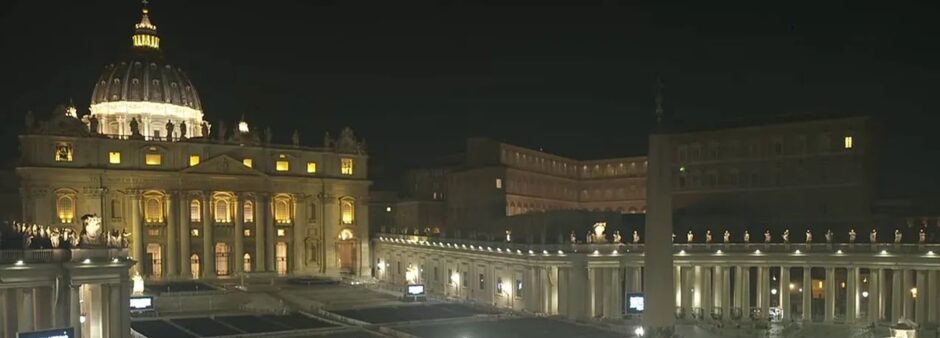
Palm Sunday marks the beginning of Holy Week.  The Sacred Triduum (triduum from tres dies – “three day space”) were once days of obligation when people were freed from servile work so that they could attend the liturgies, once celebrated in the morning.  In the 17th century, however, the obligation was removed under the influence of changing social and religious conditions.  As a result, the faithful lost sight of these beautiful liturgies and in general only priests and religious in monasteries knew them.

In 1951 Pope Pius XII began to restore the Triduum liturgies to prominence by mandating that the Easter Vigil be celebrated in the evening.  In 1953 Mass was permitted in the evening on certain days.  A reformed Ordo for Holy Week was issued in 1955 and took effect on 25 March 1956.   That is when the Sunday of Holy Week came to be called “The Second Sunday in Passiontide, or Palm Sunday”.  Matins and Lauds (Tenebrae, “shadows”) was to be sung in the morning.  Holy Thursday Mass was not to begin before 5 p.m. and no later than 8 p.m.  The idea was to make it easier for people to attend these all important liturgies.

The principal ceremonies of the Palm Sunday Mass include the blessing of palm branches (or olive branches in some parts of the world, such as Rome) and a procession around and into the church.  In the present Missale Romanum an interesting rubric about the procession harkens to ancient times:

“At a suitable hour the “collect” is made (fit collecta)in a lesser church or in another appropriate place outside the church toward which the procession marches.”

Here is our word “collect” used to describe a gathering of people.

Also in the rubrics there is something helpful for our understanding of “active participation”:

“Then as is customary the priest greets the people; and then there is given a brief admonition, by which the faithful are invited to participate actively and consciously (actuose et conscie participandam) in this day’s celebration.”

Those words actuose et conscie are very important.  The Second Vatican Council, when using the term actuosa participatio or “active participation”, meant mainly interior participation, the engaging of the mind, heart and will.  The Council Fathers did not mean primarily exterior participation.  Exterior participation should be the natural result of interior participation: we seek to express outwardly what we are experiencing within.  While the two influence each other, there is a logical priority to interior participation, which is by far the more important.

At the end of the procession, when everyone is gathered in the church, the priest says the…

COLLECT – LATIN TEXT (2002MR):
Omnipotens sempiterne Deus,
qui humano generi, ad imitandum humilitatis exemplum,
Salvatorem nostrum carnem sumere
et crucem subire fecisti,
concede propitius,
ut et patientiae ipsius habere documenta
et resurrectionis consortia mereamur.

The vocabulary of today’s Collect is incredibly complex.  We can only scratch at a fraction of what is there.

Our prayer was in older editions of the Missale Romanum and, before them, in the Gelasian Sacramentary.  In the Gelasian there is an extra helpful et: Salvatorem nostrum et carnem sumere, et crucem subire.  Wonderfully alliterative!  The editor of the Gelasian excludes a comma, which makes sense to me: qui humano generi_ ad imitandum…. There may be a touch of St. Augustine’s (+430) influence in the prayer.  In Augustine humilitatis appears with exemplum on close conjunction with documentum (ep. 194.3) and with documentum and patientiae in proximity to exemplum (en. ps. 29 en. 2.7).  In the context of the Passion Augustine says: “Therefore, the Lord Himself, judge of the living and the dead, stands before a human judge (Pilate), offering us a decisive lesson of humility and patience (humilitatis et patientiae documentum), not defeated, but giving the soldier an example of how one wages war (pugnandi exemplum): …”

There are two words for “example” here: exemplum…documenta. These words appear together in numerous classical and patristic texts. Our startlingly useful Lewis & Short Dictionary informs us that our old friend exemplum means, “a sample for imitation, instruction, proof, a pattern, model, original, example….”  Exemplum is a term in ancient rhetoric, an inseparable part of the warp and weft of the development of Christian doctrine during the first millennium.

For Fathers of the Church, all well-trained in rhetoric (how we need those skills today), exemplum identified a range of things including man as God’s image, Christ as a Teacher, and the content of prophecy.   In Greek and Roman rhetoric and philosophy, an exemplum could have auctoritas, “authority”, the persuasive force of an argument.  When we hear today’s prayer with ancient ears, exemplum is not merely an “example” to be followed: it indicates a past event with such authoritative force that it transforms him who imitates it.  Today we hear humilitatis exemplum, the authoritative model of humility who is Christ – Christ in action, or rather Christ in Passion, undergoing His sufferings for our sake.  This becomes the foundational and authoritative pattern of the Christian experience: self-emptying in the Incarnation and Passion leading to resurrection.   Exemplum is augmented later in the prayer by documentaDocumentum is also a “pattern for imitation” like exemplum but also in some contexts having the meaning of “a proof”, that is, a concrete demonstration that what is asserted is true: evidence.   In this case it is a paradigm after which we are to pattern and shape our own lives.  But this pattern or model itself actually has power to shape us.  Christ transforms us the baptized who are made in his image and likeness, after his perfect exemplum, and who imitate His exempla and documenta, His words and deeds.

Consortium (from con-sors… having the same lot/fate/destiny with something or someone) classically is a “community of goods” and “fellowship, participation, society.”

Habere has a vast entry in the L&S. The common meaning is “have”, but it also indicates concepts like “hold, account, esteem, consider, regard” as well as “have as a habit, peculiarity, or characteristic.”  Habere is doing double-duty with two objects, documenta and consortia. This is why I use both “grasp” for the first application of habere and “have” for the second.  The meanings of the two different objects draw our two different senses of habere.

Patientia is from patior, “to bear, support, undergo, suffer, endure”, and it carries all its connotations as well as the meaning “patience”.  This is where the word “Passion” comes from.  Today is Second Passion Sunday.  We could say here, “examples of His long-suffering” or “exemplary patterns of His patient forbearance.”  Finally, note that nostrum goes with Salvatorem and not with carnem: caro, carnis is feminine and the form would have to have been nostram carnem.

SLAVISHLY LITERAL TRANSLATION:
Almighty eternal God,
who, for the human race,
made our Savior both assume flesh and undergo the Cross
for an example of humility to be imitated,
graciously grant,
that we may be worthy to grasp both the lessons of His forbearance
and also shares in the resurrection.

LAME-DUCK ICEL:
Almighty, ever-living God,
you have given the human race Jesus Christ our Savior,
as a model of humility.
He fulfilled your will
by becoming man and giving his life on the cross.
Help us to bear witness to you
by following his example of suffering
and make us worthy to share in his resurrection
.

NEW CORRECTED ICEL:
Almighty ever-living God,
who as an example of humility for the human race to follow
caused our Savior to take flesh and submit to the Cross,
graciously grant that we may heed his lesson of patient suffering
and so merit a share in his Resurrection
.

More can be said about that phrase patientiae ipsiusIpse, a demonstrative pronoun, is emphatic and means “himself, herself, itself”.  Could we personify patientia to mean, “grasp the lessons of Patience itself” or even “of Patience Himself”?   That would be poetically sublime.

In the fullness of time the Second Person of the Trinity, God the Son, the eternal Word through whom all things visible and invisible were made, by the will of the Father emptied Himself of His glory and took our human nature up into an indestructible bond with His own divinity.  He came to us sinners to save us from our sins and teach us who we are (cf. Gaudium et spes 22).  This saving mission began with self-emptying (in Greek kenosis).

Fathom for a moment the humility of the Savior, emptying Himself of His divine splendor, submitting Himself to His humble and hidden life before His public ministry.   When the time of His years and His mission was complete He gave Himself over again, emptying Himself yet again even to giving up His very life.   Every moment of Jesus earthly life, every word and deed, are conditioned by humility.   This is our perfect example to follow, an example so perfect that it has the power to transform us.

As Holy Week begins and the Sacred Triduum is observed, come to the sacramental observance of the sacred and saving mysteries with humble self-emptying.  Make room for Christ.
Posted in LENT, SESSIUNCULA, WDTPRS | Tagged , ,
9 Comments

Baby pronounced dead at birth starts to breathe

Doctors pronounced this baby dead, but after 2 hours of the mother holding him in her arms, he started breathing again.

Watch.

[wp_youtube]hMAzOjExKMw[/wp_youtube]

Posted in Emanations from Penumbras, Just Too Cool | Tagged ,
16 Comments

A Universal Church should have universal Missal. Duh.

From the blog St. Louis Catholic comes a good note about an article in the New York Times the other day which I started working on for an entry here, but finally shrugged and gave it up as dumb, much like the even worse, even dumber article in the recent number of TIME (perhaps one of the dumbest things I have ever read).   But back to the point.   St. Louis Catholic made this observation about the article in the NYT:

A universal church, they say, should have the closest thing possible to a universal missal.

The above sentence is taken from this story in the New York Times, [By Laurie Goodstein, always ready to give the Catholic Church a swipe.] which details the intent of the schismatics of the left to disobey (what, again?) the Holy Father and to disregard the new English translation of the Paul VI Missal.  The new translations are defended, though with much needless hand-wringing, by Church officials in the U.S.

The Times sums up the position of “Church leaders” with the line above.  I semi-successfully prevented a spray of iced tea from my monitor, and ruefully chuckled to the effect that WE. ALREADY. HAD. ONE.

And still do, for that matter.

[…]

You have to make the adjustment in your head that here “universal church” really means the Latin, Catholic Church.  Maronites are obviously not going to be using the Roman Missal.

Posted in SESSIUNCULA |
12 Comments

Cradle Catholic – 30 years old – first confession

From a reader:

Due to your blog you singlehandedly managed to get me to my first confession ever (just before this lent, actually); my first, while I’m 30 years old and a cradle catholic. Obviously, that was quite a bit of a hurdle, which took me about a year (!) to overcome…

This sort of thing makes doing this worth it.

The writer made some other points the obstacles that remained to be overcome.

The writer made a decision to make a list, to let the priest sort out the doubtful points, and – because of nervousness about going to the local parish priest who didn’t seem very patient – to go to a different parish.

Sacramental preparation in some places was so bad, for so long, and the priests were lax in preaching about, preparing people for, and the actually getting to the confessional that many now adult catholics out there never made a 1st Confession as children before their 1st Holy Communion.

Posted in "How To..." - Practical Notes | Tagged , ,
23 Comments

QUAERITUR: I haven’t been to confession for 10 years! I don’t know what to do!

Here is a question from a reader I answered some time ago.
But it is now Saturday of Passiontide.  Sure there are parishes this evening where you can find a priest hearing confessions.

Go. To. Confession.

From a reader:

I haven’t been to Confession in 10 years, and I’ve only gone three times back when I was still in grade school. It’s possible I wasn’t catechized in the sacrament properly because I don’t recall requiring the Act of Contrition, saying any lines for my first two Confessions, nor the proper format for confessing sins.

My last Confession was in a high school theatre and the priest kept tersely correcting me when I confessed my sins wrong, and seemed quite annoyed he had to walk me through it. Now the thought of going makes me anxious to the point I feel ill.

I’ve scoured the internet for guides to confession and examinations of conscience, as well as reviewed your 20 tips, but I’m still unsure about some things.

1. What EXACTLY is the proper way to confess sins, while still being brief at the same time? By Commandment (ie: “Took the Lord’s name in vain X amount of times)? Or by specifics (ie: received communion while not in a state of grace X amount of times)? Something Else?

2. What do you recommend I do if I can’t even hazard a reasonable estimate of how many times I did something?

3. If committing a mortal sin happens so often because it became a habit, is it still a mortal sin?

Before anything else, I am very glad that you are aware of your need to go to confession and you are striving to do it right.

Please know, friend, that going to confession is not supposed to be like being stretched on the rack.  Yes, it is hard.  Yes, you accuse yourself of sins.  Yes, you should be thorough and that can be painful.  But… think of the relief afterward.

Even if you don’t think you are wholly “knowledgeable” about what to do, go anyway.   The priest can help if you get stuck.  99.9% of priests are going to be pretty careful with you.    Just explain that it has been a long time and that you are nervous.  He’ll hear that.

1) There is no specific method of confessing or of examining your conscience, which is more to the point.  You can use the commandments.  That is a standard way.  You can go with virtues and vices.  There is even an iPhone app to help you examine your conscience ahead of time!  I think examens using the Decalogue, the Ten Commandments, are pretty complete.  Perhaps that would be the easiest.  You could simply say that you sinned against the, say, 4th Commandment X number of times.   However, sometimes you may need to add details or circumstances that made it worse.  For example, you can sin against the 7th Commandment by stealing a candy bar, stealing Bill Gate’s Porsche, or stealing a little old widow’s monthly pension.  If you are starving, running from an Islamic terrorist hit squad, or… well… I can’t think of a good reason to steal a widow’s pension at the moment, unless it is to buy Mystic Monk Coffee … no… not that either… these are details that need to be included.  Also, if you stole a candy bar once or 634 times, that is something you need to mention.  Get the idea?

2) It is necessary to confess sins in kind and number, what the sin was and how many times you did it.  The number does make a difference.  That said, we have bad memories.  Just do your best, friend and don’t torture yourself.  Ten years is a long time.  If you can’t think of numbers of times, go with something like an frequency, or an average per month, per year.  Something like that.  If you still can’t get at it, use something like “very rarely”, “really often”, “constantly”.  That sort of thing.  God knows that you are doing your best and, in examining your conscience, you are still giving yourself and the priest a sense of the problem you may or may not have with a particular sin.

3) Sometimes when a sin is deeply ingrained or habitual there is a sense in which the guilt of that sin can be a bit less.  That doesn’t mean that you are not committing a sin.  Furthermore, when you know that you are sinning, you have the responsibility to do something about it.  We can’t excuse ourselves saying, “I can’t help it!”, and then continue as if it suddenly is okay to do it because we struggled over it for a little bit.  This is one of the hard parts of the spiritual life: we have to be willing to suffer, plain and simple.  Saying “no” to ourselves can make us suffer.  But knowing that we are going to suffer ahead of time could help us get our heads into the right place and make some plans before hand, so when the hard part starts, we are not just twisting in the wind.  If you know that X is a big problem and that you had better stop X-ing, make a plan so that when you recognize you are on the verge of X-ing, your pre-arranged plan will kick in and you will Y instead.  This can help.

Finally, it really does help to memorize a regular pattern or routine for what to say.  That structure will make it easier!

Take it easy friend.

If you forget something, but you did your best during the confession itself, don’t fret.  Mentioned it the next time you go.  God knows you did your best and He doesn’t expect the impossible.

You’ll be okay.  Just go.  And if you think you may need a little time, make an appointment with the priest, even to meet at the confessional if you don’t want to face the face to face thing.

Give it a shot, please!

There is nothing that matches that sense of reconciliation and the relief of the forgiveness of your sins.

Posted in "How To..." - Practical Notes, ASK FATHER Question Box | Tagged , , , , , ,
12 Comments

To priests in difficult circumstances

A note from Fulton J. Sheen to priests in difficult circumstances:

When nothing makes sense, when one is certain that “things can no longer go on like this,” one immediately is brought face to face with the most thwarted and disappointed man in the Gospel: John the Baptist…. His mission did not end as he thought it should. Like the earth shaking under his feet, there vomited up that awful sense of meaninglessness which seizes any man of God when he is seemingly not supported by God….

To whom shall we go in such black moments as we face the ugly mask of meaninglessness? John the Baptist went to Christ. Even though he did not understand the Master’s ways, he would bring his despair to Jesus. As Christ on the Cross would go to the Heavenly Father in the darkness of the Fourth Word, so the Baptist would go to Christ in the bleakness of his cell. In stark abandonment no theological discussion, no dialogue with a colleague will solace the heart, but only the experience of having an encounter with Christ. He could have said, “Oh! What’s the use? The hell with it. I’ll give up the priesthood. I made a mistake. This life demands more moral courage than I can summon. This is the end.”

On the contrary, John took all his doubts and despair to the Lamb…. But there are times when the strongest are weak; if he is pure, he feels weak when temptation attacks him; if he is hungering for righteousness, he feels weak in face of the apathy of his colleagues. When the remediless weaknesses of our humanity are upon us, then the strong search for the strongest. And this is what John did….
Somehow or other, Christ does not answer OK when we say, “Help me.” Priests may pledge their lives to Him at ordination, but there will be moments when they will think that He is not equal to their “unbearable situation”…. But in such moments, like John, they must bring their seeming defeat to the Lord, and never brood over it and assume that they know better than the Lord. Blessed is he who in spite of inner questionings and frustrations, still sees no hope for the future except in getting closer to Christ.

Once we begin to separate in Christ His Priesthood and His Victimhood, the priestly life is full of wreckage. His Priesthood can account for our success; His Victimhood alone can explain our defects. When really are we more His? When we are offering, or when we are being offered? The Lord left His own cousin in jail when He could have smitten the bars like Samson. But the Lord Himself would spend Holy Thursday night in jail. Christ the High Priest was inseparably victim; hence He beats down no storms that rise against Him. He rides upon them. The aspiring boy, Joseph, is thrown into a well. Moses is left along the Nile. And John is beheaded….
Though the Lord does not rescue us from the unbearable, His Heart is so grateful for our acceptance of His Will…. The moment we condemn the Lord for forgetting us, is the time when the Lord most highly praises us. We have no idea how much we are loved in that hour when it seems we are most unloved. John thought himself as a broken and forgotten reed, but the Lord saw him as unshakeable as a rock…. In the Divine Order, the imprisoned souls fly. No priestly heart has freedom; it is mastered and victimized: it must be captured before it can fly. The hour of frustration is the day of emancipation. The apparent forgetfulness of Christ as we toil in oblivion is the time when we are most remembered, for it is possible to be “greater than John the Baptist”: and that is by being the “least.” The ark that the Spirit of Christ builds can float in all flood waters. We are winged by our wants. The hope of the future mansion is the house unfinished here. The priesthood learns victimhood in the unsatisfied soul.

(from Chapter 17 of Those Mysterious Priests” by Fulton J. Sheen – Kindle version.)

Posted in Our Catholic Identity, Wherein Fr. Z Rants | Tagged ,
2 Comments

Happy Birthday Holy Father!

Say a prayer today for His Holiness Pope Benedict XVI, whose birthday it is today.

The Holy Father is 84 years old.

A partial indulgence is granted to the Christian faithful who, in a spirit of filial devotion, devoutly recite any duly approved prayer for the Supreme Pontiff (e.g., the Oremus pro Pontifice):

V. Let us pray for our Pontiff, Pope Benedict.

R. May the Lord preserve him, and give him life, and bless him upon earth, and deliver him not to the will of his enemies.

Our Father.  Hail Mary.

Let us pray.

O God, Shepherd and Ruler of all Thy faithful people, look mercifully upon Thy servant Benedict, whom Thou hast chosen as shepherd to preside over Thy Church. Grant him, we beseech Thee, that by his word and example, he may edify those over whom he hath charge, so that together with the flock committed to him, may he attain everlasting life. Through Christ our Lord. Amen.


Posted in Pope of Christian Unity | Tagged ,
11 Comments

ASK FATHER… QUAERITUR… what to do?

I am getting lots of questions and I just don’t have time or the energy, or often the expertise to answer them.

I am considering reviving the old ASK FATHER Question Box site.  When it wound down, due to a technical problem, it had well over 6000 questions and answers in different categories.

If I would consider doing such a thing again, I would need the help of priests (or bishops).  I would need a priests with training in scripture, canon law and moral theology in particular, as well as a sound grounding in dogma.  And did I mention liturgy? We would need men who know both Forms and I would be pleased to have a priest of an Eastern Catholic Church involved, for the sake of the Eastern Code and liturgy and traditions.  The Church has Eastern and Western lungs.

Should any priests (of bishops) be interested in participating in such a project, please let me know by email.

NB: Absolutely fidelity to the Church’s teachings is a must, along with a willingness to do a little work.

Have some Mystic Monk Coffee, Fathers, and think about it.

Posted in ASK FATHER Question Box |
Comments Off on ASK FATHER… QUAERITUR… what to do?

WDTPRS: Saturday in the 5th Week of Lent

COLLECT (2002MR)
Deus, qui omnes in Christo renatos
genus electum et regale sacerdotium fecisti,
da nobis et velle et posse quod praecipis,
ut populo ad aeternitatem vocato
una sit fides cordium et pietas actionum.

In the Tridentinum there is a prayer from Holy Saturday after the 10th prophecy: Deus, qui diversitatem gentium in confessione tui nominis adunasti: da nobis, et velle, et posse quae praecipis; ut populo ad aeternitatem vocato, una sit fides mentium, et pietas actionum.   In the Gregorian Sacramentary in the Hadrianum manuscript this results on the Thursday in the Octave of Easter, when the Station is at XII Apostoli.

SLAVISHLY LITERAL TRANSLATION
O God, who made all those reborn in Christ
to be a chosen race and a royal priesthood,
grant us both to desire and to be able to do what you command,
so that within the people called unto eternity
there may be one faith of hearts and one compassionate duty of actions.

The Angelic DoctorThe really hard phrase in this is pietas actionum.  We have on many occasions in the daily Lent series talked about pietas, and how hard it is to get into English, since “piety” just doesn’t sound right to our modern ears.

In a nutshell, when we talk about pietas as applied to us humans, we generally are referring to our duty, what we owe.  When pietas is used to describe God, we are usually speaking of His mercy towards us.  But, here we seems to have a confluence, whereby our duty is that of mercy to our neighbor as God is dutifully merciful to us His children.

If you are steeped in medieval things, or at least archaic usage of English, and know something of heraldry, you might remember the symbol of the pelican “in her piety”.  There is a symbol of Christ and His Church as a pelican who, in time of famine and drought, pierces her own breast with her bill to feed her chicks from her own blood.

Perhaps you have sung the hymn by St. Thomas Aquinas (+1274) called Adoro Te devote, in which we find the words, “Pie pelicane, Iesu Domine, / me immundum munda tuo sanguine. … O compassionate pelican, Lord Jesus, cleanse me, unclean, in your blood.”

This sort of pietas harks to the sense of “duty” and mercy.  This is what she must do for her young out of mercy.

So, in the phrase una sit fides cordium et pietas actionum we have an expression of Christian wholeness.

Just interior faith alone does not suffice for the Christian life, nor do mere outward actions of charity and mercy.

Pope Benedict spoke to this in his first encyclical letter Deus caritas est.  All good outward actions are good not just because they are performed, but because they are performed from love, a deep sacrificial love which is charity and which imitates the Lord on the Cross.

But wait, there’s more!

Double checking led to the discovery that there was a change of Collect in the 2002MR.  Here is the Collect used in the Novus Ordo this day until the 2002 editio tertia.

COLLECT (1975MR)
Deus, qui, licet salutem hominum semper operaris,
nunc tamen populum tuum gratia abundantiore laetificas,
respice propitius ad electionem tuam,
ut piae protectionis auxilium
et regenerandos muniat et renatos.

The prayer in the edito typica altera of 1975 was not in a previous edition of the Missale Romanum.  It had precedent, however, in the Gelasian Sacramentary.

LAME-DUCK ICEL:
God our Father,
you always work to save us,
and now we rejoice in the great love
you give to your chosen people
.

No, folks.  That’s really it.   Let’s keep moving along with a chuckle.

NEW CORRECTED ICEL:
O God, who have made all those reborn in Christ
a chosen race and a royal priesthood,
grant us, we pray, the grace to will and to do what you command,
that the people called to eternal life
may be one in the faith of their hearts
and the homage of their deeds
.

See what the new, corrected version does with that pietas actionum?  “Homage of their deeds”.

You decide.

As of tomorrow, we enter into the Passion with Palm Sunday.  Sweet Hosannas will ring, before we, as a Church, plunge into darkness.

Posted in LENT, WDTPRS | Tagged ,
8 Comments