VIS: Holy See Press Office statement about Universae Ecclesiae

From VIS with my emphases and comments.

NOTICE ON NEW INSTRUCTION UNIVERSAE ECCLESIA [Spelled incorrectly.  Ecclesiae.]

VATICAN CITY, 13 MAY 2011 (VIS) – Following is the notice, in full, summarizing the new Instruction Universae Ecclesia [again] regarding the application of the Motu Proprio “Summorum Pontificum” issued by Fr. Federico Lombardi, director of the Holy See Press Office.

“Instruction on the application of the Motu Proprio Summorum Pontificum (of 7 July 2007, entered into effect 14 September 2007) was approved by Pope Benedict XVI last 8 April and carries the date of 30 April in liturgical remembrance of Pope St. Pius V.

The Instruction, called Universae Ecclesiae [At last.] on the basis of the first words of the text in Latin, comes from the Pontifical Commission Ecclesia Dei, to which the Pope also entrusted the task of monitoring the observance and application of the Motu Proprio. It therefore bears the signatures of its president, Cardinal William Levada, and secretary, Msgr. Guido Pozzo.

The document was sent to all the Bishops in the past weeks. Remember that “Instructions clarify the prescripts of laws, elaborating on and determining the methods to be observed in fulfilling them” (CIC, can. 34). As is said in n.12, the Instruction was issued “with the desire to guarantee the proper interpretation and the correct application of the Motu Proprio ‘Summorum Pontificum’“.

It is natural that, in its application, the Instruction follow the law contained in the Motu Proprio. The fact that this occurs now, three years later, is easily explained by recalling that in the Pope’s Letter accompanying the Motu Proprio, he explicitly said to the Bishops: “I invite you to send to the Holy See an account of your experiences, three years after this Motu Proprio has taken effect. If truly serious difficulties come to light, ways to remedy them can be sought.” The letter accompanying the Instruction thus bears with it the fruit of a three year trial of the application of the law, which was foreseen from the beginning.

The document is presented in plain wording and is easily read. [Though there are a couple points which require some knowledge of canonical terms.] Its Introduction (nos. 1-8) briefly recalls the history of the Roman Missal up to the last edition of John XXIII in 1962 and the new Missal approved by Paul VI in 1970 following the liturgical reform of Vatican Council II. It repeats the fundamental principle that there are “two forms of the Roman Liturgy, defined respectively as extraordinaria and ordinaria: they are two usages of the one Roman Rite, one alongside the other. Both are the expression of the same lex orandi of the Church. On account of its venerable and ancient use, the forma extraordinaria is to be maintained with appropriate honor” (n. 6).

The purpose of the Motu Proprio, expressed in the following three points, bears repeating: a) to offer to all the faithful the Roman Liturgy in its most ancient usage, considered as a precious treasure to be preserved; b) to effectively guarantee and ensure, for all who ask for it, the use of the forma extraordinaria; and c) to promote reconciliation at the heart of the Church (cf. n. 8).

A brief section of the document (nos. 9-11) recalls the tasks and powers of the Commission Ecclesia Dei, to which the Pope “has conferred ordinary vicarious power” on the subject. Among others, [Nota bene:] this has two very important consequences. First of all, this Commission can [1] decide on  recourses legitimately sent to it against eventual measures taken by bishops or other Ordinaries that seem to be in conflict with the dispositions of the Motu Proprio (while retaining the possibility of further challenging the decisions of the Commission itself before the Supreme Tribunal of the Apostolic Signatura). Moreover, it falls to the Commission, with the approval of the Congregation for Divine Worship, [2] to take care of eventual editions of liturgical texts for the forma extraordinaria of the Roman Rite (for example, it is to be hoped that, following the document, new saints and new prefaces will be added).

The properly normative part of the document (nos. 12-35) contains 23 brief points on different topics.

The competence of diocesan bishops to implement the Motu Proprio is reasserted, with the reminder that in cases of controversy regarding the celebration in the forma extraordinaria, the Commission Ecclesia Dei will adjudicate.

It clarifies the concept of coetus fidelium stabiliter existens (“where there exists a stable group of faithful”), whose desire to attend the celebration in the forma extraordinaria is to be willingly accepted by pastors. While leaving an evaluation of the number of persons necessary to constitute such a group to the prudent assessment of the pastors, it specifies that it not be necessarily constituted by persons belonging to a single parish, but can be composed of persons coming from different parishes or even different dioceses. Always keeping in mind respect for the widest pastoral needs, [that wording does not appear in the Instruction] the Instruction proposes a spirit of “generous welcome” toward the groups of faithful who request the forma extraordinaria and the priests who occasionally ask to celebrate that form with some faithful.

Also very important is the clarification (n. 19) according to which the faithful who request the celebration of the forma extraordinaria “must not in any way support or belong to groups which show themselves to be against the validity or legitimacy of the Holy Mass or the Sacraments celebrated in the forma ordinaria” or against the Pope’s authority as Supreme Pastor of the Universal Church. Such would, in fact, be in obvious contradiction of the purpose of the Motu’s “reconciliation”. [Reminder: the third of three purposes indicated.]

Important indications regarding the “qualified priest” to celebrate the forma extraordinaria are also given. Naturally, he should not have impediments from a canonical aspect. He should know Latin sufficiently well and know the rite to be celebrated. Bishops should, therefore, make adequate formation possible in the seminaries to such ends and the possibility is noted, if other qualified priests are unavailable, of the assistance of priests from the Institutes established by the Commission Ecclesia Dei (which normally use the forma extraordinaria).

The Instruction repeats that every priest, whether diocesan or religious, has the right to celebrate the Mass sine popolo (without a congregation) in the forma extraordinaria if they so desire. Therefore, if it is a celebration with the participation of only one minister, the individual religious do not need the permission of their superiors.

Always in reference to the forma extraordinaria, there follow norms regarding the liturgical rubrics and use of liturgical books (such as the Ritual, the Pontifical, and the Ceremonial of Bishops), the possibility of using the vernacular for the readings (proclaimed either after the Latin language readings or even in alternative to them in “Low Masses”), the possibility for clerics to use the pre-reform Breviary, and the possibility of celebrating the Sacred Triduum of Holy Week for groups of faithful who request the ancient rite. As regards holy ordination, the use of ancient liturgical books is only permitted in the Institutes that are under the Commission Ecclesia Dei.

[And new we depart from news and move into opinion, interpretation…]

On finishing the letter, one is left with the impression of a well-balanced text that intends to promote – as intended by the Pope – a serene usage of the pre-reform liturgy by priests and faithful who feel its sincere desire for their spiritual well-being: [Note: “promote”.] even more, a text that intends to guarantee the legitimacy and efficacy of such usage in keeping with what is reasonably possible. At the same time, the text is animated with trust in the bishops’ pastoral wisdom and insists very strongly on a spirit of ecclesial communion that should be present in all – faithful, priests, and bishops – so that the purpose of reconciliation, so evident in the Holy Father’s decision, not be hindered or frustrated but fostered and attained”.

CNS has this:

Jesuit Father Federico Lombardi, Vatican spokesman, said the language of that provision made it clear that “there should be no polemical or critical intent on the part of those people making the request.”

Posted in "How To..." - Practical Notes, SUMMORUM PONTIFICUM, The Drill, Universae Ecclesiae | Tagged , ,
12 Comments

Universae Ecclesiae, chapel veils, and you

Posts about women wearing head coverings in church never get any attention… NOT.   Nice double negative, no?

I am reminded of the story of the guy during a conference on philology and philosophy who, having delivered a dopey and mind-numbing talk filled with errors, eventually quipped that, while in English a double-negative pointed to an affirmation, a double-positive did not point to a negation. At which point a thoroughly fed-up fellow panelists, griped “Yah, yah.”

I digress.

The new instruction Universae Ecclesiae has this important paragraph.

28 – Praeterea, cum sane de lege speciali agitur, quoad materiam propriam, Litterae Apostolicae Summorum Pontificum derogant omnibus legibus liturgicis, sacrorum rituum propriis, exinde ab anno 1962 promulgatis, et cum rubricis librorum liturgicorum anni 1962 non congruentibus.  … Furthermore, by virtue of its character of special law, within its own area, the Motu Proprio Summorum Pontificum derogates from those provisions of law, connected with the sacred Rites, promulgated from 1962 onwards and incompatible with the rubrics of the liturgical books in effect in 1962.

Derogate means that things are partially replaced, set aside.  So, insofar as the use of the 1962 books is concerned, if there is something that came into law after 1962, and that thing or practice conflicts with what is in the 1962 books, then those post-1962 things don’t apply to the use of the 1962 books.

Communion in the hand is after 1962, as are Extraordinary Ministers of Communion, altar girls….

As I read this, and I checked this with canonists, since the employment of females substituting for Instituted Acolytes came with an interpretation of the 1983 Code, you cannot have altar girls for the Extraordinary Form which was, in 1962, carried out by all male ministers and servers.  This would probably apply to other issues, such as the substitution of music, the use of proper vestments and choir dress, who gives which blessings, etc.

However, I don’t believe that this applies to the use of head-coverings in church by women.  Under the previous Code of Canon Law of 1917, women were obliged to cover their heads with a hat or veil during Mass.  The newer Code of 1983 does not have that obligation.

But, as best I can make it out, this obligation for women in the congregation to wear a head-covering was not in any liturgical book in 1962.  I haven’t checked, but there probably was one for the consecration of an abbess or for vows of religious sisters.  The rite of consecration of virgins was introduced in 1970, though I am vaguely aware that it had barely survived even before for Benedictine nuns.  But that is neither here nor there.  As far as I know there was no mentioned of women in the congregation wearing head coverings in the liturgical books.  And the Instruction UE deals with liturgical books.

So, while UE 28 makes it clear that females are not to serve at the altar when the older books are used, it does not touch on the issue of head-coverings for women in the congregation.

That said, Card. Burke has argued along the lines of the spirit of the provisions of Summorum Pontificum.  Surely he is right.  While there is no strict obligation according to the law, the whole ethos of the older use of the Roman Rite creates a soft obligation, a strong presumption that those who attend will of their own free will do their best to conform themselves to what the older use is offering.  That would include a willingness on the part of women to use a head-covering in church.


Universae Ecclesiae, chapel veils, and you
Posted in "How To..." - Practical Notes, 1983 CIC can. 915, SUMMORUM PONTIFICUM, Universae Ecclesiae |
58 Comments

WDTPRS POLL: Universae Ecclesiae

Here is a little poll about the new Instruction.  I have written a post about it.  I have made a PODCAzT so you can listen to it.

Give your considered answer, having first read it or listened to it and then having carefully weighed the pros and cons.

If you wish, add a comment in the combox.

I thought I would encourage you to comment.  I know how reticent most of you are about giving an opinion about anything to do with liturgy.

All in all, I rate my satisfaction with Universae Ecclesiae, at...

View Results

Loading ...
Posted in PODCAzT, POLLS, SUMMORUM PONTIFICUM, Universae Ecclesiae | Tagged ,
48 Comments

PODCAzT 119: Instruction “Universae Ecclesiae”

In this PODCAzT we listen to the Instruction issued by the Pontifical Commission “Ecclesia Dei” on the implementation of Summorum Pontificum of Benedict XVI.

At the beginning I have an introduction to give us some context.  I read in Latin only title and the very first paragraph, to get a sound of the “incipit”, which gives the Instruction its title.  I give you some points to listen for along the way.  I then read the whole Instruction Universae Ecclesiae, with the references, but not reading the footnotes.  I have a wrap up with addition observations about juridical force of the Instruction, and the date of its implementation.

There are mini-rants along the way.

NOTA BENE:

I will have to correct a point in the PODCAzT.

As far as the juridical force of the Instruction is concerned: I had thought originally that, since there is no precise date indicated for it going it force (Summorum Pontificum explicitly stated 14 September) it had to be in the Acta Apostolicae Sedis and it would go into effect in 3 months, the usual vacatio, after promulgation.  However, since this is an Instruction, it falls under the norms of canon 34.  As such, this Instruction requires no promulgation, or vacatio legis – it binds immediately, from the moment of its notification, according to the norms of canons 54-56, and specifically, canon 54, 2: “for a singular decree to be enforceable, it must be made known by a lawful document in accordance with the law” – this Instruction has already been sent, in written form, to the Bishops of the Latin Church, this it is in force NOW.

Posted in "How To..." - Practical Notes, Liturgy Science Theatre 3000, PODCAzT, SUMMORUM PONTIFICUM, The Drill, Universae Ecclesiae | Tagged , , , ,
9 Comments

RELEASED: Instruction “Universae Ecclesiae” – the text and my initial observations

Today the Instruction Universae Ecclesiae (UE) has been released.  I reformatted the documents I received and make them available in English HERE, or Latin HERE.

Here are some rapid points to help you read the document on your own.   The document is not so hard that it needs a great deal of interpretation.  But some points will need some extra light.

The structure is:

I. Introduction
II. The Responsibilities of the Pontifical Commission Ecclesia Dei
III. Specific Norms

  • The Competence of Diocesan Bishops
  • The coetus fidelium (cf. Motu Proprio Summorum Pontificum, art. 5 § 1)
  • Sacerdos idoneus (“Qualified Priest”) (cf. Motu Proprio Summorum Pontificum, art 5 § 4)
  • Liturgical and Ecclesiastical Discipline
  • Confirmation and Holy Orders
  • Breviarium Romanum
  • The Sacred Triduum
  • The Rites of Religious Orders
  • Pontificale Romanum and the Rituale Romanum

The most important point to carry away is that UE reveals something more of the mind, the mens, of the lawgiver, Pope Benedict XVI.

Questions will remain, but after the 3 year period following Summorum Pontificum (and the subsequent months which followed) the more pressing questions are addressed in this Instruction.  Some of us could have wished for a bit more strength, but this is a document from an office of the Roman Curia, not from the Pope himself.  It is not a Motu Proprio of the Pope.

I was initially worried that there would be some gassy rambling in the introduction upon which liberals could latch.  The introduction is rather more helpful than harmful.

The Instruction clarifies that the provisions of Summorum Pontificum were for all the faithful, not just followers of the SSPX, or old people who are nostalgic, etc.

The Instruction could have said that the Extraordinary Form is not to be used as often as the Ordinary Form.  It doesn’t.  It says that the Ordinary and Extraordinary Forms are “one alongside the other” and that the Extraordinary Form is to be maintained with “appropriate honor”.

The fact that the older form was never abrogated is found in some subtle language which says that, after the Novus Ordo of Paul VI was released, legislation about the use of the older books didn’t seem necessary.  That left a hole or “lacuna” that the provisions of Summorum Pontificum resolved.

It restates with a direct quote what Pope Benedict wrote in 2007: “What was sacred for prior generations, remains sacred and great for us as well, and cannot be suddenly prohibited altogether or even judged harmful.”

Summorum Pontificum is an “important expression of the Magisterium of the Roman Pontiff”.  It is not merely disciplinary.  It is doctrinal.  That is probably because liturgy and doctrine cannot be separated.

About bishops.  The Instruction says:

14. It is the task of the Diocesan Bishop to undertake all necessary measures to ensure respect for the forma extraordinaria of the Roman Rite, according to the Motu Proprio Summorum Pontificum.

Furthermore… bishops are to do everything “always in agreement with the mens of the Holy Father clearly expressed by the Motu Proprio Summorum Pontificum.”.  par. 13.  Moreover, local ordinaries cannot issue administrative provisions which contradict the Motu Proprio. par. 10. § 2.

A “group” or coetus of the faithful identified in art. 5 § 1 of the Motu Proprio Summorum Pontificum is given no minimum number. Also, the members of that group don’t have to belong to the parish, chapel or oratory.  They can even be from another diocese.  They don’t have to have been interested in the older forms before Summorum Pontificum.  Basically, this means any collection of people who frequently attend a church as part of an identifiable group who ask for the old Mass are a coetus.

The priest is considered idoneus or “qualified” when he can pronounce the Latin and understand what it means. What level of understanding isn’t specified.  He must know how to say the Mass, but he is assumed to be qualified if  he “present(s himself) spontaneously to celebrate … and [has] celebrated it previously”.  In other words, if he has been to a workshop or has learned to say it on his own and has actually done it, he is idoneus.  Also, priests in charge of churches must allow priests to say the old Mass within the bounds of the schedule.  No more of this, “We don’t do that here!” rubbish.

Training and Seminaries.  This is a weak point.

21. Ordinaries are asked to offer their clergy the possibility of acquiring adequate preparation for celebrations in the forma extraordinaria. This applies also to Seminaries, where future priests should be given proper formation, including study of Latin  and, where pastoral needs suggest it, the opportunity to learn the forma extraordinaria of the Roman Rite.

There are weasel words here.  First, ordinaries are “asked”, not required.  Seminarians “should be” is stronger, but not iron clad.  “Where pastoral needs suggest” has been an obstacle used by those who don’t like the mens of the Roman Pontiff for decades.  And “opportunity” falls short of “it must be part of the curriculum.

The mention of Latin, above, has a footnote referencing can. 249, SC 36 and OT 13.  Can. 249 says that seminarians are to be be “very well-trained” (bene calleant) in Latin.  That has not be obeyed even slightly in most seminaries, and yet during ordinations someone stands in front of the ordaining bishop and attests that the men were well-trained.  Also, given the mens of the Supreme Pontiff, and the statement that the Ordinary Form and Extraordinary are side by side, can they really attest that the ordinands are well-trained if they don’t know half their Rite?  The older half?  The one with the actual history and track record?

New saints and new prefaces can be integrated and provisions will be issued about that.

A great paragraph says that, YES, groups can have the observance of the Triduum in a parish church or chapel or oratory, as long as there is a priest who can do it, even if there is also an observance of the Triduum in the Ordinary Form.

33. If there is a qualified priest, a coetus fidelium (“group of faithful”), which follows the older liturgical tradition, can also celebrate the Sacred Triduum in the forma extraordinaria. When there is no church or oratory designated exclusively for such celebrations, the parish priest or Ordinary, in agreement with the qualified priest, should find some arrangement favourable to the good of souls, not excluding the possibility of a repetition of the celebration of the Sacred Triduum in the same church.

The only thing about this that gives me pause is that statement about “When there is no church or oratory designated exclusively for such celebrations…”.  Does that mean that, if in the diocese there is – for example – a church entrusted to the FSSP – there can’t be the Triduum over in, say, Black Duck where a diocesan priest has gotten the older form going?  I doubt it.  The parishes could be each self-sustaining, etc.

Religious who have their own Rites can use their own Rites (e.g., Dominicans) but the Instruction is silent about the Ambrosian Rite (of Milan).  I assume that another instruction will come eventually.

Another important point is that the Instruction calls the Pontifical Commission “Ecclesia Dei” the “hierarchical Superior” in these matters.  In other words, the PCED says what goes, not local bishops in cases of dispute that the Commission judges.  If bishops don’t like the decision of the Commission, they can have recourse to the Apostolic Signatura, which is the Church’s high court.  That didn’t need to be stated, but it is now clear what the line of authority is in this sphere.  Pope and then PCED.  Priests make determinations in parishes.  If there is a problem bishops are to help, not hinder.  If something goes wrong, the PCED judges the matter.

The use of the Pontificale Romanum, the Rituale Romanum, the Breviarium Romanum, the Caeremoniale Episcoporum are all confirmed.  However, bishops cannot ordain with the older books except for members of special groups who have use of the older books and only men in those special groups can receive minor orders.

It is reaffirmed that the clerical state begins with ordination to the diaconate, not before, with tonsure.

Par. 28 is very important:

28 – Praeterea, cum sane de lege speciali agitur, quoad materiam propriam, Litterae Apostolicae Summorum Pontificum derogant omnibus legibus liturgicis, sacrorum rituum propriis, exinde ab anno 1962 promulgatis, et cum rubricis librorum liturgicorum anni 1962 non congruentibus.  … Furthermore, by virtue of its character of special law, within its own area, the Motu Proprio Summorum Pontificum derogates from those provisions of law, connected with the sacred Rites, promulgated from 1962 onwards and incompatible with the rubrics of the liturgical books in effect in 1962.

Derogate means that things are partially replaced, set aside.  So, insofar as the use of the 1962 books is concerned, if there is something that came into law after 1962, and that thing or practice conflicts with what is in the 1962 books, then those later, post-1962 things don’t apply to the use of the 1962 books.

Communion in the hand is after 1962, as are Extraordinary Ministers of Communion, altar girls….  As I read this, and I checked this with canonists, since the employment of females substituting for Instituted Acolytes came with an interpretation of the 1983 Code, you cannot have altar girls for the Extraordinary Form which was, in 1962, carried out by all male ministers and servers.  This would probably apply to other issues, such as the substitution of music, the use of proper vestments and choir dress, who gives which blessings, etc.

The Instruction was signed on 30 April, identified as the memorial of Pope St. Pius V.  That is his feast in the new calendar.  But the choice was certainly significant.  That suggests that the choice of releasing the document on 13 May was always significant.  What it means, I don’t know.

The Instruction was not issued in forma specifica, as was Redemptionis Sacramentum.  I am guessing that this is for two reasons.  First, since it is not given additional weight, we see it as a normal part of the Church’s business.  The fact is, Summorum Pontificum is part of the normal life of the Church now and, in the normal course of things, clarifications are made.  This work doesn’t need forma specifica.  However, Redemptionis Sacramentum actually had to deal with abuses, some of which were graviora delicta and some of which were reprobated, a very forceful way to correct something.  Universae Ecclesiae didn’t need to do that.  Instead, it aims to pry open hearts… and brains… and read Summorum Pontificum as it was intended: according to the mens of the lawgiver.

As far as the juridical force of the Instruction is concerned: I had thought originally that, since there is no precise date indicated for it going it force (Summorum Pontificum explicitly stated 14 September) it had to be in the Acta Apostolicae Sedis and it would go into effect in 3 months, the usual vacatio, after promulgation.  However, since this is an Instruction, it falls under the norms of canon 34.  As such, this Instruction requires no promulgation, or vacatio legis – it binds immediately, from the moment of its notification, according to the norms of canons 54-56, and specifically, canon 54, 2: “for a singular decree to be enforceable, it must be made known by a lawful document in accordance with the law” – this Instruction has already been sent, in written form, to the Bishops of the Latin Church, this it is in force NOW.

Notable too, is the notion that the audience for this instruction is the Bishops, whose task it is to carry out the provisions of the Motu Proprio Summorum Pontificum. This Instruction is intended to inform them how they should be carrying out those provisions.

Ut brevis, I’ll start to wind this up.

As I have written elsewhere, this document isn’t as strong as many of the traditional view would like it to be.  But it is very good.  It is not nearly as weak as those of the liberal, progressivist, discontinuity camp wanted. For them, it is not good at all.

Given the inexorable fact of the “biological solution” and the fact that younger men coming up in the ranks can more readily accept the mens of the Roman Pontiff, Universae Ecclesiae strengthens Summorum Pontificum and confirms it as part of the increasingly normal part of the Church’s life.

Yes,  had wished for more concerning seminarians.

But consider this.  The average length of major seminary is four years.  In September 2011, around the time a new seminary year begins, four years will have passed since the provisions of Summorum Pontificum went into effect.  The men in seminary won’t have known – in seminary – a time Summorum Pontificum wasn’t in effect.  If seminary faculties are smart, they will get ahead of the wave and train them in the older rite.

One thing about seminarians: tell them they can’t have the old rite, the more they will want to learn it on their own and the more important it will become in their minds.

Besides, it is the right thing to do according to the mind of the Pope in Summorum Pontificum as clarified now by Universae Ecclesiae.

Another thing.  Pope Benedict has continued to support the identity of priests and laypeople in the work of the PCED.  Summorum Pontificum was a great gift to priests, who – according to the principle of subsidiarity (acting at the lowest level reasonable) can do among God’s people what they see needs to be done.

As I read UE, since the older forms are identified as “treasures” intended for all the faithful, priests can of their own according and even without previous requests, introduce their flocks to the older forms specified in Summorum Pontificum.  They don’t have to twiddle their thumbs waiting for a request from some large group made up only of parishioners.  There is great flexibility in the who and when and where.  After all, the Ordinary Form and Extraordinary Form are “alongside” each other.

If Universae Eccleisae doesn’t cover everything, or perhaps isn’t super-forceful on every point, which would not be the style or mens of a man such as Benedict XVI, it is nevertheless very good and quite clear.

Finally, now that this long-expected document is out, now that the situation has been brought to greater clarity, now that it is hardly to be doubted that the Pontifical Commission “Ecclesia Dei” and the provisions of Summorum Pontificum really are part of the Church’s life, the same Commission is going to have to act decisively when they are called upon.

The PCED must act decisively when put to the test.   Many out in the world will think they know how the Commission ought to act, but, over time it will become clear whether the provisions of Summorum Pontificum are being implemented or defended or not.

So, be thankful for this new Instruction, which isn’t nearly as weak and watery as some feared, and as it truly could have been.  Say also a prayer for the Holy Father and the members of the PCED and the workers in the offices.

Posted in SESSIUNCULA | Tagged , , , ,
116 Comments

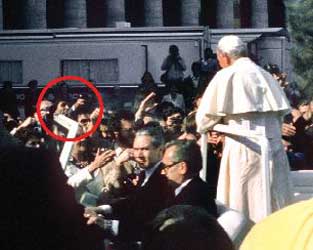
30 years ago today

30 years ago today

John Paul believed that the Blessed Mother, on her feast day as Our Lady of Fatima, saved his life.

30 years ago today.

The moment of the shot was 1717 Rome time, 1317 EDT.

Posted in The Drill | Tagged
23 Comments

The Feeder Feed: Wild Red-head Edition

I was at the oars today, writing.  I have a good view of the feeders.  As I was working, I caught out of the corner of my eye a shape and set of colors that grabbed my attention and … slowly… I went for the camera.

Only once did I see him here, last year, I think.  First, time this year.

He is coming in and picking up nuts and then flying away in the same direction each time.  Hopefully he is stashing or nesting nearby.

Behold:  Melanerpes erythrocephalus.
Red-headed Woodpecker

The wary Red-headed Woodpecker.

Posted in The Feeder Feed | Tagged ,
9 Comments

CLARIFICATION: Universae Ecclesiae and my sports analogy

CLARIFICATION: Universae Ecclesiae and my sports analogyI am driven to issue my own Instruction.

Let’s call it

Inter lusorum coronas …

or else…

Summorum ludentium….

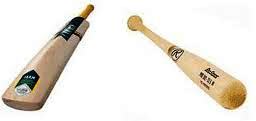
I have seen in the combox and had email analysis upon analysis of my using the analogy of a no-hitter for Universae Ecclesiae.

“But Father! But Father!”, people have written to me.  “Why a defense accomplishment?!?  What does that meeeeean? Why not an offense analogy?!!???!!  Are we being beaten?  Is there something to worry about?  What does this meeeeeeen?!?!?”

Okay… let’s try again.

This isn’t a grand-slam, its more like an inside the park home run, a “leg” home run in the lame-duck ICEL version, which in the new, corrected more Latinate translation would be called a “quadruple”.

Okay?  Better?

The problem with a baseball offense analogy is that, in baseball, the objective of the offense is to put the ball out of control, beyond the control of the defense, rather than control the ball and run around with it.  The defense is trying to keep the ball under control.

Well… “lame-duck” with its limping element hardly suggests the speed… GAH!  Now you have ME doing it too!  Enough!

There… now you can wonder about that one.

I would ask what the Cricket equivalent of a triple-play is… but…

Posted in Linking Back, SUMMORUM PONTIFICUM, Universae Ecclesiae |
49 Comments

Preliminary observations and mixed metaphors about the Instruction “Universae Ecclesiae”

The text of the Instruction is under an embargo until Friday 1200 noon Rome Time (1000 GMT, 0600 EDT).  I must respect that as far as the blog is concerned.

I will put something together about it and post it here at that time.  I have also read the Latin version.

Again, to use my sports analogy from the divinely-favored game of baseball, this document is not at the level of a perfect game, but it is a no-hitter.   For analogies with cricket, results vary.  Perhaps the follow-on?   The point is that, while a no-hitter is really good and fairly uncommon, a team whose pitcher has a no-hitter can still lose.  It’s ultra-rare, but it has happened.

To use another analogy, in the television advertisements of pharmaceutical companies, when they desire to show you the effect of some cure using animation, they always leave a tiny representation of the problem remaining.  They don’t claim that that the cure is 100%.

Universae Ecclesiae won’t smooth all the obstacles thrown before those who desire the older, traditional forms (and all that goes with them).  It will, however, smooth many of the obstacles.

When it comes to the Holy See’s juridical documents, everything depends on the willingness of the Holy See actually to implement them.  The Pontifical Commission “Ecclesia Dei” can waste this no-hitter if they simply sit on their hands and dither.  But it was ever so.  Nihil novi.

Be, therefore, of good cheer.  Many of the traditional mind will be happy with this while all of the liberal bent will be irritated.

While I suspect that there was no conscious effort to associate this document with the Feast of Our Lady of Fatima, it nevertheless is being issued on the Feast of Our Lady of Fatima.  It strikes me that when it comes to Our Mother and all that had to do with Fatima, Divine Providence seems to have a heavier hand.

Also, some have observed to me that Friday the 13th is surely nefas and a bad day for this document.  Sorry, folks.  In Rome it’s Friday the 17th which is considered back luck.  That black cat don’t hunt.

Furthermore, there is a misconception which needs some correction.  Universae Ecclesiae is not a papal document.  It is a document from the Pontifical Commission “Ecclesia Dei“.  It was approved by the Pope and its publication was ordered by him.  It isn’t the Pope’s own document, but its già molto as the Romans say: it’s already a lot.  It is Pope Benedict’s indirectly, of course.  And it is juridical.

Within it we see more clearly the mens of the lawgiver, Pope Benedict.

That’s a lot, too.

Posted in SUMMORUM PONTIFICUM, Universae Ecclesiae | Tagged , , ,
26 Comments

Of Railways

Another lighter story.  I can hear the comparison’s with the Hogwart’s Express now.

From CNA:

Vatican City, May 12, 2011 / 10:52 am (CNA/EWTN News).- It’s a little known Vatican fact but the Pope has his own train station. Thing is, it’s been dormant for years – until now. May 21 will see a 1930s steam train leave the Vatican City Station for a trip to the Italian countryside. And it’s all to raise money for the Holy See’s official charity, Caritas. [Some readers, less inclined to the Potter Analogy will surely consider that it is portentous that this starts one week after the release of Universae Ecclesiae.  Think about it.]

“It’s a rare opportunity and certainly a very joyful way to come together ahead of our General Assembly and reflect on who we are and where we are going,” Monsignor Robert J. Vitillo, head of the Caritas International delegation to Geneva, told Vatican Radio May 11.

The event coincides with Caritas’s 19th International Assembly being held in Rome as well as their 60th anniversary.

It total, five passenger carriages will be pulled by steam engine. The train is being nicknamed the “Caritas Express” for the day and each engine will be dedicated to a particular patron saint of the poor and vulnerable. Seats are still available to the general public.

The day will also see the huge iron gates that mark the border between Italy and the Vatican opened for the first time in years.

And their destination? The historic city of Orvieto in Umbria, about 60 miles to the north of Rome.  [The former bishop of the Diocese of Orvieto-Todi was one of the three bishops removed this year (so far) from governance.  Portentous.]

The Vatican City State Station was built under the Lateran Treaty of 1929 which normalized relationships between the Holy See and the Italian State. When he saw it under construction, Pope Pius XI described it as “the most beautiful station in the world.”

Pope Pius XI never traveled on the line himself and his planned papal train was never built. It was Pope John XXII who became the first pontiff to travel on line, using the Italian presidential train, in 1962. He made the trip between the Vatican City Station and Assisi. Pope John Paul II also traveled on the line in 1979 and 2002.

In the past, emergency relief supplies have also been loaded at the “Pope’s Platform” onto special Caritas trains for delivery to flood victims in northern Italy and elsewhere.

The Caritas Express will pull out of the Vatican State Railway Station at 10 a.m. on May 21. It will return to Termini Station in Rome at 7:30 p.m.

Anyone interested in making a donation and wishing to request a seat on the train should email express@caritas.va

QUAERUNTUR:

How do you get to the track?  For the Hogwarts Express you have to run at a spot in the wall at Paddington… No!  King’s Cross. The bear… thing… Pope Benedict’s coat-of-arms… also portentous.   But since people have been battering themselves against the walls of the Vatican bureaucracy for years, that seems an unlikely method.

Once you get to Orvieto, is there a free transfer for the funicular railway to get you to the top of the town?

Is there a club or dining car?

Is there any connection between the moving of the offices of the Diocese of Kansas City-St. Joseph – and the inevitable shift of the Vortex – and the opening of the Vatican’s railway doors?

Posted in Lighter fare | Tagged
11 Comments























