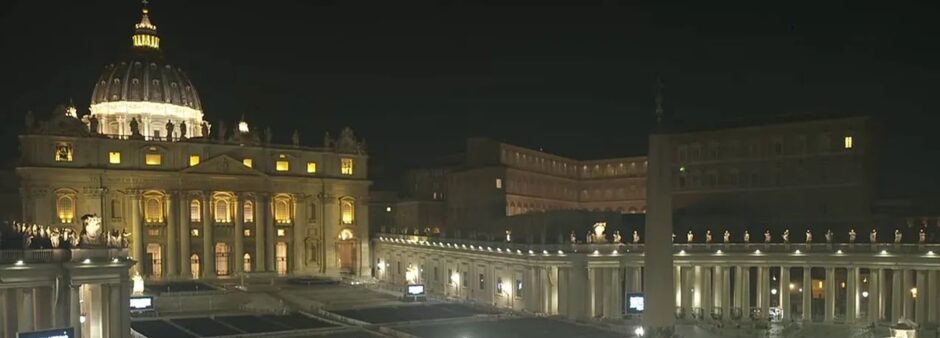
NEW TRANSLATION 1st Sunday of ADVENT 2011!

The USCCB issued a press release:

CARDINAL GEORGE ANNOUNCES VATICAN APPROVAL OF NEW ROMAN MISSAL ENGLISH-LANGUAGE TRANSLATION, IMPLEMENTATION SET FOR FIRST SUNDAY OF ADVENT 2011 [Do I hear an "Amen!"?]
 
U.S. Adaptations to Mass Prayers Also Approved
Parish Education Efforts Urged To Precede Implementation
Resources Available Through USCCB
 
WASHINGTON—Cardinal Francis George, OMI, Archbishop of Chicago and President of the United States Conference of Catholic Bishops (USCCB), has announced that the full text of the  English-language translation of the Roman Missal, Third Edition, has been issued for the dioceses of the United States of America.

            The text was approved by the Vatican, and the approval was accompanied by a June 23 letter from Cardinal Llovera Antonio Cañizares, Prefect of the Congregation for Divine Worship and the Discipline of the Sacraments. The Congregation also provided guidelines for publication.

            In addition, on July 24, the Vatican gave approval for several adaptations, including additional prayers for the Penitential Act at Mass and the Renewal of Baptismal Promises on Easter Sunday. Also approved are texts of prayers for feasts specific to the United States such as Thanksgiving, Independence Day and the observances of feasts for saints such as Damien of Molokai, Katharine Drexel, and Elizabeth Ann Seton. The Vatican also approved the Mass for Giving Thanks to God for the Gift of Human Life, which can be celebrated on January 22

            Cardinal George announced receipt of the documents in an August 20 letter to the U.S. Bishops and issued a decree of proclamation that states that [WAIT FOR IT…] “The use of the third edition of the Roman Missal enters into use in the dioceses of the United States of America as of the First Sunday of Advent, November 27, 2011. From that date forward, no other edition of the Roman Missal may be used in the dioceses of the United States of America.”   [HUZZAH!  In English of course.  Any priest can always use the 2002 Missale Romanum or the 1962 Missale Romanum.]

            The date of implementation was chosen to allow publishers time to prepare texts and parishes and dioceses to educate parishioners.

            “We can now move forward and continue with our important catechetical efforts as we prepare the text for publication,” Cardinal George said.

            In the coming weeks, staff of the bishops’ Secretariat of Divine Worship will prepare the text for publication and collaborate with the staff of the International Commission on English in the Liturgy (ICEL), which will assist Bishops’ Conferences in bringing the text to publication. In particular, ICEL has been preparing the chant settings of the texts of the Missal for use in the celebration of the Mass. Once all necessary elements have been incorporated into the text and the preliminary layout is complete, the final text will go to the publishers to produce the ritual text, catechetical resources and participation aids for use in the Liturgy.

            Receipt of the text marks the start of proximate preparation for Roman Missal implementation. Before first use of the new text in Advent 2011, pastors are urged to use resources available to prepare parishioners. Some already have been in use; others are being released now. They include the Parish Guide for the Implementation of the Roman Missal, Third Edition, and Become One Body, One Spirit in Christ, a multi-media DVD resource produced by ICEL in collaboration with English-language Conferences of Bishops. Both will be available from the USCCB. Information on resources can be found at www.usccb.org/romanmissal

            Bishop Arthur Serratelli of Paterson, New Jersey, Chair of the Bishops’ Committee on Divine Worship, voiced gratitude for the approval.

            “I am happy that after years of preparation, we now have a text that, when introduced late next year, will enable the ongoing renewal of the celebration of the Sacred Liturgy in our parishes,” he said. Msgr. Anthony Sherman, Director of the Secretariat for Divine Worship of the USCCB noted, “A great effort to produce the new Roman Missal for the United States, along with the other necessary resources, has begun. Even as that work is underway a full–scale catechesis about the Liturgy and the new Roman Missal should be taking place in parishes, so that when the time comes, everyone will be ready.”

I am very pleased at this news.

I wonder how long it will be before there is a movement to seek formal approval to use the older, traditional ICEL translation.

Posted in Just Too Cool, WDTPRS | Tagged
70 Comments

IRELAND: Tell bishops to ‘get the hell out of our cathedrals’, says writer

This is from The Irish Independent:

Tell bishops to ‘get the hell out of our cathedrals’, says writer
By Marese McDonagh
Friday August 20 2010

Irish Catholics should establish a home-grown church by demanding that the bishops "get the hell out of your cathedrals", a leading author said yesterday.

Former ‘Newsweek’ journalist Robert Blair Kaiser [a man of a certain age] also said that a grandmother who is urging women to boycott Mass in protest at the way women are treated in the church has started a revolution

He called on Irish Catholics to fix their "broken church" by making it "more Irish, less Roman" at the opening of the Humbert Summer School in Co Mayo.

Mr Blair Kaiser, who reported on the second Vatican Council for ‘Time’ magazine, said that the battle for the Irish Catholic church had already been started by 80-year-old Jennifer Sleeman, who has called on women to boycott Sunday mass on September 26 "to let the Vatican and the Irish church know women are tired of being treated as second-class citizens".

The US author said that the Cork grandmother had probably started the revolution.  [The Irish Catholic Rosa Parks, perhaps.]

"I have every reason to believe that you can take back your church — your church, not the Pope’s church, your church — not the bishops’ church", said Mr Blair Kaiser who recommended that Irish Catholics create a "autochthonous" or local and from-the-ground-up church.

In a keynote address ‘Church Reform: No More Thrones‘, the author said he was not attacking the Catholic faith but the "special and corrosive tyranny that popes have been exercising over Catholics everywhere". [What would examples of that "tyranny" be?  Apparently there should be no one in the Church to exercise the ministry of saying "No." to really bad ideas.]

He said that in the 1800s, Ireland’s first cardinal, Paul Cullen, had built a two-tiered clerical Irish church which marched in total loyalty to Rome and his own over-reaching authority. Later, Dublin Archbishop John Charles McQuaid had "put his own special twists" on Cardinal Cullen’s authoritarian model, imposing his iron will on Irish politics and Irish society.  [I am not well-versed in the particulars of the history of the Catholic Church in Ireland from the 1700’s onward, but I wonder what role Jansenism picked up in French seminaries might have played both in Ireland and then in the USA.]

"The cardinal and the archbishop established the clerical culture in Ireland that Judge Yvonne Murphy identified as the root cause of the Irish scandals that have sent your nation reeling," said Blair Kaiser.  [More and more I think we are going to be seeing the phrase "clerical culture".  "Clerical culture" is always going to be pejorative.]

Irish Catholics could establish a home-grown church by demanding bishops "get the hell out of your cathedrals" and elect their own bishops who would serve the people as listeners, not lords," he suggested[They should listen.  And then they should doooooo…. what exactly?]

Rejected

In a response to the US expert, ‘Irish Catholic’ deputy editor Michael Kelly rejected the comparison between England’s occupation and the "colonising power" of the papacy.

He said that while he shared the keynote speaker’s sadness that the church in Ireland had been unwilling and unable to embrace the teachings of the second Vatican Council, he could not accept that the council intended a rupture of the Catholic tradition of the church.

"What I have experienced in Ireland is a Catholicism that has betrayed the best tradition of our church, he added. He said it was more consoling to blame Rome than to search Irish Catholicism for what had gone wrong and he called for an "honest investigation" into the culture of the church here.

The dreadful truth about the "cabal of egomaniacal clerics" who failed Irish Catholics so dreadfully, is that these bishops did not come from Rome or Constantinople — but from Caherciveen, Tullamore, Cavan, Roscommon and Castlebar.

The school continues today with an examination of the response by the Pope and the Irish hierarchy to the abuse scandals.

Posted in SESSIUNCULA, The Drill | Tagged
62 Comments

Card. Ouellet, Prefect for Bishops, on how bishops should teach

I have been favorably impressed by Card. Ouellet since I met him Rome. 

From LifeSite:

Ouellet: We Need Bishops With ‘Spiritual Discernment’ over ‘Political Calculation’
“We have suffered from this mentality of dissent” that is “still dominating the intelligentsia,” said Ouellet.

By Patrick B. Craine

QUEBEC, August 19, 2010 (LifeSiteNews.com) – Bishops “need spiritual discernment and not just political calculation of the risk of the possibility of the message being received,” said Cardinal Marc Ouellet, the newly-appointed prefect of the Vatican’s Congregation for Bishops, in an interview this week.

“We have to dare to speak to the deep heart, where the Spirit of the Lord is touching people beyond what we can calculate,” he told Canadian Catholic News’ Deborah Gyapong.

During Cardinal Ouellet’s eight years as the archbishop of Quebec City and primate of Canada, he has become known as one of the country’s greatest defenders of faith, life, and the family.

This past spring he drew sharp criticism, from within and outside the Church, after he reaffirmed the Church’s teaching on the sanctity of unborn life, even in cases of rape. He later unapologetically reiterated his views on abortion in a press conference arranged to address the controversy.

Earlier this week the head of the Quebec Bishops Assembly, Bishop Martin Veillette, suggested in a critical interview that while Ouellet has desired to “emphasize certain points of view that he considers important,”  “There are times when it is more important to keep silent than to speak. [That path, it seems to me, has been chosen too often.]

“There are things like that, sometimes, that you need to know how to manage,” he said. “It’s a bit delicate.”

But in the recent interview, Ouellet said that in addition to fearlessly preaching the teachings of the Church, bishops must embrace them deeply.  “Then you have the power of conviction,” he said.
 
[Watch this.] “If you state it only formally and in the end you do not really want to see it applied because you don’t believe that it is possible that people accept it, you are in trouble for the transmission of the message,” he added.

The cardinal, further, said the Church needs what Gyapong called a “new intellectual dynamism” to “recapture the spirit of Christianity” and “create a new Christian culture.[Shades of the new dicastery Pro Repropaganda.]
 
“We need intellectuals for that, theologians, philosophers, Christians who really believe in the Gospel and share the doctrine of the Church on moral questions,” he said.  “We have suffered from this mentality of dissent” that is “still dominating the intelligentsia.”  [I have occasionally written about the false dichotomy that the left/liberals have a penchant for setting up between "intellectual" and "pastoral"… or even "pastor-e-al".  What Card. Ouellet is doing here, I think, is pointing to a proper integration of intellectual and pastoral.]
 
“There is no real discipleship there, real discipleship,” he added. “The discipleship that is emerging is from those who believe and who really love the Church.”

The former Primate of Canada and Archbishop of Quebec City celebrated his farewell Mass on Sunday, the feast of the Assumption, at Ste. Anne de Beaupre.  The church was packed with over 2,000 faithful, with hundreds others being turned away for lack of space.  After his homily, he was congratulated with a lengthy standing ovation.

In his new position as head of the Congregation for Bishops, Cardinal Ouellet will assist the pope in choosing the next generation of the world’s bishops.

In that role, he told Gyapong, he will seek out bold “men of faith” with “the guts to help people live it out.


WDTPRS kudos to His Eminence the Prefect.

Posted in Fr. Z KUDOS, New Evangelization, The Drill | Tagged
16 Comments

PODCAzT 110 & WDTPRSL: Learning the Roman Canon in Latin for Seminarians

I received a nice voice mail from some seminarians who are learning how to say the Extraordinary Form of Holy Mass on their own.  They asked for help with the Latin, since they have not ever heard the Roman Canon in Latin.

So… I made a rapid recording of the Roman Canon in Latin using the 1962MR.  I put in a few little bits from the Novus Ordo version of the Canon as well.

I took this very deliberately.  This is not how you would read it.  I offer this as a tool for learning. The key would be for you you listen to this and then go back to read along, working from a photocopy and circling the tricky parts, and then reviewing.  Reciting this several times a day for several days will finally get it into your tongue and mind.

I added the bits from the Novus Ordo version for a pointed reason. 

I am a little concerned that using Latin is going to be segregated sharply into the traditional form of Mass rather than in the Novus Ordo.  People might be tempted to say, "If you want Latin, go to that Mass".  That is one reason why I object to calling the traditional form or Extraordinary Form, simply "the Latin Mass". 

Latin is also the language of the Novus Ordo.

But there you have it.  I hope this will be helpful for seminarians (and perhaps priests or bishops) who are doing some work on their own.

BTW, when you hear volume shift or two, that is where I had phone calls!

https://zuhlsdorf.computer/podcazt/10_8_19.mp3

SOME RECENT PODCAzTs:

109 10-08-17 A dust up in ancient Carthage and parishes that schism
108 10-07-23 The new translation of the 3rd Eucharistic Prayer; Fr. Z digresses and rants
107 10-07-01 Most Precious Blood and your sins; Interview with Fr. Finigan
106 10-06-25 John Henry Newman’s Kindly Light

Enjoy!

Posted in PODCAzT, PRAYERCAzT: What Does The (Latin) Prayer Really Sound L | Tagged
19 Comments

Medal of Honor winners to vets returning home: Help is there!

A reader sent me a link to something I found very moving.

Some recipients of the Congressional Medal of Honor joined together to make a video PSA to encourage America’s military to seek help when adjusting to life after combat, particularly for post-traumatic stress (PTS).

You can find their website and the video here: http://www.medalofhonorspeakout.org/

I doubt very much that there is a member of the military today who doesn’t know about PTS.  What I don’t doubt is that people are people, and sometimes it is very hard to bend and admit that something isn’t going right and look for help.  Perhaps seeing and hearing Medal of Honor recipients talk about this so frankly will help them over come a sense that bravery means never admitting you are in pain.  

The men in the video show that "Never quit." and "Don’t be defeated." don’t mean never looking for help. 

Here is the video.  Be sure to go over and look at that site and perhaps share it with some vets who are returning home and who may be carrying some heavy invisible wounds and have actually brought something of the enemy home with them. 

There are many videos at that site.  This is only one of them.

WDTPRS kudos for this fantastic initiative.

[flv]10_08_19_medalofhonorspeakout.flv[/flv]
 

Posted in "How To..." - Practical Notes, Fr. Z KUDOS, Just Too Cool, The Campus Telephone Pole | Tagged , ,
9 Comments

WDTPRS: Sanctus

In the print version of WDTPRS, the weekly column, I have been comparing the lame-duck ICEL translation of the Ordinary of Holy Mass still hear in our churches with the new, approved version we will one day be able to use.

I have reached the Sanctus/Benedictus.

This is something of what I offered in the most recent column I sent in.

The sacred action of Holy Mass transcends the bounds of earth.  Every Mass is wreathed about by the heavenly hosts of innumerable angels. 

The first section of the Sanctus is inspired by Isaiah 6:3, which describes the Prophet’s vision of the throne of God.  It is worth seeing an extended passage of chapter 6 to get a sense of what our own attitude should be at this moment of Holy Mass:

In the year that King Uzziah died [+759 BC] I saw the Lord sitting upon a throne, high and lifted up; and his train filled the temple.  Above him stood the seraphim; each had six wings: with two he covered his face, and with two he covered his feet, and with two he flew.  And one called to another and said: “Holy, holy, holy is the Lord of hosts; the whole earth is full of his glory.”  And the foundations of the thresholds shook at the voice of him who called, and the house was filled with smoke.  And I said: “Woe is me! For I am lost; for I am a man of unclean lips, and I dwell in the midst of a people of unclean lips; for my eyes have seen the King, the Lord of hosts!” Then flew one of the seraphim to me, having in his hand a burning coal which he had taken with tongs from the altar.  And he touched my mouth, and said: “Behold, this has touched your lips; your guilt is taken away, and your sin forgiven.” (Isaiah 6:1-7 RSV)

“But Father! But Father!”, some might be saying as they read this.  “You are certainly a romantic at heart.  Your are being overly dramatic to associate this passage with our attitude at Mass!”. 

Hardly!  Consider that the last part of this passage from Isaiah, the description of the mighty seraphim angel coming to the prophet with the burning coal, was used at every Mass for a thousand years.  Before the reading of the Gospel the priest would say the prayer called the Munda cor meum:

“Cleanse my heart and my lips, O Almighty God, Who cleansed the lips of the Prophet Isaiah with a burning coal.  In Your gracious mercy deign so to purify me that I may worthily proclaim Your holy Gospel. Through Christ our Lord. Amen. Lord, grant me your blessing. The Lord be in my heart and on my lips that I may worthily and fittingly proclaim His holy Gospel.”

This hymn/prayer both invokes the presence of the greatest of created beings, the holy angels and acknowledges their presence.  They bow before God.  They bow before and with the priest, alter Christus, as they minister at our altars in our churches.  Later during the Roman Canon the priest requests that the angels take our sacrifice to the altar in heaven.

The word Sabaoth looks a bit like the word “Sabbath”, but it is something quite different.  Sabaoth is from Hebrew tsaba’, “that which goes forth, an army, war, a host.”  Sabaoth or Tzevaot (in some transliterations) is used by the Jews – and by us during Holy Mass – as a title for YHWH, God.   We invoke the God of the heavenly hosts. 

The Hebrew word hosanna is essentially “help” or “save, I pray”.  Depending on the context it is an appeal which the Jews raised to God begging for intervention and mercy or it is a shout of praise.  For Christians, hosanna is a recognition that Jesus is the Messiah and Lord as well as a cry for our own salvation.  It is simultaneously a shout of praise and a cry for help.

Let us now compare the version of the Sanctus/Benedictus still in use at the time of this writing with the new translation.  I add emphases to highlight the changes.

LAME-DUCK ICEL VERSION:
Holy, holy, holy Lord,
God of power and might.
Heaven and earth are full of your glory.
Hosanna in the highest.
Blessed is he who comes
in the name of the Lord.
Hosanna in the highest
.

Notice how the punctuation after “Lord” creates a separation from the rest of the actual title.  Also, the lame-duck ICEL version gives a different stress to “Sabaoth”.

NEW APPROVED TRANSLATION:
Holy, Holy, Holy Lord God of hosts.
Heaven and earth are full of your glory.
Hosanna in the highest.
Blessed is he who comes
in the name of the Lord.
Hosanna in the highest
.

When during Holy Mass you say or sing the Sanctus, you place yourself in a line of worshiping disciples wending back into the very earliest years of our Church.  St. Clement of Rome (fl. A.D. 96) in his letter to the Corinthians mentions the liturgical singing of an early version the Sanctus:

“Let our glorying and our confidence be in Him; let us submit ourselves to His will; let us consider the whole multitude of His angels, how they stand by and serve His will.  For the scripture saith, Ten thousand times ten thousand stood beside Him, and thousands of thousands served Him; and they cried, Holy, holy, holy Lord of Sabaoth! all creation is full of His glory. And let us, being gathered together in harmony and a good conscience, cry earnestly, as it were with one mouth, unto Him, that we may become partakers of His great and glorious promises.” (34:5-7)

The great liturgical scholar Joseph Jungmann wrote in his monumental Mass of the Roman Rite:

[T]his hymn, derived from the prophet’s vision, so sparing in words, yet so powerful and weighty, fits best of all in the structure of the eucharistic prayer, especially in the setting mentioned.  All of God’s benefits and the manifestations of His favor, for which we must give thanks, are after all only revelations of His inmost being, which is all light and brilliance, inviolable and without stain, before which creation can only bow in deepest reverence – his holiness.  Wherefore the first phrase taught us by our Lord in his own prayer is: Santificetur nomen tuum.  That the cry resounds three times must have but increased the joy the Christians had in this song, for even when a Trinitarian meaning was not expressly attached to the triple “holy,” still there was inherent in it an echo of this most profound of Christian mysteries.

Posted in "But Father! But Father!", WDTPRS | Tagged
17 Comments

It is good news time

Do you have some good news you care to post?

Small things but good…

I got an article done for the paper and writing it taught me something about Holy Mass.
I am pretty much recovered from a recent malady.
I am finally getting good tomatoes from the garden.


Posted in SESSIUNCULA |
65 Comments

Apostles of Jesus Christ, Priest and Victim

I had an email from a priest today who told me about a new initiative to build up diocesan priests in their lives and ministry.  Their new initiative, which has the approval of Card. George in Chicago, is called The Apostles of Jesus Christ, Priest and Victim.

I took a look at their site and visited their blog.  I found this interesting bit:

Realizing that parish life for diocesan priests can become fragmented and isolated, we strive to live a common life in shared charity for the good of our priestly apostolate. Our common life, which allows flexibility to accommodate itself to the life of a parish priest, entails the following:

  1. Morning and Evening Prayer (Liturgy of the Hours) in common
  2. One-half hour morning and evening meditation in common
  3. At least one meal daily together
  4. A weekly morning of study in the areas of theology or philosophy, with a specific focus on papal teachings and St. Thomas Aquinas

I hope they get a little traction.

Posted in Mail from priests, SESSIUNCULA |
14 Comments

QUAERITUR: keeping Hosts from different Forms of Mass separated

From a reader:

We have a sung Sunday Mass celebrated in the Extraordinary Form at a local parish. The priest who says the Mass is not the pastor, but a diocesan priest who says Mass in both forms of the Roman Rite. He was invited to say the “old” Mass there at the invitation of the bishop and welcome of the pastor.
 
It has come to my knowledge that this very wonderful priest keeps the hosts that are consecrated at the Mass in the Extraordinary Form separate from those consecrated at Masses in the Ordinary Form, so as to not risk upsetting some of the faithful attending the “old” Mass.
 
I find this extremely troubling, as it seems to send the wrong message. Instead of catering to some misconceptions (and heresy), wouldn’t good catechesis to the faithful in question be in order?

Yes, catechesis is in order.  However, some people are never going to be convinced because they happy only when they are unhappy.
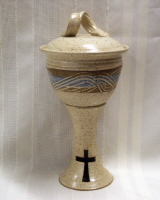
I find it absurd to separate Hosts in that manner.

This sort of thing is fueled the handful of people who think that the consecration during Holy Mass celebrated with the Novus Ordo is invalid, or perhaps the priest was not validly ordained if he was ordained in the newer rite.

Both the consecration in the Novus Ordo of Mass and ordination with the post-Conciliar rite are valid.

Transubstantiation takes place during both forms of Holy Mass.

There is not "more" Jesus in a Host consecrated at one form of Mass than at another.

It could be that the pastor who makes a decision to separate the Hosts in different ciboria simply doesn’t have the energy to deal with the troublemakers.

However, it think it is an imprudent thing to give in to that sort of thing.


Posted in ASK FATHER Question Box, SESSIUNCULA |
93 Comments

PODCAzT 109: A dust up in ancient Carthage and parishes that schism

Many dioceses are having to close parishes.  Now and then a bishop needs to discipline parishes which go renegade.  It sometimes happens that groups of Catholics just go do their own thing.

This got me thinking about a sermon of St. Augustine (+430) delivered in the cathedral of Carthage on 23 January 404.  Aurelius had invited Augustine to come to Carthage, probably to set an example of preaching against the heretical and schismatic Donatists. 

In the sermon in question, a newly discovered sermon listed as Dolbeau 2 or 359B in some lists, Augustine describes a real commotion in church that happened the day before, when he simply left the pulpit as the congregation became rowdy.  On this day, however, he uses the events of the day before to speak about obedience.

There isn’t a strict parallel of the situation Augustine describes in the sermon and what goes on in some renegade groups today, but you will find the hooks quickly and see that they are appropriate.

And so I return to my Patristic roots today and I give my own poor observations along the way.

We have to hear the great Fathers from time to time.  Their work is still actual, in the sense of being timely.

Herein you will hear some recreations of ancient Roman music by Synaulia as well as a slice of Sweetest of Sweets by the wonderful Herbert Howells and the beginning of Bernard Stevens "Agnus Dei" from the Mass for Double Choir.  


https://zuhlsdorf.computer/podcazt/10_08_17.mp3

Posted in Our Catholic Identity, Patristiblogging, PODCAzT, Wherein Fr. Z Rants |
14 Comments
























