The statue of Bl. John Henry Newman

Several good things come together in this story from the Birmingham Mail.

Statue of Cardinal Newman to take pride of place during Papal visit

Aug 18 2010 by Jasbir Authi, Birmingham Mail

THE great nephew of legendary Birmingham author JRR Tolkien is sculpting a statue of Cardinal Newman which will be specially placed in Cofton Park for the Papal visit.

Award-winning sculptor and Catholic Tim Tolkien has started work on the life-size statue of the Cardinal which will be fabricated in steel and sprayed with bronze.

Pope Benedict XVI will hold an open-air Mass at Cofton Park on September 19 and is expected to beatify Cardinal Newman in front of tens and thousands of pilgrims.

There are plans to get the statue, which is expected to be placed next to the stage, blessed by the Pope. Mr Tolkien, who is making the statue with Chris Yeomans, a blacksmith originally from Alvechurch, said the aim was to show him as a scholar and a priest rather than a Cardinal.

The statue will feature the Cardinal seated on a chair with a book and pen on a small table at his side.

Red sandstone for the six foot high plinth will be sourced from a local working quarry and the finished statue will be chemically aged for the visit.

Mr Tolkien, aged 47, who runs a wood carving and metal sculpture business in Cradley Heath, said he was approached by the council around three weeks ago to make the statue.

The father-of-two said: “I haven’t got time to make it complicated, it’s got to be simple. It’s going to be life -size rather than larger than life. “There is no council fund, no budget, money is being raised by sponsorship.

“It’s a great privilege. The Pope doesn’t come often and it’s happening in this city.

“The deadline is going to be tight, it’s going to be right up to the line.”

Mr Tolkien has applied for planning permission application to put the statue in the park.

Council leisure boss Martin Mullaney said: “We want pilgrims to touch the statue. Cofton Park will become a site of pilgrimage together with the Birmingham Oratory and Oscott College.

“It could become a holy site for Catholics like Lourdes in France and resurrect Longbridge.”

Mr Tolkien is probably most famous for his Sentinel sculpture, which stands at the entrance to Castle Vale estate, and features three Spitfires peeling off into the sky in different directions.

He has also sculpted a memorial to the actor Sir Cedric Hardwicke, which has been set up at his birthplace of Lye, West Midlands, for Dudley Metropolitan Borough Council.

Posted in SESSIUNCULA | Tagged ,
4 Comments

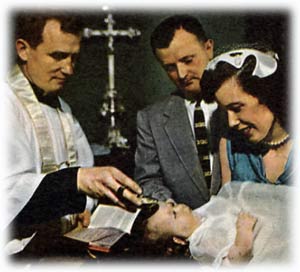
QUAERITUR: Received baptism from SSPX – must I be conditionally baptized?

From a reader:

I write inquiring about the validity of my baptism at the SSPX.

I approached the Roman Catholic Parish in our area and inquired about this matter. The parish priest told me that i will be given a conditional baptism.

Is conditional baptism right Father?

No, in my opinion, it is not.

I cannot imagine that the SSPX priest would not have followed closely the pre-Conciliar Rituale Romanum.  Since the SSPX is suspended, a formal, liturgical baptism would have been illicit, but it certainly would have been valid.

(The issue of the Sacraments of Penance and of Matrimony are separate issues and outside the scope of this discussion.)

Unless there is local knowledge that that particular SSPX priest does odd things to the form of baptism, or perhaps uses a Gin and Tonic (without ice) to baptize instead of water, I cannot see why validity should be in question. 

A possible explanation for this curious notion might be ignorance borne of dislike for anything tradition.  That is speculation on my part, but I have seen this attitude before: A priest or bishop doesn’t like or doesn’t understand traditional liturgy and therefore he calls validity of pre-Conciliar rites into question.


I think it would be worth your while asking the opinion of your local bishop about this issue of conditional baptism.

Posted in ASK FATHER Question Box | Tagged , ,
33 Comments

QUAERITUR: Communion, altar rails

A reader sent the following about Q&A in The Catholic Times, the official newspaper of the Diocese of Springfield in Illinois.  Father John Dietzen writes his column for Catholic News Service from his home in Peoria.

So, I assume this column gets picked up by numerous diocesan newspapers, and not merely the aforementioned Catholic Times.

My emphases and comments.

Short history of Communion rails …
Written by Father John Dietzen

Q A few weeks ago, near our daughter’s home, we attended a church with a Communion rail, the first one I’ve seen in many years. With people receiving Communion almost all the time standing, the rails are obviously no longer necessary. But we wondered, when did the rule that Catholic churches need a Communion rail cease? Why would this church have one? (Florida)

A There was never a rule or even an official suggestion that churches have Communion rails. They became common, in fact, only a few hundred years ago. 

In his scholarly book From Age to Age: How Christians Have Celebrated the Eucharist (Liturgical Press), Capuchin Father Edward Foley traces the widespread use of Communion rails to the trend toward uniformity of Catholic liturgy, doctrine and architecture after the Council of Trent (1545-1563).

For example, until this time, tabernacles were liturgical vessels much like chalices, even sometimes hanging from the ceiling or wall. Cardinal Charles Borromeo, archbishop of Milan, a significant figure at that council, preferred the tabernacle to be placed on the altar where the Eucharist was celebrated. For centuries, his influence solidified both that custom and later law in parishes around the world.

Something similar happened with the Communion rail, when the faithful began to kneel to receive Communion. As Foley describes it: “According to Jungmann (Josef Jungmann, whose Mass of the Roman Rite is a classic on the history of the celebration of the Eucharist), these (Communion rails) seem to have developed from the practice of spreading a cloth for communicants kneeling at the altar; eventually these cloths … evolved into the Communion rail.

As you indicate, new and remodeled Catholic church spaces today are more open, rarely with Communion rails separating the priest and the altar from the people. Perhaps the priest in the church you visited just feels for some reason there ought to be one.

I will have to differ in some respects from what Fr. Dietzen has offered.

The development of the communion or altar rail seems to be more complicated than that.

If probably developed from chancel screens which would screen the view of the sanctuary and also the wall dividing the choir area in basilicas from the rest of the nave.   These barriers go back to the earliest times of the Church.  They were intended to separate the space of the clergy from that of the laity, to mark better the place of the most holy part of the action and, as a practical issue, probably help to to keep critters (not just the congregation) from wandering into the sanctuary at the wrong time.

For example, in 5th c. N. Africa St. Augustine speaks in a sermon about a railing or barrier in a church in Carthage.  Read s. 359B. Perhaps I should do a PODCAzT on that.  It is a real kick to get a snapshot of a day in ancient Carthage.  The 5th c. historian Theodoret in his Ecclesiastical History describes how St. Ambrose forbade the Emperor Theodosius form entering the sanctuary past the rail. 

The barrier which fittingly – and with deep symbolic meaning – separates the sanctuary (the place of the priests and of sacrifice) and the nave (the place of the congregation) would come together under the weight of that greater understanding of the nature of the Eucharist which lead to more careful and reverent reception of Holy Communion.  It is both practical and symbolic.

The altar or communion rail was not merely to facilitate the reception of Holy Communion to keeling communicants (which is a practice devoutly to be wished and, please God, will return), but it has the symbolic meaning.  I think most if not all people who are against altar rails, if they are not just ignorant, are really just no very clear about the different roles of clergy and laity in the liturgical action.

I am not sure if there was ever a decree of, for example, the Sacred Congregation for Rites which required in churches the construction of altar rails.  That said, it strikes me as significant that virtually ever Roman Catholic church built everywhere for centuries had altar rails.  Is that by coincidence and custom merely or was their also legislation?

Given the fact that Communion on the tongue of a kneeling communicant is returning to greater prevalence – and I think will become more and more prevalent, it strikes me as highly imprudent and divisive to remove existing altar rails.  If I heard that a priest intended to remove an existing rail these days, I would want to know more – as a start  -about what he thinks of Pope Benedict.

Posted in SESSIUNCULA | Tagged ,
52 Comments

Fr. Breen retracts his dissenting statement made on his video

I note on the site of CMR that the priest in the Diocese of Nashville, Fr. Joseph Breen, who posted a video some time ago containing his own dissident statements.

The diocesan bishop, H.E. David Choby, gave Fr. Breen an opportunity to correct his statements.  Fr. Breen decided to accept that opportunity in a positive way.

Now I found also on CMR that Fr.

Here is the official statement by the Diocese of Nashville with my emphases and comments:

    Father Breen retracts statements, apologizes

    In letters to Pope Benedict XVI and to St. Edward Parish, Father Joe Pat Breen has retracted and apologized for statements made in an internet video and subsequent media interviews that Catholics are not obligated to follow teachings of the Catholic Church as defined by the pope and bishops. In addition, he has agreed to no longer voice his private concerns publically or in the media as required by a document presented to him by Bishop Edward Kmiec [back in] in 1993.  [This was not a new problem.]

    The letter to the parish also indicated that he expects to continue as pastor of St. Edward Parish until Dec. 31, 2011.

    Father Breen has shared the content of those letters with Bishop David Choby and the letter to the parish will be distributed in the next few days.

    Bishop Choby offered Father Breen the choice of retracting and apologizing for his statements or face the process set forth for the removal of a pastor under canon law when a ministry becomes harmful or ineffective[A canonical process.]

    The offer came during a meeting on Aug. 19, a little more than two weeks after a video interview with Father Breen posted on the St. Edward Parish website received worldwide attention. It was the bishop’s second meeting with Father Breen about his statements contradicting Church teaching. Bishop Choby asked Father Breen to remove the video from the parish site on Aug. 6. The video was removed but copies remain available on the internet and have been viewed more than 14,000 times[I would say that constitutes a potential for scandal.]

    In the letter to the parish, Father Breen said “the meeting was cordial and fruitful.”

    The terms of the 1993 ban put in place by Bishop Edward Kmiec prohibit him from making statements that disagree with the authentic magisterium of the Church.  [Once upon a time priests were required to take or renew the Oath Against Modernism when they were ordained or accepted an office.  It is sad thing when  a priest needs to be prohibited in this a way.]

    Although the process to remove a pastor has not been used in recent memory in the Diocese of Nashville, it is used with some regularity in the worldwide Church.

    “The role of pastor is particularly important as the leader and teacher of a parish,” Bishop Choby said. “The office is a direct link to the authority of the Church as instituted by Christ in the apostles and handed down through the popes and bishops. A pastor holds a public office charged with administering, teaching, and sanctifying the local community of the faithful. The Church expects him to work in unity with its authentic teaching as handed down through the pope and the bishops. It is simply wrong to state, as Father Breen has repeatedly, that one’s conscience frees an individual from the truth revealed and instilled in Church teaching. A deep understanding of Church teaching is, in fact essential to a fully formed conscience, and helps guide an individual in making the distinction between one’s opinions and a decision based soundly on the foundation of a rightly formed conscience. One who chooses to act contrary to Church teaching acts outside of the revealed truth of God’s will.”

    “In recognition of his many years of good work among the people of his parish, I want to give Father Breen every opportunity to correct the errors in his teaching, and gracefully enter retirement,” Bishop Choby said, “but in any case, his recent public remarks could not stand.”


I am very glad that the meeting between Bp. Choby and Fr. Breen was both "cordial" and "fruitful".

I am very glad that there is an opportunity to make the actual teaching of the Church clear about the role of conscience and the role of the Church’s Magisterium and the role of her pastors.

Sure, some people will now gripe and mumble against the meanie meanie bishop.  Perhaps some will perhaps even be egged on to grumble, but they will be egged on in private.

What began as something very negative, has the chance to wind up being positive.

Posted in Linking Back, The Drill | Tagged , , , ,
38 Comments

WDTPRSer interest in Italian Photography TOUR

A question for the readers:

Who would be interested in a tour in Italy focused, pardon the pun, especially on taking photos.

Therefore, the places involved in the tour would be pretty photogenic, including the usual places Venice, Florence, Pisa, Sienna, Assisi, Rome.  Patient so people can take photos, etc.  Then share and critique over supper.

I am asking not necessarily on my own behalf, but mostly on behalf of a priest friend.  I am not ruling out my involvement.

With at least one priest involved, there would of course be Mass, etc.

I don’t know an exact budget, but let’s say $3000 for 10 days ($2800 from JFK), inclusive.

ANOTHER tour of this kind could be to the Holy Land.

I want to know only about serious interest.

Therefore, send my an email with PHOTO TOUR INTEREST in the Subject line of the email, and whatever other comments you might have.

Just askin’.  No more. 

Posted in I'm just askin'..., SESSIUNCULA, The Campus Telephone Pole | Tagged
Comments Off on WDTPRSer interest in Italian Photography TOUR

NCR’s John L. Allen on African symposium about dangers of Western Secularism

Here is a fascinating piece by John L. Allen, who sadly is still writing for the National Catholic Reporter.  In his posting Allen shows both his worth as a Catholic journalist along with his own positions.  He conveys useful information and then, in a second step, reveals his own tendencies. 

I don’t agree with Allen’s tendencies (which seem generally in line with NCR’s agenda) but I have great respect for him as a journalist who brings home stories and fairly reports what goes on.  Another reason I respect him is that he actually understands what he is writing about, which is not evidenced by many liberal Catholic writers. 

Some readers here cannot believe that I am friendly with Mr. Allen.  To my unending amusement, I am inevitably excoriated for this in my email inbox for this whenever I mention him favorably. 

Here is Mr. Allen’s section from his article about a conference in Africa with my emphases and comments.  Read along with me, carefully, and for content.

During the Cold War, both sides saw the so-called "Third World" as a battleground for hearts and minds. More and more, the same thing is true in today’s ideological struggles over secularism, and this summer has brought some important changes to the strategic map:

    * On July 15, Argentina became the first nation outside Europe and North America to approve same-sex marriage.
    * In two dramatic recent rulings, the Mexican Supreme Court has upheld marriage and adoption rights for homosexuals in Mexico City.
    * Kenyans overwhelmingly approved a new constitution in early August despite objections that it opens the door to liberalized abortion.

For cultural conservatives who believe all this is fueled by Western campaigns to export radical secularism around the planet, Africa usually looms as the great hope for drawing a line in the sand. The latest effort to shore up the African front came during the July 26-August 2 plenary assembly of the Symposium of Episcopal Conferences of Africa and Madagascar (SECAM), which brings together the Catholic bishops of Africa, and which was held this year in Accra, Ghana.

[Now watch the image Allen uses here.  It is important.  File it away.] At that event, three Catholic writers and activists had the chance to address the African bishops, all associated with a fairly hawkish line vis-à-vis faith and culture. How successful such thinkers are in framing the African agenda may have a great deal to say about how Catholicism engages both the promise and perils of secularism in the 21st century. [And this concern will be dealt with again, below!]

First up was French Msgr. Tony Anatrella, who denounced what he regards as a toxic Western "gender theory," contrasting it with Pope Benedict XVI’s social encyclical Caritas in Veritate. A social psychiatrist who teaches in Paris, Anatrella is a consultor to the Vatican’s Pontifical Council for Health Pastoral Care as well as a member of an International Commission on Medjugorje for the Congregation for the Doctrine of the Faith. Anatrella briefly became a cause célèbre in 2005, when he wrote an official commentary for the Vatican newspaper asserting that homosexuality represents a "problem in psychic organization" and that gay men should not become priests even if they remain celibate[Okay… so… Msgr. Anatrella is a "hawk" when it comes to faith and culture.  Msgr. Anatrella is opposed to "toxic gender theory" and he supports his position with the work of Pope Benedict.  Now move on to what Msgr. Anatrella thinks. ]

In his speech to the African bishops, Anatrella urged them to resist a Western ideology of "gender theory," which, he charged, has been elaborated by radical European (mainly French) intellectuals, and is currently being spread around the world "by the U.N. agencies, NGOs, the European Parliament of Strasburg and the Commission of Brussels." [What is "toxic gender theory"?]  Gender theory, Anatrella said, posits that "human nature does not exist because the human being is merely the result of culture," and that "masculinity and femininity are mere social inventions.[Right on.  Thus we see everywhere today how some groups, perpetually flouting their victim status, trying to propose a new normal.  We see in the entertainment industries and in the courts an effort to change the social conventions.  This is how they re-engineer society.]

Those ideas, he said, amount to "intellectual viruses" and "anthropological heresies" with dangerous consequences. Here’s how Anatrella laid it out for the African bishops:

"This ideology of gender, produced by the human sciences, is a new form of idealism which, like Marxism, is contrary to human interests. … It suggests that sexual identity is independent of biological facts, treating biological and psychological sexuality as nothing more than a social construct and a power game between men and women. The war between the sexes thus replaces class struggle. … Motherhood is considered a handicap and an injustice, since only women carry children. It is therefore necessary to liberate women from maternity, which explains the multiplication of campaigns in favor of contraception and abortion."  [I think he is right.]

What all this amounts to, Anatrella said, is a "moral and anthropological deregulation" analogous to the market deregulation associated with liberal capitalism. [He moves into ground I am less familiar with here, but I think I follow his analogy.] He warned that a radically post-modern, post-Christian moral vision is often bundled with the process of globalization, and called on the African bishops to be on guard[Remember: Anatrella is a "hawk".]

Marguerite Peeters, an American citizen who lives in Brussels, is author of The Globalization of the Western Cultural Revolution, which decries Western efforts to foist a post-modern secularist ideology on the rest of the world. Her topic in Accra was "recent Western ideologies and lifestyles contrary to the values and virtues of Christianity." [I like her so far.  But then I would be a "hawk" too, right?]

Peeters’ text wasn’t immediately available, but in an essay on the "new global ethic" that amounts to her manifesto, Peeters argues that secularism is more invidious than Communism because it does not "bring about a new political regime." Instead, it achieves "radical changes of mentality and behavior within institutions, inside enterprises, schools, universities, hospitals, cultures, governments, families — inside the church."  [I believe we can attach this to the "dictatorship of relativism" against which Pope Benedict is struggling.]

"The institutional façade remains standing, while foreigners already occupy the rooms," she writes. "The enemy must be sought within — inside is the new battleground.[What an intriguing image.  Alarming image.]

Peeters warns that a sweeping "deconstruction of man and nature" has been packaged in a benign-sounding "new global ethic," which Catholics sometimes confuse with the social doctrine of the church. [I wonder if Catholics who watch Glen Beck – whom I catch only rarely – should keep that in mind.  There really is a good way to understand "social justice" as well as bad ways.] In fact, however, it seeks to install a "new hierarchy of values," with personal well-being placed above the sacredness of life, women’s rights above motherhood, the individual above legitimate authority, the right to choose above the moral law, and, ultimately, the human person above God. [The essence of Modernism which is, even more essentially, the fruit of the serpent’s lie: you shall be as gods.  Don’t hawks kill and eat serpents?]

Like Anatrella, Peeters charges that this agenda is being propagated through the United Nations and various Western NGOs, which, she said, are funded and sustained by ideological special interests. [Okay… at this conference, the UN and NGO’s are the bad guys.]

Finally, the bishops heard from Daniele Sauvage of the Africa Family Life Federation. Sauvage is a native of Mauritius, and her federation represents 29 groups in 20 African countries which promote traditional Catholic approaches to family life such as Natural Family Planning[So, "hawks" promote natural family planning.  This is hot issue in Africa where so many even in the Church are pushing condoms.]

Over the years, Sauvage too has warned against Western concepts such as "reproductive health" and "gender ideology" which, she argues, amount to "virulent ideological poisons" being "imposed" upon the African continent by international organizations and special interest groups. [I think she is right.] To fight that threat, she urged the African bishops to invest in programs of formation for children, couples and families, and to support the development of pro-life movements and institutes. [Is that wrong?  Is that a bad idea?  On the other hand… she is a "hawk".]

Many African bishops seem sympathetic to such arguments.  [When you read an article, look not just for what is there, but also for what is not there.  Many bishops are not sympathetic to such arguments.]

During the October 2009 Synod for Africa, for example, Archbishop Joseph Tlhagale of Johannesburg, president of the South African bishops’ conference, asserted that Africa is "under heavy strain from liberalism, secularism and from lobbyists who squat at the United Nations," representing "a second wave of colonization, both subtle and ruthless at the same time.[Spiritual colonialism is worse.] Archbishop Charles Palmer-Buckle of Accra was equally emphatic in an NCR interview, asserting that there’s a "deliberate campaign" to push Africa towards acceptance of practices such as abortion and homosexuality, stemming from what he called "a particular lobby that sees African values as a danger to the ‘new global ethic’ propounded by the U.N., by the World Bank, by the IMF, and even by the European Union." [This is highly charged stuff.  If NCR got that interview, then WDTPRS gives them a feather for their cap today.]

A SECAM spokesperson told me this week that Anatrella, Peeters and Sauvage had been recommended as speakers by several of the bishops, and that their presentations were "well appreciated."  [NB: several of the bishops.  But there are divisions among the bishops.  That is what is between the lines here.]

"The bishops of Africa are really concerned about the issues they raised," said Ben Assorow, Director of Communications for SECAM.

If nothing else, all this may suggest that Catholic doves, meaning thinkers and activists in the church interested in seeking détente with secularism, [HERE IT IS] might do well to reach out to the Africans. At the moment, their voices don’t seem to have the same echo as the hawks.

First, I want to know a great deal more about the work of the three speakers.  Jot down these three names for future reference.

  • Msgr. Tony Anatrella
  • Marguerite Peeters
  • Daniele Sauvage

Second, keep in mind that in the political/social/ecclesial language of the NCR and its satellites, "doves" are good and "hawks" are bad.  To label one group the one, and the "opposition" the other imposes an evaluation.  If I understood Allen’s position correctly, and I hope he will correct me if I didn’t, he supports those seeking détente with secularism.  He sees the message of the three speakers, which I have no doubt at all he understood clearly and thoroughly, as being a threat.  So, he is telling dovish "thinkers" to get busy and get involved in Africa because the other team is making too many inroads. 

Third, there are divisions among the bishops.  This is something the "doves" must seize upon.

In any event, this was a very good and useful piece.
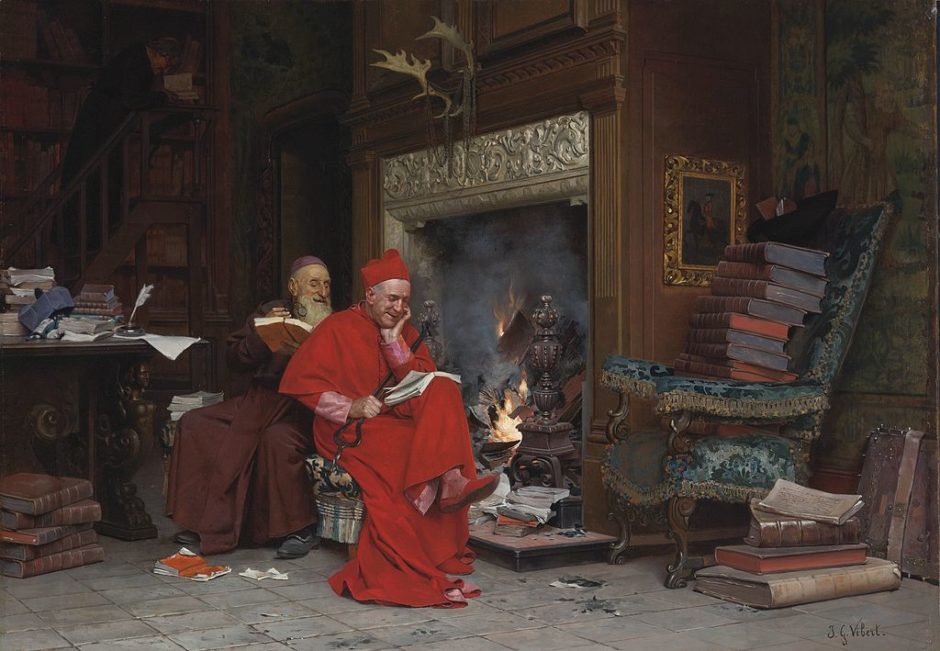
I am lead to question: Is Pope Benedict a "hawk" or a "dove"?

Posted in New Evangelization, Our Catholic Identity, SESSIUNCULA, The Drill | Tagged , , , , , , ,
29 Comments

The Feeder… Stream

Some activity at the feeder.
Twitter
Watching the live stream these days you will often see the hummingbird feeder.  

But you will sometimes see an unusual visitor.

And then there is the usual visitor.

Fun!

In the meantime, this little guy just decided to hang out and look into the cam for a while.

After about 5 minutes I did a screen capture.

There is Z-Chat in a chatroom from time to time.  I send out Tweets about when it is open via Twitter.  (Latin pipata, or "tweets" from pipio "to twitter, chirp")


Open as a pop up.

These critters are hungry.  Will you help feed them?  It’s just "tuppence a bag…"

Well… far more than tuppence, actually.

Posted in The Feeder Feed |
1 Comment

Expert comments on the music for a Papal event in England

At The Chant Cafe my friend Jeffrey Tucker, a distinguished Church musician, has a few trenchant comments about some of the music for an even during the upcoming Papal Visit to England.

My emphases and comments:

Damian Thompson reports on the sabotage of the September 18 prayer Vigil for the Pope on his visit to the UK will consist mostly of pseudo-folk music from the 1970s and 80s. The detailed program is listed here, but what I really do not understand is why it is necessary to trot out huge forces of instruments and singers for such a thing.

This is mostly unison music that most Catholics could rattle off in their sleep. It isn’t really choral music at all. It’s just a series of small tunes, best performed with a guitar, sitting on a stone by the fireside at a youth encounter thirty years ago.

Talk about over-egging the pudding: "The choir will consist of 160 singers from nearly all the dioceses in England and Wales. Together with 50 singers and 50 musicians from the New English Orchestra, you will provide the majority of the accompaniment to the Vigil. You will also be on stage (under cover should it rain) and in close proximity to the Holy Father. It should be an experience to cherish for many years."

Oh, there is one grand piece: Hallelujah Chorus by Handel. This is also something that I do not understand. There are many good things to say about this piece and they would all be easier to say if this piece hadn’t become the world’s most notorious musical cliche, second only to the opening notes of Beethoven’s 5th.

[And this is a part to pay attention to:] But even if we consider the intended purpose of the piece, it is a composition for religious theater, by a Protestant for Protestants. This doesn’t mean that it is bad, or something that should be banned from Catholic circles, but there is a downside for any community that cannot define itself with its own magnificent forms of cultural expression [there it is!] but instead relies on rehashing other people’s traditions. It is not necessary to make Handel central when you have a Catholic musical tradition inclusive of Tallis and Byrd.

I have detected a trend for Catholic gatherings of this sort to use the Hallelujah Chorus as a signaling device, as if you suggest "Lest you think that we only sing small ditties about journeys of love, here’s a big classical piece just to show you what we could do if we wanted to."


This is a direct hit.

I resonate with what Mr. Tucker says about other people’s tradition.

For example, I know that there is presently a revival of Catholic architecture in the Latin Church in part with the integration of elements from the Greek Byzantine tradition.  I like the Byzantine tradition.  But I think we Latins have our own styles and traditions.

Why do we have to turn to the Easterners in order to reclaim the sacred and transcendent?

Posted in The Drill | Tagged
56 Comments

MacMillan’s Mass settings for the Papal Visit to England

Here is some great news from The Catholic Herald, the UK’s best Catholic weekly. 

Choirs prepare for papal Masses

By Mark Greaves on Friday, 20 August 2010

Choirs across England, Wales and Scotland are rehearsing the new setting of the Mass composed for the papal visit by James MacMillan.

The setting will be performed at the two big papal events at Cofton Park, Birmingham, and Bellahouston Park in Glasgow and will follow the new English translation of the Mass.

[And here is the great news…]

Sections of the setting are already available online so that papal pilgrims can practise singing it in the run-up to the Pope’s visit.

Crowds will be aided by a choir of 2,000 at Cofton Park and 800 at Bellahouston and there will be “detailed and focused” rehearsal before the Masses start.

The choirs will be accompanied by brass and timpani on the day but, according to Mr MacMillan, any parish can perform the setting as long as it has an organ.

Mr MacMillan said he tried to make the basic melody simple so that congregations would pick it up easily. “It’s not a lot of time to bed the music down in dioceses and parishes,” he said.

He also said he hoped it would be “appropriate to the text and the way the drama of the Mass unfolds”.

Mr MacMillan said: [And now a familiar idea for WDTPRS readers…]  “There has to be a sense of awe at the words of ‘Blessed is he who comes in the name of the Lord’, just before the consecration. And the Gloria is a huge raising of hearts to heaven, a great joyous outburst from the very early days of the Church, that again has to have a very different flavour.”

Mr MacMillan admitted he was apprehensive about the setting being sung “in the middle of a field”.

“Singing out of a field is tricky – it’s just a very strange experience standing in the middle of the field and being expected to sing. And Catholics are reluctant singers at the best of times.

“I just hope that people rise to the challenge. At first encounter it might feel strange, but if they have the text and music with them I hope they will really join in on the day,” Mr MacMillan said.


Posted in Brick by Brick, Pope of Christian Unity | Tagged
15 Comments

Pounds and Grounds and Compounds

I deeply admire religious communities who make and sell things to support their life and apostolates.

Take for example the Carmelites behind Mystic Monk Coffee.

How many pounds of coffee do you have to sell in order to build this?

This is a projected design for a new monastery which the intrepid Carmelite monks in Wyoming want to build.

Go and look at the pictures of the place.  Amazing.

That, friends, is for the brick by brick file.

Buy coffee.  Build a monastery.

Posted in Brick by Brick, Just Too Cool, SESSIUNCULA | Tagged , , ,
57 Comments