Daily Rome Shot 778 –

Welcome registrant:

Gladtrad2

White to move and win (attain a winning position).  Not all that tough, but it has a good tactic which should be a regular arrow in our quivver.

NB: I’ll hold comments with solutions ’till the next day so there won’t be “spoilers” for others.

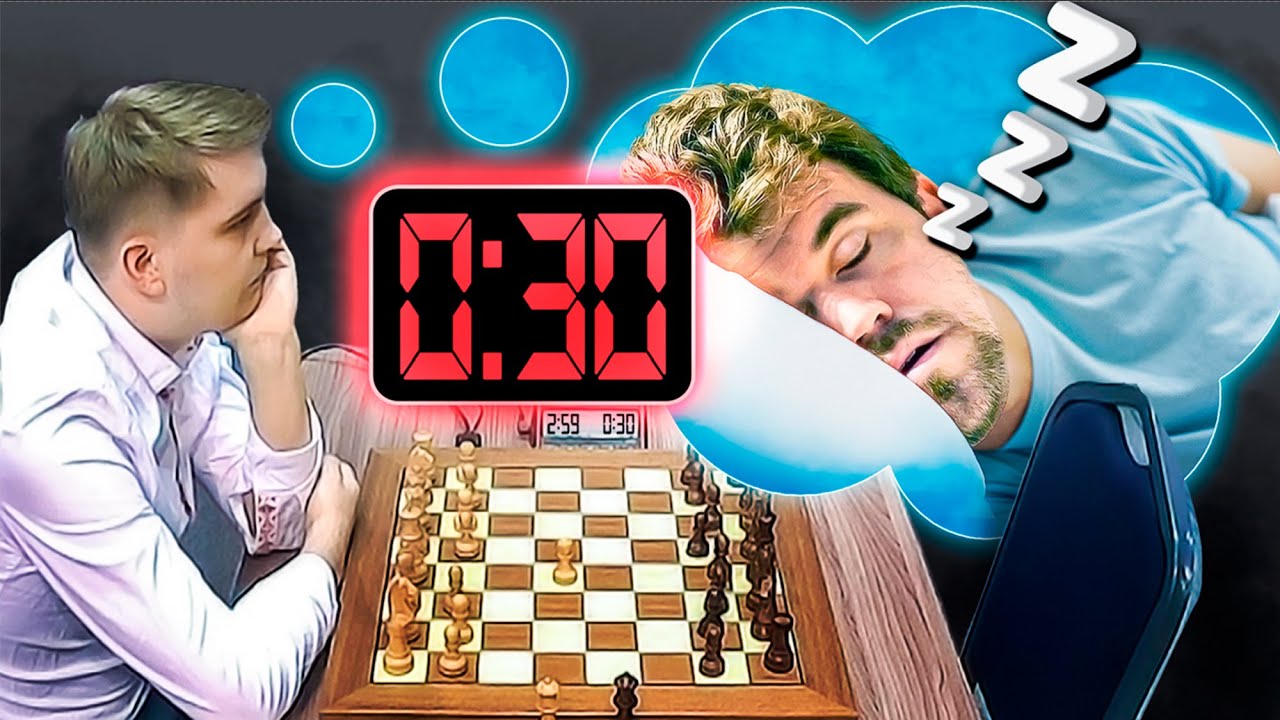
How good is Magnus?   This is crazy. Carlsen arrives late for a 3 minute blitz game, with only 30 seconds on his clock. Announcing ends up being as fast as a hockey game.

YouTube thumbnailYouTube icon

Be sure to support the Summit Dominicans!

Use FATHERZ10 at checkout

Please remember me when shopping online. Thanks in advance. US HERE – UK HERE  These links take you to a generic “catholic” search in Amazon, but, once in and browsing or searching, Amazon remembers that you used my link and I get the credit.


Here’s a position from OTB yesterday. I managed to get myself into a pickle after my opponent’s super aggressive pawn rush in a QGD. I’m now dedicated to punishing this strategy severely in the future.  A while back I forced exchanges to simplify and cut down on white’s attacking firepower.

But for now, here is the position and black to move.

27. Kh7…

What would you do?  

It’s a little hard to see but black has a light square bishop on e6.  It looks like a pawn from this angle.

Obviously there is a space differential on the queen side. Those pawns aren’t going anywhere.  All the pawns are still on the board at move 27!  There is a lot of tension in this closed position.  The action is on the king side, for sure.  Black’s rooks are good.  I put this into an engine, and to my shock, the assessment is -0.95!

Posted in SESSIUNCULA |
3 Comments

29 Aug ’23: Francis Card Arinze – Anniversary of episcopal consecration – 58 years as a bishop!

Ad MULTOS annos!

Posted in SESSIUNCULA | Tagged
8 Comments

Fr. Z’s 20 Tips For Making A Good Confession – in SPANISH

Many years ago I posted Fr. Z’s 20 Tips For Making A Good Confession

If you are nervous about making a confession, or perhaps afraid, use these tips. I hope they will be helpful.

I was recently contacted by a priest in Texas who wanted to print these 20 Tips in their parish bulletin. He later wrote that more copies of the bulletin were taken than usual.

He also said that they had the 20 Tips translated into Spanish. Very Cool. I am reminded of how my old “Internet Prayer” has been translated into a couple dozen languages. (I’m still hoping for more languages and recordings from native speakers, though the Klingon version might be a long wait.)

Anyway, here are the 20 Tips in Spanish. They didn’t send a Spanish title. Perhaps 20 Consejos Para Hacer Una Buena Confesión?
20 Consejos Para Confesarse Bien? Okay, I’ll stop.

Deberíamos…

1) …examinar nuestras conciencias regularmente y profundamente;
2) …esperar pacientemente nuestro turno en la fila;
3) …venir a la hora programada para las confesiones, no unos minutos antes de que terminen;
4) …hablar claramente, pero nunca tan fuerte como para que nos escuchen los de afuera;
5) …confesar nuestros pecados claramente y brevemente sin rodeos;
6) …confesar todos los pecados mortales en número y especie;
7) …escuchar atentamente a los consejos que dé el sacerdote;
8) …confesar nuestros propios pecados y no los ajenos;
9) …escuchar atentamente, recordar nuestra penitencia, y asegurarnos de haberla entendido;
10) …usar una fórmula regular para la confesión para que sea conocida y cómoda;
11) …nunca debemos temer el de decir algo “vergonzoso” …solo debemos decirlo;
12) …nunca debemos de preocuparnos que el sacerdote piense que somos unos grandes pecadores…. suele estar impresionado por nuestro valor;
13) …nunca debemos temer que el sacerdote no guarde nuestra confesión en secreto… él está atado por el Sello;
14) …nunca debemos de confesar “tendencias” o “dificultades” … sólo pecados;
15) …nunca debemos salir del confesionario antes de que el sacerdote haya terminado de dar la absolución;
16) …memorizarnos un Acto de Contrición;
17) …responder brevemente a las preguntas del sacerdote si pide una clarificación;
18) …hacer preguntas si no entendemos lo que quiere decir cuando nos dice algo;
19) …tener en cuenta que a veces los sacerdotes pueden tener días malos como nosotros;
20) …recordar que los sacerdotes también deben de confesarse… ellos saben por lo que estamos pasando.

Posted in GO TO CONFESSION, Just Too Cool | Tagged , , , ,
5 Comments

DOWN WITH THE FOUR OLDS!

Remember my New catholic Red Guards trope?

This one ticks several boxes.  Fr. Z kudos.

Meanwhile,

Posted in New catholic Red Guards, Pò sì jiù | Tagged
1 Comment

Daily Rome Shot 777

Welcome new registrants:

GhostofMrToad
KC7ON

The traditional Benedictines of Norcia make three kinds of beer.  It’s great!

Use FATHERZ10 at checkout

In Chess News, Hans Niemann, Magnus Carlsen and Chess.com have settled their differences and released statements to that effect. It’ll be interesting to see what happens next. Magnus isn’t playing much classical right now and that is about all Hans has done… and his rating has dropped.

Meanwhile, white to move and mate in two.

NB: I’ll hold comments with solutions ’till the next day so there won’t be “spoilers” for others.

In Düsseldorf, the World Team Rapid wrapped. Pragg was amazing, winning four wins in a row for WR Chess which clinched in the penultimate round! Pragg over all 6.5/7. How do you beat a team like this?  Wesley So, Ian Nepomniachtchi, Praggnanandhaa Rameshbabu, Hou Yifan, Alexandra Kosteniuk undefeated (4.5/6), Jan-Krzysztof Duda, Vincent Keymer.

This is fun.

MegaChess Giant Oversized Premium Complete Set of Chess Pieces with 25 Inch Tall King – Black and White

How about a game of blitz with this? Gotta put the clock at a bit of a distance.

$450. And the entry says “50+ bought in past month”HERE

FIFTY in the last month?  Tell me there is no real interest in chess these days.

Your use of my Amazon affiliate link is a major part of my income. It helps to pay for insurance, groceries, everything. Please remember me when shopping online. Thanks in advance.  US HERE – UK HERE

Posted in SESSIUNCULA |
2 Comments

Like the little pieces of a mosaic…

Sometimes pieces, tid-bits of news, fall together in such a way that they seem to reveal a larger picture or presaging something not yet seen on the horizon.

For example, in an exchange of texts today with a notable Catholic figure, I was sent a link to something that happened in Lisbon during the WYD thing (which I tried to ignore).

There is a story at CNA that Francis called for greater Eucharistic adoration.  No, really.

“Curiously, the prayer of adoration — we have lost it. We have lost it, and everyone — priests, bishops, consecrated men and women, laypeople — have to recover it. It’s to be in silence, before the Lord,” Francis urged.

This took me by surprise, since I don’t recall that Francis has put a great deal of effort into emphasizing the Blessed Sacrament.  His changes to customary practices in Rome for the Feast of Corpus Christi is a case in point.

In any event, I take this as a win.

Also, in Lisbon, Francis invoked the example of a young Jesuit saint from Lisbon, St. John Britto, a martyr.  I happen to have a relic of St. John Britto.

On the issue of Eucharistic adoration, tonight I saw some of a video interview at LifeSite with Bp. Joseph Strickland of Tyler, Texas, very much in the spotlight… or crosshairs, depending on your point of view.  In the lead up to the interview itself, we learned that at the cathedral Bp. Strickland daily spends 90 minutes, from about 5:15 AM, in front of the Blessed Sacrament before celebrating Mass.   When he says Mass at the chancery at Noon, he is beforehand with the Blessed Sacrament for at least an hour.

This is surely a reason why Bp. Strickland “gets it”, so to speak.

In any event, Bp. Strickland is surely exemplifying what Francis called for in Lisbon about Eucharistic adoration.

(Just watch… some will suggest that that’s too much time and he should be out doing something for the poor.)

Don’t ask me what, but something is up.   It’s a spidey-sense thing, maybe.

Posted in ¡Hagan lío!, Hard-Identity Catholicism, The future and our choices | Tagged
12 Comments

Because Scott Hahn has recently been attacked by a fanatic, I recommend…

Because Scott Hahn has recently been attacked by a fanatic, I recommend that you get one of Scott’s books and also a book from the publishing concern connected to the St. Paul Center, Emmaus Press.

A good choice for the first is

Holy Is His Name: The Transforming Power of God’s Holiness in Scripture

It has a forward by Peter Kreeft.  That’s a really good sign in itself.     The book explores what “holiness” is.  We often talk about holiness.  But what is it?

If you already have that book, try It Is Right and Just: Why the Future of Civilization Depends on True Religion

I was so pleased to see in it an emphasis on the virtue of Religion, which for years I have been writing and talking about in terms of the renewal of our sacred liturgical worship.

Next, an important book.  This book is the nightmare of libs and the yammering papalatrous like the fanatic who is attacking Scott.

The Faith Once For All Delivered: Doctrinal Authority in Catholic Theology

US HERE – UK HERE

This is a daring selection of essays by prominent orthodox Catholic scholars recently published by Emmaus Academic Press.

The book includes a Foreword and Introduction written by Raymond Leo Cardinal Burke, and an Afterword authored by Robert Cardinal Sarah. It is edited by Father Kevin Flannery, SJ and one other person who remained anonymous.

Every bishop should be tied to a chair and required to follow the text while someone reads aloud the essay by Robert Dodaro on sensus and consensus fidelium, what the terms really mean contrary to the notion of popular polling, etc.

Lastly go to Crisis and listen, perhaps more than once, to the podcast interview by editor Eric Sammons with Scott Hahn.

HERE

These are hard and dark times and I suspect we feel their weight.   I found this podcast super uplifting, positive, optimistic while remaining timely and realistic.  By the time you get a few minutes into it you might even be doing fist pumps in the air and sending the link to your friends. Kudos to Eric Sammons for not interrupting Scott.

Posted in SESSIUNCULA | Tagged
10 Comments

Daily Rome Shot 776

Terrific NEWish restaurant very high on my list of favorites, near Ss. Trinità.

Please remember me when shopping online. Thanks in advance. US HERE – UK HERE  These links take you to a generic “catholic” search in Amazon, but, once in and browsing or searching, Amazon remembers that you used my link and I get the credit. Even if you use SMILE, don’t worry! SMILE still gets the donation. [Discontinued]

Meanwhile, black to move and quickly force mate.

NB: I’ll hold comments with solutions ’till the next day so there won’t be “spoilers” for others.

On my desk I have small statues of St. Joseph, St. Teresa of Avila, and St. Philip Neri. I know St. Teresa played chess. Did St. Pippo? In a search on the interwebs I found something that mentioned chess and St. Philip in something called Curiosities of London published in 1855. There is a note that the Oratory of St. Philip Neri moved to a new place in Brompton. On that same page was a description of the The Cigar Divan, at No. 100 Strand where the “leading Chess publications are accessible to visitors, and where as many as twenty Chess-boards may often be seen in requisition at the same time.”

People wrote with style back then.

I looked up the Cigar Divan on the Strand.    This is a fascinating place!

At this site, there was the Fountain Tavern, home of the Kit-Cat Club (a political and  literary club and not a strip joint, for sure, HERE . A modern American version might be the Algonquin Round Table but more political by far. Whigs.).


In 1828 the Grand Cigar Divan opened here: coffee, cigars, journals, and chess while sitting on divans.  Sounds like pre-Heaven.  Regulars paid 1 guinea (21 shillings = 1 pound + 1 shilling) annually for the use of the facilities and for coffee. In 1828, £1 = £139 today so 1 guinea would be about £146 today).  Not bad.  The daily entrance fee for non-members was sixpence (6d = 2.5 new pence) or a shilling and sixpence (1/6d = 7.5 new pence) with coffee and a cigar.  There were, I think, 20 shillings/pound and 1 shilling was 12 pence, so 240 pence in a pound.  So the daily entrance fee for the Cigar Divan was about £7.73 in today’s money.  So next time you go to the Cigar Divan in 1828 and want coffee and a smoke and just plop down your 3 tanners and, Job’s a good’un, you’re in. And the GCD will be hoppin’ during your visit.  There are lots of matches, often between different coffee houses, and runners with white hats scurried around announcing the moves.

In 1948 the proprieter Samuel Reiss was joined by a caterer John Simpson, and they expanded and called the place Simpson’s Grand Cigar Divan.  It became hugely popular with its great silver trolleys of meat f

or carving at the table… which is still going on today! Simpson’s-in-the-Strand Grand Divan Tavern. is still around.  One of the last times I was in London, I met a friend there, Rev. Stephen Morgan, for lunch.  He’s now in Macao at the Catholic University.

The “Immortal Game” of Adolf Anderssen v. Lionel Kieseritzky was played at Simpson’s.  Kieseritzky usually played at the Cafe de la Regence in Paris.  Kieseritzky sent the moves to Paris via telegraph (which means Morse!) and it was published.  The game started with the King’s Gambit and involved dramatic sacs.

There’s a video explaining The Immortal Game by Sam Copeland, but this is shorter.

YouTube thumbnailYouTube icon

Once upon a time, Garry Kasparov and Nigel Short wound up with a key position from this famous battle.

Chess ceased at Simpson’s in 1903, alas. One of the original Simpson (incomplete) chess sets is displayed in the elegant Bishop’s Room.

You can purchase for me… er um… for yourselves a replica HERE.  Hmmm. Here’s what they look like.  A video about the pieces HERE

Nice.  I do like the Staunton better for everyday play.

So, this is the sort of place I’d like to open in Rome.

Welllll… maybe not quite as large.

BTW… does anyone out there have a copy of Steinitz in London?  If so, could you get in touch?

Posted in SESSIUNCULA |
10 Comments

From “The Private Diary of Bishop F. Atticus McButterpants” – 23-08-28 – A visit to a Hispanic parish for food (and Fr. Luis)

August 28, 2023

Dear Diary,

It was Fr. Luis’s “homecoming” this weekend, back to the parish he went to when he immigrated here, got involved and decided to pursue priesthood. Thank heaven he’s now over at Christ the King, though! Ultra-wasp for more English language immersion. I can’t tell if that’s working.  He doesn’t talk much around me.  Usually I get complaints.  “I can’t understand what he says!”

So I went over to our huge west side parish for Luis’s special return, to concelebrate the main Sunday Mass with him and Fr. Ernesto and stay afterwards for a major case of heartburn, just like every time to go there. I can’t help myself. The food is out of this world. This time, along will all the great stuff as usual, they had fahitas with a real kick and these cheese things called poo-poo-zas. ? Dunno.  The people are so warm and friendly, but it was good to get back for a ‘siesta’ and elka seltzer – I wonder how you say that in Mexican?

I even wore that Our Lady of Guadalupe detachable panel on the back of my cape that Mr. Domenico made for me for the two baptisms after Mass. Olay¡¡

I’ve learned enough of the lingo for some of the Mass.  Sr. Randi and Fr. Ernesto taught me how to do the “Señor” with the squiggle, “ten piedad!” Then I’m thinking, “eleven piedad, twelve piedad…” but I don’t say it.  They’re happy people but they have a serious side too, I think.  So I try say “pee-ay-dad” right but if it has the word “pie” in it … as a native of Pie Town I get distracted.  But the people really, really appreciate my being there, I can tell!  Gosh I love Hispanic ministry.

NOTE: Didn’t ask Gilbert but I’ll get Tommy to look up “las-tee-ma”.  If it wasn’t a dish there, I’m guessing it probably means ‘great’ or ‘cool’?  I heard it alot after Mass so maybe it is a dish I missed.  Too tired to use my phone. And spelling… well, not tonight.

Posted in Diary of Bp. McButterpants, SESSIUNCULA | Tagged
4 Comments

Blasphemous sermon about the Lord and the Syrophoenician woman in Matthew 15 by Francis’ close aide, Jesuit

As a preamble, Fr. Antonio (“2+2=5”) Spadaro, SJ … more HERE.  Scroll down a little.  Read about his interest in Pier Vittorio Tondelli.

Fr. Antonio Spadaro, editor of the semi-official publication La Civiltà Cattolica, has been, at times, nearly sewed to the shoulder of Francis and at other times seemingly shelved.  He got some attention from a sermon he gave last week about the Gospel from Matthew 15 about Christ and the Syrophoenician woman whose daughter was possessed.  At first the Lord doesn’t respond to her pleas, then he used the imagery of a dog (actually more like “puppy”) to describe the Canaanites (inveterate enemies of the Chosen People).  Christ eventually exorcizes the woman’s daughter and then heals many more in that Gentile region.

How did Spadaro describe the Lord?

Indifferent to suffering, peevish and insensitive, unbreakably harsh, an unmerciful theologian, mocking and disrespectful towards his poor mother, lacking humanity, blinded by nationalism and theological rigor, rigid, confused, sick and a prisoner the dominant theological, political and cultural elements of his time.

That’s most of it.   And, in case you are wondering, he didn’t end with, “But, Jesus only seemed that way.  What he was really doing was…”.  Nope.

Read it for yourselves.

What Spadaro published (Il Fatto Quotidiano has a paywall) which I found at Messa in Latino (these guys are great!):

Jesus is in Gennesaret, on the right bank of Lake Tiberias. The locals had recognized him and word of his presence had spread throughout the region, by word of mouth. Many brought him sick, who were healed. It was a land where people had to welcome and understand him. His actions were effective. But the Master does not stop. Matthew (15:21-28) – who writes for the Jews – tells us that he goes towards the northwest, the area of Tyre and Sidon, that is, in the Phoenician and therefore pagan area.
But behold, screams are heard. They are from a woman. She is Canaanite, that is, from that region inhabited by an idolatrous people that Israel looked upon with contempt and enmity. So, the story presumes that Jesus and the woman were enemies. The woman shouts: “Have mercy on me, Lord, son of David! My daughter is very tormented by a demon.” The body of this woman, her voice impose themselves erupting as if at the scene of a tragedy. Impossible for Jesus not to react to the chaos that abruptly interrupted the journey.

But no. “But he did not speak to her even a word”, writes Matthew laconically. Jesus remains indifferent. His disciples approach him and implore him, amazed. That woman was moving those who also ill judged her! Her screams had broken the barrier of hatred. But Jesus does not care. “Hear her, because she comes after us shouting!”, His companions beg him, trying to discreetly use the card of her insistence and the annoyance that her presence would have caused to the fireplace [sic!] of the Master.  [That sic is because the text says “camino… fireplace, chimney” rather than “cammino… journey”.  There’s plenty that’s horrid in this rant that supersedes typos.]

[This is where the train wreck starts.] The silence is followed by Jesus’ angry and insensitive response: “I was sent only to the lost sheep of the house of Israel”. The Master’s hardness is unshakeable. Now even Jesus is a theologian: [A “theologian”??!? That’s really bad.  Now make a connection with the new head of Doctrine of Faith, where a new kind of Prefect was needed, instead of one of those rigid theologians who used “immoral means”.] the mission received from God is limited to the children of Israel. So, nothing can be done. Mercy is not for her. She is excluded. There is no discussion.

But the woman is stubborn. Her hope for her is desperate, and she overcomes not only any supposed tribal enmity, but also appropriateness, her very dignity. She throws herself in front of him and begs him: “Lord, help me!”. [My Italian text has “Signora” rather than “Signore”.  Trans is everywhere, I guess.] She calls him “Lord”, that is, she recognizes his authority and her mission. What else can Jesus demand in order to act? Yet he replies in a mocking and disrespectful way towards that poor woman: “It is not good to take the children’s bread and throw it to the little dogs”, that is to domestic dogs. A downfall in tone, style, humanity. Jesus appears as if he were blinded by nationalism and theological rigor[Remember: theologians are bad!]

Anyone would have given up. But not the woman. She is determined: she wants her daughter healed. And she immediately grasps the only crack left open by Jesus’ words, where he had referred to domestic dogs (and therefore not stray ones). They share their masters’ house, in fact. And so with a move that desperation makes astute she says: “It is true, Lord, and yet the dogs eat the crumbs that fall from their masters’ table”. Few words, but well posed and such as to upset the rigidity of Jesus, to conform him, to “convert” him to himself. [It’s hard to believe that this guy thinks this much less published it.] Indeed, without hesitation, [Which could be a clue that maybe S’s interpretation is somewhat lacking…] Jesus replies: “Woman, great is your faith! May it happen for you as you wish ”. And from that instant her daughter was healed. And Jesus also appears healed, and in the end shows himself free, from the rigidity of the dominant theological, political and cultural elements of his time.
So what happened? Outside the land of Israel, Jesus healed the daughter of a pagan woman, despised for being Canaanite. Not only that: he agrees with her and praises her great faith.

Here is the seed of a revolution.

Revolution.

Interesting way to end that, no?

BTW… it is interesting that Spadaro blathers here about Christ being bad (“theologian”) and Francis also just ranted about theology being “ideology”, aiming it at these United States.  When he was in Portugal, as usual Francis On-The-Road has a “private” meeting with Jesuits, after which everything he said is published (with how much editing, we don’t know).  In 2021 in Slovakia, he denigrated EWTN.  This time, he talked about “backwardists” in America.  To a Jesuit who had visited these USA… (btw the Epitome was an orderly compilation, a summary of the less orderly Constitutions, made by a General of the Jesuits which came to be used for Jesuit formation in the 20th century):

You, the younger ones, have not experienced these tensions, but what you say about some sectors in the United States reminds me of what we have already experienced with the Epitome, which has generated a totally rigid and boxed mentality. Those American groups you speak of, so closed, are isolating themselves. And instead of living on doctrine, on true doctrine that always develops and bears fruit, they live on ideologies. But when in life you abandon doctrine to replace it with an ideology, you have lost, you have lost as in war.

Problem: Francis tosses the word “ideology” around for views he doesn’t like, but he hasn’t, to my knowledge, defined what he means by “ideology”.  It’s just… “out there opposed to him” and it’s “bad” because it is “against the spirit”.

Francis rails against the Epitome.  A footnote in the Civilità account says:

The formation of the Jesuits on the Society for a certain time was shaped by [the Epitome], to such an extent that some never read the Constitutions, which instead are the founding text. For the Pope, during this period in the Society the rules risked overwhelming the spirit, and he overcame the temptation to make the charism explicit and over-declared.

In the Civilità text Francis says that he was in the novitiate when the Epitome had “fossilized” the Jesuits.  Then Arrupe changed all that.  One sometimes could have the impression that Francis is treating the Church as a whole as if he were working out the internal problems of the Society.

I digress.  The Civilità piece is revelatory.  I can’t help but think that it presages something dire for a certain bishop of Texas.  I hope I’m wrong.

Archbp. Viganò responded in stark terms to Spadaro’s commentary on last week’s Novus Ordo Gospel from Matthew 15. Viganò’s vigorous reaction is at the blog of Aldo Maria Valli.  Whew.

In Spadaro’s words, the scum of the worst Modernism that has been plaguing the Church for more than a century emerges as if stirring in a puddle of sewage. That Modernism never definitively eradicated from seminaries and self-styled Catholic universities, to which a sect of heretics and misguided has erected the totem of the Council, replacing it with two thousand years of Tradition.

Until some time ago this “synthesis of all heresies” tried to make itself presentable by failing to manifest its anti-Christic nature, which was nonetheless consubstantial to it: there was still the risk that some vaguely conservative Prelate and not yet fully committed to the cause could realize its intrinsic danger. Of course, the divinity of Christ was considered a wishful thinking flowing from the need for the sacred of the “primitive community”, his miracles were exaggerations, his words were metaphors; on the other hand, “there were no recorders”, as said Arturo Sosa, Superior General of the Company of Satan.

[…]

That’s a “no” vote from Viganò, I guess.

Some common sense suggests that the Lord was not indifferent or cruel or irritated with this afflicted non-Jew.  He was teaching patience, testing her faith, underscoring persistence.  We all have had the experience of wondering if God cares about us at all, if He ever hears our prayers, which sometimes are not answered in a way we recognize.    We have to keep going to Him, even in seeming silence, even in worsening conditions.  God knows what is truly our good, our best good.  Discerning the true good for another is the foundation of charity, love of neighbor in its most authentic sense.  One gives another what is truly the other’s good, even though it can pain us or cost us, compel us into a choice of self-sacrifice.   Does anyone with faith in Christ as truly God and truly man really think that a) the Lord didn’t know what He was doing with the Syrophoenician woman, or b) that in His humanity He enjoyed putting her off and hearing her plaintive cries?  He chose what was the true good for her and for those who were looking on, taking it in.  They were in pagan territory.  It was the Lord’s primary mission in this period of His earthly life to gather the lost tribes.  He was not unmindful of the Gentiles.  He had a divinely informed mission which had order to it.  It was not an order that absolutely excluded classes of people, hence His treatment of, say, Samaritans.  St. John Chrysostom says of this moment, that Christ, “withheld the gift not to drive her away, but to make that woman’s patience an example for all of us” (Homily on Phil 1:18)  Augustine said, “She was ignored, not that mercy might be denied but that desire might be enkindled; not only that desire might be enkindled but… that humility might be praised” (s. 77.1)  St. Ambrose says of the parallel in Mark 7:24, “If God invariably listened to every supplicant equally, he might appear to us to act from some necessity rather than from his own free will” (De mysteriis, 1.3)  God is not a Pez-dispenser.    Furthermore, you can see from the exchange between Christ and the Canaanite woman the benefit one’s personal efforts can be for others.  From helping one woman who was desperate, He then healed many of the afflicted in that area before the second miraculous feeding of a multitude.  He foreshadowed the gathering of the Gentiles.  Her intercession wound up being for more than her own daughter.  God’s mercy flows and overflows.  Moreover, we are all in this together.

More can be said, of course.  And perhaps the less said about Spadaro, the better.

Again, that Civilità piece bears attention.  I don’t have the energy to put it into English, but someone will.

And –  in that informal meeting with Jesuits – Francis went off the rails again concerning Vincent of Lérin.  Again.  According to Francis, the principles Vincent lays down for doctrine eventually result in doctrine evolving into something contrary to what it was before.    But this is already too long.
Posted in What are they REALLY saying?, You must be joking! |
25 Comments