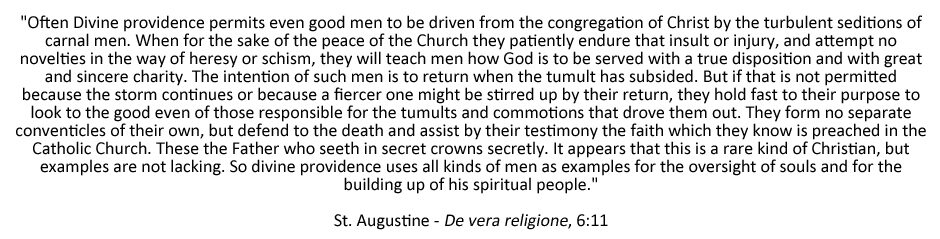
Many prelates from around the world would stay at my residence in Rome when they would come for business with the Roman curia. As a result, at mealtimes you would find yourself eating with Bp. X or Archbp. Y or Card. Z from here there and everywhere. At a certain point you start to take a little less notice of these fellows as they would come and go.
In one case, I recall for several days being on pretty much the same schedule as a visiting priest from Argentina. He was a very pleasant fellow, whose Italian wasn’t perfect, but it wasn’t bad. He was clearly very smart and had a serene and affable way about him, though he wasn’t loquacious. We chatted for some days and enjoyed company at meals. Normally, I would just stick to small talk with visitors, and let them guide how far they wanted to talk about their business.
Then one day as I was leaving the palazzo, he was getting out of a car and coming in, wearing under a greca the house cassock, fascia, and zucchetto of a Cardinal of Holy Roman Church.
It turns out that it was Jorge Card. Bergoglio I had been lunching with.
Since he had impressed me simply as a person, I started paying more attention to him and what he had done. I asked around and learned a little about this S. American prelate.
When the Holy Father John Paul II died, I was pretty convinced that Card. Bergoglio was papabile, and didn’t rule out that he had the potential of being elected. His draw back for that prospect was more than likely his membership in the Society of Jesus. Card. Bergoglio is a Jesuit, and there has never been a Jesuit Pope.
The gentlemanly Sandro Magister has a post on Card. Bergoglio, and I recommend it.
Effectively, Card. Bergoglio thinks that baptism should be given more freely even to the children of those who are not practicing their faith. Some time ago, Pope Benedict also said something along these lines, explaining that when he was younger, he had a more restrictive view. The Church in S. America is facing a horrible challenge from secularism and relativism on the one hand, fundamentalist sects on the other.
Here is a big chunk of the article, though I recommend that you read the whole thing:
[…]
In some parts of Europe, baptizing a child has already become the exception, requiring an unconventional decision. But now, the number of unbaptized infants, children, young people, adults is also rising in Argentina.
This decline in the practice of baptism is the result of a weakening of family ties and a withdrawal from the Church. Some of the clergy have drawn this conclusion: where they see the signs of faith being extinguished, they maintain that it is right to decline to administer the sacraments.
But in Argentina today, the Church authorities are moving in the opposite direction.
Already in 2002, the archdiocese of Buenos Aires and the diocese in the surrounding area had published an instruction urgently recommending the baptism of both children and adults, and explaining how to overcome resistance to the celebration of the rite.
But now the bishops of the area have returned to the task with a booklet entitled "El bautismo en clave misionera," which reproduces the 2002 instruction and supplements it with other guidelines for parish pastors.
So beginning this year, the most conscientious pastors are regularly holding "baptism days," on which they administer the sacrament to children and adults in situations of poverty or with broken families, who have been helped to overcome their own uncertainties and those of the people around them.
Cardinal Bergoglio has explained the meaning of all this in an interview with the international magazine "30 Days":
"The child has no responsibility for the condition of his parents’ marriage. The baptism of children can, on the contrary, become a new beginning for the parents. A while ago, I baptized the seven children of one woman, a poor widow who works as a maid and had her children by two different men. I met her on the feast of Saint Cajetan. She said to me, ‘Father, I am in mortal sin, I have seven children and have never had them baptized, I don’t have the money for the godparents and for the party… I saw her again and after a little catechesis I baptized them in the chapel of the archepiscopal residence. The woman said to me, ‘Father, I can’t believe it, you make me feel important’. I said to her, ‘But madam, what do I have to do with it? It’s Jesus who makes you important." [Do I hear a big "Amen!"?]
Bergoglio is anxious not to extinguish a tradition typical of the most remote areas of Argentina, in those towns and villages where the priest comes only a few times a year:
"There, popular piety feels that children must be baptized as soon as possible, so there are men or women known by all as ‘bautizadores’ who baptize the children when they are born, in anticipation of the arrival of the priest. And when he arrives, they bring the children to him so that he can anoint them with holy oil, completing the rite. When I think about it, I am reminded of the story of those Christian communities in Japan that were without priests for more than two hundred years. When the missionaries returned, they found all of them baptized and all of them sacramentally married."
The cardinal continues:
"The conference in Aparecida urged us to proclaim the Gospel by going to meet the people, not by waiting for the people to come to us. Missionary fervor does not require extraordinary events. It is in ordinary life that mission work is done. And baptism, in this, is paradigmatic. The sacraments are for the life of men and women as they are. They may not make big speeches, but their ‘sensus fidei’ grasps the reality of the sacraments with more clarity than many specialists do."
What reemerges here is the ancient and still unresolved dispute between a Church of the elite, a pure, minority Church, and a Church of the masses, populated also by that immense sea of humanity for whom Christianity is made up of a few simple things.
In Italy, for example, the dispute came up again during the last major national conference of the Church, held in Verona in October of 2006. On that occasion, one position held by the "rigorists" was precisely that of withholding baptism and the other sacraments from those believed to be unfit because they are not practicing. [A position which can be argued and defended.]
It is a dilemma that Joseph Ratzinger himself experienced personally as a young man, and finally resolved in the same direction indicated by Cardinal Bergoglio. This is what, as pope, Ratzinger himself said in replying to the question from a priest of Bressanone, in a public question-and-answer session with the clergy of the diocese on August 6, 2008.
The priest, named Paolo Rizzi, a pastor and professor of theology, asked Benedict XVI a question about baptism, confirmation, and first communion:
"Holy Father, 35 years ago I thought that we were beginning to be a little flock, a minority community, more or less everywhere in Europe; that we should therefore administer the sacraments only to those who are truly committed to Christian life. Then, partly because of the style of John Paul II’s Pontificate, I thought things through again. If it is possible to make predictions for the future, what do you think? What pastoral approaches can you suggest to us?". [What an excellent question to put to Peter.]
Pope Ratzinger responded:
"I must say that I took a similar route to yours. When I was younger I was rather severe. I said: the sacraments are sacraments of faith, and where faith does not exist, where the practice of faith does not exist, the Sacrament cannot be conferred either. And then I always used to talk to my parish priest when I was Archbishop of Munich: here too there were two factions, one severe and one broad-minded. Then [wait for it….] I too, with time, came to realize that we must follow, rather, the example of the Lord, who was very open even with people on the margins of Israel of that time. He was a Lord of mercy, too open – according to many official authorities – with sinners, welcoming them or letting them invite him to their dinners, drawing them to him in his communion.
"Therefore I would say substantially that the sacraments are naturally sacraments of faith: when there is no element of faith, when First Communion is no more than a great lunch with beautiful clothes and beautiful gifts, it can no longer be a sacrament of faith. [So, he is not saying we should apply no criteria.] Yet, on the other hand, if we can still see a little flame of desire for communion in the faith, a desire even in these children who want to enter into communion with Jesus, it seems to me that it is right to be rather broad-minded.
"Naturally, of course, one purpose of our catechesis must be to make children understand that Communion, First Communion is not a ‘fixed’ event, but requires a continuity of friendship with Jesus, a journey with Jesus. I know that children often have the intention and desire to go to Sunday Mass but their parents do not make this desire possible. If we see that children want it, that they have the desire to go, this seems to me almost a sacrament of desire, the ‘will’ to participate in Sunday Mass. In this sense, we naturally must do our best in the context of preparation for the sacraments to reach the parents as well, and thus to – let us say – awaken in them too a sensitivity to the process in which their child is involved. They should help their children to follow their own desire to enter into friendship with Jesus, which is a form of life, of the future. If parents want their children to be able to make their First Communion, this somewhat social desire must be extended into a religious one, to make a journey with Jesus possible.
"I would say, therefore, that in the context of the catechesis of children, that work with parents is very important. And this is precisely one of the opportunities to meet with parents, making the life of faith also present to the adults, because, it seems to me, they themselves can relearn the faith from the children and understand that this great solemnity is only meaningful, true and authentic if it is celebrated in the context of a journey with Jesus, in the context of a life of faith. Thus, one should endeavour to convince parents, through their children, of the need for a preparatory journey that is expressed in participation in the mysteries and that begins to make these mysteries loved.
"I would say that this is definitely an inadequate answer, [Gosh… see how harsh and rigorous Pope Benedict is? The former "enforcer" of doctrine?] but the pedagogy of faith is always a journey and we must accept today’s situations. Yet, we must also open them more to each person, so that the result is not only an external memory of things that endures but that their hearts that have truly been touched. The moment when we are convinced the heart is touched – it has felt a little of Jesus’ love, it has felt a little the desire to move along these lines and in this direction, that is the moment when, it seems to me, we can say that we have made a true catechesis. The proper meaning of catechesis, in fact, must be this: to bring the flame of Jesus’ love, even if it is a small one, to the hearts of children, and through the children to their parents, thus reopening the places of faith of our time."






 fac on Daily Rome Shot 1118 – Paddywhack!: “Speaking of the disputatio back on October 31st between Archbishop Vesco and Bishop Barron (Vesco saying the Catholic Church was…”




























