Folks, The Crescat is ailing.
I request that you stop what you are doing and say a prayer for her and that you repeat prayers during the day.

Folks, The Crescat is ailing.
I request that you stop what you are doing and say a prayer for her and that you repeat prayers during the day.
So… I am looking out of the window of the Sabine Sacristy from the Sabine Chapel and I notice strange things around a tree.
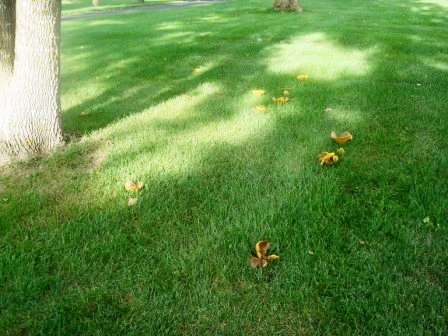
Whiskey Tango Foxtrot?

These things are HUGE.

Anyone know what these are? They are growing under an ash tree, possibly along where the roots are.
Everyone, I am sure, knows the old phrase "as bold ad borage", or "borage is courage", or even "a garden without borage is like a heart without courage".
It takes a while to grow, but I have a little going now.
Here are what the edible flowers look like.



Borage was known in medieval times to be good for people with melancholy. I believe that extracts from borage are still used in the treatment of depression.
And these flowers are darn good in Gin!
Finally…

UPDATE 10 Aug 1614 GMT
Okay! The mushrooms are Gyrodon merulioides.
A reader sent this:
The mushrooms on your lawn belong to Gyrodon merulioides, in other sources named Boletinellus merulioides (those are synonymous names, as it often happens in mycology).
They are known under the common name of "ash bolete" or "ash-tree bolete".
These are edible mushroom, but not very tasty. I tried to eat them more than once, and I was always disappointed. They have somewhat "woody" taste.
UPDATE 1714 GMT
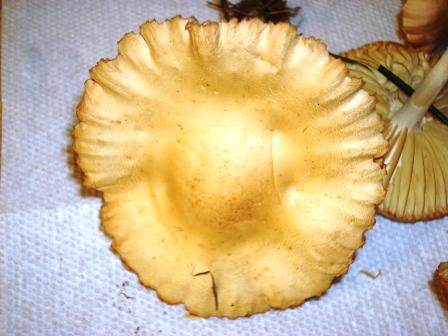
I went out and picked some mushroom near the Gyrodon merulioides.
Meet Marasmius oreades which what the French call "mousserons".


Some people claim that even though the Holy Father issued Summorum Pontificum, no one is really supposed to actually use the older books.
They have the same attitude about the TLM as they do about Gregorian chant: it should be seen and not heard.
Here is an interesting announcement.
The Pontifical Commission Ecclesia Dei has issued their own helpful material for the older form of Mass, the Missa Extraordinaria, or Usus Antiquior, in line with the Supreme Pontiff’s own Summorum Pontificum.
This is an official multimedia release, by the Holy See, on DVD in four languages for priests and laypeople to learn the older form of Mass.
It is an official release of the Holy See.
The project had been announced by the former President of the PCED, Card. Castrillon.
On the first DVD is a recording of a Low Mass. There are also other videos of Masses including a Pontifical Mass at S. Maria Maggiore in 2003.
On the second DVD is a didactic presentation with detailed explanations of rubrics and directions for serving, as well as the preparatio ad missam and thanksgiving in the sacristy.
On can obtain it on request from the PCED. It is hoped that it will be distributed also in bookstores and religious goods stores.
PONTIFICIA COMMISSIONE ECCLESIA DEI
presenta
LA FORMA STRAORDINARIA DEL RITO ROMANO
Sussidio didattico audiovisivo per sacerdoti e laicicon presentazione di S.Em.Rev.ma
il Sig. Dario Card. Castrillon HoyosCofanetto di 2 DVD
sottotitoli in italiano/english/espanol/francaisper richiederne una copia
Pontificia Commissione Ecclesia Dei – Palazzo della Congregazione per la Dottrina della Fede
Piazza del Sant’Uffizio, 11 – 00193 ROMA – Tel. 06/69885213 – 69885494 – Fax 06/69883412Una produzione multimediale ufficiale in quattro lingue per favorire sacerdoti e laici ad apprendere il rito romano nella sua forma straordinaria: ecco il primo concreto contributo della Santa Sede allo sviluppo delle ambizioni papali contenute nel Summorum Pontificum. Un progetto didattico annunciato dall’allora Presidente della Pontificia Commissione Ecclesia Dei, il Cardinal Castrillon Hoyos subito dopo l’entrata in vigore del Motu Proprio, e completato proprio quando il prelato sudamericano giunge al termine del suo mandato.Nel primo DVD è contenuto il filmato completo di una messa letta nella forma straordinaria introdotta da un’intervento del Cardinale Presidente. Vi sono anche contributi video con alcune messe gregoriane, compreso il Pontificale tenutosi a S.Maria Maggiore nel 2003.
Nel secondo DVD è contenuto il filmato didattico vero e propri oche spiega nel dettaglio gesti e rubriche del messale giovanneo per la Messa letta, dalla preparatio ad missam al ringraziamento in sagrestia.
Per acquistare una copia è possibile chiedere direttamente agli uffici della PCED. Si spera presto in una sua distribuzione più ampia presso tutte le librerie e i negozi di articoli religiosi.
This is an official release of the Holy See.
Please take note, editors of The Tablet et al.,…. this is an official release from the Holy See.
With a tip of the biretta o{]:¬) to Rinascimento Sacro.
From a reader:
The following was in our Parish Bulletin this week and is on our parish website… http://www.stanthonyofpadua-buffalo.org. Our parish has an EF Mass every Sunday and on Holy Days. Fr Secondo Casarotto is a great Pastor and we are lucky to have him. I am glad we do not have this type of "liturgical nuance" in our parish.
I thought I would share as you see these "Communion Blessings" more and more, and I thought you may find his commentary worthwhile or worthy of posting.
Interesting. I am not in favor of the practice of blessings at Communion, but I do not refuse to give them if it is obvious that the person is going to kneel there until he gets one. There is a time for blessings during Mass: the end. Communion time is for Communion, right?
Let’s see what this priest has to say.
Traditionally Speaking by S. Casarotto 8/9/09
*NO BLESSING*
A growing phenomenon in the “liturgical renewal” is giving a blessing to the faithful who have joined the Communion procession at Mass with no intention of receiving the Eucharist. They ask for a blessing as they fold their arms across their chest to receive it. I do not give this blessing and for many reasons:
1) There is already a blessing to the whole congregation at the end of the mass and I am always available to give a special blessing to those who request it for some special reasons (before going to the hospital, for an anniversary, before taking a long trip, etc.);
2) A blessing at Communion time creates confusion and is a countersign about the purpose of the Communion procession;
3) It is disrespectful to turn the attention from the Eucharist to a person to be blessed. This innovation is nowhere to be found in the instructions for the celebration of the mass. In fact, the Holy See has said many times, “Enough with experimentation” and “Nothing is to be added or taken away from the liturgy” which is “the prayer of Christ and of the Church.” I suspect that this custom started when, as a reaction to a Jansenistic understanding of spiritual worthiness for the Sacraments, well intentioned priests and liturgical committee began to urge the faithful to receive the Eucharist. Everyone, Catholic and non-Catholic, whether in a state of grace or not, came to believe they must join the Communion line. This thinking has been introduced by the false interpretation of “active participation”. As John XXII pointed out, we must ask ourselves why the number of Communions (and auxiliary ministers) skyrocketed while the number of Confessions almost disappeared.
Fr Z, keep up the great work! Thanks for your priestly ministry to our great Church!
I think other factors that contributed to this psychological pressure to go forward even if you shouldn’t are a) row by row Communion processions and b) the reduction of the Eucharistic fast to only one hour before Communion.
I hope Father doesn’t get too much flack for this. He probably will… but I hope not.
No doubt this will stir people up to say how meaningful these blessings are to them and they will express how they make them feel.
I can sympathize with those feelings. However… I think the other points, made by Father, above, are to be followed.
From a reader:
We had a visiting priest this weekend and our parish and there was a lot of ad libbing (particularly during the Eucharistic Prayer). There was even some fumbling at the words of consecration, but I figure that God took care of it. While unfortunately I am familiar with this happening, I haven’t had to deal with it for quite some time (our parish priest is primarily a "say the black, do the red" type).
After getting through mass, I wondered whether there was either a particular saint’s intercession to ask for or a particular prayer to say regarding ad libs and liturgical abuses?
I know this is perhaps a silly question, but I was just curious.
Be assured of my prayers in this Annus Sacerdotalis,…
I suppose one could use the Bux Protocol for this.
It is a sad state of affairs when a man comes into a parish as a visitor and thinks that he can do whatever he wants to to the Mass and the people present through liturgical abuses. I wouldn’t fault a man for going into a place where there are habitual liturgical abuses and insisting that he be able to say Mass according to the book in front of him (i.e., The Roman Missal). But to come in as a visitor and then inflict your personal abusive quirks is appalling.
Sad to say, perhaps pastors of parishes need to say to visitors: "In this parish we follow the books. If you commit an obvious liturgical abuse from willfulness or you change the texts in the books, you may not say Mass here again and I will write to your superior and to my own local bishop to explain what you did. That said, welcome, thanks for coming and have a nice day!"
And thanks for the prayers for this Year for Priests.
A very enthusiastic reader sent the following list of questions.
I don’t like lsits of questions. I generally like to deal with them one at a time.
Still… I will give some response according to my lights.
My emphases and comments.
Dubiums [dubia] about the Old Rite, regarding minor orders, the subdiaconate, married men or single men from a parish, etc:
1) May a married permanent deacon ordained in the new rite function as a deacon in the old rite? [YES! He is a deacon.] I have heard he may, and that makes sense: a deacon is a deacon is a deacon. May he thus also presumably act as subdeacon or one of the minor orders? [Of course.]
2) Do the Minor Orders and Subdiaconate conferred under the ’62 books, such as in seminaries using the Old Rite, maintain their validity as sacramentals in the ritual context of the Old Rite (ie, giving actual graces to assist the carrying out of their respective liturgical ministries) even though they no longer have canonical effect when it comes to the clerical state and obligations thereof? [I don’t know what graces they confer. You cannot make a person a sacramental. You can consecrate him or her as a sacred, consecrated person. But you cannot make people into "sacramentals".]
3) Does an approved reception of the Old Rite minor ordination to Lector now have the same or equivalent canonical effect as the New Rite Institution to the Ministry of Lector? [No.]
4) Under the principle of "higher orders contain the lower" does the reception of Old Rite minor ordinations HIGHER than lector (ie, Minor Exorcist and Acolyte) and/or Subdiaconate…now have the same canonical effect as the New Rite Institution to the Ministry of Lector, even if the minor ordination to lector has not previously been preformed? [No.]
5) Similarly, does the reception of the Old Rite minor ordination to Acolyte now have the same canonical effect as the New Rite Institution to the Ministry of Acolyte? [No.]
6) Under the principle of "higher orders contain the lower" does the reception of Old Rite subdiaconate…now have the same canonical effect as the New Rite Institution to the Ministry of Acolyte, even if the minor ordination to acolyte has not previously been preformed? [No. I am sensing a theme.]
7) If his bishop is willing, is there any canonical block to a married man preparing for ordination to the permanent diaconate being ordained using the Old Rite diaconal ordination? [Not that I can tell. A bishop can choose to use the older form of ordination if he wishes.]8) Similarly, may such a man also go through the ceremonies of first tonsure, Minor Orders, and subdiaconate if he wishes and his bishop is willing? [May he? Sure! He doesn’t have to, however.]
9) If a bishop is willing, may men from a parish receive first tonsure and/or some or all of the Minor Orders, such as if they want the special graces to serve in such capacities in the Old Rite? [I don’t accept the premise that this confers special graces. We don’t know what it does.] And if the answer to #8 is affirmative, does this imply even married men in a parish may receive a sort of "permanent subdiaconate" or "permanent acolytehood" if they wish and a bishop is willing (perhaps upon the recommendation of a pastor or after some training)? [No. There is no "permanent subdiaconate". There is now the ministry of acolyte according to Ministeria quaedam.]
10) Men in minor orders or merely first tonsure were traditionally not bound to celibacy. Up until the subdiaconate, they could decide to marry with no consequence. Does this remain true for those who have received the Old Rite minor orders? [The minor orders were SUPRESSED. This needs to be the clear principle. Men can go through whatever rituals, and I think they are meaningful, and they probably do something… what I am not sure. But they don’t have any effect in the sense of binding them by law, unless perhaps some religious group would connect them to vows or promises men take as a part of membership in that group, etc.] I assume so seeing as they have no longer canonical effect. But if such a man marries, should he be considered to have terminated that liturgical status or forfeit the special graces of the sacramental, or may he continue to be considered as maintaining it? [A man may participate in the liturgy in those ministries which are open to him according to law. If he is a layman (not ordained at least DEACON, then those ministries are fairly well defined.]
11) Subdeacons, on the other hand, WERE traditionally bound to celibacy. [There are no subdeacons today, in the sense that there were once. The DIACONATE is where a man is bound to celibacy (unless he is ordained to the permanent diaconate and is already married.] Presumably, if married men may now become deacons, and the answers to #7 and #8 are affirmativ e, married men may also receive the sacramental of old rite subdiaconal ordination (either transitioning to the permanent diaconate, or as "permanent subdeacons"). [Why would they? If there is going to be some traditional group that has married deacons… well… I just need to get my mind around that one.] However, though married men may be ordained deacons, once they are ordained they can no longer marry. Traditionally, this has held for the Major Orders (including subdiaconate), but not for the Minor, where marriage was possible after ordination, even while retaining the status. However, since the subdiaconate no longer has canonical effect in terms of clerical obligations, may it now be treated like the Minor Orders when it comes to the possibility of marriage after reception of it (ie, not binding/may be left without consequence)? If such a man marries, should he be considered to have terminated that liturgical status or forfeit the special graces of the sacramental, or may he continue to be considered as maintaining it? [The answer is the same: the ministries open to laymen and to clerics are well-defined. In this sense it is as if the old minor order of subdiaconate didn’t exist. A man in one of these groups who is made a subdeacon doesn’t have any more right to a liturgical role than any other baptized layman. Internal to these groups, they can do as they please. If men don’t like that, they can leave.]
I would like to know if you have answers to these questions, and if and how a dubium could be submitted to Ecclesia Dei or whatever department of the curia is relevant. [I wouldn’t bother. The principles here are pretty clear. ] I understand some of the questions would have to be more streamlined, but I would like to make sure the question is understood properly on the other end. Any help you could give would be great.
Remember: Even though there are religious groups of men who go through these old minor orders, in the Latin Church the clerical state begins at ordination as a deacon, either permanent or transitional. At that point a men either makes promises of celibacy or he doesn’t (if he is already married). If these groups have their own internal practices about the old minor orders, and they decide among themselves that they are going to treat those rituals with gravity and make them a part of what they do, fine. But they don’t have juridical force. I have no idea what spiritual effects they might confer. I suppose that depends on their spiritual state and God’s benignity.
Biretta tip to the great Fr. Blake, o{]:¬) PP in Brighton!
I don’t think we want this… so we had better pray for vocations!
Now!
Start praying!
UPDATE 2228 GMT
Some people don’t think this is funny. I do. But then… I have a sense of humor! o{]:¬)
Total Votes: 803 Started: 9 August 2009
It might be hard to beat this for a High Mass.
From CNA:
Priest brothers celebrate Mass on 20,320-foot Mt. McKinley
By Joel Davidson, Catholicanchor.orgAnchorage, Alaska, Aug 9, 2009 / 02:21 pm (CNA).- What is believed to be the first known Mass ever celebrated at the top of Mt. McKinley took place on July 3, when three childhood friends from Poland summited the 20,320-foot peak.
Father Krzyaztof Grzybowski and his brother Father Robert Grzybowski celebrated a Mass with their childhood friend Adrian Przyluski attending.
In a letter to the Catholic Anchor, Father Richard Tero, pastor of Sacred Heart Church in Seward, Alaska and local church historian in the state, said he believes the Mass was the first on the top of North America’s highest peak.
“In a most exceptionally clear and calm day, at about 4 p.m. after a long climb from 17,000 feet, on the West Buttress route, they were able to spend about 45 minutes at the 20,320 foot summit,” Father Tero wrote.
Other priests known to have summited Mt. McKinley include Father Carl Abele in the early 1970s, as well as Father Michael Shields and Dominican Father Tim Conlin in the 1980s, Father Tero said.
“I’m sure other foreign priests have also had success but didn’t share it with the local priests,” Father Tero added, “but to have no wind on Mt. McKinley is extremely rare.”
Father Tero hosted the priest brothers and their friend in Seward, where the Polish men enjoyed a Kenai Fjords tour after their climb.
In sharing the story of the mountaintop Mass, Father Tero said the men had to “blow on the wine to unfreeze it for the Mass.”
The three men grew up together in Bielsk Podlaski at the far east of Poland, on the border with Belarus.
The two brothers now serve in their home diocese as priests. Przyluski is a police officer in Warsaw. The men left Anchorage on July 23.
Why? I am not sure.
Are what the Obama Administration says and what the Obama Administration does in variance with each other?
Are they telling the truth when they talk about reducing abortions?
The following should give you some food for thought.
This is in from the invaluable C-Fam which you should add to your RSS readers.
U.S. Signs Disabilities Treaty, Sparking "Reproductive Health" Concerns
(NEW YORK – C-FAM) Late last week, United States (US) Ambassador to the Untied Nations (UN) Susan Rice signed the Convention on the Rights of Persons with Disabilities [NB: persons with disabilities] – the first binding UN treaty to mention "sexual and reproductive health" – on behalf of the US. While this has prompted concern among certain advocates for the unborn, veteran pro-life UN observers counsel that the term should not be construed to include abortion. [Oh?]At the time of the treaty’s adoption in 2006, delegates debated including the phrase amid worries among pro-lifers that certain pro-abortion organizations like the Center for Reproductive Rights might claim that the term was elastic enough to include abortion.
An official report of the proceedings, however, noted that this phrase was "not intended to alter" policies with regard to "family planning or related matters." The treaty does not affect the pro-life laws of member states that signed or ratified it.
To underscore this point, at least 15 nations made statements in the UN General Assembly at the time interpreting "sexual and reproductive health" as excluding abortion. No nation made a statement contradicting such an interpretation. Two pro-life European nations that signed the document, Poland and Malta, made formal reservations that the term did not include abortion.
The US, in it closing statement, affirmed that the term "cannot be interpreted to constitute support, endorsement, or promotion of abortion."
Certain pro-life critics worry, however, that the US closing statement was made under the Administration of President George W. Bush, and that there has now been a policy change at the White House. [And this is the problem.] They point to US Secretary of State Hillary Clinton’s statement before the House Foreign Affairs Committee this past April that she interprets the term "reproductive health" as including abortion. [Of course she does. And she is now a paid apparatchik of the most aggressively pro-abortion administration ever in the United States.]
Although such a statement from the Secretary of State indicates a US policy shift, it has no binding juridical status in international law. Abortion advocates often favor repetition of such statements, however, calculating that this will shift popular perceptions towards acceptance of a definition that includes abortion.
Jeanne Head, R.N., UN representative for National Right to Life Committee, noted that the term "reproductive health" has never been defined to include a right to abortion in any negotiated UN document, including the Disability Convention. She told the Friday Fax that abortion advocates "appear to think that if they keep repeating this false interpretation often enough, they can make the world believe it is true." ["If you tell a lie big enough and keep repeating it, people will eventually come to believe it."]
Following last week’s signing, the treaty now moves to the Senate for its "advice and consent," per the role specified in the US Constitution. If it gains the support of two-thirds of the Senators, it is then presented to the President for ratification. The Bush Administration had refused to sign the treaty, arguing that it could weaken the Americans with Disabilities Act.
In general, the United States has been reluctant to seek ratification of treaties, due to concerns that treaties interfere with principles of federalism and infringe upon the rights of individual states. The Obama Administration has indicated it nevertheless would push for ratification of several treaties, including the Conventions on the Rights of the Child and Elimination of All Forms of Discrimination Against Women.


Coat of Arms by D Burkart
 fac on Daily Rome Shot 1118 – Paddywhack!: “Speaking of the disputatio back on October 31st between Archbishop Vesco and Bishop Barron (Vesco saying the Catholic Church was…”
 on Continue the Rome shot posts? I dunno.: “Please call continue the Rome photo posts if it not too much of a burden. Thank you, Father!”
 on Daily Rome Shot 1117 – A *POLL* about 2026-27: “Sorry… my bad. It is indeed SIX. 1. Rh8+! Kxh8 2. Qh2+ Kg8 3. Qh7+ Kf8 4. Qh8+ Ke7 5.…” on Encrypted Yeast? The Fathers on “What does the “leaven” really say?” (6th Sunday after Epiphany Resumed): “I especially like St. John Chrysostom’s insight, that when we are “hidden” in the normal places we live and work,…”
 on Daily Rome Shot 1117 – A *POLL* about 2026-27: “pestolover: For what it’s worth, your solution was the best I could do also.”
 on Daily Rome Shot 1117 – A *POLL* about 2026-27: “Fr Z thanks so much for 2 reminders. 1. Using your Amazon link! For heaven’s sake it costs us nothing…”
 on 10 November – St Andrew Avellino (Vetus Ordo). Wherein Fr. Z rants.: “So interesting that you bring this up, a couple weeks ago a priest at a neighboring parish died unexpectedly. They…”

A Daily Prayer for Priests








They find you a pro-life agent in your area who commits to giving a portion of the fee to a pro-life group!

PLEASE subscribe via PayPal if it is useful. Zelle and Wise are better, but PayPal is convenient.
A monthly subscription donation means I have steady income I can plan on. I put you my list of benefactors for whom I pray and for whom I often say Holy Mass.
In view of the rapidly changing challenges I now face, I would like to add more $10/month subscribers. Will you please help?
For a one time donation...



Help Monks in Wyoming (coffee – UPDATED LINK) and Norcia (beer) and the wonderful "Soap Sisters" of Summit, NJ!


Please follow me on Twitter!










Visits tracked by Statcounter
since Sat., 25 Nov. 2006:


