How do you plan to celebrate 7 July?

In honor of the Feast of St. Isidore, I am proud to announce that I have added audio recordings of the Internet Prayer in both the dialect of Rome, Romanesco, and in Italian.
It would love to receive some additional language versions as well as audio recordings read by native speakers.
ROMANACCIO (ROMAN)
 LISTEN
Orazzione prima da collegasse a la rete
Oddio ‘nnipotente ‘n zempiterno, che c’hai fatto apparo de ‘na pittura de Sampietro, (1)
e c’hai detto:"bbadate da cerca’ le cose bbone, ‘ndo’ stanno stanno e senza torna’ ‘ndietro,(2)
e speciarmente in de la perzona de Mi’ fijo e Signore Vostro Ggesucristo",(3)
fa’ che Sant’Isidoro, Vescovo e Dottore come sarvognuno nun z’era mai visto,(4)
ce dia ‘na mano a ggira’ co’ ‘sti machinari in de la rete de’ internette,
addopranno occhi e mmano cercanno da piacette
e trattanno tutti quelli che che ‘ncontramo
come farebbe Cristo, fijo Tuo, e nno Ccaino, fijo d’Adamo.
Pe’ Ccristo Nostro Signore. Ame’.
(1) A reference to the Sistine Chapel and the catechetical intent of the depiction of Gen 1,26-27
(2) Luke 9:62
(3) Surely a Roman commoner would have God speak in first person.
(4) "sarvognuno" = "no disrespect to all others"
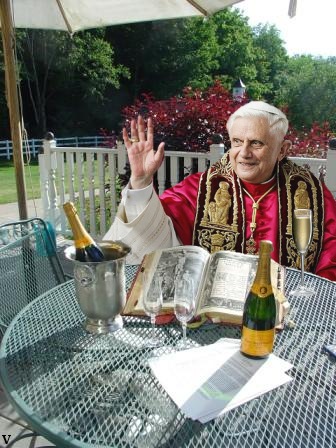
From today’s General Audience in St. Peter’s Square…
… the papal red saturno.
S’bout time!
I wish he had used it during President Bush’s visit.
I am highly amused.
I found this over at Orthometer
It occurs to me that this word might be a useful sort of tag when speaking about certain bishops who are determined to fight the Holy See on a range of issues liturgical.
Also, I had a great e-mail today stating: It strikes me that if an FSSP parish can be set up in Vancouver, B.C., it can happen anywhere!
Perhaps in the pursuit of personal parishes, people can simply exclaim, "Vancouver!"
We could no doubt come up with all sorts of shouts of this nature… all of them effable.
Another question:
Dear Fr Z —
Is an individual priest of the Latin Rite permitted to say Mass only in the Ordinary Form or only in the Extraordinary Form? Or will all priests be required to use both forms, at least once in awhile?
I know a number of priests who only say the Mass of Paul VI; in most cases, it’s because they have little or no Latin. Given Cardinal Castrillon Hoyos’s announcement that the Extraordinary Form will be made available in all parishes, is it likely that they will be required to learn the older form?
Conversely, there are priests who only say the Mass of John XXIII. Will they be required to say Mass in the Ordinary Form from time to time? The Holy Father touched on this, obliquely, in the letter accompanying Summorum Pontificum: "Needless to say, in order to experience full communion, the priests of the communities adhering to the former usage cannot, as a matter of principle, exclude celebrating according to the new books. The total exclusion of the new rite would not in fact be consistent with the recognition of its value and holiness."
It would seem ideal to me that all priests become "idoneus" in both forms of the same rite and celebrate both — not just "ordinary form" priests celebrating the EF but also priests from groups like the FSSP celebrating the OF. Is this what is supposed to happen? Is it likely to happen?
Okay… that’s a lot of questions. Too many, really. So I think I will give an answer that is too long and maybe rant a little.
First, I think circumstances will determine whether or not a priest says Mass only in the older form with the 1962MR or only in the newer form with the 2002MR. If Father is placed in such a way that it never happens for him to have to say the Novus Ordo, then he won’t be using the Novus Ordo.
Will a priest be forced to say one Mass or another? I don’t think so. However, if a bishop assigns a man to a parish where he will have to use the Novus Ordo, and the priest refuses to use the Novus Ordo, then the bishop could have a sound reason to apply disciplinary measures. Still, a priest cannot be forced to say any Mass, so long as he is willing to bear the consequences.
I think the basic approach ought to be something along the lines of what I usually say when asked if I say only the older form of Mass: I wasn’t ordained for a book.
If there is need for the Novus Ordo in this language or that, I will go unto the altar and open up the book and say Mass. If there is need for the older form, I will use the older form. I prefer the 1962 to the 2002, but the needs of the people of God must outwiegh my preferences. It would be grossly unfair for me to impose suddenly the older form of Mass on a congregation who haven’t experienced it for decades, or ever, and who weren’t expecting it.
Is it likely that priests of these specialized groups will also use the Ordinary Form of Mass? I have no special insight into this, since I don’t belong to any of these groups. I suspect they won’t be very open to the idea. I suspect some members of these groups could be open while others will staunchly refuse.
I know from my own personal experience that, even though I am willing to say whatever Mass I am pointed at, saying the Novus Ordo is a bit of a let down for me now. It takes some effort to get my heart and head into it. I do, of course. I say the Novus Ordo as reverently and with as much continuity as I can. But I can imagine very well the mental and emotional obstacles against the Novus Ordo that priests would have if they really never say it, have never said it. It would be close to trauma, a challenge to who they are as priests.
Thus, were I a diocesan bishop – and thanks be to God I never will be – I would hesitate (not refuse) to bring in priests from a group who essentially refuse to use the Novus Ordo.
Even as a priest I have suffered not a little because I refused to give up my position that I should have the right to say the older form of Mass without joining what was essentially a ghetto. People would ask me, "Why not join group X?" I believed that every priest should have this right and if diocesan priests simply opted out of dioceses in favor of some specialized institute, then the dichotomy between the diocesan priests and specialists would grow and, when the time came, the diocese would be weaker as a result. Thus, I refused to go to the back of the bus, but I endured the blow-back and it hasn’t been fun.
And so, were I a diocesan bishop (quod Deus avertat), I would hesitate about bring in specialists, not only because I think the local men should be the first to have the opportunity to serve, but because of other practical issues. Say I put guys from the Bunch of Priests Who Say Only The Old Mass (BOPWSOTM or "bopwisotum") at St. Ipsidipsy. The neighboring parish’s priest over at St. Idealia, Fr. Guido O’Brien, or "Just-Call-Me-‘Hooty’" falls off a ladder and winds up in traction. Fr. Rigidior Oldform over at St. Ipsidipsy is happy to go over to St. Idealia in a pinch, but he won’t use the newer form of Mass. The result is confusion and people looking at Fr. Rigidior as if he is from Mars.
As a bishop highly in favor of tradition, I don’t think that that is how I would want a parish to be introduced to the older form of Mass. Maybe a big jolt might work… but I bet it would create more hard feelings than positive interest.
"But Father! But Father!" you might want to object. "Surely Fr. Rigidior isn’t the only priest who could substitute. This is a straw man argument! And if another can’t be found just at that hour of the day in an emergency, surely the world won’t come to an end and people will be understanding if they can’t have Mass on Tuesday afternoon. Leave Fr. Rigidior alone! He’s our hero!"
Okay… I’ll stipulate that another guy could probably be found and that the world won’t come to an end. But it seems to me that it shouldn’t have to be that complicated.
A priest should be willing to help out in either form under reasonable conditions. Saying Mass with the newer form, when you are ordained for the WHOLE CHURCH and not just a fraction of it, is not unreasonable.
The corollary to this is, as bishop (which will never happen) I would be pretty annoyed with a priest who simply refused to learn anything about the Extraordinary Form of Mass.
If he were to have requests for the TLM and refused even to learn anything about it, that would irritate me. I would view that approach as narrow, stingy, and crass. I would begin to wonder what that priest’s understanding of the Church might be, what his notion of priesthood was, if, for idealogical reasons, he was determined to remain ignorant of his own Rite.
If Father was found to be too stupid to learn the older form of Mass, try as he might, I wouldn’t be irritated with him, poor thing. But I would have to wonder what he was doing when he said the Novus Ordo.
I think priests should be prepared to step up to the altar, open up the book, and say Mass, older or newer, Latin or English (or some other vernacular truly necessary in the place according to circumstances). As bishop I would also remind them that as pastors of souls they have the obligation to teach their flocks to speak and sing the parts that pertain to them in both Latin and their mother tongue.
If they refused to do this, I think I would want to discuss their reasoning with them and learn their minds.
Therefore, as a diocesan bishop (which is impossible) I would want to give the local men, priests of the diocese, the first and best opportunity to satisfy all these needs for the older forms everywhere in the diocese without bringing in extra-diocesan groups. I would do everything I could to make sure they had training and support and my public approval. I would even b happy to bring in extra-diocesan men on a temporary basis at least to train other priests and lay people, to get the ball rolling. But, the local men would have my first preference.
Furthermore, Summorum Pontificum states that pastors have the ability to deal with all these matters and that I should have to get involved unless necessary. Bringing in men from outside would be a serious intervention. I would rather support or persuade local men to get trained up so that they could handle these. Of course, according to this fantasy, there would be abundant right-thinking seminarians in the pipe line, so the problem would resolve pretty quickly.
Also, I would make it clear to these priests of the diocese that if there were legitimate need to help elsewhere, with the newer form of Mass, they shouldn’t drag their heels too much or grouse publicly, no matter what they said to me over the phone or griped about to their priest friends. Gripe to me in private, make your arguments, try to convince me, but please don’t be sullen in public so that you create scandal.
We are not ordained for a book, or even a specific use. Hopefully in years to come these problems and tensions will resolve themselves as Pope Benedict’s Marshall Plan creates the desired results.
So, the long and the short is this: If a priest is ordained for the Latin Church, I think he should be willing to work with people as they are and, hopefully, move them along to a broader perspective.
The Holy Father made an interesting appointment this week.
For a long time there have been strong rumors that one of Rome’s auxiliary bishops, His Excellency Rino Fisichella, Rector of the Lateran University and one of the real go to guys for the Italian media, would be made Secretary of the CDF. That would mean that the present Secretary, Archbishop Angelo Amato would be moving up to head one of the posts requiring a Cardinal, perhaps the Congregation for Causes of Saints.
However, Pope Benedict has named Bp. Fisichella as President of the Pontifical Academy for Life, making him an archbishop. He replaces Bp. Elio Sgreccia, who at 80 years old must retire for reasons of age.
I believe (now) Archbp. Fisichella will remain Rector of the Lateran. At least I haven’t seen anything to the contrary. Nor have my friends on the inside heard that he won’t be Rector any longer.
BTW… this is a bigger slap down than when Archbp. Piero Marini was moved to head up the offices for Eucharistic Congresses. Furthermore, L’Osservatore Romano also had a little note to explain how important it is to have an Archbishop! (Insult to injury.) So, it looks like Archbp. Fisichella is still at the Lateran, but now he has far less influence in the Vicariate.
At the same time, the very important Camillo Card. Ruini will be stepping aside as Vicar for the Diocese of Rome. Card. Ruini runs the day to day stuff for the Pope’s diocese for him while Pope Benedict is doing his Pope things.
The strong candidate to take over the post of Vicar of Rome is Agostino Card. Vallini, who is presently the head of the Apostolic Signatura, which is the Church’s "Supreme Court", which handles appeals from the Rota and other civil and criminal cases which arise in the Vatican City State.
Were Card. Vallini to be moved to the Vicariate of Rome, that would leave a gap at the top of the Church’s judicial ladder.
It would not surprise me at all were His Holiness to choose His Excellency Raymond Burke, Archbishop of St. Louis. Pope John Pail II and Pope Benedict highly respected Archbp. Burke as a canonist. Burke spent a long time in Rome and was the Defend of the Bond for Holy Roman Church. He has been appointed to many positions on dicasteries. There are few canonists who rival him for clarity of thought and expertise.
It would be a tremendous loss for the Church in the United States, but a great gain for the Universal Church.
In the meantime, we are also waiting to see what will happen with the appointment of Archbp. Amato to another dicastery, perhaps to a cardinal’s chair. Last week another name, also rumored before, started getting stronger: the Sardinian born Bishop Ignazio Sanna, who was himself once at the Lateran University (back in my days there) as Dean of the Theology Faculty.
Furthermore, I think many of us are holding our breath as we pray that His Excellency Archbp. Malcolm Ranjith will be made Prefect of the Congregation for Divine Worship if His Holiness decides to allow the great Cardinal Arinze (titular Cardinal of my Suburbicarian Diocese) to have a little rest after all these years of service.
We are getting to the point in the calendar year when many changes are made to the Curia. Perhaps we shall see a flurry of appointments before the summer break.
A question from the internet:
Hi Father,
I first want to say thank you for your great work for the Lord and the Church!!! Many thanks. My question is whether or not a seminarian is allowed to wear the biretta? I live in Philadelphia, but want to remain anonymous to the superiors, because some are not open to continuity with tradition. If a seminarian is allowed to wear one, when would it be appropriate? I am looking forward to attending a Mass in the Extraordinary Form also. Thank you in advance for help.
First, you are welcome. But I remind you that the participants here are really what help WDTPRS to be influential. The more people who read, the better the stats, the more the milestones, the greater impact we can have in shaping the conversation.
And it is all about shaping the conversation, isn’t it?
Second, yes, seminarians can wear birettas. They always could in years past, so I can’t see why they can’t now.
Distinction: Once upon a time seminarians were given first tonsure and vested with the cassock as a sign of their clerical state. That is when they would start using the biretta as part of their choir dress.
Now, the clerical state begins at diaconate.
However, since the ministries of lector and acolyte substitute for those old minor orders, some suggest that the biretta shouldn’t be used until the man is "installed" in one of those ministries. Aside: I find that "installed" thing rather amusing. It makes a man sound like a spark-plug.
So, I suppose we could approach this a couple ways.
Either reserve the biretta to men in major seminary, or reserve it for those who are in major seminary and who are lectors and/or acolytes.
No matter what… and this is important… be careful to gauge prudently what sort of reaction there might be from the faculty of the seminary.
Don’t get yourself scrutinized more closely because of a hat. It just ain’t worth it.
In the meantime, be sure to study what I call "birettiquette", so that you know what to do with the hat once you are sure you can use it.
I don’t know how many times I have seen clueless priests fumble around with the thing.
I got a question from a reader, but I am simply too tired to get at it. You folks must help.
This is from a priest. Help him concretely. Keep anecdotes to a minimum until we get concrete references.
Our Pastor has started bringing the children up into the sanctuary to stand behind him during the Eucharistic Prayer.
Where can I find official documentation on whether this is permitted or not?
Thanks. I greatly appreciate you work.
Okay, folks. Get to work.
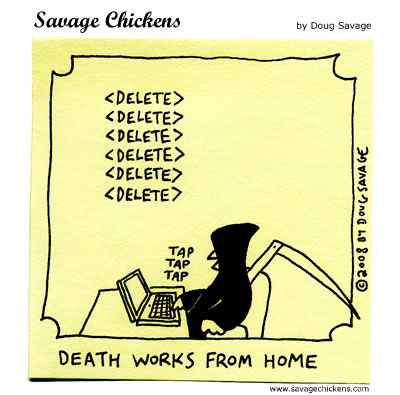
Rather reminds me of … me … cleaning up comments posted by the less than polite, or the creators of rabbit holes.
 Are you looking every day at the hermeneutically correct blog of His Hermeneuticalness the Hermeneutic of Continuity?
No? Well… start!
After all, he should wind up as the next Archbishop of Westminster.
"Mene Mene Tekel Parsin…"
Furthermore, it’s Father "Finigan" and not "Finnegan" or "Finegan" or "Fingolfin" or "Phineghin" or "Finagain", but … "Finigan".
I just noticed that H.H. Fr. Finigan has posted a very interesting piece.
I want to be mysterious so that you will go over there and give him a big statistics spike.
Go on now…. shoo!


Coat of Arms by D Burkart
 waalaw on Daily Rome Shot 1119: “In 1st variation, 2. . . . . . Q-g1# also works. As does 4. . . . . .…”
 on Daily Rome Shot 1119: “The folks in Charlotte need to test this by kneeling for Holy Communion right in front of the priest in…”
 on NB: Desktop and Posting – Zuhlsdorf’s Law kicks in – UPDATE: “I understood Windows 7, and stayed with that a long time, because it was such a stable and reliable system.…”
 on Daily Rome Shot 1119: “If the hoary old men of the Vatican wanted to instill a deep and abiding disgust of all things Vatican…”
 on Daily Rome Shot 1119: “Black mates in 4: 1. . . . Qe3+ 2. Ke1 Rg1+ (if 2. Kf1, Qg1++) 3. Rf1 RxR+ 4.…”
 on Pope Leo XIV airplane interview: remarks about relaxing Traditional Latin Mass restrictions: “@ProfessorCover: he did have a ready answer: no. That you disagree with the Roman Pontiff’s response does not make him…”

A Daily Prayer for Priests








They find you a pro-life agent in your area who commits to giving a portion of the fee to a pro-life group!

PLEASE subscribe via PayPal if it is useful. Zelle and Wise are better, but PayPal is convenient.
A monthly subscription donation means I have steady income I can plan on. I put you my list of benefactors for whom I pray and for whom I often say Holy Mass.
In view of the rapidly changing challenges I now face, I would like to add more $10/month subscribers. Will you please help?
For a one time donation...



Help Monks in Wyoming (coffee – UPDATED LINK) and Norcia (beer) and the wonderful "Soap Sisters" of Summit, NJ!


Please follow me on Twitter!










Visits tracked by Statcounter
since Sat., 25 Nov. 2006:


