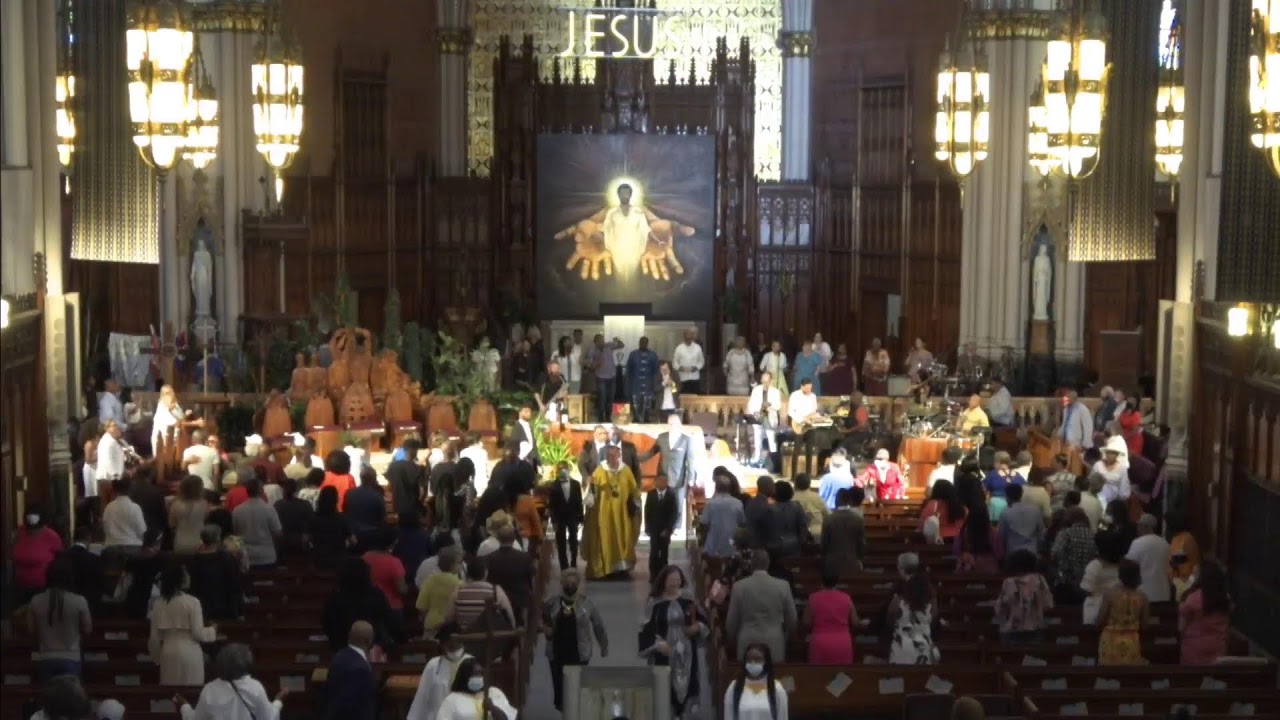
10 August: Wonderful Collect for St. Lawrence

St. Lawrence the deacon and martyr is beloved of the Romans. He has many churches in the City, which is a sign of how deeply he was venerated in centuries past.

Today in the traditional form of the Roman Rite we have a wonderful Collect:

Da nobis, quaesumus, omnipotens Deus:
vitiorum nostrorum flammas extinguere;
qui beato Laurentio tribuisti
tormentorum suorum incendia superare.

I’ll let you all have at and comment!

I limit myself to these observations.

This prayer is in a vast array of the more ancient manuscripts we possess.

Its style has the elements of Roman prayers. It is terse. It is not reticent. It has an elegant verbal and conceptual parallels (the genitive – accusative – infinitive in synchesis).

Enjoy!

Posted in Liturgy Science Theatre 3000, Saints: Stories & Symbols |
7 Comments

Daily Rome Shot 529, etc.

Priestly chess players, drop me a line. HERE

Selling or buying a home?  Consider Real Estate For Life to help.
 

In Reykjavík, 50 years ago today, there was one of most interesting of games between defender Spassky (white) and challenger Fischer (black), Game 13.

It was back and forth but it seemed to be a draw. At move 42 they adjourned (which is something that doesn’t happen now). Fischer stayed up all night working on it and was able to force a … victory. The Soviets were convinced only a draw might be possible. When Spassky resigned, he remained in his seat going over what had happened in shock. People look at the game even now and struggle with it: Black Fischer pulled it out with his rook trapped in the corner by a bishop and pawn: a king and five pawns against a king and rook. Download the PGN.

Meanwhile the drama about row removal and accusations from the Soviets of chemical or electronic mind control are going on.

Please remember me when shopping online. Thanks in advance.

US HERE – UK HERE

Posted in SESSIUNCULA |
1 Comment

Daily Rome Shot 528, etc.

Support wonderful monks.  Get great beer.  Win.  Win.

White to move and win.

Please remember me when shopping online. Thanks in advance.

US HERE – UK HERE

Posted in SESSIUNCULA |
2 Comments

Wherein Fr. Z rants and recommends a must read entry at NLM

The Council Fathers of Vatican II voted overwhelmingly to approve some few mandates that would result in a reform of the Roman Rite.

A body was assembled to implement that reform.  It was operated by radical ideologues who had their own ideas about what worship ought to be.  Guided by ideology and personal animus (in the case of Bugnini and the Congregation for Rites) Paul VI was manipulated, on the one hand, and the Consilium lied to, on the other, and sweeping changes were made to the Roman Rite that the Council Fathers never dreamed of, excepting the modernists from mainly northern Europe.

Peter Kwasniewski has a piece at NLM that is absolutely devastating regarding any claim that the Council and Council Fathers wanted an all vernacular (English) Mass.  Devastating.   He mounts up evidence that the expectation of the Council Fathers was that the Roman Canon, for example, remain in Latin.

The Council Fathers had mandated that Latin remain the language of worship, but that space could be given to the vernacular.   They mandated that no changes be made that weren’t organically consistent with the previous form.  They required that no changes by made that weren’t truly for the good of the people.

In each case, the expectations of the Council Fathers were thwarted.  Under the obscuring umbrella excuse of “the Council”, what we got what not what was voted on.   Latin was abandoned under false pretexts.  Massive changes that had nothing to do with the previous forms, total innovations, were interpolated and important, theologically founded elements were removed.  Entire Eucharistic Prayers that virtually no one even imagined about much less wanted were cobbled together and pasted in.

So much of this was accepted out of, it is possible to argue, a damaged sense of obedience.

Take a look at Peter’s entry at NLM and be amazed.  He did a huge amount of work.

Most of you are not going to read thoroughly everything Peter posts as his evidence that the Council Fathers expected that the Roman Canon be preserved in Latin.  It is overwhelming.  Just seeing it all laid out should clinch it.

We’ve been lied to for decades, to the unfathomable damage to our Catholic identity, the Church’s standing in the world, internal breakdowns and loss of moral capital like no other time in history.

Change how we pray and, over time, our beliefs change too.

Liturgy is Doctrine.

We are our Rites.

Save the liturgy.  Save the world.

Posted in Latin, Liturgy Science Theatre 3000, Pò sì jiù, Save The Liturgy - Save The World | Tagged , , , ,
17 Comments

Meanwhile, the Novus Ordo is the only expression of the Roman Rite… not.


Posted in You must be joking! | Tagged
17 Comments

ASK FATHER: The faithful put blood, sweat, and tears into the building, revival of churches, parishes. Given how bishops treat them, is there recourse in Canon Law?

From a reader…

QUAERITUR:

I’d love to hear your thoughts on where things go from here with the traditional liturgy, given the developments in DC and Chicago, as the faithful have put real blood, sweat, and tears into the building and revival of churches and parishes. I can’t help but believe that Rome will have to intervene, especially given the way that Cardinal Cupich has been treating the ICKSP’s Shrine in Chicago. Which, is there any recourse in canon law? The issue clearly isn’t going away….

Correct. It is not going away. In the meantime there will be a lot of unnecessary pain and damage.

However… not all pain is fruitless and not all damage is waste. There is such a thing as “creative destruction”, even outside of economic theory. It works in the economy of salvation as well.

We must persevere in prayer and confidence, resisting in devotion.

There would be recourse in canon law, if we were in normal times. Alas, today those appeals fall on deaf ears.

Canon 1300 establishes that

“The intentions of the faithful who give or leave goods to pious causes whether by an act inter vivos or by an act mortis causa, once lawfully accepted, are to be most carefully observed, even in the manner of the administration and the expending of the goods…”

These goods, including the labor, were given for a specific purpose: to order the churches to make them appropriate for the celebration of the Old Mass.

These goods were accepted.

It is incumbent upon the bishop to see that the wishes of the donors are respected, or, in justice, he needs to return those gifts to the donors.

An appeal could be lodged with the Holy See, but, again, such an appeal in these days would fall on completely deaf ears.

One might have more success making an appeal in civil court.

One wonders if the appellant would have any success in proving that the Church is not following it’s own internal law and therefore is violating stated rights. I don’t know civil law enough to to offer anything useful about that. Also, courts are reluctant to get involved in Church matters.

Certainly such a case would potentially draw a lot of press attention, and that might not be an altogether bad thing.

Posted in "How To..." - Practical Notes, ASK FATHER Question Box, Canon Law, Si vis pacem para bellum! | Tagged ,
19 Comments

Your Sunday Sermon Notes: 9th Sunday after Pentecost (N.O. 19th Sunday)

Too many people today are without good, strong preaching, to the detriment of all. Share the good stuff.

Was there a GOOD point made in the sermon you heard at your Mass of obligation for the 9th Sunday after Pentecost (19th Ordinary in the Novus)?

Tell about attendance especially for the Traditional Latin Mass.  I hear that it is growing.  Of COURSE.

Any local changes or (hopefully good) news?

A few thoughts of my own, HERE.

Is Idolatry Less Serious Now Than Back in Old Testament Times?

Posted in SESSIUNCULA | Tagged
5 Comments

Daily Rome Shot 527, etc.

Please remember me when shopping online. Thanks in advance. US HERE – UK HERE

3:16 isn’t just in John.

Reykjavík, Iceland, the Match of the Century between challenger Bobby Fischer and title defender Boris Spassky has reached on 8 August 1972 the 12th Game, a QGD which ended in a draw after 55 moves.

When the eleventh game was in session, Fischer handed the arbiter a note demanding that the first ten rows in the auditorium be removed because of spectator noise. There were only 15 rows. The next day, he demanded that 7 rows be removed or that the next game be played in the backstage room. The Icelandic Chess Assoc., which organized the match, agreed to remove two rows but the Icelanders and the Soviets said Nyet to the backstage.

Meanwhile, a dramatic Game 13 looms up in history on 10 August.

UPDATE:

Meanwhile, a cool video…

Reshevsky, born in Poland, played under the US flag.  He was an observant Jew and would not play on the sabbath or feast.  He wrote books and his great rival would have to have been Bobby Fischer.

QUOTE:

I am essentially a positional player, although I can conduct an assault with precision and vigor, when the opportunity arises. My style lies between that of Tal and Petrosian. [LOL – considered to be opposites] It is neither over-aggressive nor too passive. My strength consists of a fighting spirit, a great desire to win, and a stubborn defense whenever in trouble. I rarely become discouraged in an inferior situation, and I fear no one.

We could use some of that today.

Posted in SESSIUNCULA |
2 Comments

If a law isn’t accepted, it is essentially no law at all. Traditionis? Time will tell. Novus Ordo? Time has told.

In another post I mention reception theory regarding law, specifically Traditionis custodes.

If a law isn’t accepted by the group for whom it is intended, it is essentially no law at all.

One could, by this, contend that laws that were properly written and properly promulgated and were taken to be laws are, de facto if not de iure, zero.  How would one tell if they were zero?   People don’t obey them.

Remember, this applies to the Church’s disciplinary laws, not the Church’s moral teachings.

Let’s see if this applies to Traditionis custodes.  Time will tell.  And I remind the readership about 3.5% and the difference they can make.

I think we can argue that the Novus Ordo is, now, “no law at all” de facto and that there is evidence to support that view.  That doesn’t mean it wasn’t duly promulgated, etc.  It just hasn’t been accepted.

Consider the following.  The Novus Ordo was not universally accepted.  Why can we say that?

Almost 5 years after the imposition of the Novus Ordo Missae by Paul VI, on 28 October 1974, the Sacred Congregation for Divine Worship issued the Notification Conferentiarium Episcopalium which insisted that bishops “should …endeavor to secure the acceptance of the Order of the Mass of the New Roman Missal by priests and laity.”

“…endeavor to secure the acceptance…”?!?

It was not being received.

In 1980, another document was issued, Inaestimabile donum, which outlined the many abuses which had arisen over the decade.   Where there are abuses there is non-reception, ironically by those who say they accept it – and only it.  They say they accept it and the they twist it into something that it is not.  When you receive, you “Say The Black – Do The Red”.

In 1984, John Paul II issued Quattuor abhinc annos which gave an (as we now know unnecessary) “indult” for the use of the 1962 Missale Romanum.   Apparently the Novus Ordo Missae wasn’t universally received, if enough people wanted the old ways that even John Paul II, who was wholly uninterested in this matter, acquiesced.

In 1988, John Paul II issued the Motu Proprio Ecclesia Dei adflicta opening up greater use of the traditional Missal and even commanding “generosity” on the part of bishops.  How you command generosity from bishops is a good question.   But the SSPX forced the question and that question could not have been asked if there had been universal reception.

In 2001, the Congregation for Divine Worship issued the Instruction Redemptionis Sacramentum, which, as various document before, had to deal with manifestations of non-reception of the Novus Ordo, that is, abuses.  Remember: liturgical abuses are manifestations of non-reception.

In 2007, Benedict XVI issued the Traditional Roman Rite’s “Emancipation Proclamation” with the Motu Proprio Summorum Pontificum.

That’s some background and data about “reception theory” applied to the liturgical disciplinary issues we see today.

In 2021, Francis issued his landmark decision about the growing desire for the Traditional Roman Rite in his “Plessy V. Ferguson” called Traditionis custodes.   The fact that he is trying to suppress the TLM is more proof that, far from being universally received, the Novus Ordo Missae is being rejected.

Some reject it because of what they see as doctrinal deficiencies.  The majority of those who want Tradition reject it, not out of disdain but simply because they prefer the older form.   Others flee to the Vetus Ordo because the Novus Ordo is so appallingly abused at their parishes that they can’t stand it any more.

Now consider the risible claim – nay rather, demand – that we all lobotomize ourselves and openly admit that the Novus Ordo is the only expression of the Roman Rite.   Firstly, that is incoherent, since TC allows the use of the Vetus Ordo.  Sort of contradictory.  Second, it is apparent to any one with half a brain that the Novus Ordo isn’t the only expression. It can’t be.

The use of the Novus Ordo is often so unlike and inconsistent from place to place that you can’t possibly claim that the Novus Ordo has been accepted as such.  The Novus Ordo can be celebrated very much in keeping with Tradition (chant, ad orientem, Latin, vestments, etc.).  Or else, whatever the hell this is ….

YouTube thumbnailYouTube icon

Or this…


Or… in Chicago… where the Institute priests are being blackmailed into signing something that denies their very apostolate for the right to say Mass openly and hear confessions…

And this, in Chicago, last Sunday, 31 July 2022. The only expression of the Roman Rite, but the Institute is being choked by Cupich. BTW… just click pretty much anywhere on the video’s time line. Really.

YouTube thumbnailYouTube icon

Posted in Liturgy Science Theatre 3000, Save The Liturgy - Save The World | Tagged ,
19 Comments

ASK FATHER: Considering the chaos surrounding ‘Traditionis custodes” could we say that, in effect, it is no law at all?

From a reader…

QUAERITUR:

Some years ago I studied for graduate theology with several distinguished theologians, one of whom was chancellor for Card. Burke in Lacrosse. In those Canon Law classes, he made the point over and again that the law is specific, defined and unambiguous and that when one interprets the law you should never add, nor subtract from what is explicitly stated.

Couldn’t it be reasoned then that because so many bishops have made such wide ranging rules, or no rules, based on Traditionis custodes that effectively there is no law at all? It is one thing to have some reasonable variations of implementation of law, but there isn’t just variation, there are outright different worlds being forged. I contend that the chaos is desired, but that will be the downfall, for in chaos there is no law leaving the faithful to appeal to higher laws than ecclesiastical ones.

Thank you for all you do Father.

The chaos is an opportunity.  I’ll get to that.

Let me come at this from two directions.  First, there are the differences between Summorum Pontificum and Traditionis custodes, including the problem of the lack of a vacatio.   Then, there is the issue of “reception” of Tradionis, for which Francis will ever be remembered as quite simply cruel.

“Wide ranging rules”?

When Summorum Pontificum was issued, Cardinal Darmaatmadja, S.J., the Archbishop of Jakarta, simply said “it does not apply here.” And that was that.

No one ever seems to have gone after him for that. He served out his time as archbishop and retired.

I assume he must have somehow invoked can. 87 §1.

Will bishops who refuse to implement TC eventually be targeted by Rome for torture?  It would not surprise me.  As a matter of fact, someone recently intimated to me that Rome was contacting bishops to tell them to get on it – or else – rather more than bishops were contacting Rome to obtain cover for their plans.

Traditionis custodes (TC or “Taurina cacata“) is disciplinary law.  You could argue that a bishop is supposed to comply, but if conditions on the ground warrant, if in the bishop’s estimation the application of the disciplinary law would be counterproductive or disruptive, etc., then a bishop could do what Card. Darmaatmadja did.

There are subtle differences between the “legal aspects” of Summorum Pontificum (SP) and TC , but they are crafted in an similar way. They are both Apostolic Letters given motu proprio, SP has a paragraph before the Articles with DECERNIMUS [sic, full caps] (“WE DECREE … the following”) and TC’s paragraph before Articles has decernere (“…it seemed to Us opportune to decree the following”).

SP: Instantibus precibus horum fidelium iam a Praedecessore Nostro Ioanne Paulo II diu perpensis, auditis etiam a Nobis Patribus Cardinalibus in Concistorio die XXIII mensis martii anni 2006 habito, omnibus mature perpensis, invocato Spiritu Sancto et Dei freti auxilio, praesentibus Litteris Apostolicis DECERNIMUS quae sequuntur:

TC: Nunc igitur, examinatis votis ab Episcopatu expressis et iudicio Congregationis pro Doctrina Fidei audito, cupimus, praesentibus Litteris Apostolicis, magis magisque in communione ecclesiali assidue conquirenda perseverare. Qua de causa, opportunum nobis visum est quae sequuntur decernere:

The big question is the “Qua de causa” — having examined the votes/opinions expressed by the bishops and heard the judgment of the CDF”.

I and others have called B as in B, S as in S.  I don’t even for an instant believe that the poll of bishops laid adequate grounds for TC.  We should be able to for ourselves what the votes/opinions were and to read the judgment of the CDF.

Gonna happen?  Not so much.

This reminds me of the “annulment reform” legislation that Francis issued in 2015. Mitis Iudex abolished the automatic appeal of an affirmative sentence in favor of nullity. Francis stated that he ended the automatic “2nd Instance” review of annulments because, he said:

“This was called for by the majority of the synod fathers in the synod last year [2014]: streamline the process because there are cases that last 10-15 years, no? There’s one sentence, then another sentence, and after there’s an appeal, there’s the appeal then another appeal. It never ends. The double sentence, when it was valid that there was an appeal, was introduced by Pope Lambertini, Benedict XIV, because in central Europe, I won’t say which country [Poland], there were some abuses, and to stop it he introduced this but it’s not something essential to the process.”

I might have missed it, please correct me if I’m wrong, but I didn’t see anything from the 2014 synod indicating that a “majority of the synod fathers” wanted this.

It’s not unlike the bizzare claim that, before the Council, “everyone” wanted a vernacular liturgy.  It’s not unlike that claim in that weird appendix to Sacrosanctum Concilium that “everyone” was clamoring for a fixed date for Easter.  The only people who wanted these things were pointy-headed “experts” in rarely dusted university offices bored during their office hours and, like the infamous Good Idea Fairy who spreads chaos and wasted time, thinking up stuff.

Make stuff up as an excuse to impose your personal desire.   There are a lot of ways to squander moral capital.  This is one of them.

NB: TC had no vacatio, that is, a period of time before it was to go into effect.  SP did.  TC didn’t.  A vacatio allows for planning on how to implement it.  That means that if a priest were to rise in the morning and gone straight to say Mass without having perused the Vatican Bolletino, he would have been, technically, in violation of the law.  Big deal, right?  Well, if you are interested in charity, yes.  It isn’t charitable to drop bombs in such a way that you – by your haste- cause problems for others.

The wisdom of including a vacatio is proven by the fact of the confusion, chaos and irregular application over the year after TC was issued.  A lot of bishops just arbitrarily created for themselves a pseudo-vacatio.  Fair to the bishops to do it that way?  Nope.

Also, the lack of a vacatio suggests that TC  was a long time in the making, but when Francis needed surgery, it could not be put off any longer. Hence, it was hastily sprung on everyone without a vacatio.  It smacks of panic, under the circumstances (of his impending surgery) as well as total disdain for the people it would effect, including the bishops.

Continuing with similarities, SP has a clear “servari iubemus” at the end, while TC has more convoluted language.

The alarming lack of knowledge of Francis about, as above, canon law and matrimonial nullity procedures was on full display in his statements.  Maybe the situation in Argentina was so bad that he heard about endless cases and appeal.   But to impose something on the whole world because in some places reform is needed?

Regarding liturgy, let’s not forget the virtually iron-clad adage about the essentially clueless: As lost as a Jesuit in Holy Week. To impose something truly draconian on the whole world because in a few trads are jerks?   That smacks of despotism and lack of competence driven by personal animus egged on by sycophantic ideologues.

Shifting gears, I predict is that TC is not going to be received in the long run.  It will prove to be no law at all. 

Reception theory states that a law, in order to be a law, a binding law, must be received by the community for which it is intended.  If they community does not receive it, that is, they reject it outright or it fails to have any effect on how they live, the presumed law is non-binding and is really no law at all.

This doesn’t apply to moral law, because it flows from above reception or rejection by mere human beings.   In the late 1960’s and after, dissidents from Humanae vitae infamously tried to apply “reception theory” to the Church’s teaching on contraception.  Fail.

Reception theory does not apply to moral teaching, but it can apply to certain of the Church’s disciplinary law, which includes liturgical law.

BTW… did you all see that the… I am not making this up… Pontifical Academy for Life tweeted that Paul VI didn’t intend that the Church’s teaching about contraception was infallible?  HERE

Let’s have a mind exercise and think about reception theory in view of Traditionis custodes, 

Popes make mistakes.  The faithful can see that they make mistakes.  The faithful have the right to express themselves about those mistakes, even when they have to do with disciplinary laws.  Sometimes the faithful respectfully and quietly vote with their feet.  Sometimes they organize and take action.  Sometimes they organize and quietly resist.

Sure, there will be some zealous bishops who turn on the faithful who want Tradition.  It is inevitable, considering.  However, my sense is that there are so many young priests and young people who now know and love the TLM that they will find a way simply to keep going.  It might be as simple as Father leaving the doors open when he says Mass privately (that is, not on the schedule) and people happen to wander in for some time in church.   It might be that the bishop will strike down that young priest.  A couple others will spring up.

In the chaos, there is opportunity.

I don’t think this can be stopped.

Mind you, there are going to be a lot of tears and anguish because of these bishops.  But in the end, they are only bishops.

This not like the earlier attempts to crush tradition.  Now, we have the internet, access to materials for Mass, many thousands have been exposed to it and want it.  These days are very different from the 70s-90s.

Friends, when your bishops do something good and generous regarding the Traditional Roman Rite, thank them.  When they do something stingy, work on them with spiritual bouquets, fasting, sincere requests.  Be the woman at the door of the judge before you turn to more drastic measures.


Posted in "How To..." - Practical Notes, ASK FATHER Question Box, B as in B. S as in S., Liturgy Science Theatre 3000, Pò sì jiù, SUMMORUM PONTIFICUM, Traditionis custodes | Tagged
6 Comments