ASK FATHER: Cocktail advice for Our Lady of Victory

From a reader… a little late… sorry!

QUAERITUR:

Our group of philosopher/theologians meets every Friday and this week we wanted to toast to Our Lady of Victory. Might you have a good cocktail recipe to celebrate our victory over the Saracens? We were thinking maple old-fashioneds garnished with bacon.

Wow.  A challenge.

I like the theory.

I might recommend a martini made with “Victory Gin”, with a bacon stuffed olive and a laurel twist.

Otherwise, for the ladies, perhaps a martini, but made with the pink – I am not making this up – Zymurgorium Turkish Delight Gin Liqueur.  If you can’t get it, try one of the softer and sweeter seasonal Hendrik’s gins, with a stick of little turkish delight canon balls.

Anyone else?


Posted in Lighter fare | Tagged
10 Comments

ROME DAY 8: Bridges, Inscriptions, Cheeses

In Rome sunrise was at 7:14  and the Sunset will be at 18:40 and the poor Ave Maria bell is still set, in vain, to ring at 19:00 for the Curia.

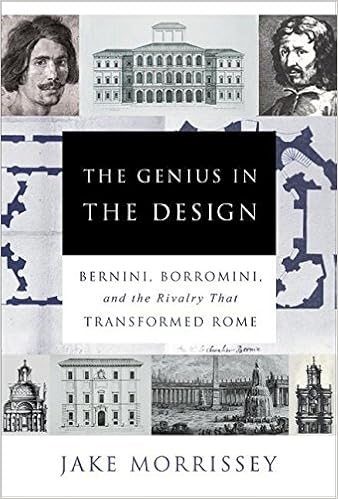
Under one of these ROME posts someone mentioned a book I have in the past recommended warmly and with fervor. I renew my recommendation. It is an amazing window into the Rome of that time and, therefore, this.

The Genius in the Design: Bernini, Borromini, and the Rivalry That Transformed Rome by James Morrisey.

US HERE – UK HERE
I had a stroll over to Trastevere today, and on the way I went past the famous “Big Mask”, Mascherone fountain.  As it appears today.

As it appeared in the day of the artist Ettore Roesler Franz (+1907)

There was a lack of water in the area, so Paul V brought Acqua Paola to this fountain.  There are different waters that flow into Rome, identifiable from their sources.   I quite like all the Roman waters.  In times of celebration, however, the nearby Farnese’s would make this fountain to run with wine.

Now to the easily identifiable Ponte Sisto, with its single large “occhione” or “big eye” in the central pier.   That reduces the force of the water against the bridge when the Tiber is in flood stage.  Yes, it gets that high, which is why all over the center of the city you can see plaques and inscriptions indicating how high the waters reached in certain bad years.

Who wants to try their Latin hand?  I was with Fr. Reginald Foster on a walk with students once upon a time, and a very fancy classics prof at Harvard was somewhat stymied by one of these.

Pope Sixtus IV (Della Rovere), builder of the Sistine Chapel (thus, the name) built this bridge in 1475 to help the movement of pilgrims to Rome during a Jubilee Year.  Just up the street is St. Trinità dei Pellegrini where St Philip Neri’s congfraternity helped pilgrims.

There is a problem with the claim in this first inscription.

I like that “magna impensa” part.  Ol’ Sixtus paid for this bridge using taxes on the papal states sanctioned brothels.

So, let’s say a prayer for Sixtus.  All in all, of comparatively happy memory, considering….

On the other side of the Tiber you see a grand fountain which is actually connected to a huge fountain on the top of the Gianicolo Hill, looming over the neighborhood.  This fountain was once in a different place: set over to the right of this photo and into the wall of a building that was razed to put in the massive embankments around to keep the river in check.  Now it is a great place to find drunks in the evening, with their particularly mangy dogs.

I’ve been mentioned Giuseppe Gioachino Belli, the poet who wrote in brilliant Roman dialect. Here is a restaurant named in his honor.  Back in the day it was alright, though I have eaten there in years.

You see there “Der Belli”  which is Roman for “di il” or “del” Belli… “Belli’s Restaurant”.  Romans like r’s in place of l’s, so “del” becomes “der” and “il” becomes “er”.

Inside Santa Maria in Trastevere.  This is one of the oldest churches dedicated to the Mother of God in Rome, perhaps older than Mary Major.

You can see that it is in the clutches of the Sant’Egidiots.  They are obsessed with putting stuff – usually related to nothing in the style or architecture of the place – in front of altars.  It is as if they have no clue at all what an altar is, other than a place to prop stuff.

The mosaics by Pietro Cavallini date to the 13th century.  They depict moments in the life of the Virgin Mary.

They are of unrivaled delicacy, though they are hard to see from a distance.

More courtly sheep decorously processing to the Lamb and the safe pasture and place of refreshment (refrigerium).

Nice ceiling, if you like that sort of thing.  Painting by Domenichino.

Here is the tomb of Pope Innocent II (+1143).

He was originally in the Lateran, but one of the times when it burned, they moved him here.  Ironically, also in the this church somewhere (not sure where) is the tomb of an Anti-Pope, Anacletus II, who was Innocent’s rival.   Innocent was backed by St. Bernard who, when it came to anti-popes didn’t always get it right. There was quite the schism.  Of course back in the day things were done directly and not by ambiguity and innuendo.  Lateran II polished off the schism in 1139.

Lovely.  The columns and capitols came from the Bath’s of Caracalla.

In the porch, you see many fragments of inscriptions and tombs.

Some are in verse.  Anyone want to try this?

Vincere supplicibus properas qui sidera verbis
effusasque Deo tendis in astra preces,
hic pete quo Dominus praesentem commodat aurem:
hac nullus hominum tristis ab arce redit,
nullius hoc fructus pereunt sub culmine voti,
Iulius hic Christum quae cupis ille rogat,
hic duo pro populis Dominum suffragia flectunt,
cum pariter templum sancta Maria tenet.
Omnibus in templis quod iustis gratia praestat,
hic et peccantis impetrat alma fides;
hinc exauditus Crescentius addit honorem,
qui instructis aditis vota secunda tulit.

Bits and pieces.  The little figures make our forebears more real to us.  They lived much as we do, even without our tech and advancements.  That’s the error that most libs make: they think that humanity has evolved into something more sophisticated, such that we don’t any longer have to do things like kneel before the flames of transcendence when we enter the sacred spaces to encounter the transforming mystery.

On the way to the island, I ran into a lone tribble, perhaps Andorian.  Not terribly chatty, so I went on my way.

Remember I said that the claim in that Latin inscription was weak?  This, or rather that, by the large, modern bridge is the “Ponte Rotto”.

This fragment of an ancient Roman bridge is what’s left of the monumental Pons Aemelianus built by in the 2nd c. BC, between Trastevere and the Forum Boarium where the ships docked and there were huge markets for vegetables and animals and all sorts of things.  It was a Greek quarter, too.  Just on the edge is the church where as a seminarian I served for a couple years and directed a Gregorian chant schola of women who sang ethereally.

St. Bartholonew. This was the titular church of Card. George, late of Chicago, who is deeply deeply deeply deeply missed.

Again, this is in the clutches of the Sant’Egidiots, who uses altars as shelves for stuff and are determined to make every view of every corner and prospect cluttered.

Got a beautiful apse painting?  Let’s put something in front of it!

This time, I must admit, there were interesting things littering the altars… every single side altar.  These are relics of various modern martyrs, each altar being a different region or persecution, such as “Americas” or “Communism”.   On the one for “Europe” (no… don’t mention Islam!), is the Liturgy of the Hours book of French martyr Fr. Hamel brutally slain by an Islamic terrorist.

Since I am doing bridge inscriptions… Here’s an innocent little offering, that you should not have too much trouble unraveling.  Note the reference to “FABRICIUM”.

Here is the PONS FABRICIUS, also called the Ponte dei Quattro Capi, for reasons that will be made clearer.

This bridge originates from 62 BC.  There was a wooden bridge here, eventually replaced by Lucius Fabricius.  Think, “The Great Roman Fabrizio” and you will remember also this bridge.   This comes from the western bank of the Campus Martius over to the island in the middle of the Tiber, where since antiquity there have always been hospitals.  In ancient times there was a temple to the healing god Asclepius here, named in the Hippocratic Oath.  You can see the ancient inscription on the arch of the bridge: “L(UCIUS) FABRICIUS C(AI) F(ILIUS) CUR(ATOR) VIAR(UM) FACIUNDUM COERAVIT”  The Bridge of Cestius goes from the other side of the island to Trastevere.  It has been rebuilt a bunch of times.

The “four heads” come from a pair of “Janus” herms, which look in both directions.   There weren’t original to the bridge, but rather moved here from a nearby church.

Over on the Viale Trastevere, before crossing the river, you see a large monument of a guy in a top hat leaning on a wall by a thing with faces sticking up.  That’s the Roman poet, Er Belli!

Errand report: I was able to get my sewing stuff and made a repair to my rather tired and worn light alb I travel with.  It is kept these days at Ss. Trin for mass.  Also, I was able to score yesterday a thing to suppress splatters from pans while cooking.  In Italian a – great word, this – paraspruzzi!

Here are my cheese guys in the Campo de’ Fiori.   The stuff is amazing.  They’ve taken to me and I’ve been learning and sampling.

Some of the soft ripened cheeses, various milks.  The Robiola is really good.

I tried one called Barrà.  Beh!  A cow milk cheese.  In the photo above, in the front there is Pagliette, of goat.  These are the two I took home for supper.

Greetings to Mary on the way home.

I concluded the day by heading to church for Mass.  I am making myself sketch a little.

I’m terrible, but… you know, this is an extended time in Rome when I haven’t been hard at a job or studies or something.  I’m just .. living.  So, I want to do a few things I haven’t ever had time to do.  Anyway, I’d very much like to have even part of the gene that brings drawing skills.

My apartment is furnished with the most elegant of drinkware for an evenings’s Aperol.

Puntarelle, dressed with anchovy, garlic, a touch of white wine vinegar, oil and pepper.

The main event with pizza bianca.

Cold report.  Not worse.  I had a good night’s sleep.  I’m blasting it with vitamins and using other nasal interventions.  Cough has not worsened.

This is longish, so I’ll conclude.  Today, Mass for Benefactors.
Posted in On the road, What Fr. Z is up to | Tagged ,
16 Comments

“Supertradmum” (Marie Dean): R.I.P.

Dear readers,

I was informed today that a long-time reader and commentator here,  with the handle “Supertradmum” has died.  I had posted about her illness a while back.  She died in St Joseph’s Hospice, London, this morning.

In your goodness please remember to pray for the soul of Marie Bernard Miller Dean (Supertradmum).

She leaves a son behind. Please, too, remember him in your prayers.

From her old version blog (newer here):

Posted in PRAYER REQUEST |
40 Comments

ROME DAY 7: Weird Amazon Stuff, Death and a Spatula

Sunrise – 7:14, Colors – 18:40, Ave Maria 19:00.

Rome is truly “crazy town” right now.

Over at Santa Maria in Transpontina there is a display, with people stationed to offer help to the curious, of what (they hope) the Synod hopes to integrate.  Involved are those who performed the probably demonic pagan rite in the Vatican gardens.

And an image I don’t want to post, but you can access HERE, of a woman breastfeeding some sort of critter.

“But Father!  But Father!”, you papalatrous toadies are croaking, in your best imitation of colorful Amazon tree frogs, “That’s just Nature!  Mother Nature!  Get it?  It’s like … like… you know… the ecosystem… which is church and… and… it’s NATURE!  But you are against nature because YOU HATE VATICAN II!”

Sorry, folks.  But that’s just weird.

Meanwhile, back in the Rione Regola, where I am staying, we find a fountain that might be mistaken for one of the “fontane rionali” (I posted the “pigna” fountain the other day)  This is the Fontana dela Cancelleria, or Chancery which is nearby.  That’s where the tree highest tribunals of the Church are housed.  This fountain, however, was designed by the guy who also did the fountain in the Piazza Viminale and the monument to the Bersagliere at the Porta Pia and the “Dioscuri” out in the ghastly EUR zone.   So, same sterile era as the fontane rionali.

This fountain depicts the arms of Card. Scarampi who commissioned Bramante to design the Palazzo della Cancelleria in the 15th century.

Here’s the facade of the 18th c. Santa Maria d’Orazione e Morte, on the Via Giulia,”St. Mary of Prayer and Death”.  Cheerful title.   There was an earlier church, dating to the 16th c.

Outside are plaques with slots for the giving of alms for the care of the dead, the lighting of a perpetual lamp (who knows if that’s still going… I doubt it) and also for widows and children of men who died while working.   There was a confraternity here, which was dedicated to giving decent burial to the abandoned dead.  St. Charles Borromeo was a member.

“This is my lot, today, but your’s tomorrow!”  Hodie mihi, cras tibi!

Memento mori!   I hope the nitwit who made the graffito got a good look.

Tempus fugit!

I haven’t seen it for years, but inside there is a room decorated with human bones, candelabra from skulls, etc.  You don’t see the church or that room open very often.

The Roman poet Belli has a couple of sonnets about the church and the cemetery, which was destroyed, probably when the embankments and the roadway of the Lungotevere was put through.   One of them HERE.

Meanwhile… or rather meenwhile… I have nothing to report about food.  Breakfast was a cup of granola, no lunch.  Last night I was out for a very pleasant supper with some great guys, but the food, while decent, was unremarkable.   So, I end with this brilliant mural observation.


Yes, do. Please, just go, vegan.

I’m sure that you were wondering whether or not I obtained a spatula.  I did.  It is very nice.  Blue.  I bought it from a little shop around the corner that has a bit of everything.  A nice old codger runs it with his wife.  I don’t know how they keep the doors open.  His grandfather, he informed me, found the amazing bronze Etruscan chariot which you can view now in the Met in NYC.   I’ll do my best to buy things from them, if at all possible and as need arises.   Next on the list: sewing items.

I spoke with the tailor about my new cassock yesterday after Mass. He was at the church to fit someone.  He looked at me and wanted to check my details again, saying that I’ve lost weight.  Sure enough, down a couple centimeters from the last check.  He has a good eye.

My cold is worse. I fear it is going to morph into bronchitis, to which I am prone in Rome.


Posted in On the road, The Feeder Feed | Tagged
17 Comments

The Holy See: Goat Rodeo

This is just great.   The Communist founder of the anti-Catholic La Repubblica, Eugenio Scalfari had a chat with the Pope.  Scalfari, slightly younger than dirt and no doubt still enjoying a perfect memory so he doesn’t have to – you know – take notes or anything, records Francis as saying that Jesus:

“granted a man of exceptional virtue, was in no way a god… sia pure un uomo di eccezionale virtù, non era affato un Dio.”

The Press Office issued a statement.   Blah blah blah.

Right right… the Lord didn’t walk around shooting light out of His eyes… except when he did on that mountain.  But let that pass.  Never mind the whole issue theandric acts.  You know, those raisings from the dead, healings, stuff like that.

Please… Holy See… just keep doing this.  What a great idea it is to talk to Scalfari on the record.   What could possibly go wrong?

Ed Pentin has the interview in a working translation HERE

I like this part from the interview:

“Once incarnated, Jesus ceases to be a God and becomes a man until his death on the cross.”

Wellll… you know what he means.  Right?   No?  In fact… no, I don’t know what he means.

Scalfari concluded… marvel at this genius…

These talks were all and always reported literally in our newspaper and that is why today I feel the need to remember them, because Francis addresses the theme of ‘Amazonia but broadens the scope and comes to the conclusion that men are substantially all equal and all different. This is the trait that differentiates us from the animal genus to which we belong, we are also endowed with instincts but we do not limit ourselves to these: we have feelings. They can be good or bad, selfish or altruistic; our body and our vital organs develop these moral diversities and create a precious yet completely incorporeal organ that is our Mind. This is the reason why I have once again recalled the interests of Francis in the corporeal and spiritual knowledge of man.

I like my word salad with a light Dijon vinaigrette.

But…it’s a break from the SYNOD… right?

Hey… LOOK!

A GOAT!

Posted in You must be joking! | Tagged
26 Comments

#AmazonSynod, optional celibacy, divorced and remarried priests, and Amoris Laetitia

Let’s think about “optional celibacy” which the Germans and other iconoclasts want in order to drive the Church towards becoming a well-connected NGO.

Let’s use Amoris laetitia (“The Joy of Sex”) as a lens.

So, Father is married.  The marriage doesn’t work that well because.. well… it’s  obvious, why it might be strained.   Father and Mrs. Father divorce.   So sad.

So, if Father marries without a declaration of nullity, say a divorcee, former wife of a former priest friend, can he receive Communion at Mass?

Of course, if he doesn’t, it wouldn’t be a Mass, right?  In that case, by consecrating the Eucharist outside of a Mass, he would commit one of the worst canonical crimes on the books.

And he took a stipend for it.

Ahhhh… the possibilities.

But we would have to accompany Father and Mrs. 2nd Father because in the internal forum, they discerned (maybe with the help of the Mrs. 2nd Father’s former priest husband) that they can receive Communion.

Marriage is, after all, an ideal and not something that real people can actually live.

Priesthood too.

See how it all fits together?

That’s all for now.

Signed… Internal Forum Msgr. Zuhlsdorf.

UPDATE:

I had the moderation queue on, but I think I’ll only let the funny stuff through.   I’ll read it all, however.


Posted in Lighter fare | Tagged
6 Comments

ROME DAY 6: Twisty Tower, Tuna, and “Tini”

Sunrise was 7:13 and Colors will sound tonight at 18:41.  Once again 19:00 is the Ave Maria (as if anyone even bothers with that any more).

One of the great rivals of the history of art in Rome was between Lorenzo Bernini, who in worldly terms admittedly won the war, and the horizon-vaulting Francesco Borromini.

Yesterday I met for lunch at a newish, trendy place in the entrance to the Palazzo Braschi (lousy food, avoid it) a friend who I have not seen for years, a art historian and polymath who whose late husband was one of the great experts in the world on Caravaggio, Velasquez, and the whole gamut of that age.   She’s working on an exhibition of female artists of the Baroque period.  Very interesting.   In any event, she was doing some research at the nearby State Archive (thieved from the Church by the State) which includes the magnificent church of Sant’Ivo brought into being by Alexander VII (Chigi) and Borromini.  It’s lantern, on top of the cupola, is one of the most recognizable features of the Roman panorama.

Interestingly enough, it was a letter of Bernini that secured the commission for Borromini.  Bernini had recently taken credit for some of Borromini’s work at St. Peter’s.  It could also have been partly a “favor” for keeping quiet about some of Bernini’s dodgy activities.

Here’s the courtyard.   Consider the beauty of the symmetry.  Then consider the trash that is passed off as church architecture today, nay, rather the whole thought of undertakings in the Church right now.  I digress.

I sang a Mass in this church many years ago, and the schola cantorum (all women) which I directed did the Gregorian chant.

Borromini was a genius at working within narrow constraints of space.  Anthony Blunt noted, “Never perhaps did the Baroque ideal of movement attain more complete and perfect expression” than Sant’ Ivo, in and out.  The courtyard has bees for Barbarini (Urban VII) who started this project with Borromini at Bernini’s prompting.  On commentator said that a stylized bee is the key to Borromini’s design as well as the 6-point star (inside).  In one of my favorite books on the art and architecture of the day, I read that in early designs you can see that Borromini wrote verses from Proverbs 9, which were to be carved over the entrance: Sapientia aedivicavit sibi domum.  And this is, of course, the seat of the original “Sapienza” University.

The lantern is a kind of altar, twisting up like a horn or a ziggurat, topped with a flame for knowledge.  Borromini was a great collector of sea shells.

When I lived nearby, I had a beautiful view of Sant’Ivo from my window.

One of my old photos.  You can see how high my apartment was.  2007!  Happier days.

Look at what the clouds are doing.

There was a conference in the library, so I stuck my head in.

On display was a book mentioning one of my favorite Popes, Benedict XVI, of happy memory.  It is about fabric, and since I’ve been dealing a lot with fabric for vestments, it caught my eye.

Off for errands.  Passing by the entrance to the French College’s chapel, I popped in to the place across the street which houses both an cultural association dedicated to Roman dialect (presentations on Monday evenings) and also the room, now chapel (now disused) where St. Catherine of Siena died.  She is interred (most of her) at Santa Maria sopra Minerva around the corner.

This was the room, I suppose, where Catherine survived on the Eucharist.

Please, O heavenly Father, raise up now in our midst great women like St. Catherine, who have the Spirit-filled confidence to offer guidance and even correction to those to whom You have entrusted Your flock.   I ask this in the Name of Your Son.  E Così Sia!

In the evening, after Mass I met with my tailor.  Since cassocks are under attack, I’ll have another cassock made.  Then, to supper with one of the very best English language writers and commentators on all things Catholic.  He is here in Rome to cover the Synod.  We had a splendid supper at a place suggested to me by another personage of the blogosphere, and it was terrific.    The approach was a bit Borromini-esque, somewhat nuovo, but it was mighty fine.

Here is their rendition of vitello tonnato.  Different presentation, and really good.  There were four of these little amuse -bouche.

Here’s a half portion of bucatini all’amatriciana.  Like the latern of Sant’Ivo, all twisted up.  That’s the thing these days.

Shank of sucking pig cooked for 36 hours.  There was a hint of clove.

Not bad.  And it was quite reasonable for Roman restaurants.

All in all, a great day.

Today, my principle chore is to find a rubber spatula.

My cold is not better.  Tough night for sleeping.


Posted in On the road, What Fr. Z is up to | Tagged ,
12 Comments

“Amazon rite” proposed at Amazon Synod: more condescension to follow

From Ed Pentin at the National Catholic Register about topics raised at the Amazon Synod:

According to a Vatican-provided synthesis of interventions, subjects so far discussed have included a reflection on “indigenous rites” of the Sacrifice of the Mass that, it was said, should be looked upon “benevolently” if they are “not linked to superstitions,” and provided they “harmonize with a true liturgical spirit,” a synod father said.

Related to this, and as part of inculturation, it was proposed that “according to the right theological, liturgical and pastoral discernment,” a “Catholic Amazonian rite” should be considered ad experimentum. After all, it was stressed, “just as there is an environmental ecosystem, so there is an ecclesial ecosystem.”

Yes, pick up your jaw.   “Ecosystem”.  It’s crazy town in the Synod Hall.

One wants to pound one’s head on the table.  Nay rather, one want to pound someone else’s head on the table, namely, anyone who would bring up such a dopey notion as an “Amazon rite”.

We’ve been over this ground before in the matter of an African rite.  I remember one bishop from Cameroon at a conference I attended nearly groaning with frustration as a blinkered European brought up an African rite.  The bishop pointed out that in his country alone there were dozens of languages and cultures: which were they going to exclude to have a rite?  Instead, he underscored that there was a rite which they could all use: the Latin Rite.

Amazing thought.

If only there were a rite and one language we could use to bring us all together, one that cut across borders and generations.

Mind you, this dopey Amazon rite thing sheds light on the mind-set of those who are pushing pushing pushing their agendas.

When, for example, will we have someone like Card. Kasper amaze us with another scintillating remark, such as he left us (recorded by the above-mentioned Ed Pentin) during the Family Synod about how Africans oughtn’t tell the Synod members what to do.   A spectacular gaff, on par with those uttered by the gaffmeister himself, running for office in the United States, former VP Joe Biden.

I can hear Card. Kasper, having another bout with the microphones, talking about how the South Americans are so “clean and articulate”.

This Amazon rite notion is condescending.

Posted in Synod | Tagged ,
19 Comments

A priest opines on the effect of optional priestly celibacy

I received this from a priest friend who, for reasons that are riotously obvious these days, desires anonymity.

He reflects on the discussion of optional celibacy that the Amazon Synod is sure to push.  Of course the Germans, who are pouring their Rhine into the Amazon, know exactly what they want to accomplish by their ongoing destruction of all things Catholic.   It’s good to think this through as, at the least, a mind exercise.

Thus, my priest friend:

So it occurs to me that allowing men to marry before being ordained (as priests) will do four things:

1) Encourage a significant portion of young men with a normal sexuality, who were open to the priesthood, to postpone that decision, to pursue marriage first. If they enter, it will be after raising a family, 20-30 years later;

2) Saddle those young men with a normal sexuality who nevertheless are willing to embrace celibacy with an additional stigma (if they still don’t marry, they must be homosexual); some subset of this group will, therefore, opt for path of option 1;

3) Have little to no effect on those young men with a disordered sexual attraction entering the seminary and becoming priests as they would face the same stigma regardless. Nevertheless, would they not inevitably become a more significant portion of the young seminarian population?

4) And, given that married priests would, as they always have, be excluded from consideration as a bishop, what now becomes more likely?

In short, this would seem to be a very useful way to strengthen the “Lavender Mafia,” no?

It’s interesting to see where that mind exercise went.

I can’t say that he’s wrong!  This would indeed play directly into the hands of the corrosive homosexualist agenda.

UPDATE:

I’m getting some really interesting feedback on this.   One of my friends wrote:

It will push all the (even latently) same-sex attracted or those who “aren’t interested in marriage” into religious orders.

All bishops will be chosen from religious orders.

The diocesan clergy will then have either young men enter seminary who will have to find a wife before ordination to the diaconate; or we will only be ordaining men who are already married — and where will his wife and kids be while he is in seminary?  [And there’s the problem if DIVORCED priests.]

Most of the Eastern Catholic Churches have a history of issues with this, having both married men and single men often training together in the same seminary. Dating during seminary…..has its challenges.  [Indeed.]

Or do we wait until the man’s children are all adults, and thus we will be ordaining men who are significantly older, investing years of training for someone who might only serve 15 to 25 years at the most, instead of 40 or 50?

Also, moving a married pastor means moving his whole family. Pastor’s terms (6 years) probably would have to be scrapped (not a bad thing, but…).

[NB:]The dollar in the collection basket that people put in will not work: we will have to do what synagogues or some Protestant communities do and charge parishioners a membership fee (in the case of a synagogue, the cost of running the place — staff salaries, heating and electricity, music, etc. — is divided up by the number of registered members and then everyone is sent a bill; and if you are not a member, you buy a ticket at the door for the high holy days). The cost of a married man, his wife, and their ten kids (they’ll have ten, right? not just the politely contracepted 2.2 kids……) will require a lot more money — especially braces for all ten children plus their schools. etc.

What about “simplex priests”? You and I both know some devout Catholic single men, middle-aged, who could be given a short program of training, just to offer Mass — they would not be given faculties for confessions or preaching, ….  And after all, so few people go to confession, that it’s not like there’s a huge demand for it.

We are now getting brass tacks.


Posted in Mail from priests, Pò sì jiù, Priests and Priesthood, Seminarians and Seminaries, Synod, The Coming Storm, The Drill, The future and our choices |
27 Comments

Amazon Synod and deaconettes?

You know that the issue of deaconettes is going to be raised at the Synod (“walking together”) on the Amazon.

The former Prefect of the CDF, Gerhard Card. Müller responded to something a wacky S. American suggested, namely, that the impossibility of the ordination of women to the priesthood is not a dogma.  Fail.

“But, even if the Pope explained at the time that ‘all the faithful of the Church are definitely to hold this decision,’ it is nevertheless not a dogma,” [wacky] Bishop Kräutler stated in an interview with Blickpunkt Lateinamerika, the journal of the German relief agency Adveniat – a group which heavily funded [the Rhine flows into the Amazon] the preparations for the upcoming Synod. Kräutler also stated in the same interview that the Amazon Synod “must” allow a female diaconate[MUST!  Well!  That’s that!]

The Amazon Synod’s controversial working document proposes “to identify the type of official ministry that can be conferred on women, taking into account the central role which women play today in the Amazonian Church” (14). But the participants of one preparatory meeting for the Amazon Synod – among them Cardinal Lorenzo [“Clergyman”] Baldisseri, the Secretary General of the Synod of Bishops – explicitly called for the allowance of female deacons.

Card. Müller points back to the document of John Paul II that simply will not go away: Ordinatio sacerdotalis.  Also, the CDF put out its own document explaining the former.  OS says clear that this is definitively to be held by the faithful.  The CDF explained that, because of the consistent teaching of the Church, this is infallibly taught.

At LifeSite read the whole thing.

In effect, Card. Müller underscores what I’ve been repeating all along.  Just as Vatican II reaffirmed, while diaconate is different from the priesthood (priest and bishop) nevertheless it is one of the Holy Orders.  The three orders are intimately tied together in one Sacrament of Holy Orders.  If the priesthood cannot be conferred on women (absolutely clear) then none of the grades of Holy Orders can be conferred on women.  Period.  Exclamation point.

It stands to reason.

But will that make a difference in this crazy age?

Posted in Deaconettes, The Coming Storm, The Drill | Tagged , , ,
22 Comments