The hits just keep rolling in. Get this. An “expert” (I know people who know him) has clarified for us what the DDF doctrinal note about titles of the Blessed Virgin Mary mean. CNA has it. My emphases and comments.
Vatican expert: Co-Redemptrix title of Mary not absolutely prohibited
Monsignor Maurizio Gronchi, an expert consultant for the Dicastery for the Doctrine of the Faith at the Vatican, clarified that the measure established last month regarding the use of the titles “Co-Redemptrix” and “Mediatrix” for the Virgin Mary is “not an absolute prohibition” and that these titles can still be used in popular piety, provided their meaning is understood.
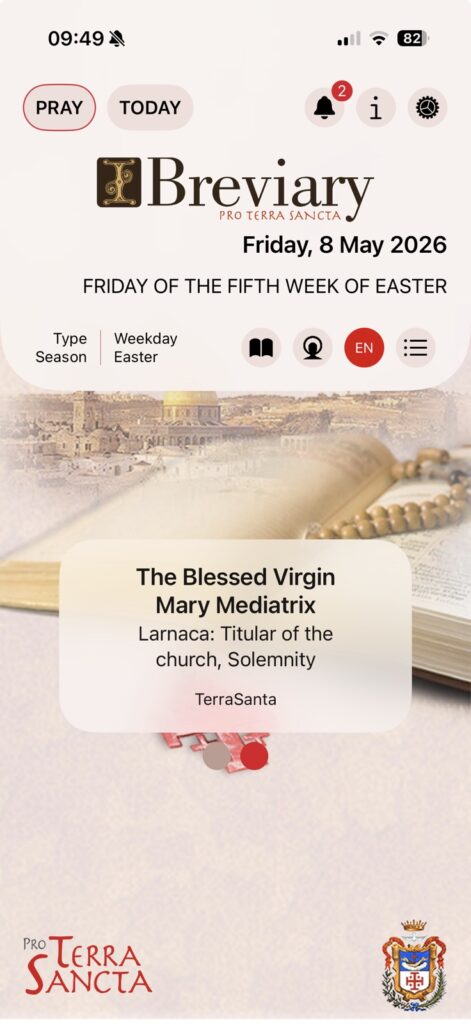
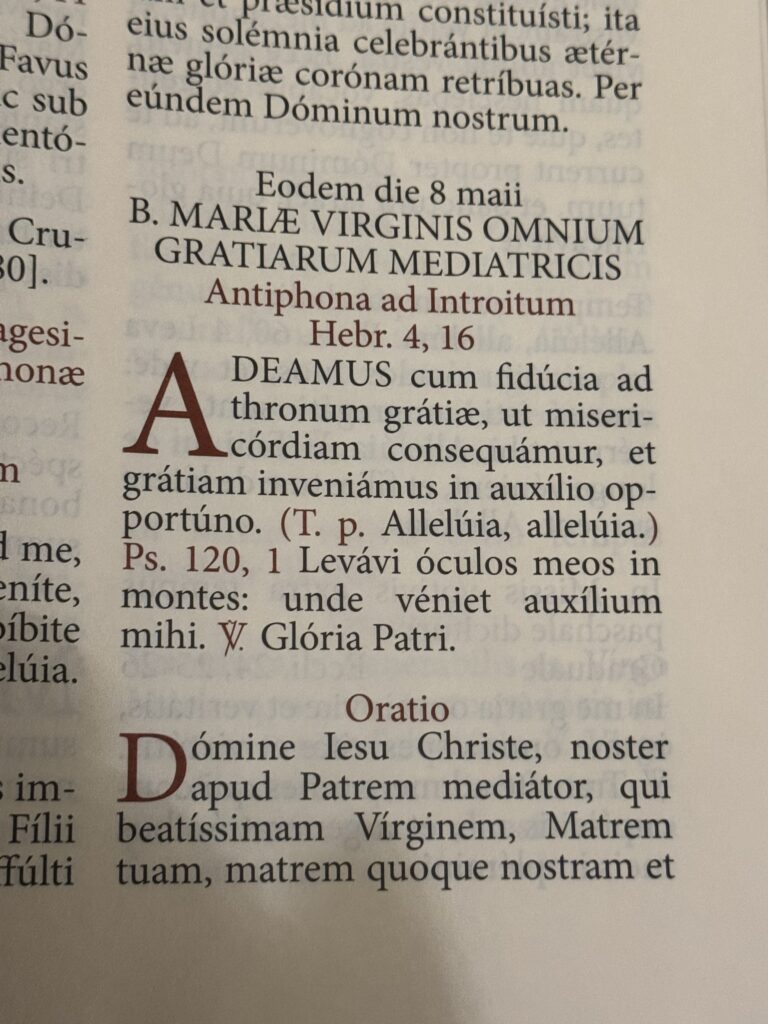
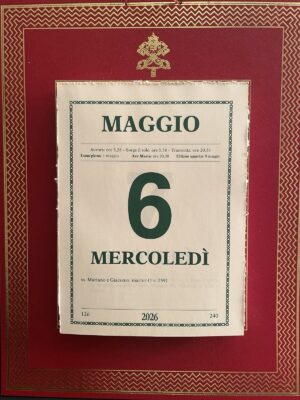
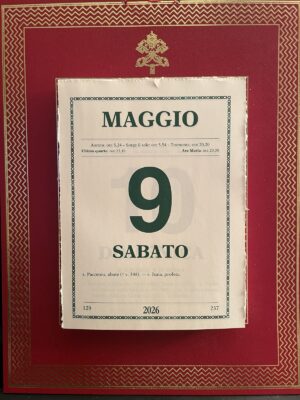
“It’s not an absolute prohibition, but it will no longer be used in official documents or in the liturgy. [The 1962 Missale Romanum has in the appendix a formulary for a Mass on 8 May for Mary, Mediatrix of All Graces… just sayin’.] But if used in popular devotion, understanding its meaning, no one will be reprimanded for it,” [Whew! I was worried.] the expert said in an interview with “EWTN Noticias,” the Spanish-language broadcast edition of EWTN News.
The interview took place after the Nov. 4 publication of the doctrinal note “ Mother of the Faithful People” in which the Dicastery for the Doctrine of the Faith, led by Cardinal Víctor Fernández, [author of … well….] stated that the use of the title “Co-Redemptrix” is “always inappropriate” and encourages “special prudence” regarding the title “Mediatrix of All Graces.” The text has sparked controversy among the faithful, especially among those who use these terms within the Catholic Church.
Gronchi explained that “the issue is an old one. This problem has been discussed for 99 years, since 1926. We have studied it on several occasions, and the dicastery has received numerous requests for clarification regarding these terms. These titles present a problem. There is a risk of obscuring, of not clearly explaining that the centrality of the paschal mystery of salvation lies in Jesus Christ.” [? Really?]
“For this reason,” the expert indicated, “now is the time to clarify these titles, so that when it is said that they have been used in the past, it will mean that it was done inappropriately. [pace … John Paul II!] It doesn’t mean that it was wrong, but rather that a definition of these titles was not yet mature and clear.” [What’s the difference between “wrong” and “inappropriately”. Is it sort of like what “time is greater than space” means?]
The consultant emphasized that the pontifical document is a doctrinal note that “deepens, clarifies, and states that these terms are not appropriate, they are not opportune, simply because Mary participates in the redemption, she collaborates in the redemption, but not in the same way as Jesus.” [ZOWIE! We were worried about that. It took the Tucho-led DDF with his acolyte Gronchi to clear up the CONFUSION that we all felt over the Blessed Mother, Our Lady of Sorrows’s, role in our redemption. It WASN’T the same as Christ’s! Protestants and you woke Catholics, you can relax now. We’re sorry for the past use of these titles. We goofed. Now we know officially that Jesus saves. Just as you Protestants have been telling us Catholics for centuries!]
After noting that the Virgin Mary is like the moon reflecting the light of the sun, a symbol of Jesus, Gronchi said that “Mary gives birth to Jesus, but on the cross, Jesus dies, not Mary. [Who knew?] Mary participates with her heart, with her affection, with all that she is, but it is a participation that the document calls dispositive, meaning that Mary disposes us to receive the grace of Christ, but she is not the source of grace, nor the mediatrix of all graces.” [8 May]
What does he say to those who are confused?
When asked what he would say to those who are confused by the new Vatican document, the expert stated that “they shouldn’t feel any confusion. They should pray to Mary and they should pray to her with the holy rosary. The rosary contains the mysteries of the life of Jesus; therefore, one prays to Mary by meditating on the mysteries of the life of Jesus.”
“This is the simplest, most popular devotion, the one that leads to heaven. The saints have already said it, and we pray to Mary with serenity. If we wish, we can also use the Litany of Loreto, which has very beautiful titles; there is no need to add anything else,” Gronchi emphasized. [Okay, that’s it. JUST the Rosary and the Litany of Loreto. Forget about Our Lady of Sorrows devotion or any of those other things, like Votive Masses. Don’t say the Angelus. Forget about the Miraculous Medal (I’m taking mine off after posting this…. NOT). The Five 1st Saturdays. Novenas. No more traveling to Marian Shrines (sorry Card. Burke!) And, get rid of that Scapular of Our Lady of Mount Carmel. It’s time to stop being “inappropriate”!]
“What we must say about Mary,” he concluded, “is that she is the mother of the Lord, the mother of God, the mother of the Church, the mother of the faithful people [there’s the downgrade] who accompany us and guide us with tenderness and great love.”
Hey GRONCHI!
St. Bernardine of Siena:
Omnis gratia, quae huic saeculo communicatur, triplicem habet processum; nam a Deo in Christum, a Christo in Virginem, a Virgine in nos ordinatissime dispensatur. … A tempore enim a quo Virgo mater concepit in utero Verbum Dei, quandam ut sic dicam, iusrisdictionem seu auctoritatem obtinuit in omni Spiritus sancti processione temporali; ita quod nulla creatura aliquam a Deo obtinuit gratiam vel virtutem, nisi secundum ipsius piae matris dispensationem.
Every grace that is communicated to this world has a threefold process; for it is dispensed in the most orderly manner from God to Christ, from Christ to the Virgin, and from the Virgin to us. … For from the time when the Virgin Mother conceived the Word of God in her womb, He obtained a certain jurisdiction or authority, so to speak, in the entire temporal procession of the Holy Spirit; so that no creature obtained any grace or power from God, except according to the dispensation of the pious mother herself.
(De Nativitate Beatae Virginis, Sermo 5.8).