The Fishwrap!

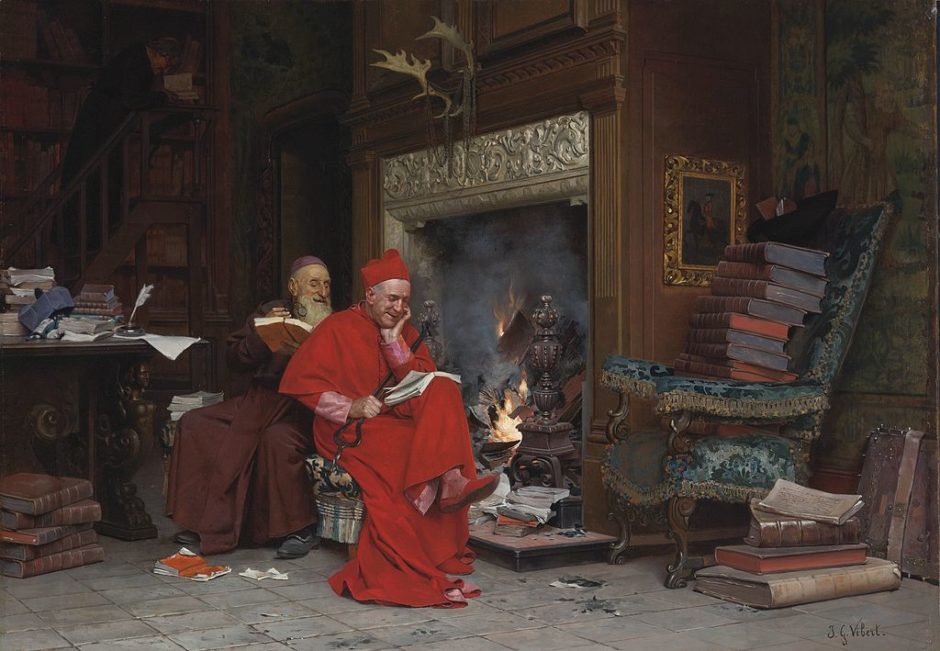
 Palm Sunday marks the beginning of Holy Week. The Sacred Triduum (triduum from tres dies – “three day space”) were once days of obligation when people were freed from servile work so that they could attend the liturgies, once celebrated in the morning. In the 17th century, however, the obligation was removed under the influence of changing social and religious conditions. As a result, the faithful lost sight of these beautiful liturgies and in general only priests and religious in monasteries knew them.
In 1951 Pope Pius XII began to restore the Triduum liturgies to prominence by mandating that the Easter Vigil be celebrated in the evening. In 1953 Mass was permitted in the evening on certain days. A reformed Ordo for Holy Week was issued in 1955 and took effect on 25 March 1956. That is when the Sunday of Holy Week came to be called “The Second Sunday in Passiontide, or Palm Sunday”. Matins and Lauds (Tenebrae, “shadows”) was to be sung in the morning. Holy Thursday Mass was not to begin before 5 p.m.. The idea was to make it easier for people to attend these all important liturgies.
The principal ceremonies of the Palm Sunday Mass include the blessing of palm branches (or olive branches in some parts of the world, such as Rome) and a procession around and into the church. In the present Missale Romanum an interesting rubric about the procession hearkens to ancient times:
“At a suitable hour the “collect” is made (fit collecta) in a lesser church or in another appropriate place outside the church toward which the procession marches.”
Here is our word “collect” used to describe a gathering of people.
Also in the rubrics there is something helpful for our understanding of “active participation”:
“Then as is customary the priest greets the people; and then there is given a brief admonition, by which the faithful are invited to participate actively and consciously (actuose et conscie participandam) in this day’s celebration.”
Those words actuose et conscie are very important. The Second Vatican Council, when using the term actuosa participatio or “active/actual participation”, meant mainly interior participation, the engaging of the mind, heart and will. The Council Fathers did not mean primarily exterior participation. Exterior participation should be the natural result of interior participation: we seek to express outwardly what we are experiencing within. While the two influence each other, there is a logical priority to interior participation, which is by far the more important.
At the end of the procession, when everyone is gathered in the church, the priest says the…
COLLECT (2002MR):
Omnipotens sempiterne Deus,
qui humano generi, ad imitandum humilitatis exemplum,
Salvatorem nostrum carnem sumere
et crucem subire fecisti,
concede propitius,
ut et patientiae ipsius habere documenta
et resurrectionis consortia mereamur.
The vocabulary of today’s Collect is incredibly complex. We can only scratch at a fraction of what is there.
Our prayer was in older editions of the Missale Romanum and, before them, in the Gelasian Sacramentary. In the Gelasian there is an extra helpful et: Salvatorem nostrum et carnem sumere, et crucem subire. Wonderfully alliterative! The editor of the Gelasian excludes a comma, which makes sense to me: qui humano generi_ad imitandum…. There may be a touch of St. Augustine’s (+430) influence in the prayer. In Augustine humilitatis appears with exemplum on close conjunction with documentum (ep. 194.3) and with documentum and patientiae in proximity to exemplum (en. ps. 29 en. 2.7). In the context of the Passion Augustine says: “Therefore, the Lord Himself, judge of the living and the dead, stands before a human judge (Pilate), offering us a decisive lesson of humility and patience (humilitatis et patientiae documentum), not defeated, but giving the soldier an example of how one wages war (pugnandi exemplum): …”
There are two words for “example” here: exemplum…documenta. These words appear together in numerous classical and patristic texts.
Our startlingly useful Lewis & Short Dictionary informs us that our old friend exemplum means, “a sample for imitation, instruction, proof, a pattern, model, original, example….” Exemplum is a term in ancient rhetoric, an inseparable part of the warp and weft of the development of Christian doctrine during the first millennium.
For Fathers of the Church, all well-trained in rhetoric (how we need those skills today), exemplum identified a range of things including man as God’s image, Christ as a Teacher, and the content of prophecy. In Greek and Roman rhetoric and philosophy, an exemplum could have auctoritas, “authority”, the persuasive force of an argument. When we hear today’s prayer with ancient ears, exemplum is not merely an “example” to be followed: it indicates a past event with such authoritative force that it transforms him who imitates it. Today we hear humilitatis exemplum, the authoritative model of humility who is Christ – Christ in action, or rather Christ in Passion, undergoing His sufferings for our sake. This becomes the foundational and authoritative pattern of the Christian experience: self-emptying in the Incarnation and Passion leading to resurrection. Exemplum is augmented later in the prayer by documenta. Documentum is also a “pattern for imitation” like exemplum but also in some contexts having the meaning of “a proof”, that is, a concrete demonstration that what is asserted is true: evidence. In this case it is a paradigm after which we are to pattern and shape our own lives. But this pattern or model itself actually has power to shape us. Christ transforms us the baptized who are made in his image and likeness, after his perfect exemplum, and who imitate His exempla and documenta, His words and deeds.
 Consortium (from con-sors… having the same lot/fate/destiny with something or someone) classically is a “community of goods” and “fellowship, participation, society.”
Habere has a vast entry in the L&S. The common meaning is “have”, but it also indicates concepts like “hold, account, esteem, consider, regard” as well as “have as a habit, peculiarity, or characteristic.” Habere is doing double-duty with two objects, documenta and consortia. This is why I use both “grasp” for the first application of habere and “have” for the second. The meanings of the two different objects draw our two different senses of habere.
Patientia is from patior, “to bear, support, undergo, suffer, endure”, and it carries all its connotations as well as the meaning “patience”. This is where the word “Passion” comes from. Today is Second Passion Sunday. We could say here, “examples of His long-suffering” or “exemplary patterns of His patient forbearance.” Finally, note that nostrum goes with Salvatorem and not with carnem: caro, carnis is feminine and the form would have to have been nostram carnem.
SLAVISHLY LITERAL RENDERING:
Almighty eternal God,
who, for the human race,
made our Savior both assume flesh and undergo the Cross
for an example of humility to be imitated,
graciously grant,
that we may be worthy both to grasp both the lessons of His forbearance
and also to have shares in the resurrection.
OBSOLETE ICEL (1973):
Almighty, ever-living God,
you have given the human race Jesus Christ our Savior,
as a model of humility.
He fulfilled your will
by becoming man and giving his life on the cross.
Help us to bear witness to you
by following his example of suffering
and make us worthy to share in his resurrection.
CURRENT ICEL (2011):
Almighty ever-living God,
who as an example of humility for the human race to follow
caused our Savior to take flesh and submit to the Cross,
graciously grant that we may heed his lesson of patient suffering
and so merit a share in his Resurrection.
More can be said about that phrase patientiae ipsius. Ipse, a demonstrative pronoun, is emphatic and means “himself, herself, itself”. Could we personify patientia to mean, “grasp the lessons of Patience itself” or even “of Patience Himself”? That would be poetically sublime.
In the fullness of time the Second Person of the Trinity, God the Son, the eternal Word through whom all things visible and invisible were made, by the will of the Father emptied Himself of His glory and took our human nature up into an indestructible bond with His own divinity. He came to us sinners to save us from our sins and teach us who we are (cf. Gaudium et spes 22). This saving mission began with self-emptying (in Greek kenosis).
Fathom for a moment the humility of the Savior, emptying Himself of His divine splendor, submitting Himself to His humble and hidden life before His public ministry.
When the time of His years and His mission was complete He gave Himself over again, emptying Himself yet again even to giving up His very life.
Every moment of Jesus’ earthly life, every word and deed, are conditioned by humility. This is our perfect example to follow, an example so perfect that it has the power to transform us.
As Holy Week begins and the Sacred Triduum is observed, come to the sacramental observance of the sacred and saving mysteries with humble self-emptying. Make room for Christ.

Last night Tucker Carlson had another segment on in his series about what’s going on with the situation of men in these USA. This is sobering stuff. We need a wide national dialogue about this. We need to talk about it in the Church as well, especially since there are horrid movements of world-conformed homosexualism going on.


 From a reader…
QUAERITUR:
If a hospital patient that is able to confess still gets the sacrament of the sick does it just forgive venial sins or mortal ones too?
First, let’s be clear about something. The sacrament of anointing is not to be given to just anyone. There are conditions for reception of this sacrament. I’m afraid it is poorly understood and sometimes abused.
The Sacrament of Anointing, is one the sacraments “of the living”, that is, they are to be received by one who is in the state of grace.
If a person is compos sui and can make his own decisions and understand what is going on, he must be given a chance to make his confession before being anointed. Even if his communication is impeded, he should indicate by signs and respond to the priest’s questions.
If a person is not sui compos, cannot respond, and isn’t aware of what is going on, such a person can be anointed and, in that case, the sacrament can also impart forgiveness of mortal sins.
If a person in the state of mortal sin – who is able to confess and receive absolution – receives the sacrament of anointing, the sacrament will not be effective in them in the way Christ and the Church intend. If a person is NOT able to confess, then the sacrament also forgives mortal sins so that the sacrament can be effective.
Also, it is good to review the law for the administration of this great sacrament:
Can. 1004 §1. The anointing of the sick can be administered to a member of the faithful who, having reached the use of reason, begins to be in danger due to sickness or old age.
This doesn’t say execution or about to engage in battle or some other activity like driving in a NASCAR race.
And there is the Catechism of the Catholic Church:
1514 “The anointing of the sick is not a sacrament for those only who are at the point of death. Hence, as soon as anyone of the faithful begins to be in danger of death from sickness or old age, the fitting time for him to receive this sacrament has certainly already arrived.”
Common points? Danger of death… sick and old age.
One can be in danger of death for many reasons. For example, someone who is about to undergo surgery requiring a general anesthesia could be in danger of death. People about to be executed or go into battle are in danger of death. Those are not really occasions for the sacrament because they are external to the person. Once damage is inflicted through a wound and danger of death is obvious, that’s another matter. Of course some people who are in need of surgery are in danger of death from the condition that requires the surgery. However, if I need to have surgery to set a broken bone in my wrist, I’m am not in danger of death.
Remember:
Danger of death… sick and old age.
And…
GO TO CONFESSION!
You don’t know when it is going to be your turn.
 I was made aware of this by a reader. I happily endorse one idea one priest had while I entirely repudiate a bad old cliché from another.
Castleton symbol of Lent: sand in holy water fonts
Alas, the silly season drags on.
However, before getting into that, the same article had a good idea that a different priest promoted at a different parish:
In another unusual Lenten practice, Immaculate Heart of Mary parish in Watervliet has been giving out its annual Lenten coins, a token to be carried by parishioners to remind them of Lent. [like challenge coins!] (Read a previous story at www.evangelist.org.) This year’s coins are embossed with John 3:16: “For God so loved the world that He gave His only Son, so that everyone who believes in Him may not perish, but may have eternal life.” The coins were purchased by the faith formation program. IHM also has a Lenten prayer banner on which parishioners can post the name of a person or intention they’re praying for this Lent.
Now back to the really bad idea at the other parish. In that article:
Sacred Heart parish in Castleton [Diocese of Albany] is trying an unusual [dopey] method to help Catholics prepare for Easter Sunday: filling the church’s holy water fonts with sand.
“Christ spent 40 days in the desert tempted by the devil, and we spend 40 days [during Lent] on our own desert journey,” said Rev. Thomas Krupa, pastor. “The sand reminds us of the desert.”
The idea for placing sand in the fonts was borrowed from other local priests, Father Krupa explained. Around five years ago, at a Lenten reflection he was attending, priests from the Albany Diocese spoke about how they were trying the practice.
“I thought, ‘Wow, that’s a great idea,” Father Krupa recalled. “But then I forgot about it.” [Alas.]
[…]
It goes on to mention the flu outbreak. Yeah… right.
No Holy Water. Sand. This is a REALLY BAD IDEA.
I’ve written about this quite a few times over the years, for example HERE. It’s amazing that it still crops up. Here’s the deal:
I’ll rant for a bit later, but in the meantime someone put this question to the Congregation for Divine Worship and Discipline of the Sacraments. They responded. Enjoy.
The emphases are mine:
Prot. N. 569/00/L
March 14, 2000
Dear Father:
This Congregation for Divine Worship has received your letter sent by fax in which you ask whether it is in accord with liturgical law to remove the Holy Water from the fonts for the duration of the season of Lent.
[NB] This Dicastery is able to respond that the removing of Holy Water from the fonts during the season of Lent is not permitted, in particular, for two reasons:
1. The liturgical legislation in force does not foresee this innovation, which in addition to being praeter legem is contrary to a balanced understanding of the season of Lent, which though truly being a season of penance, is also a season rich in the symbolism of water and baptism, constantly evoked in liturgical texts.
2. The encouragement of the Church that the faithful avail themselves frequently of the [sic] of her sacraments and sacramentals is to be understood to apply also to the season of Lent. The “fast” and “abstinence” which the faithful embrace in this season does not extend to abstaining from the sacraments or sacramentals of the Church. The practice of the Church has been to empty the Holy Water fonts on the days of the Sacred Triduum in preparation of the blessing of the water at the Easter Vigil, and it corresponds to those days on which the Eucharist is not celebrated (i.e., Good Friday and Holy Saturday).
Hoping that this resolves the question and with every good wish and kind regard, I am,
Sincerely yours in Christ,
[signed]
Mons. Mario Marini [Later, the Secretary of the Pontifical Commission Ecclesia Dei, now with God.]
Undersecretary
Did you get the part where the Congregation said: “is not permitted”?
Holy water is a sacramental.
We get the powerful theology of its use in the older Roman Ritual in the prayers for exorcism of the water and salt used and then the blessing itself . The rite of blessing holy water, in the older ritual, is powerful stuff. It sounds odd, nearly foreign to our modern ears, especially after decades of being force fed Novus Ordo pabulum.
Holy Water is a power weapon of the spiritual life against the attacks of the devil.
I would ask these priests:
Holy water is a sacramental.
It is for our benefit.
It is not a toy, or something to be abstained from, like chocolate or television.
So, don’t stand for this nonsense. If the Holy Water has been removed… clamor for its return!
According to the Catholic Herald the author of The Dictator Pope (pre-order 23 April – US HERE – UK HERE – more HERE) has been suspended from the Order of Malta and has disassociated itself from the book, describing it as a “vile attack” on Pope Francis.
“Following the press articles reporting the name of the author of the book “The Dictator Pope” the Grand Magistry of the Order of Malta has taken the decision to suspend Henry Sire, author of the book and member of the Order of Malta. The provisional suspension from membership has immediate effect and an investigation is being launched.”
How bad was the Three Days of Darkness (3DD) this year?
It seems that the LA Religious Ed Conference hits new nadirs every year, and there is no end in sight.
Couple the heterodoxy, the teachings offensives to pious ears, the sentimentalist goop oozing with every bass-guitar throb together with what Card. Sarah rightly calls “demonic” gender ideology and you have a complete disaster.
Joseph Sciambra has posted a graphic that was used during the 3DD. And he has the horrid details.
LA REC: Very young children should be allowed to transition from one gender to another
On March 16, 2018, the Archdiocese of Los Angeles, during their annual Religious Education Congress, offered a workshop entitled “Transgender in Our Schools: One Bread, One Body.” The moderator was Arthur Fitzmaurice and the presenters included Shen Heckel, a female-to-male transsexual, Peggy Ehling, a Catholic mother whose daughter was born a biological female but identifies as male, and Bryan Massingale, a professor of Theology at Fordham University. Fitzmaurice is openly gay and currently (since 2010) serves as Resource Director for the dissident Catholic Association of Lesbian and Gay Ministries (CALGM.)
[…]
What a nightmare.
Here’s the graphic.

UPDATE 21 March:
The flag arrived!
Here is the solemn unboxing.

Some literature about the organization is included.


As you can see it is large and vibrant!


A close up, so you can see the fabrics. It is synthetic, of course, and printed, but it is also tough!

The end is sown such that a poll can be inserted and it can be hung or carried. To be flown, you would have to add grommets.
I am very pleased. I want at least a dozen more so that they can be displayed down the nave of the chapel here, alternating with Vatican flags and Old Glory.
UPDATE 15 March:
From the people making the flags:
We have as of today, 73 orders, need another 27 to make it a reality. Thank you one and all. Thank you Father!
Okay, readers. Get in touch with your inner crusader and get to it!
___
Originally Published on: Mar 1, 2018
I received this:
A group dedicated for the defense of persecuted Catholics around the globe (Ordo Militaris) has designed a faithful reproduction of the famous flag of Lepanto to
raise funds for their organization.https://twitter.com/MilitarisCath/status/968497672092078080
They have a vendor printing it in Europe currently, and have just found a new vendor to print it in the US for the first time.
*IF* they can secure 100 pre-orders, it will be available to anyone in the US in a doublesided, gold trimmed version for just $135 each.
Depicted on the Flag at the Foot of the Cross are the Heraldic Shields of King Philip II of Spain, Saint Pius V, the Republic of Venice, and Don Juan of Austria.
The actual flag will NOT have the white border.

I want one!
 shocking, absolutely shocking
This is a sample of terms used by Michael Sean Winters’ – the Wile E. Coyote of the catholic Left and junior member of the New catholic Red Guards – in his hysterical 3200+ word review of Ross Douthat and his new book, thus confirming it as sound and a good buy.
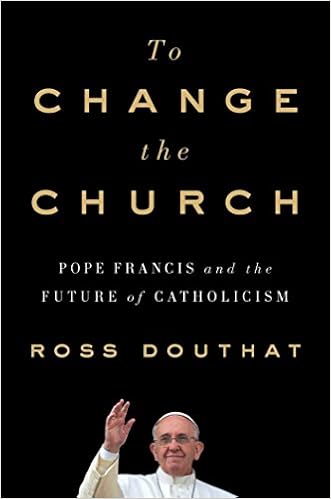
I say Douthat and his book, since Winters piece is mostly ad hominem invective.
In essence, Winters’ problem is that Douthat spoke with people whom Winters doesn’t like, never bothers to contact and talk to (whom he labels as “cranks”) and then – imagine! come to conclusions that don’t coincide with the Received Message Approved by the New catholic Red Guards.

Wile. E! Defender of Popes!
I almost laughed aloud when Winters accused former Fishwrap pillar John Allen as having anti-Francis bias. I guess Allen hasn’t applauded vigorously enough in the Great Hall of the Pueblo.
In any event, in his attack on Douthat’s sources – unfootnoted, named, etc. – Winters does the same thing of which he accuses Douthat. “One synod father commented… Another synod father told me… I asked one of the synod fathers…”. Slick, huh?
Winter even situates himself as the defender of Popes John Paul and Benedict against Douthat’s “slurs”. Yes, he used that word.
Just make popcorn and chuckle. You can’t take any of this too seriously. It was as inevitable as birds flying south for the Winters.
There is, perhaps, a key to understanding why Wile E.’s ACME-fueled spittle is today flecking with such venom. He wrote:
Could it be that there is a kind of American Catholic, be it a political operative or a CEO, for whom it is important to keep conservative sexual norms as the touchstone of Catholic identity rather than, say, commitment to the poor?
Could it be that there is a kind of catholic Left operative who is angry because some defend “conservative sexual norms”?

At the National Catholic Register there is an interview with the head of Juventutem, Bertalan Kiss, about young people, the Extraordinary Form of the Roman Rite and how progressive they and it are. He spoke with Ed Pentin in Rome during the pre-Synodal meetup with young people.
Among other things, Kiss said that for young people, the traditional Roman Rite “raises the bar”. I was struck by that, because in essence it is what I argued HERE.
KISS: It raises the bar. I’ve asked myself what’s happening when I hear that a lot of young people are attracted to the extraordinary form. I usually get asked: “Yes, but young people are also attracted by the charismatics.” I say, well, thank God we have something that attracts young people. My experience is that it’s not just about the form, though that is important, but that it raises the bar, because when you’re not part of the mainstream, you don’t have the required infrastructure, and you have to work and have to really want it. If you really want the community to work and be alive, then you really have to work day by day to do it, so it raises the bar and this attracts young people.
PENTIN: It challenges them.
KISS: Yes, it’s a challenge, and you have to give challenges to young people. This concept of dumbing down or sugar coating everything in the hope that it will be more accessible to young people — I don’t see the fruits of that. If you raise the bar, there are only about 2 out of 10 people who will accept the challenge, but they really accept it and start working towards it. No matter what kind of community or liturgy they prefer, they really accept the challenge, then others will come. But you have to be patient. We are only planting the seeds but the growth is coming from God, so we have to patient. You shouldn’t push for anything. If it becomes a self-centered thing, it doesn’t leave space for the Holy Spirit to work.
Have a look at the whole piece over there.
¡Hagan lío!

Coat of Arms by D Burkart









A Daily Prayer for Priests


They find you a pro-life agent in your area who commits to giving a portion of the fee to a pro-life group!

PLEASE subscribe via PayPal if it is useful. Zelle and Wise are better, but PayPal is convenient.
A monthly subscription donation means I have steady income I can plan on. I put you my list of benefactors for whom I pray and for whom I often say Holy Mass.
In view of the rapidly changing challenges I now face, I would like to add more $10/month subscribers. Will you please help?
For a one time donation...



Help Monks in Wyoming (coffee – UPDATED LINK) and Norcia (beer) and the wonderful "Soap Sisters" of Summit, NJ!


Please follow me on Twitter!










Visits tracked by Statcounter
since Sat., 25 Nov. 2006:

