ASK FATHER: Seminarian gives homily at Mass

From a reader…

QUAERITUR:

It has happened at least two times now where our pastor has preached 30 second homily and then says, ” and now our resident seminarian will offer some words on today’s gospel. ” The seminarian then gives a 15 min homily. I understand that seminarians need to practice, but I was under the impression that this is not allowed. If not, is it something I should bring up to Father?

The 2004 Instruction Redemptionis Sacramentum is perfectly clear. After establishing that the homily is ordinarily to be given by the priest celebrant (64), with another priest, or a bishop, or deacon able to fill in on occasion, it explicitly excludes laypersons and adds

“The prohibition of the admission of laypersons to preach within the Mass applies also to seminarians, students of theological disciplines, and those who have assumed the function of those known as ‘pastoral assistants;’ nor is there to be any exception for any other kind of layperson, or group, or community, or association.”

As clear as the law is, some want to skirt, disregard, ignore, or dance around the law.

Seminarians, in particular, are in precarious situations. Oftentimes their formation is dependent upon recommendations given by people with little desire to observe the law. Even though most seminaries are long past the dark days (though there is evidence that the dark days are returning), there are still folks involved in formation who see it as their bounden duty to “test” these little bundles of fervor and orthodoxy and shake them up. In an effort to prove to these men whom they perceive as naive waifs that there exist grey areas and difficult situations, these priests (and others) put the seminarian in a situations where they are forced to chose between obedience to the law, or obedience to the pastor.

The seminarian who resists and stands firm in the law and tradition of the Church can then be labelled “rigid,” a term that might not hold as much sway in seminaries as it did a generation ago, but is still trotted out as a slur by certain members of the in crowd… such as the Pope.

For laity, the situation can be awkward. While you have every right to the liturgy of the Church as the Church intends it (which includes a homily given by one qualified), bringing these facts up to the pastor might cause problems for the seminarian, especially if the pastor thinks that the seminarian set up the confrontation.  It need not be the truth that the seminarian did so, but the perception – his accusation – can be just as damning and harmful in the seminarian’s evaluations.

Pray for the seminarian, who is likely struggling with the propriety of doing what he’s told by the pastor, while trying to remain faithful to the law of the Church.

He has probably had to make several decisions about which battles are worth fighting and which are best to practice the virtue of nodding, smiling, and saying, “Yes, Father.”

Meanwhile, if those priests who put seminarians in this position know what Redemptionis Sacramentum says continue to put seminarians in that position… I fear for them at their judgment.

Posted in "How To..." - Practical Notes, ASK FATHER Question Box, Hard-Identity Catholicism, Seminarians and Seminaries | Tagged , , ,
32 Comments

Book which Pope Francis mentioned in address to Roman Curia

16_12_23_Acquaviva_Industriae_titlepageYesterday His Holiness Pope Francis addressed himself to the Roman Curia for the annual Christmas greeting.

He mentioned Industriae ad curandos animae morbos, that is, “Initiatives (for superiors) to cure illnesses of the soul”, a work of Jesuit formation by Claudio Acquaviva, S.J. (+1615) who was the 5th Superior General of the Jesuits and is known as their “second founder”.  There was recently issued a new version in Italian.  I mentioned that I would like to see that and a whole bunch of you found it on line and sent me the PDF.  Thanks!  I right about you: the smartest readers anywhere.  Wanna see it?  HERE

The Pope said that he had had to read this book. Industriae may be at the core of what Francis did in 2014 when he rather viciously beat the tar out of the audience.  This year he offered “remedies”.

I have been going through the work.  It is very interesting. I may use it as a kind of examination of conscience.

I found especially interesting Chapter IX. Chiusura e mancanza di chiarezza“Lack of openness and lack of clarity”

Here is a sample from IX:

3. Know that no other defect more than this one open the door to Satan, spirit of shadows, which operates freely, as it wishes and without any obstacle on this type of soul, easily persuading it; and know that there is no other defect more than this which closes the door on all remedies. Therefore, being opened up he will easily defeat all temptations; otherwise, remaining silent, he’ll be defeated.

Posted in "How To..." - Practical Notes, Our Catholic Identity | Tagged , ,
12 Comments

Pope Francis’ Christmas Address to the Roman Curia

16_12_22_Francis_Xmas_CuriaHis Holiness Pope Francis today gave his annual Christmas “greetings” address to members of the Roman Curia.  HERE  With his extemporaneous words at the end, it amounts to some 43oo words and covered 8 single-spaced pages of Times 12 point type.
His theme was “reform of the Roman Curia”.  Alluding to and building on the speech two years ago in which he blasted the members of the Curia for their 15 illnesses, this time the Pope listed – at great length – various cures for those illnesses.  Then he listed – at great length – the acts already undertaken, listing each and every Motu Proprio he has issued regarding the Curia.

One negative image he used involved cosmetics, plastic surgery, face lifts, wrinkles, blemishes.

Pope Francis sometimes speaks in code.

He sent a couple not very subtle shots over bows during the speech.  One cannonball launched was an implicit threat that anyone could be fired.  And indeed, people are being fired these days, from what I understand.  The other cannonball was aimed at anyone who opposes him (emphases mine):

In this process, it is normal, and indeed healthy, to encounter difficulties, which in the case of the reform, might present themselves as different types of resistance. There can be cases of open resistance, often born of goodwill and sincere dialogue, and cases of hidden resistance, born of fearful or hardened hearts content with the empty rhetoric of ‘spiritual window-dressing’ typical of those who say they are ready for change, yet want everything to remain as it was before. There are also cases of malicious resistance, which spring up in misguided minds and come to the fore when the devil inspires ill intentions (often cloaked in sheep’s clothing). This last kind of resistance hides behind words of self-justification and often accusation; it takes refuge in traditions, appearances, formalities, in the familiar, or else in a desire to make everything personal, failing to distinguish between the act, the actor, and the action.

We have seen this kind of rhetoric from His Holiness before. It could be that it no longer surprises or has the impact that it once may have had.

The reason why I featured the paragraph above is because this is the paragraph everyone else will lead with.  For example, John Allen at Crux in the churchy media and ABC in the secular MSM.  Just watch.

If you have a lot of time, you might read his address for yourself.

There is an interesting reference to four Latin phrases which each encapsulate the four weeks of the Spiritual Exercises.  I’d like to know who originally made this distillation: deformata reformare, reformata conformare, conformata confirmare et confirmata transformare.  There are so many smart readers here.  Perhaps someone knows.

Also, pay attention to his phrase: “positive silence”.  Again, His Holiness often speaks in code.

Interesting were the references Francis made at the very end in his extemporaneous remarks:

“When, two years ago, I spoke about the illnesses, one of you came to say to me: ‘Where must I go, to the pharmacy or to confession?’ ‘Well… both!” I replied. And when I greeted Cardinal Brandmüller, [One of the Four Cardinals of the Five Dubia.] he looked me in the eye and said: ‘Acquaviva!’  I, at the time, did not understand, but later, thinking about it, I remembered that Acquaviva, the third general of the Society of Jesus, had written a book which we students read in Latin; the spiritual fathers made us read it, and it was entitled: Industriae pro Superioribus ejusdem Societatis ad curandos animae morbos, that is, the illnesses of the soul. Three months ago, a very good edition came out in Italian, done by Father Giuliano Raffo, who died recently, with a good prologue which indicates how to read the book, and also with a good introduction.  It is not a critical edition, but it is a really beautiful translation, very well done, and I believe it could be useful. As a Christmas gift, I would like to offer it to each one of you. Thank you”.

I’d like to get that book.

Posted in Francis | Tagged , ,
57 Comments

ASK FATHER: I don’t feel appreciated as a parish volunteer

From a reader…

QUAERITUR:

I volunteer a substantial amount of my time and talent to help our priests with sacramental prep, providing music for Mass (which alone takes up several hours), as well as helping to clean the rectory on a regular basis. Furthermore, I readily offer my assistance as needed for other tasks. I’ve been doing this for six years now, and not once have I been thanked by one of our priests for my efforts. Quite the opposite, if I need the priest’s time for something (ie: to discuss a spiritual matter) I have to practically beg for a half hour of their time (picture the woman begging our Lord for the crumbs that fall from the table, and that’s about how I feel when I need to ask for some of our priests’ time). Meanwhile other parishioners have no issues with getting time to meet with him.

I don’t get it. While I don’t do things for the sake of being thanked, the lack of appreciation I receive as well as being treated like a second-class parishioner, is really starting to take its toll on me. I get frustrated and want to tell my priest to clean his own house (I work full time and only get one day off a week as well and I still have to keep my living quarters clean) and do all my other daily tasks without anyone else helping me.

I make sure to graciously thank him for his time and sacrifices, but I still get treated like dung.

Why are some priests so ungrateful towards volunteers, and what would you recommend I do? I feel like stopping all services, but I feel God would be displeased with me, or that I would lose out on greater merits for Heaven. At the same time, I worry that this is just enabling him in his ungrateful behaviour.

Why are some priests ungrateful? For the same reasons that some bishops are ungrateful, some cardinals are snide, some popes are testy, and some lay people are annoying.

Original sin is at the heart of this, further complicated by personal sins.

We are all human.  We are all subject to the same struggles and temptations. All of us are capable, through God’s benevolent grace, of great acts of heroism. We’re also all capable of small acts of … well, of smallness.

I think I understand your situation. While not doing virtuous things for the sake of earthly reward, that occasional pat on the back and knowledge that what we’re doing is appreciated is a good thing.  I will be the first to admit that priests (and others) don’t always show proper gratitude.  This is why I say Masses for benefactors and I let them know through the blog.

What’s the best strategy?

Perhaps you can use the passive-aggressive approach: grouse and grumble a lot. Do your volunteer work with lots of sighs and looking at the clock. Gossip with your friends and neighbors about how lousy Fr. Q is. When asked what’s wrong, answer, resignedly, “Oh…. nothing.” Perhaps find a way to comfort yourself by overindulging in created comforts: food, booze, luxuries. Complain a lot, even when you’re alone. That should work.

Another, different, strategy would be to take the matter by the horns and go to Father directly.

“Father Q, I know that you have many things that are demanding your time. I, too, have a lot on my plate, but volunteering some time here at St. Dionysius the Pseudo-Areopagite Parish has always made me feel like I’m contributing to the work of the Church. Lately, however, I just don’t feel like I’m being appreciated. And it’s not that I’m looking for money, or any public recognition or anything, but if you could let me know if what I’m doing is of any value, I’d appreciate it. And if not, is there something else I could be spending my time on. I don’t want to keep doing something that isn’t in keeping with what you want the parish to be.”

Posted in "How To..." - Practical Notes, ASK FATHER Question Box | Tagged
28 Comments

Brick By Brick in Duluth: TLM instituted in a parish

For your Brick By Brick file, from the Duluth Tribune:

Kenwood neighborhood Catholic parish brings back the Latin Mass

The people at St. Benedict’s Catholic Church are worshipping like it’s 1962. [A little Minnesota Prince reference.]

Not all of the people, all of the time. But since the beginning of this year’s Advent season, the noon Mass at the Kenwood neighborhood church has been celebrated in Latin.

On the first and third Sundays of the month — and the fifth, when there is one — it is celebrated in the “extraordinary form.” That means it’s not only in Latin but essentially in the way Mass was celebrated for centuries until reforms took place in the 1960s.

St. Benedict’s is the only church in Duluth to bring back the Latin Mass, said the Rev. Joel Hastings, priest of the church and director of liturgy for the diocese.

For Shannon Lisic, the return of the old way of worship has been, literally, a godsend.

Maybe just an answer to a lot of our prayers is what I can attribute it to,” Lisic said.

Lisic and her husband, Michael, came to St. Benedict’s about six months ago, she said, after their previous parish, St. Philip Neri in Saginaw, closed its doors.

At 53, Shannon Lisic was born after the beginning of the Second Vatican Council, which paved the way for reforms in the Catholic liturgy that, among other things, allowed the Mass to be celebrated in the language with which the people of the church were most familiar.

The language change began to go into effect in 1965, Hastings said, and the completed ritual that is used today as the “Ordinary Form of the Roman Rite” was first given in 1970.

Lisic was 8 or 9, she said, when her home parish made the conversion from what is now known as the “extraordinary” to the “ordinary” form of the Mass.

“My mother and father, it tore their hearts out to see the Latin Mass go,” Lisic said.

For decades after that, attending Mass seemed more like fulfilling an obligation than an act of worship, Lisic said.

“I never left Mass feeling like I adored (God) as I should,” she said. “I felt I was not giving him the full me.”

Others felt the same longing, Hastings said, some of them surprisingly young. Where Latin Masses have been reintroduced in large metropolitan areas, they’ve proven popular with young families, he said.  [True.]

“One of the things the Latin Mass not only invites but in a real way causes is for people to simply be present to something that can be said to be bigger than who they themselves are,” Hastings said. “And to come to a Mass that would be more, to use the modern-day buzzword, ‘relevant’ doesn’t appeal to them because it doesn’t connect them to something that’s out of this world.”

Hastings came to St. Benedict’s in July 2015. It seemed like the obvious place to reintroduce the Latin Mass, he said, because it already was a more traditional parish in its worship and already had some experience with the Latin form.

Hastings, now 43, was on board with the project but wasn’t sure he was the right priest for the job. He questioned whether, not being fluent in Latin, he’d be able to “really pray the Mass” or “is it just going to be rote,” Hastings said. “And I don’t want it to be just rote.”  [Fabricando fabri fimus, dear Father.]

His perception changed in April, when he attended a workshop at St. John Cantius parish, a historic, baroque church in the heart of Chicago that specializes in the Latin Mass. He and a handful of other priests were drilled in the ritual of the extraordinary Mass, Hastings said. But the epiphany for him came when he participated on a Wednesday evening in the missa cantata — the sung Mass.

“And I was very moved by it, to the point where I found myself praying: OK, Lord, if you want me to be the guy in Duluth, please help me out with this,” Hastings recalled.  [Good for him!]

The change required a new schedule. From Masses in English at 5 p.m. Saturday and 8 and 10:30 a.m. Sunday, St. Benedict’s has retained the Saturday time but gone to a single Sunday morning Mass in English at 9 a.m. and the Latin Mass at noon.

So far, the Latin Mass has typically attracted about 100 worshippers with a mix of ages, he said.

As in that Wednesday service that Hastings attended, the form of the Latin Mass at St. Benedict’s is the sung Mass. “I believe that singing is the more beautiful expression,” he said. “Frankly, the church believes that — that sung worship is more beautiful and, in a way, more effective.” [And it is closer the more ideal Solemn Mass.  Good choice.]

That includes the choir singing Gregorian chants — worship music dating to the early Middle Ages.

Lisic said it’s the structured, everything-always-the-same nature of the traditional Latin Mass that appeals to her.

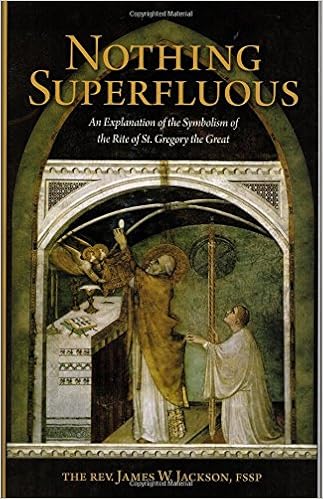
“Every prayer has a reason,” she said. “Every gesture of the priest and altar boys has a reason. Every candle that is lit. Every sequence. Every time the bell is rung. Every single thing, there’s a reason. And I love to have a purpose for what you do.”   [There is a good book about each little gesture, etc., Nothing Superfluous by Fr. James Jackson.]

She’s careful to say that she doesn’t think any less of the modern-day liturgy. But those who haven’t experienced the traditional form “don’t know what they’re missing,” Lisic said.

The Latin Mass instills a “sense of awe,” Hastings said, which is “at the heart of our theology of worship and sacraments. It’s meant to draw us into a deeper encounter with Christ, into a deeper sense of union with him and the saints of heaven.”

When she re-experienced the Latin Mass for the first time since childhood, Lisic “just was flooded with happy tears,” she said.

“That’s something you don’t forget,” Lisic said. “It’s just ingrained so deep, all the bells and smells, rich in symbolism. You don’t forget that.”

If you go

St. Benedict’s Catholic Church, 1419 St. Benedict St., will celebrate Christmas Eve Mass at 5 p.m. and 10 p.m. on Saturday. Both will be in English, said the Rev. Joel Hastings, although portions will be sung in Latin during the later service.

The normal Sunday schedule will be followed on Christmas Day, with Mass in English at 9 a.m. and Latin Mass in the “ordinary” form at noon.

Fr. Z kudos to Fr. Hastings.  This is a great boon to the area around Duluth.

We need more and more occasions of Holy Mass in the Usus Antiquior.  The use of the older, traditional form, is of tremendous advantage for the Church at every level.  Hopefully there will be an enduring knock-on effect from these instances of Holy Mass in Duluth.

Posted in Brick by Brick, Liturgy Science Theatre 3000 | Tagged
6 Comments

ASK FATHER: Can I give SSPX followers Holy Communion?

From a reader, a priest…

QUAERITUR:

We offer the old mass every Sunday at midday. Missa cantata with very sound teaching.

There are individuals who choose to attend Sunday mass at an sspx chapel near to us (and no nearer or more convenient to these individuals) because the Sunday congregation there is small (15) and perfecti whereas our is larger (40) and messier (more crying babies, etc)

These individuals can’t get daily mass at sspx but come to us for the daily tlm.

I’m starting to think that these circumstances make their decision schismatic and that I should inform them that I will not give them holy communion.

What do you think?

Can. 912 establishes the basic principle that Catholics who are not forbidden by law may and must (potest et debet) be admitted to Holy Communion.

Can. 915 clarifies further, stating that those who have been excommunicated or interdicted are to be excluded, as are those “who obstinately persist in manifest grave sin.”

Can. 916 add that those who are conscious of grave sin should not receive Holy Communion without going to confession or at least (if confession is not possible) making a perfect act of contrition and resolving to go to confession as soon as possible.

Can. 1364 say that apostates, heretics, and schismatics incur latae sententiae excommunication (for which our wise friend Dr. Ed Peters will be quick to call an end, in that they create messy and cloudy situations) and therefore should be excluded from Holy Communion.

Can. 751 informs us that schism is the withdrawal of submission to the Supreme Pontiff or from communion with the members of the Church subject to him.

The general principle is that, when dealing with penalties or restrictions of rights, the Church wants us to take a strict interpretation of the law (can. 18) lest someone’s rights be unjustly abridged.

Hence, I urge great caution before deciding that someone has committed the delict of schism and thus incurred the penalty of excommunication. 

The SSPX, as it has been affirmed by several authorities in the Church, is not schismatic, though it is also not in full communion (it’s in a sort of a tertium quid).

Further, the SSPX only consists of the clerical and seminarian members of the Society itself. Even if the SSPX were to be declared schismatic (quod Deus avertat), the faithful who merely attend their Masses would not fall under that same category.  The lay faithful do not belong to “priestly societies”.

In an ideal world, would it be better for the faithful to hear the Holy Mass at a Church in full and unimpaired communion with the rest of the Church? Yes.

Is their decision not to do so a schismatic act? Not according to the Church.

So, what’s to be done in this situation?

The work of a priest is often hard and difficult. While there are ample rewards for it in this life and the next, the answer in this life (for your sins) is more work. Ergo, befriend these parishioners.  Cajole them (warmly, tenderly, as a father, not as an imperious scold). Go to their houses, get to know them. Develop the sort of relationship that will allow you, on Monday morning, to call them up and ask if everything is alright because they were missed in their regular pew on Sunday. Preach regularly about the benefits of full communion.  Remin them of their responsibilities as Christians to cling close to the Church, even when the human flaws of the institution are all too real.

Perhaps getting to know the priest or priests at the SSPX chapel would also be advisable. While the “big” work of reintegrating the Society back into full communion is handled by committees and commissions in Rome and Econe, the real work of reconciliation is going to take place at the grass roots. Invite him over for a brandy and a cigar. Talk sports. Talk hunting. Talk politics. Compare seminary war stories.

Brick by brick.  That’s the process forward.

Posted in "How To..." - Practical Notes, ASK FATHER Question Box, Hard-Identity Catholicism, SSPX | Tagged , , , , ,
20 Comments

ASK FATHER: Can religious priests omit wearing an alb for Mass?

Padre-Pio-Mass

Franciscan priest saying Mass wearing an alb.

From a reader…

QUAERITUR:

Is a priest required to wear an alb when saying Mass? I’ve seen on two separate occasions where Franciscan priests would just wear the chasuble and stole over their habit without putting on an alb.

While I was interred in the re-education by hard labor camp run by Hillary Democrats and Communists (redundant, I know), I excluded putting on an alb for celebration of Mass using the tiny fragments of bread hidden from the guards and wine fermented from raisins in the twist off top of an old water bottle squirreled away in the crack of my cell’s wall.

Other than that, I can’t find any good reason – or permission – to exclude wearing the alb.

As a matter of fact, the Instruction Redemptionis Sacramentum says:

“123. The vestment proper to the Priest celebrant at Mass, and in other sacred actions directly connected with Mass unless otherwise indicated, is the chasuble, worn over the alb and stole.’ Likewise the Priest, in putting on the chasuble according to the rubrics, is not to omit the stole. All Ordinaries should be vigilant in order that all usage to the contrary be eradicated.”

“126. The abuse is reprobated whereby the sacred ministers celebrate Holy Mass or other rites without sacred vestments or with only a stole over the monastic cowl or the common habit of religious or ordinary clothes, contrary to the prescriptions of the liturgical books, even when there is only one minister participating. In order that such abuses be corrected as quickly as possible, Ordinaries should take care that in all churches and oratories subject to their jurisdiction there is present an adequate supply of liturgical vestments made in accordance with the norms.”

Hence, the alb is necessary for Holy Mass.   Religious may not omit using the alb, even if they, like Dominicans, have a white habit.  If they do this because they are too warm with the alb over the habit, they can remove some of their habit, but they may not neglect the alb.

That said, may I suggest, Fathers, that you memorize one or two Mass formularies, such as that for Mary on Saturday or the Votive Mass of the Holy Spirit?  When you are interred in the camp, you won’t have a book… or an alb.

Posted in "How To..." - Practical Notes, ASK FATHER Question Box, Liturgy Science Theatre 3000 | Tagged , ,
26 Comments

ASK FATHER: Blessing wine on St. John’s Day… or “another beverage”?

From a reader…

QUAERITUR:

You usually give your readership an annual reminder for the blessing of wine on St. John’s Day.

The Rituale says “Benedicere… hunc calicem vini et CUJUSLIBET POTUS”- so presumably any hard beverage could be blessed with that blessing? Whiskey would be acceptable right?

Right! Whiskey is “another beverage”.

I hope that you will get organized for this great day and wonderful blessing.  First, contact your priest and make sure he is one board.   To get him on board, it might be a good idea to to assure him that you will be leaving behind a goodly portion of the large quantity of the “other beverage” you want blessed:

“Hey Father!  I have a little too much Laguvulin 16 right now.  Could I leave some for you after you bless it?  I’d be much obliged.”

That sort of thing.

How did this blessing develop?   There was an attempt on the life of St. John the Evangelist by poisoning.  He blessed the cup and the poison crawled out in the form of a serpent.  You often see St. John depicted this way in art.

Here are a couple texts for Father’s use.

BLESSING OF WINE

on the Feast of St. John, Apostle and Evangelist

At the end of the principal Mass on the feast of St. John, Apostle and Evangelist, after the last Gospel, the priest, retaining all vestments except the maniple, blesses wine brought by the people. This is done in memory and in honor of St. John, who drank without any ill effects the poisoned wine offered to him by his enemies.

P: Our help is in the name of the Lord.

All: Who made heaven and earth.

P: The Lord be with you.

All: May He also be with you.

Let us pray.
If it please you, Lord God, bless + and consecrate + this vessel of wine (or any other beverage) by the power of your right hand; and grant that, through the merits of St. John, apostle and evangelist, all your faithful who drink of it may find it a help and a protection. As the blessed John drank the poisoned potion without any ill effects, so may all who today drink the blessed wine in his honor be delivered from poisoning and similar harmful things. And as they offer themselves body and soul to you, may they obtain pardon of all their sins; through Christ our Lord.

All: Amen.
Lord, bless + this creature drink, so that it may be a health- giving medicine to all who use it; and grant by your grace that all who taste of it may enjoy bodily and spiritual health in calling on your holy name; through Christ our Lord.

All: Amen.
May the blessing of almighty God, Father, Son, + and Holy Spirit, come on this wine (or any other beverage) and remain always.

All: Amen.
It is sprinkled with holy water. If the blessing is given privately outside of Mass, the priest is vested in surplice and stole and performs the ceremony as given above.

4. ANOTHER FORM FOR BLESSING WINE

on the Feast of St. John, Apostle and Evangelist

At the end of Mass, after the last Gospel, the following is said:

Psalm 22
(for this psalm see Rite for Baptism of Children)

After the psalm: Lord, have mercy. Christ, have mercy. Lord, have mercy. Our Father (the rest inaudibly until:)

P: And lead us not into temptation.

All: But deliver us from evil.

P: Save your servants.

All: Who trust in you, my God.

P: Lord, send them aid from your holy place.

All: And watch over them from Sion.

P: Let the enemy have no power over them.

All: And the son of iniquity be powerless to harm them.

P: Then if they drink anything deadly.

All: It will not harm them.

P: Lord, heed my prayer.

All: And let my cry be heard by you.

P: The Lord be with you.

All: May He also be with you.

Let us pray.
Holy Lord, almighty Father, everlasting God, who willed that your Son, co-eternal and consubstantial with you, come down from heaven and in the fulness of time be made flesh for a time of the blessed Virgin Mary, in order to seek the lost and wayward sheep and carry it on His shoulders to the sheepfold, and to heal the man fallen among robbers of his wounds by pouring in oil and wine; may you bless + and sanctify + this wine which you have vintaged for man’s drink. Let all who taste or drink of it on this holy feastday have health of body and soul; by your grace let it be a solace to the man who is on a journey and bring him safely to his destination; through Christ our Lord.

All: Amen.
Let us pray.
Lord Jesus Christ, who spoke of yourself as the true vine and the apostles as the branches, and who willed to plant a chosen vineyard of all who love you, bless + this wine and empower it with your blessing; so that all who taste or drink of it may, through the intercession of your beloved disciple John, apostle and evangelist, be spared every deadly and poisonous affliction and enjoy bodily and spiritual well-being. We ask this of you who live and reign forever and ever.

All: Amen.
Let us pray.
God, who in creating the world brought forth for mankind bread as food and wine as drink, bread to nourish the body and wine to cheer the heart; who conferred on blessed John, your beloved disciple, such great favor that not only did he himself escape the poisoned potion, but could restore life by your power to others who were dead from poison; grant to all who drink this wine spiritual gladness and everlasting life; through Christ our Lord.

All: Amen.
It is sprinkled with holy water.

Posted in "How To..." - Practical Notes, Just Too Cool, Liturgy Science Theatre 3000 | Tagged
5 Comments

Super cool Galileo gravity experiment

Super cool.

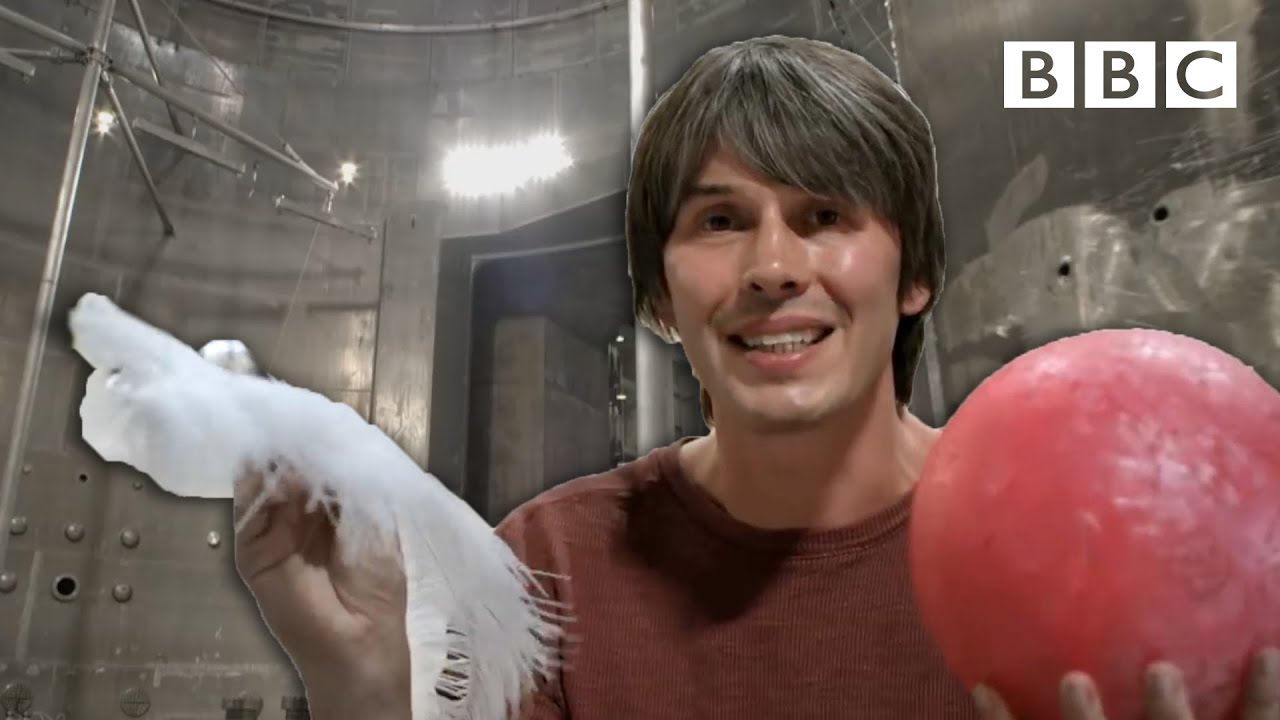
Galileo claimed that if there was no air, a cannonball and a feather would, if dropped, hit the ground at the same time. One of the Apollo astronauts did this experiment on the moon with a hammer and a feather.

At the NASA’s Space Power Facility in Ohio, there is a huge chamber which can pump out all the 800K cubic feet of air, some 40 tons, leaving only a few grams. It is a near perfect vacuum. They conduct the experiment and show video in slow motion.

YouTube thumbnailYouTube icon

An interesting point is made: We watch this and say that the feather and ball are falling. But wee see this occur in relation to the backdrop. Einstein would say that they not falling.

Posted in Just Too Cool | Tagged ,
18 Comments

DOUTHAT in NYT: Ongoing ‘Amoris laetitia’ controversy

Dear readers… a lot of time and electrons are being spilled on Amoris laetitia these days because it may be the most important controversy of our time, with long lasting implications for doctrine on faith and morals, and on discipline.  Our Catholic identity is tied to the controversy.  We have to pay attention even though I am sure that many of you are ready for Amorexit (opting out of further discussion of the controverted Post-Synodal Apostolic Exhortation).   Mind you: Some people should vote for Amorexit and stop paying attention, particularly if it is becoming spiritually toxic for you.  For people who are saying things like “I don’t know if I can remain Catholic because of this!”, I say, tune out and start reciting, often, your memorized Acts of Faith and of Hope.

Meanwhile, the rest of us are in the scrum.

Check out Ross Douthat’s examination of the controversy surrounding Amoris laetitia in his NYT – yes, NYT – Hell’s Bible – column. HERE Pope Francis and his surrogates do not get a pass.

A sample…

[…]

Indeed, the exact same post-“Amoris” pattern that we’ve seen on second marriages and the sacraments is playing out presently in Canada with assisted suicide. The bishops in the western provinces are taking the traditional line that Catholics who are planning their own suicides can’t be given last rites, because you can’t grant absolution to someone who intends to commit the gravest of sins shortly afterward … while the Catholic bishops of the Maritime provinces, citing Pope Francis’s innovations as a model, suggest that actually pastoral accompaniment could include giving last rites to people who are about to receive “medical assistance in dying,” because every case of assisted suicide is different and who are we to judge?

In other words, thanks in part to the pope and to “Amoris,” we now have two different implicit teachings from two different groups of Catholic bishops on a literal matter of life and death. And saying “the train has left the station” and labeling one camp of bishops the “dissenters” – which, on the issue of euthanasia, I don’t think Ivereigh [See his ghastly piece.] would do – tells us exactly nothing about how this conflict ought to be resolved.

[…]

Not. Going. Away.

One thing leads to another in our Catholic Faith.

Admission of people to Communion who are objectively committing a sin (whether it is adultery or contemplating suicide, etc) has implications for what we believe the Eucharistic to be, about who we believe Christ to be.  Was the Lord (God) wrong when he taught about the indissolubility of marriage?   If He was wrong, then is He divine?  Was the Lord wrong about eating His Body and drinking His Blood?  Is that just idolatry?  If objective adulterers can be admitted to Communion, then why can’t those contemplating suicide be anointed first?  Why not every sacrament for everyone?  What are sacraments anyway?

This is why the Five Dubia are so important and why so many desire clear answers.   It’s not about a lack of “mercy”.

Posted in One Man & One Woman, Our Catholic Identity | Tagged , ,
46 Comments