ASK FATHER: How do I find out which territorial parish I live in?

From a reader…

QUAERITUR:

A recent post of yours got me wondering, how do I know what my territorial parish is? I live in a medium city and there are three parishes almost equidistant to my house.

My wife and I actually go to a fourth parish only slightly further away (the cathedral) because of the preaching.

How do I know which one is my territorial parish, and what are my responsibilities to it? Am I doing anything wrong going somewhere else?

You are not doing anything wrong by going to another parish.  However, when it comes to receiving certain sacraments, the local, territorial pastor shouldn’t be ignored.

The 1983 Code of Canon Law starts out describing a diocese as a “portion of the people of God”.  Dioceses are usually circumscribed by borders, indicating territory.  You belong to your diocese because you dwell in the diocese in a relatively stable way.   (There are exceptions, as in the case of the Archdiocese for the Military, to which members of the military and their dependents belong).  The Code also says that parishes – which could also be described as “portions of the people of God” -are usually territorial (can. 518): if you live in the boundary of the parish, you probably belong to that parish.  (There are exceptions for parishes with boundaries that could stretch to the diocesan boundaries for ethnic or language groups, etc.)

So, in the main, you live in the geographically described territory of some parish.  In general if you live really close to a parish church, that’s probably your parish.

However, now parishes are being consolidated.  You may live close to St. Joseph Terror of Demons Church, which was formerly its own parish.  A couple years ago, it might have been consolidated with the parish Our Lady Mournful Mother Weeping Church to form a larger parish with two churches in it, the new consolidated parish now being called “Through My Fault Through My Fault Through My Most Grievous Fault Catholic Community”.

That’s the sort of name I would come up with, by the way, although on my planet, these consolidations would be as rare as hen’s teeth.  Alas, these days the usual consolidation names are more like “Sing A New Faith Community Into Being Faith Community” or “Engendering Togetherness Community of Welcome”.

To get a handle on what your territorial parish is, you could call what you think is your local parish.  If that doesn’t produce results, call the diocese.  Tell them your address and ask which is your official territorial parish.

Mind you: You may have a problem finding someone who knows a) that there are such a thing as parish borders and b) what those borders are.

Some dioceses make it easy.  For example, the Archdiocese of Philadelphia provides a way to enter your address on their website to find out your territorial parish.  Not all dioceses do that.

This could take some perseverance.

Slowly but surely – at least in developed countries where people are highly mobile – the practical effects of parish boundaries are dissolving and resolving themselves into a dew.

In law people belong to St. Idealia in the Diocese of Libville where with the acquiescence of Bp. Fatty McButterpants the ultra-liberal Fr Bruce Hugalot commits all manner of liturgical abuse and preaches outright heresy, but in practice they are receiving all their services from Msgr. Zuhlsdorf at St. Ipsidipsy, across the diocesan border over in the Diocese of Black Duck!

This isn’t far-fetched.  Say you live near your diocese’s border, and there is a far superior option over there in the other diocese.  A person might drive from N. Illinois up to Madison WI.  Someone might take the subway from Brooklyn (a diocese), into Manhattan (a different diocese).

It’s confusing, but that’s life these days.  People are voting with their feet.

It may be that the law will be changed to reflect new realities.  It is hard to know what that might look like, however, since the world isn’t homogeneous.

Posted in "How To..." - Practical Notes, ASK FATHER Question Box | Tagged ,
16 Comments

Who cares what libs think? Boldly recover and use great traditional items and vesture of yore.

At the newish blog LAJ, Shawn Tribe has a good post about boldness in regard to some traditional vesture and other items of yore.

In the 60s Paul VI abolished quite a lot of good things. That was a mistake. However, with the rise of Summorum Pontificum, and with the slow but steady demise of the aging-hippy tyrants brainwashed in the halcyon days of Vatican II, some of our riches are returning to use.

Tribe mentions, among other things, the tufted fascia, buckled clerical shoes, the mantelletta, etc.

He touches on the ridicule heaped by libs on those who enjoy traditional things.

He doesn’t not avoid that there are some who get way too involved with the ecclesiastical gizmos and tat.

However, he also rightly observes that younger people who are discovering our rich traditions, the patrimony that was cruelly kept from them, don’t have the baggage still lugged about by the aging-hippies and their kind.  They like and want this old stuff.

Who cares what libs think?   They are always wrong.

Here is his peroration:

If there were advice to be given to clergy in the light of all this, it would seem to be this:

Don’t politicize these things of course but don’t shy away from them either. Stop feeling sheepish about them — you may as well feel sheepish about all Catholic traditions and teachings if so. There’s no need and it’s certainly not how many of your younger flock tend to look at these things, not to mention many others besides. Keep things in perspective of course, making the sacred liturgy your first priority, but be confident in our Catholic patrimony.

Will some mock? Yes, you can absolutely count on it. Christ didn’t shy away from mocking however. [NB] The reality is that ideologues and enemies will always find one way or another to mock and deride and if it is not one thing, then it’s another. If anything, acceding to their mockery only invites more derision, demonstrating weakness, and that doesn’t invite respect. You can also be assured, however, that many others, even those outside the Church, find these things of interest and appeal.

In short, we beg you, please stop ‘blinking.’ Instead, be bold and confident in our patrimony and start to lead the conversation again.

I agree.

A few notes.

It can be argued that the vesture used by prelates in 1962 can and should be used when they participate in Masses in the traditional Roman Rite.  I wrote a post about this: HERE.

Paul VI changed a bunch of things in 1969.  For example, he “abolished” the mantelletta, the sash with “fiochi” (I have those in black and in paonazza for when I’m MC in Pontifical Masses), the red tabarro, galero and plush hat, the colored stockings and shoe buckles for lesser prelates, the red pom on the birettas of prelates of honor, the mantellone for lesser prelates, etc.

Frankly, I think that suppression of articles of clothing is, how to put it… lana caprina.

Moreover, I think that in the context of the use of the 1962 liturgical books they can be used.  When in choir monsignors can and should dress as monsignors dressed in 1962.  Must they?  Are they obliged to?  No. I won’t go that far.

Another thing… shoe buckles.

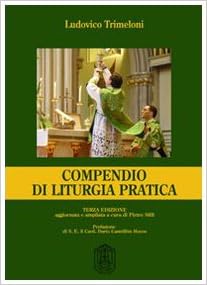
Since we Unreconstructed Ossified Manualists like manuals, we consult Trimeloni, (US HERE – UK HERE).

In the section on “Ceremonies of Mass, ch. I, “The Read Mass”, I. “The Celebrant”-  “In the sacristy” (p. 397 – my translation):

Use the footwear that clerics of the place are used to wearing publicly and wear the cassock.

I can’t bring myself to wear flip flops, golf shoes or crocs.   Sorry.

But wait!  There’s more.

In a footnote:

D. 3268, 3. [Cf. Naifa, Costume of the Prelates of the Catholic Church, Balitmore, 1925: “According to the Roman ceremonial, all clerics and those who serve in church, as cantors, sacristans, etc., ought to wear shoes with buckles (It. fibbie).  The buckle is of shiny steel for members of the inferior clergy and servers, in silver for priests, monks and prelates belonging to religious orders.  Gold and gilded silver are reserved for secular prelates.”

That means that I really should have shoes with buckles.  Right?

If someone wants to get me clerical shoes with silver buckles – silver, mind you, not just polished silver colored metal – I’m open to using them.   Maybe we should start a fund at Gammarelli: “For Use By Fr. Z”.  (They really need to update and offer gift cards, etc.)

I don’t feel obliged to use buckles.

However, I think that Tribe is right.

Let’s use our traditional items, as they were properly used back when.

Let’s just do it.  After all, in this age of mercy where laws don’t have meaning and all can discern for themselves what their state is (I’ve discerned in the internal forum that I’m now an Internal Forum Monsignor)… who is anyone to judge?

So, maybe I could put the detachable silver buckles on my normal winter footwear for Mass.

Silver buckles might spiff up my cadillacs.


Posted in ¡Hagan lío!, "How To..." - Practical Notes, ACTION ITEM!, Be The Maquis, Brick by Brick, Decorum, Hard-Identity Catholicism, Just Too Cool, Liturgy Science Theatre 3000, New Evangelization, Our Catholic Identity, Si vis pacem para bellum!, The future and our choices | Tagged
18 Comments

ASK FATHER: If I confess to watching porn, must I say it was homosexual porn?

From a reader…

QUAERITUR:

Father, recently the catechist at our parish said that, when making our confessions, we ought to mention anything that might aggravate or mitigate the gravity of our sins, so that the confessor can get a clearer idea of our culpability. I know that this is good practice, but is it necessary for making a valid confession? For example, if I wanted to confess to watching homosexual-themed pornography, could I just say “I watched pornography on one occasion”, or would I have to specifically say that the pornography was homosexual in nature?

First, the catechist at the parish is right to say that we should confess any circumstances which might aggravate or mitigate the gravity of sins.

For example, a man steals a loaf of bread.   On the one hand, he might be a well-off fellow who is perfectly able to buy it.  On the other hand, he is a poor man whose children are starving in the alley around the corner.  In both cases, a man stole bread.  Stealing is always wrong.  Circumstances change the gravity of the guilt of the sin committed.

Other circumstances include not having full use of will at the moment, because of fear or illness, etc.

Another example of why details can make a difference.  Say someone confesses needlessly belting a guy in the chops.  It wasn’t self-defense, he just did although insufficiently provoked. That’s sinful.  However, the guy he belted was not just any guy, he was a priest. The assaulter knew that his victim was a priest when he belted him.  That means that two sins were committed: the sin of the assault and the sin of sacrilege, because the person belted is a sacred person.  One act, but two sins must be confessed.

We must confess sins in kind and number and with necessary details.  These make a difference to the confessor.  These pieces of information tell the priest what sort of problems exist and what kind of counsel to give.  However, knowing and confessing in kind, number and significant details tells YOU, the penitent, what your principle problems are.  You can’t move forward if you don’t really know who you are.

Examination of conscience and confession of sins tells you who you are.

In the case you bring up, watching porn is sinful.  But, there is an essential element which must be confessed: it isn’t just porn, it is homosexual porn.  Homosexuality, by definition, involves unnatural, disordered appetites and inclinations.   Watching even homosexual porn of the opposite sex is an aggravating detail.  Watching homosexual porn of your same sex is worse yet.

Also, one occasion of doing this is bad.  If might just be a one-off, as it were.  An aberration (in more than one sense).  However, occasion after occasion across many confessions is a problem that must be addressed.

The devil is, literally, in these details.

Do not fear providing these details.

The priest has, by now, heard it all.  He is not going to freak out.  He is not going to tell anyone what you did.  He is probably going to be impressed by your courage.

And speaking of courage, the priest, learning that you are involved with homosexual porn, especially watching homosexual porn of your own sex, might be able to refer you to the excellent and helpful organization Courage.

Knowing ourselves and our principle faults, our vicious habits, etc., is the first step to making changes and striving for holiness.  Another indispensable element in amending our lives is the knowledge that we are going to suffer and the willingness to suffer when it comes.  When we say “NO!” to vicious appetites and temptations to sin in ways that are by now deeply ingrained, habitual, we will begin to suffer.  THAT’s the moment you must anticipate before hand.  Plan for it.  Recognize it for what it is.  Make a plan about how you are going to handle it.  Have a strategy to deal with it.  Commit yourself to a plan of action, for example.  Plan that when you say “NO!” to a temptation and you start to suffer you will go out to the garage and start scrubbing oil stains out of the concrete.  You will clean the gutters.  You will strip paint from the fence and repaint.  You will…. etc.

Be ready and willing to suffer and have a plan.

And, especially in the case of something like porn, really be tough on yourself.  It is horribly, diabolically addictive.

Maintain custody of the eyes.  Don’t look at what you must not look at.   The devil can really get to you through your eyes.  If this means getting rid of the computer, etc., that is what you must do.   I remember one young man telling me – outside of the confessional and in no way in the internal forum – that having a computer in his apartment was like having hot and cold running cocaine coming right at him.  He got rid of his computer in his dwelling and broke the vice.

And for any Jesuit homosexualist advocate who might be reading this:

Woe to the world because of scandals. For it must needs be that scandals come: but nevertheless woe to that man by whom the scandal cometh.  And if thy hand, or thy foot scandalize thee, cut it off, and cast it from thee. It is better for thee to go into life maimed or lame, than having two hands or two feet, to be cast into everlasting fire. And if thy eye scandalize thee, pluck it out, and cast it from thee. It is better for thee having one eye to enter into life, than having two eyes to be cast into hell fire.

Posted in SESSIUNCULA | Tagged , , , , , ,
10 Comments

ACTION ITEM! Petition against removal of historic Cross where Fr. Marquette died

I received this request from TFP. It is a good cause.

Liberals and atheists are now trying to bring down another historical cross. This one is particularly important to our American heritage.

The Father Marquette Memorial Cross in Ludington, Michigan, was erected at Ludington, Michigan, on the site where Father Jacques Marquette died. Father Marquette was a French missionary from the late seventeenth century who explored the Mississippi.  [Fr. Marquette is a monumentally important figure for the history of the region.  He deserves an appropriate monument.  Nothing is more appropriate than a Cross, in which name he worked, where he died.]

The large, white Cross has stood near Lake Michigan in Ludington for over half a century. And now atheists want it torn down!

Sign the petition urging the Pere Marquette Township to keep the Marquette Cross standing

According to reports:

An iconic West Michigan monument honoring Father “Pere” Jacques Marquette has come under fire recently, and now the Michigan Association of Civil Rights Activists is calling for the Christian cross to be removed.

“The cross is in a hilltop memorial park on a small peninsula in Pere Marquette Township. The peninsula separates Lake Michigan and Pere Marquette Lake, and the cross is visible from either side. It was erected in 1955 on the spot where Marquette reportedly died.”
(MLive.com)

How could anyone even conceive of taking down this important marker?

This is not only an attack on our American heritage but on Christian civilization.

Please sign our petition, telling the Pere Marquette Township the Father Marquette Cross must be allowed to remain

We must take a stand! We cannot allow our country’s links with Christianity to be destroyed.

Please take the time to sign our petition, asking the Township of Pere Marquette to let the Marquette Cross stand.

Posted in ACTION ITEM!, Si vis pacem para bellum!, The Coming Storm, The Drill, The future and our choices, The Last Acceptable Prejudice | Tagged ,
3 Comments

ASK FATHER: We want our children to have reverent Masses. Can we go to the SSPX chapel?

From a reader…

QUAERITUR:

We are in a desperate situation. We have looked very deeply into the matter, and feel very strongly that the Extraordinary Form of the Mass is the most reverent. We are morally accountable to bring our four beautiful children to the most reverent Mass possible. We live in a rural area, and the only Novus Ordo Masses within an hour driving distance are not reverent — they have liturgical abuses and other irreverent practices. There is a SSPX chapel 45 min. from our home which offers the Latin Mass twice per month. Is it permissible and prudent to go there twice per month? We have pleaded with our bishop and after years, have only been able to get the Latin Mass offered once per month in our diocese.

I have great respect and sympathy for parents who are trying to raise their children in today’s secular and today’s ecclesiastical environments.  What challenges you face, both from outside and – woe to us! – within the Church.  God is offering you great graces as you face the mounting trials of your state in life.

You have pretty much equal distances to drive, it seems.  You have to haul your family a hour each way, which is not insignificant.

The irreverence and abuses at the Novus Ordo Masses you mention, and your sense of responsibility to your children, could constitute a moral impossibility to go to that Novus Ordo only parish for Sunday Mass when there is an decent alternative.

The decent alternative presents itself twice a month in the SSPX chapel.

There is a great deal I don’t know about your situation.  For example, if the preaching at the Novus Ordo parish is sound, or if the preaching at the SSPX chapel is harsh or aimed with hostility against legitimate ecclesial authorities, etc.

All things being equal, however, I think that you can in good conscience go to the SSPX when Mass is offered there.  You fulfill your Sunday obligation in doing so.  You may receive Communion if you wish.  You can, in justice, contribute to the collection, since you are receiving a service from them.  You can go to confession to SSPX priests…. now.

That said, remember that even though step by step we all seem to be coming towards greater formal unity, you should not weaken your own unity with your local pastors, including your parish priest and your bishop.

When Mass is not offered at the SSPX chapel, you should go to your local parish.  All things being equal, your local parish is your default choice.

The SSPX chapel may present excellent Masses, preaching and catechesis, but you are still within the bounds of the official parish, which is something that an SSPX chapel cannot, by law, be.  The parish priest has the faculties and duties assigned by the local bishop.  Do not forget this when making choices about where to go for sacraments, etc.

I would double-down on your prayers and even fasting for the local pastor and for the bishop.

Continue respectfully to make your concerns known.  Keep every scrap of correspondence.

If there are serious abuses in the Mass in the official, Novus Ordo parish, then make them know to the bishop and, beyond him, the Congregation for Divine Worship in Rome.   You would need to send proofs of what you claim is happening, of course.  Also, having more than one person sending information to the bishop or to Rome is helpful.  You have the right to make your concerns know.  Review the whole of the document Redemptionis Sacramentum, especially the very end, where your rights and obligations are described.

Meanwhile, perhaps all those couples who are also raising children out there, and perhaps in a similar situation, might chime in with their own experiences… together with a promise of reciprocal prayers.

Posted in "How To..." - Practical Notes, ASK FATHER Question Box, Hard-Identity Catholicism, Liturgy Science Theatre 3000, SSPX, The Coming Storm, The future and our choices | Tagged ,
9 Comments

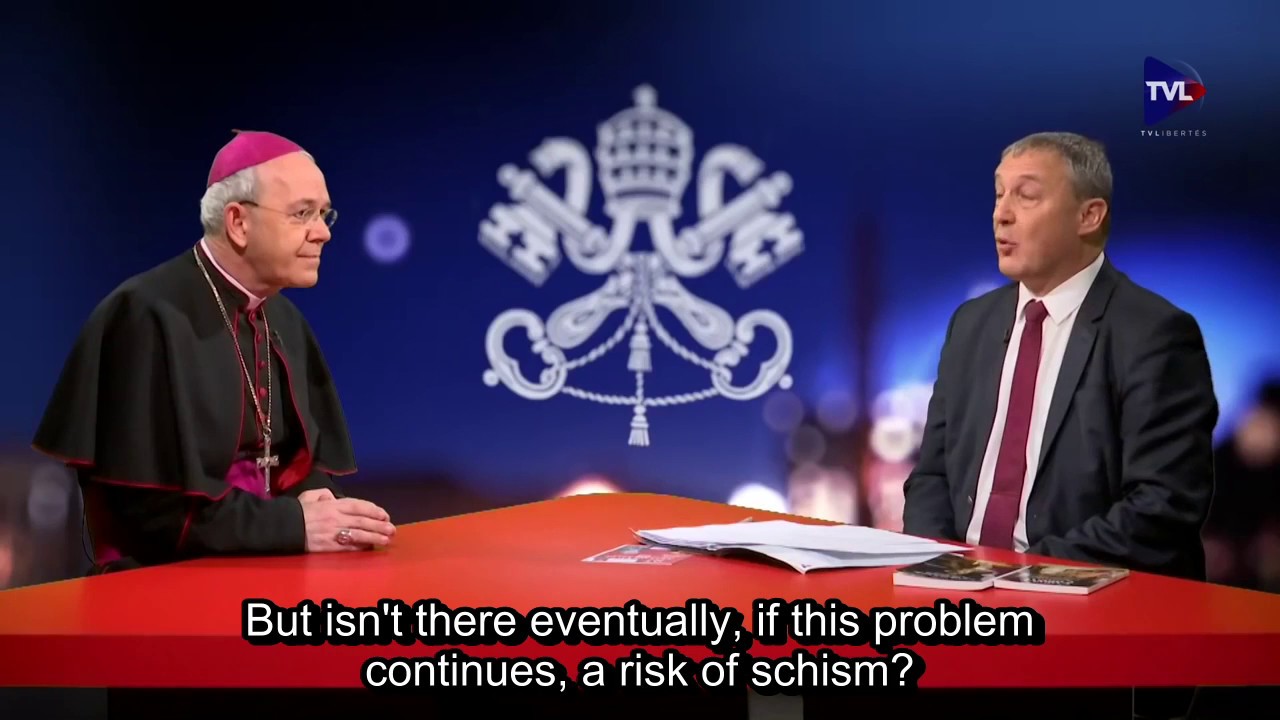
VIDEO Bp. Athanasius Schneider interview about “Amoris laetitia” Controversy

His Excellency, Bishop Athanasius Schneider, gave an interview on French TV about Pope Francis and the Amoris laetitia controversy that is tearing apart of the unity of the Church in many spheres.  The video is available.  There are English subtitles.

He hits hard those ecclesiastics who want a “Gospel without the sixth commandment”.

“They use tactics and evil means, such as “ruses, deceptions, masterful rhetoric and dialectics, and even the tactic of intimidation and moral violence in order to attain their goal of admitting so-called “remarried” divorces to Holy Communion” without the latter fulfilling the condition of living in perfect continence…”.

“It is not only a risk of schism, but a certain kind of schism already exists in the Church. … “We are witnessing today a strange form of schism. Externally, numerous ecclesiastics safeguard formal unity with the pope, at times for the good of their own career or out of a kind of papolatry. And at the same time they have broken their ties with Christ, the Truth, and with Christ, the true head of the Church. On the other hand there are ecclesiastics who are denounced as schismatics despite the fact they live in canonical peace with the pope and remain faithful to Christ, the Truth by assiduously promoting His Gospel of Truth. It is evident that those who are internally the true schismatics, in relation to Christ, make use of calumnies for the sole purpose of silencing the voice of Truth, by absurdly projecting their own state of internal schism on those ecclesiastics who, regardless of praise of rebuke, defend the divine truths. In fact, as Sacred Scripture says, the word of Divine Truth is not bound. Even if a number of high-ranking officials in the Church today temporarily obscure the truth of the doctrine of marriage and its perennial discipline, this doctrine and discipline will always remain unchangeable in the Church because the Church is not a human foundation, but a divine one.”

He compares the present controversy to the Arian controversy of the 4th c. Church.

YouTube thumbnailYouTube icon

UPDATE:

I just found another video with Bp. Schneider. He spoke at the “Catholic Identity Conference” last October 2017. Apparently the video was posted only yesterday, 13 Jan 2018. It only has 1530 views as I repost it, so it must be pretty recently added to YouTube. This is the same conference at which Ed Pentin gave his terrific talk. HERE

His theme: The crisis of faith in the world today.

YouTube thumbnailYouTube icon

Posted in Hard-Identity Catholicism, Our Catholic Identity, The Coming Storm, The Drill, The future and our choices | Tagged ,
3 Comments

ASK FATHER: Should I tell a noisy penitent that we can hear everything said in the confessional?

From a reader…

QUAERITUR:

There is a young lady who regularly takes a very long time in Confession (25-30 minutes, sometimes longer). She is not making a long confession, and it’s not the priest spending long amounts of time giving her counsel. It’s her repeatedly asking questions about what the priest says and just a whole lot of being loquacious (she’s very loquacious and it’s hard to get a word in if she’s part of a conversation). How do I know all this? She’s also very loud, so everything she says during that half hour is heard by anyone within a 20 foot radius of the confessional (which is pretty well sound resistant). The priest is of a more timid disposition and not going to say anything (if he can even get a word in). Is it ever appropriate for someone in line to knock on the door of the penitent and kindly let them know that everyone in line can hear what the person is saying, or to please wrap it up because the line up is growing exponentially? It’s so frustrating to know that it will take only a few minutes to make my confession, but I’ll be waiting in line for a half hour or longer because said person went straight for the confessional when they got into the church and I opted to Spiritually prepare for a minute beforehand.

Should you knock on the door?

No.  You should not.

However, you can tell the person afterward that people outside could hear everything she said.   Do NOT say what you heard.

You could, as you get into the confessional after that noisy penitent, tell the priest that you could hear everything.

It is the priest’s responsibility to handle the pace and length of the confession.  I wouldn’t get into that with the noisy penitent.

You might also – on another occasion – ask the priest to preach occasionally about how to make a good confession, or to put some instructions in bulletin and to make a pamphlet of some kind available.

And there are my 20 Tips.

Also, I will remind everyone reading this that overhearing something in someone else’s confession places an obligation on you.   You are not to reveal or talk about what you have overheard.  In a sense it is an extension of the Seal that binds the confessor.

The 1983 Code of Canon Law deals with this.

Can. 983 §1. The sacramental seal is inviolable; therefore it is absolutely forbidden for a confessor to betray in any way a penitent in words or in any manner and for any reason.

§2. The interpreter, if there is one, and all others who in any way have knowledge of sins from confession are also obliged to observe secrecy.

Can. 1388 §1. A confessor who directly violates the sacramental seal incurs a latae sententiae excommunication reserved to the Apostolic See; one who does so only indirectly is to be punished according to the gravity of the delict.

§2. An interpreter and the others mentioned in can. 983, §2 who violate the secret are to be punished with a just penalty, not excluding excommunication.

So, anyone who overhears the content of a confession cannot reveal what she has heard to anyone else.  Doing so could incur a censure, if the person is aware that it is wrong to reveal the content of a confession.

NB: A person who is genuinely unaware of the law and the gravity of the situation does not incur a penalty.  You have to know that it is wrong before you can incur the penalty.   This is another thing that priests should explain in their preaching and bulletin notes.

Some might wonder if, having overheard a person’s confession, it would violate the “seal” to go up to the person afterward and tell her that she could be heard.  Isn’t that a way of making use of information learned from someone else’s confession?  Answer: No, that would not violate the law about secrecy.  You would merely be acting on the fact of the volume of sound coming from the confessional, which anyone else nearby could hear, not the content of what was said.  Also, in no way would it be to the detriment of the noisy penitent to be so informed.  It would be a positive benefit so that she knew to correct her noisy practice in the future.  However, under no circumstances should you tell her what you overheard.

All necessary steps should be taken to preserve the secrecy of the confessional.

Confessionals should be adequately sound-proofed.  Penitents should be instructed where to wait for confession so that, over time, good practices take root.  Priests should preach about confession practices and remind people while making their confession to lower their voices if they are loud.  Confessors should help penitents not to ramble aimlessly.

And, it seems appropriate to add here:

GO TO CONFESSION!

Posted in "How To..." - Practical Notes, ASK FATHER Question Box, GO TO CONFESSION, Liturgy Science Theatre 3000 | Tagged , , , , ,
9 Comments

A false #missilethreat is NOTHING compared to this REAL DEATH THREAT

It’s 8:08 Saturday morning. You’ve slept in on a day off. Your phone has awakened you with a PING. With a measure of resentment you check The Precious™ for its message.

You read it once. And again. And – with the strange feeling that marks the arrival of adrenaline – again.

NOW WHAT?!?

How much time do you have? 15 minutes? 30 minutes? Where do you go? Do you try to call people? Go somewhere?

When did you last…

GO TO CONFESSION?

You realize that it has been a … how long? … long time, since you’ve been to confession and the memory of a bunch of things floods your mind.

NOW WHAT?!?

Unless you are across the street from the parish, you are pretty much out of luck.

What do you do?

Do you… start praying?  Say you’re sorry to God?

People develop habits of prayer and thought through their lives that don’t suddenly change in the face of a catastrophe.

We have to practice for dying, just as athletes and soldiers practice drill endlessly to win.

How many times have I written about a sudden and unprovided death?

We don’t know the day or the minute when we will go before our Judge. Whether it is a natural event like a storm or meteor, or a man-made event like a drunk driver, a nutjob with a rifle, or a ballistic missile, we just don’t know.

Avoid the trap of thinking that these things only happen to other people. YOU are other people. It’s always someone else… until it’s you.

So, examine your consciences and …

GO TO CONFESSION.

I would also add as a regular feature of your daily prayers that important petition in the Litany of Saints:

“A subitanea et improvisa morte… From a sudden and unprovided death, spare us O Lord.”

Sudden is one thing. Unprovided is another.

An “unprovided” death is a death without access to the last sacraments, especially absolution from a priest.

That’s a scary thought…. especially if you haven’t been to confession for a long time.

What happened with that false alarm in Hawaii was dramatic and pretty awful.

This post is NOT a false alarm.

You. ARE. Going. To. DIE.

When did you last go to confession?

Posted in "How To..." - Practical Notes, Global Killer Asteroid Questions, GO TO CONFESSION, Going Ballistic | Tagged , ,
7 Comments

Fr. Murray on EWTN with outstanding commentary on recent developments

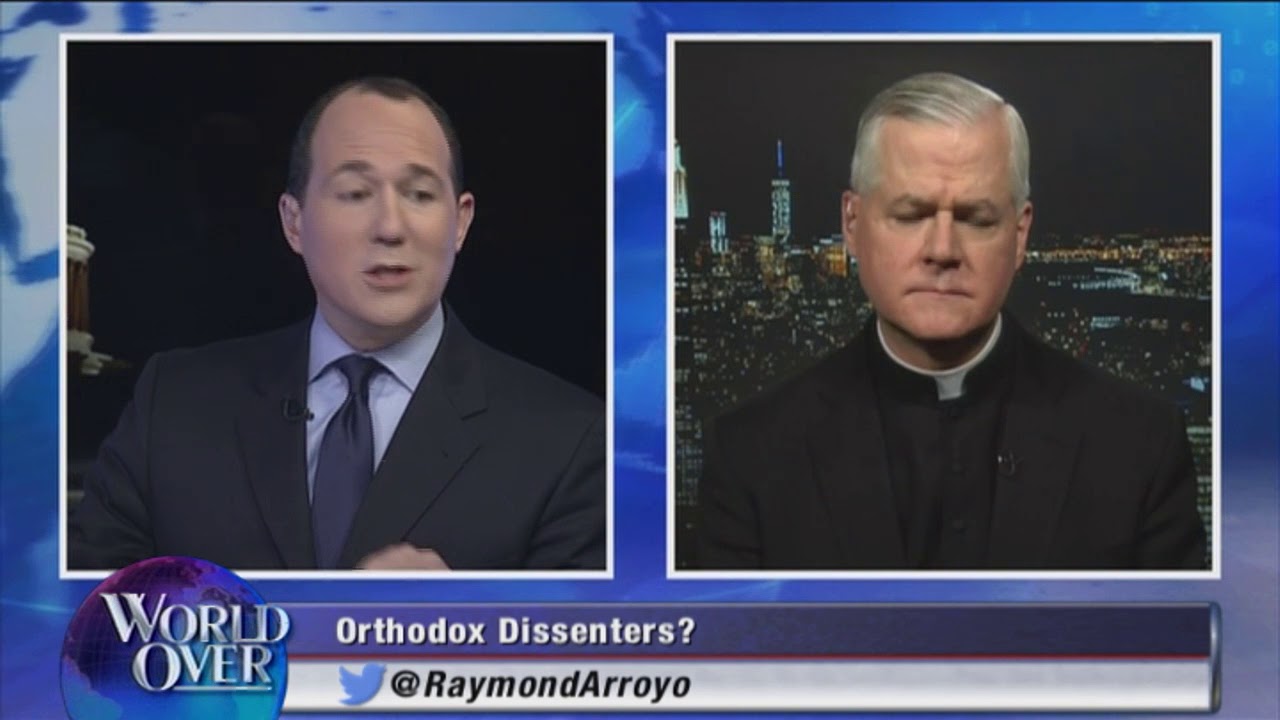
My friend Fr. Gerald Murray held the lone guest chair with Raymond Arroyo on EWTN the other night, and the video is now available.

Fr. Murray is no-nonsense.

YouTube thumbnailYouTube icon

Posted in ¡Hagan lío!, The Coming Storm, The Drill | Tagged
15 Comments

Wherein Fr. Z comments on a @RorateCaeli post about priests, permissions and exorcism prayers. Then @fatherz rants.

Dunstan 1 - Devil 0

Dunstan 1 – Devil 0

At Rorate there is a post especially for priests about the proper and improper use of the exorcism prayers in the older Rituale Romanum.  It’s a good service.

After providing images of a 2009 letter from the Pontifical Commission “Ecclesia Dei” with responses to questions  (back in the day we got answers to dubia), about deacons blessing with the older Rituale (sort of important, but … not really), they got down to the far more important issue: the danger to priests (or others) which can result from using the restricted exorcism prayers without the proper permission.

The Rorate post adds a anonymous (alas) note about how sins and playing with things like oujia boards can open the door to entrance by demons.   The writer correctly states – and this is accurate and salutary – that demons are legalistic.  Therefore, if a priest uses these restricted prayers without permission, he could be opening the door to the demons attacking him!   I often warn lay people in these electronic pages to avoid getting at all into these matters, these texts.  Avoid them!  If even a priest – having the character imposed by orders – without a permission can get into trouble, how much more lay people?

Some explanation is in order:

The traditional rite of exorcism is found in the traditional Rituale Romanum.

Summorum Pontificum 9, §1 allows the use of the Ritual in force in 1962, that is, the 1952 edition, which was the last official edition prior to 1962. Universae Ecclesiae 35, a document explaining the implementation of SP, says that the Ritual can be used in its entirety. That means that the rites for Exorcism can be used.  HOWEVER… these rites were restricted to bishops and those to priests to whom the ordinary gave permission.  They still are.  Always have been.

The rites of exorcism are found in Title XI of the 1952 Rituale. Title XI is in 3 chapters.
1. De exorcizandis obsessis a daemonio – An introductory chapter which explains exorcisms, etc. It doesn’t contain rites of exorcism.
2. Ritus exorcizandi obsessos a daemonio – This rite may be pronounced only by bishops and and by priests who have authorization from the Ordinary (keep in mind that that are different kinds of “ordinaries” – a Vicar General is an “Ordinary”). The rite includes the litany, long prayers with signs of the Cross, readings from Scripture, the Athanasian Creed, psalms, etc.  If I wanted to drive the devil out of some Jesuit, I would use this prayer, with the permission of the local bishop or ordinary.
3. Exorcismus in satanam et angelos apostaticos – This prayer – for driving the infesting enemy from people and from places – can be used by bishops and by priests who have authorization from the Ordinary. It consists of a prayer to St. Michael, a couple of exorcism prayers, etc.  For example, if I wanted to exorcise the offices of the Fishwrap I would use this prayer with permission from the local bishop or vicar general (unless the bishop restricted this to himself in KC).

In each case, a priest must have permission.  Any bishop can use them pretty much anywhere.

It was very good that Rorate posted on this.  Hopefully priests will read the post and take it seriously.  Dealing with demons is not a game of bean bag.   They are angelic beings, restrained in large part by God, but angelic nonetheless.

The Rorate post’s comment, however, may go astray on a point.   The writer seems to imply that the 2009 PCED letter (the “protocol”) might have changed something.  After commenting that some priest used the Ch. 3 of Title XI with good effects for some time apparently without specific permission, and that that was recommended in a book which had an imprimatur by Card. Pell, (emphases added):

this protocol makes it clear that it is now unquestionably at least a material disobedience each and every time any priest in the world uses this prayer without the proper permissions. And certainly every devil in the world is well aware of this.”

This is a small matter, but Card. Pell’s book couldn’t have given any permission to use Ch. 3 and I don’t believe there was ever a question about whether or not a priest could use ch. 3 without permission.  If Summorum Pontificum gave permission to use the entire Rituale, it did not thereby remove the restrictions on exorcisms.

Therefore, the 2009 PCED letter did not once again place restrictions on the use of those prayers.  The restrictions were always there.  Period.  It was always wrong and even dangerous for the aforementioned priest to use either ch. 2 or 3 without the permission of the ordinary, before SP and after.

That said, it is true that demons know the law and that they are legalistic.   That’s a good point in the Rorate post.  This is one of the reasons why the Church’s traditional exorcism prayers are seemingly repetitive when breaking demonic bonds.  Demons claim rights to be where they are, because they were invoked or invited by curses or “spells” or through objects and sins, etc.  Once there, they attach like leeches and get legalistic.  The prayers of the Church systematically break their claims and eradicate them and expel them.

And they really hate Latin.

Demons get so legalistic that they will mock priests whose Latin isn’t very good.  That’s why I made this post HERE.

Folks, I’m not making this stuff up.

If after Vatican II the Church’s shepherds stopped talking about sin and its consequences, that doesn’t mean that sin stopped having consequences.

Demons can infest places and things and people like vermin or ringworm or parasites and they are decidedly unhelpful for everyone around.

Don’t kid yourselves.   This is one reason why in our traditional practices as Catholics we use lots of sacramentals, we say prayers before meals asking God to bless our food, etc.  We had – have – blessings for everyday things, tools, foods, common and important places (homes or perhaps sick rooms).  We have blessings and rites for feasts and changes of seasons.  All these practices wove us as individuals into the rich fabric of the Church’s life in the practice of the virtue of religious, and braided us all together in our rites and our identity together with our forebears and descendants.

We are our rites!  Change them, drop them, denigrate them… there are consequences.

Holy Church is the greatest expert on humanity there has every been.  Through centuries of experience she developed what is good for us and WHAT WORKED.  These things can slowly change and shift over time, but they do so slowly.  Human beings don’t really change over the millennia.  Circumstances do, but even then not too much.  So, when the Church figured it out, making sudden changes to… everything, I guess, was consequential.

In the creeds we recite, we say that we believe in things that are “invisible”.  That means the angelic realm, with its good and holy angels who are our friends and guardians as we as the fallen angels, who are demons and who desire our spiritual isolation from God and ultimate torment.  There are hierarchies of angels, good and bad.  Some are vastly more powerful than others, each one being his own species, as different from each other as a giraffe from a spiny hedgehog.  But all angels transcend our human nature.  Thanks be to God we have our Church with sacramentals and even more mighty sacraments.  We have angels and the restraining will of God over all the forces of Hell.

This is why I never fool around with rites for blessings and sacramentals.  I use the older Rituale, with its permitted exorcisms in Latin and clear intentions.

Finally, listen up!

The rite of exorcism is just a sacramental.   Confession and the Eucharist are sacraments and are immensely powerful.   If you are having problems of some kind and suspect demonic involvement, make plans to make a good Holy Communion, examine your conscience and…

GO TO CONFESSION!

UPDATE:

Some priests have written to ask for the aforementioned recordings. One of them wrote,

I am a Priest of ___ I have just been appointed Exorcist for ___. I offer the TLM regularly but but Latin doesn’t come easily for me. I would appreciate you sending me your recordings. I intend using the old ritual in this ministry. As one priestly wag commented: “The only reason the demon would leave when the new prayers are used is out of boredom.”

LOL! Thanks, Father, for the chuckle.

Posted in GO TO CONFESSION, Hard-Identity Catholicism, Liturgy Science Theatre 3000, Si vis pacem para bellum!, The Drill, Wherein Fr. Z Rants | Tagged , , ,
21 Comments