 The National Sodomitical Reporter (aka Fishwrap) is at it again with a particularly dreadful defense of sodomy.
While not many people will bother to read it (it’s really long and rather boring), it contains landmines.
From the title – and from its length – you know from the get go that the content that follows is going to be a slippery twisting of Catholic moral teaching:
The scandal may be in not holding funerals for gay spouses, theologians say
Written by … Michael G. Lawler is the emeritus Amelia and Emil Graff Professor of Catholic Theology at [Jesuit run] Creighton University. He is married to a woman and has several children. Todd A. Salzman is a professor of theology at Creighton University.
They are the co-authors of The Sexual Person: Toward a Renewed Catholic Anthropology. ([Jesuit run] Georgetown University Press).
BTW.. when you see the word “toward” in a title of an academic book, be on your guard.
Their sex book, was sharply criticized by the USCCB’s Doctrinal Committee chaired by then-Archbishop Donald Wuerl of Washington DC. The committee issued a 24-page statement which faulted Lawler and Salzman for their treatment both of scripture and of natural law. Their approach, it said, represents “a radical departure from the Catholic theological tradition.” Story in the Fishwrap.
According to these guys, “nature” is a social construct.
And “the only thing Lawler and Salzman leave intact about natural law is the name.”
So, you can guess that this new Fishwrap piece is a full-throated defense of sodomy.
They do so through an attack on the Code of Canon Law, can. 1184 that requires the denial of funerals to manifest sinners unless they had shown some sign of repentance.
Can. 1184 §1. Unless they gave some signs of repentance before death, the following must be deprived of ecclesiastical funerals:
1/ notorious apostates, heretics, and schismatics; []
2/ those who chose the cremation of their bodies for reasons contrary to Christian faith;
3/ other manifest sinners who cannot be granted ecclesiastical funerals without public scandal of the faithful. [This would include homosexuals who publicly marry or who make known their relationship widely, etc.]
§2. If any doubt occurs, the local ordinary is to be consulted, and his judgment must be followed.
Can. 1185 Any funeral Mass must also be denied a person who is excluded from ecclesiastical funerals.
They start with dog-whistle calls to attack against upholders of the law, Bp. Paprocki of Springfield and Bp. Morlino of Madison.
They proffer a long, distracting fan-dance about what scandal is, with definitions. But they add:
“What is not clear, however, and what is not defined, is what constitutes scandal and how are claims of scandal to be justified.”
See what they are at? “It’s not clear!”
Going on:
While the two bishops [Paprocki and Morlino] assert that permitting a church funeral for a deceased same-sex spouse would give scandal for seeming to condone same-sex relationships, other Catholics assert that denying a church funeral to a deceased same-sex spouse would give scandal for seeming to justify discrimination against homosexuals. Which claim to scandal is justified? [Very clever. They want you to buy that these view have equal standing.]
Scandal is a personal moral judgment that the immoral behavior or attitude of one person leads another to do evil, and is therefore, we suggest, in the eye of the beholder. We ask, however, are there any objective criteria for determining whether or not the beholder is making an accurate moral judgment of an attitude or behavior that would cause him scandal and lead him to do evil?
The assertion that an attitude or behavior would cause “public scandal” is precisely that, an assertion, not an ethical argument and, like any assertion of right or wrong, it needs to be justified by ethical argument. [As if everyone doesn’t know what the argument is.] In the following we argue, in three points, that there are ethical and canonical guidelines for justifying claims to scandal and, further, that public scandal in the case under consideration is more likely to be caused by the bishops’ attitude and behavior than with the permitting of a church funeral to a deceased same-sex spouse.
Here’s a good one about “attitude”:
The catechism’s definition of scandal rightly distinguishes between an attitude and a behavior. This is a common distinction made in Catholic theological ethics, between the goodness or badness of a moral agent, her attitude, disposition or character, and the rightness or wrongness of a behavior or act. [Keep going.]
Why the distinction? Because an attitude and a behavior do not always coincide morally. The classic example is giving alms (a morally right behavior) for vainglory (a morally bad attitude). We morally evaluate behavior on how it impacts relationships and human dignity. [Would that they would admit that homosexual behavior violates human dignity.] In the case of almsgiving everything else being equal, it improves human dignity. The act, therefore, is right. Vainglory, however, is a morally bad attitude that, according to Thomas Aquinas, makes the act morally bad but does not necessarily make the behavior wrong. A bad attitude, being unmerciful or uncharitable, for instance, always makes a right or wrong behavior morally bad. A wrong behavior, however, engaging in a homosexual act, for instance, is not always morally bad if it is done with a good attitude. [Uh huh.]
There’s more… watch the next step.
Behavior norms, however, though they may be absolute like the norm prohibiting homosexual behavior, [it just one of those “norms”] do not necessarily make a behavior morally bad. Depending on the attitude, as well as a well-informed conscience, a wrong behavior may not be morally bad and may even be morally good. If the behavior is not morally bad, it follows that there is no grave sin and, therefore, no legitimate public scandal.
See? Wasn’t that easy? And they tossed that “well-informed conscience” as it it meant the same as “well-formed” conscience, that is, in line with the Church’s teachings.
The argument:
If homosexuals are well-informed – and who isn’t informed about the Church’s teaching these days? – and if you have the right “attitude”, then inseminating another man’s colon isn’t a problem. Hey! It could be morally good!
Next, if it’s morally good (and they have established that as a premise you are supposed to accept), then their acts aren’t a scandal.
Next, if their acts aren’t scandalous, they can’t be denied a funeral on the basis of scandal!
See?
Problem:
Maybe insemination of colons isn’t scandal to the well-informed homosexuals who commit the acts – but those acts are scandalous to right-thinking people who adhere to the truth of natural law and the teachings of the Church which condemn such acts.
That’s the sort of whopper that probably got their book condemned.
Then go pull out the numbers card saying that “the majority of U.S. Catholics (67 percent) support same-sex marriage”.
So the hell what? After decades of simply dreadful catechesis, I’ll bet that 67% of Catholics can’t tell you what a sacrament is. After decades of simply dreadful basic education, I’ll bet that 67% percent of young people can’t read a single page of text with comprehension or balance their checkbook… if they had checkbooks.
Furthermore it is a non sequitur. How is it a good thing to give tacit approval to same-sex acts by giving openly homosexual, active, public sinners (marriage is public) funerals and thus contribute to that number going for 67% to 68%. Shouldn’t that number be going the down, and not up?
And they wanted “objective criteria” before. I’d say that the numbers are objective enough.
Later they get into the morass surrounding “grave” sin and “mortal” sin, as if they are different.
I’ll quote from John Paul II’s Post-Synodal Apostolic Exhortation Reconciliatio et paenitentia. And we all know that no one ever quibble with a single word or footnote in any Post-Synodal Apostolic Exhortation. Nosirreee! Read carefully:
During the synod assembly some fathers proposed a threefold distinction of sins, classifying them as venial, grave and mortal. This threefold distinction might illustrate the fact that there is a scale of seriousness among grave sins. But it still remains true that the essential and decisive distinction is between sin which destroys charity and sin which does not kill the supernatural life: There is no middle way between life and death.
Likewise, care will have to be taken not to reduce mortal sin to an act of ” fundamental option”-as is commonly said today-against God, intending thereby an explicit and formal contempt for God or neighbor. For mortal sin exists also when a person knowingly and willingly, for whatever reason, chooses something gravely disordered. [even if your conscience is “well-informed”?!?] In fact, such a choice already includes contempt for the divine law, a rejection of God’s love for humanity and the whole of creation; the person turns away from God and loses charity. Thus the fundamental orientation can be radically changed by individual acts. Clearly there can occur situations which are very complex and obscure from a psychological viewpoint and which have an influence on the sinner’s subjective culpability. But from a consideration of the psychological sphere one cannot proceed to the construction of a theological category, which is what the “fundamental option” precisely is, understanding it in such a way that it objectively changes or casts doubt upon the traditional concept of mortal sin.
[NB:] While every sincere and prudent attempt to clarify the psychological and theological mystery of sin is to be valued, the church nevertheless has a duty to remind all scholars in this field of the need to be faithful to the word of God that teaches us also about sin. She likewise has to remind them of the risk of contributing to a further weakening of the sense of sin in the modern world.
That’s what these guys and the National Sodomitic Reporter are doing.
They are weakening the sense of sin in the modern world.
That’s called SCANDAL.
That’s why faithful bishops uphold the law and the Church’s teachings: to avoid SCANDAL.
That’s why faithless clerics and agents of the demonic in the lib catholic press “struggle” against these bishops much as the Red Guards did in the Chinese Cultural Revolution.
The authors go one to make a mess of the “primacy of conscience” and, this time “well-formed” conscience with the grand peroration…
Understanding Catholic teaching on the authority of conscience, Pope Francis has correctly stated that we, that is, Catholic pastors and faithful alike, “find it hard to make room for the consciences of the faithful, who very often respond as best they can to the Gospel amid their limitations.”
We have been called, he adds, “to form consciences, not to replace them” (Amoris Laetitia, 37).
Once again, ladies and gentlemen, Amoris laetitia.
That phrase is trotted out to justify anything.
We might ask, how many Catholics out there know their basics and have a properly-formed, well-formed conscience?
Do you see the creepy mess presented in the Fishwrap?
It’s all for for sake of the advance of sodomy and, eventually, lowering the age of consent.

 Two stories. Both alarming.


 From a reader…
 Back in December,
  From a reader…
 The
The  My inbox is being pelted with a story that some Armenian Orthodox bishop in Tehran “ordained” a female deacon. For example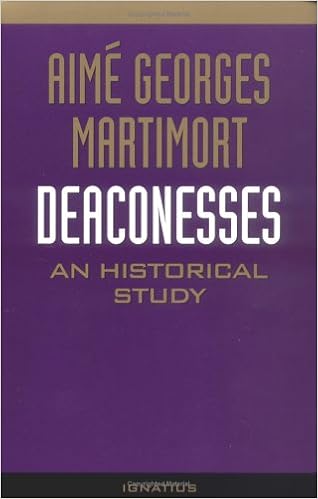





 TonyB on Daily Rome Shot 1646: We have to move on.: “I was very angry when my sister began getting rid of Mom’s clothes, but it had to be done. I…”






























