ASK FATHER: TLM for 25th Wedding Anniversary

Screen Shot 2014-12-15 at 10.55.52From a reader…

QUAERITUR:

My wife and I will be celebrating our 25th wedding anniversary this coming year.  We are regular attendees of an Extraordinary Form Mass at a local oratory dedicated to the same.  We are planning some sort of celebration for the occasion, but would like to start of with an appropriate Mass.  Are you familiar with any options for an Extraordinary Form Mass, preferably a High Mass, for the celebration of a wedding anniversary?

If the calendar permits, for your 25th and your 50th there can be a Votive Mass of the Trinity or the Blessed Virgin Mary with additional prayers “Pro gratiarum actione“.

It can be Low Mass, Sung Mass, or Solemn Mass.

After Mass there can be a blessing, found in the Rituale Romanum.

There are rubrics for this in the Roman Missal in the section on Votive Masses. Ask your local priest about this.

Posted in "How To..." - Practical Notes, ASK FATHER Question Box, One Man & One Woman, Our Catholic Identity |
3 Comments

“One of the great papist characters in modern fiction”

At the UK’s best Catholic weekly, the Catholic Herald, there is a fun piece about books I often mention here, the Aubrey/Maturin series by Patrick O’Brian, who would be 100 years old this year.

Which I would that he had lived to 100, so that we could have more tales of the nautical duo!

The Complete Aubrey/Maturin Novels (Vol. 5 volumes) (Aubrey/Maturin Novels)  UK link  HERE

Here is the piece, which is not available online. You can, however, subscribe to the digital version of the weekly.

The ‘reptilian’ Catholic who misses nothing

By Mark Benbow

The quick-witted Stephen Maturin is one of the great papist characters in modern fiction. His faith is so vivid you’d be forgiven for thinking that his creator was himself a Catholic

Dr Stephen Maturin is an unlikely Catholic hero. He is a ship’s doctor during the Napoleonic Wars. Half Catalan, half Irish, he is “reptilian” in appearance, casting a suspicious eye on everyone he meets. He is short, ugly and a spy – for the British government, fortunately, since nothing escapes him.
Maturin is the junior partner in one of
the great double acts in British fiction: the Aubrey-Maturin seafaring novels by Patrick O’Brian, who was born 100 years ago. Maturin’s surreptitious Catholicism is a theme in many of the 20 novels, beginning with Master and Commander, which was published in 1969 but acquired cult status only in the 1990s. O’Brian himself, though extremely reticent about his past, hinted that, despite his refined English voice and old-fashioned snobbery, he was an Irish Catholic from Dublin.
Perhaps not surprisingly, the Aubrey-Maturin series is much loved by many Catholics, who relish the dynamic between Captain Jack Aubrey, brave, impulsive and naïve, and the dry wit of his papist confidant. O’Brian plunges his readers into the life of the sea, with few concessions to their ignorance of nautical jargon (except when Aubrey is explaining things to the land-lubber Maturin). Some of the writing is beautiful, as in this excerpt from The Surgeon’s Mate, which takes Aubrey and Maturin from the fogs of Novia Scotia to a French jail:

“There,” cried Stephen when Jack appeared in the frail topgallant-shrouds, “are you not amazed?” He pointed cautiously with one finger and Jack looked out to the south-west. At this height they were above the low blanket of fog that covered the sea: clear sky above, no water below; no deck even, but a smooth layer of white mist, sharply cut off from the clean air; and ahead, on the starboard bow and on the starboard beam the surface of the soft, opaque whiteness was pierced by an infinity of masts, all striking up from this unearthly ground into a sky without a cloud, a sky that might have belonged to an entirely different world.
“Are you not amazed?” he said again.

If you do not know what “topgallant-shrouds” are, then buy a nautical handbook (as some devotees do). O’Brian takes pleasure in meticulous accuracy, and not just in his accounts of naval warfare. The early 19th century was a time of religious change in England. Catholics fell under suspicion as Britain went to war with France again – and, indeed, the Benedictine-educated Maturin was a supporter of the French Revolution until the Terror and the subsequent tyranny of Bonaparte. Yet we were also on the verge of Catholic Emancipation: papists moved in elevated social circles and O’Brian expertly captures the half-surreptitious, half-proud spirit of Maturin’s Catholicism.

In Fortune of War, set in 1812, Maturin is apprehended by the Americans in Boston and attends Mass during his captivity:

The priest was already at the altar by the time they reached the obscure chapel in a side-alley, and crept into the enormously evocative smell of old incense. There followed an interval on a completely different plane of being: with the familiar ancient words around him, always the same, in whatever country he had ever been (though now uttered in a broad Munster Latin), he lived free of time or geography, and he might have walked out, a boy, into the streets of Barcelona white in the sun, or
into those of Dublin under the soft rain.

The reference to the old Mass will have appealed to one of O’Brian’s biggest fans, the traditionalist priest-blogger Fr John Zuhlsdorf, who in one post seems to take mischievous delight in the unflattering portrayal of the Jesuits as “[making] a sad nuisance of themselves again, turning out atheists from the schools by the score”.

Catholic readers should be warned, however, that these bracing, colourful and cluttered novels were written by a very strange and dishonest man. Patrick O’Brian was not Irish, not Catholic and not called Patrick O’Brian. Shortly before his death in 2000, the BBC revealed that he was born Richard Russ, the son of a doctor from Chalfont St Peter, Buckinghamshire. He had changed his name after an unhappy first marriage and probably deceived people into thinking that he was a spy during the war (he was actually an ambulance driver). His faith was as fictional as Maturin’s. But don’t let that put you off. The books, if you like that sort of thing, are terrific.

Which terrific ain’t in it, as Preserved Killick would say.

Posted in O'Brian Tags, Preserved Killick | Tagged , , ,
17 Comments

ASK FATHER: Mistake about minister of Sacrament of Matrimony and validity

From a reader…

QUAERITUR:

When making vows at a Catholic Wedding in a Catholic Church if a Groom genuinly beleives that the officiating priest at a wedding is the minister of the Sacrement of Matromony, and not the bride and groom (as the Chuch teaches), is it possible that the groom would \ may lack the intention to do what the Catholic Church dose rendering the marriage null and void in all but Civil Law ?

One need not be fully aware of the profundity of one’s own actions for those actions to have effect.

If Bob consents to marry Betty, but Bob does not fully understand the Church’s theology of marriage, all things being equal, he does, in fact, marry Betty.

The Church’s understanding is that the average 14 year old female, and the average 16 year old male has the mental wherewithal to consent validly to marriage.  I will add that perhaps the Church is a bit optimistic in this matter, given my conversations with young people.

Bishops Conferences have the right to set a higher minimum age, taking into consideration the cultural situation of the country.  However, the US Bishops have not done so… yet.

Failure to understand, precisely, the sacramental efficacy of one’s consent does not render that consent invalid.  Failure to grasp that the priest is not the minister does not render consent invalid.

Posted in "How To..." - Practical Notes, ASK FATHER Question Box, Liturgy Science Theatre 3000, One Man & One Woman | Tagged , , , ,
27 Comments

Succisa virescit: Another parish church reborn after destruction

The other day I posted about the rebuilding of a little parish church which had burned a few years ago on Christmas Eve.  The rebuilding was quite the success.  E cineribus resurgit.

I see now that another parish church, destroyed – 47 years to the day that it had been dedicated – in the horrible tornados that struck Joplin, MO some time ago, has been rebuild as well.  Rebuilt and significantly amplified. I wrote about that parish HERE

And now… from the Joplin Globe:


Friends, it is possible to build better than we have been building for the last few decades.  It really is.

I congratulate the parish on their new church.

Succisa virescit.

Posted in "How To..." - Practical Notes, Fr. Z KUDOS, Just Too Cool | Tagged , ,
15 Comments

Nota bene: Apostolic Visitation of US sisters and CDF scrutiny of LCWR are NOT the same

There is some speculation about what may be said on 16 December in Rome about the Apostolic Visitation that was conducted of communities of women religious in these USA by the Congregation for Institutes of Consecrated Life and Societies of Apostolic Life (aka Congregation for Religious).   Some suggest (hopefully, even triumphantly) that a rosy picture, or at least not a black picture, will be painted of religious life in female institutes and orders.  Or, perhaps, there will be the usual positive comments about the many “fruits”, just like all the “fruits” we have obviously been granted since the Second Vatican Council.  Then, there could be a small bite of the lip, tilt of the head, and lift of the hand, while, with furrowed brow someone says, even with all the “fruits”, there are points to work on (like the fact that most communities are going to be extinct in 20 years).

Whatever the outcome, whatever the statements, be careful not to fall into a trap.  Don’t let media outlets lead you astray.  Don’t let, especially liberal catholic commentators blow smoke into your eyes.

Do not conflate – as so often happens – the Visitation of the communities of women religious and the Congregation for the Doctrine of the Faith’s scrutiny of the LCWR.   These are separate issues and actions.  The exoneration or praise of or even criticism that might come from the report on the Visitation, is NOT the same as what the CDF is doing in examining the formation and spirituality of the LCWR.

But watch.  Some will say, “Look! The Pope himself (even though it’s the Congregation) has said the nuns of the LCWR are groovy! So, everyone now has to listen to the Nuns on the Bus!”   No. It will be the Congregation and it won’t concern the CDF and the LCWR, and the Nuns on the Bus are yet another group (though the Venn Diagrams start to overlap heavily).

Posted in The Drill, Women Religious | Tagged , , , ,
6 Comments

My View For Awhile: last trip edition

Off again, hopefully for the last trip of the calendar year!

IMG_4256.JPG

And boarded…

IMG_4257.JPG

I’m reading Peter Kwasniewski’s new book. HERE

IMG_4258.JPG

UPDATE:

Upgraded.

IMG_4260.JPG

I’m reminded of the big band song from WWII. “You’re 1-A in the Army, but you’re A-1 in my heart!”

UPDATE:

The (Delta) screen is promising free text messaging for T-Mobile customers. Given that and the far better overseas data rates, I’m think I’ll explore switching.

Posted in On the road, What Fr. Z is up to |
6 Comments

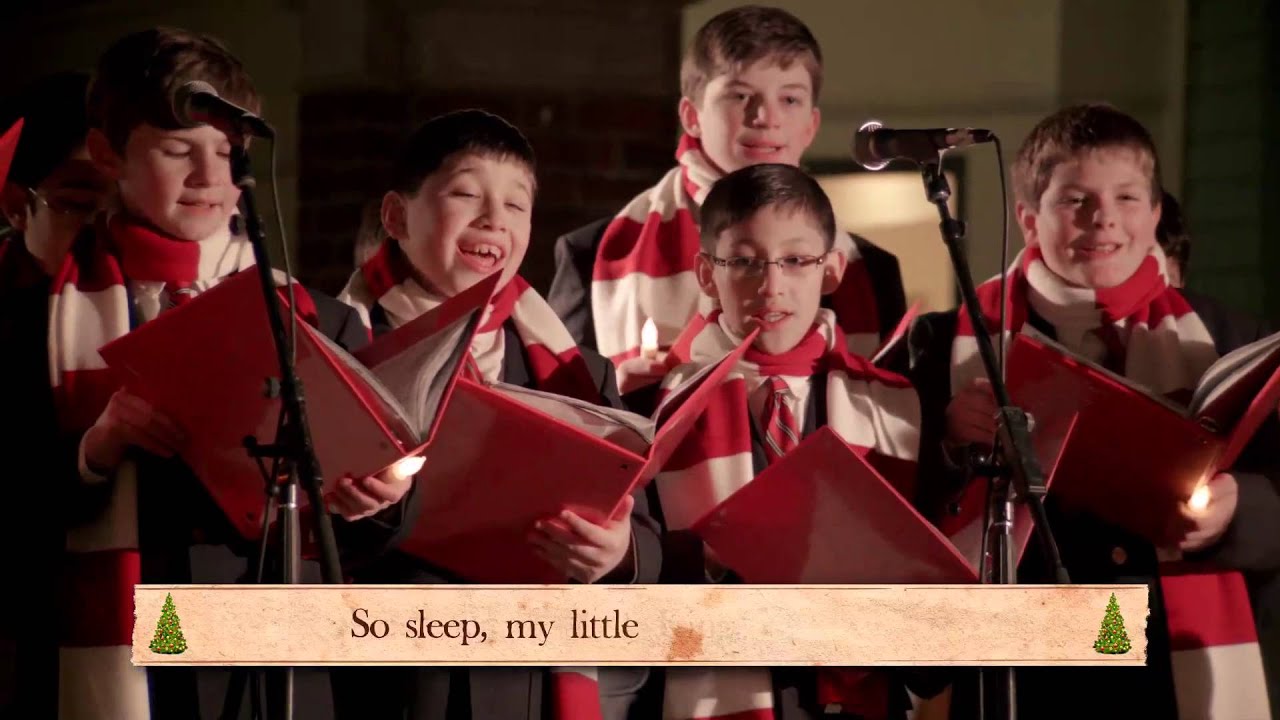
CD of beautiful Christmas music – VIDEO

I told you about the great new Christmas music CD from the only Catholic boy’s choir school in these USA, St. Paul’s near Harvard University and posted a video about the choir.  HERE

The Christmas In Harvard Square.   It is available also in MP3.

UK link HERE

There is another video about the choir.

YouTube thumbnailYouTube icon

It’s not too late to order!

Posted in The Campus Telephone Pole | Tagged ,
3 Comments

ASK FATHER: Will I have my pets again in heaven?

halo dog

QUAERITUR:

People have been asking me: Are there animal in heaven?  Will I have my pets in heaven?

This has probably been stirred up by something Pope Francis reputedly said recently in the press  (as it turns out, it was false reporting, but here goes):

“One day, we will see our animals again in the eternity of Christ. Paradise is open to all of God’s creatures.”

First and foremost, this was not – good grief… do I have to write this? – a definitive statement.

The Roman Pontiff does not teach definitively, or even seriously, through interviews with journalists of any country, much less with the Italian media.

So, we can and should simply draw a line through this whole thing.

That said, animals, “brute beasts”, do not have immortal souls in the way human beings do. Do they have souls? Yes. They have their animal souls. Can they feel fear, etc? Of course they can. That doesn’t make their souls immortal. They are not proportioned to the consideration of eternal things, as human souls are.  We have our souls directly from God with no intermediary.  As St. Thomas Aquinas explains, and I think he is right, God must somehow be involved with the creation of animal souls, but they seems to have their souls through their bodies rather than directly from God.  When animals die, their souls die with them.

Could there be critters in heaven?

I suppose one way to look at it is this: If, for some reason, our eternal happiness were somehow dependent on the presence of critters in life the come, then I suppose there could be critters.

However, in the Beatific Vision, in seeing God, we will not need any created thing for our happiness. That’s pretty clear. So, there is no need for critters in heaven.  Who knows, but that leads me to think that there will not be critters around us as we contemplate the Holy Trinity in communion with the Holy Angels and each other.  Why would we?

Animals don’t have immortal souls. They don’t do things that are meritorious in the way we can. They don’t sin in the way we do. They don’t need a Savior.

That said, at the end of things Christ will submit all of creation to the Father so that God might be all in all. I have no idea what that means in regard to critters. I suppose we will see in that moment how critters fit into God’s plan for us.

In our Judgment we shall certainly be judged according to how well we carried out our role as stewards of creation. We were given all of material creation for our proper use. We mustn’t abuse critters. We can use them, but properly. If we consciously misuse them, we sin, either venially or mortally.

That said, I hope we will still be able to have steak and Cabernet.

But, let’s settle down about this and not get excited or put reason aside in favor of sentimentality. It isn’t that important.

Finally… think about this for while:

If pets can go to heaven, they can also go to hell.

Posted in "How To..." - Practical Notes, ASK FATHER Question Box, Four Last Things, Francis | Tagged , , ,
98 Comments

Congratulations to a long-time participant and commentator for his ORDINATION!

Today in the Diocese of Marquette the local bishop is ordaining transitional deacons including a long-time participant here and frequent commentator, now Rev. Mr. Tim Ferguson!

You know him also at the Official Parodohymnodist of this blog, famous for the lyrics of “Liturgical Blue” and the smash hits of Zuhlio.

I am sure the entire readership will join me in congratulating the diocese, the bishop and Rev. Mr. Ferguson.

Rev Mr Tim Ferguson

YouTube thumbnailYouTube icon

Posted in Fr. Z KUDOS, Just Too Cool, Non Nobis and Te Deum | Tagged
22 Comments

WDTPRS 3rd Sunday of Advent – “the childlike dash towards the long-desired thing”

Rose vestments from the days of Fr. Finigan in Blackfen. Then came the regime change….

We are coming to the 3rd Sunday of Advent, also nicknamed Gaudete…. the plural imperative of gaudeo, “Rejoice!”. This Sunday there is a relaxation of the penitential aspect of Advent.

Yes, Advent is a penitential time, though not so much as Lent.

Remember: Real priests wear rosacea.

In the first week of Advent we begged God for the grace of the proper approach and will for our preparation.

In the second week, we ask God for help and protection in facing the obstacles the world raises against us. This Sunday we have a glimpse of the joy that is coming in our rose colored (rosacea) vestments, some use of the organ, flowers. Christmas is near at hand.

COLLECT – (2002MR)
Deus, qui conspicis populum tuum nativitatis dominicae festivitatem fideliter exspectare, praesta, quaesumus, ut valeamus ad tantae salutis gaudia pervenire, et ea votis sollemnibus alacri laetitia celebrare.

The infinitives in our Collect (expectare… pervenire… celebrare) give it a grand sound and also sum up what we are doing in Advent. L&S informs us that conspicio means, “to look at attentively, to get sight of, to descry, perceive, observe.” Alacer is, “lively, brisk, quick, eager, active; glad, happy, cheerful” and it is put in an unlikely combination with laetitia, “joy, especially unrestrained joyfulness”. At the same time we also have votis sollemnibus. Votum signifies first of all, “a solemn promise made to some deity” (we have all made baptismal vows!) and also “wish, desire, longing, prayer”. There is a powerful sentiment of longing in this prayer, God’s as well as ours. Don’t fall into the trap of thinking that expecto is from ex- + pecto (pecto, “to comb”). You won’t find exspecto “look forward to”, in your L&S, but the etymological dictionary of Latin by Ernout and Meillet says it is from ex– + *specio, spexi, spectum or ex- + spicio. Therefore, it is a cousin of conspicio: God “watches” over us and we “look” back at… er um… forward to Him. This word play is clever.

Furthermore, sollemnis, related to sollus, i.e. “totus-annus“, points to something that takes place every year.  So, it basically means “yearly, annual”.  Thus, by extension it means something that takes place at appointed times, such as rites of a religious character and that which is does by custom.

LITERAL TRANSLATION:
O God, who attentively watch Your people look forward faithfully to the feast of the Lord’s birth, grant, we entreat, that we may be able to attain the to joys of so great a salvation and celebrate them with eager jubilation in solemn annual festive rites.

OBSOLETE ICEL (1973):
Lord God, may we, your people, who look forward to the birthday of Christ experience the joy of salvation and celebrate that feast with love and thanksgiving.

You decide.

With the last two week’s of “rushing” in our prayers and doing good works, we have now the added image of eager and unrestrained joy, an almost childlike dash towards a long-desired thing.

Have earthly fathers watched this scene all of a Christmas morning?

Even so should we be in our eager joy to perform good works under the gaze of a Father who watches us, a Father with a plan.

The obsolete ICEL version captures little of the impact of the Latin prayer, that is, God the Father is patiently watching his people as we go about the Advent business of doing penance and just works in joyful anticipation Christ’s coming.

NEW CORRECTED ICEL (2011):
O God, who see how your people faithfully await the feast of the Lord’s Nativity, enable us, we pray, to attain the joys of so great a salvation, land to celebrate them always with solemn worship and glad rejoicing.

Posted in ADVENT, ADVENTCAzT, Liturgy Science Theatre 3000, WDTPRS | Tagged , ,
2 Comments