“Liturgies” compared

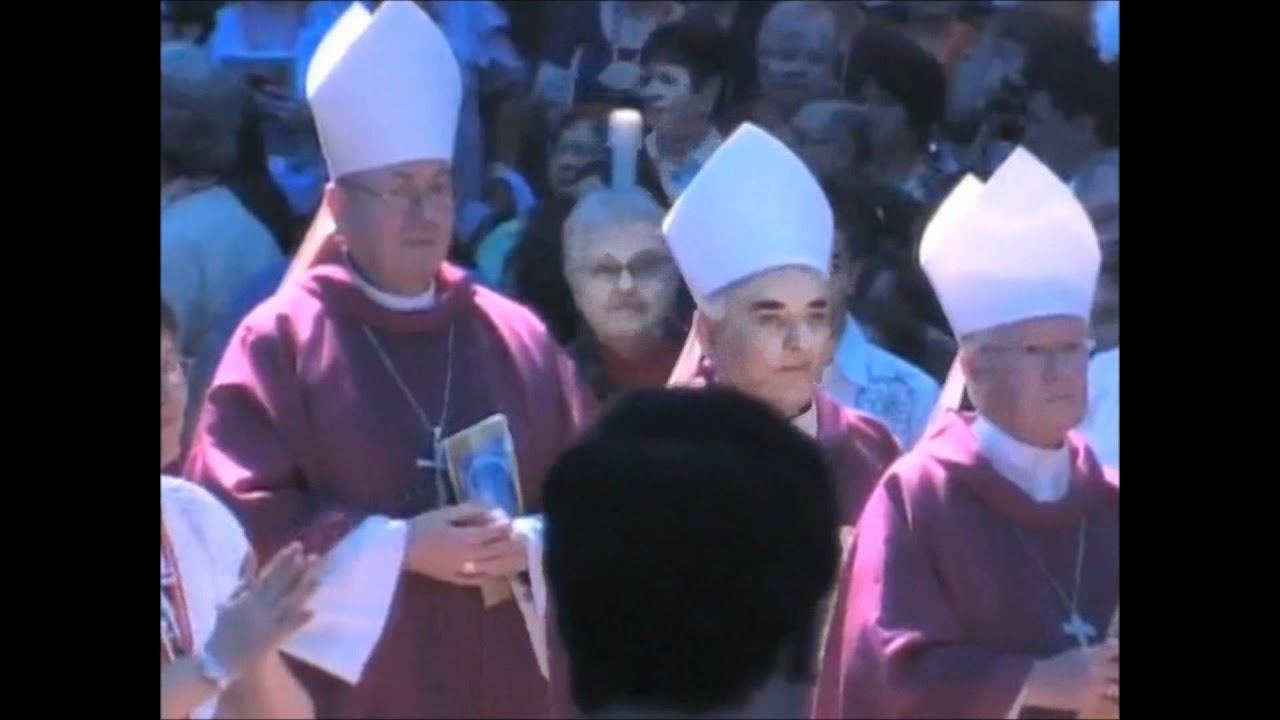
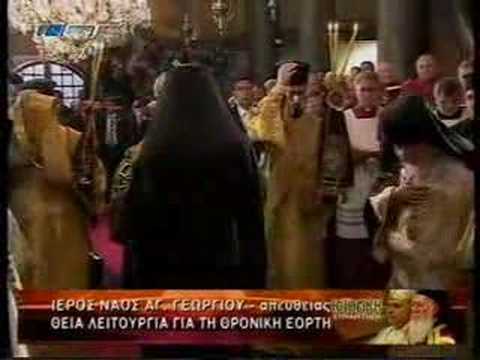
In the combox under a different entry, one of the participants here posted a link to a video that wasn’t perfectly relevant to the topic, but… I can’t resist sharing it with a wider audience.

Keep in mind that the Latin Church example is pretty strange.  I don’t the maker of the video had any intention to be “fair”.  But that underscores a problem, doesn’t it?  The Novus Ordo is susceptible to this.

Anyway… it is an interesting video.

YouTube thumbnailYouTube icon

Posted in "How To..." - Practical Notes, Liturgy Science Theatre 3000, Our Catholic Identity | Tagged , , , , , , , ,
107 Comments

Pope Francis’ Prayer to Mary

Yesterday the Holy Father lead a profession of Faith for all the Italian bishops as they are meeting in plenary session. He addressed them. At the end of the address, Francis pronounced a prayer to Mary which should move any but the coldest heart.

This isn’t Secretariat of State boilerplate. This is Francis.

Some context: Before this prayer, Francis had mentioned that the first faithful bishops have are their priests.  He spoke about obedience and self-emptying, the gift of self as what distinguishes pastoral ministry.  He mentions the Devil again, of course. He warns about the seduction of a career, money, laziness, being a functionary, worrying about structures more than people.  The whole thing bears reading.

Then, after saying “I place you, and I place myself, too, under the mantle of Mary, Our Mother”, he concluded with this!

Mother of the silence that preserves the mystery of God, deliver us from the idolatry of the present, to which those who forget are condemned. Purify the eyes of pastors with the balm of memory:that we might return to the freshness of the beginning, for a praying and penitent Church.
Mother of the beauty that blossoms from fidelity to daily work, remove us from the torpor of laziness, of pettiness, and defeatism. Cloak Pastors with that compassion that unifies and integrates: that we might discover the joy of a humble and fraternal servant Church.
Mother of the tenderness which enfolds in patience and mercy, help us burn away the sadness, impatience, and rigidity of those who have not known what it means to belong.
Intercede with your Son that our hands, our feet and our hearts may be swift: that we may build the Church with the truth in charity.
Mother, we will be the People of God, on pilgrimage towards the Kingdom. Amen.

Benedict has his voice. Francis has his.

Posted in "How To..." - Practical Notes, Francis, Just Too Cool, Our Catholic Identity, Priests and Priesthood, The Drill | Tagged , , , ,
11 Comments

QUAERITUR: Greek island without a Catholic church on Sunday

From a reader:

we will be on a Greek island without a Catholic church on a Sunday:

can we attend the Greek mass and/or receive the Sacrament?

You can, and I think should, attend the Greek Divine Liturgy if attending a Catholic Mass is not possible. The impossibility of attending a Catholic Mass in a Catholic church or chapel that day absolves you of your obligation (no one is bound by law to do what is impossible).

Even though you can’t fulfill your canonical Sunday obligation, and therefore you are absolved of that obligation, you still have an obligation in natural law to worship God.

Since the Liturgy of the Greek Church is valid and reverent, you can surely fulfill your natural law obligation than to worship with the Greek Orthodox Church.

As to the reception of Holy Communion, can. 844 §2 states,

“whenever necessity requires or a genuine spiritual advantage commends it, and provided the danger of error indifferentism is avoided, Christ’s faithful for whom it is physically or morally impossible to approach a Catholic minister, may lawfully receive the sacraments of penance, the Eucharist, and anointing of the sick from non-Catholic ministers in whose Churches these sacraments are valid.”

Therefore, it is possible, from the Catholic perspective, to receive. However, the Greek Orthodox Church may differ!

As I understand it, the Orthodox do not entirely agree with us on this principle. They will not, as I understand it, administer the Eucharist to non-Orthodox congregants. In other words, we say we may receive from them, but they say they will not give to us.

Out of respect for their law and practices, it would probably be best not to approach to receive Communion.

You have, instead, the opportunity to make a Spiritual Communion.

Use Communion time to pray, not only for the unity of our Church, as Christ Himself willed, but also for all those who should not receive the Eucharist, perhaps because of irregular marriage situations or even the lack of a priest for their parish.

And I’ll just say it again:

Benedict XVI was the Pope of Christian Unity.

UPDATE:

Some people are shocked that I suggested attending liturgical worship of God in an Orthodox Church.  Some even suggest that I am advocating mortal sin.

YouTube thumbnailYouTube icon

Posted in "How To..." - Practical Notes, ASK FATHER Question Box, Liturgy Science Theatre 3000, Our Catholic Identity, Pope of Christian Unity | Tagged , , , , ,
87 Comments

Praise ye him, O sun and moon: praise him, all ye stars and light.

I was struck today by the image of a galaxy posted at Astronomy Pic of the Day.

On the full screen it is amazing. Click it.

Note other galaxies in the background.

Sometimes I consider why the visible cosmos is so large, involving forces and numbers so great that we cannot get our thoughts around them.  Perhaps God arranged it this way so that we can have some notion of eternity.  On the other hand, when we delve into the microscopic world, we see manifest order and mind-boggling complexity.  It is so, no doubt, so that we can understand that we are not accidents of irrational chaos.

We are made in the image and likeness of the One who brought all this into existence from nothing.


Posted in Just Too Cool, Look! Up in the sky! | Tagged , ,
17 Comments

Pope Francis on the possibility of salvation for atheists

People are sending me notes about Pope Francis’ fervorino from Mass yesterday.  News outlets (and panicky emails I am getting) are suggesting that the Pope said that atheists go to heaven.  HERE

Alas, we never get what the Pope actually said in its entirety.  We are only getting bits and pieces as determined by someone working for either Vatican Radio or L’Osservatore Romano or… well… it’s hard to know!   This is a problem.  Did the newsie doing the reporting making the right selection of quotes? Is the newsie doing the reporting a theologian?  We should either get everything Francis says or nothing.  Moreover, the Italian accounts and the English accounts of what Francis said differ somewhat.  And who knows how what Francis says in these sermonettes will ultimately be related to the Ordinary Magisterium of the Roman Pontiff?  We are told that it is doesn’t form part of his magisterial teaching, but…  really?  They sure are being played up by the Holy See’s news agencies, aren’t they!

Back to the Pope’s sermon from 22 May.

If you go through his comments as reported, and I did, there is nothing in Pope Francis’s remarks about the possibility of atheists being saved that is not in keeping with the document Dominus Iesus.

In a nutshell, Francis was not talking about non-Catholics or non-Christians.  He was not talking about those who profess another religion with their own mediators.  He was not talking about those who pray to other gods.  He was talking about atheists.

Moreover, Francis was clear that whatever graces are offered to atheists (such that they may be saved) are from Christ.  He was clear that salvation is only through Christ’s Sacrifice.  In other words, he is not suggesting – and I think some are taking it this way – that you can be saved, get to heaven, without Christ.

So, have a care with these sermons.  It is great to get pithy lines from the Holy Father about something that is crystal clear such as, say, the Devil.  It is another when the pithy quip veers into something that is more difficult to untangle.  It is best not to jump to negative conclusions based on the incomplete reports about fervorini of ambiguous magisterial authority.

Posted in "How To..." - Practical Notes, Francis, Liturgy Science Theatre 3000 | Tagged , ,
72 Comments

A priest reacts to priests reacting to the new translation

Over at the Deacon’s Bench, Rev. Mr. Kandra has a great post.  A priest wrote to Dcn. Kandra as a reaction to the whiny survey of priests about the new translation.  My emphases and comments:

After reading this latest post on how priests reportedly dislike the new Missal, a priest friend dropped me an email to share his impressions:

One of the things going on here is very important, but I suspect most priests have never thought about it.

I concelebrated at a Funeral Mass with an older priest (about 75) about four months after the new Missal came into use. I was the main celebrant. His parts were reading the Gospel and the sections of the Eucharistic Prayer given to concelebrants.

He did this with real difficulty, the reason being that he kept trying to look at the congregation as he read. This is much easier with the older, easily memorized text. This book keeps you needing to read from it.  [It makes you think about what the texts mean, too.  One day some of these priests will actually think about the texts and they will realize that most of the time they are not talking to the congregation.]

Most priests do not seem to ever have thought about the nature of ritual at all. The priest who comes out on the altar and greets the folks in his own colloquial way, and then starts the Mass with the text, doesn’t realize that there IS a greeting in the Mass. He speaks in “real life” and then retreats to the formal worship. He does so at the end as well. “Have a nice day!”

This priest I concelebrated with did not seem to realize that in the Eucharistic Prayer we are speaking to God, not the congregation. [There it is.]

I believe that putting the priest celebrant behind the altar facing the people was a very serious, core error.   [Do I hear an “AMEN!”?] When I celebrate the Traditional Mass or the Anglican Use liturgy (which is generally celebrated with the traditional altar ceremonies), I come before the altar, face it in the same direction as the people, and begin Mass by addressing Him. I submit myself to the rite; the people submit themselves to the rite. We participate together.

The Novus Ordo has made the priest the focus. He starts by initiating a dialogue with the people. He keeps up this dialogue throughout the Mass. He stands behind the Altar like Julia Child doing a cooking demonstration at her kitchen island.  [Good one!]

[…]

A new translation cannot be expected to accomplish everything. Only with time will we recover a sense of the difference between going to the Altar of God and singing around the camp fire.

Read the whole thing over there.


Posted in Liturgy Science Theatre 3000, Mail from priests, Our Catholic Identity, The Drill, The future and our choices, Vatican II | Tagged , ,
24 Comments

Dominican Sisters in FINALE of American Bible Challenge! PREVIEW VIDEO

The Dominican Sisters of Mary, Mother of the Eucharist (decidedly not LCWR types!) are participating in a TV game show called the American Bible Challenge. More on them HERE.

They are in the FINALS!

My correspondent wrote:

Don’t forget to watch the Dominican Sisters of Mary competing for the Grand Prize  ($100,000) on the American Bible Challenge this Thursday, May 23, 2013 at 7:00 PM on GSN (Game Show Network, Ch. 71 Direct TV). Their winnings will go to a retirement fund for retired nuns. Let’s pray they win in this grand finale.

UPDATE:

There is a preview video.

http://www.youtube.com/watch?v=Qd1M7eG4OYY&feature=player_embedded

Posted in Just Too Cool, The Campus Telephone Pole | Tagged , ,
16 Comments

A new Catholic “whistle-blower” group

From Newsmax:

Catholic Priests and Nuns Unite to Fight Church’s Abuse Problem

A group of priests and nuns calling themselves Catholic Whistleblowers are pressing Pope Francis and the American bishops to take on those in the church who are still protecting sexual predators. [They are “pressing” Pope Francis?  I’d like to know just how they are doing that!]

The group formed quietly about nine months ago and plans to go public with their campaign this week. Of the 12 members in the steering group, some have exposed abusers before, three are canon lawyers who have represented the church in abuse cases in the past, and four say they were sexually abused as children, The New York Times reports.

The whistleblowers say they aim to provide support for victims and others who would come forward as well to expose areas where the church is falling short in dealing with the abuse problem. They also want the world to know that there are good priests and nuns in the church who are fighting against the sex-abuse scandal that has plagued the Catholic Church in recent years.

[…]

They may be wasting their valuable time scrutinizing the American bishops.  They have pretty successfully cleaned up their act. I suspect that the bishops in these USA are as jittery as cats in a rocking chair factory when it comes to this issue.

Perhaps this new committee, or whatever it is, should turn their attention to American nuns.

SNAP has – unsuccessfully – been urging the LCWR to cooperate in dealing with the abuse of children by sisters.  HERE and HERE and HERE

Do they get a pass?

Posted in Clerical Sexual Abuse, Women Religious | Tagged , ,
18 Comments

Ed Peters on the suicide at Notre-Dame de Paris

Over at the blog of the gentlemanly though trouble-making canonist Ed Peters (aka The Canonical Defender) there is a post about the ramifications of the suicide at Notre-Dame in Paris.

 Suicide—whatever mental/emotional problems induce some to commit it and which might even mitigate its culpability—is objectively a gravely evil action (CCC 2280-2283) and may never be licitly chosen. When committed in a sacred place such as a church or shrine, suicide effects the “violation” of that space and divine worship (as opposed to personal prayers) may not be offered there until the place is rehabilitated in accord with canon and liturgical law (1983 CIC 1211, olim 1917 CIC 1172; see also 1983 CIC 1376).

When Dominique Venner killed himself with a shotgun blast to the head inside Paris’ Notre Dame Cathedral (indeed, it seems, within the sanctuary itself) he desecrated that great church. If it turns out that Venner killed himself in protest over France’s new “gay marriage” law, then, besides condemning the classical scandal his deed produced, one may further observe that all he really accomplished was to make opponents of “gay marriage” look like kooks, and to deprive, for a time, the faithful of France of a particularly powerful place of worship from which to ask God’s help in preserving the natural and holy institution of marriage in their nation.

Only the Evil One would take pleasure in that.

First, there are certain rites that have to be performed in the church because it was desecrated.

Also, Peters is right about how certain parties will use this against true marriage.

Posted in "How To..." - Practical Notes, Liturgy Science Theatre 3000, The Drill | Tagged , , , ,
19 Comments

QUAERITUR: Can Father require all servers to stand to receive Communion?

From a reader:

My 10-year-old son, who daily receives Holy Communion on his tongue while kneeling (and in fact has never received standing) just completed altar server instruction. He was told that when he serves, he must receive standing!!! (for the sake of uniformity!) I realize that serving is a privilege and not a right, but does exercising this privilege allow for his right to receive kneeling to be restricted? He has been looking forward to serving for so long now and would have the opportunity to serve nearly daily. It’s tearing us apart to think that he would have to go from always kneeling to almost always standing.

Indeed.  Lay people do not have rights when it comes to serving at the altar.  They cannot simply demand to serve and then serve only on their own terms, in their own way and style.

This is tough question.  On the one hand, the right of the faithful to receive whilst kneeling is inviolate.  This is affirmed in Redemptionis Sacramentum.  On the other hand, the priest may choose whom it pleaseth him to choose as altar boys.  If Father wants to make posture for the reception of Holy Communion a litmus test, he can.  Service at the altar is not a right.  Lay people serve at the pleasure of the priest.

Frankly, I would like priests to require all the altar boys to kneel to receive, and of course to use the Communion paten properly.

And wouldn’t it be great use as a litmus test the state of grace?

You might try to win the priest over to another view of the matter, but as a parent you can through good instruction and good example and practice help your children receive only when in the state of grace.

Posted in "How To..." - Practical Notes, ASK FATHER Question Box, Liturgy Science Theatre 3000, Our Catholic Identity | Tagged , , , ,
46 Comments