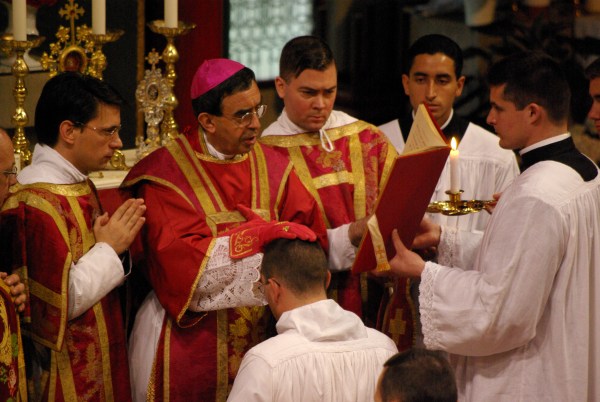
Did you participate in any processions?
Any newly revived processions?
Give us a report of what you saw and heard.
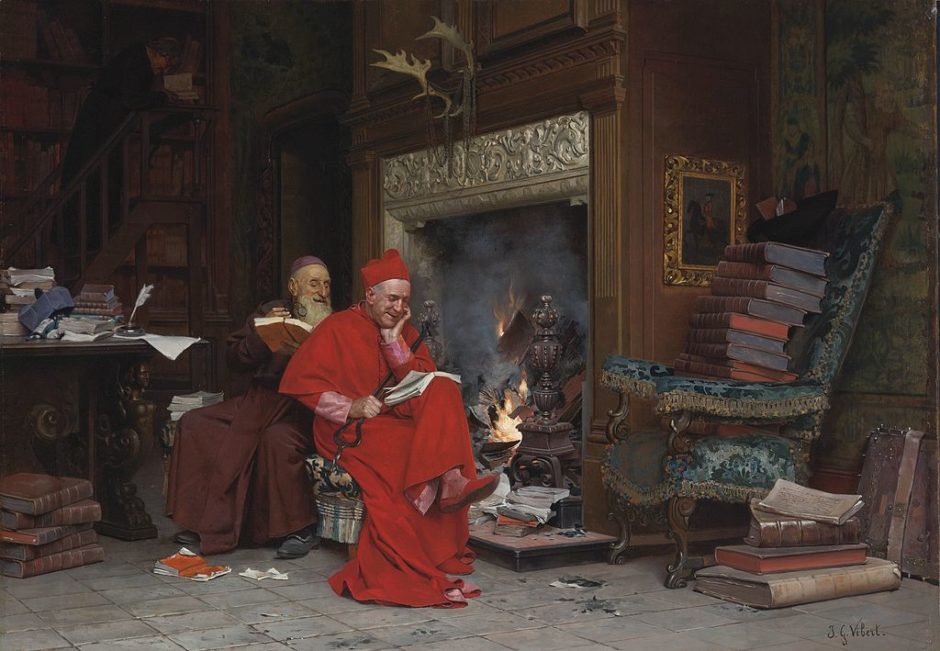
Did you participate in any processions?
Any newly revived processions?
Give us a report of what you saw and heard.
For your Just Too Cool file.
From Vatican Insider
Pollen is evidence that the Holy Shroud is indeed a winding sheet
According to university researchers the pollen found in the Turin Shroud corresponds to that of flowers used for funerals in Asia Minor 2000 years ago
MARCO TOSATTI
ROME
In a recent conference held in Valencia, on the Holy Shroud, the work of one Marzia Boi, a university researcher at the University of the Balearic Islands stood out in particular. Boi is an expert in Palynology, which is the science that studies pollen.
As history lovers may already know, the fabric of the Holy Shroud is covered in pollen and Boi’s report clearly highlights that the pollen is proof that the shroud, which is kept in Turin, was a winding-sheet and was used according to rituals common in the Middle East over a thousand years ago. We have therefore taken the liberty of drawing the following conclusion (which we would like to point out was never made by the researcher herself): this discovery is strong proof against the theory of the shroud being a medieval fake. It seems somewhat incredible (and it would be a true scientific miracle) that a medieval forger would have known what ointments and oils were used in Jewish funeral rites in I century AD and that this same forger would have put together aromas and ointments in the knowledge that a few centuries later tools that had not yet been invented might reveal his work.
Marzia Boi wrote in her report in Valencia: “ The pollen traces on the Holy Shroud which have so far been linked to the geographic origin of the relic reveal what oils and ointments were put both on the body and on the sheet. These discoveries have an ethno-cultural meaning linked to ancient funeral practices. These non-perishable particles capture the image of a 2000-year-old funeral rite and thanks to them it was possible to discover what plants were used in the preparation of the body that was kept in the sheet. The oils allowed the pollens, as fortuitous ingredients, to be absorbed and hidden in the shroud’s fabric like invisible evidence of an extraordinary historical event.” According to Jewish custom the dead bodies and the winding sheets were treated with oils and perfumed ointments following a meticulous ritual.
[…]
Read the rest there.
Let’s have a little poll.
Feel free to give your reasons in the combox.
I am torn between, on the one hand, pity for these men whose priesthood and ministry was tainted from the onset by bad formation and poor leadership and, on the other, contempt for them as arrogant quislings.
From Vatican Insider:
Germany: Catholic priests administer communion to divorcees
ALESSANDRO SPECIALE
VATICAN CITY
The wait is over. It is now time for action: this is what the more than 150 priests and deacons of the Archdiocese of Freiburg, in Germany (161 at the time this article was written) must have thought, as they issued an open declaration on the internet, stating that they regularly administered communion to divorced couples who had remarried.In their manifesto, the priests – who account for approximately a seventh of the clergy in Freiburg, led by Archbishop Rober Zollitsch who is also President of the German Episcopal Conference [his name just keeps cropping up when] – stated they were fully aware they were violating the rules laid down by the Catholic Church: “With our signature, we declare that in our pastoral activity regarding remarried divorcees, we are allowing ourselves to be guided by mercy,” they wrote, quoting the salus animarum suprema lex (the salvation of souls must always be the supreme law) principle.
In going against the dictates of the Catholic Church, “we take account of the conscious decision made by the individuals involved and the real life situation that follows.” [“real life situation” is now an excuse for doing anything you want to do, I guess.] “In our communities, remarried divorcees take communion and receive the sacraments of reconciliation and the anointing of the sick, with our approval,” the parish priests declared, adding that those who divorce and remarry also participate in parish councils and play an active role in the catechesis and community activities.
The issue of remarried divorcees is a delicate issue, particularly in German speaking countries, but in others as well. The issue was brought before Benedict XVI by the then federal president Christian Wulff, himself a divorcee, during the Pope’s visit to Germany last November. The issue is one of the five critical points which the Congregation for the Doctrine of the Faith highlighted in a recent notification regarding a book published by a nun in the U.S. [Farley.]
During the recent Word Meeting of Families in Milan, Pope Benedict XVI admitted that the situation of remarried divorcees is “one of the great causes of suffering for the Church today”: “we do not have simple solutions – he said -. Suffering is great and all we can do is help parishes and individuals to help these persons endure the suffering of this divorce.”
In their manifesto, the priests in Freiburg referred explicitly to the Memorandum entitled “Achieving a necessary turning point” [“turning point”… otherwise… “revolt”? “revolution”?] which was launched by hundreds of theology professors in March 2011 and published in the book “An opportunity for reconciliation?” by the theologian Eberhard Schockenhoff which deals with the issue. Over 300 members of the Freiburg clergy signed a petition supporting the Memorandum.
In a communiqué, the Archdiocese of Freiburg said the priests’ initiative had been “blown up by the media and this is “neither useful nor constructive.” Though it may be possible for a priest to make a “conscious,” “responsible and well-grounded” choice in certain concrete cases, this can in no way become a “general and undifferentiated” practice that goes against the universal Church doctrine.
Is this really “blown up” by the press? I suspect it is not, and that this revolt will breed more revolt, as rotting meat attracts flies and maggots.
What they are doing is scandalous, for it will breed more revolts elsewhere, about this and other issues. This isn’t just about how the Church ministers to the divorced and remarried. This is a deeper problem.
One of these days these priests are going to die and go to their judgment. I hope that they are simply so screwed up that they are not fully culpable for these bad decisions and the scandal they cause.
In the face of this sort of revolt, what does one do?
As Pope, I suppose you soldier on and suffer.
Imagine what a faithful bishop or the Holy Father is faced with when things like this happen. What to do? Will action make the situation worse? Will inaction make it worse? Do you impose an interdict? Suspend the clergy involved with the resulting exacerbation of the shortage of priests?
You almost get the sense that a huge shortage of priests would be less bad than having priests like those guys.
You might add some small and planned mortifications to your daily routine to offer up for the Holy Father’s intention.
Marantha! Come!
Lord Jesus, come back now. Please?
I am passing this along as is:
Bishop under fire for pictures
Alain Castet, Bishop of Luçon, in the Vendée, was in Germany on May 12 for an event. The images of him there have now become known: the pictures that have rocked a diocese…
A “dangerous” event: six new traditional Deacons From daily “Ouest France“:Malaise in the Church following an ordination
Bp. Castet was in Germany, for the Priestly Fraternity of Saint Peter, on May 12, where he ordained six deacons. A gesture that hurts a part of the Church in Vendée, the Fraternity being perceived as Integrist.
The photos have circulated throughout the diocese. They are found very easily on an internet website. We see in them Bp. Castet ordaining six deacons. The ceremony took place on May 12, at Wigratzbad, in Germany, at the invitation of the Priestly Fraternity of Saint Peter. Rage has been brewing in the Vendean Church since then. The Fraternity is in fact considered by some as ultra-Traditionalist.
“They are even Integrist [Fundamentalist],” said someone close to the Bishop, under anonymity. … “Too much, this is too much,” another priest says, “it is a return to a past that the Bishop proposes to us, we turn our backs to the Vatican II Council.” …
No, they are not kidding. [Source: Le Salon Beige, whose editors add that “you may pray for him” and perhaps send him a message of support at eveque@catho85.org]
Perhaps the LCWR would like to issue a statement of support for Bp. Castet, given that he is now an unjustly oppressed victim.
June is a month given in a special way to devotion to the Sacred Heart of Jesus.
I am getting requests from people to advertise their events, Masses, etc. Were I to do that, this would no longer be my blog. It would be a college campus telephone pole.
However, here is a place where you can post some events.
During our Latin Mass Conference this afternoon, soon-to-be Fr Hunwicke, said something very sensible in his excellent talk.
Every time you go to confession, you make it easier for others to go. You make it easier for priest to hear confessions
So, even if you are a person of considerable sanctity, perhaps – in your kindness – you could remember a few venial sins on a regular basis.
 Here is a photo I took a few years ago in the Vatican Gardens during a Corpus Christi procession. That great edifice in the background is back of St. Peter’s Basilica. It isn’t often you get Swiss Guards to carry the canopy.
I noted that His Eminence Marc Card. Ouellet said the other day that adoration of the Blessed Sacrament Cardinal “must not be belittled as a pious but now outdated custom.” It is, instead, “a development of the living tradition, which felt the need to express faith in Christ’s real presence in the sacrament in this way.”
In our efforts for any new evangelization, open and fervent and even public adoration of the Blessed Sacrament must be promoted.
On that note, here are some thoughts which I have offered up in the past, but which I share with you veteran readers again, and with you new readers in a fresh way.
In 1246, Robert of Thourotte, Bishop of Liège, Belgium, had instituted in his diocese the feast now known as Corpus Christi at the request of an Augustinian nun Juliana of Cornillon, who composed an office for it. In 1264, Pope Urban IV ordered the feast of the Body of Christ to be celebrated as a holy day of obligation for the universal Church on the Thursday after Trinity Sunday and accepted the texts by the Angelic Doctor for the Mass and office.
At the request of an Augustinian nun, Juliana of Cornillon, in 1246 the Bishop of Liège, Robert of Thourotte, instituted in his diocese a feast now known as Corpus Christi. A few years later, following a great Eucharistic miracle in which a priest suffering doubts witnessed a Host become flesh and bleed on the linen corporal, Pope Urban IV n 1264 ordered the feast of the Body of Christ to be celebrated by the universal Church on the Thursday after Trinity Sunday. The Angelic Doctor, St Thomas Aquinas (d 1274), composed the feast’s Mass and Office. The Collect for today’s Mass, also used during Benediction, was assumed into the 1570 Missale Romanum. It has remained unchanged.
Deus, qui nobis sub sacramento mirabili passionis tuae memoriam reliquisti, tribue, quaesumus, ita nos Corporis et Sanguinis tui sacra mysteria venerari, ut redemptionis tuae fructum in nobis iugiter sentiamus.
Iugiter, an adverb, is from iugum, “a yoke or collar for horses”, “beam, lath, or rail fastened in a horizontal direction to perpendicular poles or posts, a cross-beam”. Iugiter means “continuously”, as if one moment in time is being yoked together with the next, and the next, and so on.
LITERAL TRANSLATION:
O God, who bequeathed to us under a wondrous sacrament the memorial of Your Passion, grant to us, we implore, to venerate the sacred mysteries of Your Body and Blood in such a way that we constantly sense within us the fruit of Your redemption.
CURRENT ICEL (2011):
O God, who in this wonderful Sacrament have left us a memorial of your Passion, grant us, we pray, so to revere the sacred mysteries of your Body and Blood that we may always experience in ourselves the fruits of your redemption.
In the 1980’s we seminarians were informed with a superior sneer that, “Jesus said ‘Take and eat, not sit and look!’” Somehow, “looking” was opposed to “receiving”, “doing”. This same error is at the root of false propositions about “active participation”: if people aren’t constantly singing or carrying stuff they are “passive”.
Younger people no longer have that baggage, happily. They desire the all good things of our Catholic patrimony. They want as much as Holy Church can give. They resist passé attempts to make Jesus “smaller”.
After the Second Vatican Council, many liturgists (all but a few?) asserted that, because modern man is all grown up now, Eucharistic devotions are actually harmful rather than helpful. We mustn’t crawl in submission before God anymore. We won’t grovel in archaic triumphal processions or kneel as if before some king. We are urbane adults, not child-like peasants below a father or feudal master. We stand and take rather than kneel and receive.
How this lie has damaged our Catholic identity! Some details of society have changed like shifting sandbars, but man doesn’t change. God remains transcendent. We poor, fallen human beings need concrete things through which we can perceive invisible realities.
The bad old days of post-Conciliar denigration of wholesome devotional practices may linger, but the aging-hippie priests and liberal liturgists have lost most of their ground under the two-fold pincer of common sense and the genuine Catholic love people have for Jesus in the Eucharist. The customs of Corpus Christi processions, Forty Hours Devotion, and Eucharistic Adoration are returning in force. People want and need these devotions. They help us to be better Catholic Christians through contact with Christ and through giving public witness to our faith.
The iugum (whence iugiter) was a symbol for defeat and slavery. A victorious Roman general compelled the vanquished to pass under a yoke (sub iugum, “subjugate”) made of spears. Prisoners were later yoked together and paraded in the returning general’s triumph procession.
In worldly terms, crosses and yokes are instruments of bitter humiliation.
Jesus says His yoke is “sweet” and “light”.
Christ invites us to learn His ways through the image of His yoke upon our shoulders (Matthew 11:29-30). True freedom lies precisely in subjugation to Him. His yokes are sweet yokes. He did not defeat us to give us His yoke. He defeated death in us to raise us by His yoke. In honoring the Blessed Sacrament we proclaim with the Triumphant Victor Christ, “O death, where is thy victory? O death, where is thy sting?” (cf 1 Cor 15:54b – 57).
Proponents of true “liberation theology” take Christ the Liberator into the public square. In the sight of onlookers, we march in His honor, profess His gift of salvation, and kneel before Him.
We cannot honor enough this pledge of our future happiness in heaven, the Body and Precious Blood of Christ.
I affirm my subjugation to Christ, Victor over death, hell and my sins.
Before the Eucharist, Jesus my God and King, I am content to kneel until with His own hand He raises me.
When I was in seminary, the faculty spoke with contempt of adoration of the Blessed Sacrament and treated seminarians with such a devotion with suspicion and fear. One of the things we heard was “Jesus said ‘Take and eat’ not ‘sit and look'”. Benighted writers such as Richard McBrien have openly ridiculed Eucharistic Adoration as backward and harmful.
Benedict XVI, however, who with his Marshall Plan to revitalize our Catholic identity as we move closer to the Year of Faith, has a different idea.
Here is Benedict XVI’s sermon for the Solemnity of “Corpus Domini” as it is called in Italy. Translation from Zenit.
 Dear Brothers and Sisters!
This evening I would like to meditate with you on two interconnected aspects of the Eucharistic Mystery: the worship of the Eucharist and its sacredness. It is important to take it up again to preserve it from incomplete visions of the Mystery itself, such as those which were proposed in the recent past. [Recognizing that there are problems out there, the Holy Father is making correctives and calling those who hold errors to task. I like especially his use of “Mystery” from the onset.]
First of all, a reflection on the value of Eucharistic worship, in particular adoration of the Most Blessed Sacrament. [Not just during Mass, but also outside of Mass.] It is the experience that we will also live after the Mass, before the procession, during its development and at its end. A unilateral interpretation of Vatican Council II has penalized this dimension, restricting the Eucharist in practice to the celebratory moment. [“celebratory moment” = Mass. In my writing and talking – as a matter of fact in a talk I must give today at the LMS Conference, I stress that when we speak of the Eucharist, we speak both of the Sacrament and also its celebration. We can’t just reduce the term to “Mass” or even worse vague “liturgy”.] In fact, it was very important to recognize the centrality of the celebration, in which the Lord convokes his people, gathers them around the twofold table of the Word and the Bread of life, nourishes them and unites them to Himself in the offering of the Sacrifice. [He touches on “table” and stresses “Sacrifice”.] This assessment of the liturgical assembly, in which the Lord works and realizes his mystery of communion, [Christ is the true Actor.] remains of course valid, but it must be placed in the right balance. In fact – as often happens – the stressing of one aspect ends up by sacrificing another. In this case, the accentuation placed on the celebration of the Eucharist has been to the detriment of adoration, as act of faith and prayer addressed to the Lord Jesus, really present in the Sacrament of the altar. This imbalance has also had repercussions on the spiritual life of the faithful. [Truer words were never spoken.] In fact, concentrating the whole relationship with the Eucharistic Jesus only at the moment of Holy Mass risks removing his presence from the rest of time and the existential space. And thus, perceived less is the sense of the constant presence of Jesus in our midst and with us, a concrete, close presence among our homes, as “beating Heart” of the city, of the country, of the territory with its various expressions and activities. The Sacrament of the Charity of Christ must permeate the whole of daily life. [There’s a phrase to jot down on a card and keep in your hand missal.]
In reality, it is a mistake to oppose celebration and adoration, as if they were in competition with one another. It is precisely the contrary: the worship of the Most Blessed Sacrament is as the spiritual “environment” in which the community can celebrate the Eucharist well and in truth. Only if it is preceded, accompanied and followed by this interior attitude of faith and adoration, can the liturgical action express its full meaning and value. The encounter with Jesus in the Holy Mass is truly and fully acted when the community is able to recognize that, in the Sacrament, He dwells in his house, waits for us, invites us to his table, then, after the assembly is dismissed, stays with us, with his discreet and silent presence, and accompanies us with his intercession, continuing to gather our spiritual sacrifices and offering them to the Father. [Adoration of the Blessed Sacrament fosters in us a greater receptivity.]
In this connection, I am pleased to stress the experience we will also live together this evening. At the moment of adoration, we are all on the same plane, kneeling before the Sacrament of Love. The common and ministerial priesthoods are united in Eucharistic worship. It is a very beautiful and significant experience, which we have experienced several times in Saint Peter’s Basilica, and also in the unforgettable vigils with young people – I recall, for example, those of Cologne, London, Zagreb, Madrid. [Who can forget Hyde Park in London, when silence dominated the TV broadcast as the monstrance was shown.] It is evident to all that these moments of Eucharistic vigil prepare the celebration of the Holy Mass, prepare hearts for the encounter, so that it is more fruitful. To be all together in prolonged silence before the Lord present in his Sacrament, is one of the most genuine experiences of our being Church, which is accompanied in a complementary way with the celebration of the Eucharist, listening to the Word of God, singing, approaching together the table of the Bread of life. Communion and contemplation cannot be separated, they go together. To really communicate with another person I must know him, I must be able to be in silence close to him, to hear him and to look at him with love. True love and true friendship always live of the reciprocity of looks, of intense, eloquent silences full of respect and veneration, so that the encounter is lived profoundly, in a personal not a superficial way. And, unfortunately, if this dimension is lacking, even sacramental communion itself can become, on our part, a superficial gesture. Instead, in true communion, prepared by the colloquy of prayer and of life, we can say to the Lord words of confidence as those that resounded a short while ago in the Responsorial Psalm: “O Lord, I am thy servant; I am thy servant, the son of thy handmaid. / Thou hast loosed my bonds./ I will offer to thee the sacrifice of thanksgiving /and call on the name of the Lord” (Psalm 115:16-17).
Now I would like to pass briefly to the second aspect: the sacredness of the Eucharist. Also here we heard in the recent past of a certain misunderstanding of the authentic message of Sacred Scripture. The Christian novelty [Don’t be put off by that word. He is talking about something strikingly new rather than something odd.] in regard to worship was influenced by a certain secularist mentality of the 60s and 70s of the past century. [It is refreshing to hear from the Vicar of Christ a reference to that time frame as the source of trouble.] It is true, and it remains always valid, that the center of worship is now no longer in the rites and ancient sacrifices, but in Christ himself, in his person, in his life, in his paschal mystery. And yet, from this fundamental novelty it must not be concluded that the sacred no longer exists, but that it has found its fulfillment in Jesus Christ, incarnate divine Love. The Letter to the Hebrews, which we heard this evening in the Second Reading, speaks to us precisely of the novelty of the priesthood of Christ, “high priest of the good things that have come” (Hebrews 9:11), but it does not say that the priesthood is finished. Christ “is the mediator of a new covenant” (Hebrews 9:15), established in his blood, which purifies our “conscience from dead works” (Hebrews 9:14). He did not abolish the sacred, but brought it to fulfillment, inaugurating a new worship, which is, yes, fully spiritual but which however, so long as we are journeying in time, makes use again of signs and rites, of which there will be no need only at the end, in the heavenly Jerusalem, where there will no longer be a temple (cf. Revelation 21:22). Thanks to Christ, the sacred is more true, more intense and, as happens with the Commandments, also more exacting! Ritual observance is not enough, but what is required is the purification of the heart and the involvement of life.
I am also pleased to stress that the sacred has an educational function, and its disappearance inevitably impoverishes the culture, in particular, the formation of the new generations. [Thus, there is in our veneration of the Eucharist and its celebration also a “knock-on-effect” for culture. This is the secondary effect of that phrase I use here “Save The Liturgy Save The World”.] If, for example, in the name of a secularized faith, no longer in need of sacred signs, this citizens’ processions of the Corpus Domini were abolished, the spiritual profile of Rome would be “leveled,” and our personal and community conscience would be weakened. Or let us think of a mother or a father that, in the name of a de-sacralized faith, deprived their children of all religious rituals: in reality they would end up by leaving a free field to so many surrogates present in the consumer society, to other rites and other signs, which could more easily become idols. [Isn’t that what is happening?] God, our Father, has not acted thus with humanity: he has sent his Son into the world not to abolish, but to give fulfillment also to the sacred. At the height of this mission, in the Last Supper, Jesus instituted the Sacrament of his Body and his Blood, the Memorial of his Paschal Sacrifice. By so doing, he put himself in the place of the ancient sacrifices, but he did so within a rite, [YES! And He gave Holy Church His authority to govern those rites.] which he commanded the Apostles to perpetuate, as the supreme sign of the true sacred, which is Himself. With this faith, dear brothers and sisters, we celebrate today and every day the Eucharistic Mystery and we adore it as the center of our life and heart of the world. Amen.
[Translation by ZENIT]
Remember when Rep. Nancy Pelosi (D-CA) – Theological Mastermind and Doctrix of the Church – said that her faith compelled her to endorse same-sex marriage and when she said she was going to side against the bishops? Or … or… or…
What do you think of this?
Pelosi On Contraception & Faith: “I Do My Religion On Sundays, In Church”
“Well I don’t think that is the entire Catholic Church,” House Minority Leader Nancy Pelosi (D-Calif.) said about the lawsuit brought against the Obama administration by numerous Catholic institutions in the U.S. “Those people have a right to sue, but I don’t think they’re speaking for the Catholic Church and they’re are people in the Catholic Church, including some of the bishops, who have suggested that some of this may be premature.”
“You know what? I do my religion on Sunday in church and I try to go other days of the week. I don’t do it at this press conference,” Pelosi said curtly at her weekly press conference.
WDTPRS responds: Coward!
There is, of course, video.
I hope that some reporter from CNS or other Catholic outlet parks in the front row of every single presser she does and ask those questions over and over and over.
Here is theCan. 915 swag you can get.

I received some nice photos of Confirmation in the older form of the Roman Rite administered by His Excellency Most Rev. Michael Burbidge, Bishop of Raleigh.
There is so much to like about this one.

WDTPRS kudos to Bp. Burbidge and congratulation to the newly confirmed.
It is nice to get news that people have been able to receive confirmation in the older form. It is a wonderful thing for bishops to do and the people are so grateful. Sometimes they wait years to be confirmed before a bishop is willing to use the older books. Happily, I think this is turning around.

Coat of Arms by D Burkart









A Daily Prayer for Priests


They find you a pro-life agent in your area who commits to giving a portion of the fee to a pro-life group!

PLEASE subscribe via PayPal if it is useful. Zelle and Wise are better, but PayPal is convenient.
A monthly subscription donation means I have steady income I can plan on. I put you my list of benefactors for whom I pray and for whom I often say Holy Mass.
In view of the rapidly changing challenges I now face, I would like to add more $10/month subscribers. Will you please help?
For a one time donation...



Help Monks in Wyoming (coffee – UPDATED LINK) and Norcia (beer) and the wonderful "Soap Sisters" of Summit, NJ!


Please follow me on Twitter!










Visits tracked by Statcounter
since Sat., 25 Nov. 2006:

 In a recent conference held in Valencia, on the Holy Shroud, the work of one Marzia Boi, a university researcher at the University of the Balearic Islands stood out in particular. Boi is an expert in Palynology, which is the science that studies pollen.