OLDIE ASK FATHER: Eastern Subdeacon for Roman Solemn Mass? A Clerical Bedtime Story.

OLDIE ASK FATHER: Eastern Subdeacon for Roman Solemn Mass? A Clerical Bedtime Story.

Just the day, someone sent me a note about this post.  I noted that it’s one year anniversary was about to strike, and so here it is again.  One year later.

From a reader:

I have a friend who is a Eastern Catholic subdeacon, officially installed in his own rite. [installed?] Would it be possible for him to serve a subdeacon during a Latin Extraordinary Form Solemn high Mass? And if so, which vestments would he wear, his own eastern vestments or the Tunicle?

The Latin Church has its Code of Canon Law and the Eastern Churches have their Code.  For this, we have to consult also the Eastern Code.

Can. 701 of the Eastern Code says:

“For a just cause and with the permission of the eparchial bishop, [like the diocesan bishop in the Latin Church] bishops and presbyters of different Churches sui iuris can concelebrate, especially to foster love and to manifest the unity of the Churches. All follow the prescripts of the liturgical books of the principal celebrant, avoiding any liturgical syncretism whatever, and preferably with all wearing the liturgical vestments and insignia of their own Church sui iuris.“

This canon does not mention deacons or subdeacons. However, can. 1501 of the Eastern Code (parallel to can. 19 of the Latin Code) says:

“If an express prescript of law is lacking in a certain matter, a case, unless it is penal, must be resolved according to the canons of the synods and the holy fathers, legitimate custom, the general principles of canon law applied with equity, ecclesiastical jurisprudence and the common and constant canonical doctrine,”…

… and can. 1499 (parallel to can. 17) says, in part,

“If the meaning remains doubtful and obscure, they [laws] must be understood according to parallel passages, if there are such, to the purpose and circumstances of the law, and to the mind of the legislator.”

Let’s pull this all together.

An Eastern subdeacon (who is ordained, not just installed – the Eastern Churches continue to ordain men to the subdiaconate – just WE LATINS SHOULD BE DOING!!) can serve as a subdeacon at Latin Rite Mass, as long as his bishop/eparch permits.

Said subdeacon would follow the rubrics of the Roman Missal, but he would ideally wear the vestments proper to his own Church.

So, to illustrate, ….

OLDIE ASK FATHER: Eastern Subdeacon for Roman Solemn Mass? A Clerical Bedtime Story.nce upon a time in the Diocese of Black Duck at St. Fidelia in Tall Tree Circle, Father the Parish Priest, Guido Schmitz, was blessed with a visit by his 2nd cousin Subdeacon Grigori of the Eparchy of St. Theophan the Recluse.  Father 1st Assistant, upon meeting the Subdeacon, quoth, “We have a real subdeacon! Let’s have a Solemn Mass on Sunday!  Sven can be Deacon.”  Reverend Mister Sven Martínez was a not-quite-elderly Permanent Deacon around the place, rare in his permanent diaconal ministry as an expert in all matters liturgic.

Everyone deemed this a winning plan.

And so they gathered around the black bakelite telephone in the pastor’s office and called Subdeacon Gigori’s’s Eparch.

The Eparch, who answered his own phone, was delighted at this opportunity to foster unity between both lungs of the Church.  He, though not a Latin himself, sought every opportunity to underscore that he understood the mens of the Lawgiver in Summorum Pontificum, that the Roman Rite had its great liturgical tradition that rivalled his own.  He knew that Pope Francis had clearly affirmed Benedict’s provisions in TBI™, and that the Supreme Pontiff also had been involved with Eastern Churches in S. America.  Consequently, the Eparch concluded swiftly that it was both pleasing and opportune to deign to grant to the Reverend Subdeacon his Permission.

He added, with not-quite-mock menance, the stern admonishment to “Say The Roman Black and Do The Roman Red!”

Even as they were sharing their goodbyes and protestations of good will, the fax machine spit out the Eparch’s perfectly legible chirograph.  (The Eparch followed up with letters to both the Subdeacon and the parish priest.)

Subdeacon Grigori happened to have all his proper vestments with him.  They had a couple walk-throughs and – badda bing badda boom – ecce Sunday Solemn Mass.

OLDIE ASK FATHER: Eastern Subdeacon for Roman Solemn Mass? A Clerical Bedtime Story.And so it was that that happy Sunday with the Solelmn Mass and the real Eastern Subdeacon, became a matter of fond recollection and anecdotes.

Later in the year, Subdeacon Grigori returned for another visit!  The first stay at St. Fidelia had been so very agreeable both for its liturgical excellence in the Roman Rite – a new experience for the Subdeacon, if you get my drift – and because of the priestly fraternity that he knew was sure to follow the Sacred Synaxis.

This time, however, Subdeacon Grigori was without his own proper Eastern vestments!  They were were in the bag lost by the airline.  “Haudquaquam mihi molestum’st“, quoth he, in his best effort to fit in with his Latin hosts, “Let us be flexible.”

When it came time for the Solemn Mass, our Subdeacon vested contentedly as a Roman subdeacon, this being the only commonsensical course to pursue.  The music for the Ordinary was the Mass by Stravinsky, in honor of their Western/Eastern, modern/traditional liturgical nexus.

Subdeacon Grigori, as before, flawlessly carried out his subdiaconal ministry according to the Roman Red and Black, not a syllable lacking or gesture out of place.  He even used the thurible in the Roman manner, though afterwards he showed the altar boys how they used it in his Church.

Having decorously mactated the Victim, the clerics went to the Church hall for coffee and doughnuts with the folks. Subdeacon Grigori gave the parishioners a presentation about the differences between Roman and Byzantine liturgy.

Once the pastoral duties were complete, including a baptism and a Churching, the clerics went off together, parish priest, Fathers assistant, and Subdeacon, to St. Ipsidipsy over in the next county.  St. Ipsidipsy was, of course, the infamous parish entrusted to their mutual friend, Msgr. Zuhlsdorf (hey… fiction is the only way I’ll make Monsignor…).  In Monsignor’s rectory they had a light lunch.  Since they were way out in the wilderness, they then repaired, as was their wont, to Monsignor’s private outdoor firing range near the satellite dish arrays, backup generators, CPU cooling tower, bocce ball courts, and various antennae.

Having prayed to St. Gabriel Possenti and their Guardian Angels for steady hands and safety, they proceeded to put thousands of rounds through a variety of handguns. AR-15s with high-capacity magazines were not lacking. A Barrett .50 cal sniper rifle was fired with great effect.

They all agreed with Grigori’s observation that the glint of sunlight off the shower of casings falling to the ground about their feet was not unlike the sparkle of sun in the Holy Water during that morning’s Asperges.

OLDIE ASK FATHER: Eastern Subdeacon for Roman Solemn Mass? A Clerical Bedtime Story.The only dark note in the afternoon came when Father 2nd Assistant’s Sig Sauer P220 jammed from an errant round of .40 cal that had mysteriously made its way into the .45 ammo can. They consulted, set the Sig apart for closer inspection, and Father continued with his Beretta (… what else?).

Every story has its low point, and they had had theirs. It was a grave moment of concern, but their natural, hard-wired conservative, nay rather, even traditional Catholic cheerfulness overcame even that hitch in their afternoon.

Once all the paper was conclusively dead and all the metal targets had been sufficiently rung and spun, they invoked St. Joseph, Defender of the Church and Mary, Queen of the Clergy and sought out the humble church of St. Ipsidipsy where they sanctified their Sunday through Exposition, Vespers (sung antiphonally), and Benediction.

The scent of spent gunpowder mingled with the incense as together they wafted through the waning sunlight from the windows, their ears ringing merrily from both the .50 cal. and the Sanctus bells.

The conclusive clank of the tabernacle’s door sent them back to the rectory to clean their weapons over Campari sodas and then to enjoy homemade Bucatini all’amatriciana, steaks, salad, bottles of Barolo, which Monsignor had prudently opened before even the first round of .45 ACP had been fired.  They tucked in, reviewing news from the blogs, sharing the usual informations priests are privy to – amusing and dire – about diocesan and parish matters, chuckling for a while over a story in the Fishwrap and by turns glowering over the liberals’ continued misinformation campaigns, reviving anecdotes from seminary and past assignments all while not forgetting to proffer current tips on the best places to buy ammo.

The designated driver had been chosen by lot back at St. Fidelia’s (it fell to Father 2nd Assistant, who was therefore to be exempted for the next couple weeks), and so they brought out the cigars, the Warres ’77, the Hennesey XO and the Lagavulin 16.  Unicuique suum, after all, which happened also to be the motto on the coat of arms of Father 3rd Assistant.

His actis sumptisque omnibus, waving goodbye to Monsignor Z, they hitched up their cassocks, piled into the Father Pastor’s spacious new Volkswagen Phaeton, and sped down the road.

And so they came back to St. Fidelia’s, tired but happy.

THE END

Posted in Lighter fare, Linking Back, Liturgy Science Theatre 3000 | Tagged ,
14 Comments

Help the Transalpine Redemptorists!

Help the Transalpine Redemptorists!The Transalpine Redemptorists waaaaaay out on Papa Stronsay of the Scottish coast are doing some campaigning to help them make ends meet. They have a calendar which looks pretty nice.

I had a nice note from “Br. Martin” who sent me a link to a video about it.

Play video

To learn more about how to support the the Sons of the Most Holy Redeemer on Papa Stronsay click HERE.

Posted in ACTION ITEM!, Brick by Brick | Tagged ,
18 Comments

Your Sunday Sermon Notes

Was there a good point in the Sermon you heard for your Sunday Mass?

Let us know what if was!

(Of more than one, of course, if they’re good.)

Posted in SESSIUNCULA |
25 Comments

ASK FATHER: CQ CQ CQ … QSL?

ASK FATHER: CQ CQ CQ ... QSL?It’s Ham Saturday for me, it seems. I have had email about Echolink (which I still haven’t gotten into… mea culpa).  And now this, from a reader…

QUAERITUR:

I would like to know what your thoughts on including Catholic art on QSL cards is. I have begun receiving some in the mail, but need to design mine to respond; I was thinking of including some great Catholic imagery (possibly from St. Andrews Daily Missal).

For those of you who don’t know what a QSL card is, when people make long-distance contacts with other hams, they will sometimes exchange, by snail mail, a custom-made postcard which has their callsign and location etc.  It’s a good old-fashioned way to prove that you made the contact and also to build up your ego wall, a visible way to display your contacts to admirers who visit your station or ham shack.  “QSL?” is a short way of saying or clicking away if you are using Morse, “Do you confirm that you received my transmission?”

As far as I can tell (for I don’t have many), people like to include on their QSL cards little personal touches.  I can’t see the problem in including an image that says something about yourself, provided that it is decent and legal to use and send in the mail.

No, I haven’t made a QSL card yet.

N, I don’t think making contact with others here on this blog in the combox is the right moment to exchange QSL cards.

But… who am I to judge?

Elmer?  Anyone?

73

Posted in "How To..." - Practical Notes, ASK FATHER Question Box, Ham Radio | Tagged , , , ,
18 Comments

Bp. Conry (D. Arundel & Brighton) suddenly resigned. Fr. Z muses.

Bp. Conry (D. Arundel & Brighton) suddenly resigned. Fr. Z muses.

Please follow!

As I write, the news of the resignation of Bp. Kieran Conry, 63, of the Diocese of Arundel and Brighton in England is hitting social media.  I had an embargoed signal about it, but it is out now.   In a statement, Bp. Conry, clearly of the “progressivist” camp, says that he was not a faithful priest, he says that he didn’t do anything illegal, he resigns his post effective immediately, and he apologized to everyone who will be hurt.

I’m pretty sure this resignation falls on the eve of more information coming out.

The prolific Damian Thompson‘s tweets have been carrying running commentary.  The UK’s best Catholic weekly, The Catholic Herald has a piece already.

I note that, in a “related post” on CH’s sidebar, there is a piece about how the number of confessions is growing in England.  Bp. Conry is quoted.  This was from 5 September.

How quickly things can change.

However, also quoted in that 5 Sept. piece about confessions was my friend Fr. Tim Finigan, formerly of Blackfen and now of Margate.

Fr Tim Finigan, parish priest of Our Lady of the Rosary, Blackfen, Kent, said: “I have also noticed a rise in Confessions, particularly among young adults who are sincerely trying to live a good life. It is important to preserve the core meaning of the sacrament which is the forgiveness of sins. We can always have a more general chat outside of Confession.”

Within two week of Fr. Finigan’s being moved to Margate, the new parish priest at Blackfen began to dismantle what it took the better part of two decades to build.

How quickly things can change.

That said, three points.

First, I hope that faithful Catholics will avoid their own Lord of the Flies Dance with the resignation of Bp. Conry.  Instead, I hope they will recall that everyone in the Church is a sinner and it is precisely because we are all sinners that we have a Savior (that’s Saviour) and our Church.  Instead, pray that the Nuncio Archbp. Mennini will be able to secure an exceptionally good appointment for Arundel and Brighton.

Second, do not rest complacent in what you may have built or gained, even over decades.  Keep your heads on a swivel.  Keep working to build, improve, and strengthen.  Excel in charitable works as the mortar to secure your efforts.

Third, go to confession.  Examine your own consciences, and not other people’s consciences, and GO TO CONFESSION.

Posted in GO TO CONFESSION, The Coming Storm, The Drill | Tagged , , , ,
42 Comments

Pondering Francis

I have been trying for a while now to get my head around what Pope Francis might really think about economics and markets and so forth.  I have been puzzled by a few of his remarks. I think I am not alone in that.

I saw in interesting interview at Real Clear Religion with Rocco Buttiglione, who played a role in the economic views of St. John Paul II.

[…]

RCR: Does Pope Francis have the same kind of philosophical heft that Wojty?a had?

RB: No. He is a different man.

RCR: Is that problematic for the Church?

RB: I don’t think so. We have had a pope who was a great philosopher, we had a pope who was a great theologian, and now we have a pope who has a great pastoral spirit. The Church needs all. I dare say that after those two popes we surely need a pope like Francis because the Curia is a mess and you need someone who has the capacity of clearing that mess.

RCR: You’re often credited for bringing Wojty?a to free market ideas, especially in the context of Centesimus Annus. How did you seem to persuade him?

RB: I would not put it that way, but I was a friend. As Don Ricci had done with me, I talked to Wojtyla about my friends and the things I saw in the world. Sometimes he asked me to do this or that for him, and that’s all.

RCR: Do you think Pope Francis needs a similar education on economics?

RB: Well, you had a pope from Poland who came to understand and love North America much more than anybody could imagine. Now you have a pope who comes from Latin America and in dialogue with him, we must try to explain other things. He is a pope that cannot be only Latin American, but he has to enlarge his horizons. How will he do that?

One of the first things John Paul II did when he became pope was go to Latin America. There he gave a series of homilies, which are a kind of regional encyclical. This encyclical is not against liberation theology, but it is an encyclical that says: We want a theology that is from the point of view from Latin American people. Fine. We want a theology that is written from the point of view of the Latin American poor. Even better! You think that you can produce this theology by using Marxism? That’s wrong. You need a different instrument to approach socio-economic realities from a point of view of a true liberation theology.

I remember one day Don Ricci and I were in Lima, Peru and we were talking with a group of liberation theologians. It was the day of the feast of Señor de los Milagros, and all the people were in the streets. I told the theologians: You talk about the people? Please open the door and look on the streets. They are the people! They are people who are not Marx’s proletariat; they are a people of culture and religion.

Then we started working in Latin America to create groups that wanted to make a true liberation theology. Some wanted to condemn all liberation theology, and there was the first instruction from the Congregation of the Doctrine of the Faith, which was very harsh.

I went around visiting different countries and when I came back, John Paul II invited me to one of his “working dinners.” In the end, he asked me: There is the theoretical side, but how is Gustavo Gutiérrez as a man? Does he say Mass? Does he pray the Rosary? Does he confess people? Yes? Then we must find another solution.

After that came the second instruction on liberation theology, which made a distinction between true liberation theology and Marxist liberation theology.

RCR: Which liberation theology is Francis influenced by?

RB: He is not a Marxist. Politically, he is a Justicialista. Westerners might call it populist. Justicialismo in Argentina has been a tremendous movement, giving for the first time to the people the idea that they have dignity. They are anti-capitalist and anti-Marxist. There is an Anglo-Saxon model of capitalism, which is the “self-made man.” That’s American. But that’s not capitalism in Argentina. Capitalism there is where a few people use the contracts given by the state without taking the risk of the market make an enormous amount of money and oppress other people. It is a capitalism created by the State.

If I could suggest to Pope Francis the reading of a book, I would suggest he read Friedrich Hayek’s The Counter-Revolution of Science: Studies on the Abuse of Reason. This might help him.

[…]

Justicialismo…  good grief.  Who of us up here in the North can grasp what on earth has gone on in Argentina?  The more I read about the place, and its modern history, the less I understand.  Do you have be Argentinian to get it?  Does anyone understand Perónism, with all its layers and bands along the ideological spectrum?  I’d be pretty skeptical were someone to make that claim.  Take a look on Google for something on Justicialismo.  There is nearly nothing useful in English.  I read Spanish, but… sheesh… this has been entirely ignored.

I recently heard a talk about Pope Francis with a South American journalist who is the head of CNA and ACI Prensa, Alejandro Bermudez (whose background is, in part, Argentinian).  He clarified a few things for me and proposed some others.  In no particular order….

Concerning the Argentinian view of capitalism, I think I now better grasp the Holy Father’s (and that of whoever was doing some ghostwriting for him) dim view of capitalism, especially of so-called “trickle down” economics.  You will recall that that Francis mentioned this in his Post-Synodal Exhortation Evangelii gaudium and that there was controversy about the (bad) English translation.  To simplify: if up here in the North we think of “trickle down” as wealth pouring into a cup and, when the cup fills, it overflows and runs downward to the next level, thus helping to raise others up from poverty, in Argentina there would be a different view.  There is no “trickle down”, because as the wealth pours into the cup, the cup gets bigger and bigger so that nothing escapes over the edge.  This is the Argentinian experience.  And so in the matter of personal economics, we individuals and families with our little economies might go off the rails of charity when we say something like “I’ll help the poor after I get my second boat.”  As we gain wealth, rather than than overflow our boundaries, we expand our boundaries into more personal stuff.

Furthermore, Bermudez spoke of the influence on Francis of thinkers such as the Uruguayan writer-theologian Alberto Methol Ferré, the Russian-American sociologist Pitirim Sorokin, and the pivotal Spanish-language poet Rubén Darío.  To condense wildly, it seems that Francis may breathe in a school of thought that sees a kind of “manifest destiny” for Latin America.  When cultures develop a interior decay, which they always do, revitalization of the cultures comes from “peripheries”.  For the larger Church, experiencing an interior decay, a periphery is Latin America.  Latin America, unlike any other continent, is unified in language (by far dominated by Spanish with related Portughese) and is/was unified in religion, Catholicism (though there is bad erosion).  With these unifying factors, Latin America has a critical role to play.  Also, if you are playing attention, Francis seems to use the word “periphery” a lot.  This not quite the same thing as “margin”.

Alas, we in the North have in general paid scant attention to what’s going on intellectually “down there”.  Thus, I have no idea who Alberto Methol Ferré and Rubén Darío are.  I guess I had heard of Sorokin, but I know little to nothing about him other than he explored a cyclic theory of societies.   A lot of us in the North are a bit crippled when it comes to ferreting out what Pope Francis is up to.

I had read that, while Pope Francis is a staunch opponent of Marxist-based Liberation Theology, he did embrace a kind of “liberation theology” that flowed from the devotion of the people.  If I (and others I talk to, and Buttiglione and Bermudez) are right about these things, then I may be getting closer to understanding a key element of Francis’ of economics, the North, etc.

Lastly, it could be that Francis, who has been placed on a pretty steep learning curve, now has an opportunity to learn something about the North and its ways and views.  It may be that his time in Germany, his only experience of the North aside from occasional visits to Rome, tainted his view of all of the Church in the North.  In Germany he would have experienced a Church with a lot of money and fewer and fewer believers.  I suspect that when and if he makes his first North American visit, he many encounter something that he hasn’t yet experienced.  It could be also that, as he meets representatives from North American Catholic organizations and hears about what they do, he is gaining a new insight into the Church in the wealthy North Western Quadrant.

I look forward to input especially from South American readers and, in particular, Argentinians.

Posted in Francis, The Drill | Tagged , , , , ,
52 Comments

Malicious email from nefarious ne’er-do-wells

Malicious email from nefarious ne'er-do-wellsI spotted this via a Tweet by Patrick Madrid.  While you are at it, would you please follow me on Twitter?

At PC Magazine there are some tips to spotting malicious email.

I get a lot of email.  A LOT.  My antennae are constantly waving and on alert.

Malicious email from nefarious ne’er-do-wells can contain malware or can be phishing scams.

You don’t want to be the victim of identity theft.

I keep my virus scanning software updated.  I run that software.  I run other malware detection programs periodically, at least once a week.  I am very careful about incoming mail. I also have a LifeLock account.

I wish there were a filtering program that could identify and eliminate stupid.  You should see some of the stuff I get.  But I digress.

So, get smart, get cleaning and prevention software, get a UPS.

Do you just open everything that comes into your inbox?  I’d rethink that if I were you.

Lot’s of us live a great deal of life online.  We have to keep our heads in the game.

Posted in "How To..." - Practical Notes |
5 Comments

Why “oikonomia” isn’t a solution for divorced and civilly remarried.

Why "oikonomia" isn't a solution for divorced and civilly remarried.

Click to PRE-ORDER

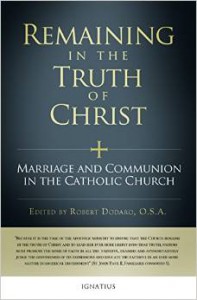
Italian writers have finally gotten to the section by Archbp. Cyril Vasil, SJ, in The Book, that is, the “Five Cardinals” book in defense of the Catholic teaching on marriage.

Available now in the UK: HERE

 Archbishop Vasil is Secretary of the Congregation for Oriental Churches.

Sandro Magister has an entry today in which he focuses on Archbp. Vasil’s essay “Separation, Divorce, Dissolution of the Bond, and Remarriage: Theological and Practical Approaches of the Orthodox Churches.  There is an extensive excerpt too.

Magister’s introductory comments:

The example of the Orthodox Churches that allow second marriages is an argument enlisted by those who want the Catholic Church to set aside the ban on communion for the divorced and remarried, with Cardinal Walter Kasper in the lead.

Pope Francis gave them a big nudge with the sibylline “parenthesis” that he opened and closed in a conversation with journalists on the return flight from Rio de Janeiro on July 28, 2013:

“But also – a parenthesis – the Orthodox have a different practice. They follow the theology of what they call oikonomia, and they give a second chance, they allow it. But I believe that this problem – and here I close the parenthesis – must be studied within the context of the pastoral care of marriage.”

The commonly held idea is that second and even third marriages are celebrated sacramentally in the Orthodox Churches, and communion is given to the divorced and remarried. And this in continuity with the “merciful” practice of the Church in the early centuries.

But the reality is very far from these fantasies. Second marriages entered into the practice of the Eastern Churches in a later era, toward the end of the first millennium. They entered under the invasive influence of civil legislation, of which the Church was the executrix.

In any case, second and third marriages were never considered a sacrament. They were allowed under various more or less expansive forms in this or that area of Orthodoxy. The dissolution of first marriages was almost always for these Churches the simple transcription of a sentence of divorce issued by the civil authority.

The Orthodox Churches themselves do not help to specify this practice of theirs in a theologically and juridically clear form. The proof of this is the serious difficulty in which pastors in the Catholic Church find themselves in coming to grips with mixed marriages in which the Orthodox party comes from a marriage that has been dissolved on both the civil and religious level.

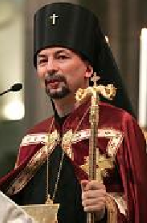
Why "oikonomia" isn't a solution for divorced and civilly remarried.This knowledge gap is filled in, in the text reproduced further below, by an authority in this field, Archbishop Cyril Vasil (in the photo), a 49-year-old Slovak Jesuit, secretary of the Vatican congregation for the Oriental Churches and a former dean of the faculty of canon law at the Pontifical Oriental Institute in Rome.

The text is an extract from the extensive and well-documented article that Vasil dedicated to the theme in this multi-author book to be released in early October in the United States and Italy.[…]

The book, conceived of as a contribution to the upcoming synod on the family, has ignited lively reactions on account of the presence among its authors of cardinals Gerhard L. Müller, prefect of the congregation for the doctrine of the faith, Walter Brandmüller, Raymond L. Burke, Velasio De Paolis, and Carlo Caffarra, all of them severely critical of the ideas of their colleague Kasper. Who has counterattacked by asserting that Francis had “agreed” with him on his proposals and therefore “the target of the polemics is not me, but the pope.” [Which claim is nothing short of ridiculous.]

But while the five cardinals had already presented their positions in previous statements – presented again in the book with their explicit cooperation, unlike the inventions [like those of Vecchi] that the media chimes in with Kasper’s remonstrations – Vasil’s article on divorce and second marriages in the Eastern Churches is an absolute novelty, on a matter among the least known and most misunderstood, and yet of extraordinary significance and relevance.

This essay by Archbp. Vasil could have the effect of a nuke on any discussion of oikonomia during the upcoming Synod.  It’s effects will probably be felt after the Synod as well.

I also direct your attention back to something on oikonomia which I posted HERE.

Posted in One Man & One Woman, Our Catholic Identity | Tagged ,
18 Comments

When inculturation is wrong: “whoring after ephemeral relevance, a prostitution to the present age”

Over at Corpus Christi Watershed there is a good piece by Prof. Peter Kwasniewski of Wyoming Catholic College about inculturation.

Inculturation is unavoidable.  Inculturation has given us magnificent benefits.  If you want a good example of great inculturation try: Baroque.

But inculturation has to be properly understand and approached.  There is a simultaneous exchange constantly going on between the world and the Church.  That’s just fine, so long as what the Church has to give always has logical priority over what the world gives to the Church.

But let’s see Kwasniewski’s piece with my emphases and comments:

Confusions about Inculturation

IN RECENT DECADES there has been a great and deep confusion about the concept of inculturation. It has been taken to mean [wrongly] that the Catholic faith and its practice should be changed to conform to an indigenous culture, and should assimilate that culture’s own religious beliefs and practices. In other words, [liberals, usually, think] Catholicism is seen as raw material and the alien culture as an agent of transformation. This is a false view. In reality, the culture to which the Catholic faith comes is in need of conversion and elevation, so whatever elements are taken from it, once duly purged of sin and error, stand as material to the “form” imparted by the life-giving Catholic faith. It is the Church that is the agent, form, and goal in any true inculturation, while the culture is the matter that receives the form from the agent for the sake of salvation in Christ.  [Dead on.]
Any culture would benefit from the insertion of the Roman Mass in its fullness. [Do I hear an “Amen!”?] Either the culture would welcome it as a sublime expression of a divinely revealed religion, as the ceremonies and texts of the traditional Latin liturgy powerfully convey (it is in just this way that many of the Japanese are said to have reacted to the beauty and majesty of the liturgy as celebrated by the missionaries), [and today is an Ember Day, so get some tempura!] or a hostile culture would in time be overcome by it and thus purged of ignorance, error, and sin. In no case is it ever necessary to seek, as a goal, to take elements of a prevailing heathen culture and incorporate them into the sacred culture. [And yet that is what liturgical liberals do.] If there are elements that are worthy of elevation into the sacral domain, this will happen slowly, subtly, with fine discernment and discretion. Running after these elements in a kind of desperate hunt for relevancy is doomed to failure; it is a kind of whoring after ephemeral relevance, a prostitution to the present age and its malevolent prince. [OORAH!]

THINGS THAT ARE REALLY TRUE, good, and beautiful will, as it were, line up in front of the doors of the church and beg admission; they will sue for peace, and beg pardon, and offer themselves like lambs for the sacrifice. Then we may take them up in our arms and make of them vehicles of grace. But not in any other way. As St. Augustine says: “He that believes not, is truly demoniac, blind, and dumb; and he that has not understanding of the faith, nor confesses, nor gives praise to God, is subject to the devil.”  [qu. eu. 1, 4 – qui non credit subditus est diabolo] The Church does not go to the blind and dumb to ask for advice on how she should worship or what she should believe; she does not go to subjects of the devil, in desperate need of baptism, and beg them for a seat at their master’s table.
Inculturation as it has been understood and practiced by liturgical revolutionaries is one more ploy of Satan to destabilize and denature the Church of God, to water down her distinctiveness, to poison and pollute her divine cultus and human culture. This is not what the great Jesuit, Dominican, and Franciscan missionaries did; they brought forward the Catholic faith in all the splendor of its abiding truth, and by that light, they converted nations and baptized all that was noble and good in their people.

Please visit THIS PAGE to learn more about Dr. Kwasniewski’s Sacred Choral Works and the audio CDs that contain recordings of the pieces.

Fr. Z kudos to Prof. K.  Rem acu tetigit!

If our sacred liturgical worship is screwed up (and, by an large, it is) then everything else we undertake as a Church will be on a foundation of sand.  Our human relationships are ordered by the virtue justice.  We are to give people that which is due to them.  We also must give the Divine Persons their due.  But because the Divine Persons are qualitatively different, we give them their due by the virtue of religion.  And the first thing we owe to God is worship.  If our relationship with the Divine Persons is disordered, our other relationships will be out of joint.  Our liturgical worship of God keeps us in the right relationship with God so that we can be on a good footing in every other thing we pursue.


Posted in "How To..." - Practical Notes, Fr. Z KUDOS, Hard-Identity Catholicism, Liturgy Science Theatre 3000, The Drill, The future and our choices | Tagged ,
28 Comments

Fishwrap’s venomous MSW

Fishwrap's venomous MSWWhen liberals run out of ideas, they resort to personal attacks.   This is the SOP of the venomous* Sean Michael Winters.  Today’s example is HERE.

Winters didn’t like Ed Peters’ examination of a suggestion made by Card. Scola about slimming down the annulment process.  HERE

Winters, therefore, resorts to ad hominem attacks aimed at both Peters and Card. Burke (whom he is incapable of leaving alone).

What a surprise.  Winters calls for “niceness” from conservatives and, as usual, shows none of his own.  HERE

*More on venom HERE

Posted in Liberals | Tagged , , ,
25 Comments