A tip of the biretta to Mark Shea and Mike Flynn for this chuckle. o{]:¬)
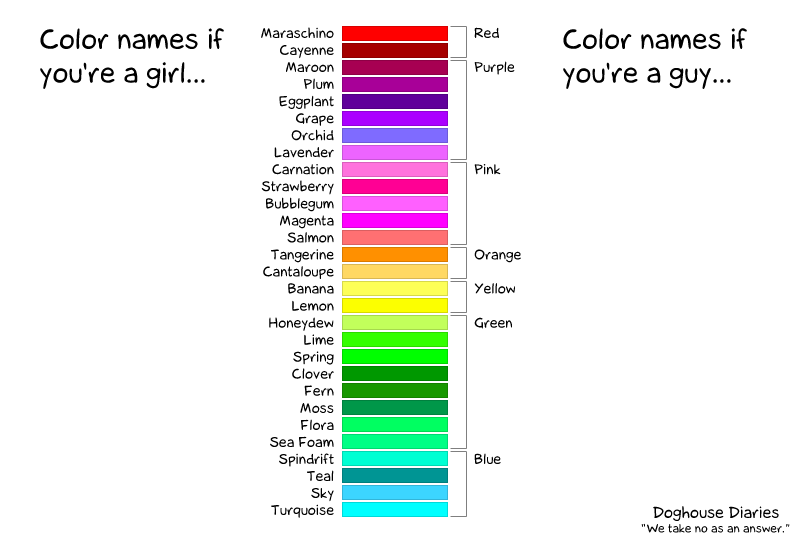

Apparently our Catholic identity is involved.
This is from Reuters with my emphases and comments:
Vatican talks with splinter group difficult
By Tom Heneghan, Religion Editor
PARIS (Reuters) – Vatican talks with a controversial splinter group have been difficult and the ultra-traditionalist Catholics will have to make concessions if an accord is to be reached, a senior Vatican cardinal said on Wednesday.
The Society of Saint Pius X (SSPX), whose four bishops were readmitted to the Church last year after a ban of 21 years, cannot conduct the doctrinal discussions on their terms, but only on those of the Vatican, Cardinal Walter Kasper said. [It is not, of course, a dialogue between "equals".]
The closed-door talks are a key issue for the Catholic Church because, although the SSPX is small, its return to the fold has been so stormy. [And now for an entirely irrelevant tangent…] One readmitted bishop, Richard Williamson, is a Holocaust denier convicted and fined for hate speech in Germany.
Pope Benedict’s eagerness to rehabilitate the SSPX, despite its rejection of the Second Vatican Council (1962-1965) reforms, troubles Catholic critics who see them as anti-Semites who want to turn back the clock on 40 years of dialogue among religions.
"Dialogue with them is not easy," Kasper, who heads the Vatican department for relations with other Christian churches and with Jews, told a news conference during a visit to Paris.
"The main problem with them is not the Mass in Latin," he said, referring to the SSPX’s insistence on the pre-Council liturgy, "but the concept of tradition. Do we want a living tradition or a petrified one?"
"I’m for a dialogue, but on our conditions, not on the traditionalists’ conditions," he added. The SSPX had to accept the Council reforms, the "sine qua non" of any accord. [Although we have no idea what "accept the Council reforms" actually means.]
Without an accord, the group will have no official status and its clergy will not be recognised as Catholic priests or allowed to exercise their ministry. [That is not quite accurate. The priests are recognized as priests but they have no permission from the Church to exercise a priestly ministry.]
Benedict, who has promoted a return to Catholic tradition and identity during his five-year papacy, said in January that the talks among three theologians from each side were held up over "doctrinal problems" he did not specify.
The SSPX, numbering several hundred thousand members, insists it represents the true faith and the Vatican and the vast majority of the Church went off the rails at the Council.
POPE’S SLEEPLESS NIGHTS
Even while its theologians meet Vatican experts every other week to seek a common understanding of the Council, its leaders have been criticising key doctrines of that historic event.
SSPX head Bishop Bernard Fellay said in March the Vatican theologians "wish the Church well but also want to save the Second Vatican Council — that’s like squaring a circle."
Williamson, ignoring a gag order Fellay imposed on him after his interview denying the Holocaust, dismissed the Vatican talks in January as a futile bid to harmonise irreconcilable views.
"Either the SSPX becomes a traitor, or Rome converts, or it’s a dialogue of the deaf," he said.
In recent months, the SSPX head in Germany has criticised Benedict for visiting the Rome synagogue and the French district head said dialogue with other faiths was ruining the Church.
A former colleague, German theologian Wolfgang Beinert, told Der Spiegel magazine last month that the pope had told him the SSPX issue "robs him of his sleep." He did not think Benedict would compromise at any cost with the ultra-traditionalists. [Pope Benedict is the Pope of Christian Unity.]
Kasper, the second-highest German at the Vatican after Benedict, said the SSPX has staunchly opposed the dialogue with other Christian churches for which he is responsible.
"They’ve attacked me as a heretic," he said with a smile.
Asked why the ultra-traditionalists opposed ecumenical dialogue so strongly, he said: "Some people feel threatened in their Catholic identity when we speak with Protestants.
"We need to have a Catholic identity," he said. "But we need an open and mature identity, not a closed one. That’s not a mature identity."
(Editing by Tim Pearce)
I was alerted to the following by a long-time reader.
A poll conducted by CBS and Hell’s Bible (aka the New York Times) finds that, in spite of the efforts of the MSM, the Holy Father’s popularity has actually risen.
AMERICANS, CATHOLICS REACT TO REPORTS OF CHILD ABUSE BY PRIESTS
April 28-May 2, 2010The Vatican receives criticism from Catholics and from Americans overall for its handling of the recent reports of sexual abuse of children by priests; most think it’s done a poor job. But majorities of Catholics and Americans say that has not affected their views of the Catholic Church, and positive views of Pope Benedict XVI among Catholics have risen since March.
Few Catholics say views of their religion generally or their involvement in their church has been affected by the reports of abuse. While four in ten Catholics say the recent abuse reports have caused them to doubt the Vatican’s authority, only about one in ten have questioned their Catholicism, become less involved in their church’s activities, attended Mass less often or donated less money.
There is a good deal more.
Keep in mind that the MSM had some objectives in the recent stirring of controversies. The poll reflects the interests of the NYT as well.
Also note that the poll refers to "the Vatican", which is so vague as to be nearly meaningless.
Here are some excerpts from the findings:
RECENT ABUSE REPORTS CAUSED YOU TO DOUBT VATICAN’S AUTHORITY?
(among Catholics)
All Weekly Mass
Yes 40% 28%
No 55 69Despite the pontiff’s leadership role in the Church hierarchy, 77% of Catholics say a person can be a good Catholic yet not accept the Pope’s authority.
Few report any impact on their own faith or involvement in the Catholic Church. Just one in 10 Catholics say that as a result of the recent reports of child abuse, they have questioned whether they would remain in the Catholic Church. Almost all Catholics who attend Mass weekly say they have not questioned whether they would remain in the Catholic Church.RECENT ABUSE REPORTS’ LED TO QUESTION REMAINING IN CATHOLIC CHURCH?
(among Catholics)
Yes 9%
No 86Similarly, nearly all Catholics say the reports have not affected how comfortable they are around their own parish priest.
RECENT ABUSE REPORTS’ EFFECT ON COMFORT WITH OWN PRIEST?
(among Catholics)
More comfortable 4%
Less comfortable 6
No effect 88Fewer than one in ten Catholics report they are less likely to be involved in the Church or attend Mass because of the recent reports of abuse.
RECENT ABUSE REPORTS’ EFFECT ON…?
(among Catholics)
Involvement in Church activities
More likely 9%
Less likely 11
No effect 77Mass attendance
More likely 4%
Less likely 10
No effect 8279% of Catholics say they or other family members in their household have given money to a Catholic parish or organization in the past year, and most Catholics say their financial contributions to the Church have stayed the same. 14% say they have given less to the Church because of the recent sexual abuse reports.
Yet another reason why Pope Benedict was right to issue Anglicanorum coetibus.
A priest friend, Fr. GR, alerted me to this, on Virtue Online, a site for "orthodox Anglicanism":
Defrocked Catholic Priest Leads Earth Worship Seminar
Former Dominican Turned Episcopalian Praises Gaia, ‘Goddess’An Episcopal priest and "theologian" [and we use that term loosely] who popularized the rave-like "Techno Cosmic Mass" and advocated goddess worship [Sounds like my seminary days.] recently led a seminar on mysticism and Earth spirituality to coincide with Earth Day.
Warning that environmental degradation caused by raging against "Gaia" had to cease, the Rev. Matthew Fox [Remember him?!?] made frequent references to "the Goddess" and the divine feminine during his environmentally-themed lecture and workshop, "Earth Spirituality and the Mystical Tradition." The event was held in April at the Unitarian Universalist Church in the Washington suburb of Rockville, Maryland, and sponsored by the Shalem Institute for Spiritual Formation.
Episcopal Priest and Theologian Matthew Fox has authored 28 books, many addressing the mysticism and spirituality of Earth worship. (Image Courtesy of Friends of Creation Spirituality) Fox’s seminar was a melding of Celtic spirituality, goddess worship, panentheism (which posits that God interpenetrates every part of nature, but also transcends nature), environmental activism, and a political rejection of American "empire," peppered sporadically [Wait for it!] with digs against the Vatican.
Making references to Christian mystics like Hildegard of Bingen alongside pagan deities and the animal world, Fox comfortably oscillated between threats to polar bears and the oppression patriarchy when expressing his views on the natural world.
The solution offered by the former Roman Catholic priest [whack job] was an embrace of ancient spiritual practices, recast in modern language and setting.
"This is how you change consciousness the fastest – through rituals, not [academic] degrees," Fox said, explaining the various practices he has either rediscovered or pioneered in mapping out "creation spirituality."
Creation Spirituality
Fox’s views have long sparked controversy, although he did not start out in unorthodox surroundings. A member of the Dominican Order for 34 years, Fox refused to respond to a summons to discuss his writings with his superiors in the Roman Catholic Church. This disobedience led to his expulsion from the order in 1993. Due to his denial of the doctrine of original sin, Fox had already been forbidden by then-Cardinal Joseph Ratzinger (now Pope Benedict XVI) from teaching theology in 1988. [Not a moment too soon. The Domincan’s themselves should have taken care of this nut. Who was at the head of the Dominicans in those days?]
Following his departure from Roman Catholicism, Fox has served as a priest in the San Francisco-based Episcopal Diocese of California [Where else?] since 1994, working with the group Friends of Creation Spirituality and the now-shuttered University of Creation Spirituality. At the center of his work has been something called "the cosmic mass" – a religious ceremony that Fox adapted from the creation spiritual tradition.
"Creation spirituality begins with the concept of original blessing instead of original sin," [Apparently defying God is a good thing.] Fox explained in a 2005 documentary. "You came into the world as a real expression of divinity and as something beautiful and yearning to connect with others, including the creator. [That’s the problem, isn’t it. Our first parents excluded the Creator.] The ‘cosmic Christ’ theology is also a big part of our cosmic mass. It teaches that the Christ – that is the image of God – is present in every being in the universe. This allows you a much broader canvas in which to paint your worship." [Your non-Christian worship.]
That worship has included the "Techno Cosmic Mass" – an event that attempts to combine the religious ritual of the Eucharist with non-Christian religious rituals and the energy of techno music and rave parties. Mixing dance, techno music, contemporary art and the western liturgical tradition, the post-modern form of worship eschews traditional images of church, along with rejecting traditional Christian teachings.
Fox partly justifies creation spirituality by saying that Jesus Christ did not get his wisdom from books. [And he knows this… how? Did Christ not read Scripture in the synagogue?]
"He was probably illiterate," [the Eternal Word] Fox claimed, explaining that Jesus’ purportedly illegitimate birth would have exiled him from the rabbinical schools. Instead, Fox posits that the young Jesus spent more time learning from nature. References to lilies, vines, and mustard seeds in Jesus’ teachings back this view, according to Fox. [Nut case!]
The former Catholic "theologian" did not explain how Christ was so familiar with rabbinical teachings if he was illiterate, or how he read from the scrolls at Capernum or wrote on the ground while confronting the accusers of the woman caught in adultery.
In addition to creating his own theology independent of Scripture, Fox waded into science, authoring his own physical laws for the universe. [!]
"Matter is frozen light," Fox asserted, also adding that plants and animals had souls, as they share the properties of being "living, sensory and intelligent." [Some of you readers who are young might not know what sort of rubbish was floating around in the 80’s. Sounds funny now, doesn’t it?]
Fox conducted elements of the "cosmic mass" during the seminar. Among them was a grieving ritual, which Fox equated with confession during the traditional mass. In preparation for the ritual, Fox invited participants to place their feet, knees, hands and forehead in direct contact with the floor, in order to increase connection with the earth below. Seminar participants then were instructed to release their grief into the earth in three stages: anger, sorrow, and concluding with "bottoming out". [Or, perhaps, botttoming up!]
As the "grief work" began, animal-like barking and growls punctuated guttural wails and whimpering that filled the church sanctuary, rising to a crescendo and then concluding. Fox pronounced the "grief work" as authentic, saying that which came from the gut was correctly in line with the third chakra, a point of spiritual power located along the body in yoga. [Nut case!]
The clergyman also prescribed another practice of grieving: "Find a rock, dig a hole, ask the rock if it is willing to do this, [Yep… sounding more and more like seminary…] and then you get a bandanna or some piece of cloth that means something to you, and you put your grief into that rock and wrap it, wrap the bandanna around it and bury it, and then cover it up. The Earth is so generous and large that she can absorb our grief for us." [I know… I know… but you keep on reading anyway….]
Despite Fox’s efforts to correlate portions of the cosmic mass with the traditional mass, such as having a modified communion service, he seemed eager to jettison the theme of the Eucharist. [What a surprise!]
"We’ve been told by bad preachers that Jesus died on the cross for your sins," Fox said. In the place of sacrificial atonement, the Episcopal priest argued that liturgy and worship was about the Universe itself, "veneration of the sacred."
Animosity toward the Vatican
Despite his focus upon creation spirituality, Fox could not resist inserting occasional digs at the leadership of the church he left over 15 years ago.
As if to validate concerns that led to his expulsion from the Dominican order, Fox referred to Mary as "the Goddess" whom he worshipped. Fox also criticized the "patriarchy" of Rome. [He is a the ideal "theologian" for that relic of the 80’s, the S.N.A.G., the "sensitive new-age guy".]
"Anyone who doesn’t think that Christianity needs reinventing has not been listening to the news for the past six weeks," Fox said, referring to the clergy sex abuse scandals. "The Vatican needs reinventing, it needs a burial with a good ritual – all good Catholics can put their imaginations to work now on what a post-Vatican Catholicism would look like."
Fox also protested against the Pope’s ban on the use of the feminine pronoun at the altar to describe God.
"One of the objections by Cardinal Ratzinger to my theology was that I call God ‘mother’," [One of the objections? Here’s my objection…. How about the objection that someone this loony shouldn’t be allowed ever to speak in public or write?] Fox said. "I think he should have spent more time with these mystics and less time chasing down theologians."
Expressing frustration with the investigations of unorthodox theology by the Congregation of the Doctrine of Faith, Fox hypothetically asked of the bishops: "Who’s investigating you? We’d be glad to." [He doesn’t sound bitter. No. Not a bit.]
"Enough of the injustice, enough of the lies, enough of the Vatican, enough of patriarchy, enough is enough," Fox said. "Enough of the empire." [Enough is right.]
Here is an interesting bit of information from Catholic Hierarchy:
While doing some research I discovered that my wording on the website relating to the age of a cardinal and his right to vote in a conclave was not accurate. I’m in the process of updating the wording on the site.
The old wording was:
Cardinals under the age of 80 at the time the Holy See becomes vacant may vote in a conclave.
The new wording is:
Cardinals that reach the age of 80 before the Holy See becomes vacant may not vote in a conclave.
It may not seem like that big of a change, but there is one important distinction. [NB:] If the Cardinal turns 80 years old on the same day that the Holy See becomes vacant, he does retain the right to vote in the subsequent conclave.
(Source: #33, Universi Dominici Gregis, by Pope John Paul II, on 22 Feb 1996)
On another note, I believe that if a man is named Cardinal but the Holy Father dies before the consistory in which that Cardinal would receive the marks of his dignity (red hat and ring), the man named Cardinal would be NOT allowed to participate in the conclave. The names must be published in the consistory, not just made public.
I have interested in the Fatima apparitions for quite some time… in particular in the controversy concerning the "Third Secret" given by Our Lady to Sr. Lucia.
 For some background on the controversy you might check out Antonio Socci‘s book, translated now into English. Marco Tossati also has a good book in Italian.
This is from CNA:
Pope Benedict to deliver ‘intense’ message during Fatima visit
Vatican City, May 5, 2010 / 12:20 pm (CNA/EWTN News).- "Fatima is a particularly significant place for this Pope," said Vatican spokesman Fr. Federico Lombardi on Tuesday, noting that it was also a destination for two former Popes. The Holy Father has a thorough knowledge of the history of the Marian sanctuary, he added. [And the Holy Father has known the content of the "Third Secret" for a very long time.]
Fr. Lombardi held a press conference at the Vatican to prepare the media for the Pope’s next trip out of the Vatican. He will be visiting Portugal from May 11-14.
The spokesman referred to the Pope’s stop in Fatima on May 13 as the highlight and "heart" of the upcoming four-day trip to Portugal, according to Vatican Radio. But, he pointed out, Benedict XVI will not be the first Pope to visit the Marian shrine. [The things he tells us!]
Two other Pontiffs have been to Fatima. In 1967, the sanctuary hosted Paul VI, and John Paul II visited in 1982, 1991 and 2000, at which time the visionaries Jacinta and Francesco were beatified.
The Portuguese shrine is not unfamiliar to Pope Benedict, since as head of the Congregation for the Doctrine of the Faith, then-Cardinal Joseph Ratzinger extensively studied the message of Fatima. Fr. Lombardi said on Tuesday that the Pope has been involved with history of the Marian sanctuary in a "very deep, personal way."
It was him, for example, who was called upon to give a theological perspective when the third secret of Fatima was made public in 2000. [Or… at the least… part of the Third Secret!]
[NB:] The Vatican spokesman said that the Holy Father will also deliver an intense message ["an intense message"] during his Fatima visit. Upon his arrival at the sanctuary on May 12, he will remember John Paul II and the 29th anniversary of the assassination attempt that nearly took his life on May 13, 1981.
[…]
Fr. Lombadi has certainly put an edge to my interest by this whetting.
In the meantime, I would love someday to see an image of Our Lady of Fatima that doesn’t involve pastels.
An oldie PODCAzT for today, which in the feast of St. Pius V in the older, traditional Roman calendar:
 On this feast of St. Pope Pius V (+1572) I drill into one of his most famous acts as Roman Pontiff. Today we look into and listen to his Apostolic Constitution Quo primum, by which he promulgated the editio princeps of the Missale Romanum.
 This history changing document came out of turbulent times. The Council of Trent had just closed and Pius, as Pope, was tasked with the standardization of the Church’s liturgy as a bulwark against attacks on the Catholic Faith on many fronts. Catholic identity was shaken by the theological revolt in the north, uncertain teachings, lack of unity in the expression of worship and even the menace of invasion by Islamic armies.
Because there is a reciprocal relation between what we believe and how we pray, our worship plays a key role in the shaping and maintaining of our Catholic identity in a difficult world.
However, centuries after the edition of the "Tridentine" Roman Missal, decades after Paul VI issued his own Apostolic Constitution for the promulgation of the so-called Novus Ordo of the Roman Rite, confusing claims remain about the juridical force of Pius V’s Quo primum.
Some people maintained that Paul VI absolutely abolished the older, traditional "Tridentine" form of Mass with his own Constitution Missale Romanum.
Some people maintain that Pius V’s Quo primum can never be abrogated or abolished or modified even by other Popes and that it still has force of law.
While not trying to get too canonical, we drill into the questions, draw some conclusions, and hear the words of Pius V in their 16th century splendor.
You may surprised at how modern some of the saintly Pope’s actions sound.
https://wdtprs.com/wp-content/legacy/audio-archive/podcazt/09_04_30.mp3
I received the program for the upcoming FOTA III Conference:
St Colman’s Society for Catholic Liturgy
Third International Liturgy Conference
“Psallite sapienter: Benedict XVI on Sacred Music”Imperial Hotel, South Mall, Cork
10-12 July 2010Prior to his election as Pope, Joseph Ratzinger frequently addressed the question of sacred music in various writings, especially in his liturgical trilogy, “The Feast of Faith”, “A New Song for the Lord” and “The Spirit of the Liturgy”. Indicating the principles which underlie its historical development, he describes the qualities which should characterise all forms of liturgical music and proposes a way forward, which is in line with the Church’s musical tradition, while encouraging genuine creativity.
A key to Ratzinger’s understanding of the nature of sacred music is found in the expression “Psallite sapienter”, literally translated “Sing ye wisely”, which is drawn from Psalm 46 of the Latin Vulgate edition of the Bible. For him this text synthesises what Sacred Scripture has to say about the kind of music that befits worship. Such music must be in accordance with wisdom, and therefore with reason and, ultimately, with the revealed word that comes from God, with the Word made flesh. In this way, it becomes capable of touching the human heart and raising it to communion with God, as it did so dramatically in the case of St Augustine: “Greatly did I weep at the beauty of your hymns and canticles, moved deeply by the sweet chants of your Church’s music. The voices flowed into my ears and truth was poured forth into my heart, from which the emotion of my devotion overflowed: tears ran from my eyes and I was blessed in them” (Confessions, IX, 6, 14).
Unfortunately, recent decades have witnessed an impoverishment of liturgical music in many parishes and religious communities. All too often, Church music has been reduced to the trivial and the banal, providing a poor substitute for the musical entertainment easily obtainable elsewhere and sadly failing to raise the heart and mind to God. Many factors have contributed to this situation, including an inadequate understanding of the kind of music appropriate to a liturgical setting, the banishment of the Church’s extraordinary heritage of plainchant and polyphony to concerts and recordings, a superficial interpretation of “active participation” which has effectively eliminated specialised choir music in the name of congregational singing, where such exists, and a pastoral pragmatism that has led to the adoption for worship of the mass-produced melodies of popular music.
Mindful of this situation, this Conference explores the ideas advanced in the Holy Father’s writings on liturgical music. It also provides a forum for a younger generation of liturgists and musicians, drawn from various countries, who are presently engaged in the recovery and promotion of the Church’s musical heritage for liturgical use or in composing beautiful new and uplifting works of sacred music.
The Conference will be opened by His Excellency Archbishop Raymond Leo Burke, Prefect of the Supreme Tribunal of the Apostolic Signatura, Archbishop Emeritus of Saint Louis.Provisional Programme
Saturday 10 July
10.00 Registration
11.00-13.00
Dr D. Vincent Twomey, SVD, Professor Emeritus of Moral Theology, St Patrick’s College, Maynooth
Sursum corda: An Introduction to Ratzinger’s Theology of Sacred MusicFr Uwe Michael Lang, CO, Consultor to the Office for the Liturgical Celebrations of the Supreme Pontiff
Defining Criteria for Sacred Music: From Benedict XIV to Benedict XVIFr Sven Leo Conrad, FSSP, Liturgical Scholar (Germany)
Joseph Ratzinger and Johannes Overath: The Intellectual Connection15.00-18.00
Fr Stéphane Quessard, Episcopal Vicar, Archdiocese of Bourges (France)
Towards a Renewal of Sacred MusicDr Alcuin Reid, Liturgical Scholar (Fréjus-Toulon, France)
Ut mens concordat voci: Sacred Music and Actual Participation in the LiturgyFr Samuel Weber, OSB, Director of the Institute for Sacred Music, Archdiocese of Saint Louis (USA)
Benedict XVI on the Psalms in the Liturgy19.30 Pontifical Vespers
Celebrant: Archbishop Raymond L. Burke
Sts Peter and Paul’s Church, Cork21.00 Organ Recital
Thomas Lacôte
Sts Peter and Paul’s Church, CorkSunday 11 July
11.30 Pontifical High Mass
for the Seventh Sunday after Pentecost
Celebrant: Archbishop Raymond L. Burke
Palestrina, Missa Papae Marcelli (Lassus Scholars, Dublin)
Sts Peter and Paul’s Church, Cork16.00-19.00
Dr Andreas Andreopoulos, Director of the Centre for Orthodox Studies, Department of Theology, University of Wales, Lampeter (Wales)
Music in the Orthodox LiturgyFr Alberto Donini, Lecturer in Sacred Music, Diocese of Brescia (Italy)
Gregorian Chant in the Liturgy according to Joseph Ratzinger / Benedict XVIDr James MacMillan, Conductor and Composer (Scotland)
The Spirit of the Liturgy: Rejoice in Tradition and Embrace the Future20.00 Gala Dinner
Monday 12 July9.00-12.00
Dr Frank Lawrence, Department of Music, University College Dublin (Ireland)
The Spirit of the Liturgy: Gregorian Chant as Mystagogy and ExegesisThomas Lacôte, Titular Organist of St Stephen’s Cathedral, Bourges (France), Composer, Professor at the Musical Academies (Conservatoires) of Orleans and Aubervilliers, Associate Professor at the Conservatoire National Supérieur, Paris
Liturgical Texts, Rites and Symbols and Contemporary Musical Creation: An Example for the Feast of the Dedication of a ChurchDr Kerry R. McCarthy, Assistant Professor of Music, Duke University (USA)
Listening to William Byrd12.30 Solemn High Mass
William Byrd, Mass for Five Voices (Lassus Scholars, Dublin)
Sts Peter and Paul’s Church, Cork16.00-18.00
Mgr James O’Brien
Annual General Report of St Colman’s Society for Catholic LiturgyArchbishop Raymond Leo Burke, Prefect of the Supreme Tribunal of the Apostolic Signatura
The New Evangelization and Sacred Music: The Unbroken Continuity of Holiness, Beauty and UniversalityIte O’Donovan, Director of the Lassus Scholars, Dublin (Ireland)
Choral Music in the Celebration of the Liturgy: A Musical Heritage of Inestimable Value, a Tradition to be Fostered and Protected …_________
Inquiries about the Conference may be made to the Society in writing, by telephone or by e-mail:
In writing: Terry Pender, Leeview, Cobh, Co. Cork, Ireland
Telephone: 021-4813445/4813636 (within Ireland); +353-21-4813445/4813636 (from outside Ireland)
e-mail: colman.liturgy@yahoo.co.uk


Coat of Arms by D Burkart
 Fr. John Zuhlsdorf on Daily Rome Shot 1117 – A *POLL* about 2026-27: “Sorry… my bad. It is indeed SIX. 1. Rh8+! Kxh8 2. Qh2+ Kg8 3. Qh7+ Kf8 4. Qh8+ Ke7 5.…”
 on Encrypted Yeast? The Fathers on “What does the “leaven” really say?” (6th Sunday after Epiphany Resumed): “I especially like St. John Chrysostom’s insight, that when we are “hidden” in the normal places we live and work,…”
 on Daily Rome Shot 1117 – A *POLL* about 2026-27: “pestolover: For what it’s worth, your solution was the best I could do also.”
 on Daily Rome Shot 1117 – A *POLL* about 2026-27: “Fr Z thanks so much for 2 reminders. 1. Using your Amazon link! For heaven’s sake it costs us nothing…”
 on 10 November – St Andrew Avellino (Vetus Ordo). Wherein Fr. Z rants.: “So interesting that you bring this up, a couple weeks ago a priest at a neighboring parish died unexpectedly. They…”
 on Daily Rome Shot 1117 – A *POLL* about 2026-27: “All moves are forced for black. R-h8+, KxR Q-h2+, K-g8 Q-h7+, K-f8, Q-h8+, K-e7 QxP+, K-e6 Q-f7++ Ok, so 6…”
 on Daily Rome Shot 1117 – A *POLL* about 2026-27: “I couldn’t post on the ad orientem article. Here’s what I wanted to post: “Let the bishops restore ad orientem…”

A Daily Prayer for Priests








They find you a pro-life agent in your area who commits to giving a portion of the fee to a pro-life group!

PLEASE subscribe via PayPal if it is useful. Zelle and Wise are better, but PayPal is convenient.
A monthly subscription donation means I have steady income I can plan on. I put you my list of benefactors for whom I pray and for whom I often say Holy Mass.
In view of the rapidly changing challenges I now face, I would like to add more $10/month subscribers. Will you please help?
For a one time donation...



Help Monks in Wyoming (coffee – UPDATED LINK) and Norcia (beer) and the wonderful "Soap Sisters" of Summit, NJ!


Please follow me on Twitter!










Visits tracked by Statcounter
since Sat., 25 Nov. 2006:

