Nuncio says Rome has more interest in internet than a “terna” his sends

My friend Fr. Ray Blake of Brighton’s St. Mary Magdalen has this interesting piece:

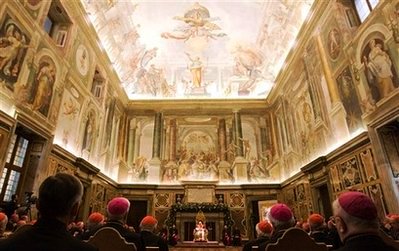
Archbishop Faustino Sainz Muñoz, the Apostolic Nuncio [in the UK] has given an interview to The Tablet, apparently. Why such a good man should not choose a mainstream Catholic journal or newspaper but prefer a fanzine which sets itself the task of opposing every thought, word and deed of the Holy Father, I am not sure. Apparently in the interview he says Rome, now, seems to take more interest in the internet than in a "Ternas" submitted by him.  [If that is true, that signals that the Congregation has finally adjusted its learning curve.]

Obviously Rome has learnt from the Williamson debacle but also learnt that the news and views of epicopabili are online, […and, of course, views about them…] and readily available to the various Roman dicasteries but also to the media, and actually to individual members of the faithful, a whiff of scandal once on-line is there forever. Recent episcopal appointments in the States indicate Rome tends to appoint priests who have a positive and strong, paper and internet trail behind them, for the most part they have either worked in Rome or have been military chaplains, where their careers are heavily documented.  [A point I have made often.]

I don’t think Rome takes much interest in priest bloggers, [You would be surprised.] though we all have regular Vatican visitors, we tend not to get involved in personal criticism but I am sure it is fascinated by what on-line newspapers have to say and I am sure someone trawls through pastoral letters on diocesan websites. One blog that does have influence is Damian Thompson’s, though I feel for anyone who is thrown into the bear pit of his readers. There is a rumour that Damian’s unrelenting ridicule of his pastoral ineptitude cost one ecclesiastic preferment to a high position. Today he has a very beautiful post about the meeting of faith and beauty at the Oratory Carol service. He always writes beautifully about music.


Posted in SESSIUNCULA | Tagged
14 Comments

Fr. Schillebeeckx… RIP

I just learned that Fr Edouard Schillebeeckx died today.

Fr S had many erroneous ideas but at one point did some good theological work.

May God be merciful to him now.

Posted in SESSIUNCULA |
50 Comments

The Cloisters

Today I jouneyed up the west side to the Cloisters.

On the last stretch I stopped for a moment where Washington stopped on the heights above the river.

The Cloisters

The Cloisters

The the short walk the rest of the way.

The Cloisters

The Cloisters

There are splendid medieval holdings here in this extensive complex of reconstructions. Here are some views.

The Cloisters

The Cloisters

The Cloisters

The Cloisters

The Cloisters

The Cloisters

The Cloisters

The Cloisters

The Cloisters

The Cloisters

After the Cloisters we stopped at the shrine of St Francis Cabrini, where her body is venerated.

The Cloisters

Eventually we made our downtown to Holy Innocents where I was slated to say Mass.

The Cloisters

Posted in SESSIUNCULA |
14 Comments

Holy See Press Office comment on Decree of heroic virtues of Ven. Pius XII

From the Vatican Press Office comes this, with my emphases and comments:

NOTE CONCERNING DECREE ON THE HEROIC VIRTUES OF PIUS XII

VATICAN CITY, 23 DEC 2009 (VIS) – Holy See Press Office Director Fr. Federico Lombardi S.J. today issued the following note concerning the signing of the recent decree on the heroic virtues of Servant of God Pope Pius XII.

  "The Pope’s signing of the decree ‘on the heroic virtues’ of Pius XII has elicited a certain number of reactions in the Jewish world; perhaps because the meaning of such a signature is clear in the area of the Catholic Church and of specialists in the field, but may merit certain explanation for the larger public, in particular the Jewish public who are understandably very sensitive to all things concerning the historical period of World War II and the Holocaust.

  "When the Pope signs a decree ‘on the heroic virtues’ of a Servant of God – i.e., of a person for whom a cause for beatification has been introduced – he confirms the positive evaluation already voted by the Congregation for the Causes of Saints. … Naturally, such evaluation takes account of the circumstances in which the person lived, and hence it is necessary to examine the question from a historical standpoint, but the evaluation essentially concerns the witness of Christian life that the person showed (his intense relationship with God and continuous search for evangelical perfection) … and not the historical impact of all his operative decisions".

  "At the beatification of Pope John XXIII and of Pope Pius IX, John Paul II said: ‘holiness lives in history and no saint has escaped the limits and conditioning which are part of our human nature. In beatifying one of her sons, the Church does not celebrate the specific historical decisions he may have made, but rather points to him as someone to be imitated and venerated because of his virtues, in praise of the divine grace which shines resplendently in them’.

  "There is, then, no intention in any way to limit discussion concerning the concrete choices made by Pius XII in the situation in which he lived. For her part, the Church affirms that these choices were made with the pure intention of carrying out the Pontiff’s service of exalted and dramatic responsibility to the best of his abilities. In any case, Pius XII’s attention to and concern for the fate of the Jews – something which is certainly relevant in the evaluation of his virtues – are widely testified and recognised, also by many Jews. [I am glad that he at least added that.]

  "The field for research and evaluation by historians, working in their specific area, thus remains open, also for the future. In this specific case it is comprehensible that there should be a request to have open access to all possibilities of research on the documents. … Yet for the complete opening of the archives – as has been said on a number of occasions in the past – it is necessary to organise and catalogue an enormous mass of documentation, something which still requires a number of years’ work.

  "As for the fact that the decree on the heroic virtues of Pope John Paul II and Pope Pius XII were promulgated on the same day, this does not mean that from now on the two causes will be ‘paired’. They are completely independent of one another and each will follow its own course. There is, then, no reason to imagine that any future beatification will take place together".

  "It is, then, clear that the recent signing of the decree is in no way to be read as a hostile act towards the Jewish people, and it is to be hoped that it will not be considered as an obstacle on the path of dialogue between Judaism and the Catholic Church. Rather we trust that the Pope’s forthcoming visit to the Synagogue of Rome [That is probably what this is all about.] will be an opportunity for the cordial reiteration and reinforcement of ties of friendship and respect".

Posted in SESSIUNCULA | Tagged
40 Comments

USCCB: Senate health care bill “deficient”

From the USCCB:

BISHOPS CALL SENATE HEALTH CARE REFORM BILL ‘DEFICIENT,’ ESSENTIAL CHANGES NEEDED BEFORE MOVING FORWARD
 
Seek to retain federal policy on abortion funding and conscience protection
Want to protect access to health care that immigrants have now, remove barriers to access
Need strong provisions for adequate affordability and coverage standards
 
WASHINGTON—The current health care reform bill is “deficient” and should not move forward without “essential changes,” the chairmen of three committees of the United States Conference of Catholic Bishops said December 22.
            The chairs, Cardinal Daniel DiNardo of Galveston-Houston, of the Committee on Pro-Life Activities; Bishop William Murphy of Rockville Centre, New York, of the Committee on  Domestic Justice and Human Development; and Bishop John Wester of Salt Lake City, of the Committee on Migration, stated their position in a December 22 letter to senators working to pass the Senate version of health reform legislation.
            The entire letter can be found at http://www.usccb.org/healthcare/letter-to-senate-20091222.pdf.
            The legislative proposal now advancing “violates the longstanding federal policy against the use of federal funds for elective abortions and health plans that include such abortions — a policy upheld in all health programs covered by the Hyde Amendment as well as in the Children’s Health Insurance Program, the Federal Employees Health Benefits Program — and now in the House-passed ‘Affordable Health Care for America Act,’” the bishops said.
They said that the health care bill passed by the House of Representatives “keeps in place the longstanding and widely supported federal policy against government funding of elective abortions and plans that include elective abortions” and “ensures that where federal funds are involved, people are not required to pay for other people’s abortions.” The Senate bill does not maintain this commitment.
In the Senate version, “federal funds will help subsidize, and in some cases a federal agency will facilitate and promote, health plans that cover elective abortions,” the bishops said. “All purchasers of such plans will be required to pay for other people’s abortions in a very direct and explicit way, through a separate premium payment designed solely to pay for abortion. There is no provision for individuals to opt out of this abortion payment in federally subsidized plans, so people will be required by law to pay for other people’s abortions.”  The public consensus against abortion funding, said the bishops, “is borne out by many opinion surveys, including the new Quinnipiac University survey of December 22 showing 72 percent opposed to public funding of abortion in health care reform legislation."
            This bill also continues to fall short of the House-passed bill in preventing governmental discrimination against health care providers that decline involvement in abortion,” the bishops said. And it also “includes no conscience protection  allowing Catholic and other institutions to provide and purchase health coverage consistent with their moral and religious convictions on other procedures.”
            The bishops also called for all immigrants, regardless of status, to be able purchase a health insurance plan with their own money.
 “Without such access, many immigrant families would be unable to receive primary care and be compelled to rely on emergency room care,” the bishops said. “This would harm not only immigrants and their families, but also the general public health. Moreover, the financial burden on the American public would be higher, as Americans would pay for uncompensated medical care through the federal budget or higher insurance rates.”
            The bishops urged removal of the five-year ban on legal immigrants accessing federal health benefit programs, such as Medicaid, the Children’s Health Insurance Program, and Medicare, which was proposed by Senator Robert Menendez (D-NJ). His proposal, “which would give states the option to remove this ban, should be included in the bill.”
            The bishops said they want health insurance to be affordable and said that while theSenate bill “makes great progress in covering people in our nation,” it “would still leave over 23 million people in our nation without health insurance. This falls far short of what is needed in both policy and moral dimensions.”
The bishops urged Congress and the Administration to “fashion health care reform legislation that truly protects the life, dignity, health and consciences of all.”
Right now, they said, “in all the areas of our moral concern, the Senate health care reform bill is deficient. On the issue of respect for unborn human life, the bill not only falls short of the House’s standard but violates longstanding precedent in all other federal health programs. Therefore we believe the Senate should not move this bill forward at this time but continue to discuss and approve changes that could make it morally acceptable. Until these fundamental flaws are remedied the bill should be opposed.”
            “Regardless of the outcome in the Senate, we will work vigorously to incorporate into the final legislation our priorities for upholding conscience rights and longstanding current prohibitions on abortion funding; ensuring affordability and access; and including immigrants,” they added. “We hope and pray that the Congress and the country will come together around genuine reform.” 

Posted in SESSIUNCULA | Tagged , ,
23 Comments

Christmas Masses – An “omnium gatherum”

Under this entry you can post your Christmas Mass plans.

Do you have a midnight Mass?  Music?  Special events?

Let us know.

Posted in SESSIUNCULA |
73 Comments

Benedict XVI to Roman Curia for Christmas… some liturgical observations

Benedict XVI to Roman Curia for Christmas... some liturgical observationsThe other day Pope Benedict addressed the Roman Curia for the annual exchange of Christmas greetings.

You might recall his foundational speech in 2005 which defined much of the work of his pontificate.

This year, the Holy Father reviewed the year, spending a good deal of time on reflections about his trip to Africa and the Synod on Africa.

During these remarks he spoke about his experience of liturgy in Africa…. translating, as it were, the immaterial into the material… always a challenge.

Here is my overly fast translation of the Italian original posted in haste from my phone:

There was impressed on my memory in an especially profound way memory of the liturgical celebrations.  The celebrations of the Holy Eucharist were truly feasts of faith.  I would like to mention two elements which seemed to me especially important.  There was above all a great shared joy, which was expressed also through the body, but in a disciplined manner also directed to the presence of the living God.  With this there was indicated the second element: the sense of the sacrality, of the mystery present of the living God formed (plasmava), so to say, each individual gesture.  The Lord is present  – the Creator, He to whom everything belongs, from whom we have our origin and toward whom we are journeying.  Spontaneously there came to my mind the words of St. Cyprian, who in his commentary on the Our Father wrote: "Let us remember that we are in the sight of God which is turned upon us.  We must be pleasing to God’s eyes, both with the attitude of our body as also with the use of our voice" (De dom. or. 4 CSEL III 1 p 269).  Yes… this understanding was there [I think he means in Africa].  From this there does not come fear or inhibition, nor even an exterior obedience to the rubrics and even less a putting of oneself on display to others or a shouting in an undisciplined way.  There is rather what which the Fathers called "sobria ebrietas": being filled up with a joy that nevertheless remains sober and orderly, which unites persons from within, leading them in common praise of God, a praise which at the same time arouses love of neighbor, reciprocal responsibility.


Forgive errors in this fast work… I am waiting for a flight.

I suspect some of you will find his comments a little challenging.

Also in this speech the Holy Father spoke of the ecclesiology of the Council.

This was a very "conciliar" speech in many ways.

I may try to add to this a little later.

Posted in SESSIUNCULA | Tagged , ,
23 Comments

Wonderful photos, not to miss

My friend John Sonnen of Orbis Catholicus has some great photos from the recognizable Gesu e Maria on the Corso in Rome, where the older form of Mass is celebrated on Sundays.

Long time readers will remember I that I had some pretty spiffy photos there of moments during Holy Communion.   John caught the same moments.

Wonderful photos, not to miss

Wonderful photos, not to miss

Posted in SESSIUNCULA |
8 Comments

Did Shakespeare study for the priesthood… in Rome?

Fr. Longenecker has an interesting post about Shakespeare:

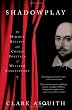
Did Shakespeare study for the priesthood... in Rome?The literature on Shakespeare being a Catholic keeps mounting. Clare Asquith’s book Shadowplay along with the scholarship of Fr.Peter Milward started the ball rolling, then Joseph Pearce’s excellent, The Quest for Shakespeare gathered all the evidence Did Shakespeare study for the priesthood... in Rome?together in a rollicking good read and the PBS documentary In Search of Shakespeare made it visual.

Now some mysterious evidence has emerged in the Venerable English College in Rome. You can read the article here. They have found some documents that might have Shakespeare’s name on them, indicating that during his ‘lost years’ from 1585 – 1592 he was in Rome, and if in Rome was he studying for the priesthood? [This is from The Daily Telegraph.]

A leather parchment kept by the college is signed by "Arthurus Stratfordus Wigomniensis" in 1585, "Shfordus Cestriensis" in 1587 and "Gulielmus Clerkue Stratfordiensis" in 1589. The college believes these signatures are: "(King) Arthur’s (compatriot) from Stratford (in the diocese) of Worcester," "Sh(akespeare from Strat)ford (in the diocese) of Chester" and "William the Clerk from Stratford".

What makes the quest so intriguing is that the evidence for Shakespeare’s life is so scant, and in this particular area it is very scant indeed, but the times were dangerous. To be a Catholic in England was considered an act of treason. Catholics had to disguise their identities. If the names in the register at the English college were cryptic maybe they had to be so that real identities would not be revealed. It’s all very juicy conspiracy theory stuff, and yet that was the situation the Catholics were in. They were members of an underground church. They had to destroy or disguise evidence and ‘keep it secret keep it safe.’

As it happens, I’ve produced the outline of a screenplay called The Shakespeare Plot. In it Shakespeare is a secret Catholic in Elizabethan England and is all tied up with spies, disguised priests, torture chambers priest’s holes, executions and other juicy stuff. Think Man for All Seasons meets Shakespeare in Love. Some people in California seem to be interested.  [Intriguing!]

Posted in Just Too Cool | Tagged
24 Comments

The turning point

Did you notice that as of yesterday, in the northern hemisphere at least, it is now winter?

We reached the turning point in our spiral through space and time.

I always think of the ancient neo-Platonic idea of exitus and reditus with the necessary conversio at this time of year…. as we go slowly but surely back into the light.


Posted in SESSIUNCULA |
12 Comments