Sadly I must walk past my favorite Chinese spot in NYC … without stopping.

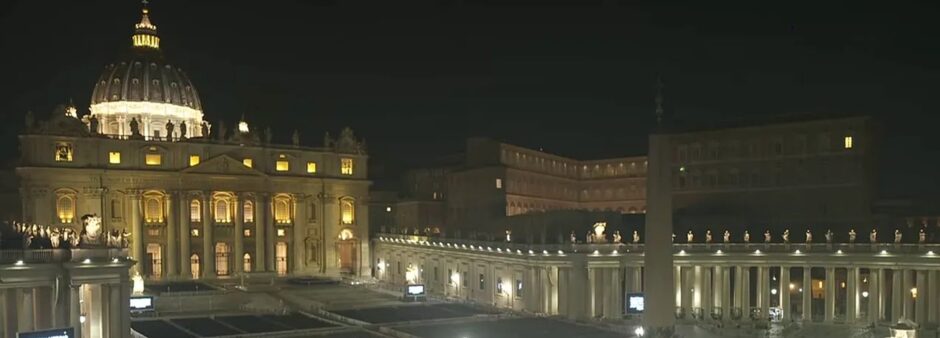
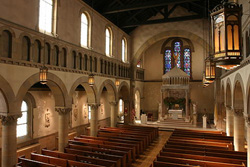 Tonight, 6 November, at 6:30 pm, at Guardian Angels Church (193 Tenth Avenue at 21st Street) there will be sung a Solemn Requiem Mass.
The sacred ministers will be Fr. Gerald Murray, Pastor of the Church of St. Vincent de Paul, as deacon and Mr. Brian Graebe, seminarian for the New York Archdiocese, as subdeacon. Your humble correspondent is celebrant for the Mass.
I am told there is to be very good sacred music for the Mass.
On CNS I read this great line:
The U.S. Conference of Catholic Bishops dismissed the House Democrats’ plan to try to isolate funding for abortion in the health care bill as a “money-laundering system” that would do nothing to stop federal funding of abortion, an issue that could potentially derail health care reform.
Pro-Abortion Catholic Speaker Pelosi’s bill is like money laundering for tax-payer funded elective abortion.
My friend John Allen, the nearly ubiquitous fair-minded columnist of the sadly ultra-liberal National Catholic Reporter has good analysis in his regular Friday piece. Let’s have a look with my emphases and comments.
Benedict’s ongoing battle against secularism
by John L Allen Jr on Nov. 06, 2009Much has been made lately [by liberals] of Pope Benedict XVI’s apparent lenience for "cafeteria Catholicism" on the right. Two developments have fed the perception: talks between the Vatican and the Society of St. Pius X, the "Lefebvrites," who broke with Rome in protest of liberalizing currents after the Second Vatican Council (1962-65); and new structures to allow Anglicans to become Catholic while preserving their heritage, with the most likely takers being conservative Anglicans opposed to homosexuality and women’s ordination. [These are both nightmare scenarios for liberals.]
Though it’s not clear how many Lefebvrites or Anglicans will walk through the doors Rome has tried to open, the effect on both fronts will be to inject new pockets of traditionalist believers into the Catholic circulatory system.
What’s the underlying logic for such moves? While it may at first blush seem unrelated, [Allen makes a good connection here…] a controversial decision on Tuesday by the European Court of Human Rights, which held that displaying crucifixes in Italian public school classrooms violates freedom of conscience, can help provide some context.
In effect, Benedict’s outreach to Lefebvrites and dissident Anglicans forms part of a trend I’ve described as "evangelical Catholicism." One cornerstone is to reassert markers of Catholic distinctiveness [good phrase] – such as Mass in Latin, and traditional moral teaching – as a means of ensuring that the church is not assimilated to secularism. At the policy-setting level of the church today, this defense of Catholic identity is job number one. [Mr. Allen is right. Pope Benedict has some goal for this pontificate. If we are going to fight the dictatorship of relativism, we need a strong Catholic identity. If we are going to evangelize, we need a strong Catholic identity. If we are going to engage in true ecumenism, we need a strong Catholic identity. Liturgy is the key component in his "Marshall Plan" for the Church. Remember what the Marshall Plan was supposed to promote. The parallel for the Church is clear.]
Historically, "evangelical Catholicism" is a creative impulse rather than something purely defensive, with roots in the papacy of Leo XIII in the late 19th century and his effort to bring a renewed Catholic tradition to bear on social and political life. [so that we, as Catholics, have an influence in the public square.] Nevertheless, fear that secularism may erode the faith from within is also a powerful current propelling evangelical Catholicism forward.
To over-simplify a bit, Benedict XVI is opening the door to the Lefebvrites and to traditionalist Anglicans in part because whatever else they may be, they are among the Christians least prone to end up, in the memorable phrase of Jacques Maritain, "kneeling before the world," meaning sold out to secularism. [Not to mention the fact that they are Christians who are separated from clear unity with the Church. Pope Benedict stresses the importance of his role as Pope as being one of promoting unity. It is not just that they a Christians who tend to agree with him. They are separated. He is trying to reintegrate them.]
At this stage, some critics may be tempted to ask if the cure is perhaps worse than the disease — in other words, if secularism is really so bad.
Benedict XVI himself has talked about a "healthy secularism," which involves the separation of church and state and recognition of the essentially lay character of politics. Evangelical Catholics such as the late Cardinal Jean-Marie Lustiger of Paris actually see this kind of secularism as a precondition for authentic faith, because it forces Christianity to be a personal choice, rather than something imbibed from religiously homogenous cultures where faith and practice are buttressed by the state.
"We’re really at the dawn of Christianity," Lustiger used to say of the transition to a secular world.
Yet that’s not the perception of secularism that tends to drive the ecclesiastical train these days, especially in Europe. At senior levels of the church, there’s a growing conviction that a tipping point has been reached — that Western secularization is crossing the line from neutrality to outright hostility, toward religion in general and Catholicism in particular. Cardinal Renato Martino, the former President of the Pontifical Council for Justice and Peace, put things this way: "It looks like a new Inquisition. It is a lay Inquisition, but it is so nasty. You can freely insult and attack Catholics, and nobody will say anything."
All of which brings us back to the stunner this week from the European Court of Human Rights.
The court, based in Strasbourg, issued its ruling in response to a petition from an Italian woman [Finish woman] named Soile Lautsi, who lives near Padua and who claimed that having crucifixes in the public school classrooms attended by her two children violates the church/state separation provisions of the European Convention on Human Rights. The court agreed, awarding Lautsi 5,000 euros (roughly $7,400) in damages.
The court did not order Italian schools to remove the crucifixes, in part because under European law it had no authority to do so. Lautsi had tried and failed to press the issue in Italian courts, which rejected her claim on the basis that crucifixes are symbols of Italy’s national identity.
The Vatican was predictably dismayed. Jesuit Fr. Federico Lombardi, the Vatican spokesperson, issued a statement greeting the ruling with "astonishment and sorrow." Lombardi decried the effort to "cast out of the educational world a fundamental sign of the importance of religious values in Italian history and culture."
It’s tough not to regard the ruling as a way for European judges to grind an axe, since whatever else it may mean, it certainly does not augur the end of crucifixes in Italian classrooms. Italian authorities have said they will appeal, [What’s wrong with that statement….] and politicians of the left, right and center tripped over one another denouncing the ruling. Polls have consistently showed overwhelming public support for leaving the crucifixes in place.
"No one, and certainly not an ideological European court, will succeed in erasing our identity," said Italian Education Minister Mariastella Gelmini, a member of Prime Minister Silvio Berlusconi’s center-right coalition.
Perhaps the lone indisputable result of Tuesday’s ruling, therefore, is that it will cement impressions among many religious believers, and particularly among Catholics, that Europe’s secular elites are determined to drive religion out of public life — that the "nasty lay inquisition" to which Martino referred continues apace.
In that cultural milieu, one in which Catholic identity is perceived to be under assault — and, given Tuesday’s decision, it’s hard to fault church leaders for drawing that conclusion — it’s no surprise that defense of Catholic identity has become an idée fixe. [Do I hear an "Amen!"?] That includes efforts to welcome groups into the church who are ferociously committed to important markers of identity, such as traditional forms of liturgy and devotion and traditional moral teachings. [Not to mention the fact that they are separated and Christ prayed that we be one.]
One may, of course, dispute the wisdom of Benedict’s open-door policy for the Lefebvrites or disgruntled Anglicans. Yet to pretend that such moves are inexplicable apart from the personal predilections of a conservative pope is to ignore the social reality of contemporary Europe. [And those people are also Christians who should be in unity with the Church.]
It’s not paranoia, in other words, if they really are out to get you.
* * *
I was in Spain this week, speaking at an international symposium organized by the Capuchins on the subject of "What Does Europe Believe In?" with the subtitle, "The Capuchins between Secularization and the Return of Religious Life."
[…]
You can read the rest of Mr. Allen’s article at that place over there.
Yes, there is no question that having the followers of the SSPX and traditional Anglicans will be helpful in bolstering a strong traditional Catholic identity. But let us not simply reduce this to a pragmatic decision. Opening the door to these groups is the right thing to do.
And Pope Benedict is the Pope of Christian Unity.
In The Catholic Spirit, the newspaper of the Archdiocese of St. Paul and Minneapolis, Archbishop Nienstedt has something to say about the upcoming changes to the translations of the Roman Missal.
My emphases and comments.
Changes in the language of the liturgy
By Archbishop John C. Nienstedt
Thursday, 05 November 2009One of the principal goals of the Second Vatican Council was to initiate a reform of the Sacred Liturgy.
The goal of this reform was not a matter of simply revising texts. Even less was it a matter of abandoning the treasured traditions of the past. Rather, at its heart, the liturgical reform of the council was a divinely inspired desire [So long as we are talking about the actual work of the Council and not necessary with what we actually got,…] to foster within us, the People of God, a renewed love of the liturgy, the source and summit of our Catholic way of life.
Praying the liturgy
The goal of “active and conscious participation of the faithful” in the liturgy, so central to authentic liturgical reform, is not so much a matter of merely doing more things, but rather of actively internalizing and, in short, praying the liturgy. [Again, it is so refreshing for a bishop to emphasize the interior dimension of "active participation".]
Tremendous successes have been made in realizing this crucial goal, while much work remains. The church continues to invite all of her members to make her own liturgical life the source and summit of their lives, as she prays with Christ, in Christ, and through Christ in this service of love that is the liturgy.
In a matter of a few short years to come, the English-speaking church will receive a historic text that marks a special moment in the continuing implementation of the reforms of the Second Vatican Council. This text is a new English Roman Missal, more commonly known as the Sacramentary. [It won’t be called the Sacramentary any more, as a matter of fact. Now the title of the book will also be accurately translated: Roman Missal.]
A bit of history
This large, red-covered book is most often only seen from afar by most Catholics. Consequently, the idea of a new one being issued by the church can seem like a matter hardly worth any fuss.
But the fact is that every Sunday and, indeed, every time we attend Mass, we are impacted by this essential red book.
It is the book from which the prayers of the Mass of the Roman Rite are found, and it is from this book that the priest recites the church’s approved texts of prayer and blessing. While no specific date has yet been given for an official release, it is reasonable to assume that by Advent of 2011, we will be using this new translation for our eucharistic worship.
Some will ask, “Why a new translation?” In attempting to answer that question, I think it is helpful to remember that when the Second Vatican Council began over five decades ago, the Mass was celebrated everywhere in the Latin language. [And that Latin is still the official language of the Latin Church’s worship.]
Shortly thereafter, the bishops of the council recommended [permitted as useful when appropriate] that portions of the Sacred Liturgy be celebrated in vernacular languages to help foster that conscious and active participation of the faithful that was at the heart of the council’s liturgical reforms.
That led in 1964 to the formation of the International Commission on English in the Liturgy, commonly referred to as ICEL. The first full English translation of the Mass was published in 1974 and a revised edition was promulgated in 1975.
A second edition of this work appeared in 1985 and that is the translation we use today. All of these translations of the Missal were [more or less] translations of the Latin original, which remains the official text of the Roman Rite.
Because the work of translation was so new, it was always presumed that there would necessarily be a learning curve and that the first translations, over time, would need to be amended.
In addition, it is important to remember that at the time of the first translation, the translators and editors were following a 1969 instruction on the translation of liturgical texts, “Comme le prévoit,” which suggested a methodology which has now become known as “dynamic equivalence.” This theory emphasized the translation of concepts over the more “literal” translation of words.
However, in 2001, the Congregation for Divine Worship and Discipline of the Sacraments promulgated, with the permission and approval of the Holy Father, an important document on the translation of liturgical texts, “Liturgiam authenticam.” This instruction stated in part:
“The translation of the liturgical text of the Roman Liturgy is not so much a work of creative innovation as it is of rendering the liturgical text faithfully and accurately into the vernacular language.
While it is permissible to arrange the wording, the syntax, and the style in such a way as to prepare a flowing vernacular text suitable to the rhythm of popular prayer, the original text, insofar as possible, must be translated intricately [sic… "integrally"] and in the most exact manner, without omissions or additions in terms of their content, and without paraphrases or glosses. Any adaptations to the characteristics of the nature of the various vernacular languages is to be sober and discrete” (No. 20).
Comparing the texts
The differences between the old translation and the new translation can be seen most clearly by placing the texts next to each other. [A great idea! o{]:¬) One I have been doing for 9 years in The Wanderer and on the internet. When you place the texts side by side you really get a sense of what was being done in that translation from the ’70s and what we have been missing all these years.]
Below are two prayers, or “collects,” taken from the texts of the first Sunday of Lent:
Current translation:
“Father, through our observance of Lent, help us to understand the meaning of Your Son’s death and resurrection, and teach us to reflect it in our lives.”
Proposed new translation:
“Grant us, Almighty God, through our yearly exercises in the Holy Season of Lent, to grow in understanding of the riches hidden in Christ and to pursue their effects by a worthy way of life.”
[Here is the slavishly literal WDTPRS version originally in The Wanderer in 2001:LATIN (1970 Missale Romanum):
Concede nobis, omnipotens Deus,
ut, per annua quadragesimalis exercitia sacramenti,
et ad intellegendum Christi proficiamus arcanum,
et effectus eius digna conversatione sectemur.LITERAL TRANSLATION:
Almighty God, grant us
that, by means of the annual exercises of the forty-day mystery,
we may both make progress in understanding the mystery of Christ
and by worthy conduct of life imitate its consequences.And now the Archbishop’s article continues…]
Here we can at least begin to see some of the differences between “dynamic equivalence” and the more literal method of translation that “Liturgiam authenticam” calls for.
The expression, “our observance of Lent,” does basically mean the same thing as “our yearly exercise.” However, while it is more crisp and direct, much of the richness of the original Latin text is lost.
The same would be true of “riches hidden in Christ.” It, of course, does refer to Christ’s death and resurrection, as indicated in the first text, but again, a certain poetic expression has been eliminated from this first text.
There will also be changes in the responses of the congregation, for which some catechetical work needs to be done.
For example, “Et cum spiritu tuo” in 1985 was loosely translated, “And also with you.” But in point of fact, when the priest greets us with “The Lord be with you,” he is doing so in virtue of his sacramental identity as an “alter Christus in capitis”; the priest celebrant is making present Jesus Christ, our great High Priest, head of the Mystical Body.
So our response is not merely, “And with you, too, Fr. John . . . thanks for being here,” but rather, “And with you, too, Fr. John, in recognition of the wonderful sacred grace of Holy Orders bestowed on you by the Holy Spirit through the laying on of hands.”
Just the addition of that one word, “spirit,” which, in fact, is in the original Latin text, adds great meaning to our liturgical celebration.
Invitation to study
I do not presume that these changes will be easy for either priests or congregation. Certainly they will require great adaptation on my part as well.
Yet, if these adaptations lead us, as they are intended, to a greater sense of wonderment, a greater sense of the beauty and splendor of our worship, and a greater step closer to real contemplative prayer, then whatever effort is required will be well worth the sacrifice. [As I wrote the other day: "If a priest, deacon, or lay catechist could spend two minutes to explain what the word "ineffable" means that would be two minutes well spent on the people of God." This will be of great importance in the coming months: explanations.]
I invite the reader to study the formational materials on the new English Roman Missal available at the USCCB Web site: http://www.usccb.org/romanmissal.
This site is being constantly updated, and has within it many wonderful features meant to educate us all on the new translation. In the implementation of these historically important changes, there can be no substitute for good catechesis. [Ditto that.]
God bless you!
WDTPRS kudos to Archbishop Nienstedt.
There is great interest among the faithful in dignified prayer for the dead.
A reader sends this:
Fr. Dwight Longenecker and Fr. Jay Scott Newman sat in choir as Msgr. Steven Brovey, V.F, pastor of Prince of Peace parish, and head of liturgy for the diocese of Charleston, offered the Traditional Latin Mass on Monday, Nov. 2, the Feast of All Souls, at Prince of Peace in Taylors, SC.
The combined choirs of St. Mary’s (Greenville, SC) and Prince of Peace sang a Faure Requiem.
More than 800 attended from around the Upstate of South Carolina.
Planting seeds…
Brick by brick.
This rather gives the lie to the banal "celebrations of people’s lives" perpetrated in the place of real funerals or requiem Masses.
I received an e-mail from Fr. Rutler about a video produced about the CCHD – Catholic Campaign for Human Development.
I am puzzled.
I was under the impression that the CHD had been cleaned up a little.
Sincerely, what gives? I would benefit from some well-informed comments. I bet a lot of the priests and bishops who read would as well.
So… let’s keep the spewing out of the conversation. Make this substantive.
Apparently the USCCB is going to urge a collection.
Spew and I delete you.
I’ll be here a good deal of the day, refreshing the mind and soul.
A glimpse at a Van Gogh.


A Terracotta Panathenaic prize amphora. c. 530 BC. of the “Euphiltos Painter”



Coat of Arms by D Burkart
 fac on Daily Rome Shot 1118 – Paddywhack!: “Speaking of the disputatio back on October 31st between Archbishop Vesco and Bishop Barron (Vesco saying the Catholic Church was…”
 on Continue the Rome shot posts? I dunno.: “Please call continue the Rome photo posts if it not too much of a burden. Thank you, Father!”
 on Daily Rome Shot 1117 – A *POLL* about 2026-27: “Sorry… my bad. It is indeed SIX. 1. Rh8+! Kxh8 2. Qh2+ Kg8 3. Qh7+ Kf8 4. Qh8+ Ke7 5.…” on Encrypted Yeast? The Fathers on “What does the “leaven” really say?” (6th Sunday after Epiphany Resumed): “I especially like St. John Chrysostom’s insight, that when we are “hidden” in the normal places we live and work,…”
 on Daily Rome Shot 1117 – A *POLL* about 2026-27: “pestolover: For what it’s worth, your solution was the best I could do also.”
 on Daily Rome Shot 1117 – A *POLL* about 2026-27: “Fr Z thanks so much for 2 reminders. 1. Using your Amazon link! For heaven’s sake it costs us nothing…”
 on 10 November – St Andrew Avellino (Vetus Ordo). Wherein Fr. Z rants.: “So interesting that you bring this up, a couple weeks ago a priest at a neighboring parish died unexpectedly. They…”

A Daily Prayer for Priests








They find you a pro-life agent in your area who commits to giving a portion of the fee to a pro-life group!

PLEASE subscribe via PayPal if it is useful. Zelle and Wise are better, but PayPal is convenient.
A monthly subscription donation means I have steady income I can plan on. I put you my list of benefactors for whom I pray and for whom I often say Holy Mass.
In view of the rapidly changing challenges I now face, I would like to add more $10/month subscribers. Will you please help?
For a one time donation...



Help Monks in Wyoming (coffee – UPDATED LINK) and Norcia (beer) and the wonderful "Soap Sisters" of Summit, NJ!


Please follow me on Twitter!










Visits tracked by Statcounter
since Sat., 25 Nov. 2006: