All those synodizers, those dreamers of process, get a key thing wrong

Demonic ritual bowl on the altar of St. Peter’s Basilica at the end of “Walking Together With Pachamama”, Oct 2019

The left has a problem in view of the Amazon Synod (“walking together”) and Francis’ document Querida.

  • The Synod was stacked so as to make certain recommendations.
  • They made those recommendations.
  • Francis tells everyone to read them, and he himself ignores them.

More than a little ironic.

Caught in this bind, the libs are spinning the disconnect into a dream of opening up even greater synodality, the promise of more and more process in the future, glorious and unending process.  Somehow, they envision, there won’t be any conflict between the ever processing synod and the Pope.  The Pope will be subjected to the process, not the initiator.

Here’s the problem with the synodizers, those dreamers of process.   They all get something wrong.   If you can stomach it, read what Madame Defarge wrote at Fishwrap.  If you can stand it, read what Beans wrote at Commonweal.

They are eager for greater synodal process.   That’s the gold ring.

A true synodal process, however, would have to be representative.

But was this last synod representative?  Hardly.  Is any synod?  Any and every synod is going to be stacked.  John Paul did it towards the right.  Francis does it towards the left.  Let’s admit it.    Synods are not truly representative.  No synod in history every really was.

The Amazon Synod was stacked like cord-wood with the people Francis wanted.  It was aimed at a certain outcome.   Synodal process, for the libs, is great when you get the outcome you want.  But if there is any dissenting view, the dissenters are labelled as resistance and vilified.   They must be side-lined.

The mistake that the synodizers make is to juxtapose a stacked synod against the resistance to the synod.   Only their sort of stacked synod is permitted a voice, because it is stacked in the direction they desire.  The Resistance doesn’t have a role in their synodizing fantasy.  So synods aren’t really synodal at all.  They are un-synods (“not walking together”).

Synodizers say they want synodality. In reality, what they want is totalitarianism.

You might think that would be “a Pope”.  Popes are totalitarians, right?   Full power, jurisdiction over everything, can’t be judged by anyone?

What’s the old phrase from the American Revolution?  “Which is better? To be ruled by one tyrant three thousand miles away or by three thousand tyrants one mile away?”

What synodizers want is for the unending process to be the totalitarian power.  But that’s impossible.  Someone will always be running the show.

They are wishing for something that can never exist.

“Woke Synods” and “Woke Popes”?

Best not to get stuck in the tar baby of synodality.

I leave you with the thought of St. Gregory of Nazianzus writing to Procopius in 382.

I am, if the truth be told, in such a tone of mind that I shun every assemblage of bishops, because I have never yet seen that any Synod had a good ending, or that the evils complained of were removed by them, but were rather multiplied….

Posted in Liberals, The Drill | Tagged ,
8 Comments

Card. Zen, Cops, and a Cappa Magna

As you know, the great Card. Zen is in NYC now for a great meeting and Mass.  We will hear all about it.  How I wish I could have been there.

That said, I just received a great photo from a friend in the NYPD.   This is terrific.

Cardinal Zen with the NYPD Holy Name Society.  (Of which I am proud to me an honorary member.)

Posted in Just Too Cool | Tagged , , ,
14 Comments

WDTPRS – Sexagesima Sunday: Some make it but many do not.

In the traditional Roman calendar, last week was the first of the pre-Lenten Sundays, Septuagesima or “Seventieth” before Easter. This Sunday is called Sexagesima, “Sixtieth”.  This number is more symbolic than arithmetical. For a fuller explanation, HERE.

Pre-Lent Sundays have Roman Station churches.  The Roman Station is at St. Paul’s outside-the-walls.

The Fore-Lent or Pre-Lent Sundays prepare us for the discipline of Lent, which once was far stricter. Purple is worn rather than the green of the season after Epiphany and there is a Tract instead of an Alleluia.

The prayers and readings for the pre-Lent Sundays were compiled by St. Gregory the Great (+604).

In the Novus Ordo of Paul VI there is no more pre-Lent, which was a real loss.  Yet another reason to be grateful for Summorum Pontificum.

This Collect was in the 8th c. Liber sacramentorum Engolismensis.

COLLECT:

Deus, qui conspicis, quia ex nulla nostra actione confidimus: concede propitius; ut, contra adversa omnia, Doctoris gentium protectione muniamur.

I don’t think this prayer in any form survived to live in the Novus Ordo.  The jam-packed Lewis & Short Dictionary informs us that conspicio means “to look at attentively”.  In the passive, it is “to attract attention, to be conspicuous”.  Conspicio is a compound of “cum…with” and *specio. The asterisk indicates a theoretical form which has to do with perception. The useful French dictionary of liturgical Latin we call Blaise/Dumas says that conspicio refers to God’s “regard”, presumably because God “sees” all things “together”.

The last word here is from munio, which is “to build a wall around, to fortify, …protect, secure, put in a state of defense; to guard, secure, strengthen, support”.

LITERAL TRANSLATION:

O God, You who perceive that we trust in no action of our own: propitiously grant; that we may be fortified against every adverse thing by the protection of the Doctor of the Gentiles.

This ancient prayer makes explicit reference to St. Paul, the Doctor of the Gentiles.

Remember: the Roman Station today is the Major Basilica of St. Paul “outside the walls”.  Few prayers of the Roman Missal display such an intimate connection with the place where the Mass was celebrated in Rome and with the readings.

In 2 Cor 11 and 12 St. Paul presents a portrait of how we must live, the battle we face as Christians, and the suffering we may be called to endure.  It is an apt reading before Lent, to inspire us to consider the discipline of our Christian life.

The Gospel is the Lord’s parable about the sower of seeds.  Some seeds make it but many do not.  Some people hear the Word of God and it bears fruit. Many hear it and fail.  It is our own disposition that makes the difference, not the seed that the Sower sows in us.

Consider the context of the prayer: Holy Mass. The Eucharist, the Host we dare to receive, is the seed Christ the High Priest sows in us.  St. Paul teaches us a stern lesson about the reception of the Eucharist by the worthy and by the unworthy.  We are in control of our disposition to receive what God offers.  Our Lenten discipline, which these pre-Lent Sundays remind us of ahead of time, provides terrain for God’s grace.  We must till and tend the terrain, take better control of that over which we can exercise control so that God can do the rest.

SECRET:

Oblatum tibi, Domine, sacrificium vivificet nos semper et muniat.

An oblatum is a thing that is “offered”.  This is from offero, “to bring before; to present, offer” and in Church Latin, “to offer to God, to consecrate, dedicate; sacrifice”.  An “oblation” is something sacrificed to the divinity.  An “oblate” is someone consecrated to God.  The sacrificium oblatum here is what has been placed on the altar for the Sacrifice: bread and wine.

LITERAL TRANSLATION:

May the sacrifice which is offered up to You, O Lord, quicken us always and secure us.

This prayer, concise as it is, has layers of meaning.  First, we have the concept of “vivify… give life” which is also “restore”.  This is coupled with “defend… strengthen… protect”.  There is the positive, but also the dire.  If we need protection, that means there is something out there which is dangerous.  There is also something within us that is dangerous as well which needs to be “restored… brought to life”.  The oblatum sacrificium on the altar must not only be the bread and wine, but also our own aspirations and our weaknesses.

Again, consider the context: the priest just prepared the chalice moments before.  A tiny amount of water, symbolizing our humanity is joined to the wine, representing Christ’s divinity.  The water is taken in and transformed in to what the wine is.

POSTCOMMUNIO:

Supplices te rogamus, omnipotens Deus, ut, quos tuis reficis sacramentis, tibi etiam placitis moribus dignanter deservire concedas.

This prayer survived and made it into the Novus Ordo as the Post communionem of the 1st Week in Ordinary Time.  It is also, if I am not mistaken, used for the 2nd Sunday of Lent in the older Missal.  Here is a question for you Latin students. Quaeritur – There are four instances of the ending is: How are they different/similar?

LITERAL VERSION 

Humbly we beseech You, Almighty God, that You may grant that those whom You refresh with Your sacramental mysteries, may also serve You worthily in pleasing moral conduct of life.

Here we pick up on what is implied in the invocation of St. Paul at the beginning of Mass. Without a proper Christian conduct of life, there is no proper disposition for reception of the Blessed Sacrament, or admission to the Beatific Vision.  Good works, which are good through the merits of Christ, along with the graces we are given in the sacraments make us worthy of eternal life.

This time of Pre-Lent, Fore-Lent, reminds us that our season of penance is coming.

Posted in Liturgy Science Theatre 3000, WDTPRS | Tagged
3 Comments

After Querida Amazonia, Francis isn’t flavor of the month with seriously disappointed libs

Here’s an interesting tidbit.

CNS reports that, during an ad limina meeting with US bishops, Francis expressed displeasure with the libs who accused him of not being brave enough to obey the Holy Spirit and approve of married priests and deaconettes.

VATICAN CITY (CNS) — Pope Francis told a group of U.S. bishops that, like them, he is accused of not being courageous or not listening to the Holy Spirit when he says or does something someone disagrees with — like not mentioning married priests in his document on the Amazon.

“You could see his consternation when he said that for some people it was all about celibacy and not about the Amazon,” said Bishop William A. Wack of Pensacola-Tallahassee.

“He said some people say he is not courageous because he didn’t listen to the Spirit,” the bishop told Catholic News Service Feb. 13. “He said, ‘So they’re not mad at the Spirit. They’re mad at me down here,'” as if they assume the Holy Spirit agreed with them.

[…]

For a decades the lefty libs have pitted the “spirit” filled church against the “institutional” Church.  They, like the Manichean Elect, have special insight into what the Holy Spirit wants.  Remarkably it turns out to be rather like the Democrat Party platform and the musings of Edward Schillebeeckx, with dollops of Boff, Zagano, and Martin.

In any event, the libs are not happy with Francis.

One attempt to spin away from the disappointment comes from Fishwrap‘s in house tricoteuse.   Michael Sean Winters has opted for the view that, in deciding not to decide (except against deaconettes), Francis is doing something so amazing, so deep that we can’t barely imagine his profound deepiness.  We read his gobsmacked awe:

I would like to look at what I found the most striking aspect of the text, its ecclesiological significance.

[…]

I think the pope is looking for a deeper change. His emphasis on synodality has become one of the most dominant themes of his pontificate and holds the potential to help the church step away from the Ultramontane excesses of the 19th and 20th centuries. Synods are consultative bodies, and they usually leave the difficult decisions to the pope. But Francis wants us to move away from that monarchical model and engage the whole church in the process of discernment on issues like bringing back the female diaconate.

You can’t achieve synodality if you continually look to the pope to make the tough calls.

[…]

This is quite remarkable. Instead of the synod being a consultative body that helps the pope form his own judgment, here he is giving the outcome of the synod’s deliberations its own standing and status.

[…]

There are other aspects of this document that warrant examination, most especially the Holy Father’s intense spirituality of the environment and appreciation for the spirituality of the indigenous peoples and his use of poetry to not just echo but to instantiate the doctrinal points he is making. His insight into the problem of Christ and culture is further revealed in all its complexity. His attentiveness to the promptings of the Spirit is remarkable.

In trying to return the Petrine ministry to something that continues to serve as a source of unity while undoing the suffocating uniformity produced by the Ultramontanism of the past 200 years, through the mechanism of synodality, Francis is attempting something almost impossible to conceive. Unless you truly believe that with God all things are possible. Do we?

So very deep.

Then there is disappointed Jesuit Thomas Reese.  He’s at Fishwrap via RNS.

Reese is disappointed that Francis won’t allow married priests: “It was disappointing but not a surprise that Pope Francis decided not to respond to the Amazon synod’s recommendation that the Catholic Church ordain mature, married men….” He is disappointed that Francis calls for prayers for vocations:  “I find it disappointing that he recycles the old recommendations of praying for vocations and enlarging the role of the laity.”  He found Francis’ decision against deaconettes to be disappointing: “His arguments against women deacons were disappointing and patriarchal.”   We are, it seems, all disappointed: “Our disappointment with Francis’ decisions on married priests and women deacons…”.

But wait!  There’s more.  Beyond our collective disappointment, there’s so much to appreciate!    There’s global warming and inculturation and the the prospect that Card. Sarah has to resign!  That last part isn’t actually in Francis document, but Sarah is clearly living in Reese’s head space.  There’s the elevation of the role of synods.   It’s disappointing, but it is still a Jesuit’s candy-store.

I am disappointed too.

It seems to me that, if the Amazon region is so important, a synod should have been held in the Amazon region for the Amazonians, perhaps without the involvement of so many Germans.

Who else was disappointed?   Fishwrap‘s (I’m sensing a theme) Heidi Schlumpf.

Pope Francis’ apostolic exhortation on the Amazon disappointed those hoping for an opening of clerical roles to married men and women, with many noting that the pope failed to extend his prophetic voice about environmental injustice to injustices in his own house, the church. Many women were especially outraged over the document’s language of complementarity.

Outrage comes easily to some people.

Reading the document was “demoralizing” and “painful,” especially given the pope’s lyrical language about his dreams for the region, said Casey Stanton, who works in parish ministry and said she is called to the diaconate.

“But then you get to the paragraphs about women … and it just feels like the dream stops short of including them and including me,” said Stanton, a minister of adult faith formation at Immaculate Conception Church in Durham, North Carolina.

She admitted that she did not expect a change in church teaching from the papal document, but “just wanted him to keep the conversation open in this slow-moving church.”

“Instead, I think what the pope has done in this document is to close the door,” she said.

Translated: Forget what the Church says; keep bashing away at it until we get our way.

Disappointment abounds, it seems.

Those who work for church reform also reacted negatively to the Feb. 12 release of the document.

“We are profoundly shocked and disappointed,” said Linda Pinto, co-chair of CORPUS, a church reform group that advocates for an inclusive priesthood.

I’m SHOCKED, SHOCKED, to find that disappointment is going on at the Fishwrap!

And so Francis is not exactly flavor of the month right now, unless you are able to appreciate him in his amazing ecclesiological profundity about synodality.

Posted in Deaconettes, Francis, Liberals | Tagged , , , , , , ,
20 Comments

Wherein Fr. Z responds cordially to The Remnant’s polite response – #UniteTheClans

I opened my snail-mailbox and found my copy of The Remnantfreshly arrived.

In this offering (31 January 2020… late?) you find their coverage of the event in Munich, the Acies Ordinata, in protest against Card. Marx and the antics of the Germans.   I wrote about it  HERE.

At the time I was critical not so much of the fact of the protest and presser, but the fact that it was organized by invitation only and it had a secretive aspect to it.  Post factum, the organizers said that they were worried that it would be shut down or that counter-protesters would show up.

In any event, my post did not go unnoticed by Michael Matt, whom I respect and like.  He mentioned my reaction in his piece’s 2nd paragraph:

I am perfectly okay with Michael reacting in this way to my own reaction.

I also appreciate that he wrote without rancor.

Much of what I see from the trad side of things is, when they disagree, redolent of self-absorbed adolescents.

Moreover, I am still on board with his Michael’s call to “Unite The Clans”… if he is.  Is he?  I hope so.

We have to be able to talk civilly to each other, even to disagree.  In the end we have to close ranks, giving up smaller perspectives for the sake of a much larger view of an increasingly dark horizon.

I still think that the Acies Ordinata event in Munich, though perhaps good in motives, was not done well on the level of tactics.  We shall see what they choose to do in the future.  It’s over now, and we turn to the future.

What is without question is that the antics of the Germans threatens the whole of the Church.   Not even Francis can rein them in.  They have huge power through their monetary clout and they aren’t going to be guided by anyone.  In the Illustrated Ecclesiastical Dictionary, next to the entry for “loose cannon” find a photo of the German Bishops.

BTW… a loose cannon is dangerous because, as it runs free on a deck, it can plunge down a hatch and crash through the hull of the ship, or crush people in its path as it rolls around.    That’s Germany.  Peter’s Barque is full of loose cannons and we are all endangered by them.  Sailors did all that they could to “trip” a loose cannon over onto its side.

So, the bottom line is that, I appreciate Michael Matt and his call to #UniteTheClans.  Some have written to me by email and called me “naive” for that … and called me a lot worse than naive.  I also appreciate that, though we disagreed on Munich, Michael remains civil and the gentleman I have for years known him to be.

I’d rather be naive and hopeful, than bitter and divided into easily picked off weakened, inconsequential cliques.  I’d rather be optimistic and trying to create a stronger and united coalition than remain like Japaneses soldiers on far flung islands who didn’t get the memo.

In token of which, here is the subscription page to The RemnantHERE

Posted in "How To..." - Practical Notes, Be The Maquis, Our Catholic Identity, The future and our choices | Tagged , ,
6 Comments

ASK FATHER: Adoption and “rescue” of frozen IVF embryos in cryogenic oppression through surrogate motherhood

From a reader…

QUAERITUR:

We recently had a Mormon physician die who became unhealthily fascinated with procreation.

He began an IVF “service”. With his passing, there are untold numbers of cryogenically frozen human embryos.

If Catholics, who had nothing to do with this inhumane procreation, wanted to save just one of these tiniest of persons, would it be licit for a married couple to ask for an implantation? How would this be any different than adoption? In fact, would it not be nobler, having to undergo the burdens of pregnancy, and trusting in God for the outcome?

Some think that maybe a million of these embryos languish in why I think of as cryogenic oppression.  They are mostly seen as “stuff”, to be thawed and “used” or thrown out.  Their fate can be the matter of couples fighting in a divorce.  They are experimented on.  As it takes money to maintain them, and as there is a demand by childless couples for children, they are a commodity, which is human trafficking.  Christians organizations are trying to walk the ethical tightrope in “matchmaking”.

Theologian are divided.

The Holy See has a document on IVF, but it doesn’t pronounce on this.  HERE  The CDF instruction correctly identifies the IVF act by which the child results as wrong.  It talks about “surrogate motherhood” in regard to women who have implanted an embryo of strangers, which she will give up at birth, and women who have implanted an embryo to which she contributed her ovum, and then gives up.  It doesn’t deal with the issue of surrogacy with the intent to keep the child of strangers, which some call a “rescue” of a frozen embryo, languishing in cryogenic oppression.

What to do about all the frozen children?

What to do?  There is no definitive teaching from the Church about adopting a strangers child locked in cryogenic oppression.

I have in mind the brave members of the Mercedarians who were founded to ransom slaves by raising money or substituting their own bodies in exchange.  That was morally licit.

On the one hand, it is hard to separate the implantation of an embryo in this way from some kind of objectification and the risk of continuing a commodity environment.   We have this problem in trying to “rescue” relics of saints that find their way onto the market.

So, what do we do if that is where we are stuck, just keep paying the bill to keep the children frozen?   Let them die a nature death?

Ethicist Janet Smith thinks that it is, in fact, licit for women to have these stranger children implanted so as to rescue them from frozen limbo.  It can be an act of charity.

For my part, and I am not a moralist or ethicist, it seems to me that adoption of a stranger’s child even at the stage of implantation in the womb is both ethical and moral and even meritorious.  Consider that if you were to find a baby abandoned in the street, it would be good – nay rather an imperative – to warm, save, feed, protect the child and meritorious to raise that child if abandoned.  That child would grow and develop.  That embryo would grow and develop.  You give of yourself to feed and raise the child at all stages.  One is internal and the other external.  “Greater love hath no man…”.

The good done in the rescue of the embryo from cryogenic oppression is considerable.  If there is a risk that one is contributing to making embryos a commodity for experimentation and exchange for value, that is foreseen by the principle of the double-effect.

If we say that frozen embryos are frozen human beings, children, then it is hard for me to escape the conclusion that this kind of surrogacy – with the intention of raising the child as one’s own – would be moral and licit and even a great good.  It would be another matter if the intention behind the adoption and implantation was to deal with infertility.  Also, it would be another matter if the woman had the intention to give the child up to someone else.

So, it is hard for me to escape that.  Then there’s this.

The 2008 Dignitatis humanae of the CDF – HERE.  We have to tread very lightly around this.   The CDF says:

It has also been proposed, solely in order to allow human beings to be born who are otherwise condemned to destruction, that there could be a form of “prenatal adoption”. This proposal, praiseworthy with regard to the intention of respecting and defending human life, presents however various problems not dissimilar to those mentioned above.  [But not quite the same, either.]

All things considered, it needs to be recognized that the thousands of abandoned embryos represent situation of injustice which in fact cannot be resolved. Therefore John Paul II made an “appeal to the conscience of the world’s scientific authorities and in particular to doctors, that the production of human embryos be halted, taking into account that there seems to be no morally licit solution regarding the human destiny of the thousands and thousands of ‘frozen’ embryos which are and remain the subjects of essential rights and should therefore be protected by law as human persons”.

seems to be no morally licit solution…”.

Just tears and reflection on the fallen nature of mankind?  That’s what we are left with?

This is a hard one and the Church hasn’t completely sorted it out yet.  But 2008 Dignitatis humanae must be weighed.

Posted in "How To..." - Practical Notes, ASK FATHER Question Box, Emanations from Penumbras, One Man & One Woman, The future and our choices | Tagged , ,
7 Comments

VIDEO – On EWTN – Fr. Murray and Dr. Royal about Exhortation, devastating interview with Card. Zen about China

Tonight on Arroyo’s show, my good friends Fr. Murray and Prof. Royal talk about a range of issues involving the new Apostolic Exhortation.

In the second half of the show, former Bishop of Hong Kong Joseph Card. Zen gave a live interview. It is devastating about the Vatican and China accord, and the plight of Chinese Catholics.

YouTube thumbnailYouTube icon

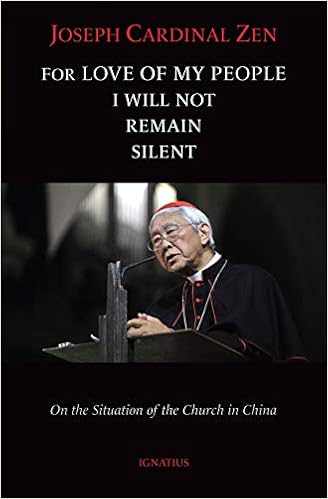
BTW… Card. Zen has a newish book, out about year ago.

For Love of My People I Will Not Remain Silent: On the Situation of the Church in China

US HERE – UK HERE

Posted in Our Catholic Identity, Pò sì jiù, The Drill, The future and our choices | Tagged ,
3 Comments

A priest is diagnosed with a brain tumor. See how he reacted.

Fr John Hollowell has been diagnosed with a brain tumor.

Here is his response to the news.

Fr. Z super kudos to Fr. Hollowell.

Posted in Clerical Sexual Abuse, Fr. Z KUDOS, Mail from priests |
9 Comments

ASK FATHER: Two Catholics getting married in the Orthodox Church

From a reader…

QUAERITUR:

I have friend who is getting married in the Orthodox church. This friend and his wife to be were both Catholics, but recently left the Church for the Orthodox church. Is this marriage valid? Should I attend this marriage or no?

Leaving the Catholic Church for the Orthodox Church.  I can’t – and won’t – get my head around that.  Really.  Bad.  Idea.  No, no.  There is no good reason for it.  Nope.  Don’t even try.

Invalid.

Firstly, two Catholics can’t be dispensed from canonical form except in danger of death (can. 1079 §1). Outside danger of death, a dispensation from canonical form for two Catholics can only be granted by the Apostolic See.

Without a dispensation from Rome (which the couple is unlikely to seek), the wedding would not be validly celebrated.  In other words, afterward they’ll be shacking up… formally… but shacking up nevertheless.

Their formal shackup might later be sanated, presuming everything else is in order.   And presuming that they returned to the Catholic Church from their ill-advised jaunt into schism.

As to whether you should attend the wedding or not, that’s a complicated situation which should be discussed in person with your pastor.  Each one of these situations must be dealt with on its own merits.  I’d like to be able to give a simple answer… every single time someone asks me this “Should I go to the wedding?” query.   But circumstances today, in which a huge number of people are barely, if at all catechized, and families are atomized, make any attempt at a cover-all answer both foolish and misleading.

Posted in "How To..." - Practical Notes, ASK FATHER Question Box, Canon Law, One Man & One Woman, Our Catholic Identity | Tagged ,
14 Comments

New book by Francis strongly endorses priestly celibacy. Will Beans, Austen and crowd apologize to Card. Sarah and Benedict XVI?

Speaking of papal books, Francis has a new book now, released on 11 February. It was a cooperative venture with a priest, Fr. Luigi Epicoco.  San Giovanni Paolo Magno.  Or St. John Paul, The Great.

As reported by CNA, In one chapter, Francis says he is

“convinced celibacy is a gift, a grace, and walking in the footsteps of Paul VI and then of John Paul II and Benedict XVI, I am convinced that celibacy is a decisive grace that characterizes the Latin Catholic Church. I repeat: It is a grace, not a limit.”

Fine. I’m glad that he made that statement and put it in writing.

Somewhere.

But not where it was really needed.

That was needed in the new Exhortation on the Amazon.

What’s with that, anyway?

Also according to CNA, Francis says that if we were to read the sermons he gave in Buenos Aires, we would see that he is in “total harmony with the thought of St. John Paul II with respect to the priesthood”.

In From The Depths Of Our Hearts, Sarah cited John Paul II’s 1992 Apostolic Exhortation Pastores dabo vobis.  

The synod on the subject of the priesthood made it possible to compose in 1992 the Apostolic Exhortation Pastores Dabo Vobis. In it, Saint John Paul II forcefully teaches that priestly celibacy follows from what the council described as the essence of the character and of the grace proper to the sacrament of Holy Orders: the enablement  to represent Christ the Head for the Body that is the Church-Bride. The Church, as the Bride of Jesus Christ, desires to be loved by the priest in the total, exclusive manner in which Jesus Christ the Head and Bridegroom loved her.10 [Pastores, 29] This statement by Saint John Paul II is of capital importance. It holds up celibacy as a need of the Church. The Church needs men who love with the very love of Christ the Bridegroom.

Without the presence of the celibate priest, the Church can no longer become aware that she is the Bride of Christ. Priestly celibacy, far from being merely an ascetical discipline, is necessary to the identity of the Church. You can say that the Church would no longer understand herself if she were no longer loved totally by celibate priests who sacramentally represent Christ the Bridegroom.

I wonder if, after reading the fulsome endorsement of celibacy by their hero Francis in his new book, Austen, Beans at Co. will manifest a little openness to the book about celibacy penned by Card. Sarah and Benedict XVI.

An apology to Sarah and Benedict is in order.

Posted in Benedict XVI, Priests and Priesthood | Tagged , , ,
6 Comments