 From a reader…
QUAERITUR:
Is death truly definitive in terms of divine judgement? There is a priest who spoke on the Patrick Coffin show (Fr. Chris Alar) that says that after we die we are given a chance to choose God or reject him, so that someone who took their life wouldn’t be damned. Is this true? But I thought that the will was fixed at death. I know you are very busy, Father, but I would be very grateful for a response.
Hell, which is not-God and un-bliss, is something chosen by the one who is damned and that choice is irrevocable.
To understand why it is irrevocable, it helps to understand why angels cannot change their minds. With extreme brevity, angels have no bodies and, therefore, they have no passions which can lead them into errors. Angels don’t have appetites which pull them now here and now there, as ours do. Angels don’t learn through senses. They know directly. There is no process for them. Angels can make mistakes, but when they make errors, they stay wrong. They can’t change their minds because they have no passions or appetites to draw them to another good.
We can change our minds now because we have bodies. When our soul separates from our body we will no longer have the appetites and passions which can draw the will to change. In life, the habits that form from following appetites and passions can be corrected. Not so after death.
The precise moment of total separation of the soul and body is hard to latch onto. I am reminded of the first part of St. John Henry Newman’s Dream of Gerontius. The soul of the dying man, soon dead, describes the separation of soul from body. It is deeply moving.
Nevertheless…
At death, our soul and body separate. Our soul continues to operate, as it should do, but without the influences of the body and without bodily senses. We will be much like angels in that state. Just as angels cannot change their minds, and are locked into their state, so too it will be with us.
We will be locked into our state at the time of the separation of our soul from our body. We will either be locked onto God or onto not-God, onto bliss or un-bliss. There will be no competing appetites to draw us from one to the other and no new information coming in through the senses. Death is like the kiln that bakes the clay into its final form. Now, we can shape the clay. Once it goes through the kiln, we can’t reshape it. Hence, after the resurrection of the flesh, we will remain locked in to God or to not-God. That won’t change even when our souls get bodies again.
After the separation of the soul from the body, we don’t get another chance to change our minds. We are locked in.
This is why it is important to stress certain things in our preaching and catechism.
First, people tend to die the way they lived. Yes, there are deathbed conversions. That is a grace that we cannot, must not, presume that we will receive. We form life-long habits. That is why it is important to PRACTICE DYING every day. If you want to be a good piano player, you have to practice. If you want to die well, and you ARE going to die, you should practice dying. Dying to self, dying to the world, even to the good things of the world, is preparation for a good death. Mortifications are good for us. They are called “mortifications” for a reason: they make us die a little, to self and the earthbound.
Next, sometimes loons gripe at the Church with the idiot accusation that we are obsessed with sex. No, we are obsessed with keeping people out of Hell. While it is true that carnal sins are not as serious as sins of pride and so forth, carnal mortal sins nevertheless are sufficient to damn us for eternity. If we talk about sexual issues a lot, its because these urges are so strong and the pleasures so great that they can easily lead the soul to lock onto not-God, lock onto excluding ourselves from God. Not so many people are intensely locked into those terrible sins of the spirit, but many are indeed locked into the pleasures of the flesh, sins now so common and pervasive that they are hardly considered any longer. But, those sins are enough to damn us. I repeat: they are enough.
Finally, we should take death and sin seriously to the point that we often pray, as the Litany expresses and forms in us, that God will preserve us from a sudden and unprovided death, a death without access to the last sacraments. And here I return to my constant theme these days: we are our rites. We are our rites. We are our rites, when we pray the Litany with its petitions and those petitions in turn form us and shape our desires to stay close to the sacraments and use them well.
When we finally get serious about doing something about the state of the Church, that’s when we will get serious about our sacred liturgical worship of God. That’s where we are formed and shaped and instructed about dying and the promise of Heaven. Thanks to the love and mercy of God, we have a Church because we are going to die. We have our sacred liturgical worship precisely because we are going to die. This is the overarching reason for all that we do: passing through the mysterious gate of death and entering into the bliss of Heaven and into the sight of God, not through a glass, darkly, but face to face in an eternal transformation in His glory ever more and ever more to be the images He created us to be.
Let nothing endanger that.
GO TO CONFESSION.
Also, check out
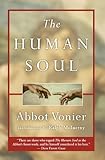
The Human Soul by Abbot Anscar Vonier


 If you would like to send me Christmas greetings or cards, please send by snail mail, if possible with really cool stamps.































