Invoking “Grandmother of the West”….? What is THAT all about?

SERIOUS PREAMBLE

No demon has a real name.  That’s part of their punishment.  They really want a name and identity.   Invocation of a false god or spirit allows demons to step up and be recognized, take the name and get to work.

Remember that forcing demons to reveal their name is part of the rite of exorcism.

Exorcists will wind up – by Christ’s power and authority – forcing demons to cough up their names like, “Ares” or something.  Not that “Ares”, the Greek god, ever existed as a Greek god, but as a demon who got the name “Ares” because they invoked “Ares”.

Invoking spirits, powers, gods, etc. is to invoke a demon.  Period.  It is a grievous sin against the FIRST COMMANDMENT.

“But Father! But Father!”, some of you mewling softies and synchretists are objecting. “You are being judgmental about the sincere faiths of indigenous peoples whom Catholics oppressed with diseases and subjugation to a foreign culture.  They have their wisdoms and we can embrace and learn from their sophisticated faith patterns and nature-sourced images of cosmic power flows… and … and… Vatican II says we have to do this, because it is the new lens through which everything in the past has to be reinterpreted.  But you don’t get that and you are mean and disrespectful of their .. faiths, which are every bit as good as… as… YOU HATE VATICAN II!”

I respond, saying, Ps 95/96: 5:  For all the gods of the peoples are idols.

It doesn’t make a difference of a people made up their sky gods and water gods or tree gods or lizard gods 3000 years ago or 30 years ago.  It doesn’t make a difference if they left their faith expressions and invocations on cave walls or in stone carvings or on the pages of some 1990’s “new age” publisher.  Invoke a spirit or power, especially with a name or a title (which, duh, is a name) and you have invoked a demon.  Some demon now has a name and targets.

One exorcist told me, “they line up” for invocations in false religions, pagan ceremonies, etc. to GET an identity even if it is made up, like in Wicca.  It doesn’t make any difference if it was something historic like Aztec stuff from a thousand years ago, or the wacko scribbling of a new age crank trying a make a few bucks off of the stupidly naïve.

HENCE: If you sit as a willing participant, witness, while some person – it makes zero difference if that person is sincere, a believer in some strain of spirituality – invokes the “Grandmother of the West”, you have just participated in the invocation of a demon.

It doesn’t make any difference if the title “Grandmother of the West” sounds sort of hokey.   After all, couldn’t they have come up with a cooler name for the demon, like Cthulhu or Thqbnhj of Ykqxg Muncher of Souls?  No, it could be that or, “Daisy the Flower Petal” spirit or “Bob’s unknown animal spirit guide”.   Demons don’t have to have cool sounding names.  What do they care?  It’s a NAME.  To invoke them, even in a fake new age thing 10 minutes old or an pagan ancient pagan cult from 1500 BC, it is a violation of the 1st Commandment if done in earnest.

I saw an image of cardinals and bishops, and another guy, in Canada do as instructed – put their hands on their hearts, the “seat” of who they are, symbolic place of the their love and identity, and watch and listen as a demon was invoked.

They didn’t this in Rome, with Pachamama.

They did this in Canada with the “Grandmother of the West”.

But by all means… crush the Vetus Ordo which includes, by the way, the Rite of Exorcism and all the effect constitutive blessings and sacramentals meant specifically to provide protection from demons.

Moreover, the pagan ritual involving the invocation of “the Grandmother of the West” was done so as to be admitted to the “circle of spirits”.

The circle of WHAT SPIRITS?  And WHY?

Somewhere I saw a video, but I can’t find it.  Anyone?  [UPDATE: At Rorate there is a still photo, which is a capture from a video.]

This type of ceremony is either made up B as in B, S as in S, or it has some historic rooting in an indigenous belief.

So… I searched the interwebs and found this, pretty much right away, which is what any functionary of the pre-trip preparatory group could have found out when they looked over, ahead of time, what was going to be done.

Check this out HERE

A couple of screen shots from “Celebrate! Ceremonies and Blessings for Individuals, Families, and Spiritual Communities.” by an writer on … I don’t know what the hell it is, frankly.   She writes about “Huna” which is a New Age thing from, I think, Hawaii.  In other words it is a made up in 1945 and HERE.  Think of the word “kahuna”.   Once you start reading that wiki article, your skin should start to crawl and alarm bells will ring.

Yep.  This was another way – wittingly or unwittingly – to invoke demons.

Screen shots from the “ceremony” book.  Just a taste.  But, Grandmother of the West is here.

Invoking "Grandmother of the West"....? What is THAT all about?

Invoking "Grandmother of the West"....? What is THAT all about?

It is cringeworthy, isn’t it.

Invoking "Grandmother of the West"....? What is THAT all about? Invoking "Grandmother of the West"....? What is THAT all about?

Get a load of that crap.   But, silly as it is, it is dangerous.   Anyone invoking these “spirits”, made up yesterday, 30 years ago, or 3000 years ago, is invoking demons.

And all those prelates, cardinals, etc., Francis… sat there during that… thing they did.

It’s called idolatry and it is against the 1st Commandment of the Decalogue and it is very dangerous.

UPDATE:

Play video

Posted in Francis, The Drill | Tagged
26 Comments

Daily Rome Shot 519, etc.

Meanwhile….

Daily Rome Shot 519, etc.

The Masses for Cupich Project, for the change of his heart about the ICK and TLM in Chicago is up to 60 Masses as I write.

Daily Rome Shot 519, etc.

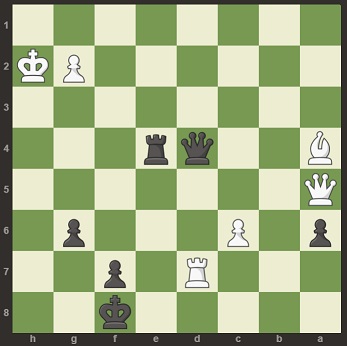
White to move. Don’t get rooked.

Daily Rome Shot 519, etc.

Please remember me when shopping online. It hasn’t been a great month. Thanks in advance.

US HERE – UK HERE

FATHERZ10

Daily Rome Shot 519, etc.

Posted in SESSIUNCULA |
2 Comments

D. Arlington: more accompaniment for the faithful who desire the Vetus Ordo

Remember this?

Citing the absurd smoke-screen of “international assessment and consultation of bishops”,  and the Dubious Dubia (which bind only the original questioners… but they were probably on the inside) and then local consultation, Bp. Burbidge of Arlington has slashed the number of locations where the Vetus Ordo is celebrated from 21 to 8.   Parishes that have it, can have it for only two years.

This is, of course, all very pastoral.

One wonders what sort of pressure was applied from across the Potomac.

I refer the readership to this informal project. Perhaps add prayers begging for forgiveness for the narrow cruelty of some pastors of the Church.

ACTION ITEM! Be a “Custos Traditionis”! Join an association of prayer for the reversal of “Traditionis custodes”.

Posted in Traditionis custodes | Tagged , , ,
19 Comments

Francis: Grandmother of the West, invoked, to open the great circle and then blasts at “traditionalists”.

At The Catholic Thing there is a summary piece abooot Francis’ trip to Canadia.  It starts:

“Well, that’s over.”

You can read it there.  It paints a rather pathetic picture and darns with faint praise, the point being that it wasn’t as bad as it could have been and certain aspects were surprisingly mediocre.

There were the usual cringe moments, like with the head dress.

Not only.

From Le Monde:

At the request of Raymond Gros-Louis, an “elder” from the Huron-Wendat Nation, Pope Francis, his retinue of cardinals and bishops, Canadian Prime Minister Justin Trudeau, and Governor General of Canada Mary Simon all placed a hand on their hearts for a welcoming ceremony. Then, in keeping with tradition, this First Nations representative lit a “sacred fire” to “connect” with the four directions and the “four life elements.” He blew a whistle and asked “the grandmother of the West for access to the great sacred circle.” Thus began Pope Francis’ meeting with Canadian authorities on Wednesday, July 27, at the Citadel of Quebec, on the third day of the visit by the Catholic Church’s leader to the country.

“The grandmother of the West”? “Great circle”?

Then, in the inevitable airplane presser, he said something strange things (surprise) about changes of doctrine and tradition. Responding to an RNS (lib) question about changing the Church’s teaching about contraceptives, he danced a bit:

But know that dogma, morality, is always in a path of development, but development in the same direction.

He cited Vincent of Lerins a couple times.

At the same time, in his ramble, he used the word “change” in regard to the Church’s teaching the death penalty (which certain is NOT in keeping with Vincent’s admonition):

Then… and remember, he rambles and his answers seem sometimes like a bag full of cats, but this was in response to something about contraception and changing dogma:

A Church that does not develop its thought in an ecclesial sense is a Church that goes backwards. And this is the problem of so many who call themselves traditional today. They are not traditional, they are “indietrists,” they are going backwards without roots — “That’s the way it has always been done,” “That’s the way it was done in the last century.” Indietrism [looking backward] is sin because it does not go forward with the Church. And instead, someone described tradition — I think I said it in one of the speeches — as the living faith of the dead and instead for these “indietrists,” who call themselves “traditionalists,” it is the dead faith of the living.

Tradition is the root of inspiration to go forward in the Church, always these roots, and “indietrism,” looking backward, is always closed. It is important to understand well the role of tradition, which is always open like the roots of the tree. The tree grows like that, no. A composer had a very beautiful phrase — Gustav Mahler — said that tradition in this sense is the guarantee of the future, it is not a museum piece. If you conceive tradition as closed, this is not Christian tradition. Always it is the root substance that takes you forward forward forward. That’s why what you say above thinking, carrying forward faith and morals, while going in the direction of the roots, of the substance goes well with these three rules I mentioned of Vincent of Lerins.

I think many people who desire traditional Catholic worship will read this with increased alarm, as if it will bear much more increase. It is important to keep it in its context: airplane presser, and about contraception and other defined teachings – not liturgy. However, liturgy IS doctrine. Hence, you see the path of his thought. Does this apply to liturgy? Yes, and no. It is mostly a string of cliches in a context that makes no difference. Still, we get a glimpse of his thought.

I leave you will the image of the Francis and others invoking,

“the grandmother of the West for access to the great sacred circle”,

and wondering what Vincent of Lerins would have thought of that… “in keeping with tradition”.

Posted in The Coming Storm, The Drill, The future and our choices |
22 Comments

Daily Rome Shot 518, etc.

I’ve been updating the “Day in Rome” project.  Thanks to the donors!

The Masses for Cupich Project, for the change of his heart about the ICK and TLM in Chicago is up to 60 Masses as I write.

Wyoming Catholic College is looking for a chaplain. HERE

Daily Rome Shot 518, etc.

Photo by Fr. F

Black to move.   You should get this totally forcing solution right away.

Daily Rome Shot 518, etc.

Posted in SESSIUNCULA |
Leave a comment

VIDEO Apparitions of Our Lady Hrushiw, Ukraine

Here’s a British film from the late 80’s about an apparition of the Blessed Virgin Mary in Ukraine, a place much in the news these days.

As it began, I couldn’t help but think about the way that traditional Roman Catholics are being treated by the power that be in the Church today.

Have a look.  There is some wonderful liturgical song and beautiful places.

Play video

Posted in Our Solitary Boast, The future and our choices, The Last Acceptable Prejudice | Tagged , ,
1 Comment

ASK FATHER: It is mortal sin for parents to send their children to public schools?

ASK FATHER: It is mortal sin for parents to send their children to public schools?From a reader…

QUAERITUR:

With the recent dustups involving education curriculum in the United States I feel this is an important question to ask.

Some on social media have suggested that, with what’s going on public schools these days, it is mortal sin for parents to send their children to public schools.  Some have also pointed out that older examens have said that sending your children to a school where they receive an education dangerous to their faith is a sin to be confessed, and this would exclude all public schools.

So my question is, is it truly a sin to send your children to public schools?  Most parents unfortunately cannot afford Catholic school and don’t have the time to homeschool.

In an absolute sense, no, it is not a mortal sin to send you children to a public (in the USA sense) school.  However, each lived instance out there is different and a one size answer cannot possibly fit all.

I know that there are readers out there who will be very interested in this topic.  I also know that some of them have dealt with this and who have found solutions.  Whether or not the solutions are perfect is a matter of debate.   We also must not fall into the trap of making the perfect the enemy of the good.

That said, you sort of have me boxed in.   You say that old examens say that it is a sin to put your child’s faith in danger.  I agree.  That might happen at a public school, especially these days, so that position of the examen seems even stronger.   And we have to admit that some Catholic schools are pretty dangerous to the faith of children.

Catholic schools can have a wide range of tuition options: some can be expensive, others less so.  Almost all of them have some sort of plan for parents whose incomes are lower, or have several children.   Therefore, you really have to go talk to the (probably) parish priest in charge of the school.   Find out your options.  Find out what homeschool groups there are in the area.

But, if you say you really can’t afford Catholic school, even having checked on things, and you really can’t homeschool, what am I supposed to say about public school as the last resort?

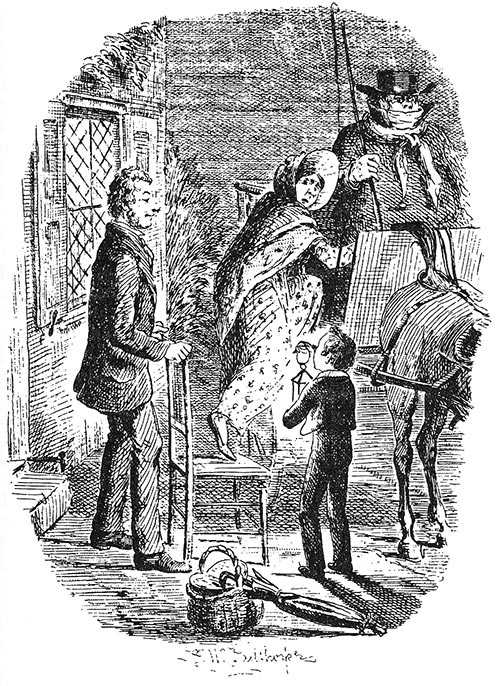
If I had been reading a lot of Dickens these days, instead of what I am reading (not Swift’s Modest Proposal), I would tell you to farm out your kids to a cobbler or blacksmith or an undertaker and have done with the whole thing.  Sad to see the last of them?  Sure, for a while.  But be assured of a sudden reappearance after a couple of decades and adventures.

It could be that readers here will have somewhat less Victorian solutions.


Posted in "How To..." - Practical Notes, ASK FATHER Question Box |
22 Comments

Daily Rome Shot 517, etc.

I’ve been updating the “Day in Rome” project.  Thanks to the donors!

The Masses for Cupich Project, for the change of his heart about the ICK and TLM in Chicago is up to 60 Masses as I write.

Wyoming Catholic College is looking for a chaplain. HERE

Daily Rome Shot 517, etc.

Daily Rome Shot 517, etc.

Photo by Fr. F

Daily Rome Shot 517, etc.

Please remember me when shopping online. Thanks in advance.  It’s very important for me, so I would appreciate it if you would also suggest it to your friends.  Just click a link and start shopping.  Amazon will “remember” you entered through my link and I will get a small percentage of each purchase.  Win win.

US HERE – UK HERE

Posted in SESSIUNCULA |
Leave a comment

ASK FATHER: Consecration of bishops when there is no Pope

ASK FATHER: Consecration of bishops when there is no PopeFrom a reader…

QUAERITUR:

If Francis were to (God forbid) die tomorrow, how would that affect the rules concerning episcopal consecrations?

I saw a comment on this blog saying the SSPX could likely use sede vacante periods to slip by the issue. I personally question that. I do believe in states of necessity, but that still doesn’t jive with what the statement seemed to imply. Canon Law can be changed, you can find loopholes, but it doesn’t die.

Interesting question.

If I am not mistaken… and I hope someone will correct me if I am wrong… in the case of the death of the Roman Pontiff, episcopal appointments are suspended until they are reconfirmed on the election of a new Roman Pontiff. [UPDATE: It seems I was wrong about this. It does now happen that in the sede vacante period bishops are consecrated. It happened in the time between JP2 and B16 for example. However, i used the Catholic Hierarchy site to if between the death of Paul VI and election of JP2 there were consecrations and… found a gap for the period in the data entered. The same thing happened when I checked between the death of J23 and P6… and P12 and J23….]

I know of one case in which a priest was to be consecrated bishop and then Pope Paul VI died, which canceled the consecration.  He was not, subsequently, reconfirmed and he was never consecrated as a bishop.

It could be that this involves the fact that, during sede vacante periods, all the offices of the Roman Curia are suspended (with a couple exceptions, such as the Penitenzieria Apostolica which deals with internal forum issues).  That would mean that, sede vacante, there technically is no Congregation for Bishops.  [That doesn’t mean that the doors are locked and people don’t go to work.]

As for the SSPX, sede vacante would not be a “loop hole” permitting the consecration of a bishop.  If anything, it would be the opposite.  If I am right, it would absolutely be the wrong time to do it.  [Moreover, I am assured by a priest friend in the SSPX that, were there to be considered another consecration – which would likely only be for the sake of the survival of the SSPX – they would exhaust every avenue with Rome to obtain a mandate before hand.]

Posted in SESSIUNCULA | Tagged ,
7 Comments

8th Sunday after Pentecost: We will see the end of all this and Christ will see us through.

Cross posted with One Peter Five:

8th Sunday after Pentecost: We will see the end of all this and Christ will see us through.

This week’s task is scary.  The Gospel for this 8th Sunday after Pentecost presents probably the most difficult of the Lord’s parables to explicate.  This week we hear the Parable of the Unjust Steward from Luke 16.

Context: For the last few chapters of Luke we have been presented with Our Lord telling many parables.  Just as a reminder, a parable, Hebrew mashal, is a short allegorical lesson.  Parables generally have a narrative twist, or nimshal, that conveys a point through something counter-intuitive, a seemingly unrealistic turn out of keeping with daily experience.   We should remember when hearing or reading the Lord’s parables that we are separated from the daily experience of the original audience by many centuries and a different culture.  Some things in the human condition never change, and so are “evergreen”.  Others do change, so we must do some “translation”.

Let’s review the text of the parable this week (RSV):

“There was a rich man who had a steward, and charges were brought to him that this man was wasting his goods. 2 And he called him and said to him, ‘What is this that I hear about you? Turn in the account of your stewardship, for you can no longer be steward.’ 3 And the steward said to himself, ‘What shall I do, since my master is taking the stewardship away from me? I am not strong enough to dig, and I am ashamed to beg. 4 I have decided what to do, so that people may receive me into their houses when I am put out of the stewardship.’ 5 So, summoning his master’s debtors one by one, he said to the first, ‘How much do you owe my master?’ 6 He said, ‘A hundred measures of oil.’ And he said to him, ‘Take your bill, and sit down quickly and write fifty.’ 7 Then he said to another, ‘And how much do you owe?’ He said, ‘A hundred measures of wheat.’ He said to him, ‘Take your bill, and write eighty.’ 8 The master commended the dishonest steward for his shrewdness; for the sons of this world are more shrewd in dealing with their own generation than the sons of light. 9 And I tell you, make friends for yourselves by means of unrighteous mammon, so that when it fails they may receive you into the eternal habitations.

A few things might need “translation” from 1st century Palestine.  “Steward” is Greek oikonomos, the “house – oikos + law – nomos” guy.  He is the property manager of a “wealthy man”, whom the steward refers to as “lord – kyrios”, which you should recognize.  The steward/manager says, and I like the Douay-Rheims best for this: “To dig I am not able; to beg I am ashamed.”  The idea is that the steward, used to a life of physical ease, cannot go out like a day-laborer and toil for the standard daily denarius coin.  Also, he is probably too well known to be a beggar.  Note that the financial transactions by which the steward cooks the books are not in coinage, but in kind.  That was common in the ancient world: you often paid your debts with produce of the land, such as your olive oil or grain.  In the context of Luke, mammon is Aramaic. That came into Greek and Latin, for “wealth, profit” and it gained a pejorative connotation, even coming to be personified as a demon.  The Lord used the word several times, as when in the Sermon on the Mount He taught in Matthew 6:24: “You cannot serve God and mammon.”

We can find hooks with other passages in the Greek Gospels.  For example, in that initial verse (v.1) the RSV has the steward “wasting” the goods of his lord.  The Greek verb used is diaskorpizo, which conveys the image of throwing chaff into the wind to be dispersed, to “winnow”.  Hence, it is also “waste” or “squander”.  The same verb is used in the Parable of the Prodigal Son who “squandered” his portion of inheritance with “loose living” (Luke 15:13).  In English, to be “prodigal” is to be “recklessly extravagant, wasteful”.  Latin prodigo, “to drive, get rid of” can be “waste, dissipate”, hence the English “prodigal”.  Through this verb, we probably see what the Lord was driving at when describing the steward’s use of his lord’s goods.  Hence, the lord’s abrupt dismissal of the steward.

How to deal with this parable?   After all, Christ seems to have told us to imitate a thief who, after abusing his position and squandering money, then stole more money from his employer in order to curry favor and ingratiate himself with the master’s debtors.  Read the parable.  That’s what Christ seems to have done!

That doesn’t seem right.  There must be some other explanation.  How do we get to the nimshal twist wherein the master praises the thieving manager?  Who does that? Great writers such as Fathers of the Church struggled with this.  The Scripture scholar St. Jerome (+420) even wrote to St. Augustine of Hippo (+430) to ask what this parable meant.

Here are a few approaches.

Firstly, let’s check our moral compass.  The plight of the unjust steward shows us how deeply into trouble we can get once we start to slide in the matter of our faults.  Small faults lead to bigger faults.  Venial sins weaken us so that we commit larger and more serious sins.  The irresponsibility of the steward who squandered his master’s money eventually leads him to commit an even graver sin of defrauding his master and leading others to defraud him in his attempt to save his own skin.  Be wary, therefore of first steps toward sin.  Be wary of near occasions of sin.

That’s a moral, ethical approach to the parable, and one which is easily grasped.  However, it seems unsatisfactory because the fact remains that the lord in question praises the fraudulent steward for his clever moves.   How to untangle that?

Augustine thinks that this parable is an argument a minori ad majus: if the wicked steward is commended in his cleverness about worldly matters, how much more will the upright steward be commended.  If earthly affairs require such cleverness and dexterity and planning and decision in action, how much more do heavenly matters and the spiritual life require planning and decisiveness?  St. Paul in Romans 6 calls people to serve the Lord in matters of our sanctification with the same zeal with which, before, we served iniquity.  Hence, Christ praises the clever, fraudulent steward not for his fraud, but for his cleverness.  The steward saw his situation with clarity and took clever steps to secure his future, even though that was a merely earthly future.  This is a metaphor for how the children of the light should work with clarity and shrewd planning to secure their future in heaven.  The children of this world are clever in earthly affairs.  We must be at least as clever – nay rather, even more clever – in what secures Heaven.

Another way to look at this parable’s startling nimshal, twist, is to remember that the steward squandered and then redistributed what was not his to squander and distribute in the first place.  The steward did not own it all, the lord (kyrios) did.  This is, of course, the universal condition of humanity: nothing is really ours – all is from God and remains God’s.  We use vicariously every material good in this earthly life.  Even our bodies are God’s and not truly ours, which is why we are not free to do anything we want with and to our bodies.

The parable is about how to secure a place in Heaven.  Christ told us how to secure for ourselves “eternal habitations”, the word for “habitation” being Greek skene which is used for the “booth” or “tabernacle” that referred to the movable “temple” in the wilderness during the Exodus and the tents or booths people lived in, as well as what the Jews annually built during the pilgrimage to Jerusalem for the Feast of Tabernacles which involved an octave of celebration.  That Feast looked backward to the time in the wilderness and, simultaneously, forward to the New Jerusalem of the Kingdom of God fulfilled.  So, the parable is about how to get to Heaven: prodigal, lavish, extravagant distribution of alms, event to the point that it seems like wasting it on the unworthy.  The alms are ultimately from the Lord.  The recipients are from the Lord.  Alms open the heavenly doors when we are poor and in need, as we all always truly are.  After all, in giving to the needy, we give what is the Lord’s back to the Lord Himself.

How lavish must we be, you ask, sounding like Peter asking how many times we must be forgiving (Matthew 18:21-22)?

In a magnificent sermon on patience and hope (s. 359A), Augustine pours it out for us:

Mammon is the Hebrew word for riches, just as in Punic the word for profit is mamon, So what are we to do? What did the Lord command? Make yourselves friends with the mammon of iniquity, so that they too, when you begin to fail, may receive you into eternal shelters (Lk 16:9). It’s easy, of course, to understand that we must give alms, that a helping hand must be given to the needy, because it is Christ who receives it in them. It’s what he said himself: When you did it for one of the least of mine, you did it me (Mt 25:40). Again, he said somewhere else, Whoever gives one of my disciples just a cup of cold water in the name of a disciple, amen I tell you, he shall not lose his reward (Mt 10:44 We can understand that we have to give alms, and that we mustn’t really pick and choose about whom we give them to, because we are unable to sift through people’s hearts. When you give alms to all and sundry, then you will reach a few who deserve them. You are hospitable, you keep your house ready for strangers; let in the unworthy, in case the worthy should be excluded. You cannot, after all, be a judge and sifter of hearts.

Talk about lavish.  Treat your enemies this way too.

Finally, I can’t help myself.  Augustine’s s. 359A is simply too good.  It is about something we all need right now, given what we face in the Church and in society: hope, patience, willingness to be long-suffering in perseverance in view of what will come.   Let’s have a taste of the very beginning of s. 359A.

In this he has some great Latin word play. He was, after all, once the official imperial orator in the court in Milan before his conversion.  In his language of above and below and fixing something like an anchor, Augustine invokes a favorite image of a big crane or derrick used for constructing buildings (aka faith, hope and charity), which they did have in the ancient Roman world.  Note too that Abraham, in 23:3-4 at 137 years old died as a “stranger in a strange land”, without seeing what God had promised about his numberless descendants.  We are all “strangers and sojourners” (Lev 25:23) and “The earth is the Lord’s and the fulness thereof, the world and those who dwell therein” (Ps 24:1).  Hence, we are to live as “aliens and exiles” (1 Peter 2:11).

As long as we are in this world, if we take care to have our hearts filed up above, the fact that we are walking here below won’t be to our disadvantage after all, in this flesh. We are walking here below, after all, in this flesh. So, by fixing our hope up above, we have set it like an anchor on firm ground, able to hold against any of the stormy waves of this world, not by our own strength but by that of the one in whom this anchor of our hope has been fixed. Having caused us to hope, after all, he will not disappoint us, but will in due course give us the reality (Latin res) in exchange for the hope (spes). For hope, as the apostle says, which is seen is not hope: for why should anyone hope for what he can see? But if, he goes on, we hope for what we cannot see, we wait for it with patience (Rom 8:24-25).

It’s about this patience that I wish to speak to your graces [the members of Augustine’s congregation] whatever the Lord grants me to say. The Lord Jesus Christ too, you see, says somewhere in the gospel, By your patience shall you gain possession of your souls (Lk 21:19). It also says in another place, Woe to those who have lost patience! (Sir 2:14). Whether it’s called patience, or endurance, or tolerance, the same thing is signified by several names. We, though, should fix in our hearts not the variety of sounds, but the unity of the thing itself, and have inside us what we outwardly give names to. Those who realize they are living the life of strangers in this world, in whatever country they may find themselves as regards the body; who know they have an eternal home country in heaven; who are confident that that is the region of the blissful life which one is at liberty to long for here below, not at liberty to possess here; who are burnt up with such a holy, such a chaste desire—they know how to live here patiently. Patience doesn’t seem to be needed when things are going well, but when they are going badly. Nobody patiently tolerates what is enjoyable. But anything we bear with patiently, is harsh and bitter; and thus patience is not needed when you’re happy, but when you’re unhappy.

However, as I started to say, any who are on fire with a yearning for eternal life, in whatever country they may be happily living, must of necessity live patiently, because they have reluctantly to tolerate the fact of their being strangers and exiles, until they reach the desired home country after loving it so long. Love expressed in desire is one thing, love satisfied by sight another. I mean, when you desire and when you see. Your love, when you desire, is aimed at arriving; your love, when you see, at staying. Now if the desire of the saints burns so hot when fueled by faith, what will it be like when fed by sight? If we love like this while we believe what we cannot yet see, how shall we love when we actually do see?

Dear readers, we will see the end of all this and Christ will see us through.

Posted in Liturgy Science Theatre 3000, Save The Liturgy - Save The World, SESSIUNCULA, WDTPRS | Tagged ,
5 Comments