ASK FATHER: Hosts brought to altar at Communion, not before consecration

12_08_17_angels_monstranceFrom a reader…

Today at mass, after the priest had completed the Eucharistic Prayer, and we had moved past the Agnus Dei, one of the EMHCs noticed that the Chalices and Ciboriums with unconsecrated hosts (those meant for distribution to those at Mass) had not been placed on the altar.
Instead they had been on a table to the back left of the priest who presumably had no idea they were there (he looked quite shocked when the EMHC went to move them to the altar). They then proceeded to distribute communion as normal with those hosts and chalices that had not been on the altar during the consecration.
My question is: were those hosts consecrated, being behind the priest, and not on the altar? Would it matter whether he knew they were there?
I abstained from receiving lest I receive what was passed off as, but not really, the Blessed Sacrament, but I wondered what I should do.
Also, now that the leftover unconsumed hosts have been placed in the Tabernacle, what do I do if I return to Mass at the same Church. With my knowledge, must I be wary of receiving those possibly unconsecrated hosts, being passed off as the Eucharist? Thank you for your response!

Priests are trained, or ought to be trained, to have the intention, at least the moral intention, to consecrate the elements that are placed on the corporal upon the altar.  Priests have it drilled into them, and they drill it into themselves, that if it is on the corporal, it gets consecrated.  They don’t have to have a specific immediately conscious intention about each and every single host.  A general, or moral intention is adequate.

The practice of priests making a act of intention before they go out to celebrate Mass should be revived.  I warmly urge every priest (and bishop) who reads this to learn the Formula of Intention and even to print it, frame it, and locate it near where you put on your vestments.  There are other good prayers for the priest’s preparation to say Mass, but I think this is the most important and basic.  The Formula can be found in every copy of the traditional Missale Romanum.  I also found it in the Latin 2002 Missale Romanum.  I don’t happen to have to hand an English volume, but I’ll bet a translation is in the appendix.  Here is the text:

Ego volo celebrare Missam, et conficere Corpus et Sanguinem Domini nostri Iesu Christi, iuxta ritum sanctae Romanae Ecclesiae, ad laudem omnipotentis Dei totiusque Curiae triumphantis, ad utilitatem meam totiusque Curiae militantis, pro omnibus, qui se commendaverunt orationibus meis in genere et in specie, et pro felici statu sanctae Romanae Ecclesiae. My purpose is to celebrate Mass and to confect the Body and Blood of our Lord Jesus Christ according to the rite of the holy Roman Church to the praise of almighty God and all the Triumphant Church (in Heaven), for my good and the good of all the Church Militant (on Earth), and for all who have commended themselves to my prayers in general and in particular, and for the favorable state of the holy Roman Church.
Gaudium cum pace, emendationem vitae, spatium verae paenitentiae, gratiam et consolationem Sancti Spiritus, perseverantiam in bonis operibus, tribuat nobis omnipotens et misericors Dominus. Amen May the almighty and merciful Lord grant us joy with peace, amendment of life, room for true repentance, the grace and consolation of the Holy Spirit and perseverance in good works. Amen.

Back to the specific question.

In my opinion, the priest did not validly consecrate the hosts in the ciboria that were left on the credence table.

It might have mattered should he have know about them, remaining on the credence table, but then he ought to have had them brought to the altar.  In your description, you say that he was “quite shocked” when the ciboria were brought up, which indicates that he didn’t know of them and, therefore, didn’t intend to consecrated them.  Hence, they were not consecrated.

It is possible that the priest then spoke the words of consecration over those hosts.  However, even in the context of Mass that’s not good.  A priest mustn’t consecrate one species apart from the other.  What he should have done, in my opinion, is simply explain to the people that the ciboria were left on the table, they were not consecrated and there would not be enough consecrated Hosts for everyone.  He should explain that, yes, they were at Mass because he had consecrated and consumed his Host and Blood from the chalice and that they had fulfilled their obligation and he his obligation to say Mass for the intention offered.  Done.   That could have been a learning experience for many.

However, there is such a mania today that everyone must always go to Communion at every Mass, that Father was psychologically driven to do something else.

If the priest did not consecrate those hosts, and they were distributed, he would have committed a grave sin.  Please, Lord, I hope he didn’t do that.  Furthermore, if he put unconsecrated hosts into the tabernacle then he would cause people – albeit unwittingly – to commit acts of idolatry were they to venerate them.  Please, Lord, I hope he didn’t do that.  And he would sin again, sacrilegiously, by leaving them there and – quod Deus avertat – distributing them at another Mass!  If Father knows for sure which ciboria are in question, he should take steps to correct the situation.

In any event, it is better simply to explain what happened and learn from it than too do something imprudent and, potentially, scandalous.

For your part, I would refrain from receiving Communion for a few days, at least if you see that hosts from the tabernacle are being distributed.  Also, you would not be out of line to contact the priest and ask him about what you saw.  Be calm, respectful, factual, and listen carefully to his explanation.

Posted in "How To..." - Practical Notes, ASK FATHER Question Box, Liturgy Science Theatre 3000, Mail from priests, Priests and Priesthood, Seminarians and Seminaries | Tagged , , ,
14 Comments

1 Year Ago: Mother Angelica, RIP

Today is the 1st anniversary of the death of Rita Antoinette Rizzo, better known as Mother Angelica, the foundress of EWTN and many other initiatives.

May those who carry on with her work not disgrace her memory.

Here is one of the defining moments of her ministry.

It was World Youth Day in Denver.  There was a “stations of the cross” that was , quite frankly, blasphemous.  Mother reacted strongly.

Please, all of you, pray for her. She would love that Masses are offered for her. She would love rosaries.

Posted in Four Last Things | Tagged
10 Comments

Your Sunday Sermon Notes and a ‘Laetare’ Sunday ROSE POLL

17_03_26_Laetare_SMPB_01Was there a good point in the sermon you heard at the Mass to fulfill your Sunday obligation?  Let us know.

For my part, for the TLM this morning, I spoke of the flow of Lent, from Pre-Lent to the Vigil and about how the Church liturgically dies.    For the Novus Ordo, I reviewed necessary elements for making a good confession, including confession of all mortal sins in number and kind and therefore the need to make a daily examination of conscience.  I spoke also about a firm purpose of amendment.  Thereupon, a gave some suggestions for how to establish good habits (making an examination of conscience) and breaking bad habits (willingness to suffer and having a plan for doing something else).

And now, since this is Laetare Sunday, what vestments did you who belong to the Roman Rite see for Mass?  Let’s have a POLL.  Anyone can vote but you have to be registered and approved to use the combox.  For more on the liturgical color rosacea, HERE

For 'Laetare' Sunday 2017, at my Roman Rite Mass I saw...

View Results

17_03_26_Laetare_SMPB_02

Posted in Liturgy Science Theatre 3000, POLLS | Tagged , ,
37 Comments

WDTPRS – Lady Day: The very Feast of the Incarnation

Tanner AnnunciationThis is the very Feast of the Incarnation.

Today we celebrate that moment when our Lord elevated our humanity by taking our human nature into an indestructible bond with His Divinity.

In the Incarnation God opened for us the path to our “divinization”: His sharing of something of His own divine glory with us in the eternal happiness of heaven.

In the sin of our First Parents the whole human race sinned.  In justice, therefore, a human being had to correct the offense.  However, such a correction was entirely impossible for a mere mortal human.  Such a correction required the intervention of one who was both man and God.

In the Incarnation, the Word made flesh – made man – Jesus the Lord and Savior not only begins to save us from our sins in His earthly ministry, but begins also the mysterious revelation of man more fully to himself (cf. GS 22).

Part of the Lord’s mission was also to teach man more fully who He is in the beauty of His own Person.  However, He did not begin to do this only from the beginning of His public ministry.  He began this from the very moment of the Incarnation.

Remember: From the instant of His conception, the Word made flesh begins to teach man more fully who man is.

Light from Light sheds light on the dignity of man, God’s image, from the instant of conception, from man’s humblest beginning.

Here are the Collects for this beautiful Feast of the Annunciation, Lady Day.  Here are the “Opening Prayers” from both the older, traditional, Extraordinary Form of the Roman Rite and the newer, post-Conciliar, Ordinary Form.

You might discuss their differences, their respective strengths.

COLLECT (1962MR):

Deus, qui de beatae Mariae Virginis utero Verbum tuum, Angelo nuntiante, carnem suscipere voluisti: praesta supplicibus tuis; ut, qui vere eam Genetricem Dei credimus, eius apud te intercessionibus adiuvemur.

LITERAL VERSION:

O God, who desired Your Word to take flesh from the womb of the blessed Virgin Mary the angel announcing it: grant to your supplicants; that we who believe truly in the Mother of God, may be helped in Your sight by her intercessions.

COLLECT (2002MR):

Deus, qui Verbum tuum in utero Virginis Mariae
veritatem carnis humanae suscipere voluisti,
concede, quaesumus,
ut, qui Redemptorem nostrum
Deum et hominem confitemur,
ipsius etiam divinae naturae mereamur esse consortes
.

LITERAL VERSION:

O God, who wanted Your Word to take up
the truth of human flesh in the womb of the Virgin Mary,
grant, we beseech,
that we, who confess our Redeemer to be God and man,
may also merit to be the sharers of His divine nature
.

This is of new composition, though there is a reference here to Letter 123 Ad Eudociam Augustam – “De monachis Palaestinis” of St. Pope Leo I, “the Great” (+461).

“Fides enim catholica sicut damnat Nestorum, qui in uno domino nostro Iesu Christo duas ausus est praedicare personas, ita damnat etiam Eutychen cum Dioscoro, qui ab unigenito Deo Verbo negant in utero Virginis matris veritatem carnis humanae susceptam.”

NEW CORRECTED ICEL VERSION:

O God, who willed that your Word
should take on the reality of human flesh
in the womb of the Virgin Mary,
grant, we pray,
that we, who confess our Redeemer to be God and man,
may merit to become partakers even in his divine nature
.

Posted in Liturgy Science Theatre 3000, Our Solitary Boast, WDTPRS | Tagged ,
2 Comments

VIDEO: Card. Burke about the future of the Five Dubia about ‘Amoris laetitia’

At St. Raymond of Penafort Church in Virginia (which if I am not mistaken was built by my my friend Fr. James Gould), another Raymond, Card. Burke, answered a question about the Five Dubia submitted by the Four Cardinals about the infamous objectively murky bits of Amoris laetitia.

The Dubia That Won’t Die.

So far, Pope Francis has not given any clear answer to the Five Dubia, though surrogates (e.g., Card. Schoenborn, Card. Coccopalmerio, et al.) have thrown up smoke screens and misdirections which we were supposed to accept as adequate explanations of the objectively murky bits.  Others have flat out denied that there are any obscurities or ambiguities, which is, of course, absurd.

Yesterday, Card. Burke responded to a question about what might happen if the Holy Father does not provide responses to the Dubia.  There is a video.

The question was, what would the Four Cardinals do if the Pope does not respond to the dubia.

The Cardinal answers that they would have to correct the situation in a manner that draws from the constant teaching of the Church on the issues raised by the dubia, and that this teaching would be made known for the good of souls.

In other words, the Cardinals would issue a public restatement of the constant teaching of the Church in regard to the issues covered by the Five Dubia.  Does this mean all four of the Four Cardinals? Cardinal Burke did not say, at least in the video clip, above.

Play
Posted in One Man & One Woman, Our Catholic Identity | Tagged , , , , , ,
6 Comments

“No man is above canon law!”

As the Gorsuch Trials continue, this comes from the often amusing Eye of the Tiber:

Catechumen nominee Neil Schlesing said that “no man is above canon law” when pressed on whether Pope Francis could allow divorced and remarried Catholics to receive communion.

It was one of several exchanges Tuesday as Schlesing mostly deflected council members’ efforts to get him to reveal his views on the death penalty, global warming, and other controversial issues inside the Catholic Church.

As the grueling day of questioning wore on, council members and Schlesing engaged in a well-established tradition in recent confirmation Masses, as the nominee attempts to resist all requests to say how he feels about the Holy Father’s decisions, regardless of how many times he’s been asked.

Donohue also asked Schlesing what he would do if the pastor of the church asked him to deliver a speech about sin in front of the congregation.

“Mr. Council, I would have walked out the door,” Schlesing replied. “That’s not what Catholics do. My personal views, I tell you, Mr. Council, are over here. I leave those at home.”

The exchange with parish council member Lindsey Donohue came on the second day of Schlesing’s confirmation hearing to fill one of the final vacant seats for this round of confirmation classes.

Posted in Canon Law, Lighter fare | Tagged , ,
6 Comments

Fr. Z’s take on the Pope’s remarks to Chilean Bishops

amoris vaticanPeople are asking me in email what I think of the Pope’s alleged statements to Chilean bishops making their ad limina visit.  Apparently the Holy Father told them, as reported by the UK’s best Catholic weekly The Catholic Herald (for which I write a weekly column):

The Chilean bishops were speaking to the newspaper El Mercurio, which paraphrased their remarks and included a few direct quotations. Here’s the key passage:

¿Comunión a los divorciados? Con la misma decisión, el Pontífice negó que su objetivo con el sínodo al que convocó sobre la familia haya sido autorizar la comunión de los divorciados. Les habló de que no hay “moral de situación”, dicen otras fuentes. “Nos cuesta mucho ver los grises”, les habría dicho, cuando contó un caso personal, familiar suyo. “Tengo una sobrina casada con un divorciado, bueno, católico, de misa dominical y que cuando se confiesa le dice al sacerdote ‘sé que no puede absolverme, pero deme su bendición’”.

The Pope says a few separate things here:

  • The objective of the Family Synod was not to authorise Communion for the remarried (“autorizar la comunión de los divorciados”).

  • “It’s not a matter of ‘situation ethics’.” (“Les habló de que no hay ‘moral de situación.’”)

  • It’s difficult for us to see grey areas. (“Nos cuesta mucho ver los grises.”)

  • His niece is married to a divorced man who doesn’t take Communion, but tells the priest: “I know you can’t absolve me, but give me a blessing.” (“Sé que no puede absolverme, pero deme su bendición.”)

Some are taking this as an “indirect” response to the Five Dubia of the Four Cardinals aroused by the objectively murky bits of Amoris laetitia.

My response?  What do I make of this?  How to make sense of this thrashing bag full of cats?

If and when Pope Francis wants clearly to respond to the Dubia, he knows how to do it.

Moreover, I respond that today is a Friday in Lent.  Say your prayers, pray the Stations, examine your consciences and…

GO TO CONFESSION!

The moderation queue is ON, of course.

Posted in Francis, GO TO CONFESSION, One Man & One Woman, Our Catholic Identity | Tagged , ,
7 Comments

A Saint who bi-located to be with a dying Pope

Clement_XIV_Alphonus_LiguoriToday, a Friday in Lent, I re-posted my recordings of different versions of the Stations of the Cross, one of which is the classic by St. Alphonsus Liguori. I did so, as I sipped from my glorious Pope Clement XIV (Ganganelli) mug.

Did you know that there is a connection between Pope Clement, Suppressor of the Jesuits, and St. Alphonsus, Doctor of the Church?

In 1772, the second year of Clement’s glorious reign, St. Alphonsus wrote to the Pope asking to be relieved of his duties as diocesan bishop. Clement responded that it was enough for him that Alphonsus govern from his bed: “His prayers do as much for his flock as all the activity in the world.”

When in 1773 Clement finally suppressed the Jesuits – did I mention that he suppressed the Jesuits? – Alphonsus wrote of how he prayed for the harassed Pontiff. And then on 21 September 1774, after saying Mass, Alphonsus had a prolonged ecstasy, lasting into the next day. When he came out of it, he said that he had been with Clement XIV as he lay dying. Hence, Alphonsus bi-located and was with Papa Ganganelli at his dead bed.

Just so that you can’t say that you hadn’t been told, I’ve made available some Papa Ganganelli mugs.

Clement_XVI_Mug_01 Clement_XVI_Mug_02

For all the selections click

>>HERE<<


Posted in Saints: Stories & Symbols | Tagged ,
2 Comments

Great news for Sacred Music promoters everywhere!

Firstly, did you know that the man who made the magnificent Garand rifle – which helped to win freedom for millions – was named John Cantius Garand?

Speaking of John Cantius, I received a note from St. John Cantius in Chicago – which is helping to win salvation of souls – where there is a magnificent music program, that they have signed a recording contract with Sony Classical.

I guess they have learned the lessons taught by the Benedictine nuns in Missouri, et al.

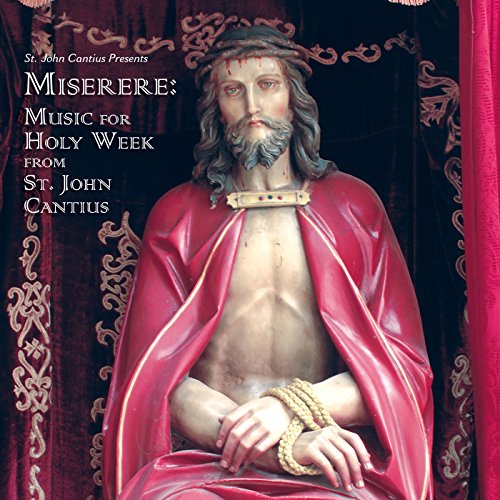
I attest that their disc Miserere: Music for Holy Week From St. John Cantius (US HERE – UK HERE) is, quite frankly, magnificent.

All is not quiet on the Sacred Music front these days.

Even Pope Francis said (HERE) that a lot of our music is “mediocre, superficial and banal”. Truer words were never spoken, and this from someone who doesn’t seem terribly interesting in liturgy.

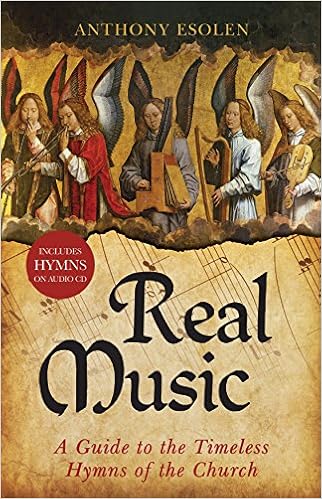
Anthory Esolen is also on the case.

US HERE – UK HERE

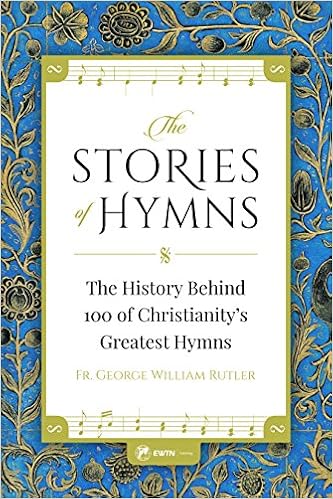
Fr. George Rutler put out a new book.

US HERE – UK HERE

And there is a fine initiative – Cantate Domino – to promote worthy sacred music for liturgical worship.  HERE

Posted in Just Too Cool, Liturgy Science Theatre 3000 | Tagged , , , , ,
Comments Off on Great news for Sacred Music promoters everywhere!

WDTPRS Laetare – 4th Sunday of Lent (2002MR): “with prompt devotion and eager faith”

Fr. Finigan when he was still PP of Blackfen in the Rose vestments YOU readers helped to purchase in 2009!

The nickname Laetare originated from the first word of the Introit chant for Sunday’s Mass, “Rejoice!”

On Laetare Sunday there is a slight relaxation of Lent’s penitential spirit, because we have a glimpse of the joy that is coming at Easter, now near at hand.

The custom of using rose (rosacea) vestments is tied to the Station churches in Rome. The Station for Laetare Sunday is the Basilica of the Holy Cross of Jerusalem where the relics of Cross and Passion brought from the Holy Land by St. Helena (+c. 329), mother of the Emperor Constantine (+337), were deposited. It was the custom on this day for Popes to bless roses made of gold, some amazingly elaborate and bejeweled, which were to be sent to Catholic kings, queens and other notables. The biblical reference is Christ as the “flower” sprung forth from the root of Jesse (Is 11:1 – in the Vulgate flos “flower” and RSV “branch”). Thus Laetare was also called Dominica de rosa…. Sunday of the Rose. It didn’t take a lot of imagination to develop rose colored vestments from this. Remember, the color of the vestments is called rosacea, not pink (especially not baby-rattle pink). This Roman custom spread by means of the Roman Missal to the whole of the world.

Our Collect is a new composition for the 1970MR and subsequent editions of the Novus Ordo based on a prayer in the Gelasian Sacramentary and a section of a sermon by St. Pope Leo I, the Great (+461). There is some similarity between this Collect with those of Advent. On the 2nd Sunday of Advent, we heard: in tui occursum Filii festinantes… “those hurrying to meet your Son.” On the 3rd Sunday (this Sunday’s fraternal twin Gaudete, the only other day for rose vestments) we heard: votis sollemnibus alacri laetitia celebrare…”, to celebrate…with eager jubilation by means of solemn offerings.”

There is rosy anticipation in today’s Collect just as there was in Advent.

Without further delay, here is the beautiful Latin followed by the current ICEL version, the atrocious but happily obsolete ICEL version, and then… a couple of surprises!

COLLECT (2002MR):

Deus, qui per Verbum tuum
humani generis reconciliationem mirabiliter operaris,
praesta, quaesumus, ut populus christianus
prompta devotione et alacri fide
ad ventura sollemnia valeat festinare.

Sollemnia is the neuter plural of the adjective sollemnis meaning “yearly”, that which is established to be done each year. In religious contexts, it comes out as “religious, festive”. As a substantive, it is “a religious or solemn rite, ceremony, feast, sacrifice, solemn games, a festival, solemnity”. Sollemne, the neuter noun, is also, “usage, custom, practice”. In legal contexts, it can be “formality”. In later, Christian Latin words related to sollemnis came to indicate the celebration of the Eucharist. Alacer is “lively, brisk, quick, eager, active; glad, happy, cheerful”. Promptus, a, um is from the verb promo. Promptus indicates, “brought to light, exposed to view” and by extension “at hand, i. e. prepared, ready, quick, prompt, inclined or disposed to or for any thing.”

LITERAL RENDERING:

O God, who by Your Word
wondrously effect the reconciliation of the human race,
grant, we beg, that the Christian people
may be able to hasten toward the upcoming solemnities
with ready devotion and eager faith.

CURRENT ICEL (2011):

O God, who through your Word
reconcile the human race to yourself in a wonderful way,
grant, we pray,
that with prompt devotion and eager faith
the Christian people may hasten
toward the solemn celebrations to come
.

Note the marvelous parings of alacer fides and prompta devotio … “eager faith” and “ready devotion”. We know that fides “faith” can refer to the supernatural virtue which is given to us in baptism and also to the content of what we believe. This content must be understood as both the things we can learn and memorize with love, but more importantly the divine Person whom we must learn and contemplate with love.

There is a faith by which we believe, the virtue God gives us, and a faith in which we believe, the content of the Faith.

On the other hand, whereas fides is a supernatural virtue, devotio is an “active” virtue according to St. Thomas Aquinas in the Summa Theologica. The Angelic Doctor wrote:

“The intrinsic or human cause of devotion is contemplation or meditation. Devotion is an act of the will by which a man promptly gives himself to the service of God. Every act of the will proceeds from some consideration of the intellect, since the object of the will is a known good; or as Augustine says, willing proceeds from understanding. Consequently, meditation is the cause of devotion since through meditation man conceives the idea of giving himself to the service of God” (STh II-II 82, 3).

The Jesuit preacher Louis Bourdaloue (1632-1704) underscored devotion as especially “a devotion to duty”. What we do, including our “devotions”, must help us keep the commandments of God and stick to the duties of one’s state in life before all else. There is an interplay between our devotions and our devotion.

Each of us has a state in life, a God-given vocation we are duty bound to follow.

We must be devoted to that state in life, and the duties that come with it, as they are in the here and now.

That “here and now” is important. We must not focus on the state we had once upon a time, or wish we had, or should have had, or might have someday: those are unreal and misleading fantasies that distract us from reality and God’s will. If we are truly devoted and devout (in the sense of the active virtue) to fulfilling the duties of our state as it truly is here and now, then God will give us every actual grace we need to fulfill our vocation. Why can we boldly depend on God to help us? If we are fulfilling the duties of our state of life, then we are also fulfilling our proper roles in His great plan, His design from before the creation of the universe. God is therefore sure to help us. And if we are devoted to our state as it truly is, then God can also guide us to a new vocation when and if that is His will for us. Faithful in what we must do here and now, we will be open to something God wants us to do later.

This attachment to reality and sense of dutiful obedience through the active virtue devotio is a necessary part of religion in keeping with the biblical principle in 1 John 2:3-5:

“And by this we may be sure that we know Him, if we keep His commandments. He who says ‘I know Him’ but disobeys His commandments is a liar, and the truth is not in him; but whoever keeps his word, in him truly love for God is perfected. By this we may be sure that we are in Him: he who says he bides in Him ought to walk in the same way in which He walked.”

OBSOLETE ICEL (1973):

Father of peace,
we are joyful in your Word,
your Son Jesus Christ,
who reconciles us to you.
Let us hasten toward Easter
with the eagerness of faith and love.

This makes you want to pound your head against the table.

What would happen if we translated the ICELese back into Latin? If the ICEL were accurate, you might expect some similarities, right?

WARNING: Do not attempt this at home. Spiritual harm and damage to property can be caused by thinking about these ICEL versions. Leave this sort of thing to trained professionals and people with tough foreheads.

LATIN REVERSION of the OBSOLETE ICEL:
Pater pacis,
in tuo Verbo, Iesu Christo filio tuo,
qui nos tibi reconciliat, laetamur.
Fidei studio et amoris
ad diem Paschalis festinemus.

So, just for kicks we can see how the Google translates the Latin original.

GOOGLE TRANSLATOR MACHINE VERSION:
O God, who by your word
reconciliation of the human race dost wonderfully,
grant, we beseech Thee, that the Christian people
with ready devotion and eager faith
the formalities to come to the be able to hurry up
.

Oookaayyy… ‘nuf said about that.

And there are some in the church today who want to revise the norms for liturgical translation.  Talk about wanting to “turn back the clock”!  The irony would be laughable if the stakes weren’t so high.

Posted in LENT, Liturgy Science Theatre 3000, WDTPRS | Tagged ,
2 Comments