The famous plague procession Crucifix in Rome’s San Marcello al Corso has been moved from its chapel in the center of Rome to St. Peter’s Square for a prayer Francis will recite on 27 March at 1800h (Rome time)
I wrote about this Cross and its history HERE.
What I wrote:
The reign of the Medici Pope, Leo X was over. It was the Pontificate of Adrian VI. He reigned from 9 Jan 1522 to 14 Sept 1523, Feast of the Triumph of the Cross. Adrian, who tomb is in Santa Maria dell’Anima, was the last non-Italian elected Pope untill John Paul II. When he was elected, Adrian had never been to Rome and was elected in absentia. The Roman people were not happy and the pasquinades were vicious. A protester put a “For Sale” sign up at the Vatican. Apparently, Adrian was pious and brilliant, but his Latin sounded rather too German, rather like Ratzinger.
 Adrian arrived in Rome in 1522. The Plague gripped the city. People were fleeing in droves. One priest, taking possession of his new church in the Via del Governo Vecchio – where seminarians from the North American College often walk to and from classes – Santa Cecilia de Turre Campi, later razed to build the Oratory, could get up to the upper floor because there were so many bodies in the place. Dislike for Adrian was so bad that, rather like Pres. Trump, he was blamed for the plague that was already there. A poet named Antonio Tebaldeo, secretary to Lucrezia Borgia and official under Leo X, mocked Adrian with the epitaph: “Here lies Adrian. Whoever succeeds him, don’t touch his throne. He was a plague.” Antonio would later lose everything in 1527 Sack of Rome. “Who bites the Pope dies”, I guess.
When Adrian arrived in Rome, he was brought an image of Mary that was carried in procession against the plague. That image is now in Sta. Maria in Campitelli. A couple years ago, for the Summorum Pontificum pilgrimage, we venerated the image and it is, occasionally processed in the streets even today. I posted some images and, perhaps, video on the blog of one of these.
San Marcello al Corso, one of the Roman Stations during Lent, had burned in 1519, but the large 14th c. Sienese wooden crucifix was miraculously undamaged. The new church was built by Sansovino with a facade by Carlo Fontana.
However, in 1522, Guglielmo Raimondo Card. de Vico, held a procession – over 16 days – 4-20 August in the midst of the real summer heat – against the plague from San Marcello al Corso, to St. Peter’s Basilica. It went through all the rioni of the City. It took so long, because where the Cross went, the plague dissipated, so people tried to keep it in their area as long as they could. Nobles and citizens, barefoot, alike dressed in black habit and ashes, marched through the different districts chanting “Mercy, Holy Crucifix!”
Even then public authorities worried that crowds would increase the contagion. Instead, the plague rapidly ended.
There is an archconfraternity, one of the first ever raised to that status, which cares for and venerates the crucifix used in the procession. It’s membership eventually grew to some 1800 men, which was a large percentage of tiny and bedraggled Rome of the day, and members from the greatest Roman families belonged. They, like some other powerful confraternities, was given the privilege of pardoning one prisoner condemned to death per year, on 14 September. Chapters spread all through Europe. Back in the day, people didn’t depend on the “state”. The archconfraternity, as all of them did in Rome, was dedicated to works of mercy, in this case taking care of poor girls and visiting the sick and prisoners. The crucifix was eventually hidden from view for much of the year, but there would be solemn unveilings and processions with it four times a year, on Good Friday, the Finding of the Cross in May, Corpus Christi, and the Exaltation of the Cross in September, with sackcloth habits and unbleached candles with great lanterns and torches. Dozens of men carried a platform with the venerated Cross. Musical pieces were commissioned and choirs from the great churches participated.


 This is some cool news…
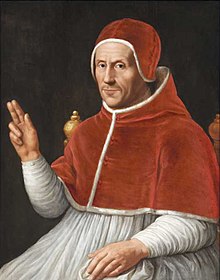 Adrian arrived in Rome in 1522. The Plague gripped the city. People were fleeing in droves. One priest, taking possession of his new church in the Via del Governo Vecchio – where seminarians from the North American College often walk to and from classes – Santa Cecilia de Turre Campi, later razed to build the Oratory, could get up to the upper floor because there were so many bodies in the place. Dislike for Adrian was so bad that, rather like Pres. Trump, he was blamed for the plague that was already there. A poet named Antonio Tebaldeo, secretary to Lucrezia Borgia and official under Leo X, mocked Adrian with the epitaph: “Here lies Adrian. Whoever succeeds him, don’t touch his throne. He was a plague.” Antonio would later lose everything in 1527 Sack of Rome. “Who bites the Pope dies”, I guess.
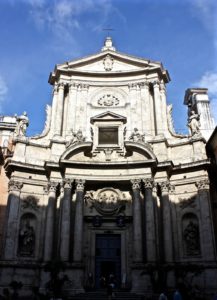 San Marcello al Corso, one of the Roman Stations during Lent, had burned in 1519, but the large 14th c. Sienese wooden crucifix was miraculously undamaged. The new church was built by Sansovino with a facade by Carlo Fontana.
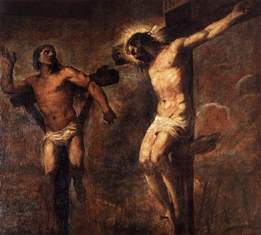 Today is Lady Day, the Feast of the Annunciation, the instant of the Incarnation.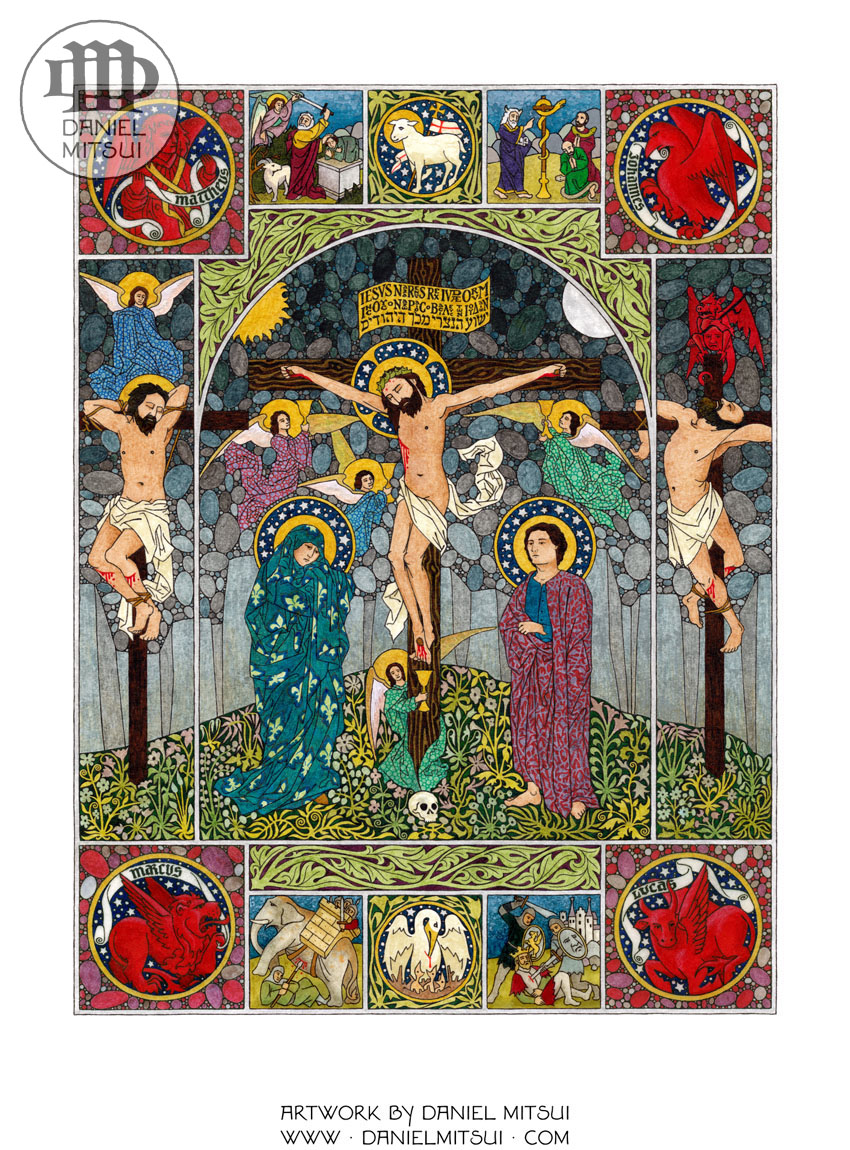



 waalaw on ROME 26/10– Day 22: Colors and courses and Coco: “Thank you, pestolover. I made sure that my solution was correct before posting it; but, as is my fatal flaw,…”




























