Was there a good point made in the sermon you heard at the Mass that fulfilled your Sunday Obligation?
What was it?

Was there a good point made in the sermon you heard at the Mass that fulfilled your Sunday Obligation?
What was it?
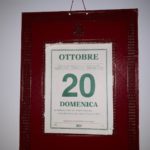 The rose at 7:26 in Rome today and it will set at 18:24. The Ave Maria bell will be neglected, as usual, at 18:45.
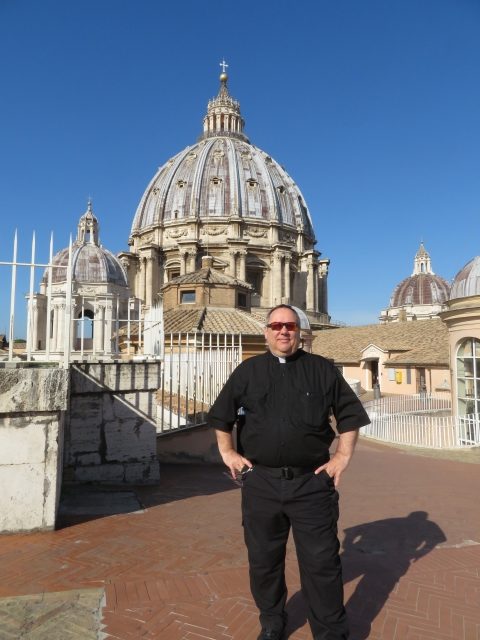
Yesterday, I trotted over to the Porta Sant’Anna and met a couple friends for a walk in Vatican Gardens. First, we went up to the roof of the Basilica, where there is a rather good bar for a coffee and roll.
As you can imagine, the view from the roof is great. Not as high as from the cupola, but not bad.
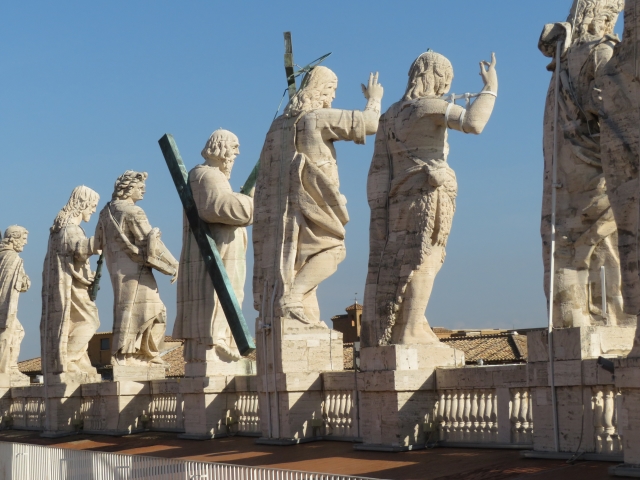
A view not many see. The backs of the heroic statues on the facade.
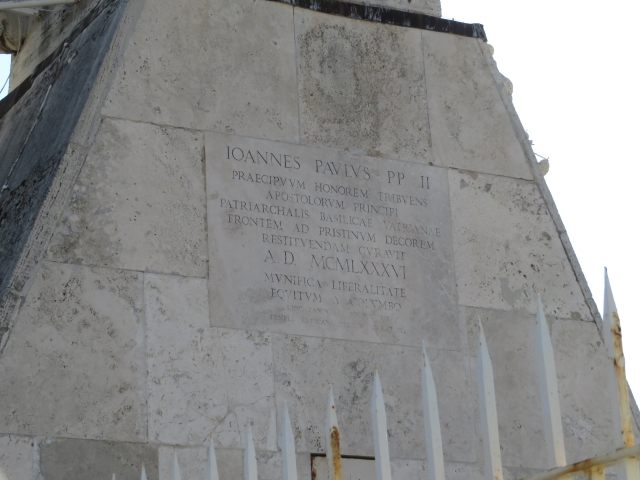
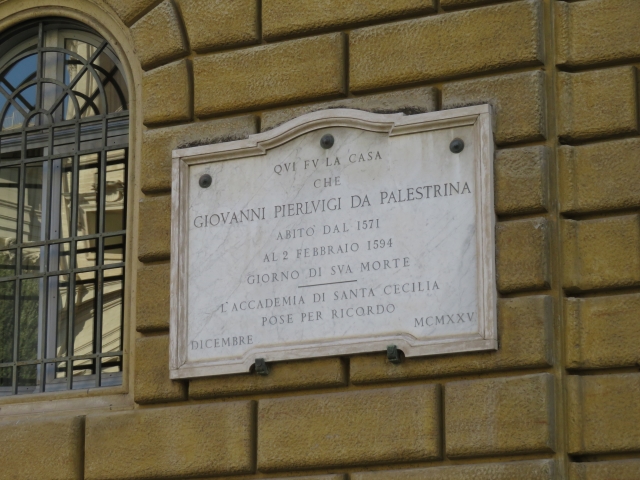
I always want you to have a chance to read some Latin.
Down on the ground, we went past the Casa Santa Marta, quickly, and to an errand or two in office of the Fabbrica and Gendarmeria. Meanwhile, how cool is it to have an inscription to commemorate Palestrina?
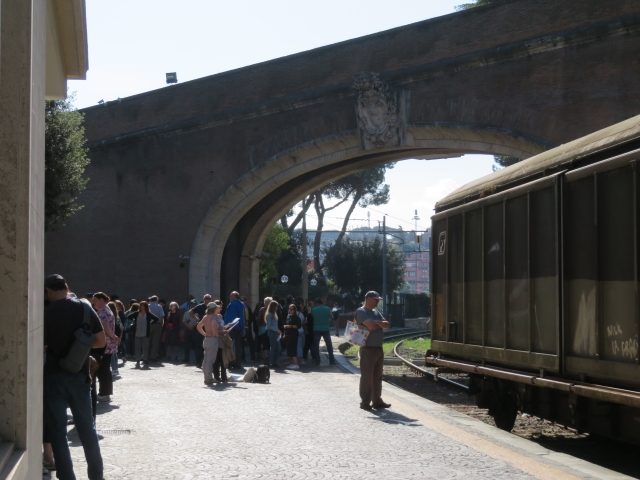
On Saturday the immense train door was open. There are trains that run to Castel Gandolfo. Looking out into Italy. You don’t see this every day.
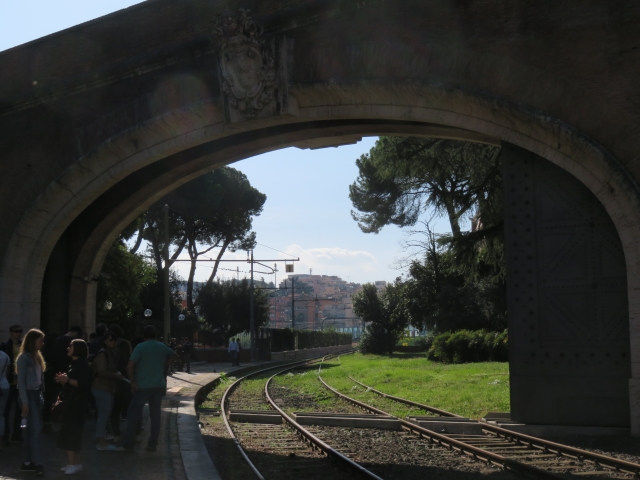
Along the way.
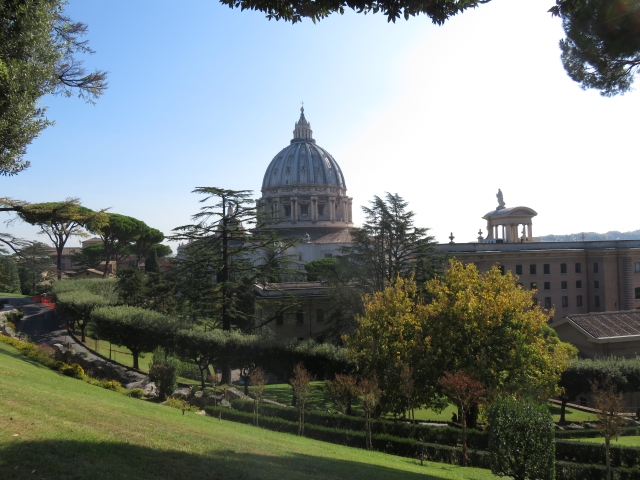
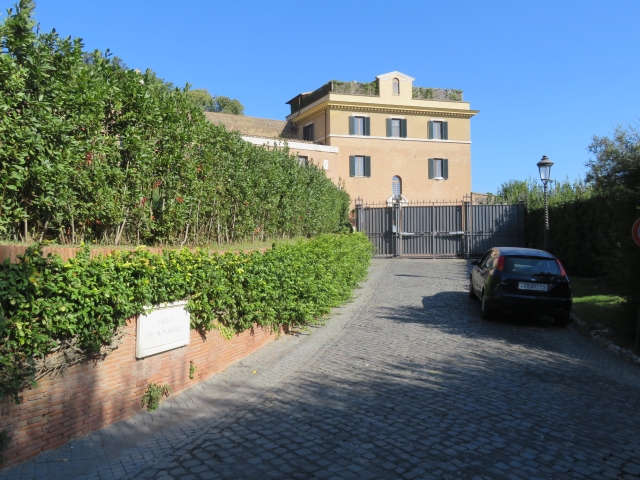
The residence of Benedict XVI. We stopped and pray for him, Aves in German.
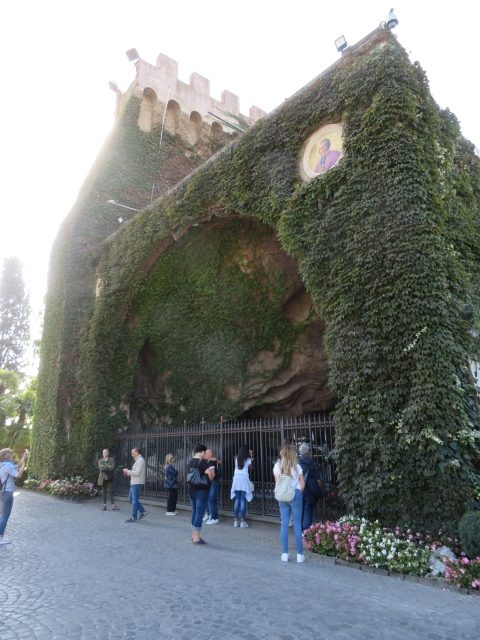
The Lourdes grotto.
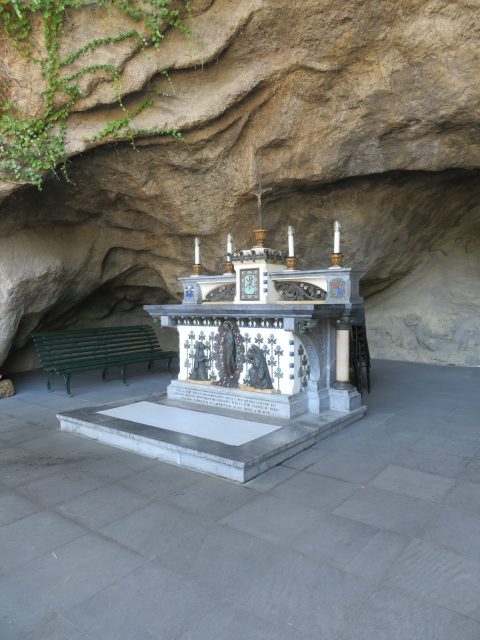
Its altar. It may be possible to celebrate Mass there. Must learn more.
Nearby, the place where the horrid pagan ceremony took place and a tree was planted. Here it is. We have no round up, or the story might have been different.
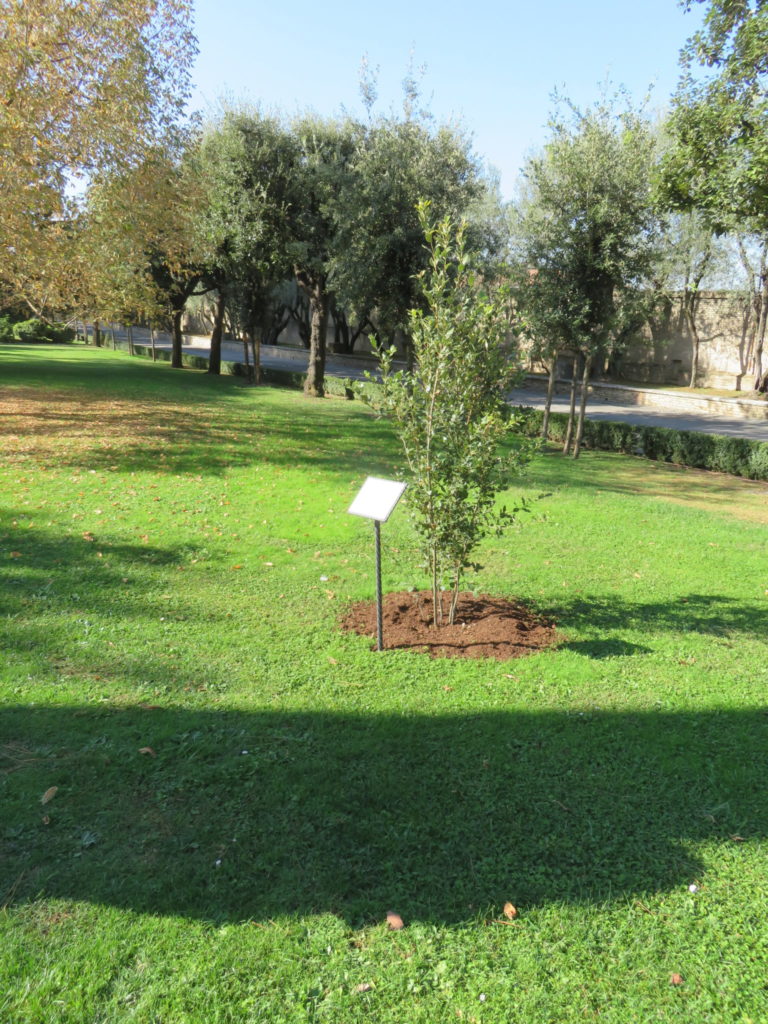
It is known, however, that a priest did come to this spot and read the long St. Michael Prayer.
Another infamous tree. This is on the other side of the Basilica, where the Museums are. This is the Tree of Islamic Infamy, where the Iman read the sutra to claim the Vatican for Islam.
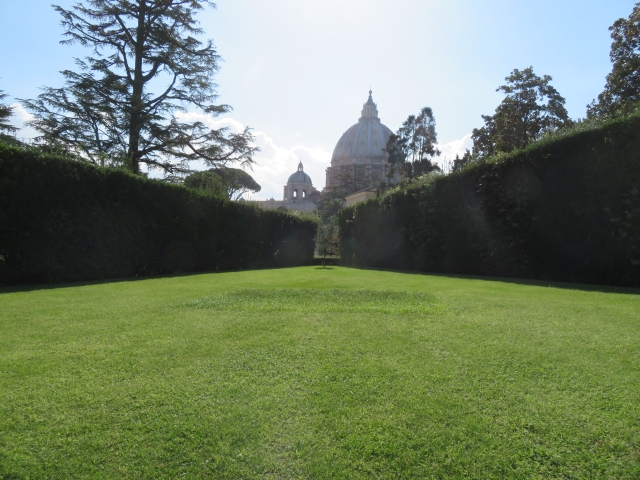
No plaque here. Curious. All the other trees have plaques.
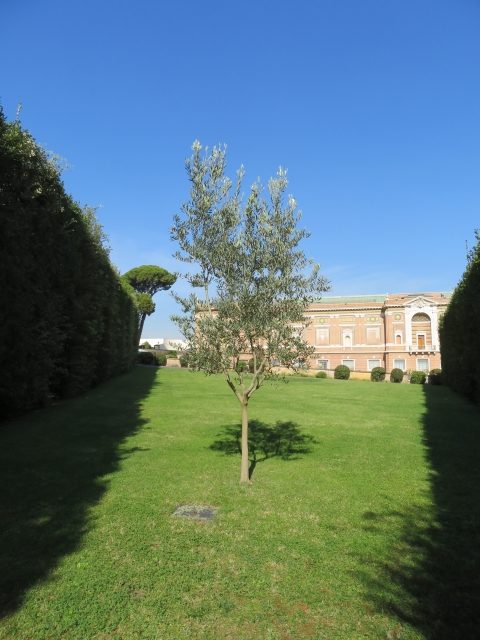
It’s as if these spots surround San Pietro… Traspontina, Sant’Uffizio, Santa Marta, pagan tree, Imam tree.
Looking out of Vatican City into Rome.
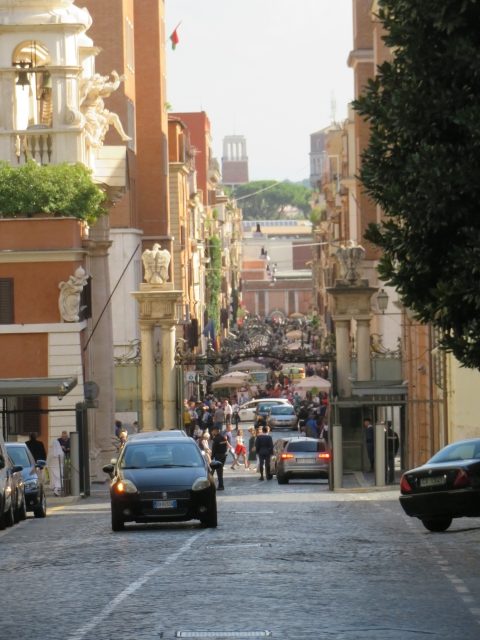
And, on the way home from Mass in the evening, a shot of where I buy my coppiette. Alas, no longer horse.
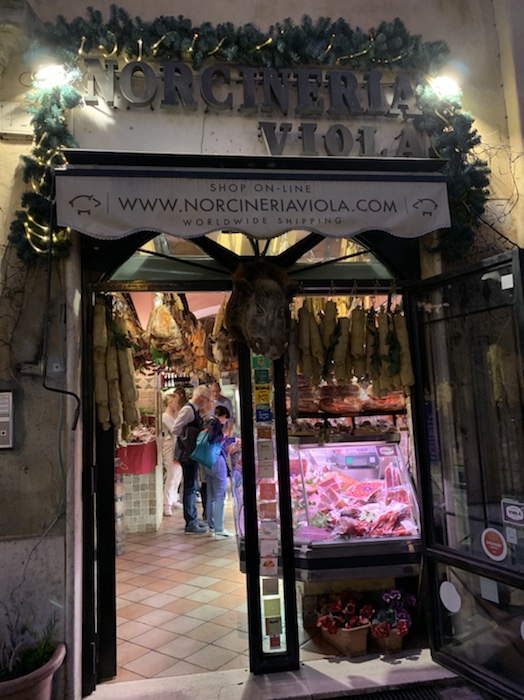
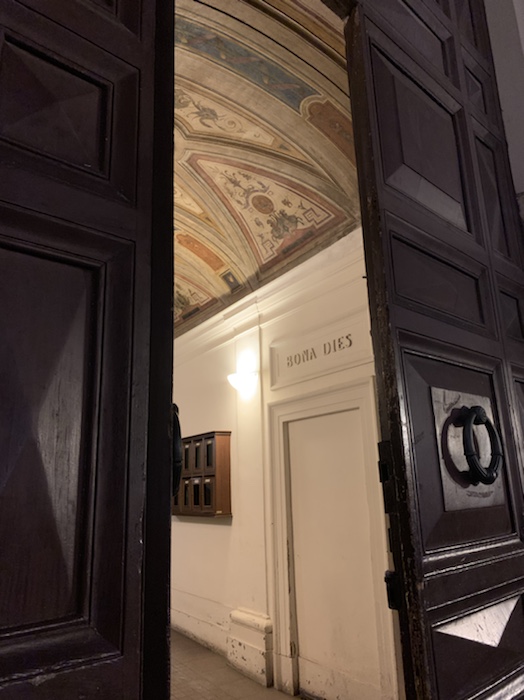
A glance in the doorway.
Bona dies, indeed!
COLD REPORT: Nothing to report today. Some cough in the morning, gone in the afternoon.
Sunday I was asked to celebrate the main, Solemn Mass at Ss Trinità. Among the announcements the pastor made, he thanks you and me. They hit the target for the baptismal font. After Mass, at a little reception, they gave me a chasuble, which was very kind of them.
More on that later.
Meanwhile, I was up late-ish, watching the blog transition. So far so good.
If only I could have provided a little round up!
 We did it.
We had a fairly narrow window to get the blog moved, but the CRACK EXPERT TIGER TEAM did it.
The blog has a new home.
Many many thanks go out to CB and JR (amazing) who were instrumental in the move and, as always, DY. Without whom this blog wouldn’t have survived its first redition and challenge back in its earliest days when it first exploded.
You all might need to change some bookmarks.
Anything that had an address with
wdtprs.com/blog/
now loses the /blog/
The RSS feed is https://wdtprs.com/feed/
There is a bug email. If you find something that is broken, other than my heart at what’s going on in the Church,
adorientemengine@gmail.com
Actually, my heart is as hard as one of those metals like, you know, Unobtainium. It’s an honor to live in this time of war.
And the blog just obtained a new suit of armor and a new steed to ride.
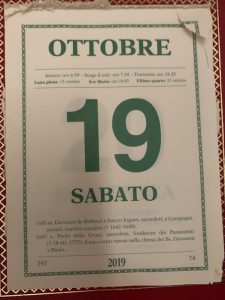
0724
1825
1845
The madness of the Amazon “walking together” Synod continues. Outside the unofficial church of the squatting amazonians and their accomplices this woman was holding forth to Swiss TV. Note the shirt.

Inside (there is a video) a group was having what I understand was a regular meeting, in the pews, during the recitation of the rosary going on in the church! A woman, bless her, told them to shut up or get out. They went out.
See? It can be done.
Nut jobs.
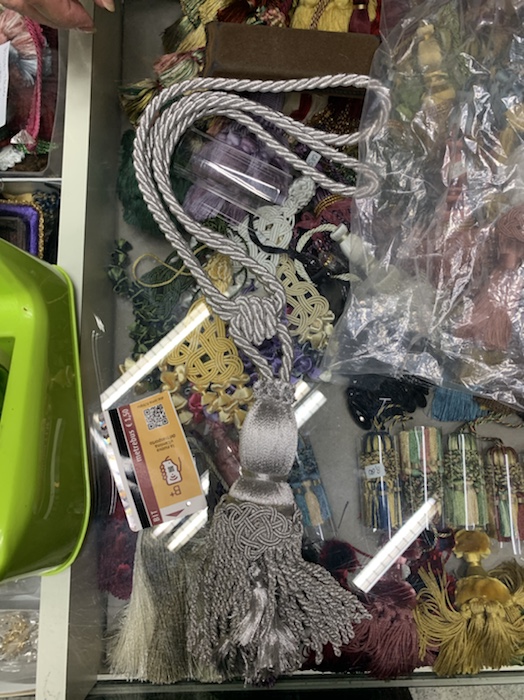
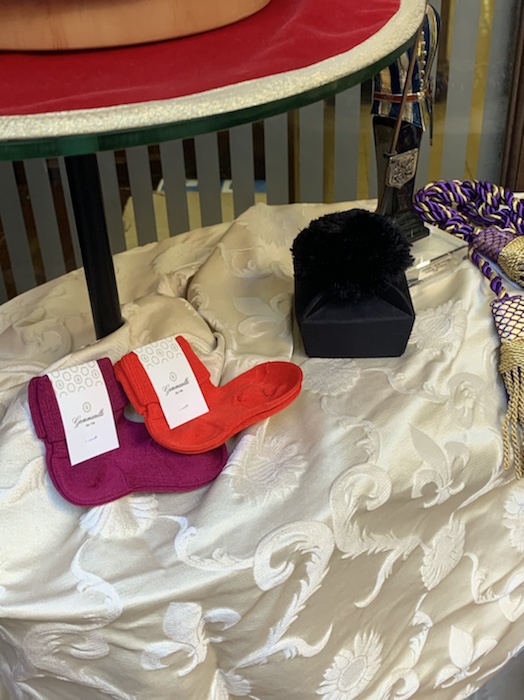
I might be getting these for the BLACK set, almost read and Gammarelli.
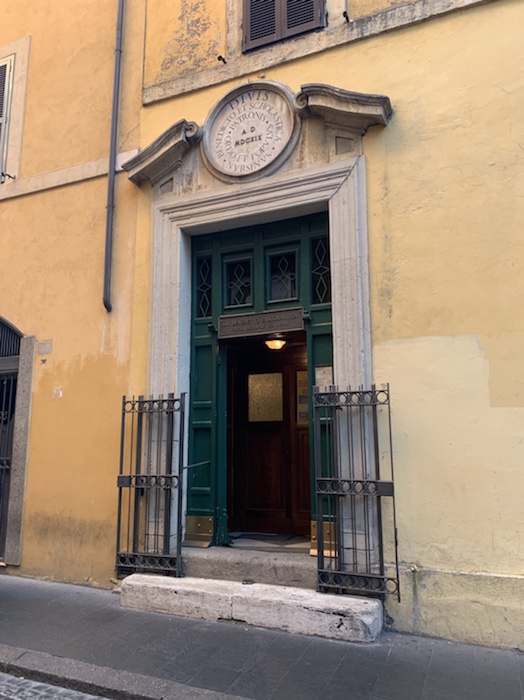
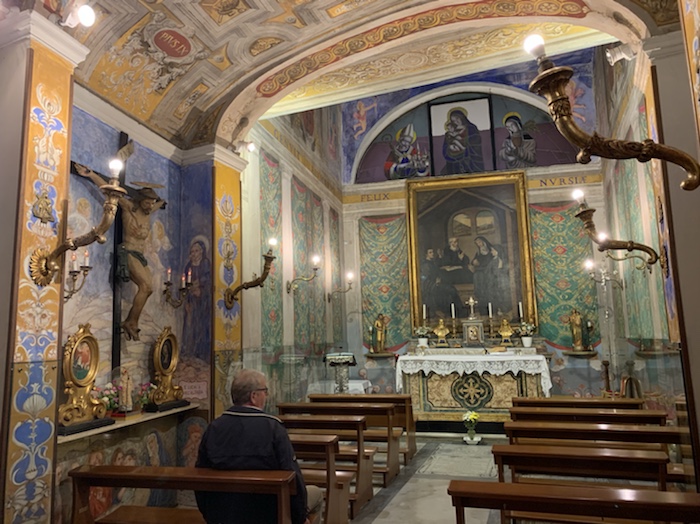
A little church which I haven’t seen open in… whew… a long time.
Sweet.
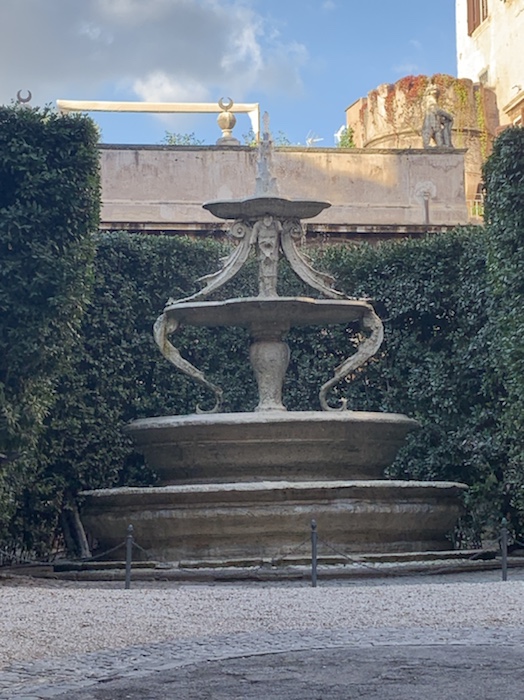
A famous fountain, of the Orsini’s.
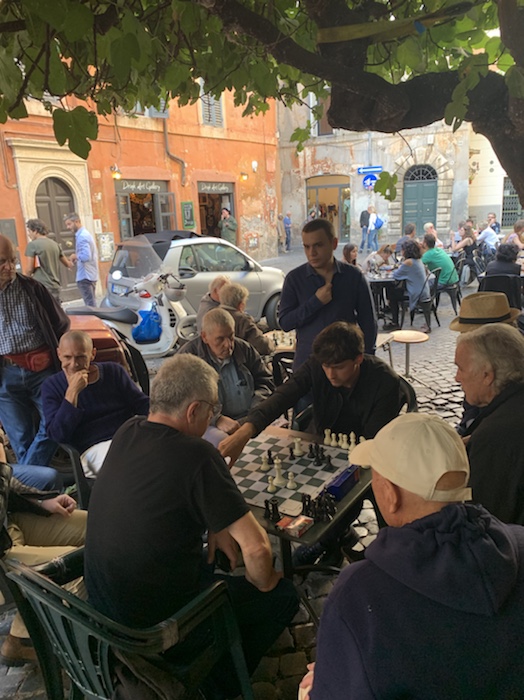
Guys playing check under the big fig tree.
Gammarelli, baby monsignor and cardinal socks and miniature biretta.
The once bank of the Holy Spirit. FDIC?
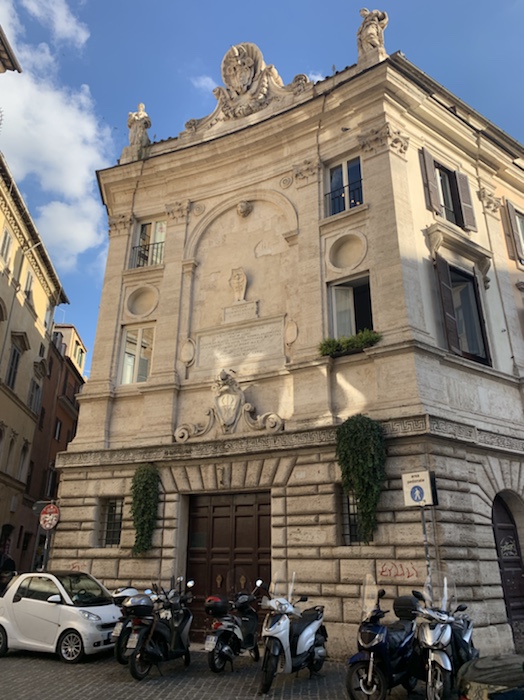
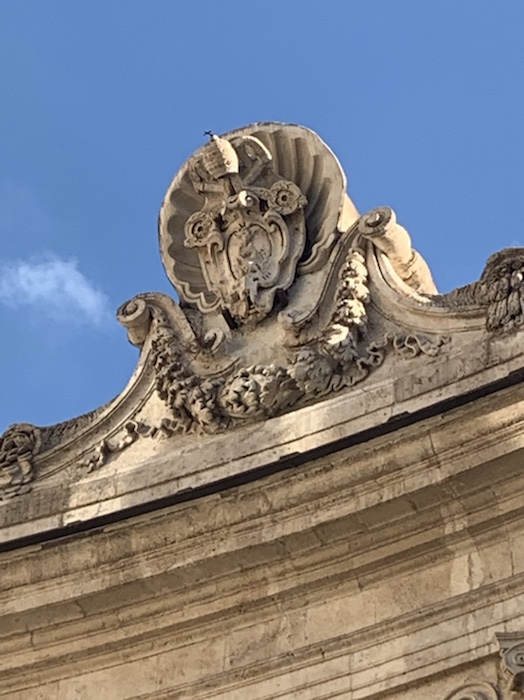
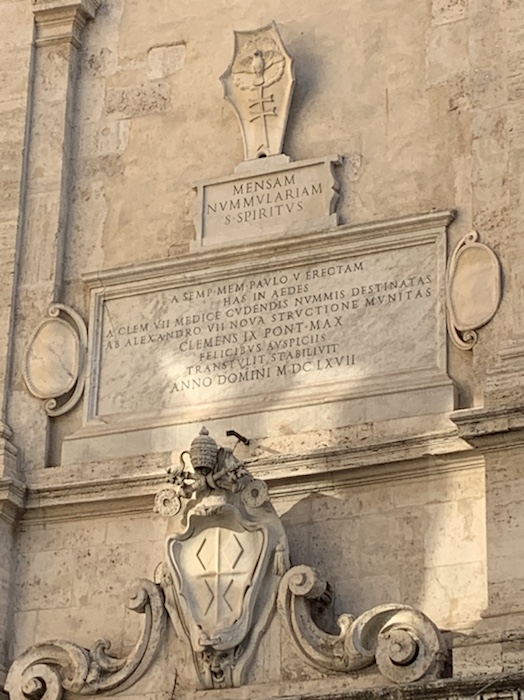
And nearby a plaque in honor of Benvenuto Cellini, whom I mentioned the other day.
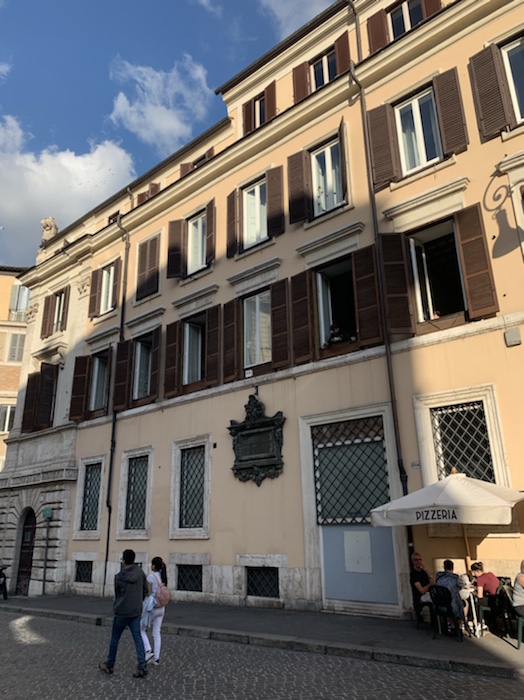
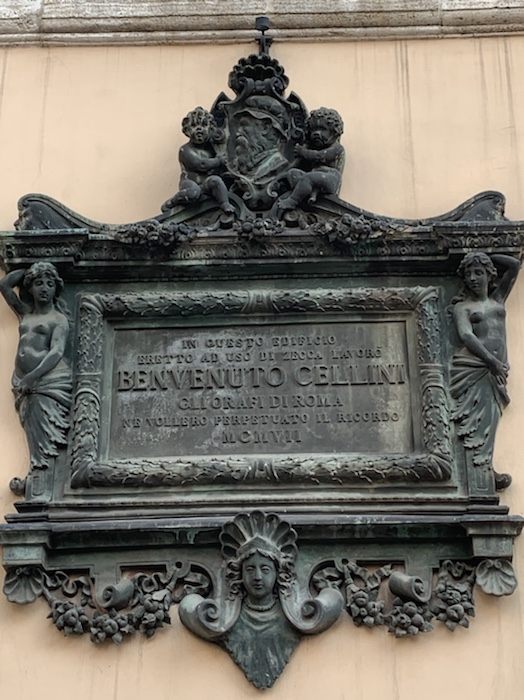
Just a couple shots at a great corner.
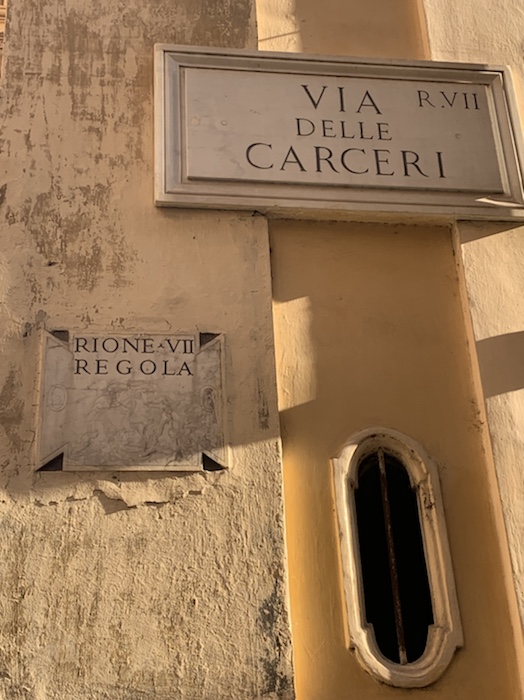
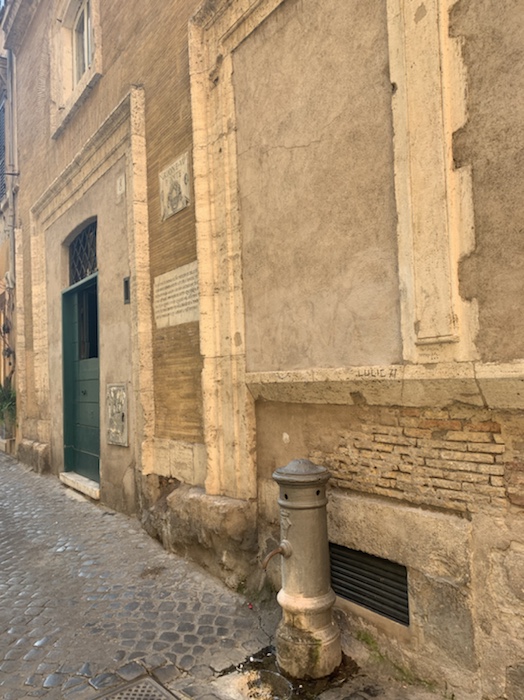
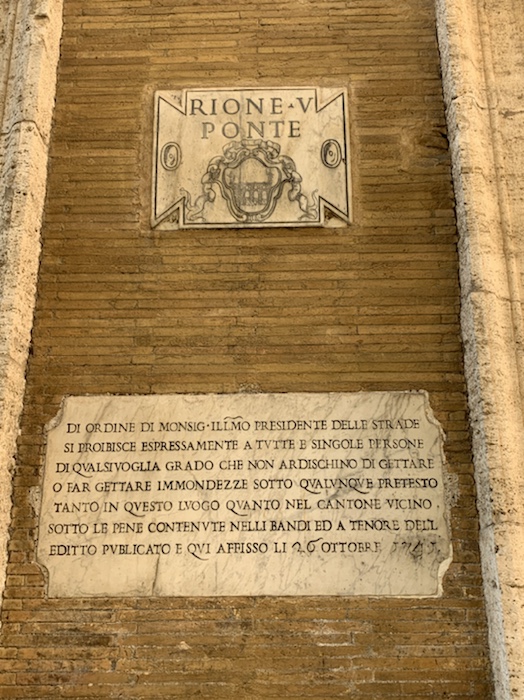
This is the boarder of Ponte and Regola. Don’t liter here.
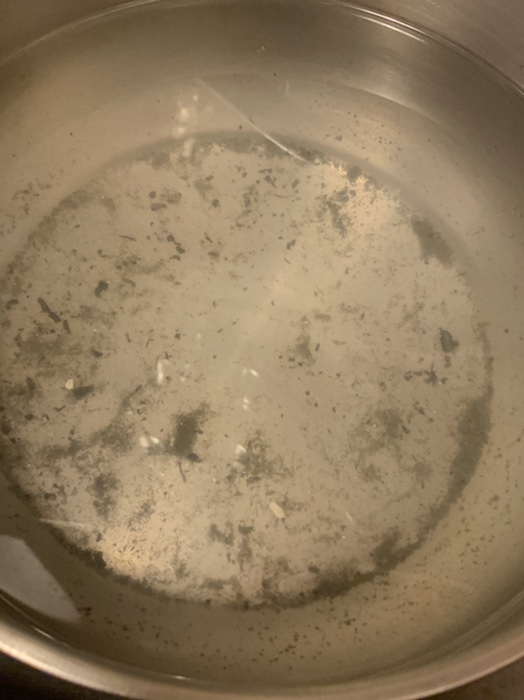
Why you soak clams for hours in salt water.
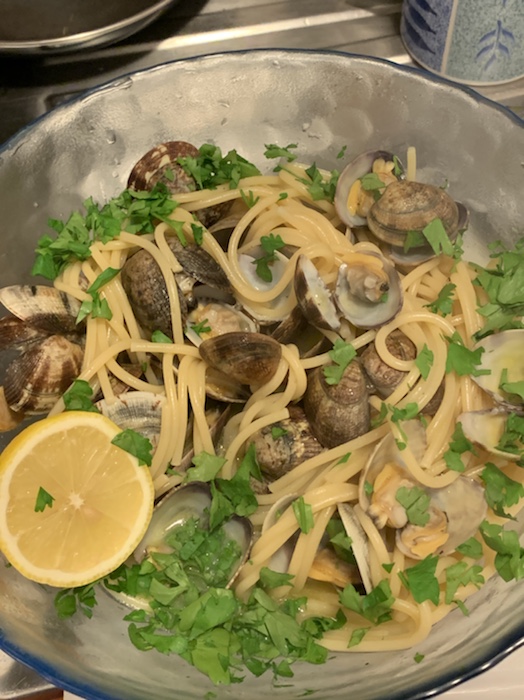
Yes, it was so good last time, that I did it this Friday.
COLD REPORT: Slight cough.
Today I had a great walk in the Vatican Gardens with friends. We did NOT run into Benedict XVI but we stood in prayer by his place.
Also, it may have happened that a certain priest privately read in Latin Ch. 3 of a certain Title in the Rituale Romanum while standing at the place where a certain pagan ceremony was conducted with a tree planting. It may have happened that a certain priest was stung by a bee while reading it, but without any ill effects. That’s all hypothetical, of course.
More tomorrow.
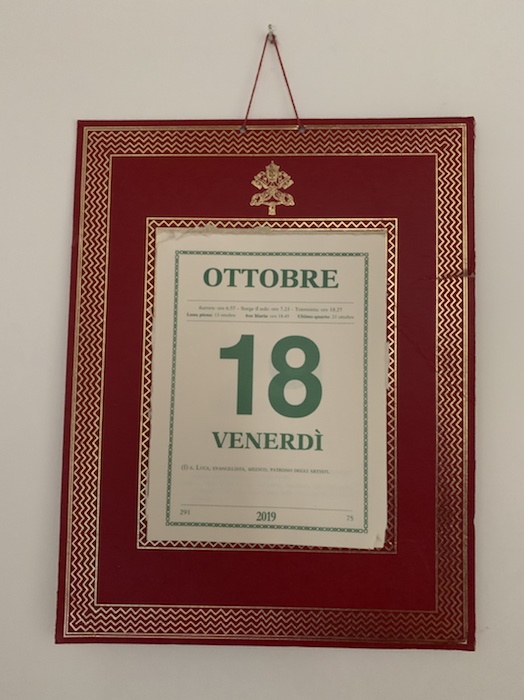 7:23 is when the Sun rose, which in turn will set at 18:27 and the Ave Maria should – but won’t – ring at 18:45.
One of the things that was causing a lot of stress some time ago is slated to be resolved before too long.
This blog has to move.
I was informed by the Whatever From High Atop The Thing that their business model had changed and everything that was not going to be In The View had to skedaddle before a Certain Terminal Moment.
The clock has been ticking and Crack Team of Experts has been working the problem. The Certain Terminal Moment is upon us.
In a matter of days, or even perhaps hours, this blog will wanish… vanish!
*PFFFT*
*
*
*
Only to reappear again, once the polarity has been reversed, Beamed to Another Place.
Let’s hope that all goes well and that The Blog doesn’t get caught in the… what was it they always had a problem with? … the Transporter Buffer?
I don’t always get the tech right. After all, I’m a priest, not a server technician.
That said, I am convinced more than ever that a Catholic Signal Corps is necessary. We need a Crack Team of Experts who are dedicated to helping with and maintaining Catholic sites and who will eventually be able to build an infrastructure that isn’t at the mercy of demonic agenda driven ideologues.
Meanwhile, just around the corner from where I say Mass in the evenings, and just up from the Ponte Sisto, is the little church of the Pallottine Fathers. This is where you may venerate St. Vincent Pallotti. It’s on the Via dei Pettinari,
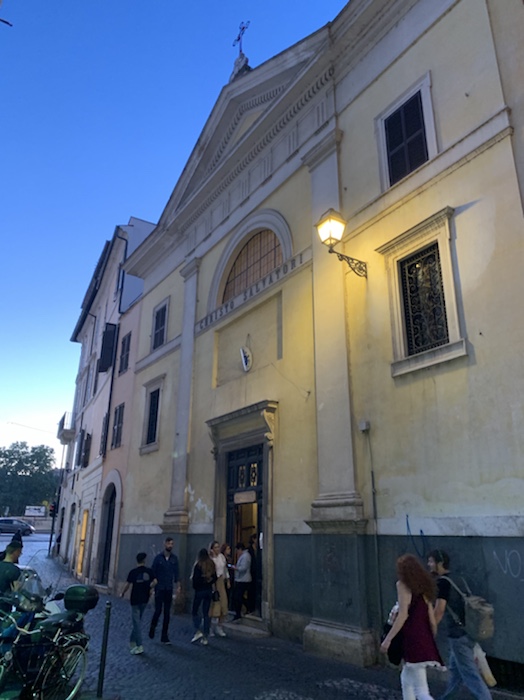
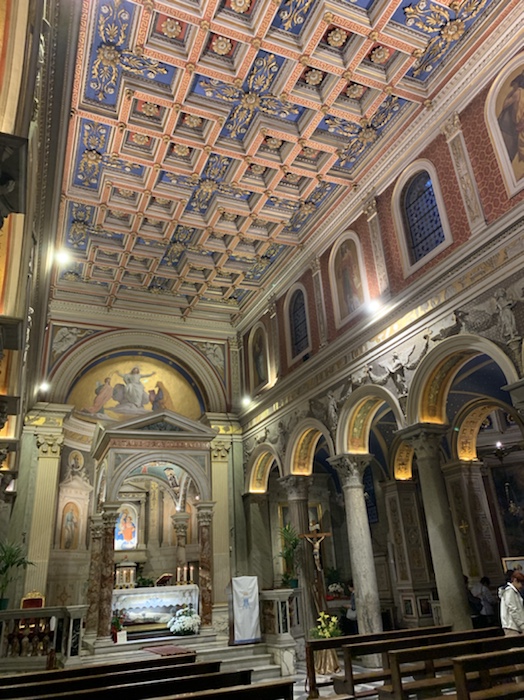
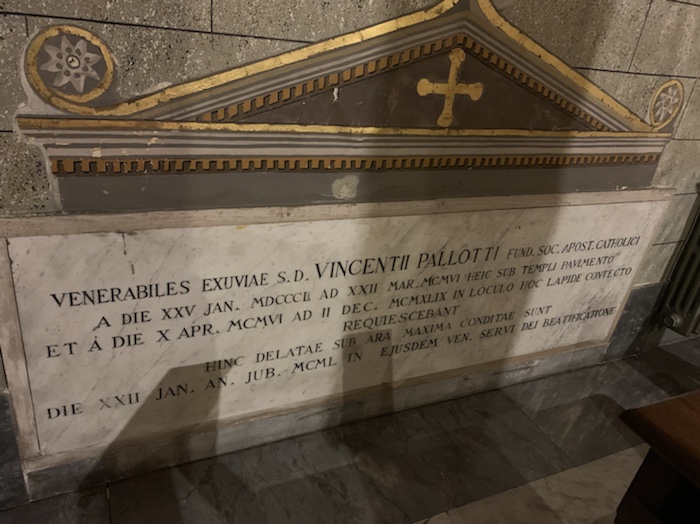
This is a Roman saint, who developed schools for tradesmen, such as shoemakers and tailors and carpenters. There were lots of these shops in the area when this church is, and the streets are still named for various trades.
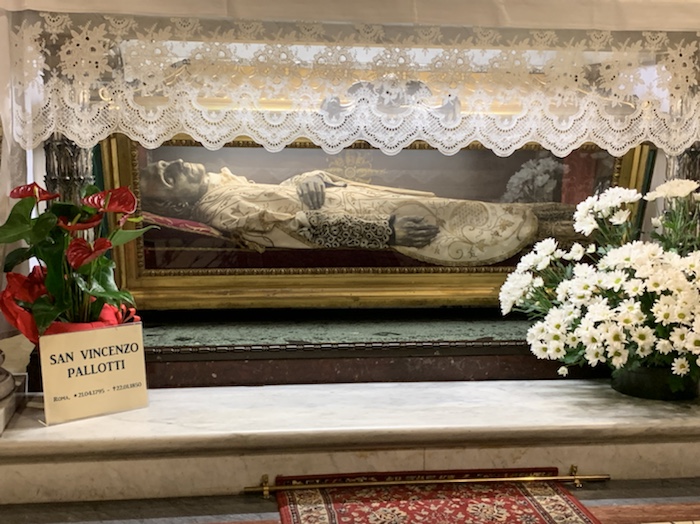
When his body was exhumed as part of his cause in 1906 and in 1950, it was incorrupt.
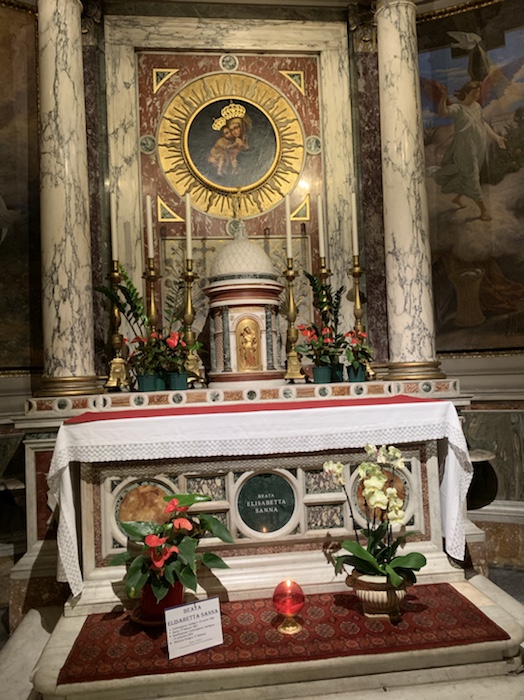
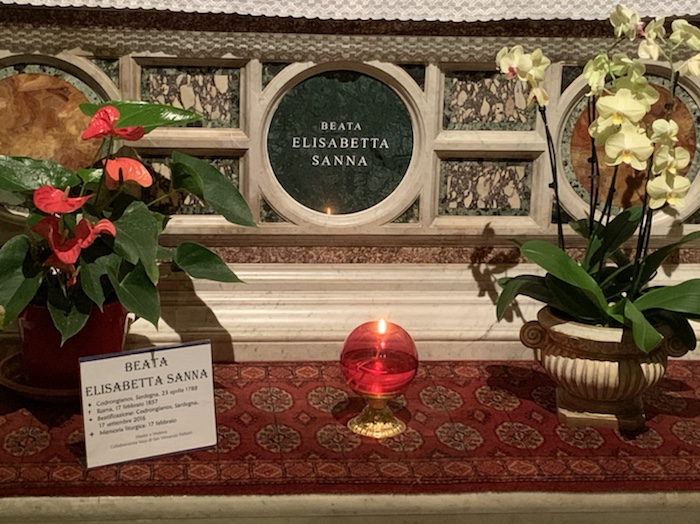
A Blessed is here, Elisabetta Sanna, who died in 1857 and was beatified in 2016. She was a widow, terribly disfigured by small pox and a collaborator with St. Vincent.
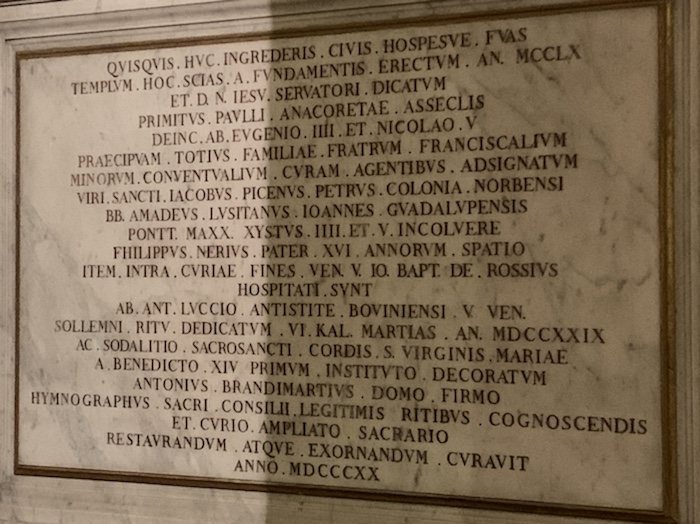
Some of the history. It mentions the first activity here of a hermit named Paul in 1260.
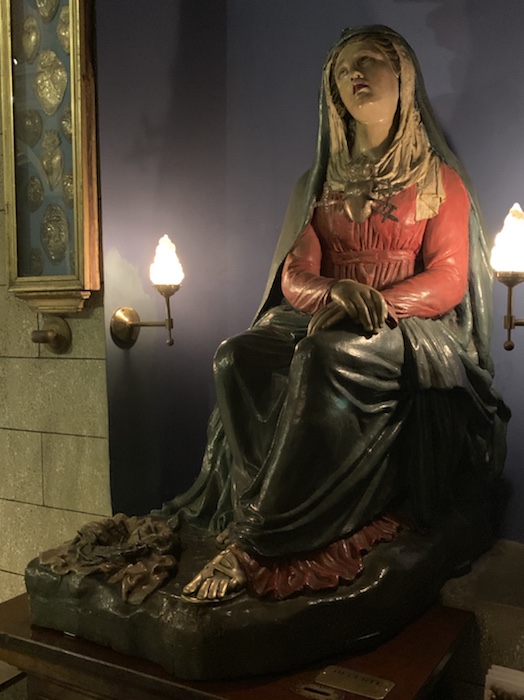
Our Sorrowful Mother. Today she is sad because of the Amazon Synod (“walking together”). I think that that’s also an eye-roll.
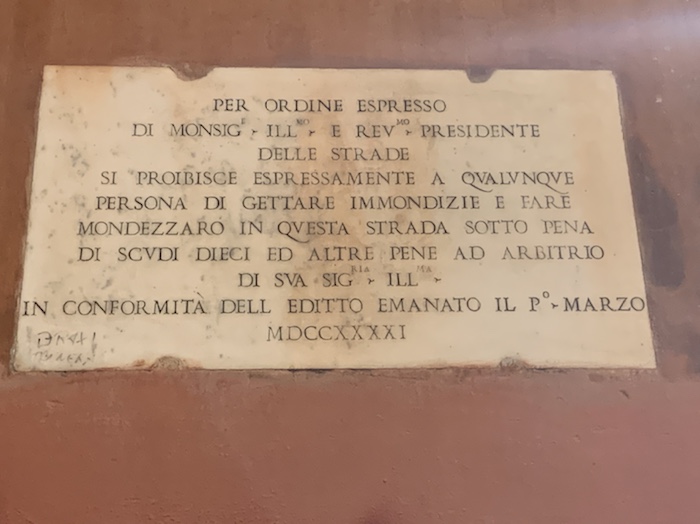
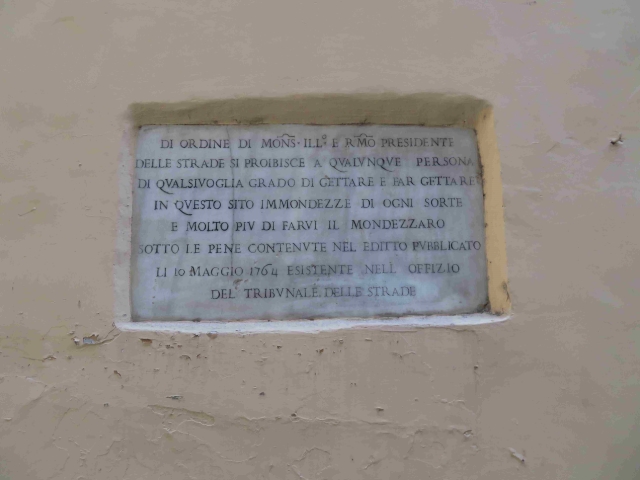
When you leave San Salvatore in Onda, after your visit to St. Vincent and Bl. Elisabetta, by order of the Most Illustrious and Most Reverend Monsignore President of the Streets, you are NOT to liter or you will be fined 10 golden scudi and maybe given other punishments as well.
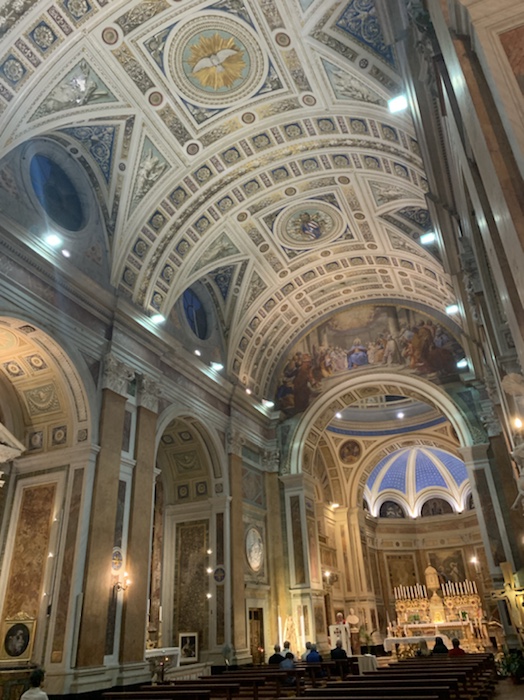
I popped my head into the Neapolitan church, Lo Spirito Santo dei Napolitani on the Via Guilia.
Mass was on for Knights of the Holy Sepulcher, so I couldn’t explore. The sermon took boring to new depths of soul annihilation.
The old church, once dedicated to St. Aurea (thus unlocking the mystery of the name of a nearby alleyway), was built in 1574. It was S. Aura in strada iulia and there were nuns here. Dedicated to the same St. Aurea of Ostia in whose church on the edge of Ostia Antica St. Monica’s body was kept, before it was translated into Rome to Sant’Agostino.
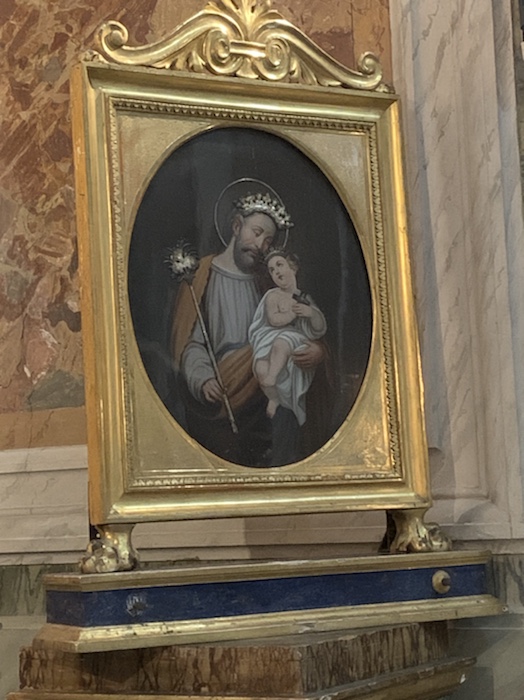
A lovely crowned image of Joseph. You don’t see these too often. There is a great one at San Carlo al Corso.
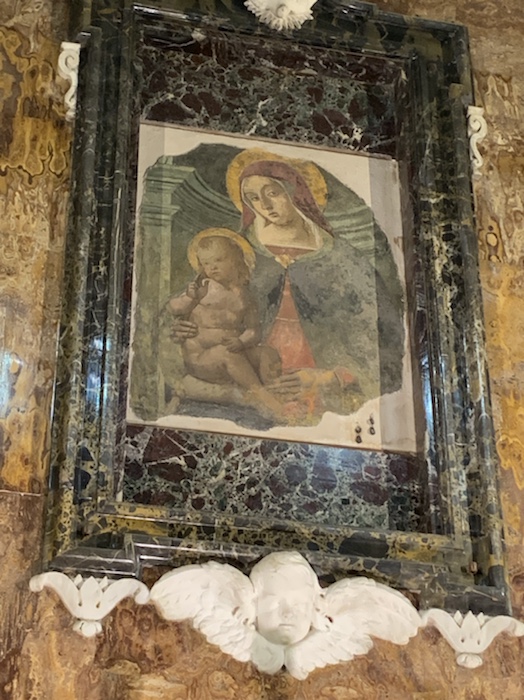
This is nice. Nicknamed, “Madonna del Fulmine”, for reasons that are not clear to me.
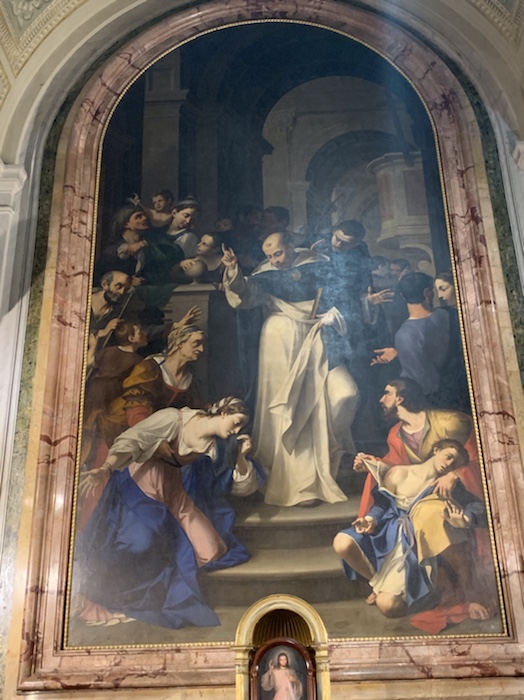
Here’s a nice probably 18th c. painting of St. Thomas Aquinas.
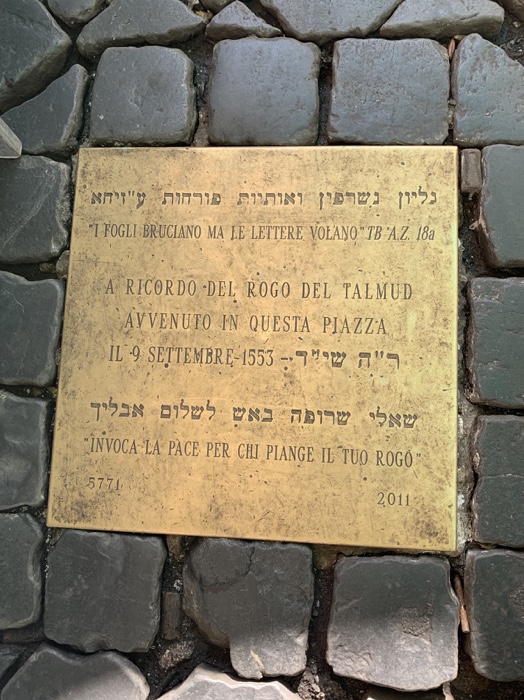
Today, walking through the market to collect some clams for supper, I spotted this, embedded in the sanpietrini. If I’ve seen it, I haven’t remembered it. Of course it is near the statue of Giordano Bruno, so it’s hatemail to the Church.
Here’s the little, charming (without the cars) Vicolo del Bollo. A Roman “vicolo” isn’t just an alley or connecting passage. They had there own microcultures and nearly their own climates. This one runs between the Via dei Cappellari (where surely saturnos were made) and the Via del Pellegrino.
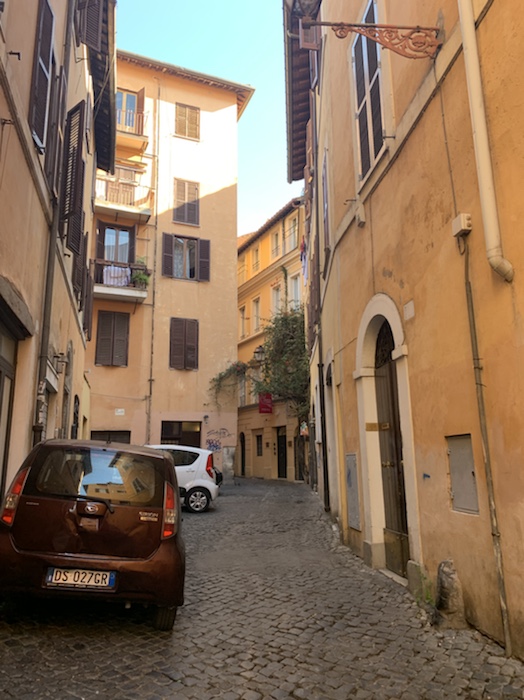
It was named at the office of the Bollo, or “stamp” which was founded in 1608 to certify the quality of silver and gold in metal works. There were gold smiths and jewelers around here. There still are. In Roman parlance we still say, “oro de bollo” for something that’s the real Dr. McCoy. I once had an short term apartment here. At the right time of year, you enjoy wisteria and bougainvillea.
I have a 19th c. silver chalice which I found and had repaired. It bears the silver stamp of the Papal States. I’m pretty sure that stamp, that bollo, was set in this little street.
Speaking of silver, click the wavy flag! Mass tonight for Benefactors at 6-ish, Rome time.
Meanwhile, at the fish monger, I spotted a net of telline… ahhhh… telline, and of razor clams. I wasn’t quite sure what to do with razor clams, since I’ve never prepared them, so I didn’t get any. I’ll have to check on that. I’ve had really good razor clams in Spain.
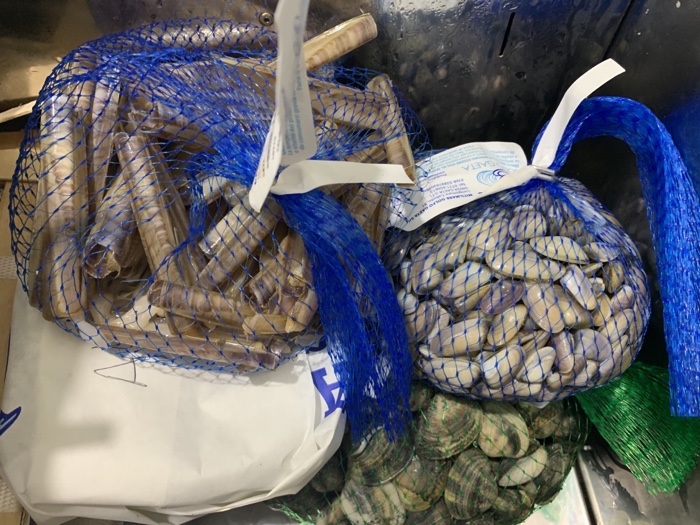
These are called fazzolari. If you ever wanted to make a platter of clams and garlic, maybe a little bread crumb or two, try these.
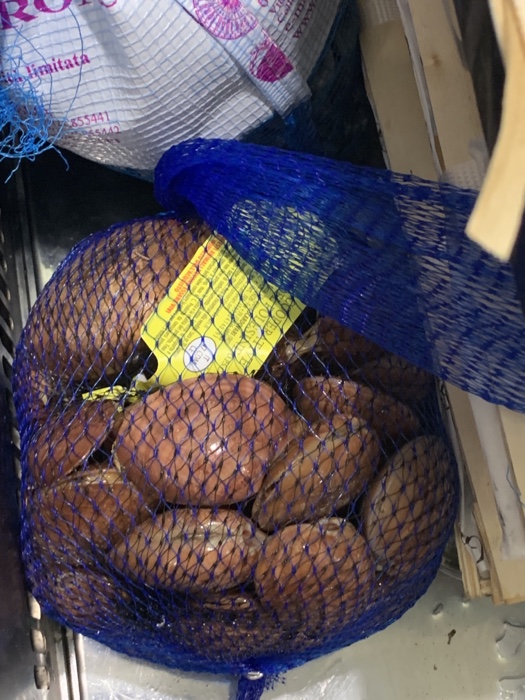
And this little group sends you off to your own day. Kinda like a MoTown group, a little sole music
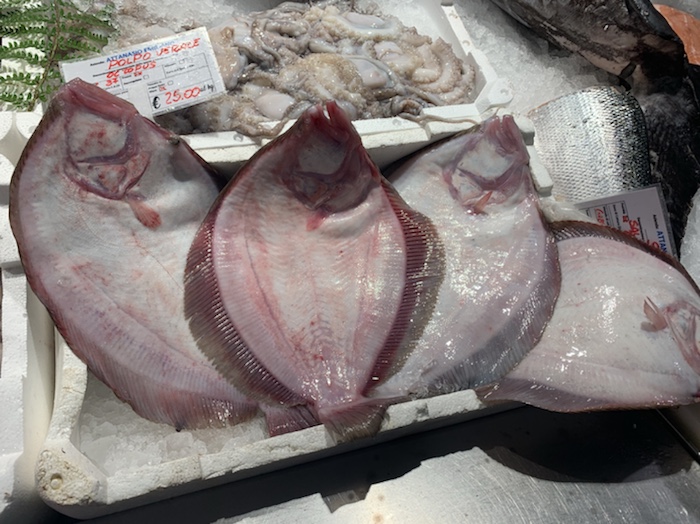
Sorry about the puns. I can’t help myself.

COLD REPORT: It’s under control, but the cough remains. It’s infrequent, but it’s there.
Today, writing. Tomorrow, Vatican gardens and a checkup at the Vatican ATM. I found a zip cover for my Baronius Press Breviary the other day at the Paoline. So that’s done. Meanwhile, I’m reading, Newman, the book on Bernini and Borromini, Windswept House, and Weigel’s new book.
YES!
I arrive home to England to the news that @ChickfilA has opened its first UK restaurant in Reading. Surely this is the third miracle of Saint John Henry Newman?
— Fr James Bradley (@FrJamesBradley) October 16, 2019
Reading is going to be a magnet!
FSSP and Chick-fil-A! OORAH!
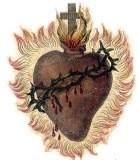 Bp. Hying of Diocese of Madison loves the Sacred Heart of Jesus.
As a matter of fact, at his installation Mass he declined to wear the chasuble with his own new coat-of-arms we had made especially to match what everyone else was wearing in favor of a chasuble with the Sacred Heart on it! Not that I’m, you know, filing these things or anything.
Seriously, I get it. I was ordained a Deacon on the Feast of the Sacred Heart, by my choice. I share the devotion, and Bp. Hying has it in spades… or rather in hearts.
Hying had a brief video today – in fact every day he has brief videos – for the feast of St. Margaret Mary Alacoque, the French nun and visionary of the Sacred Heart. Less than 3 minutes.

The Postcommunion for St. Margaret Mary in the traditional Roman Rite (the choice of readings was superb). Addressed to the Son:
Córporis et Sánguinis tui, Dómine Iesu, sumptis mystériis: concéde nobis, qu?sumus, beáta Margaríta María Vírgine intercedénte; ut, supérbis s?culi vanitátibus exútis, mansuetúdinem et humilitátem Cordis tui indúere mereámur:…
Let us pray.
Having received the sacramental mysteries of Thy Body and Blood, we beseech Thee, O Lord Jesus, grant to us, the virgin blessed Margaret Mary interceding, that, having been stripped of the pride-filled empty-pomps of the world, we may warrant to clothe ourselves with the meekness and humility of Thy Heart.
Who livest and reignest with God the Father, in the unity of the Holy Spirit, one God, world without end.
R. Amen
UPDATE 17 Oct:
WE DID IT.
“For Luigi!”
Last night an American woman dropped in at the sacristy, knowing I would be there, with an envelope full of Euro. The pastor was there too, so she put it directly into his hands. It was quite a bit. Thanks, D! You did a beautiful thing for a concrete project.
Between that and what we raised online, we have hit the goal. Hopefully, I’ll get a final figure. Even if there is a little extra, the money will be used on that baptismal font somehow. (I suspect their estimate will turn out to be a little low.) It’ll take a while to get it installed, and we will surely get photographic updates.
Happily, the dollar is strong, so your US donations were potent.
Meanwhile, the pastor of Ss. Trinità dei Pellegrini send me this message to pass on you all of you who contributed.
As Pastor of the Parish of Trinità dei Pellegrini I would like to sincerely thank all the readers of Fr Z’s blog who donated funds for the new baptismal font for our Parish. The generosity and speed with which you have responded to our call has been tremendous. Be sure that news of the installation and inauguration of the completed font will be posted to the blog in due course (probably in a few months’ time).
I would also like to express my thanks to Fr Z himself, who has been a great friend of our Parish over the years.
Please do not hesitate to drop by at Trinità dei Pellegrini if you are ever in Rome. May God bless you all.
Rev. Jean-Cyrille Sow, fssp
Pastor, Santissima Trinità dei Pellegrini, Rome
GENEROSITY AND SPEED!
I am so proud of you that even my black non-monsignor socks are tempted to roll up and down.
Of course I have another project ready in the wings… a helmet for a Swiss Guard. More to follow.
UPDATE 14 Oct:
I have a progress report. From the USA we’ve raised so far about $5000. From the UK, then amount is, frankly, pretty small.
This is what has to be replaced. I came into church the other day and a baptism was concluding.
See that bronze urn?

No. Just… No.
C’MON FOLKS!
Let’s get this over the top!
I know you can do it.
Remember that the traditional parish in Rome needs to set a standard.
Originally Published on: Oct 7
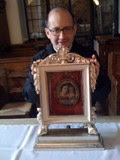
 nce upon a time , as a seminarian in Rome, I came to know a young man, about my same age, who grew up in the neighborhood between San Carlo ai Catinari and Ss. Trinità dei Pellegrini, between the Campo de’ Fiori and the Ghetto, on the Piazza del Monte di Pietà. He was deeply traditional and loved the Church and desired to be a priest.
In those years the church now held by the Fraternity of St. Peter, Ss. Trinità, was in bad shape and Tradition was being crushed in Rome on every side. Neglected for years, the ultra-liberal Sant’Egidio community was encroaching. Nevertheless Luigi did his part to keep alive the ancient Confraternity founded by St. Philip Neri. He had the keys to the place and did his best, thanklessly, to tidy and preserve.
I developed a strong connection to that church before my ordination in 1991. And it came to pass that I was ordained on 26 May, the feast of St. Philip Neri, who is Rome’s co-patron with Peter. Therefore, I celebrated my third Mass at the main altar of Ss. Trinità, beneath the great painting by Guido Reni. In a few short years, I would bury Luigi’s mother from the church, Elena, at his request, with the Traditional Rite.
Luigi overcame many obstacles, persecutions, and was eventually accepted as a seminarian for Rome at the Major Seminary at the Lateran. Ordained in 2001, he was mistreated by his superiors for his traditional leanings and he was persecuted and his well-being neglected, though his health wasn’t good. Don Luigi died in 2011 at 50 years of age, some 10 years a priest.
This is all a preamble to ask for your help for something that my friend don Luigi would have loved to see in life.
The church Ss. Trinità dei Pellegrini was historically the church of a confraternity. It was not a parish church. As a result, there was never a baptistery or baptismal font.
However, it is now the Traditional Parish in Rome. As a parish, it needs – precisely – a baptismal font!
11 years since its canonical founding and there’s no font. And now, as a sign of great life, there are young families and children and baptisms. Exactly as you would expect from traditional worship and Catholic life.
Here’s where you come in.
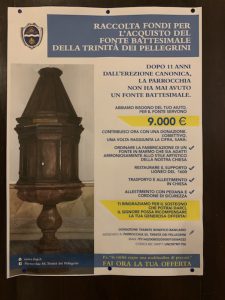 The parish is raising money to install a baptismal font from the 1600’s which they obtained in France. They want 9000 euro for this, though I think that is a little optimistic. That would provide for installation, etc. I think we can do a little better.
So far, they’ve only scratched the surface of the campaign, but – in Rome, believe me – it’s hard going to raise money.
Friends, if we want Tradition to be alive where we are, let’s help the birth into new Christian life in the parish in Rome where a great example is being set to confound all naysayers.
We have to help.
I have spoken with the pastor of Ss. Trinità, and the other priests, about this project.
You can contribute to this project by making donations to the Fraternity of St. Peter. If you are in the United States, go
Donate to the US District. At the bottom of the form there is a place for a comment. Earmark the donation for
BAPTISMAL FONT FOR ROME PARISH
If you are in the UK go HERE. Same deal. Earmark.
Be sure to state that this is for the BAPTISMAL FONT FOR ROME PARISH.
Also the IBAN of the parish:
IT51A0200805205000105064222 – Account n° 706 105064222 for Parrocchia SS. Trinità dei Pellegrini with UniCredit, Largo di Torre Argentina, 14, 00186. BIC SWIFT è: UNCRITM1706
I’m not sure how, but I’ll try to collect progress reports.
As the Amazon Synod revs up, let’s make our own spiritual counter strike and with the battle cry “FOR LUIGI!” get this done.
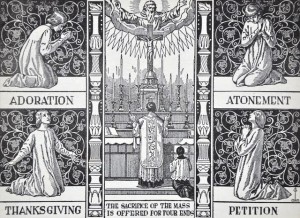 I often write about the petition in the Litany that God preserve us from a “sudden” and especially “unprovided” death, that is, no time to repent and no opportunity for the last sacraments and, hopefully, Apostolic Pardon.
Ann Barnhardt, online might be likened to a hybrid of Hello Kitty and the Incredible Hulk, and I mean that with my most cordial respect. Heck, I’ve been called, “A cross between Kung Fu Panda and Wolverine.”
In her Podcast #95, Ann has one of the best reflections on death, the reality that we are going to die, that I have ever heard, anywhere. Start at 14:15.
In that podcast she also presents a position for which she is now well-known, namely, that Francis is an anti-pope. Whether she is right or wrong is not, in this case, the important thing.
Her reflection on offering personal suffering, offering sufferings, aging, illness, and death is really good.
It is the sort of thing that I hope ALL of you think about, ponder – really weigh, every day or at least often.
The Four Last Things are not optional in our catechesis or our reflection or our prayer or in the preaching from the pulpit by priests and PLEASE bishops. They merit attention just as other articles of Faith merit attention.
There are Three Divine Persons in One Godhead. You are going to die. Jesus is God and man. You are going to die and be judged. Christ died for our sins and rose again. You are going to stop breathing one day and you will go to your eternal judgment. Christ founded the One, Holy, Catholic, Apostolic Church and gave it His own authority. Your heart will cease to beat, and soon. The Seven Sacraments, instituted by Christ as the ordinary means of our salvation. You just might be closer to the end than the beginning.
Get it? When did you last hear a BISHOP talk about the Four Last Things? A PRIEST?
But here is a lay woman getting this right.
You know the classic reasons for attending Holy Mass, namely, petition, adoration, atonement and thanksgiving. The overarching reason that gives all of those their substance is the fact that we are all going to die and face judgment.
Want an reason to go to Mass? You are going to die, my friend. You don’t have to look farther than that.
What should we do with this final and firm realization that death is inescapable and judgment comes on right away?
Embrace it, dear readers.
There is a moment in the podcast when they talk about their friend, dying of cancer, called the priest to ask permission to let go.
WHOA! Way to go dead friend! Pray for us!
I would add that in my years as a priest, many times it occurred that when I began the final “commendation” beginning, “Go forth O Christian soul…”, the poor dying person died at that moment, breathing his or her last, at the commanding release of the priest, alter Christus. Nurses will relate that sometimes they will whisper to a moribund person that their loved one’s have left the room and that it’s okay to let go.
Death is mysterious. But it is unavoidable. Start getting ready. Like all aspects of “situational awareness”, running through scenarios in your head in preparedness for earthly challenges, how much more ought we to run through the scenarios about the most important moment of our life?
Fr. Z kudos to Ann for that. For her podcast, click HERE. Start at 14:15.
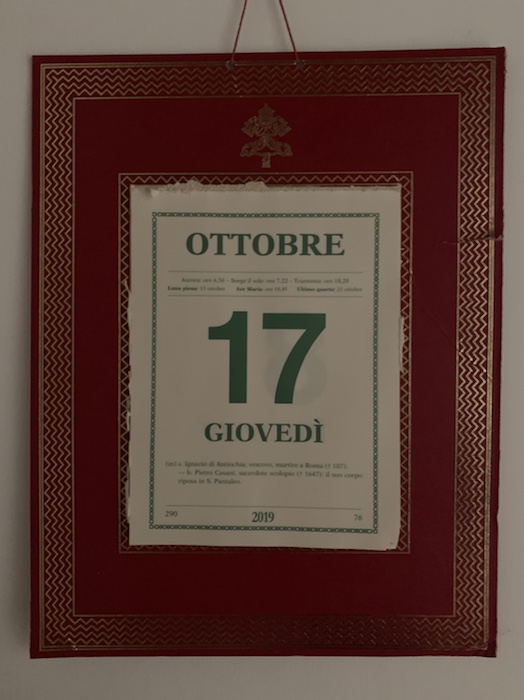 Sunrise… 7:22… Sunset… 18:28 and the Ave Maria is at…. ? Why 18:45, of course.
And somebody finally bit and asked “What is that Ave Maria bell? Is that the Angelus?”
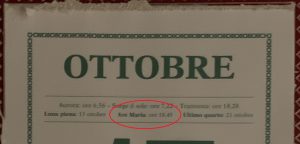
No, it is not the Angelus, which is said at 18:00, traditionally. This is specific to the Roman Curia, upon whose calendar this appears by now by long custom, harking back to another day.
The “Ave Maria” indicates the time of the ringing of the Ave Maria Bell, which once upon a time let people know at what point in the day they were when there were not an abundance of clocks. Think about how, in Rome, a canon sounds at noon, booming out over the City. Noon was important, because that’s when appointments and contracts began. Church appointments still begin at noon. There was a great solar clock tracing the analemma on the floor of Santa Maria degli Angeli. When the spotlight from the sun crossed the midday mark on the floor, a signal flag went up from the roof of the church. Spotted from the Gianicolo, a canon sounded the hour.
The Ave Maria signaled a turning point in the work day in the Curia. A bell rang, approximately one half hour after Sunset, 3 times, then 4 times, then 5 times, and then once. That indicated the change of the religious day from day to night.
Approximately, because the sunset changes but the Ave Maria stays fixed for a while, then changes in 15 minute increments. Hence, since right now the Ave Maria is rung at 18:45, as it is from for some days, then 17:45 is 23rd hour of the day and 19:45 is the 1st hour of the next day.
In the Roman Curia, Cardinals and other officials would still receive people in audience for the hour after the Ave Maria Bell rang. An hour after the Ave Maria, a single bell would toll, thus ending all business for the day, since it was the first hour of night.
Get it?
Meanwhile, here is the Chiesa Nuova in its sunny splendor. Santa Maria in Vallicella. This is the HQ of the Oratorians found by Rome’s co-patron with Peter and one of my favorites, St Philip Neri. Next door is the Oratory, designed by Borromini, whom I mentioned yesterday. Seized by the State, alas, and now a library.
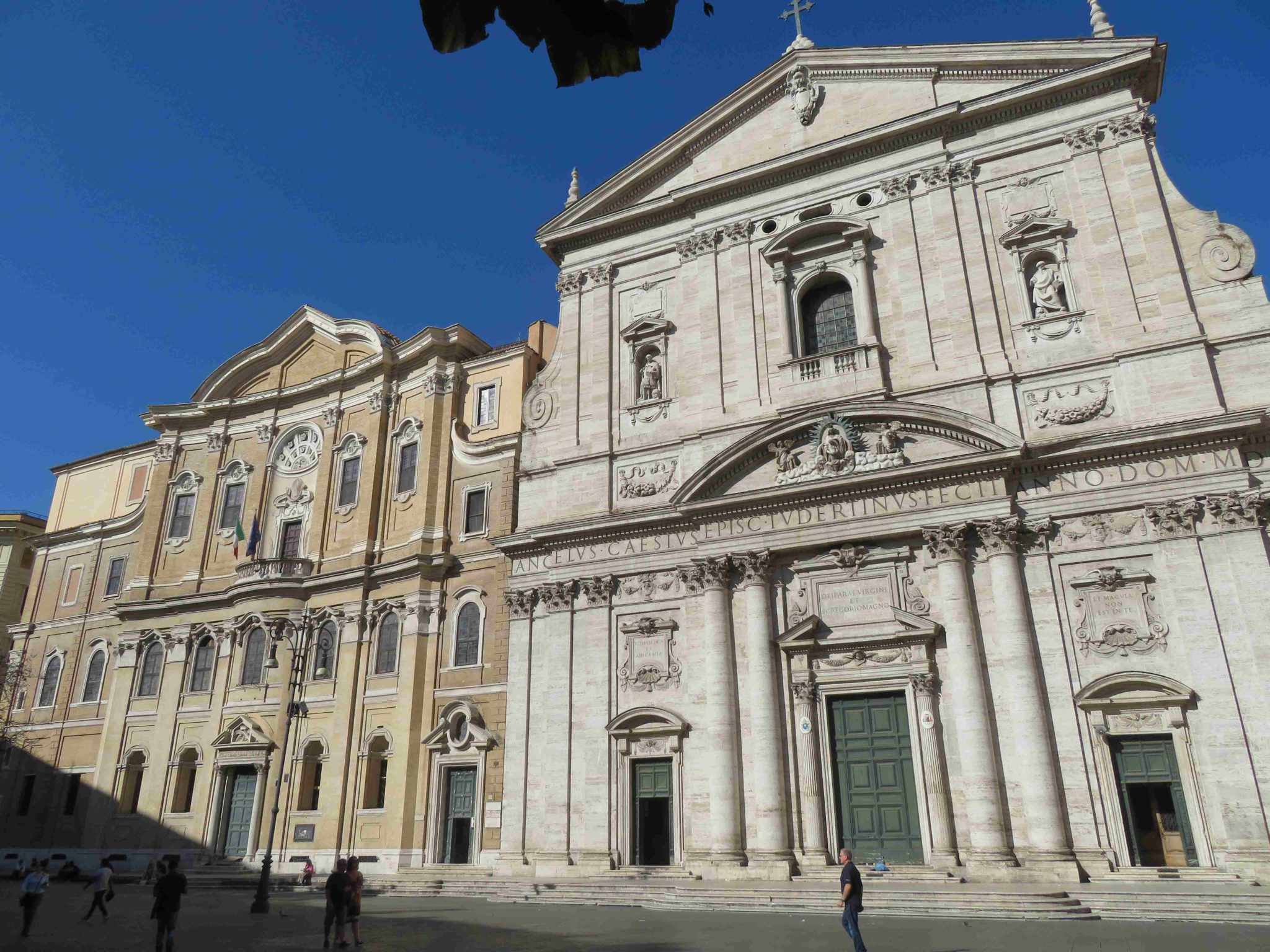
I tried to sketch this the other day. Disaster. But I sure appreciate the detail more than ever now that I tried. It is slightly concave.
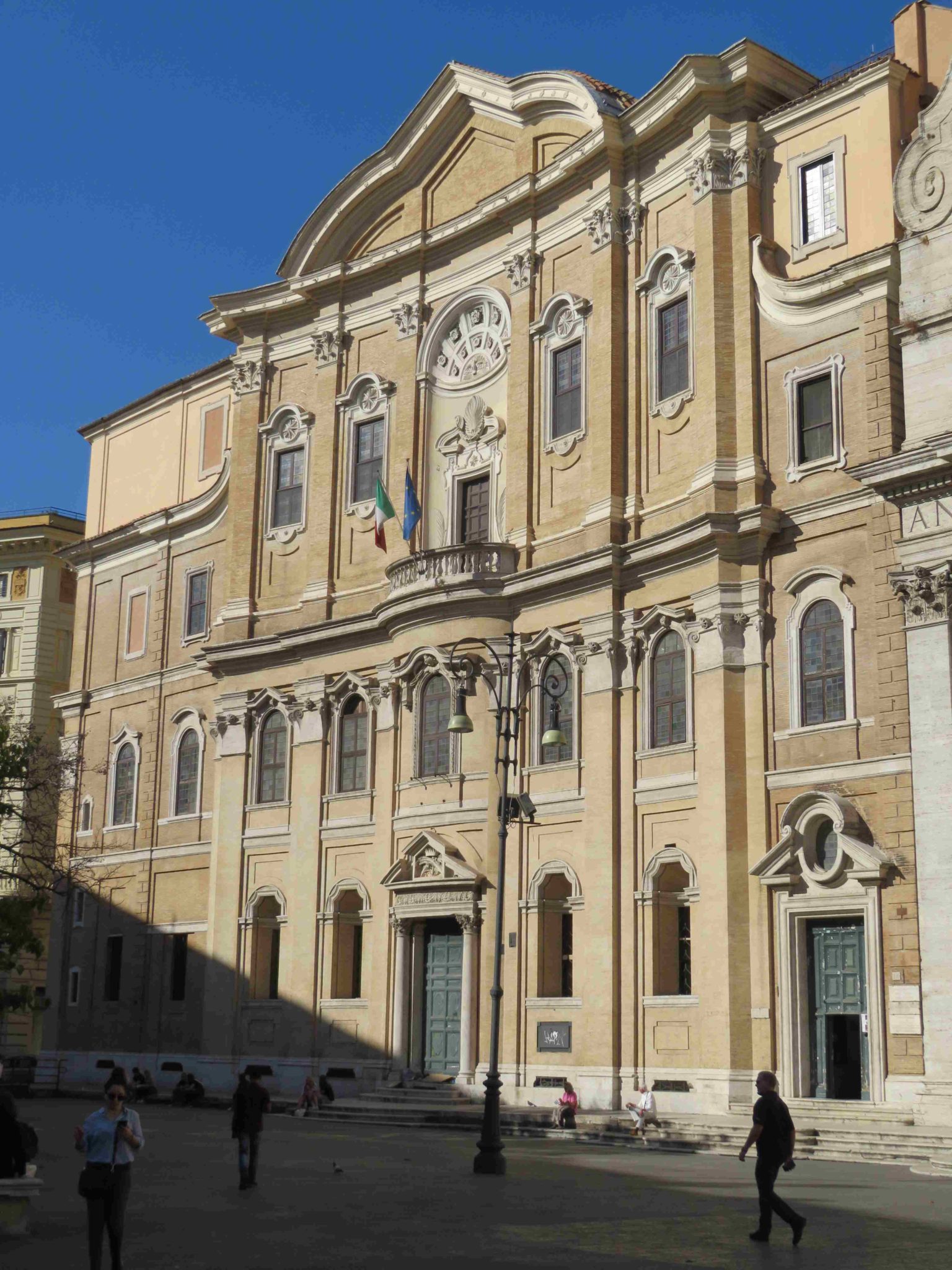
Let’s go into the church.
Look what the barbarians set up in front of that glorious sanctuary and altar. It is so blitheringly incoherent that you want to tear your hair. Set that up in front of that? And look how “permanent” made it. Grrrrr.
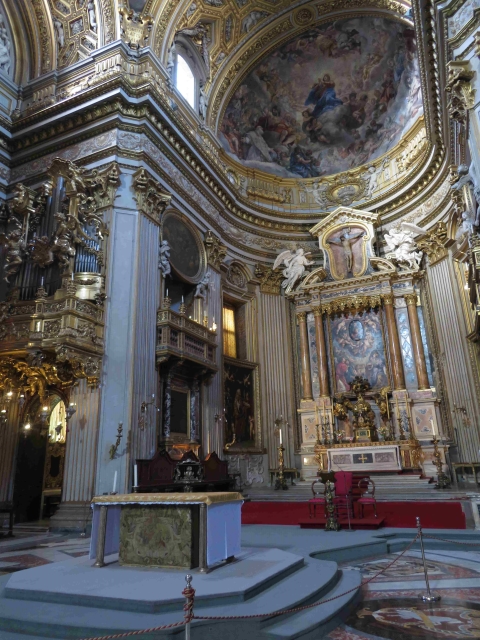
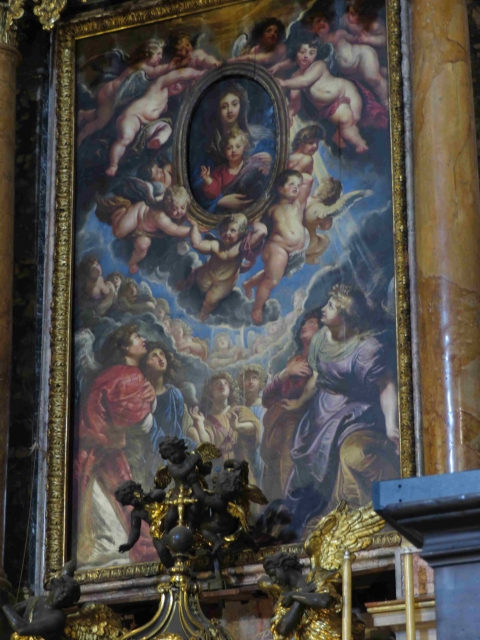
Altar painting. Interesting. Rubens, oil on copper and slate.
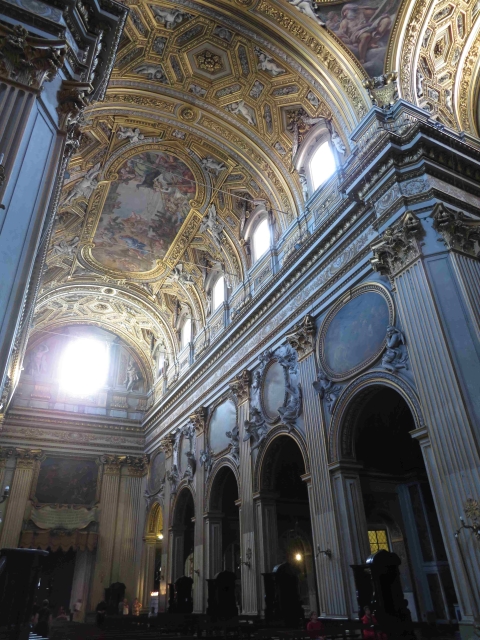
This is one of the great Counter-Reformation churches in Rome, following the lead of the Gesù, the mighty church of the still-sane Jesuits. Originally, St. Philip wanted it completely white, but, it got decorated as you can see. There are paintings within by Barocci and Pietro da Cortona.
A side chapel.
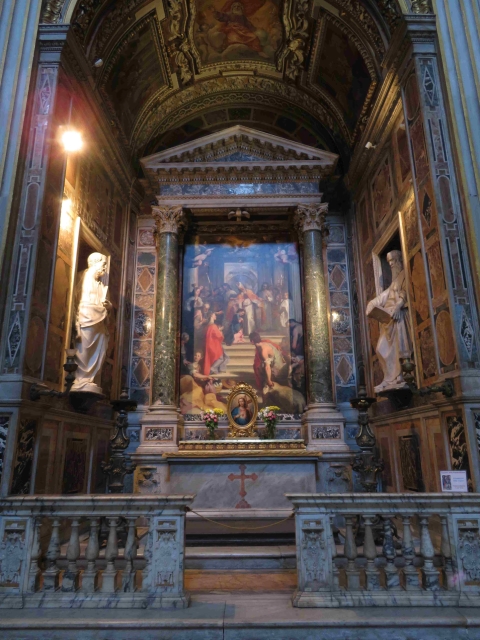
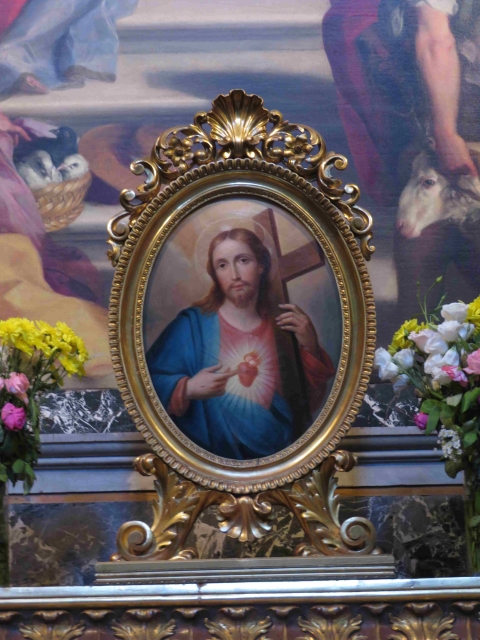
Another side chapel, to the Gospel side of the sanctuary, with the tomb of the saint. I have said Mass here many times.
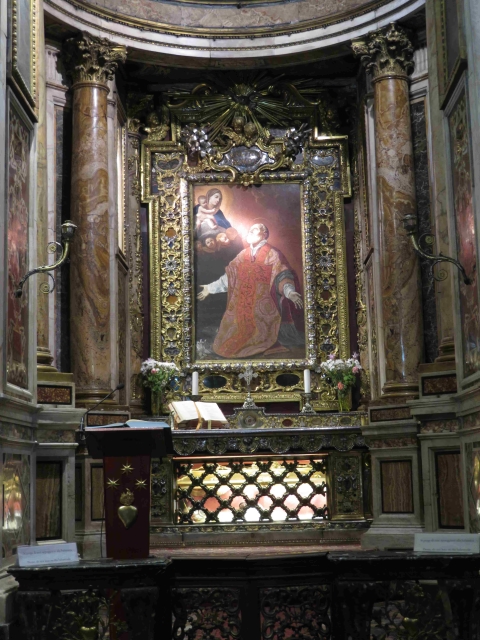
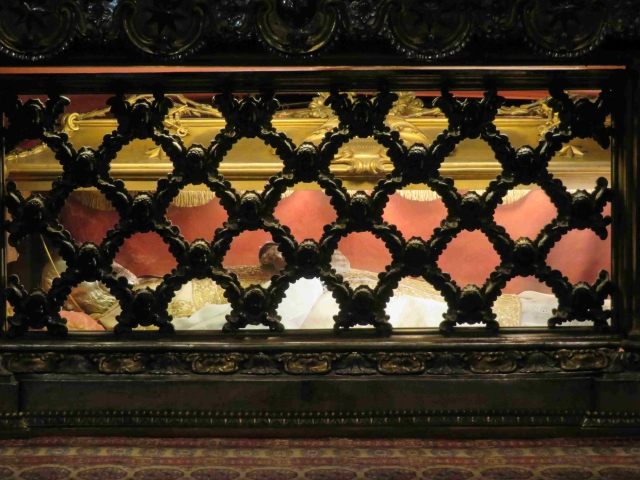
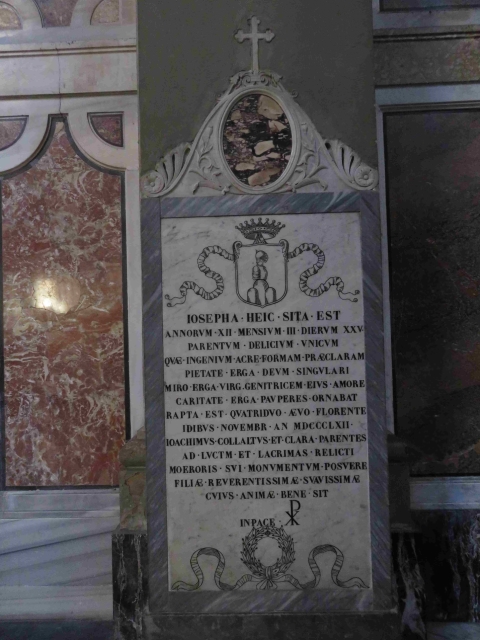
A memorial inscription. Maybe one of you would like to take a shot at it. Some of these stones are poignant indeed.
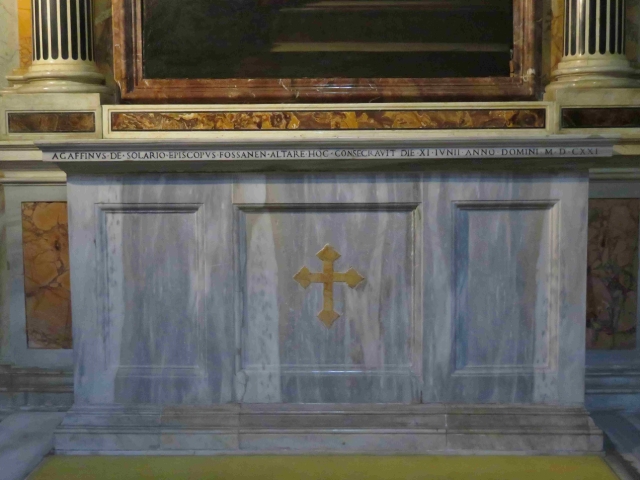
Another inscription, which, sadly, we can see across the mensa of this altar, tells us who consecrated it and when. This church is filled with side chapels once teaming with priests saying Masses.
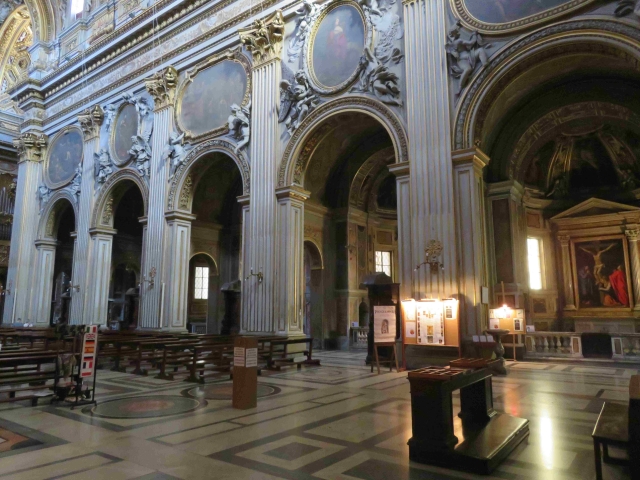
You see where they are, along the nave. That doesn’t show the transepts and other chapels.
When the City was filled with Oratorians for the canonization last week, many of them wound up at Ss. Trinità to say Mass. Telling.
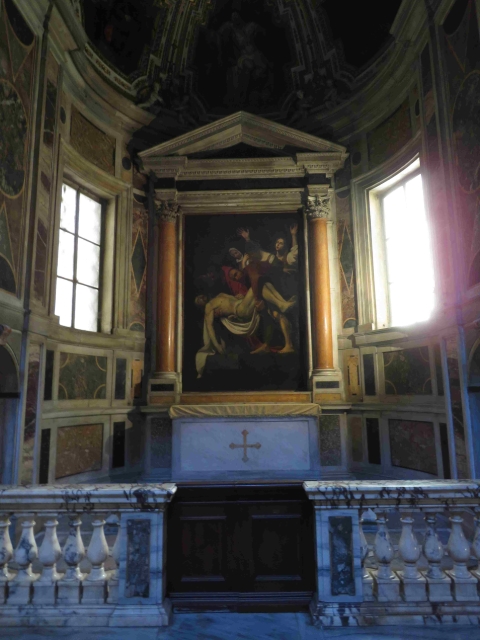
This side altar had a painting by Caravaggio, now in the Vatican Museum
Christ is being taken down from the Cross. What you have to visualize, is a priest at the altar, saying Mass, at the moment of the Elevation. Christ’s hand, on the lower, hanging arm, would by pointing directly to where the Host and the Chalice would be held during the Elevation.
Outside again, on my way to complete an errand on my Roman To Do List.
Do NOT litter here.
My bookbinder.
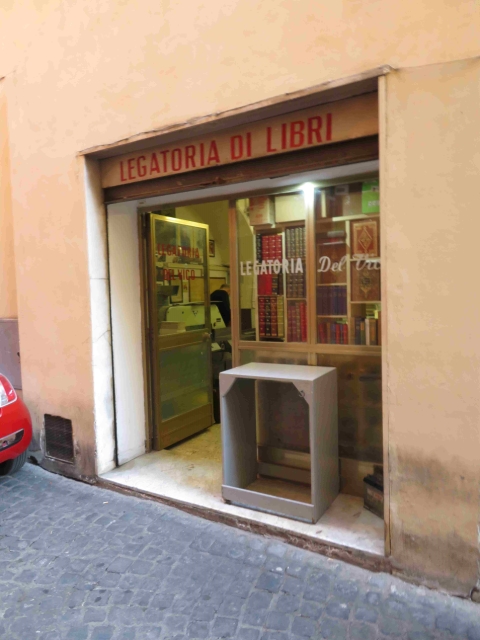
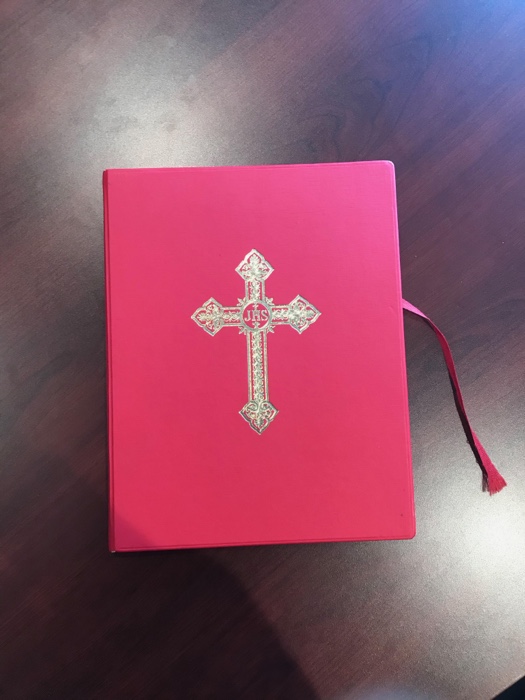
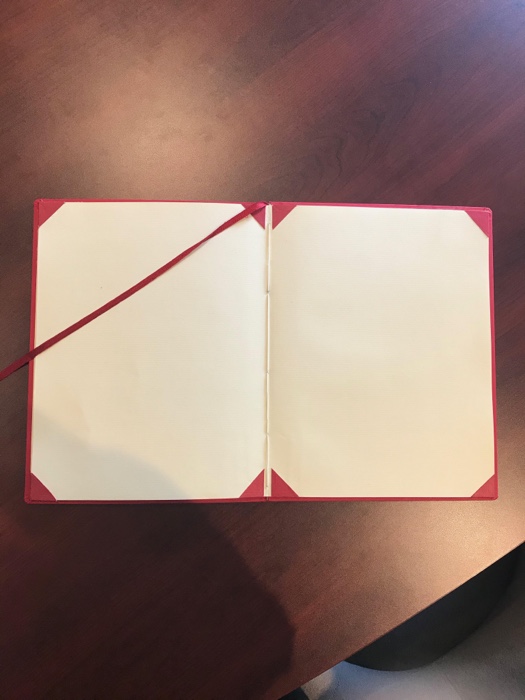
I need a couple of document folders made, for when decrees or something must be read.
Behind the Oratory, the lovely bell tower.
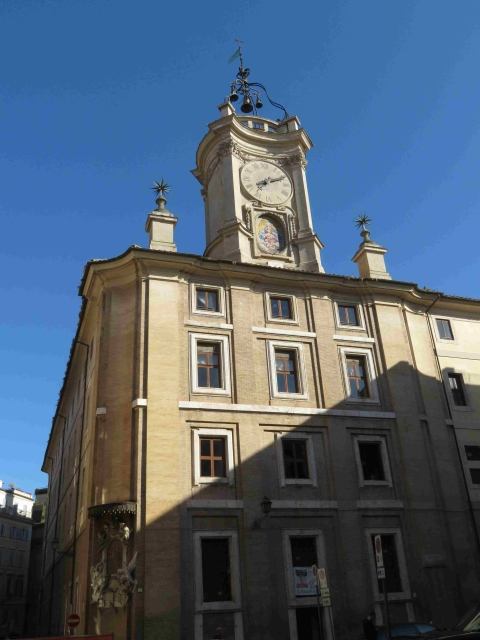
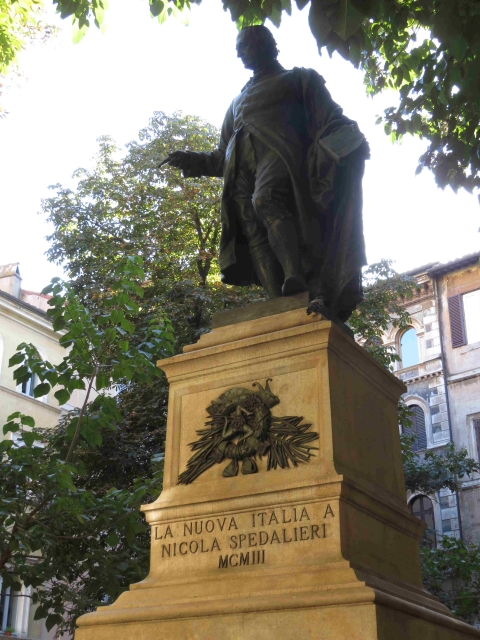
There is a nice little square across from Borromini’s Oratory. At the back side of the square is a good restaurant, not stupendous, but good and reliable and pretty quiet where you can sit outside without traffic around you. Polese. The square has a statue ofNicola Spedalieri, was a priest who wrote some controversial things. It is said that he was poisoned by Jesuits. I can buy that! The libs put up this statue to him.
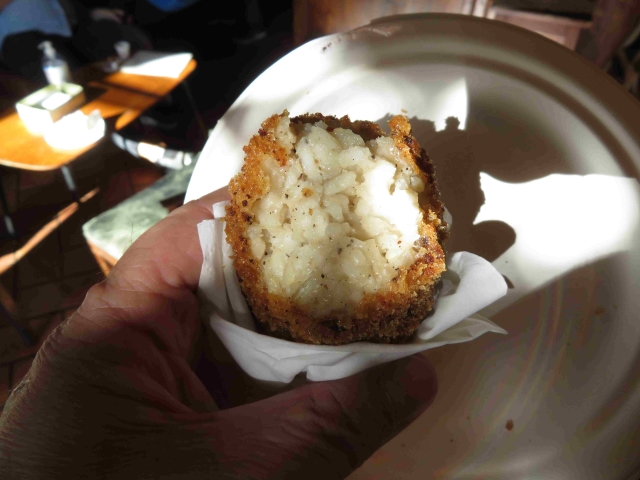
Meanwhile, I stopped to get a supplí, around the corner at Supplizio. I guess they are to die for.
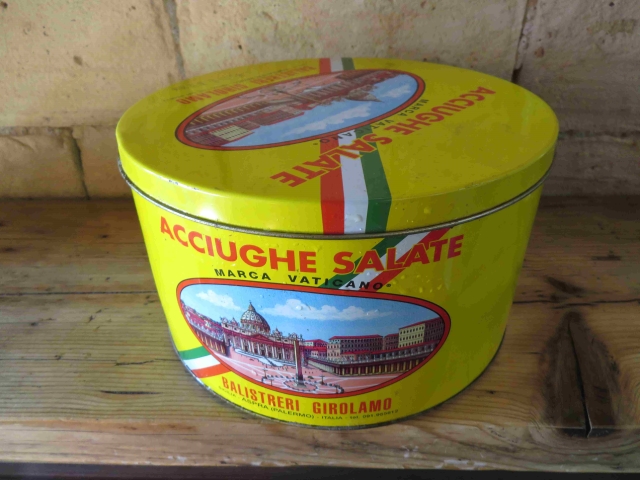
While waiting I spotted this wonderful anchovy can. “Marca Vaticano”. There’s always something fishy in there.
My snack with caccio e pepe.
I also liked this…. Funky Tomatos.
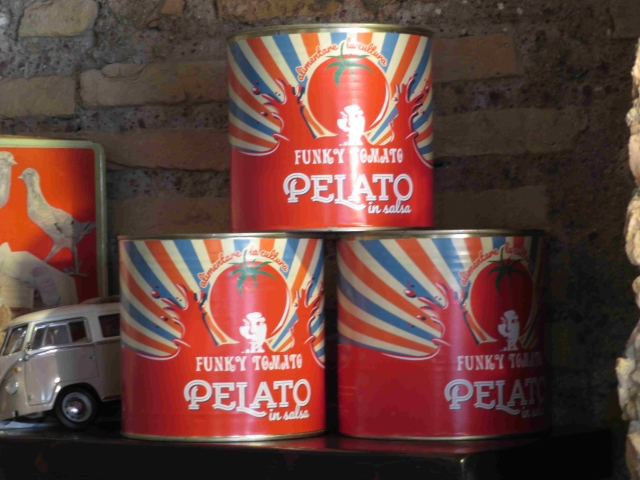
Yes, that’s funky.
COLD REPORT: A little sniffly last night, so I took some cold meds that made me a little drowsy, but I got a good sleep and feel pretty good today. Still that lingering cough, but it isn’t bad.
Tonight, Mass for a friend.
Tomorrow, Friday, some penance for the Church and Mass for the routing and conversion of the Church’s internal enemies.


Coat of Arms by D Burkart
 OrdainedButStillbeingFormedDiakonos on ROME 26/10– Day 25: King things: “While I am from the home of the Tampa Bay Rays and indeed saw a game or two at the…”
 on My Annual St Crispin’s Day roundup with Henry V speech!: “A Very Happy Saint Crispin’s Day to you, Fr. Z. With grateful thanks for the magnificent Service that you undertake…”
 on ROME 26/10– Day 25: King things: “Great story on Yount ! Thank you Father. Yount and Paul Molitor were tough to beat.”
 on Your Sunday Sermon Notes – Feast of Christ the King (N.O.: 30th Ordinary): “NO Replying to a question from a lawyer Christ states “Thou shalt love the Lord thy God, etc . .…”
 on My Annual St Crispin’s Day roundup with Henry V speech!: ““We few. We happy few. … You know your places. God be with you.”” on ROME 26/10– Day 25: King things: “It should be noted that Bob Uecker’s lifetime batting average against Sandy Koufax was .400.”
 on Summorum Pontificum Pilgrimage 2026… *sigh*… Vatican Bars Annual TLM Pilgrimage from ENTERING St. Peter’s Basilica: “https://x.com/MountainButorac/status/2114352253251297776?s=20”
 on My Annual St Crispin’s Day roundup with Henry V speech!: “Father, while I do cherish this annual tradition, I believe your post to be incomplete without a reference to the…”
A Daily Prayer for Priests








They find you a pro-life agent in your area who commits to giving a portion of the fee to a pro-life group!

PLEASE subscribe via PayPal if it is useful. Zelle and Wise are better, but PayPal is convenient.
A monthly subscription donation means I have steady income I can plan on. I put you my list of benefactors for whom I pray and for whom I often say Holy Mass.
In view of the rapidly changing challenges I now face, I would like to add more $10/month subscribers. Will you please help?
For a one time donation...



Help Monks in Wyoming (coffee – UPDATED LINK) and Norcia (beer) and the wonderful "Soap Sisters" of Summit, NJ!


Please follow me on Twitter!










Visits tracked by Statcounter
since Sat., 25 Nov. 2006:
