
 The new Superior of the SSPX, Italian Fr. Davide Pagliarani, has given a hard-hitting interview. Originally in Nouvelles de Chrétienté, it is in English HERE
Samples:
The Society holds a treasure in its hands. […] Our fondest wish is that the official Church will stop considering Tradition as a burden or a set of outmoded old things, but rather as the only possible way to regenerate herself. However, major doctrinal discussions will not be enough to bring this work to completion: first we have to have souls ready for all sorts of sacrifices. This is true both for consecrated persons and for the lay faithful.
And…
What are the important topics today? Vocations, the sanctification of priests, the care of souls. […] Now the Society has all the necessary means to lead the movement of the return to Tradition. More precisely, we have to confront two demands:
– on the one hand, to preserve our identity by recalling the truth and denouncing error: “Praedica verbum: insta opportune, importune: argue, obsecra, increpa.” “Preach the word: be instant [persistent] in season, out of season: reprove, entreat, rebuke” (2 Tim 4:2);
– on the other hand: “in omni patientia, et doctrina,” “in all patience and doctrine” (ibid.): attract to Tradition those who are walking in that direction, encourage them, introduce them little by little to the battle and to an increasingly courageous attitude. There still are authentically Catholic souls who thirst for the truth, and we have no right to refuse them the cup of cold water that is the Gospel by an indifferent or haughty attitude. These souls often end up encouraging us by their own courage and determination.
AMEN. This is what so many of you do for me every day.
And…
The less connected we are to the Internet, the more we will rediscover peace of mind and serenity of judgment. The fewer screens we have, the better we will be able to make an objective evaluation of the real facts and of their exact import.
And…
Now the problem is right here, always at the same place, and we cannot shift it to somewhere else: what is the dogmatic authority of a Council that intended to be pastoral? What is the value of these new principles taught by the Council, which have been applied systematically, consistently and in perfect continuity with what had been taught by the hierarchy that was responsible both for the Council and for the post-conciliar period? This real Council is the Council of religious liberty, or collegiality, of ecumenism, of the “living tradition”…, and unfortunately it is not the result of a wrong interpretation. The proof of this is that this real Council has never been rectified or corrected by the competent authority. It conveys a spirit, a teaching, a way of thinking about the Church which are an obstacle to the sanctification of souls, and its tragic results are right before the eyes of all intellectually honest men, of all people of good will. This real Council corresponds at the same time to a doctrinal teaching and a lived-out practice that have been imposed on the “People of God”; we refuse to accept this as just another council like the others. This is why we discuss its authority, but always in a spirit of charity, for we want nothing but the good of the Church and the salvation of souls. Our discussion is not a mere theological joust and, in fact, it has bearing on subjects that are not “debatable”: the life of the Church is at stake here, indubitably. And that is what God will judge us on.
This, then, is the perspective in which we stick to the official documents from Rome, with respect but also with realism; it is not about being on the right or the left, hard-line or lax: it is simply about being realistic.
And…
At Mass, the faithful discover the echo of the ephpheta, “be opened”, pronounced by the priest at Baptism. [Optional in the Novus Ordo.] Their soul is opened once more to the grace of the Holy Sacrifice. Even when they are very little, children who attend Mass are sensitive to the sacred meaning that the Traditional liturgy expresses. Above all, attending Mass makes fruitful the life of married couples, with all its trials, and gives it a profoundly supernatural meaning, for the graces of the Sacrament of Matrimony flow from Our Lord’s sacrifice. Attending Mass is what reminds them that God wants to make use of them as cooperators in the most beautiful of His works: sanctifying and protecting the souls of their children.
BEAUTIFUL!
And…
Father General, before concluding, allow us to ask a more personal question. Didn’t the responsibility that fell on your shoulders on July 11 of this year frighten you?
Yes, I must admit that I was somewhat afraid, and I even hesitated in my heart before accepting it. We are all vessels of clay, and that is true also of the man who is elected Superior General: even though it is a somewhat more visible and somewhat larger vessel, it is nonetheless fragile.
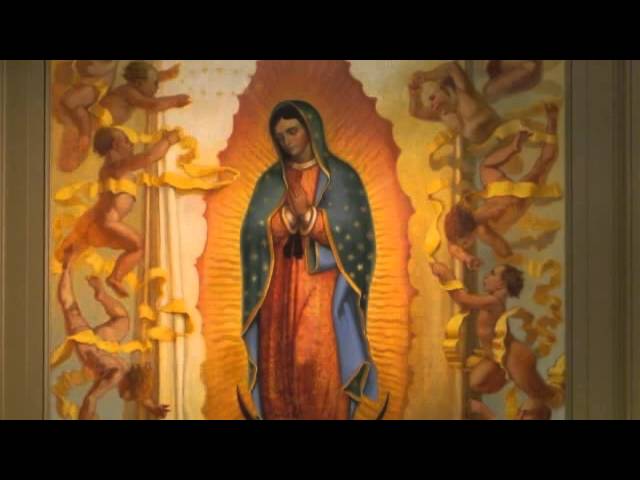
The thought of the Most Blessed Virgin is the only thing that enabled me to overcome the fear: I place my trust in her alone, and I do so totally. She is not made of clay because she is of ivory; she is not a fragile vessel because she is an impregnable tower: turris eburnea [as it says in the Litany of Loreto]. She is like an army set in battle array, terribilis ut castrorum acies ordinata [Canticle of Canticles 6:3], which knows in advance that victory is the only possible outcome of all its battles: “In the end my Immaculate Heart will triumph.”
You mean… you don’t think she is “normal”?
So, reading the whole of the interview – worthwhile – you get the sense that the brakes have been applied and a strong spiritualized approach is underway, at least from the office of the Superior of the SSPX.




 Today is the anniversary of the opening of the Second Vatican Council in 1962. At the opening, John XXIII (whose feast it is today) gave a famous speech which is known by its incipt, Gaudet Mater Ecclesia.

 Fr. John Zuhlsdorf on ASK FATHER: Priest says the consecration of the chalice over the host: “Darby: 1) Yes 2) No”






























