US Catholic Colleges with Holy Mass “ad orientem”, TLM and Ordinary Form

The Cardinal Newman Society, which studies Catholic Higher Education, has an interesting piece about ad orientem worship at Catholic schools. The CNS has a great news widget on my sidebar. Check it out now and watch it every day!

Students Show Growing Appreciation for Traditional Masses, Say College Chaplains

Among Catholic colleges and dioceses across the country there has been an apparent rise in the celebration of the Mass ad orientem, where the priest and congregation face the same direction, traditionally to the east. The Cardinal Newman Society spoke with chaplains from three colleges recommended in The Newman Guide about the Masses celebrated ad orientem on campus and what that type of worship brings to students.
At Christendom College in Front Royal, Va., the priest celebrates ad orientem during several weekly Masses—two in the Extraordinary form, as well as two in the Ordinary Form in English and one in Latin—College chaplain Father Stephen McGraw told the Newman Society.

Fr. McGraw explained:

The gradual introduction and occasional celebration of Mass “ad orientem” on campus, along with the celebration “versus populum,” allows students to experience the traditional and historic way of celebrating the Eucharist without jarring them and helps show and reinforce for them the “hermeneutic of continuity” (as spoken of by Benedict XVI) between the Masses of the preconciliar and postconciliar periods. [Good approach.  Some of these young people may have only experienced the Ritus Suburbanus.]

Masses celebrated ad orientem give students “an opportunity to participate in liturgical prayer that leads them to contemplation,” [A lot harder with the priest gawking at you with a grin as if he were Conan O’Brien.] said Father Hildebrand Garceau, chaplain at Thomas Aquinas College (TAC) in Santa Paula, Calif. “All are facing liturgical east in one movement of prayer and offering. It seems to aid greatly in reducing distractions and helping students to focus on the liturgical action of the most powerful prayer in the universe—the Holy Mass.”

At TAC, Masses are said each morning in the Extraordinary Form which gives the undergraduates a “reverent, quiet, contemplative Mass,” said Fr. Garceau. Most Saturdays, a Mass is also said in the Ordinary Form.

Father John Healy at the Thomas More College of Liberal Arts (TMC) in Merrimack, N.H., told the Society that TMC began to celebrate the Latin Mass ad orientem once a week on Fridays because of student demand. Students continue to tell him that the silence in the Mass “impresses them in a particular way” and is very helpful for them, he said.

Additionally, said Christendom’s Fr. McGraw, ad orientem worship “shows our communion with the Eastern Church, which for the most part cele?brates the liturgy of the Eucharist ‘ad orientem.’” He also noted that the priests at Christendom have “expressed their appreciation” for the chance to celebrate these Masses for the students.

According to Fr. Healy, bishops in the dioceses that celebrate the Extraordinary Form say that a lot of the participation is from the younger generation. This gives hope for liturgy and Church tradition both in the present and in the future, he said. It is encouraging to see students appreciate the traditional forms of the Mass.

Ave Maria University, the College of Saint Mary Magdalen, Franciscan University of Steubenville, Holy Apostles College and Seminary, the University of St. Thomas-Houston and Wyoming Catholic College [hurray!] also offer Masses ad orientem.

All the aforementioned colleges are recommended in The Newman Guide for their strong Catholic identity. The Cardinal Newman Society recently released the 2015 edition of the Guide along with an innovative new “Recruit Me” program that allows students to sign up so that the recommended colleges can compete for them.

Catholic Education Daily is an online publication of The Cardinal Newman Society. Click here for email updates and free online membership with The Cardinal Newman Society.

For more on why ad orientem worship is important – more important than ever especially as a tool of the New Evangelization – check out two books which would be great gifts for your parish priests this Christmas.

First, Joseph Ratzinger’s Spirit of the Liturgy.  He explains ad orientem and his transitional arrangement called the “Benedictine Arrangement”.  (UK HERE)

Also, my friend Fr. Lang’s Turning Toward the Lord.  Historical and theological analysis. (UK HERE)

Posted in "How To..." - Practical Notes, Brick by Brick, Just Too Cool, Liturgy Science Theatre 3000, New Evangelization, Our Catholic Identity | Tagged , , , , , , , ,
10 Comments

One of the aims of reform of the Roman Curia – weaken it.

One of the things I have been saying all along is one aim during the present pontificate is the reduction of the number of Cardinal Prefects and Presidents (and therefore Archbishop Secretaries) in dicasteries of the Roman Curia.

Put several dicasteries together – bammo – fewer cardinals slots open.   This will have the simultaneous effect of concentrating power in hands of fewer department heads – easier to control their … world views – and of weakening the power of the Curia globally.

Now I read something from the once-solid, now shakier Andrea Tornielli, an interview with Oscar Card. Rodriguez Maradiaga, who is the Archbishop of Tegucigalpa in Honduras but who spends nearly all his time in Rome these days.  He is part of a small group of cardinals – the Gang of Eight (Nine with the Secretary of State) – appointed by Pope Francis to look at matters of Curial Reform, which we grant is a big job.

[…]

And what about the restructuring of the dicasteries? Can you confirm that two new bodies are being created in order to merge the functions of the various pontifical councils being merged into these?

“The two bodies dedicated to the laity and charity are certain. [That would absorb a several dicasteries.] Te Pope has already presented them to the heads of dicasteries of the Roman Curia. Of course soem observations have been made, that was the point of the consultations. There are certain details that need to be fine tuned. But as far as the general setup is concerned, I think they can be considered work in progress.”

Will the two bodies in charge of laity and charity – which should merge together laity, family, migrants, pastoral care for healthcare workers, Cor Unum and Justice and Peace – be congregations?

“Yes, that is the aim. They will be two congregations. [NB] But they will not be the arithmetical sum of what already exists. Primarily because as congregations they will have a different legal status from that of the pontifical councils. It is also not necessary for there to be a cardinal or a bishop heading every dicastery: there could be a married couple in charge of family affairs, for example and for migrants there could be a nun who has specific experience in this area, a member of the Scalabrinian missionaries for instance.”

What is the aim of Curia reform?

“The aim is to rationalise and simplify things. There are approximately thirty different dicasteries at the moment, including secretariats, councils and congregations. How can a leader regularly bring together all of his ministers ? In the past, meetings took place once or twice a year. How can an institution go on like this? Meetings and consultations need to be more frequent. Then we will be able to say that simplification  fosters collegiality. And this is important.” [Keep in mind that before Paul VI there were many fewer dicasteries.]

Will the Secretariat of State also undergo reform?

“Yes, it is currently being studied. The Secretary of State, Cardinal Pietro Parolin, will be presenting a plan for this at the next meeting.”

Can anything be said about this?

“No, it is still too early, we have to wait and see. I think one of the points that will be discussed will be the redistribution of internal tasks. But let’s wait and see.”

Will judicial structures undergo reform too? [There are three major tribunals, the Apostolic Signatura (with a cardinal), the Rota, the Apostolic Penitentiary (with a cardinal)]

“This has not yet been discussed. I personally think the idea of merging bodies relating to justice could have a positive outcome. We will discuss this if we have time at the next meeting. I think it would be a good idea to have one single ministry of Justice in the Church that includes the Apostolic Signatura, the dicastery for the interpretation of legislative texts [with a cardinal] and the Apostolic Signatura [ummm… didn’t he just mention the Signatura a second ago?  Maybe he meant the Rota?]. With one single head.” [3 cardinals reduced to 1]

Will there be fewer cardinals serving in the Holy See’s offices when Curia reform comes into force?

Of course, that is the idea. [!!] The Curia must no longer be perceived as a papal court or as the Church’s centralised super-government. It needs to be an energetic structure, there to serve the papal ministry.” [not the “Petrine Ministry”]

[…]

See what’s going on?  This might be a good idea.  The Church seemed to run pretty well for a long time on fewer departments.  Then the Curia was restructured and massively expanded.  Has that helped?  Really?  On the other hand, much depends on what else is being done during a pontificate.  So, it is way to early to tell.  One thing I do know, moves like this are surely to cause, in the short term, paralysis.

Posted in The Drill, The future and our choices | Tagged , ,
23 Comments

Sheriff on Ferguson and “racial divide”

Here is one of the best interviews I have heard about the situation in Ferguson, MO.

Sheriff David Clarke of Milwaukee County.  I like this guy.

Posted in The Coming Storm, The Drill, The future and our choices, The Last Acceptable Prejudice | Tagged , , ,
6 Comments

Fr. Z’s Kitchen: Sunday Chicken

I was in Paris not long ago and one dish that I didn’t get to have there was Coq au vin. I therefore determined to make some. It has been a while. Since my Sunday night plans opened up, I contacted two priest friends who wound up free for supper (after the Packers game, of course).

I’ve done Coq au vin more than once for the blog, but it has been awhile.  I haven’t been doing any interesting cooking for long time now. My recent travels have sparked anew a desire to do something.

Click! It's a great gift idea.

And so it came to pass that I made a grocery and booze run during the first half and then set about making the desired dish, using Julia Child’s recipe. Who else? I used her first volume of Mastering the Art of French Cooking.  UK HERE

One of the first things you have to do is get some of the fat off the bacon. Slice lean bacon into small pieces, lardons, and simmer them in water. I like larger pieces rather than the very narrow you sometimes see. The water gets rather scummy but… that’s the point.  It is discarded.

BTW… as before, I am doing this entirely on a hot plate.  I don’t have a stove.

Then you brown them in lots of butter.

Then, in the butter and bacon fat, you brown the chicken. I use dark meat for this, since I didn’t have an old rooster.  Season it well before you add the meat for the browning stage.  Salt and pepper are your friends.

Thanks, by the way, to readers S & KA who sent me the hotplates – quite a while ago now – from my wish list.  I think of them often as I cook, for the hardware is a nice reminder of their kindness.

I brushed the stuff off of the mushrooms, which I quartered. That is I cut them up, I didn’t give them a place to live.

I also set about (on a separate hot plate) to braise the little onions, glacé a brun, as it were.

Then the mushrooms take their turn. They have a lot of water in them, so do only a few at a time, lest they steam each other in the pan.

Since I have limited options, having only two hot plates, I decided to combine the mushrooms and onions.  Here you see the auxiliary hot plate, non-inductive.  It doesn’t come out very often, but I needed an extra spot.  I could have done it with just one, but I didn’t have the time that would have involved.

Time to flame up the chicken. I used about a 1/4 cup of brandy. Whoosh! This isn’t just “for effect”, as it were. This step firms up the flesh before the simmering stage.

Once that was burned off and reduced, I put in the bouquet garnis and a bit of tomato paste, a mashed garlic clove, and wine. I used a good Côte du Rhone. Remember that your Coq au vin or Boeuf Bourguignon will depend in large part on the quality of the wine.  It stands to reason since it is a principle ingredient.  Spend a few bucks more and get something that you would want to drink on its own, or even use the same wine you will drink with the meal. Nasty cheap wine will make your meal less than what it could have been, thus ruining the potential of the other ingredients you spent money and time on.

So, in go the wine and then stock. I used some beef stock and some chicken stock which I had at hand.  The bouquet garnis included thyme and just a few leaves of rosemary.  I think I will exclude the rosemary next time.  Julia’s recipe didn’t call for it, but I had some at hand and I fell into temptation.  Rosemary is tricky when liquids are involved.  It can overwhelm everything else if you are not careful.  In this case, it didn’t.  It was subtle.  But I am not sure that the touch of rosemary significantly improved what this dish was meant to be.  The bay leaves, however, were essential.  Get the imported leaves. I don’t think the California laurel tastes right.

At this point priest guests were present. I have no pics of the beurre manié, which does what roux accomplishes: thicken the sauce. You extract the chicken, start to reduce the liquid and add the beurre, because there wasn’t enough beurre in it already.

Alas, I also don’t have shots of the table and everything plated up, though we did it family style. The ravenous hoard did leave my two pieces as left overs. Here they are reheated the next day. I dare say that the chicken was even better than the night before.

I left all the lardon in, of course.  The plate needed some additional personality, but.. hey.  Left overs!  Right?

Sunday meals with others are important.  Make plans to make meals.  Invite people.  Get those knees under the table and make an afternoon or evening of it.  Eating together is a blessing and a great way to make a Sunday a Sunday.

Posted in "How To..." - Practical Notes, Fr. Z's Kitchen | Tagged ,
12 Comments

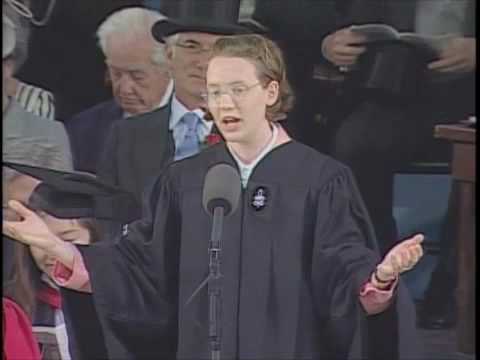
Harvard Valedictorian’s gives address in Latin, enters religious life

A young lady who was the Valedictorian at Harvard, Mary Anne Marks, has entered religious life with the Dominican Sisters of Mary, Mother of the Eucharist, in Ann Arbor, Michigan.

You’ll notice that she didn’t join the Liberated Community of the Expanding Cosmic Consciousness Egg or the Women Who Have Moved Beyond Jesus or even the Nuns on the Bus or any of the other LCWR type groups. Nope. She went for some real nuns.

Here is a video of her address at commencement … in Latin.

The Classical pronunciation takes me back to my own days of first and advanced Latin studies.

YouTube thumbnailYouTube icon

She did pretty well! And it was also a good thing to see someone give a memorized address.

Kathryn Jean Lopez has an interview with her HERE.

Posted in Just Too Cool, Women Religious |
39 Comments

French First Folio Found

I saw a blurb about this the other day on the news, but it was so facile that it didn’t get my attention until now.

From the UK’s best Catholic weekly, for which I also write, the Catholic Herald.

Shakespeare First Folio from Catholic College found in France

A First Folio of Shakespeare’s plays found in a French library came from a Catholic college

The discovery of a previously unknown copy of Shakespeare’s First Folio has refuelled speculation that the Bard was a Catholic sympathiser, if not a Catholic himself. [Of course Shakespeare was Catholic.]

The First Folio was discovered in a library in the small town of Saint-Omer, near Calais in northern France. A librarian came across it last month when he was preparing an exhibition of links between the area and England. Missing its frontispiece and the usual portrait of Shakespeare it had mistakenly been classified as an 18th century edition.

The librarian called in Shakespearean scholar Professor Eric Rasmussen from the University of Nevada, who was in London. Prof Rasmussen crossed the Channel to look at the book and concluded within minutes that it was a First Folio.

The First Folio, containing the text of nearly all Shakespeare’s plays, was compiled by the playwright’s friends and published in 1623, seven years after his death. Entitled “Mr William Shakespeare’s Comedies, Histories & Tragedies. Published according to the True Originall Copies”, it is the only source of a number of his plays, including Macbeth, Twelfth Night, Julius Caesar and As You Like It. Over a quarter of the 800 copies have survived; this is the 233rd known copy.

During the Elizabethan and Jacobean period many English Catholics escaped to France. A college at Saint-Omer gave a Catholic education to English boys. It was expelled from France in 1762 and moved first to Belgium and then in 1794 to Stonyhurst in Lancashire, where it remains today.

A spokesman for Stonyhurst College: “Many precious medieval artefacts, illuminated manuscripts and books were taken with them, and survive at Stonyhurst to this day, but it seems that a slightly scruffy and dog-eared First Folio was overlooked and left behind.

Some of the college’s books, including a 15th-century Gutenberg Bible, ended up in the town library in Saint-Omer. The presence of the work at the Catholic college indicates, if nothing else, that Shakespeare’s work was well-regarded by Catholics at the time.

The newly-discovered First Folio has the name “Nevill” inscribed at the front, suggesting that “it was probably originally the property of Fr Edmund Neville, an English Jesuit priest who taught at the College in the 1630s”, the spokesman said. But other authorities suggest that “Nevill” refers instead to Edward Scarisbrick who studied at Saint-Omer; members of his family, from Ormskirk, Lancashire, used the name Neville as an alias.

This appears to have been a working copy of the book. Handwritten stage directions and alterations in Henry IV suggest that it was used in the performance of plays at Saint-Omer College, which had a reputation for well-attended drama productions. In one scene the word “hostess” is changed to “host” and “wench” to “fellow”, perhaps indicating that a female character was turned into a male.

Posted in Just Too Cool | Tagged , ,
3 Comments

Thanksgiving Day: another demonstration that collectivism doesn’t work

Take a look at Truth Revolt (where there is a transcript of the following). The Left won’t like this:

YouTube thumbnailYouTube icon

Posted in The Drill | Tagged , , ,
8 Comments

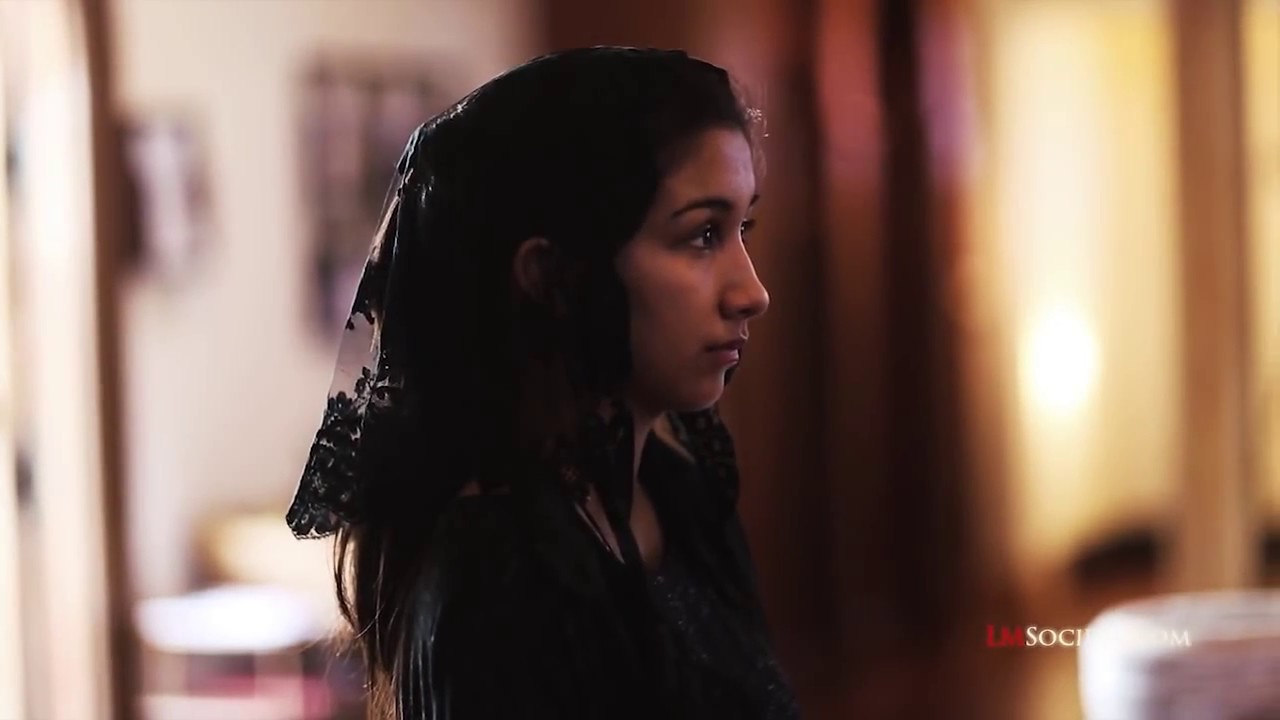
VIDEO: Chapel veils

UPDATE 8 Sept 2015:

I have learned that this fellow/group is claiming my approval.  It does not have my approval.  As a matter of fact, I am entirely against this group and what he is up to.  It’s weird and there is more than a touch of the neo-nazi to it:

A screenshot sent by an alert and concerned reader:


image1

Just so that you all know that I want nothing to do with them.

ORIGINAL Published on: Dec 2, 2014 @ 04:00

There is a nice video from St. Anne’s parish in San Diego, an FSSP parish. They have their own “Latin Mass Society”, not to be confused with the Latin Mass Society in the UK.

YouTube thumbnailYouTube icon

Posted in "How To..." - Practical Notes, Our Catholic Identity | Tagged , ,
39 Comments

ASK FATHER: “To contribute to the support of one’s pastor.”

From a reader…

QUAERITUR:

If one spends hundreds of dollars a years on Mass stipends, can that be considered keeping the precept of the Church that says one must “contribute to the support of one’s pastor“? Because after spending that much in stipends, I don’t have enough cash left over for regular tithing.

Good question.

While the Precepts or Commandments of the Church vary a bit in language, they were generally listed in older books as:

1) To keep Sundays and holy days of obligation holy by attending Mass and resting from work.
2) To fast and abstain on the appointed days.
3) To go to confession at least once a year.
4) To receive Holy Communion at least once a year, during the Easter season.
5) To contribute to the support of one’s pastor.
6) Not to marry in a way prohibited by Canon Law.

In the Catechism of the Catholic Church we are given 5 Precepts, rather than 6:

2041 The precepts of the Church are set in the context of a moral life bound to and nourished by liturgical life. The obligatory character of these positive laws decreed by the pastoral authorities is meant to guarantee to the faithful the very necessary minimum in the spirit of prayer and moral effort, in the growth in love of God and neighbor:

2042 The first precept (“You shall attend Mass on Sundays and holy days of obligation and rest from servile labor”) requires the faithful to sanctify the day commemorating the Resurrection of the Lord as well as the principal liturgical feasts honoring the mysteries of the Lord, the Blessed Virgin Mary, and the saints; in the first place, by participating in the Eucharistic celebration, in which the Christian community is gathered, and by resting from those works and activities which could impede such a sanctification of these days.

The second precept (“You shall confess your sins at least once a year”) ensures preparation for the Eucharist by the reception of the sacrament of reconciliation, which continues Baptism’s work of conversion and forgiveness.

The third precept (“You shall receive the sacrament of the Eucharist at least during the Easter season”) guarantees as a minimum the reception of the Lord’s Body and Blood in connection with the Paschal feasts, the origin and center of the Christian liturgy.

2043 The fourth precept (“You shall observe the days of fasting and abstinence established by the Church”) ensures the times of ascesis and penance which prepare us for the liturgical feasts and help us acquire mastery over our instincts and freedom of heart.

The fifth precept (“You shall help to provide for the needs of the Church”) means that the faithful are obliged to assist with the material needs of the Church, each according to his own ability.

Notice that the issue of marriage is removed from the list, which, in my opinion, is a mistake.

Back to the question.

The faithful also have the duty of providing for the material needs of the Church, each according to his own abilities.

The law – and natural justice – requires that we support our pastors. The law does not go into detail about how we do that. Our Lord gives some indication, by praising the widow who gave only her mite (Mark 12: 41-44, Luke 21:1-4).  From this it seems that our charitable giving should truly be sacrificial.

Furthermore, we give to our pastors, not in order that we get something back from them, but out of gratitude for what they give to us. We don’t hire them to perform a task like we would a gardener or an accountant.

Mass stipends, in many places in the world, are means by which priests live. When the concept of Mass stipend originated in the Middle Ages, a priest would ordinarily only say one Mass a day. The stipend was intended to cover his daily cost of living.

For the most part, especially in North America, priests receive salaries and do not live off of their stipendiary income. They are still only allowed to accept one stipend per day (except on Christmas).  In many dioceses, priests forgo stipends entirely and that money is directed toward the parish.  A priest is only permitted to collect Mass stipends for Masses he can reasonably offer in a year. If there are excess stipends, often times the parish or priest will send those stipends and the corresponding intentions to the missions or to religious orders.

How does this answer your question? Imperfectly, I suppose.

Priests have the right to their living “from the altar”.  They don’t do what they do for the sake of money, but they have to live too.   Diocesan priests have to make their own way in the world, like other people.  And, if Father isn’t going to get a job (which would limit his ability to serve the people, and which he may not do without the permission of proper authority), the flock must support him.  This is a symbiotic relationship.

Everyone fulfills their obligation to support their pastors in different ways. Hopefully, their giving is sacrificial, hopefully it aims at the needs of the priest and not just the needs of the donor.  For example, imagine a parishioner who works at, say, a candy company.  As an employee she get discounted gift certificates from her company. She then regularly puts a $20 gift certificate, for which she paid $15, in her Sunday envelope.  The pastor, diabetic, must pass those gift certificates on to others.  Does that really help Father?

Posted in "How To..." - Practical Notes, ASK FATHER Question Box, Priests and Priesthood |
16 Comments

ASK FATHER: Rorate Masses in Advent

Some of you have written asking about “Rorate Masses” during Advent.

This is a beautiful custom whereby Mass is celebrated illuminated only by candlelight. They are usually before dawn.

The Mass is a Votive Mass of the Blessed Virgin, and so it is celebrated in white, rather than Advent purple.

One way that I have heard this done is that, while the hymn Rorate caeli begins, the priest and people process into the church. At the end of the hymn, prayers at the foot of the altar begin. When the Gloria is sung (for the Blessed Virgin’s votive Mass) the lights of the church are turned on.

It could be good to time to end of Mass as the sun is rising.

I imagine that some of you have experiences of these Rorate Masses during Advent.

Posted in "How To..." - Practical Notes, ASK FATHER Question Box, Liturgy Science Theatre 3000 | Tagged
12 Comments