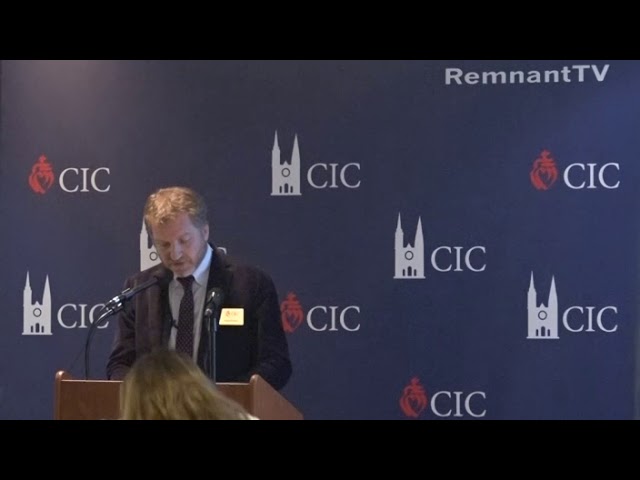
Boston College Amoris Laetitia Agitprop Workshop and Schrödinger’s Cat

SchrödingersCatI wrote about the first installment of coverage of the agitprop workshop going on at Boston College about issues concenring Amoris Laetitia.  HERE

It seems to me, having read something about the second round (including the talk about Jesuit Fr. Antonio “2+2=5” Spadaro) that this is a practical workshop for agents wherein they are giving them marching orders and talking points for how to attack those who disagree with their interpretations.

That said, I am at present in Napa Valley, speaking at a Men’s conference.  We are on a break right now.

I just had a great conversation with a fellow who is a physicist.  We were talking about the work of another physicist who was part of the gravity team which was awarded the Nobel Prize.  He is trying to reunite physics and physika, Aristotelean principles properly understood. In any event, in the course of our chat the classic case of Schrödinger’s Cat came up.  Also, in our chat, in reference to the BC agitprop workshop I observed that, right now, those who are undermining Catholic teaching with ambiguity and chatter about “lived experience” have jettisoned the principle of non-contradiction.

Something hit me.

The people who are saying, in effect, that people who are in the state of sin can go to Communion without confession and a firm purpose of amendment, are like those who stand in front of the box containing Schrödinger’s Cat.  Except, they refuse to open it in order to find out what’s inside.   So long as they never have to open the box, the cat is both alive and dead at the same time.

It strikes me that that is what is going on when questions are asked (“Is the cat dead or alive inside that box, Prof. Schrödinger?”) and, instead of opening the box to find out, the key is squirreled away in a place no one can access.   Hence, you can have one bishops conference interpreting Amoris one way while another conference goes another way, in blatant violation of the principle of non-contradiction.

Refuse to look and you can have it anyway you want.

That’s fine when it’s just a cat in a box.

It’s not fine when we are talking about the salvation of souls.

Posted in The Drill | Tagged ,
35 Comments

PODCAzT 157: Pius XII – Ingruentium malorum – On reciting the Rosary

Pius XII RosaryNational Catholic Register on 1 Oct 2017 had a terrific article which brought to my attention again an 1951 Encyclical of Pius XII 1951, Ingruentium malorum, on the recitation of the Rosary.

The article by Joseph Pronechen is rightly called prophetic. As it so often happens when we read these old encyclicals it is as if they were directed to our very days.

Today I read it for you.

As you listen, tune your ears for he description of their times, in the post war. He could be describing our situation.

One of the things he drives hard is the importance of the family.  He also has a powerful description of the Rosary, when challenges loom, as if it were David’s sling against the huge enemy Goliath.d confusing for the Church and no little trouble for me as well.

So as we come to the Feast of Our Lady of Victory, the Feast of the Holy Rosary, here is a reflection to help strengthen your resolve and joy and to inspire new personal and family practices.

You might hear along the way, something by Heinrich Ignaz Franz von Biber’s The Mystery Sonatas

US HERE – UK HERE

Also, the Dominican Sisters of Mary, Mother of the Eucharist

US HERE – UK HERE

Posted in "How To..." - Practical Notes, Our Catholic Identity, Our Solitary Boast, PODCAzT | Tagged , ,
4 Comments

Some reader feedback

From a reader…

I wanted to thank you for your wonderful blog. I’ve been following you for a while and I wanted to let you know how grateful I am. I’m a convert who comes from a family of radical leftists. My aunt was a Communist in the thirties, my brother is an avowed Socialist (Bernie fan) and my cousin supports organizations like the Ms. foundation. So when Bernie Sanders was a featured speaker at the Vatican and A. L. came out, I hit a wall. Did I battle my way into the Church for this? Do I stand in front of Planned Parenthood (40 days for Life) for this? I was challenged. But several things have kept me grounded and in the Church. Lots of Rosaries, Weekly Latin Mass and your blog. Thank You! Don’t stop speaking out!!

Thanks.  May I add “GO TO CONFESSION!”?  Seriously, I’m sure you are doing that.

Hence, may I add, “Please remember me in your daily prayers.”

Speaking of going to confession… another reader wrote:

Thank you as always for your calls to go to confession. I normally go monthly, but every time I read your “Go to confession” I do a mini examination of conscience and think to myself “When is the last time I went? Do I need to go sooner?” Thank you so much!

A good day’s work.

And there’s this from another reader…

I am sure that right now things are extra frustrating and possibly discouraging for you with all this liberal press nonsense toward you. You are civil, [I try to be.  I know that, out of frustration, sometimes I fail in charity.] entertaining, and above all, reasonable. You say what needs to be said. Thank you!!

I am a busy homeschooling mom of four, the oldest of whom is 8, with another on the way. You are the only Catholic news source I subscribe to. I may look at others when I have the time, but if it’s something I really must know about, I figure you will cover it. And you’ll do it in an entertaining manner often, which adds considerably to my day. I often forward or read things aloud to my husband. Thank you!!

I’ve been reading for years. I don’t have time to comment, so I don’t. You’ve been a great help as we have navigated the changing church situation we face locally, and on a larger scale. I have no doubt you have helped us become better Catholics, and you are helping our children through us. You even encourage us to be more prepared for disasters. And of course to go to confession. Thank you!!

Please don’t be discouraged, and know we are praying for you. Thank you for being willing to do what needs to be done. It would be easier not to. But I can tell you take caring for us all very seriously, and we truly do appreciate it.

Thank you so much, and God bless,

Thanks for the encouragement and kind words.  Back at you!

I’ll spare you the notes with obscenities and amazingly stupid and cowardly, malicious comments.  Really?  Do you really think that, after all these years, that stupidity bothers me?  Take your meds and go away until your heads are in a less dark place.

Also, sometimes people who have registered for combox privileges (privileges, not rights!) leave comments that have no other motive than to provoke.  Sometimes those who disagree will post endless repetitions of already dealt with issues.  Moreover, I don’t allow any public discussion in the combox of my moderation choices or combox policies.  Hence, I just delete the comments at the instant I see opinions on my choices for the combox.  Don’t even try.  I don’t have the time or the energy to debate about how to debate about the debating of debators.


Posted in SESSIUNCULA | Tagged
Comments Off on Some reader feedback

Fishwrap on Jesuit Boston College conference on Amoris Laetitia

Fishwrap (akfishwrapa National Schismatic Reporter) has a post about a conference about Amoris Laetitia held at Jesuit-run Boston College.  The report has an aggressively tendentious title: Conference weighs how ‘Amoris Laetitia’ rejects ‘infantilization of laity’

Infantalization?

First, consider some of the speakers: Cardinal Blase Cupich, Atlanta Archbishop Wilton Gregory, Malta Archbishop Charles Scicluna and San Diego Bishop Robert McElroy, Natalia Imperatori-Lee, a theologian at Manhattan College, Jesuit Fr. James Keenan, Jesuit Antonio “2+2=5” Spadaro, C. Vanessa White, a theologian at Catholic Theological Union, etc. Great, right? What could go wrong?

Everything, apparently.

It is hard to assess the usefulness of conference from a news piece written by someone with a clear agenda, but we can glean a few things from the quotes.

One thing that emerged is that they are pushing the primacy of “experience”.  This means that if your experience prompts you to do X, well, that must be okay even though the Church teaches that X might even be intrinsically evil.  Your “experience” authorizes you to do X.  Furthermore, the clergy’s role must then be to affirm your choice and accompany you as you pursue it.  I think I got that right.

Leaving aside completely Cupich’s talk, …

Natalia Imperatori-Lee, a theologian at Manhattan College, said Latino reception of Amoris Laetitia “cannot be understood” outside the historical legacy of the colonial system in the Americas. “

Oh, Sure. Right!

She also said:

Imperatori-Lee said that in Francis’ call for better respect of decisions laypeople make in their lives, Latinos see the pope “pointing to the infantilization of laypeople and families that is so commonly a feature of colonization.” [colonization?]

“The infantilization of the laity has its historical roots in a view of laypeople as objects of clerical control: pay, pray and obey, or as Pius X notes in [the 1906 encyclical] Vehementer Nos, ‘the right of the laity is to allow itself to be led,’ ” she said.

Imperatori-Lee said Francis, however, sees the family as “the protagonist of its own destiny.

“Couples become the subjects of their history, even as pastors and confessors retain a role of accompaniment and listening,” she said.

I’m pretty sure that this is code for: You don’t have to listen to the Church if you don’t want to.

“The replacement of conscience is an act of domination, again colonization,” she said, paraphrasing Peruvian theologian Gregorio Pérez. [I wonder what theological school he could be aligned with.] “It is an abuse of power. The formation of conscience, on the other hand, is life-giving ministry.” [I’m not quite sure who that Gregorio Pérez is, but I suspect it could be this guy.]

I think this means that if a priest or bishop teaches something clear about what the Church teaches concerning faith and morals, that is an attempt to “replace” the conscience and is, therefore, a symptom domination, like colonization (which must, I guess, be really bad… colonization must be evil).  I’ll bet that the speaker thinks that “formation” of conscience means something like affirming whatever people think with your fingers crossed that they’ll get it right on their own… but if they don’t, affirm them anyway.  You don’t, after all, want to be a colonizer.

And this….

C. Vanessa White, a theologian at Catholic Theological Union, focused on how the black Catholic community has understood the exhortation. To prepare for her talk, she sought input from other black Catholic theologians and lay ministers on how the document had affected their parishes.
“Sad to say, most of those who responded say there has been little impact,” said White.
One lay minister told her: “When Amoris Laetitia first came out it was discussed briefly … but there wasn’t an overall interest from the parish to read the document in its entirety.

That’s more like it!

And there’s this.  What to make of this?

Cathleen Kaveny, a theologian and civil lawyer at Boston College, spoke about how the church considers people who have been divorced and remarried without first obtaining annulments.

Kaveny used her dual professional background to examine how the church might turn to U.S. civil law as a resource for a re-evaluation of how it sees remarriage as a continuing kind of adultery.  [US civil law as resource… Does that mean theological locus?  What about laws that permit abortion?  Aren’t there still some sodomy laws on the books?  What about the Ohio law that it is illegal for five women to live in the same house?]

She cited a case in which the Supreme Court decided that prosecutors pursuing a case against polygamists could not charge them with separate counts for each year they were married because the crime had to align with the “lived experience” of the people at question.  [There it is.  “lived experience”.  But wait!  The good stuff is coming up!]

Jesus clearly disfavored adultery,” Kaveny concluded. [Disfavored.  Interesting word choice.  I can picture Christ now, biting his lower lip like Bill Clinton and then accompanying the adulterers with a hug and smile.] “It’s clear that he rejects divorce and remarriage as contrary to the original will of God. [Get ready for the poison…] But nothing in Jesus’ words or conduct demand that the sin involved in divorce and remarriage must be conceptualized as a sin that continues indefinitely, without the possibility of effective repentance.”  [What this means, I think, is that at a certain point the adulterous union ceases to be a sin without any changes or amendment of life.  I think that what she meant.]

“To impose such a requirement in every case is not merciful,” she said. “And mercy is the ultimate touchstone for the divine lawgiver.” [Mercy means never having to say “I’m sorry.”]

We do not need to disturb Jesus’ teaching in order to refine and develop it in these ways, in ways that moral theologians and canon lawyers have always done,” she said.  [Because we now have US civil law to help us out!]

Look.  This is a biased report in the worst excuse for a catholic source you can find.  It is hard to know what really happened there from this mishmash of quotes.  However, I’ll bet you all the money in your pocket that it was help to promote a specific agenda and that no one walked out wondering what it was.

The moderation queue is ON.

Posted in Biased Media Coverage, Liberals, One Man & One Woman, Our Catholic Identity, The Coming Storm, What are they REALLY saying? | Tagged ,
48 Comments

An avant-garde Bishop raises an English church to new life

The Bishop of Lancaster, England, Most Rev. Michael Campbell, OSA, posted on his blog about celebrating a Pontifical Mass at the Throne.  The church was recently entrusted to the Institute of Christ the King, which is raising it to new life.

I was struck by this observation. The bishop wrote:

It seemed to me as if this venerable place of worship was once more breathing fully in both lungs, and through its splendid liturgy praise and worship were offered to Almighty God.

He didn’t let the church die.  Instead, he thought so far inside the box that what he did was outside the box, it was avant-garde: he returned the church to the purpose for which it was made.

YouTube thumbnailYouTube icon

Yes, I think this is avant-garde, which implies that more bishops will do the same as they wake up to the possibilities.

Fr. Z kudos to all!

Posted in Fr. Z KUDOS, Just Too Cool, Liturgy Science Theatre 3000 | Tagged ,
15 Comments

Well-prepared Catholics raise questions. Responses? “Shut up!”, they explain.

17_06_27_AAS_AmorisPeople are swift these days to talk about their “rights”.  I sometimes get a little nervous when “rights” are invoked in the Church, because often “rights” means “I didn’t get what I wanted”.  Clarity is needed regarding “rights”.

At his excellent, daily-check blog, canonist Ed Peters looks at arguments over the Filial Correction.  He lays it out well.  My emphases  and comments.

On arguments that may be, and sometimes must be, made

I have taken no position on the Correctio Filialis. I know and respect some of its signatories as I do some of its critics but, as the document itself seems to fall within the boundaries of Canon 212, [§1 “Conscious of their own responsibility, the Christian faithful are bound to follow with Christian obedience those things which the sacred pastors, inasmuch as they represent Christ, declare as teachers of the faith or establish as rulers of the Church.”] I say, ‘Have at it folks and may the better arguments prevail’. That said, some recent arguments against the Correctio are, in my view, subtly deficient and, time permitting, I will reply to them.

But even before that, I wish to reply to an attitude I perceive emerging against the Correctio,[Leveled by some also at the Five Dubia™.] one that attempts to dissuade Correctio supporters from their position by alleging a disastrous— but supposedly logical —consequence of their being right, [ironic, no?] something along these lines: If Amoris laetita and/or Pope Francis and/or his Vatican allies are really as bad as the authors of the Correctio seem to believe, then all petitions, Dubia, and corrections will do no good. Prayer and fasting would be more advisable.

Hmmm.

Setting aside that several of these scenarios are not asserted in the Correctio and that the evidence concerning some others is not yet in, underlying this doomsday-like retort of the Correctio is, I think, a certain despair about the importance of argument itself in this matter. At the very least, such a bleak conclusion disregards the duty of certain Catholics[NB: He did not say, “Catholics”, but rather “certain Catholics”.] precisely to engage in such debates.

Canon 212 § 3 has been invoked by those supporting the Correctio to point out that the Church herself recognizes [here we go] the right of certain persons “to manifest to sacred pastors their opinion on matters which pertain to the good of the Church and to make their opinion known to the rest of the Christian faithful”, namely, those persons who possess “knowledge, competence, and prestige” in regard to the matter under discussion. Indeed. But Canon 212 § 3 says something more.

Canon 212 § 3 states in regard to persons with special knowledge, competence, and prestige in regard to ecclesiastical matters, that they “have the right and even at times the duty” to express their views on matters impacting the well-being of the Church (my emphasis). The duty. Not just the right. [Get that?]

Thus to the extent that some qualified signatories and/or supporters of the Correctio have realized a duty (expressed in law) to address these matters, they are not simply acting under the protection of law (as are those exercising a right), they are acting in accord with its directives (as do those under an obligation). Now, to be sure, Canon 212 is not self-interpreting and several prudential considerations must be considered when applying it. But in its very terms is the expression of a duty incumbent upon certain Catholics who are qualified by their education, experience, and Church positions to make serious arguments on matters impacting the Church. And I see no exception in the law for those whose positions might imply the existence of other problems for the Church or for those who arguments seem unlikely to be acted upon.

Cdl. Caffara said “only a blind man could deny there’s great confusion, uncertainty, and insecurity in the Church.” Much of that confusion turns, obviously, on the meaning of technical terms and on the content of intellectual assertions. Those blessed with advanced training in such technical terms and intellectual assertions may be, and at times should be, at the forefront of these debates.

And, yes, all participants in these debates should be engaged in extra prayer and fasting.

Amen.

So, some well-prepared Catholics sense their duty to raise questions.  The responses from authorities and critics?

“Shut up!”, they explain.

The moderation queue is ON.

Posted in Canon Law, The Coming Storm, The Drill | Tagged , ,
17 Comments

The Coming Storm

Jesus_Lamb_Storm_Boat_640At the UK’s best Catholic weekly, the Catholic Herald, I saw this:

London commuters ran onto the tracks after a man began reciting Bible verses out loud

Commuters on one of London’s busiest rail routes forced open the doors on a rush hour train and climbed onto the tracks after panicking over man reading the Bible.

The BBC reports that passengers became scared when a man began quoting Bible passages such as “death is not the end” out loud, causing them to flee the train outside Wimbledon station at 8.30am Monday morning.

One man who was on the train said the Bible reading caused a “crush” and a “commotion”, before someone asked the reader to stop “as he was scaring people”.

The guy stopped and stood there with his head down,” the witness added.

British Transport Police said no one was injured and no arrests were made, but the incident caused severe delays to train services for the rest of the morning.

Posted in The Coming Storm, The future and our choices |
21 Comments

Little Saint Placid Day

Today in the traditional Roman calendar it is the feast of the 3rd c. Sicilian martyrs St. Placid and companions, slain during the reign of the Emperor Diocletian.

Today in the revised calendar is the feast of Sts. Placid and Maurus, companions of St. Benedict in the 6th c.

The saints are sometimes confused and both have their feast on 5 October.

Here is the entry in the 2005 Martyrologium Romanum.

5. Commemoratio sancti Placidi, monachi, qui inde a pueritia carissimus fuit discipulus sancti Benedicti.

Here is the entry in the1878 Martyrologium Romanum.

Messanae in Sicilia natalis sanctorum Martyrum Placidi Monachi, discipuli beati Benedicti Abbatis, et fratrum eius Eutychii et Victorini, ac Flaviae Virginis eorum sororis; item Donati Firmati Diaconi, Faisti, aliorumque trignita Monachorum, qui a Manucha pirata pro Christi fide necati sunt.

I have for a long time had an interest in St. Placid, the Benedictine of the 6th c., because of a delightful book I found during a retreat when I was in seminary.

The book is called La vie de petit st Placid… The Life of Little St. Placid by Mother Geneviève Gallois. I have it in French and in English.

I soooo hope that someone will republish it in English.

Little St. Placid

A sister name Placida came to Mother Geneviève and asked her to draw her a picture.  Mother drew 104 and thus the book was born.  It is a work of deep spiritual value and nearly painful charm.

Little St. Placid

Mother Genevieve, who had come from an extremely anti-clerical background, was a talented painter.  She had bad health and a hard time when at 23 she entered the convent of the Les Bénédictines de la rue Monsieur (20 rue Monsieur in the 7e arrondissement).  She wound up being a novice for 22 year, in fact.

Here is one of her paintings.

Le feu - plus je tape, plus il pétille

A couple more images from the book.

Little St. Placid

About Mass.  Click to enlarge.

Little St. Placid

Posted in Saints: Stories & Symbols |
3 Comments

PODCAzT 156 – Josef Seifert on The Persecution of Orthdoxy

Today at First Things there is a powerful and persuasive piece by Josef Seifert, former Dietrich von Hildebrand Chair of Realist Phenomenology at the International Academy of Philosophy in Spain.

It is clear that there is now a not so subtle persecution ramping up by the champions of ambiguity against those who hold traditional values and affirm perennial teachings.

Today, in the midst of truly a lot of things to do, I decided that Seifert’s piece was so good, so measured and well written that it had to be made available beyond those who have time to read webpages.  People might have time to absorb it as they drive, run, or do chores…. that’s how I get through a lot of books, after all.  Seifert’s essay has great information and good arguments which all of us need to have cold so that when we have discussions, we can know what’s what and offer reasons for our hope and faith in charity.

Fr. Z kudos to First Things and to Prof. Seifert.

Posted in ¡Hagan lío!, Cri de Coeur, PODCAzT, The Coming Storm, The Drill, The future and our choices | Tagged ,
4 Comments

ASK FATHER: Considering moving to a Ukrainian Catholic Parish

From a reader…

QUAERITUR:

I attend a NO parish and am considering moving to a Ukrainian Catholic Parish for a variety of reasons but mainly because I am attracted to the Divine Liturgy and the beautiful traditions they have held onto…not to mention that when you enter that Church, it’s definitely a sacred space where you leave the world and your heart lifts up to God. My question: Can I as a Roman Catholic register as a parishioner of a Ukrainian Catholic parish and remove myself as a parishioner of the NO parish? Am I obligated to financially support the NO parish? Am I under the authority of the Roman Catholic Diocese/Bishop, or the Ukrainian Catholic Bishop? Thank you for any guidance you can give Father, God Bless you :)

GUEST PRIEST RESPONSE: Fr. Tim Ferguson

A couple interesting aspects here – Ritual Church ascription and parish registration.

One’s Ritual Church ascription is set at the time of baptism and, generally speaking, is set for life. There are some specific situations where one can change ascription through marriage (though I would recommend against someone marrying a random Chaldean hottie merely to change ritual Churches), and there are situations where, with special permissions from the necessary hierarchs, one can change Ritual Churches by decree.

For the vast majority of cases, this is not recommended or advised. Any Catholic is permitted to worship with other Catholics in any Ritual Church that is in communion with Rome – even on a stable basis, and even over the course of one’s lifetime. A Maronite may spend his life attending a Melchite parish every single Sunday with complete impunity. One must be attentive, however, and note that one is still bound by the laws of one’s Ritual Church. If the Maronite Patriarch makes the feast of St. Charbel Mahklouf a Holy Day of Obligation of all Maronites, then even one who regularly attends the Melchite Church must hear the Divine Liturgy on his feast day (which is the third Sunday in July according to the Maronite Calendar), though not necessarily in Maronite Church.

Registration in a parish… hmmm. This is a characteristically (but not exclusively) North American phenomenon. There is nothing in the Code of Canon Law about registering with a parish. It is not a canonical “thing” and provides no rights, instills no obligations, and has no canonical effects, despite the protestations of thousands of pastors, parish secretaries, religious education coordinators, school principals and the like. Pastors are not allowed to refuse sacraments to those who are not “registered” in the parish, nor should they refuse the non-registered the other spiritual benefits of the Church.

So, as a Latin Catholic, can one “register” in a Ukrainian parish? Absolutely – but know that it provides you with no canonical rights whatsoever.
Does that “remove” you as a parishioner of your Latin parish? Nope.
Are you obligated to financially support the Latin parish? Canon 222 of the Latin Code, to which you are still bound, requires that you assist the Church, insofar as you are able, to provide what is needed for divine worship and the decent support of the ministers. It does not specify how you are required to do so, or which specific parish or diocese you support. In plain justice, one should support the parish from which one receives spiritual assistance.
Under the authority of which bishop are you? Your proper bishop, which would be the bishop of the Latin Diocese in which you live.

Posted in "How To..." - Practical Notes, ASK FATHER Question Box, Both Lungs, Canon Law, Our Catholic Identity | Tagged , ,
24 Comments