I’m sure you all remember
Here is a great note from a reader:
If only Bugnini had been into Chinese dining…

I’m sure you all remember
Here is a great note from a reader:
If only Bugnini had been into Chinese dining…
This is a sheer delight to read. Dr Peters doesn’t offer an open combox, but I do!
Bp Paprocki’s norms on ‘same-sex marriage’
A few days ago, doubtless in response to pastoral questions he had been receiving from ministers in his local Church, Springfield IL Bp Thomas Paprocki issued diocesan norms regarding ministry toward persons who had entered a ‘same-sex marriage’. These norms, hardly remarkable for what they say, are nevertheless noteworthy for being necessary [What a crazy situation we are in.] and for Paprocki’s willingness to state them clearly while knowing what kind vilification he would suffer in their wake.
Predictably New Way’s [pro homosexual sex] Ministry attacked Paprocki’s norms using equally predictable language and arguments and by hosting a combox replete with personal attacks on the bishop. [Yes, that’s how they usually work.] All of this is sad, but none of it is newsworthy. Worth underscoring, though, is the glibness with which Robert Shine, an editor at New Ways, attempts to school Paprocki, of all people, on canon law, of all things. A little background. [Make some popcorn!]
Paprocki has, besides the master’s degree in theology that Shine claims, a further licentiate degree in theology and, even more, a licentiate and doctorate in canon law from the Pontifical Gregorian University in Rome. While I can’t quite say that Paprocki “wrote the book” on the defense of rights in the Church, he certainly wrote a book on it, his 580 page doctoral dissertation, Vindication and Defense of the Rights of the Christian Faithful through Administrative Recourse in the Local Church (1993), which tome I can spy from my desk right now. And before his canon law studies, Paprocki had already earned a civil law degree from DePaul University and had centered his legal practice around services to the poor.
And now Shine (sporting zero legal credentials) is going to tell Paprocki how canon law should be understood? Okay … [Get your popcorn out of the microwave.]
According to Shine, among the “other things wrong with Paprocki’s new guidelines” is their use of Canon 1184 which, as Shine correctly notes, restricts ecclesiastical funeral rites for, among others, “manifest sinners” whose funerals would provoke scandal. [Here we go!] But then Shine attempts to explain what Canon 1184 means by the phrase “manifest sinners”.
Per Shine, “It is discrimination to target LGBT people when, in a certain sense, all Catholics could be deemed ‘manifest sinners.’” Channeling Fr. James Martin’s outrageous claim that “Pretty much everyone’s lifestyle is sinful”, [Are we tired of him yet?] Shine apparently thinks that, because it is manifest that everyone sins, everyone’s sins must be “manifest”. But Paprocki, having actually studied canon law, knows what canon law means by the phrase “manifest sinners”.
Paprocki knows, for example, that the CLSA New Commentary (2001) discussing Canon 1184 at p. 1412, understands one in “manifest sin” as one “publicly known to be living in a state of grave sin”. That’s a far cry from Shine’s rhetorical jab, delivered as if it were the coup de grace to Paprocki’s position, “Who among us, including Bishop Paprocki, does not publicly sin at different moments?” Hardly anyone, I would venture, and so would Paprocki. But the law is not directed at those who, from time to time, commit sin, even a public sin; it is concerned about those who make an objectively sinful state their way of life. [Gosh! What group loudly and incessantly does that these days?!?] Fumble that distinction, as Shine does, and one’s chances of correctly reading Canon 1184 drop to, well, zero.
Yet Shine goes on, thinking that offering some examples of supposedly-sinning Catholics who yet are not refused funeral rites should shame Paprocki into changing his policy, citing, among other debatables, “Catholics who … deny climate change.” Yes. Shine actually said that. And this sort of silliness is supposed to give a prelate like Paprocki pause? [LOL]
There are several other problems with Shine’s sorry attempts to explain the canon law of ecclesiastical funerals, but I want to end these remarks by highlighting a much more important point: Paprocki’s decree is not aimed at a category of persons (homosexuals, lesbians, LGBT, etc., words that do not even appear in his document) but rather, it is concerned with an act, a public act, an act that creates a civilly-recognized status, namely, the act of entering into a ‘same-sex marriage’. That public act most certainly has public consequences, some civil and some canonical.
Bp Paprocki, by long training and awesome office, understands what the consequences of ‘same-sex marriage’ are and are not and he is much more likely to be thinking clearly about them than is Mr Shine.
Day 2 started, as always, with Holy Mass in the Extraordinary Form.

In another room, there is the Ordinary Form (I think they use electric piano over there). There is also, this year, an Orthodox Prayer service and a Protestant.
Day 2 also started with me being freer than yesterday. My faculty duties are mostly done (except of course for the mingling and answering questions, which is fun). Lot’s of people introduce themselves as long time readers here. You hear many languages. Today I was waiting for a talk to start on Secularism. Two Gentlemen From Lebanon (not a play title) came in and introduced themselves (Maronites), as I heard behind me a conversation in Chinese (Mandarin – I got part of it) and at the end of the row a couple were speaking in Spanish, I think Argentinian. We have any number of African languages around us too. There is a group from Israel, including a couple of rabbis. This is a seriously international gathering. There are priests here from all over the world, many of them on fellowships. It is ecumenical as well. Quite a few of the (great) talks I have heard were by Protestants.

Today an amusing thing happened. One of the presenters made a less than felicitous comment about the post-Constantinian (Catholic obviously) Church in the Middle Ages. As I shifted in my chair, a friend of mine sitting behind me, an Orthodox priest, patted me on the shoulder and said “There there.”

Meanwhile, these are lovely long evenings, perfect for conversation etc.

Acton U runs ON TIME. Every session starts and ends on schedule. That shows RESPECT for participants. By contrast I remember a beautiful place out West for a conference … disaster.
Good food – for over a thousand.

Panel discussion.


UPDATE:
I’ve returned from the post-supper, post-panel, post-mingle activities which were great. I wandered to where I knew I might find some interesting folks and I found them. We had two Israeli rabbis, a Muslim, a couple of priests and assorted laymen (including two of the smart Acton staff I know). The conversation was incredible. I spent a quite a lot of time parked with a strongly conservative rabbit and the muslim talking about… lots of stuff. I asked a lot of questions and got a pretty good education.
This was one of those perfect, a Jew, Muslim and a Priest walk into a bar moments….
Anyway, one of the rabbis, who reminded us that they can’t be with us tomorrow for more of the same, told me about this. We all watched it together on a phone, but here it is. I remember this from when I was pretty young. Transplanting it into this age of screens is… disturbing. This video has something deep for our families to consider. It is from a different tradition. It is from an older tradition. It is from a valid tradition.

From a reader…
QUAERITUR:
Is a Latin Rite Catholic who is married to an Eastern Rite Catholic, has Eastern Rite children, attends an Eastern Rite parish, but has not been canonically transferred still obliged to follow the precepts of the Latin Rite (Holy Days of Obligation, fasting and abstinence, etc.)?
GUEST RESPONSE FROM: Fr. Tim Ferguson
Ritual Church ascription is an odd thing, which is made more complex by our modern, mobile society. Our ancient ancestors had little trouble with the notion that, if you lived in Diocese X, you followed the liturgical books of Diocese X. By the Middle Ages, some exceptions started to develop. The legates of the Pope to the Byzantine Emperor worshiped, in Constantinople, according to the Roman books, and the legates of the Emperor to the Pope worshiped, in Rome, according to the Constantinopolitan books. Some merchant colonies started springing up, and some would bring priests from their homeland rather than mix in with local hoi polloi. As the Muslims started conquering large swaths of African and Asian Christendom, refugees from those formerly Catholic lands came to Europe, some bringing with them their priests and their liturgical customs. By the middle of the second millennium of Christianity, we had the beginnings of our current situation where, especially in metropolitan areas, you might have Catholic Churches offering the Holy Sacrifice using several different liturgical books, all in unity with the Bishop of Rome.
So, here we are now, and in some places, there are multiple parishes adhering to multiple rites, and the chances of folks intermarrying, or drifting from one ritual Church to another increase.
Canon law maintains the principle that your ritual Church identity is more or less set at the time of your baptism. If Mom and Dad are of the same ritual Church, then little Buster is too. If Mom is Maronite and Dad is Ethiopian Coptic Catholic, then little George will ordinarily be Ethiopian Coptic, but Mom and Dad can make a specific choice to have him be Maronite. If Mom is Ukrainian Catholic and Dad is Finnish Orthodox, then little Petra is Ukrainian Catholic. It gets more complicated, but let’s not get into that here – specific cases should be referred to your local, friendly chancery office for help in clarifying things.
Now, in the Latin Code, canon 112 gives Latin Catholics the ability to transfer to another ritual Church under two headings. Firstly, by requesting this permission directly from the Holy See. Secondly, by marrying a Catholic of another ritual Church. Marriage does not automatically bring about a change in ritual Church, but it provides the Latin Catholic with the ability to make that choice. He would need to do so publicly – before the Eastern Church pastor, and in writing, in the presence of witnesses. This declaration will then be communicated to his parish of baptism, so that it can be duly noted in the baptismal register.
Mere attendance, no matter how long of a duration, at a parish of another ritual Church does not make one a member of that ritual Church. A Latin Catholic who goes to St. Charbel’s Maronite Church for 50 years is still a Latin Catholic, and a Italo-Albanian Catholic who goes through 12 years of school at St. Waldburga’s Very Proper Latin School, attending Mass there daily, remains an Italo-Albanian. One’s rights and obligations follow from one’s ritual Church ascription, not from one’s parish of attendance. Hence, a Slovak Byzantine Catholic who goes to a Latin Catholic parish is still bound by the Slovak Byzantine laws on fast and abstinence, and a Latin Catholic who worships at a Malabar parish is still bound by the Latin Catholic laws on holy days of obligation.
 From the UK’s best Catholic weekly, the Catholic Herald. This is a terrific summary of the hate launched by liberals at Card. Sarah. We owe the writer debt of thanks for piecing this together for the record. He exposes a nasty fever-swamp. It is unpleasant, but ugliness must be exposed before it can be corrected.
Why Cardinal Sarah terrifies his critics
Cardinal Sarah’s opponents have attacked his views and called for his sacking. His response has been a gracious silence
A growing crowd wants Cardinal Robert Sarah’s head on a platter. Open a liberal Catholic periodical and you are likely to find a call for the dismissal of the Guinean cardinal who heads the Vatican’s Congregation for Divine Worship: “It’s past time for [Pope Francis] to replace Cardinal Sarah” (Maureen Fiedler, National Catholic Reporter); [Talk about “high time”…] “New wine might be needed at the Congregation for Divine Worship” (Christopher Lamb, the Tablet); “Curia officials who refuse to get with Francis’s programme should leave. Or the Pope should send them somewhere else” (Robert Mickens, Commonweal); “Francis must put his foot down. Cardinals like Robert Sarah … may feel that with a papacy heading in the wrong direction, foot-dragging is a duty. But that does not mean Francis has to put up with them” (The Editors, the Tablet). [I’m pretty sure that the lib model for the Curia under Pope Francis is something like a full assembly of the Party in the Great Hall of the People for a meeting with the N. Korean dictator. The unison clapping is pretty impressive. Mickens reasons for hating Sarah are obvious. But he has a strong hate streak, it seems. Remember how he wished death on Benedict XVI, which lead to his being sacked by The Tablet.]
Sarah was not always treated as the most dangerous man in Christendom. When he was appointed to his post by Pope Francis in 2014, he enjoyed the goodwill even of those who criticise him today. Mickens described him as “unambitious, a good listener and, despite showing a clear conservative side since coming to Rome … a ‘Vatican II man’ ” [And then the Cardinal spoke up about certain issues….]. Lamb was told by his sources that Sarah was someone liberals could like, the kind of bishop who was sympathetic to “inculturation”. John Allen summed up the consensus around the Vatican: Sarah was a low-profile bishop, “warm, funny and modest”.
All that changed on October 6, 2015, the third day of the contentious synod on the family. The synod fathers were riven by the seemingly competing demands of reaching out to people who felt stigmatised by the Church’s sexual teaching and boldly proclaiming truth to a hostile world. In what has come to be known as the “apocalyptic beasts” speech, Sarah insisted that both were possible. “We are not contending against creatures of flesh and blood,” he told his brother bishops. “We need to be inclusive and welcoming to all that is human.” But the Church must still proclaim the truth in the face of two great challenges. “On the one hand, the idolatry of Western freedom; on the other, Islamic fundamentalism: atheistic secularism versus religious fanaticism.” [Benedict XVI made the same point in his first Letter for the World Day for Peace.]
As a young priest, Sarah studied at the Ecole Biblique in Jerusalem and planned a dissertation on “Isaiah, Chapters 9-11, in Light of Northwestern Semitic Linguistics: Ugaritic, Phoenician and Punic”. So it is no surprise that he employed biblical language to make his point. Western freedom and Islamic fundamentalism, he told the assembly, were like two “apocalyptic beasts”. The image comes from the Book of Revelation, which describes how two beasts will attack the Church. The first comes out of the sea with seven heads, 10 horns, and blasphemy on its lips. The second rises out of the land performing great wonders, and persuades the world to worship the first.
This strange dynamic – one monstrous threat leading men to embrace the other – is what Sarah sees at work in our own time. Fear of religious repression induces some to worship an idolatrous freedom. (I recall the time I found myself the only man left sitting when Ayaan Hirsi Ali ended a speech by asking her audience to give an ovation “To blasphemy!”) On the other hand, attacks on human nature tempt some to embrace the false reassurance of religious fundamentalism, which has its most horrible expression under the black flag of ISIS. Each evil tempts those who fear it to succumb to its opposite. As with communism and Nazism in the 20th century, both must be resisted.
Archbishop Stanislaw Gadecki, head of the Polish bishops’ conference, wrote that Sarah’s intervention was made at a “very high theological and intellectual level”, but others seemed to miss its meaning altogether. Archbishop Mark Coleridge of Brisbane decried the use of “apocalyptic language”. (One wonders what he makes of the rest of John’s Revelation.) “The boys don’t like to be reminded of judgment,” quipped one cardinal after Sarah spoke.
A prominent Vatican watcher wrote to me from Rome: “He stepped in it today by talking about the two beasts of the Apocalypse. His popable stock took a hit.” Fr James Martin SJ claimed that Sarah had violated the Catechism, “which asks us to treat LGBT people with ‘respect, compassion and sensitivity’ ”. [Say da magic woid, win a hunnadahlars.]
One sometimes wants to ask whether, for Catholics like Fr Martin, there are any words in which the Church’s sexual teaching can be defended – since they seem never to employ them. Still, the reaction to Sarah’s speech probably had more to do with simple illiteracy than any difference in principle. Cardinal Wilfred Napier of Durban said in the run-up to the synod that Europeans suffer from a “widespread ignorance and rejection not only of Church teaching but also Scripture”. He was right. Those who do not live in Scripture and know its figures first-hand are more likely to view biblical language as irrelevant or inflammatory.
On October 14, a week after Sarah’s speech, Cardinal Walter Kasper complained about African interventions at the synod. “I can only speak of Germany where the great majority wants an opening about divorce and remarriage. It’s the same in Great Britain, it’s everywhere.” Well, not quite everywhere: “With Africa it’s impossible. But they should not tell us too much what to do.” [Who can forget that moment? He denied saying it, but Edward Pentin had a recording.]
Kasper’s dismissal of Sarah and the other Africans prompted an immediate outcry. Obianuju Ekeocha, a Nigerian Catholic who campaigns against abortion, wrote: “Imagine my shock today as I read the words of one of the most prominent synod fathers … As an African woman now living in Europe, I am used to having my moral views and values ignored or put down as an ‘African issue’.”
Cardinal Napier agreed: “It’s a real worry to read an expression like ‘the Pope’s Theologian’ applied to Cardinal Kasper … Kasper isn’t very respectful towards the African Church and its leaders.”
Kasper’s statement was like the breaking of a dam. Since then, a great wave of abuse has poured over Sarah. His critics have described him as uppity, uneducated and possibly criminal – or at least in need of a good beating.
Michael Sean Winters of the National Catholic Reporterreminded Sarah of his role (“Curial cardinals are, after all, staff, exalted staff, but staff”). La Croix’s Fr William Grim called his work “asinine … patently stupid … red-capped idiocy”. Andrea Grillo, a liberal Italian liturgist, wrote: “Sarah has shown, for years, a significant inadequacy and incompetence in the field of liturgy.”
In the Tablet, Fr Anthony Ruff corrected Sarah. “It would be good if he could study the reforms more deeply and understand, for example, what ‘mystery’ means in Catholic theology.” Massimo Faggioli, a vaticanist who haunts Rome’s gelaterias, innocently observed that Sarah’s apocalyptic beasts speech “would be subject to criminal charges in some countries”. (Having ministered for years under the brutal Marxist dictatorship of Sékou Touré, Sarah hardly needs reminding that open profession of Christian belief can be a crime.) [These libs are so smuggly, morally superior. They are such a bore.]
After Pope Francis rejected Sarah’s call last year for priests to celebrate mass ad orientem, contempt for Sarah broke out in a shower of blows: “It is highly unusual for the Vatican to publicly slap down a Prince of the Church, yet not entirely surprising given how Cardinal Sarah has operated…” (Christopher Lamb, Tablet); “the Pope slapped down Cardinal Sarah quite strongly, with only a bit of face-saving spared him,” (Anthony Ruff, Pray Tell); “Pope slaps down Sarah” (Robert Mickens, on Twitter); “Pope Francis … slapped him down” (Mickens again, in Commonweal); “a further slap-down” (Mickens once more, a few months later in La Croix). Added up, it makes for quite a beating. [I have to hand it to the writer, Michael Schmitz. I’ll bet that after all this dumpster diving for links – a real service to us – he felt like he had to scrub himself and his keyboard with lye.]
Exchanging charges of insensitivity is probably not the best way to settle doctrinal disputes, [PAY ATTENTION] but the rhetoric of Sarah’s critics reveals something important about Catholic life today: in disputes doctrinal, moral and liturgical, liberal Catholics have become ecclesial nationalists.
Traditional Catholics tend to support consistent doctrinal standards and pastoral approaches regardless of national boundaries. If they do not actually prefer the Latin Mass, they want vernacular translations to track the Latin as closely as possible. They are not scandalised by the way Africans speak of homosexuality or Middle Eastern Christians of Islamism.
Liberal Catholics, meanwhile, campaign for vernacular translation written in idiomatic style and approved by national bishops’ conferences, not by Rome. Local realities require truth to be trimmed whenever it crosses a border. Catholic doctrinal statements should be couched in pastorally sensitive language – sensitive, that is, to the sensibilities of the educated, wealthy West.
One of the advantages of ecclesial nationalism is that it allows liberals to avoid arguing on direct doctrinal grounds, where traditional “rigorists” tend to have the upper hand. If truth must be mediated by local realities, no man in Rome or Abuja will have much say over the faith of Brussels and Stuttgart (this was the point behind Kasper’s dismissal of Africans).
One sees this in writers like Commonweal’s Rita Ferrone, [yawn] who says that rather than heeding Sarah, English speakers should be “trusting our own people and our own wisdom concerning prayer in our native tongue”. The “we” behind that “our” is not global and Catholic, but bourgeois and American.
What if instead of being put back in his place, slapped down and locked up for violating Western speech codes, Sarah becomes pope? [Fun zayn moyl, in Gots oyer!] This is what his critics fear most. Mickens writes of the dark possibility of a “Pius XIII (also known as Robert Sarah)”. Lamb says that Sarah may turn out to be “the first black Pope”. (That would be a beautiful thing – Sarah’s parents, converts in the remote Guinean village of Ourous, assumed that only white men could become priests and laughed when their son said he wanted to go to seminary.) The same well-connected Vatican watcher who told me that Sarah’s stock fell during the synod now says his fortunes are improving. “People have noticed all the attacks, and his gracious refusal to respond in kind.” [I hope they keep attacking and attacking and attacking.]
It is indeed remarkable that Sarah has suffered this hail of abuse with such grace. In his newly published book The Power of Silence, we hear his stifled cry of anguish:
I painfully experienced assassination by gossip, slander and public humiliation, and I learned that when a person has decided to destroy you, he has no lack of words, spite and hypocrisy; [Mickens, Winters, etc.] falsehood has an immense capacity for constructing arguments, proofs and truths out of sand. When this is the behaviour of men of the Church, and in particular of bishops, the pain is still deeper. But … we must remain calm and silent, asking for the grace never to give in to rancour, hatred and feelings of worthlessness. Let us stand firm in our love for God and for his Church, in humility.
Despite it all, Sarah is a man unbowed. His book reiterates his call for Mass ad orientem and the rest of the “reform of the reform”: “God willing, when he wills and as he wills, the reform of the reform will take place in the liturgy. Despite the gnashing of teeth, it will happen, for the future of the Church is at stake.” [Do I hear an “Amen!”?]
If Sarah has refused to make himself pleasing to those who run Rome, he is not about to serve any other party either. In this wonderfully individual book, he tells old Islamic folktales, dotes on the suffering and weak, and decries military intervention: “How can we not be scandalised and horrified by the action of American and Western governments in Iraq, Libya, Afghanistan and Syria?” Sarah views these as idolatrous outpourings of blood “in the name of the goddess Democracy” and “in the name of Liberty, another Western goddess”. He opposes the effort to build “a religion without borders and a new global ethics”. [None of those things matter to Mickens, Winters, Martin. Of course. Right?]
If that seems hyperbolic, recall that six days after missiles hit Baghdad, Tony Blair sent George W Bush a memo saying, “Our ambition is big: to construct a global agenda around which we can unite the world … to spread our values of freedom, democracy, tolerance.” Sarah views this programme as something close to blasphemy.
He has equally pungent views on the modern economy: “The Church would commit a fatal mistake if she exhausted herself in giving a sort of social face to the modern world that has been unleashed by free-market capitalism.”
War, persecution, exploitation: all these forces are part of a “dictatorship of noise”, whose incessant slogans distract men and discredit the Church. In order to resist it, Sarah turns to the example of Brother Vincent, a recently deceased young man whom Sarah dearly loved. Only if we love and pray like Vincent can we hear la musica callada, the silent music the angels played for John of the Cross. Yes, this book shows that Sarah has a great deal to say: on the mystical life, the Church and world affairs. But for the most part he keeps silence – while the world talks about him.
Matthew Schmitz is literary editor of First Things and a Robert Novak Journalism Fellow
If you haven’t had the pleasure of reading Card. Sarah’s books.
The Power of Silence: Against the Dictatorship of Noise.


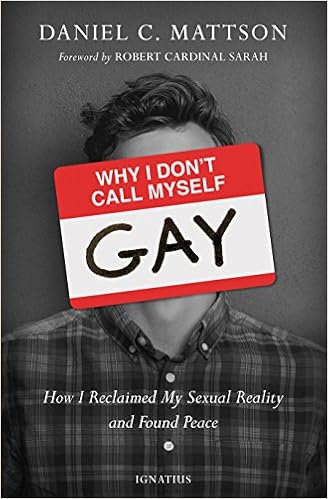
And there this new offering, which might be of special interest to many of Card. Sarah’s critics. He wrote the foreword.
 Even as you read this, the blog is under siege by vile spammers trying to register to post their putrid slime. I have logs that show me what’s going on.
The drawbridge is raised. The gators are in the moat. Oil is on the boil.
COMMENTS
To comment here, you have to be registered and your registration must be approved.
Registrations go into a queue, which I check when I can. I’m not always near my computer. Be patient. Check once in a while to see if it went through. The approval isn’t automated and I don’t manually send you confirmations. Sorry. I just don’t have time. Some people write after trying to register multiple times. You are probably already registered! In these cases I’ll usually write back ASAP with a new temporary password.
If you register to comment, pay attention to that field where I ask information about you. You don’t have to provide a biography, address or blood type. Just write something that will show me that you aren’t a bot or a nefarious ne’er-do-well. Your confirmation name is a good one, favorite encyclical, a brief explanation of circumincession… that sort of thing… easy stuff.
NB: I recommend that you do NOT use your email as your nickname here… unless, of course, you like lots of spam. Also, I don’t like the use of names of real historical people, for example, of saints. No, you are NOT St. Hillary of Poiters.
Also NB: Some people think that this is a open public forum and that they can come into may place and spew any ol’ damn thing they want under the cover of anonymity. Some people think that they have a right to post, and to post any dreck they want. Wrong. I’m the Benevolent Dictator of my blog. I turn on the queue  when I want, where I want, for whom I want.
Furthermore, I allow zero discussion in my combox of my decisions about comments or why this or that comment appears or doesn’t appear. Zero. Mention: “My last comment didn’t appear… “… then neither will this one. Mention: “Why did my comment disappear?” That won’t appear. Mention: “You’ll probably delete this, but…”. I stop reading and it’s gone. Period. Zero. No appeal. Dura lex sed lex.
These policies help my blog’s combox not to descend into chaos or knucklehead stuff.
SNAIL MAIL
For those you who sent Christmas cards or other things over the last couple years, that snail mail address isn’t in use anymore. It was a temporary mailbox. I’ve had a couple notes from people asking if I got their snail mail. Probably, if it wasn’t too recent. Bottom line, don’t send snail mail to that old address. I terminated that mail box.
NEW USPS PO BOX ADDRESS:
Fr. John Zuhlsdorf
733 STRUCK ST
PO BOX 44603
Madison, WI 53744-4603
I get a lot of email. Keep a couple things in mind.
First, if you have a question, use the ASK FATHER form on the top menu. I pretty much delete others. Otherwise, use the Contact form on the top menu. Don’t send just links without explanations. Keep ’em brief. The longer they are, the more likely I’ll move on to something else.
I will hand threatening email over to law enforcement.
Finally, I direct you once again to my Litany For The Conversion Of Internet Thugs (a wry work in progress for private use only, when truly irritated, and when the alternative is foul language.)
Really finally, this blog needs updates, technical work. I hope that will be possible. Say a prayer or two that I can find someone reliable.
We have completed the first full day.
I gave my lecture today on Augustine and the City of Man.
A view of the great deco/liberty hall in the older portion of the otherwise state of art facility. I always like walking through this space

Tonight we heard from Russell Moore. He was really good.

Afterwards, I caught up with friends on the deck.

Which drink is mine?

After this, with cigars I sat with one of the faculty (one of the smartest on the staff) and a entrepreneur, solider from Israel who also had several years in the yeshiva talking, arguing, about Jewish political theory.
Acton is a place where you wake up all those parts of the brain that haven’t been challenged for a while.
Tomorrow, as usual, TLM at 7:15.

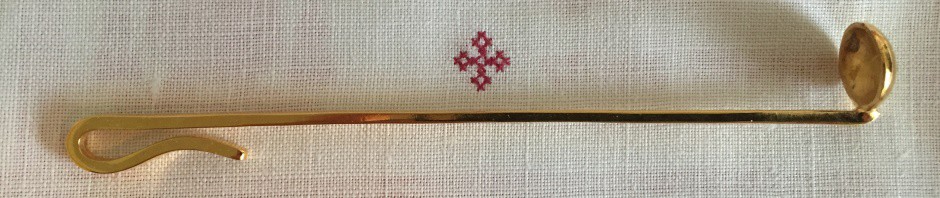
The Scruple Spoon
From a reader…
QUAERUNTUR (I generally take ONE question at a time, but I am feeling benign this afternoon… a rare occurance):
Your recent post this afternoon about validity around a Priest using “for all” instead of “for many” made me think of my own questions regarding validity based upon recent experience.
1) is it valid if the priest pours too much water into the chalice causing the wine to become diluted?
2) An older priest that says daily Mass regularly at a parish I attend does not break off a fraction of the host and place in the chalice before the “Lamb of God”. Does this render the Mass invalid?
Ad 1m. If the priest adds too much water to the wine in the chalice, he “breaks” the substance of the wine. At that point, there is no wine to consecrate and, hence, there can be no consecration. That means that Mass was not celebrated. However, it is possible that the Host was consecrated. That means that the priest, technically, consecrated the Eucharist outside of Mass, which is a serious sin and crime. Mind you, it can happen that an older fellow or a priest who isn’t tracking very well might do this by accident. If that happens more than once, someone should be with him to correct the situation. More wine must be added, for example. Another way to avoid this is the use of the so-called “scruple spoon”. I have a photo of one of these great gizmos among the headers for this blog. With the “scruple spoon”, Father is able to dip up a tiny bit of water and add it to the chalice. Easy.
 The next part of this question is, obviously, how much water is too much?
For this we, being good Unreconstructed Ossified Manualists, refer to our old manuals. In the manual of dogmatic theology by Tanquerey, that tonic for the soul, I found the opinion that “quinta pars aquae ad vinum corrumpendum non sufficiat … a fifth part of water isn’t enough to break [the substance of] the wine”, and thus render it invalid matter for consecration.
Think about it. One fifth of the volume of the wine usually isn’t very much. So, priests should be very careful about this. FATHERS! DEACONS! SEMINARIANS! PAY ATTENTION!
Ad 2m. No. Not putting the particle of Host into the Precious Blood does NOT invalidate the Mass. At this point the priest has the Body and Blood of the Lord on the altar. Now the critical thing is that he must consume them both to complete the Sacrifice. Putting the particle into the chalice is highly significant, but it is not an element which is absolutely essential for Mass to have been celebrated. This element could have developed from the ancient practice of the Bishop of Rome breaking pieces from his Host and sending them out to all the tituli (“parishes”) of the City to show their unity. At last, some saw the mingling of the Body with the Blood as a sign of the Resurrection. If the two-fold consecration is the separation of the Blood from the Body, and therefore the death of the Lord, then their rejoining is like His resurrection. Thus, when we receive Communion we have been given then sign that what we receive is truly the Lord gloriously risen. This commingling should also give us a great sense of peace. In the older form of Mass the priest makes the sign of the Cross thrice with the particle from rim to rim of the chalice saying, “May the peace of the Lord be with you always”.

 Some of you will remember those commercials years ago where some guys, sitting with friends is a loud restaurant, says something like, “My broker is Joe Bagofdonuts. Joe says…”, and suddenly the entire restaurant is dead still with everyone leaning in, straining to hear.
When Msgr. Nicola Bux speaks we should listen. Edward Pentin, arguably the best English language Vaticanista right now, interviewed Msgr. Bux (of the famous Bux Protocol™) at the NCRegister.
Monsignor Bux: We Are in a Full Crisis of Faith
[…]To resolve the current crisis in the Church over papal teaching and authority, the Pope must make a declaration of faith, affirming what is Catholic and correcting his own “ambiguous and erroneous” words and actions that have been interpreted in a non-Catholic manner.
This is according to Monsignor Nicola Bux, a respected theologian and former consulter to the Congregation for the Doctrine of the Faith during Benedict XVI’s pontificate. [NB: former… but keep in mind that he had served under Benedict in that role, which tells you a great deal]
In the following interview with the Register, Msgr. Bux explains that the Church is in a “full crisis of faith” and that the storms of division the Church is currently experiencing are due to apostasy — the “abandonment of Catholic thought.”
Msgr. Bux’s comments come after news that the four dubia cardinals, seeking papal clarification of his exhortation Amoris Laetitia, wrote to the Pope April 25 asking him for an audience but have yet to receive a reply.
The cardinals expressed concern over the “grave situation” of episcopal conferences and individual bishops offering widely differing interpretations of the document, some of which they say break with the Church’s teaching. They are particularly concerned about the deep confusion this has caused, especially for priests.
“For many Catholics, it is incredible that the Pope is asking bishops to dialogue with those who think differently [i.e. non-Catholic Christians], but does not want first to face the cardinals who are his chief advisors,” Msgr. Bux says.
“If the Pope does not safeguard doctrine,” he adds, “he cannot impose discipline.” [Tell that to the priests in that that diocese in Nigeria.]
***
PENTIN Monsignor Bux, what are the implications of the ‘doctrinal anarchy’ that people see happening for the Church, the souls of the faithful and priests?
BUX The first implication of doctrinal anarchy for the Church is division, caused by apostasy, which is the abandonment of Catholic thought, as defined by St. Vincent of Lerins: quod semper, quod ubique, quod ab omnibus creditur (what has been believed everywhere, always, and by all). Saint Irenaeus of Lyon, who calls Jesus Christ the “Master of unity,” had pointed out to heretics that everyone professes the same things, but not everyone means the same thing. This is the role of the Magisterium, founded on the truth of Christ: to bring everyone back to Catholic unity.
St. Paul exhorted Christians to be in agreement and to speak with unanimity. What would he say today? When cardinals are silent or accuse their confreres; when bishops who had thought, spoken and written — scripta manent! [written words remain]— in a Catholic way, but then say the opposite for whatever reason; when priests contest the liturgical tradition of the Church, then apostasy is established, the detachment from Catholic thought. Paul VI had foreseen that “this non-Catholic thought within Catholicism will tomorrow become the strongest [force]. But it will never represent the Church’s thinking. A small flock must remain, no matter how small it is.” (Conversation with J. Guitton, 9.IX.1977). [A small flock… sigh…]
PENTIN What implications, then, does doctrinal anarchy have for the souls of the faithful and ecclesiastics?
BUX The Apostle exhorts us to be faithful to sure, sound and pure doctrine: that founded on Jesus Christ and not on worldly opinions (cf. Titus 1:7-11; 2:1-8). Perseverance in teaching and obedience to doctrine leads souls to eternal salvation. [NB] The Church cannot change the faith and at the same time ask believers to remain faithful to it. She is instead intimately obliged to be oriented toward the Word of God and toward Tradition.
Therefore, the Church remembers the Lord’s judgment: “For judgment I came into this world, that those who do not see may see, and those who see may become blind.” (John 9:39). Do not forget that, when one is applauded by the world, it means one belongs to it. In fact, the world loves its own and hates what does not belong to it (cf. John 15:19). May the Catholic Church always remember that she is made up of only those who have converted to Christ under the guidance of the Holy Spirit; all human beings are ordained to her (cf. Lumen gentium 13), but they are not part of her until they are converted.
PENTIN How can this problem best be resolved?
BUX The point is: what idea does the Pope have of the Petrine ministry, as described in Lumen gentium 18 and codified in canon law? Faced with confusion and apostasy, the Pope should make the distinction — as Benedict XVI did — between what he thinks and says as a private, learned person, and what he must say as Pope of the Catholic Church. [I believe JPII did the same before B16 did.] To be clear: the Pope can express his ideas as a private learned person on disputable matters which are not defined by the Church, but he cannot make heretical claims, even privately. Otherwise it would be equally heretical.
I believe that the Pope knows that every believer — who knows the regula fidei [the rule of faith] or dogma, which provides everyone with the criterion to know what the faith of the Church is, what everyone has to believe and who one has to listen to — can see if he is speaking and operating in a Catholic way, or has gone against the Church’s sensus fidei [sense of the faith]. Even one believer can hold him to account. [I have in mind a figure in the Church whom St Augustine describes as homo spiritalis.] So whoever thinks [Card. Rodriguez! Etc!] that presenting doubts [dubia] to the Pope is not a sign of obedience, hasn’t understood, 50 years after Vatican II, the relationship between him [the Pope] and the whole Church. Obedience to the Pope depends solely on the fact that he is bound by Catholic doctrine, to the faith that he must continually profess before the Church.
We are in a full crisis of faith! Therefore, in order to stop the divisions in progress, the Pope — like Paul VI in 1967, faced with the erroneous theories that were circulating shortly after the conclusion of the Council — should make a Declaration or Profession of Faith, affirming what is Catholic, and correcting those ambiguous and erroneous words and acts — his own and those of bishops — that are interpreted in a non-Catholic manner. [In June 1968 Paul issued with an Apostolic Letter Motu Proprio his great “Credo of the People of God“. More on that below.]
Otherwise, it would be grotesque that, while seeking unity with non-Catholic Christians or even understanding with non-Christians, apostasy and division is being fostered within the Catholic Church. For many Catholics, it is incredible that the Pope is asking bishops to dialogue with those who think differently, but does not want first to face the cardinals who are his chief advisors. If the Pope does not safeguard doctrine, he cannot impose discipline. As John Paul II said, the Pope must always be converted, to be able to strengthen his brothers, according to the words of Christ to Peter: “Et tu autem conversus, confirma fratres tuos [when you are converted, strengthen your brothers].”
In 1967 the Church was being torn apart by wild ideas. As an example of the chaos take the infamous “Dutch Catechism”. Paul VI, talking Charles Journet, saw that the Church at the time was in a state of disaster. He therefore called for a Year of Faith for 67-68 (much like Benedict did later). At the end of the Year, Paul issued his “Credo of the People of God”, a text crafted on the basis of the Nicene Creed and expanded by Jacques Maritain and amended by the Holy Office. Paul’s “Creed” is non-liturgical.

Paul VI pronounces the “Credo of the People of God” – 30 June 1968
In his introduction to the text of the “Creed”, Paul, in his Apostolic Letter, wrote… and see if this doesn’t dovetail with what Msgr. Bux asked for (i.e., profession of faith in troubled times):
3. [W]e deem that we must fulfill the mandate entrusted by Christ to Peter, whose successor we are, the last in merit; namely, to confirm our brothers in the faith. With the awareness, certainly, of our human weakness, yet with all the strength impressed on our spirit by such a command, we shall accordingly make a profession of faith, pronounce a creed which, without being strictly speaking a dogmatic definition, repeats in substance, with some developments called for by the spiritual condition of our time, the creed of Nicea, the creed of the immortal tradition of the holy Church of God.
4. In making this profession, we are aware of the disquiet which agitates certain modern quarters with regard to the faith. They do not escape the influence of a world being profoundly changed, in which so many certainties are being disputed or discussed. We see even Catholics allowing themselves to be seized by a kind of passion for change and novelty. The Church, most assuredly, has always the duty to carry on the effort to study more deeply and to present, in a manner ever better adapted to successive generations, the unfathomable mysteries of God, rich for all in fruits of salvation. But at the same time the greatest care must be taken, while fulfilling the indispensable duty of research, to do no injury to the teachings of Christian doctrine. For that would be to give rise, as is unfortunately seen in these days, to disturbance and perplexity in many faithful souls.
Alas, I think that Paul himself contributed to that confusion, especially by signing off on the liturgical reform that went waaaaay beyond what the Council had mandated. The general impression was, “If the way we say Mass can be so profoundly changed, then anything, even doctrine, can be changed.”
Consider the times. What Paul did happened in the turbulent revolution years of 67-68. Humane vitae, was issued then. Turbulent years and crazy stuff is coming up now. Protests not unlike those of the 60s are taking place. There is an even more horrible “sexual” revolution going on, in which human nature itself is debased in what Card. Sarah rightly calls diabolical “gender theory”. Now there seems to be a movement to nullify the teaching of Paul’s greatest accomplishment, Humanae vitae, afoot and also the Magisterium of John Paul II.
I had thought that at the end of the most recent Year of Faith, Benedict XVI would issue something very much like Paul VI’s “Credo of the People of God”. But he resigned before the Year of Faith ended.
Were Francis to take up the entirely reasonable call to issue a “profession of faith” along the lines of what Bux called for, he would be following in the footsteps of Paul VI and he would also fulfill something that, I believe, Benedict XVI could have, should have, would have done in 2013.
We have gathered again in Grand Rapids MI for Acton University 2017.
Once again there is a huge and diverse group from all over the world.
Tonight we have registered and greeted lots of old friends and now our first event is beginning. After our first (excellent) meal, there is a talk by Hon. Janice Rogers Brown.
I would love for all of you to have the experience of Acton U. I’ll give you some tastes along the way.


UPDATE
Sam Gregg is giving a talk. He is maybe the smartest guy in the room.

Here is is explaining that he doesn’t use Powerpoint because, of course, power corrupts and Powerpoint corrupts absolutely.
And he just blasted Karl Rahner. This is great.

Coat of Arms by D Burkart
 James C on Distressing words of Leo about the SSPX consecrations: “Four parishes in the Archdiocese of New York are advertising a full slate of Pride Month events. Some of them:…”
 on Detroit’s Archbishop attends mosque opening, says: “There is no place where I feel more respect, fraternity, and kindness”: “Wasn’t there a time when a cleric would not set foot in a house of “worship” of another religion except…”
 on Detroit’s Archbishop attends mosque opening, says: “There is no place where I feel more respect, fraternity, and kindness”: “Look, we have to move forward, so don’t worry about it.” on Distressing words of Leo about the SSPX consecrations: “It’s pretty sad, but it seems to strongly indicate exactly what direction Pope Leo wants to take the Church and…”
 on Distressing words of Leo about the SSPX consecrations: “I don’t think it’s particularly helpful to complain about why the Holy Father might treat his different children differently. Why…”
 on Distressing words of Leo about the SSPX consecrations: “Moving on seems the most sensible course. We should commit resources to ongoing negotiation to what end? Is there any…”
 on Distressing words of Leo about the SSPX consecrations: “As one podcaster noted, there is no place for Tradition in the ‘synodal church’, that ‘ape of the church’.” on Detroit’s Archbishop attends mosque opening, says: “There is no place where I feel more respect, fraternity, and kindness”: “The archbishop was most likely feeling the preternatural. Remember that the gods of the pagans are demons. (so are aliens)”
A Daily Prayer for Priests










They find you a pro-life agent in your area who commits to giving a portion of the fee to a pro-life group!

PLEASE subscribe via PayPal if it is useful. Zelle and Wise are better, but PayPal is convenient.
A monthly subscription donation means I have steady income I can plan on. I put you my list of benefactors for whom I pray and for whom I often say Holy Mass.
In view of the rapidly changing challenges I now face, I would like to add more $10/month subscribers. Will you please help?
For a one time donation...



Help Monks in Wyoming (coffee – UPDATED LINK) and Norcia (beer) and the wonderful "Soap Sisters" of Summit, NJ!


Please follow me on Twitter!










Visits tracked by Statcounter
since Sat., 25 Nov. 2006:

