DOUTHAT in NYT: Ongoing ‘Amoris laetitia’ controversy

Dear readers… a lot of time and electrons are being spilled on Amoris laetitia these days because it may be the most important controversy of our time, with long lasting implications for doctrine on faith and morals, and on discipline.  Our Catholic identity is tied to the controversy.  We have to pay attention even though I am sure that many of you are ready for Amorexit (opting out of further discussion of the controverted Post-Synodal Apostolic Exhortation).   Mind you: Some people should vote for Amorexit and stop paying attention, particularly if it is becoming spiritually toxic for you.  For people who are saying things like “I don’t know if I can remain Catholic because of this!”, I say, tune out and start reciting, often, your memorized Acts of Faith and of Hope.

Meanwhile, the rest of us are in the scrum.

Check out Ross Douthat’s examination of the controversy surrounding Amoris laetitia in his NYT – yes, NYT – Hell’s Bible – column. HERE Pope Francis and his surrogates do not get a pass.

A sample…

[…]

Indeed, the exact same post-“Amoris” pattern that we’ve seen on second marriages and the sacraments is playing out presently in Canada with assisted suicide. The bishops in the western provinces are taking the traditional line that Catholics who are planning their own suicides can’t be given last rites, because you can’t grant absolution to someone who intends to commit the gravest of sins shortly afterward … while the Catholic bishops of the Maritime provinces, citing Pope Francis’s innovations as a model, suggest that actually pastoral accompaniment could include giving last rites to people who are about to receive “medical assistance in dying,” because every case of assisted suicide is different and who are we to judge?

In other words, thanks in part to the pope and to “Amoris,” we now have two different implicit teachings from two different groups of Catholic bishops on a literal matter of life and death. And saying “the train has left the station” and labeling one camp of bishops the “dissenters” – which, on the issue of euthanasia, I don’t think Ivereigh [See his ghastly piece.] would do – tells us exactly nothing about how this conflict ought to be resolved.

[…]

Not. Going. Away.

One thing leads to another in our Catholic Faith.

Admission of people to Communion who are objectively committing a sin (whether it is adultery or contemplating suicide, etc) has implications for what we believe the Eucharistic to be, about who we believe Christ to be.  Was the Lord (God) wrong when he taught about the indissolubility of marriage?   If He was wrong, then is He divine?  Was the Lord wrong about eating His Body and drinking His Blood?  Is that just idolatry?  If objective adulterers can be admitted to Communion, then why can’t those contemplating suicide be anointed first?  Why not every sacrament for everyone?  What are sacraments anyway?

This is why the Five Dubia are so important and why so many desire clear answers.   It’s not about a lack of “mercy”.
Posted in One Man & One Woman, Our Catholic Identity | Tagged , ,
46 Comments

Edward Feser: The Five Dubia and the Silence of the Pope

I found Edward Feser’s essay on Schadenfreude to be especially helpful after the election of Donald J. Trump as President of These United States of America after the humiliating defeat of Hillary and everything she stands for.   Truly helpful.

Feser has a piece right now that you might find helpful: Denial Flows Into The Tiber

US Click here

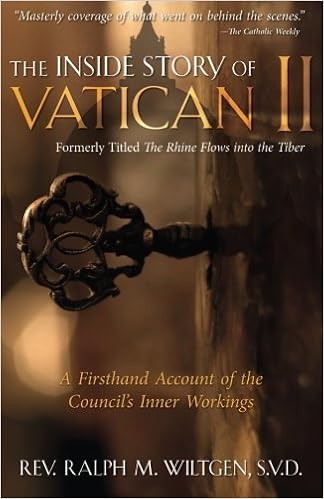
He is riffing on the title of an exceptionally useful book about how Northern Europeans hijacked the Second Vatican Council by Ralph Wiltgen.  (UK HERE).  Clever.

It is about just about the only thing that matters right now, Amoris laetitia.

Fever’s piece is really long.  However, I hope you will tackle it.  Jumping into the middle, here are my bullet points, which are his subheadings, of what he deals with.

[…]

If all that makes the current situation sound serious, that is because it is.  Yet there seems to be, in certain sectors of the Church, an air of unreality or make believe surrounding the crisis.  With the honorable exception of Rocco Buttiglione, defenders of Amoris have not even attempted to respond to the substance of the four cardinals’ questions.  They have instead resorted to abuse, mockery, and threats – all the while claiming to champion mercy and dialogue.  They assure us that the four cardinals and others who have raised questions about Amoris are comparable to rigid and legalistic Pharisees and acting contrary to the gentle mercy of Christ.  Yet as a matter of historical fact it was the Pharisees who championed a very lax and “merciful” attitude vis-à-vis divorce and remarriage, and Christ who insisted on a doctrine that was so austere and “rigid” that even the apostles wondered if it might be better not to marry.

Others suspect that there is something wrong, but refuse to express their concerns on the assumption that a Catholic must never say anything that might seem to imply criticism of a pope.  They simply refrain from thinking or talking about the crisis, or they do so only when they can put a positive if tortuous spin on some problematic statement, or they badmouth as disloyal those who raise even politely expressed worries.  “We are at war with Eastasia, and always have been!We are through the looking glass!  Denial is just a river in Egypt!

Several reasons are often put forward for taking these various attitudes toward the crisis.  All of them are bad.  Let’s consider each one and what is wrong with it:

  1. “To ask the pope for a Yes or No answer misses the point.” […]
  1. “Those who support the four cardinals are dissenters from Church teaching.” […]
  1. If the pope says it, it can’t be contrary to traditional teaching.” […]
  1. But there is a way to readAmoris that really is plausibly consistent with traditional teaching.” […]
  1. Criticism of the pope should not be made in a public way.” […]

[…]

Quo vadis, Petre?

It is hard to see how a continued failure to respond to the four cardinals and the other critics could be justified.  Ensuring doctrinal clarity and unity within the Church are two of the chief reasons why the papacy exists in the first place.  And both doctrinal clarity and unity are now in danger.  There is no agreement on the meaning of Amoris.  Some claim that it is a revolutionary breach with tradition, others that it is perfectly in continuity with tradition.  Different bishops in different dioceses are implementing different interpretations of the document, some maintaining previous practice, some departing from it.  Some Catholics regard Amoris’s defenders as dissenters from binding teaching, while others regard the critics of Amoris as dissenters.  Some worry that Francis is, with Amoris, undermining the authority of the Church and the papacy.  Others seem to think that upholding the authority of the papacy requires punishing the critics of Amoris.  Tempers are high, and many fear that schism is imminent.

There is only one man who can resolve the crisis, and that is Pope Francis.  And resolving these sorts of crises is at the very top of the list defining the job description for any pope.  When such a crisis has arisen precisely as a consequence (however unintended) of a pope’s actions, his obligation to resolve it is surely even graver.

There is also the consideration that, just as Arianism was the main challenge to the Faith at the time of Liberius, and Monothelitism was the main challenge to the Faith at the time of Honorius, so too is the sexual revolution arguably the main challenge to the Faith today.  The modern, liberal, secular Western world regards the Catholic Church as an obstacle to progress in many respects, but there is nothing for which the Church is hated more than her stubborn insistence on the indissolubility of marriage and the intrinsic immorality of contraception, abortion, fornication, homosexual acts, and the like.  Secularists and progressives have for decades dreamed of finding a way finally to break this intransigence and bring the Church to heel on these matters.  Their greatest weapon has been the rhetoric of mercy, forgiveness, and non-judgmentalism.  That is to say, they have used (a distortion of) one part of Christian teaching as a bludgeon with which they might shatter another part.

[…]

To quote a progressive theologian, Harvey Cox: “Not to decide is to decide.”  Though, the longer a decision is delayed, perhaps the question of what Pope Francis will do will become less important.  As Honorius could tell you, sometimes it is what the next pope does that matters most.

You might also want to check out Edward Feser’s books.  He’s real smart.


US click


UK HERE

Posted in SESSIUNCULA | Tagged , , , ,
15 Comments

TURN TOWARDS THE LORD AGAIN! Shrine of O.L. of Guadalupe

Click!

I am delighted to post that henceforth all Masses celebrated at the Shrine of Our Lady of Guadalupe near La Crosse, WI will be celebrated ad orientem.

HERE

[…]

In his homilies for both the Third Sunday of Advent and the Solemnity of Our Lady of Guadalupe, Cardinal Burke offered a catechesis regarding the orientation of the priest and people during the offering of the Sacrifice of the Mass. He explained that the priest at the head of the congregation will, with the congregation, turn toward the Lord during the prayers and, above all, during the Eucharistic Prayer, in order to render more visible our recognition that it is Our Lord Himself Who inspires our prayer and Who acts during the Eucharistic Prayer to make sacramentally present His Sacrifice on Calvary for our eternal salvation. We all turn to Him; we all look to Him.
He further explained that the practice of the priest facing the congregation, which developed during the years after the Second Vatican Ecumenical Council, was not in fact a discipline ordered by the Council. He observed that, while it may have seemed helpful at the time, it now seems fitting and indeed important to return to the ancient practice by which the union of the priest who offers the Sacrifice of the Mass, in the person of Christ, and the congregation is visible to us all and inspires in us a more ready recognition of Christ in our midst, as He is most fully and perfectly present in the Eucharistic Sacrifice. Quoting Cardinal Robert Sarah, Prefect of the Congregation for Divine Worship and the Discipline of the Sacraments, he explained that the teaching of the Second Vatican Ecumenical Council on the Sacred Liturgy does not speak of a change in the ancient discipline according to which “during the Rite of Penance, the singing of the Gloria, the orations and the Eucharistic Prayer, all, priest and faithful, should turn together towards the East, to express their desire to participate in the work of worship and of redemption accomplished by Christ.
He explained that, returning to the ancient practice of the Church, we all face the East, we all face the Lord, during Sacred Worship. It is not a question of the priest turning his back to the faithful but rather directing himself, with the faithful, to Christ Who makes sacramentally present His Sacrifice for our eternal salvation. He expressed the hope that, purifying and enriching the liturgical practice at the Shrine, we will be one with Our Lady of Guadalupe in giving witness to the all-merciful love of God present, in a most extraordinary manner, in the Eucharistic Sacrifice.
He also explained that facing our Lord in Sacred Worship gives form to our daily living. In everything that we think and say and do, we are to turn to the Lord. Each day, we devote ourselves anew to the conversion of our lives to Christ. We live, intently engaged in the life of the world, but always with our eyes fixed on heaven, on our true destiny and the final destiny of the world. We are called to worship and serve God. We are called to make Christ, not ourselves, the center of our lives, so that we truly serve God, directing our minds and hearts more and more toward Him with fidelity, generosity and obedience.

Brick by brick.

Posted in Liturgy Science Theatre 3000, Turn Towards The Lord | Tagged , , ,
6 Comments

The Pope, The Five Dubia and the “Formal Correction”

His Eminence Raymond Leo Card. Burke gave interview to LifeSite. He said that the “formal correction” of Pope Francis he had mentioned before could “probably” be issued sometime after the upcoming Feast of the Epiphany, thus after 6 January 2017

Among the things Card. Burke said were that a “formal correction” was necessary because the Five Dubia submitted by the Four Cardinals about Amoris laetitia Ch. 8 concern the “very foundations of the moral life of the Church” and “the Church’s constant teaching with the regard to good and evil”.

The “formal correction” would be a brief reaffirmation of points raised in the Five Dubia.  It could not be much more than that.

As I wrote before, in the past Popes have indeed been “corrected”.  Check out this post: Once upon a time, there was this Pope who was “corrected”…. So, what Card. Burke is suggesting is not entirely without precedent.

Furthermore, if the situation is allowed to go forward without some sort of action, the result could be an undermining of the Petrine Office itself, which is so important for the unity of the Church and the safeguarding of teaching on faith and morals.  Therefore, what might be undertaken is a service to the Holy Father, not an attack.  Far from it.

So, Card. Burke mentioned 6 January, Epiphany.  However, in between then and now comes the annual Christmas “Greetings” between the Pope and the Roman Curia.  This year it will take place on Thursday 22 December.  Benedict XVI used that occasion to make a famous speech about the hermeneutic of discontinuity and rupture in regard to Vatican II (etc.).  O my prophetic soul.  And then there was Francis’ own infamous tirade against the members of the Curia in 2014, when he read them his list of 15 “ailments” and ripped them to shreds.  HERE

It is impossible not to imagine that Pope Francis will use the Christmas Curia greetings on Thursday to tear the Four Cardinals, and anyone else thinking about associating with them, limb from limb, if not directly and by name, then by innuendo and oblique reference.

Will Pope Francis respond to the Five Dubia?   I doubt it.  His surrogates will probably continue to put out there that a) if perhaps the doubters heard more confessions, b) didn’t hate the Spirit of Vatican II, c) were not so obtuse, they would see how perfectly the notions proposed in Amoris laetitia Ch. 8 in fact are authentic developments of … you know… doctrine and stuff.

So, I would make plans to tune in to CTV on Thursday to watch the exchange of greetings of Francis and the Roman Curia for Christmas.

Posted in Francis, One Man & One Woman, Our Catholic Identity, The Coming Storm, The Drill, The future and our choices | Tagged , , , , ,
8 Comments

Among the dumb and evil things on the internet…

I’ve seen some pretty dumb things on the internet.  I’ve seen some pretty evil things on the internet.  I’ve seen things that are both pretty dumb and pretty evil on the internet.

This has to be right up there with the dumbest and the worst.

Our friend the Motley Monk posted this.

From the “Stretches credulity” file: The Virgin Mary’s purity is offensive to victims of rape…

The bizarre title of a recent Washington Post op-ed caught The Motley Monk’s eye:

                “Our culture of purity celebrates the Virgin Mary.
As a rape victim, that hurts me.”

The op-ed’s author, Ruth Everhart, has concluded that the Advent season sets Mary up as a problem.

Why? Mary’s purity.

How so? Everhart aruges:

  • Mary sets “an impossibly high bar….Now the rest of us are stuck trying to be both a virgin and a mother at the same time.”
  • It isn’t really Mary’s fault, in Everhart’s opinion. The Church has manipulated Mary into a model of purity. She writes: “Mary is not responsible for what we’ve done to her story. Church culture has overfocused on virginity and made it into an idol of sexual purity. When it comes to female experience, the church seems compelled to shrink and distort and manipulate.” Everhart asks Mary: “How do you feel about what the patriarchy has done with you?”
  • For some people, “vaginas are inherently dirty,” Everhart states. “They can never be purified. And isn’t that the definition of hopelessness? Does it bother you that half of the human population is condemned to hopelessness because their body parts can never be pure?”
  • Christians are also at fault for people feeling sexually dirty. She writes: “Maybe the church could ask body-owners to weigh in about their experiences. Most people have thoughts and feelings about their sexual selves. Having a body is complicated. It involves trial and error.
  • It’s foolish to teach young people the virtue of purity or to appreciate abstinence before marriage. Everhart observes: “We want to pretend sexuality is something we can lock in a box and keep on a shelf. But a lockbox won’t work. Neither will a chastity belt or a purity ring. Certainly not the abstinence pledges they make young folks sign.”

Reading Everhart’s op-ed, The Motley Monk’s first thought was that Everhart is hurt and angry. And, as a victim of rape, she has every reason to be. Very sad, indeed.

How is Everhart coming to terms with the anger stirred in her by the Virgin Mary’s story? Everhard has become a pastor.

Could it be that this op-ed is more evidence of “faux news” on the part of the Washington Post?

Posted in Biased Media Coverage, Blatteroons, You must be joking! | Tagged
19 Comments

Can “Rome” be trusted? SSPX questions and beyond

I have smart friends who think that – things being as they are – the SSPX should NOT at this time accept terms offered by the Holy See. It’s hard to see what that might entail… things being as they are, and all that.

Related to this point is a post from Fr. John Hunwicke at Mutual Enrichment:

Summorum Pontificum

Bishop Schneider has called for the SSPX to be given the justice they were denied in the 1970s. I do wonder, with great respect to his Lordship, whether things are now any longer quite as simple as that.  [The answer is, obviously, no.]

For a decade or two, we have been told that regularisation must wait upon the acceptance by the Society of the teaching of Vatican II and of the post-Conciliar Magisterium. But given the way things are now, might it not be fair and equitable for the Society now to insist that Papa Bergoglio manifest a proper and unambiguous submission to the post-Conciliar Magisterium of S John Paul II and of Benedict XVI? And, in particular, that he enact (perhaps as part of a deal with the Society) a solemn reconfirmation in his own name of Veritatis splendor, Familiaris consortio, and Summorum Pontificum?

The Roman Pontiff, suspiciously, has already declined to to give the very simple answers requested of him to the effect that Veritatis splendor and Familiaris consortio still, as it were, apply. And on November 20, I expressed a fear that a regularisation of the SSPX might be accompanied by a cancellation, or evisceration, of Summorum Pontificum. Indeed, on 21 September 2016 Sandro Magister had reported somebody called Andrew Grillo (Alcuin Reid’s sparring partner??) as opining that the next Synod would discuss “the collegial exercise of the episcopate and the restitution to the bishop of full authority over diocesan liturgy”. It was pretty obvious to me what the nasty little phrase I italicise was code for, as I wrote a few days later on my blog. In the event, we were reprieved; a different topic was to be selected for the next Synod (Youff, I think), possibly because Bergoglio is decent enough still to have some reticence about too overt a public humiliation of Joseph Ratzinger while he is still alive. But Grillo’s expectations are unlikely to have been entertained by him alone.


There has always been a practical certainty that a certain sort of bishop, for whom ‘subsidiarity’ means I Must Be Free To Ban Everything That Isn’t To My Personal Taste, would not easily abandon his hopes of (at least) limiting and controlling worship according to the Old Rite. In one of the Ordinariates (not the British one!) a local bishop put pressure some years ago on the Ordinary to prevent the use of the Extraordinary Form within that Ordinariate. Readers will not need to be reminded of the savage humiliations inflicted, and by a Roman Dicastery, upon the Franciscan Friars and Sisters of the Immaculate; humiliations which are still, as far as I know, in place. There was an American bishop who required clergy to pass a test in Latin to prove that they were idonei to celebrate the Old Mass … typical piece of Liberal nastiness, isn’t it … you arrange for your clergy, contra canonem, to be ordained without having been taught Latin, then you jeer and sneer at them for not knowing it. [EXACTLY!] At the jollier level, English clergy may remember how Cardinal Murphy-O’Connor acquired, for a year or two, the nickname of “The Envisager” because he attempted to circumscribe Summorum Pontificum by issuing a whole lot of comically panic-ridden rubbish making use of the phrase “It is envisaged that …” [NB good example of Management-talk using the impersonal passive construction]. [This construction is usually covered the day before study of the episcopal subjunctive: “It would seem that it might be…”.]

Bigotry still abounds.

[…]

Bigotry.

The moderation queue is ON.

Posted in SSPX | Tagged , ,
30 Comments

NYC Day 1-2: Hot Dog Carts and Chop Sticks

On Saturday evening, there was an Advent “O Antiphon” dinner sponsored by the traditional council of KCs associated with Holy Innocents parish in midtown. I think you have all heard of the place. It was great to see the former pastors, who came. The present pastor… no show. Too bad. It would have been good to get to meet him.

In any event, the next morning it was off to the Met.  If someone is wondering where I might be at a given moment in NYC, a good guess is either inside or at the hot dog cart outside.

Inside, they are constantly rearranging, bring out new old things.

Here is something that I hadn’t recalled spending time with.  I noticed a detail which I still need to verify, but seemed ominous and ghastly.

Herodias by Francesco Cairo (+1665).

This was cut down from a larger piece.  There are similar works by Francesco Cairo in Boston and Vicenza showing the larger composition which includes the platter upon which rests the head of St. John the Baptist.

A detail…

It is hard to see, but it looks like she is holding between her pinchers a single hair. [It could be a pin.]

If that is so, then she is in ecstasy over her post-mortem torment of the Baptist.

Remember that John was killed partly because he said to the world something which could be a contemporary point of discussion: No, you may not have that woman as your wife.  Herodias was outraged and she plotted her revenge.

Here is a lovely French ivory piece, as sweet as the other is awful.   There is byzantine influence, of course.   I find this very touching.

A marvelous bronze corpus, Italian.

The Met museum shop has a reproduction which I have been debating purchasing for several years.  The reproduction is very good and it even as the wholes for nails.  I thought I would have a wooden Cross made for it.  As a member I get a good discount.  ‘Tis also the season.

A while back I mentioned Michael O’Brian’s new book, The Fool of New York City

This painting figures in the book.   Goya, of course.  The cage is filled with finches… of the type which serves as the famous Christological Goldfinch.

US HERE – UK HERE

This could be a good Christmas gift.

We had to go to the tree lighting.  Only one time on Sunday afternoon. Detail.

I found the monkey again, and the pig is still crossing the bridge.

More on them later.

In the evening, CHINESE!  There is no good Chinese where I live, alas.

Potatoes.  Addictive.


Lamb with cumin.

Three pepper chicken.  Whew.

So far so good.  Today brings errands.   I am meeting a friend for lunch and movie.  I must stop at certain shops, including the place where I buy incense for the parish.

Posted in On the road, What Fr. Z is up to |
15 Comments

ASK FATHER: Can we listen to talks by SSPX priests?

From a reader…

QUAERITUR:

As SSPX priest and bishops are canonically suspended, would it be a sin to listen, read or propagate a book or a talk by a priest or bishop of the Society ? For example, if I wish to listen to a good talk in French about the basics of modernism, and the only one available is given by an SSPX priest. Thank you very much.

First, I don’t think that the only available talks about modernism are from the SSPX.  As a matter of fact, I have in my quiver a talk about modernism.  However, I will grant you that not many priests talk about modernism and the dangers of modernism and the modern manifestations of modernism because they either don’t know about it or they, too, are modernists.

Would it be a sin?   That depends on what the SSPX priests says, n’est-ce pas?

If the priest commits the sin of scandal in his talk, I would say yes.  If you are looking for that sort of thing, I think you would stray from the right path.  If not, if he is factual and charitable and does not lead people to undermine their unity with the Roman Pontiff and the bishops in unity with him, then I would say, “Thank you for addressing this important topic!”

The fact of belonging to the SSPX doesn’t in itself mean that what the priest says is either bad or good, to be avoided or sought out.  I can say the same for the talks given by many priests and, alas, bishops.  Just because someone is a high ranking cleric in good standing in the Church – even at the highest levels – is there any guarantee that everything that cleric says is sound or even within the bounds of what we call smart.

The moderation queue is ON.

Posted in "How To..." - Practical Notes, ASK FATHER Question Box, SSPX | Tagged ,
12 Comments

Brick by Brick in Australia

From an Aussie reader comes proof that it can be done.

G’day Fr,

Thanks for all you do!

I just wanted to drop you a note of recent happenings out here in regional Victoria, Australia!

Long story short: I, along with a few others, formed a lay society 10 years ago in anticipation of the Motu Propio dedicated to providing the old form of Mass.

We toiled for many years with little or no Mass, built up an arsenal of everything we would need plus more (love ebay!) but our hard work has paid off and we’ve been having regular Sunday Masses in the main parish church for the past 6 or so years.

Church politics/diplomacy has taught me a great deal.

The boys of the parents who assist at the old Mass have all learnt their serving (with a bit more to cover but we get by) but this past Sunday our youth choir sang it’s first Mass! It was awesome.

They were led by an young local gentleman who has been teaching them each Monday for the past 9 months. I would say it was recording quality but I’m biased. The eldest of our choir is 12 and the youngest is 6. They were supported by a family of singers from a neighbouring diocese.

If you think it appropriate please share these pics and our story with your readership as a note of encouragement for those starting out on getting the Mass up and running in their parish. It can be done! The Parish is that of St. Patrick’s Wangaratta in the Sandhurst Diocese. The priest who provides Mass is Fr. Terence Mary Naughtin OFM Conv and we can’t thank him enough!

Cheers and Advent beers!

Brick by brick.

16_12_19_aussie_01

16_12_19_aussie_02

They worked at it. They used diplomacy. They had patience.

Posted in Brick by Brick, SUMMORUM PONTIFICUM | Tagged
5 Comments

The Blood of San Gennaro

On Saturday early I got a text message from a friend in Italy that, in Naples, San Gennaro’s blood did not liquify on one of the dates that it was… supposed to.

Now I see the story at La Stampa.

The blood of San Gennaro usually liquifies on 16 December, which is the anniversary of an eruption of Vesuvius in 1631.  When the blood doesn’t liquify, well… that isn’t taken well by the locals.  That’s because when it doesn’t bad things happen.

“But Father! But Father!”, some of you are tittering, “You are so superstitious with your Latin and your Vatican II hatred.  So, the blood didn’t liquify, as you call it – *snicker* – how bad could it be?  What sorts of things are you troglodytes think could happen?”

How bad?  What things? Things like earthquakes, colera epidemics, WWII, occupation by Nazis.  That sort of thing.

[…]

Il mancato miracolo è stato sempre legato a momenti nefasti della storia della città: nel settembre del ’39 e del ’40, date di inizio della seconda guerra mondiale e dell’entrata in guerra dell’Italia, nel settembre del ’43 durante l’inizio dell’occupazione nazista, nel ’73 invece Napoli fu colpita da un’epidemia di colera. Il 1980 invece è stato l’anno del tremendo terremoto in Irpinia.

Posted in "But Father! But Father!", Saints: Stories & Symbols | Tagged ,
5 Comments