Steamroller

I had a note the other day.  It included a frustrated phrase and list:

Steamroller. That’s the right image. Exaltation and exaggeration of Amoris, feckless bishops, seminarian repressions renewed, undermining Summorum, synod idolization, devolution danger, homosexuals, deaconesses, intercomnunion hucksters, admiration of Luther, global warming zombies, just war deniers, immigration fanatics, capitalism haters, cassock attackers, and now Canadian bishops nod to euthanasia.

Steamroller?

How about …?

tank guy 01

Yep.  I admit it. This is how I have often felt these days. I have.  And it is really grinding me down.  I also have in my mail box notes from people who are truly shaken and anxious.  Not a few notes.  Hence, I know that I am not alone, which is both consoling and alarming at the same time.

We have to lift our chins and stand firm and be Christians who really believe.

May I recommend that you all memorize and recite often the Acts of Faith, Hope and Charity?  Especially, for now at least, when you are down, the Acts of Faith and Hope?

There are many versions, but here are the ones I know:

ACT OF FAITH

O my God, I firmly believe that Thou art one God in Three Divine Persons, Father, Son and Holy Ghost. I believe that Thy Divine Son became Man, and died for our sins, and that He will come to judge the living and the dead. I believe these and all the truths which the Holy Catholic Church teaches, because Thou hast revealed them, Who canst neither deceive nor be deceived.

ACT OF HOPE

O my God, relying on Thy almighty power and infinite mercy and promises, I
hope to obtain pardon of my sins, the help of Thy grace, and Life Everlasting, through the merits of Jesus Christ, my Lord and Redeemer.

ACT OF CHARITY

O my God, I love Thee above all things, with my whole heart and soul, because Thou art all-good and worthy of all love. I love my neighbor as myself for the love of Thee. I forgive all who have injured me, and ask pardon of all whom I have injured.

In my experience, and I think priests will back me up, people tend to die as they have lived.  We develop life habits and they carry through to death.  Rare are the instances when the patterns people bake in over the years suddenly change on the verge of death.  Musicians practice endlessly so that their technique becomes virtually automatic.  In sports, athletes develop muscle memory and skills from repetitions.  Soldiers drill and drill and drill so that when the terrifying part starts, they act rightly, when things go sideways, they can react.

This is how we have to live our lives.  We have to train for heaven, practice, drill, repeat and repeat again.    Parents, give your children a great gift: inculcate into them the building blocks of memorized prayers and tenets of the Faith.  Once they have them, they can pop out at the needed moment.  And don’t forget the Sacrament of Confirmation.

These prayers, these various Acts (along with the Act of Contrition), these devotions of ours, and sudden short prayers when fleeing from temptation, must go into our marrow so that they are so “ours” that they can’t not be ours when the Big Moment comes.

When you in your faith are under attack… ATTACK RIGHT BACK!  Who the Hell do you think is trying to break you?

When you are feeling hopeless or despondent… HOPE IT UP!  Who the Hell do you think wants you to despair?

GOD?

I don’t think so.

Memorize the prayers.  Once they are memorized, they are part of you.  Then get them into your marrow by reciting them frequently and over a long period of time… like until you DIE, which is going to happen pretty soon, as it turns out.

In WWII there was colonel of the 1st Rangers named William Darby who said:

“Onward we stagger. And if the tanks come, may God help the tanks!


Posted in Cri de Coeur, Hard-Identity Catholicism, Si vis pacem para bellum!, The Coming Storm, The future and our choices | Tagged , , , ,
10 Comments

URGENT PRAYER REQUEST: Gayle – RIP

I received some sad news today.  The woman who made the most beautiful rosaries I have ever seen or used died, under tough circumstances.

I spoke with her daughter tonight and told her that I would ask for prayers.  I ask the entire readership now, please, to stop and to say a pray for Gayle.

Eternal rest grant unto her, O Lord.
And let perpetual light shine upon her.
May she rest in peace.
Amen.
May her soul and all the souls of the faithful departed rest in peace.
Amen.

I am sure that, despite all the hard things towards the end, Our Blessed Mother will have held her protecting mantle over Gayle.  A small thing brings this to a strong surety in me, which I can relate.

Back in the 90’s – back in the days of the Catholic Forum on CompuServe! – I urged and helped Gayle to start an online biz for her rosaries, which she did and it was pretty successful.  Gayle didn’t have a lot of peace, not for a long number of years.  She did, however, have “Queen of Peace Rosaries”.

I cannot but think that the Queen of Peace will help Gayle to heaven.

By the way, I think now that there are other “Queen of Peace” rosaries.  They aren’t Gayle’s, that’s for sure.

Now for the “small thing” to relate…

For a couple years now I have daily carried about one of those “Combat Rosaries” made by a priest friend which have become so visible and so popular.  However, yesterday at O’Dark Hundred as I readied myself for my trip (presently underway), instead of grabbing the gun-metal Combat Rosary for my pocket as usual, out of the blue I picked up that worn leather pouch with the only rosary I have now from Gayle.

Perhaps Our Blessed Mother, the Queen of Peace, steered my hand to that pouch long before dawn this morning, for probably Gayle was dying  And so I had it with me when I got the news.

Pretty often I would tell Gayle that I had given yet another one away.  I would sometimes run into people who were in serious situations, or who were on the cusp, shall we say.  Something just sparked in me and I’d spontaneously give them my rosary.  And we are talking about some pretty darn nice rosaries, too.  On more than a few occasions I heard back that they made a difference.

I shan’t be giving this one away.  No siree.  And I’ll remember Gayle in my prayers.


Posted in Four Last Things, PRAYER REQUEST, Urgent Prayer Requests | Tagged
15 Comments

WDTPRS – 4th Sunday of Advent (TLM): Mass is a glimpse of heaven

We are drawing close, though because Christmas falls on Sunday we still have a week to go.

COLLECT (1962MR):

Excita, quaesumus, Domine, potentiam tuam, et veni: et magna nobis virtute succurre; ut, per auxilium gratiae tuae, quod nostra peccata praepediunt, indulgentia tuae propitiationis acceleret.

This prayer was in the ancient Gelasian Sacramentary and other sacramentaries. It survived in edited form in the Novus Ordo on Thursday of the 1st week of Advent.

Praepedio means “to entangle the feet or other parts of the body; to shackle, bind, fetter”, and therefore “to hinder, obstruct, impede”. Something is placed “before” (prae) the “foot” (pes), which makes you stumble. We never stumble using the thick Lewis & Short Dictionary which shows that prae-pes means also “swift of flight, nimble, fleet, quick, rapid”. To the Latin ear, just hearing prae-ped…sparks an interesting tension of opposing concepts. During Advent we are being constantly given images of movement, of rushing swiftly to a goal: venio (“come”), suc-curro from curro, (“run”), accelero….

A LITERAL VERSION:

Rouse up Your power, O Lord, we beseech You, and come: and hasten to aid us with your great might, so that, through the help of Your grace, what our sins are hindering the indulgence of Your merciful favor may make swift.

Christ is rushing towards us. Will we hasten him to us by clearing the path for His rushing feet, bringing peace and reward? Will our sins hasten His more violent coming, with correction and then separation? We must smooth His path, remove the obstacles. When the Lord comes, He will come by the straightest path … whether we have straightened it out or not. Our sins make His path crooked.

SECRET (1962MR):

Sacrificiis praesentibus, quaesumus, Domine, placatus intende: ut et devotioni nostrae proficiant, et saluti.

This is also found on the 2nd Sunday of Lent.

A TRANSLATION (The New Roman Missal – 1945):

Look with favor, we beseech Thee, O Lord upon these offerings here before Thee, that they may profit both for our devotion and for our salvation.

The point of this ancient prayer, from the Gelasian Sacramentary¸ is the connection between the Sacrifice and our salvation.

POSTCOMMUNIO (1962MR):

Sumptis muneribus, quaesumus, Domine: ut cum frequentatione mysterii, crescat nostrae salutis effectus.

This is used also on the Second Sunday after Pentecost in the 1962MR and the 15th Sunday of Ordinary Time in the Novus Ordo.

Frequentatio means, “frequency, frequent use, a crowding together.” As a figure of speech, in rhetoric, it is “a condensed recapitulation of the arguments already stated separately, a recapitulation, summing up.” This noun comes from the verb frequento, meaning “to visit or resort to frequently, to frequent; to do or make use of frequently, to repeat” and “to celebrate or keep in great numbers, esp. a festival.” Or, in somewhat post-Augustan usage, of a single person, “to celebrate, observe, keep”. In English we say “frequent” a place when we go there often. In this liturgical context it means “to attend or participate in often” and it has the over tone of being crowded together with others. Since Advent, now swiftly drawing to an end, also focuses us on the Second Coming, consider the figure of speech angle of frequentatio. Christ Himself is our frequentatio, our summing up of all things at the end of time as described in 1 Cor 15:28.

A TRANSLATION (St. Andrew Missal – 1959)

Having received Your sacred gifts, we implore You, Lord, that by our assiduous assistance at these holy mysteries, they may the more surely avail to our salvation.

ICEL (1973 translation of the 1970MR):

Lord,
by our sharing in the mystery of this eucharist,
let your saving love grow within us.

This is what we had to deal with, for pity’s sake.

The Latin version is an intense prayer, though it seems to have little to do with our Advent theme. But does it not focus us clearly on the purpose for our being at Mass: salvation? All other concerns and seasonal themes return to that overriding point.

Let’s pry it open. In our prayer frequentatio mysterii evokes for me superimposed images of the visible and invisible dimensions of Holy Mass, the Eucharistic sacrifice (mysterium). In the earthly church building many people are repeatedly gathered around us (frequentatio). Imagine now a superimposed layer of the invisible participants at that Mass: myriads of holy angels and members of the Church Triumphant.

Mass is a glimpse of heaven.

This imperfect world is also a place of spiritual warfare.

Many at Mass are not in the state of grace. Some may be very wicked. Not only are the angels of heaven present at the sacred mysteries, but also the Enemy with the fallen ones in all their pain-filled fury. They suffer horribly in the presence of the Blessed Sacrament. Their pain is great but their malice is so intense that they endure agony if they might spur just one person to weaken in his conscience and make a bad Holy Communion.

By frequent Holy Communions in the state of grace God increases in us the effects of salvation (salutis effectus). In this world, our state of “already but not yet”, the Eucharist strengthens us against the persistent attacks of hell and readies us for the Lord’s Coming.

Straighten the way for the Coming of the Lord.

May God bless you and yours for the great feast of the Lord’s Nativity.

Posted in ADVENT, Liturgy Science Theatre 3000, WDTPRS | Tagged ,
3 Comments

1000 years of border changes in 3 minutes

This is mesmerizing.

Think of all the strife and grief which produced those arbitrary changes.

Posted in SESSIUNCULA | Tagged
15 Comments

WDTPRS – 4th Sunday of Advent (O.F.): Seeing really is believing

The 4th Sunday’s Collect in the Novus Ordo is also the Post Communion for the Feast of the Annunciation (25 March) in the Extraordinary Form of the Roman Rite (1962MR).

The Annunciation was the moment of the Incarnation of our Lord.

Therefore, on that feast and on Christmas, during the Creed of Holy Mass according to the Ordinary Form, we bend our knees instead of merely bowing at the words “Et incarnatus est…”.

Alas! Only on those two days do we kneel during the Creed with the Ordinary Form!   In the Extraordinary Form we always kneel during the Creed at that profound moment.  Such gestures serve to build and reinforce our Catholic Christian identity.  But I digress.

If you recite the Angelus (which has an indulgence), you know today’s Collect.  It was already in the 8th century Gelasian Sacramentary.

Gratiam tuam, quaesumus Domine, mentibus nostris infunde, ut qui, Angelo nuntiante, Christi Filii tui incarnationem cognovimus, per passionem eius et crucem ad resurrectionis gloriam perducamur.

The last lines have wonderful alliteration and a snappy final cadence (glóriam perducámur).  Collects are often little treasure boxes.

Cognosco is, generally, “to become thoroughly acquainted with (by the senses or mentally), to learn by inquiring…”, but in the perfect tenses (cognovimus) it is “to know” in all periods of Latin.  Infundo basically is “to pour in, upon, or into” but in the construction (which we see today) infundere alicui aliquid) it is “to pour out for, to administer to, present to, lay before”.  It can mean, “communicate, impart”.  Perduco, “to lead or bring through”, is “guide a person or thing to a certain goal”.  It can also mean “to drink off, quaff”, a nice counterpoint to infundo.

A LITERAL RENDERING:

We beg You, O Lord, pour Your grace into our minds and hearts, so that we who came to know the incarnation of Christ Your Son in the moment the Angel was heralding the news, may be guided through His Passion and Cross to the glory of the resurrection.

That angelo nuntiante is an ablative absolute. By its “present” tense it is contemporary with the time of the past tense in cognovimus.  Thus, in the very moment the Angel was heralding the good news, we (collectively in the shepherds) knew about how God the Son, who had taken our whole human nature into an indestructible bond with His divinity, was being born into this world.  The shepherds then rushed to the Coming of the Lord to see the Word made flesh lying in His wooden manger, which foreshadowed His wooden Cross.

OBSOLETE ICEL (1973):

Lord, fill our hearts with your love, and as you revealed to us by an angel the coming of your Son as man, so lead us through his suffering and death to the glory of his resurrection.

NEW CORRECTED ICEL (2011):

Pour forth, we beseech you, O Lord, your grace into our hearts, that we, to whom the Incarnation of Christ your Son was made known by the message of an Angel, may by his Passion and Cross be brought to the glory of his Resurrection.

“Seeing is believing”, they say, but believing makes us want to see.  “Crede ut intellegas!  Believe that you may understand!” is a common theme for St. Augustine of Hippo (+430 – e.g., s. 43,4.7; 118,1; Io. eu. tr. 29,6).

Today many people pit faith against reason, authority against intellect, as if they were mutually exclusive.

Faith and authority are indispensible for a fuller rational, intellectual apprehension of anything.  In all the deeper questions of human existence, we need the illumination that comes from grace and revelation. We must receive and believe.  Faith is the foundation of our hope, which leads to love and communion with God, as Augustine would say (trin. 8,6).

When we hear about something or learn a new thing we often rush to know more, to have personal experience, to see.  This is a paradigm for our life of faith.

There is an interlocking cycle of hearing a proclamation (such as the Gospel at Mass, a homily, or a teaching of the Church) or observing the living testimony of a holy person’s life (such as soon-to-be St. Theresa of Calcutta). Because of an experience of reception, and subsequent pondering, we come to love the content of that which we received.

The content of the prayers Holy Church gives us is the Man God Jesus Christ.

By hearing and pondering and using well these prayers, we come all the better to know Christ and to love Him. In loving Him we desire all the more to know Him.

Acceptance of the authority of the content of our orations at Mass opens previously unknown treasuries which would otherwise be locked.  This is why our translations are so important.

Remember! Our prayers at Mass were composed in Latin.  Some of them are ancient indeed.  They are, indeed, like treasure boxes which, with the right keys, we can open to find irreplaceable riches.

Annunciation Weninger 03Our Blessed Mother, so closely associated with today’s Collect, first received the message of the Angel.

She accepted and believed the message, and made it her own.

She pondered it in her heart.

She pronounced her Magnificat.

She brought our Savior into the light of the world.

The angel heralded with authority once again.

The shepherds accepted and believed.

They rushed to Bethlehem and pondered.

the-angels-song-and-the-shepherds-visitThey saw the Infant.

They understood the message of the Word made flesh.

They knelt.

They worshiped.

This is the cycle of our experience of the reception of the content of our Faith in worship.

Posted in ADVENT, Liturgy Science Theatre 3000, WDTPRS | Tagged , , , , , ,
1 Comment

The defense of ‘Amoris laetitia’ by recourse to the Two Synods on the family

My friend Fr Gerry Murray has an analysis piece at The Catholic Thing which could be useful in your discussions about Amoris laetitia.

There are elements of Chapter 8 which are objectively unclear.  Many want clarifications, as is reasonable.  Some defend Amoris’ putative “clarity” with the tenacity of a terrier with a towel.  They proclaim the mantra: Just look at the Synods on the family if you want clarity.  The Synod Fathers spoke! Two-thirds majority! It must be the Spirit!

Fr Murray goes back to the voting of the Synod Fathers and looks at the vote tallies.  If some want to claim that Amoris is clear because of the work of the Synod, we should look at what the Synod really did, nicht wahr?  

Sample about paragraphs 52 and 53 (which dealt with controversial things we are now dealing with in the wake of Amoris):

[…]

Paragraph 52 received 104 “yes” (“placet”) votes, and 74 “no” (“non placet) votes. Paragraph 53 received 112 “yes” and 64 “no” votes. They did not receive the required two-thirds approval and thus were excluded from the final report according to the rules of the synod.

Pope Francis, however, gave instructions that the two paragraphs should be included. They were not published as an addendum with a note that Francis had ordered their publication. The only way a reader would know what really happened is by consulting the paragraph-by-paragraph vote tallies; but even then, there is no note specifying that a two-thirds majority of the voting synod fathers was needed for approval. The votes clearly showed that two-thirds of the 2014 Synod Fathers did not choose to continue discussing the matter of Holy Communion for divorced and remarried Catholics at the Ordinary Synod of 2015.

Pope Francis disregarded all that when he decided to include the two paragraphs in the working document for the 2015 synod (Instrumentum Laboris, paragraphs 122-125). He has complete freedom to do this, of course. But their inclusion represents the pope’s own decision about what he wanted discussed in 2015. Francis had ordered their publication. The only way a reader would know what really happened is by consulting the paragraph-by-paragraph vote tallies; but even then, there is no note specifying that a two-thirds majority of the voting synod fathers was needed for approval. The votes clearly showed that two-thirds of the 2014 Synod Fathers did not choose to continue discussing the matter of Holy Communion for divorced and remarried Catholics at the Ordinary Synod of 2015.
Pope Francis disregarded all that when he decided to include the two paragraphs in the working document for the 2015 synod (Instrumentum Laboris, paragraphs 122-125). He has complete freedom to do this, of course. But their inclusion represents the pope’s own decision about what he wanted discussed in 2015.

[…]

There’s more about these controversial paragraphs from the Synod’s Final Report.   

Why look backward at this?

If people want to discuss the merits of Amoris, let the discussion rest on facts.  The Synod had rules for what to include in the Final Report.  Paragraphs needed approval of 2/3 of the Fathers.  Some paragraphs got a simple majority but not a 2/3 majority.  Pope Francis –  who can do as he pleases – told them to include those rejected paragraphs.  Thus they were in the Final Report not because the Synod Fathers included them but because the Pope included them on his own authority.   He was entirely free to do that, but let’s be clear about it.

Posted in Mail from priests, One Man & One Woman, Our Catholic Identity, Pò sì jiù, SESSIUNCULA, The Drill, The future and our choices | Tagged ,
20 Comments

My View For Awhile: Snow Scare Edition

Off again despite the warnings of a civilization ending winter storm.  I burned miles to keep warm.


Honestly, the weather reports and reactions thereto have become ridiculously hyperbolic.  I suppose everyone is trying to cover their posteriors because of something a lawyer told them.

Although it was supposed to be howling, sled dog killing tempts, roads were in pretty good shape. Of course it was also pretty cold: 8F with partly cloudy skies.  Since the flight is so early I figured the flight and crew would be here in town so we wouldn’t have to wait.

Meanwhile, since my last flight, Delta changed the color of their blankets from Obama Red to Hesitant Gray.


I approve.

Short flight compared to the last few.

UPDATE

We landed relatively softly and then waited FORTY minutes for a gate only to be told that it’ll be another FORTY-FIVE.

Waiting for a gate will be longer than the flight.  

And of course someone is waiting to fetch me.

Grrrrrrrrr.

Meanwhile an airplane with TRUMP in big letters on the side.  I wonder whose that might be.


So Matins earlier …


Time for Lauds.

Posted in SESSIUNCULA |
7 Comments

St. Daniel and the Fiery Furnace Boys

Some don’t know, and understandably so, that the Church recognizes many great figures of the Old Testament as saints, and she gives them feast days.  They may not appear on the general calendar for liturgical observation, but they are listed in the Roman Martyrology.

As the first part of Advent closes and we move into the heavier Advent days of final preparation we have three ancient Prophets.  On 16 Dec St. Haggai. On 18 Dec. St. Malachi.

Today, however, we have St. Daniel.  And along with Daniel Sts. Ananias, Azarias, and Misael, the three boys in the fiery furnace.  I think some sources placed them on 16 December.

Here is a shot of my Roman Curia wall calendar.


Posted in Liturgy Science Theatre 3000, Saints: Stories & Symbols | Tagged
14 Comments

Helpful liturgical note for servers (and priests) for Ember Days Masses

ember daysAt the site of Romanitas Press there is a useful post with tips about how to serve Ember Days Masses.   On Ember Saturday there are a lot more things to do and a server can get scrambled around.

The tips could be helpful for priests too.  For example: “Note well, that the priest never goes to the center of the altar before saying “Oremus,” etc. before each Lesson.”

By the way, the Latin name for the four sets of Ember Days is Quatuor Tempora, Four Times.  There is a connection with Japanese food.

In the 16th c. Spanish and Portuguese missionaries settled in Nagasaki, Japan.  From their interest in inculturation and out of sensitivity for the ways of the people, they tried to make meatless meals for Embertide, which is a fast time.  They started deep-frying shrimp.  The Japanese ran with and developed it to perfection.  This is “tempura,” again from the Latin term for the Ember Days “Quatuor Tempora“.

Speaking of Japan and missionaries…

US HERE – UK HERE

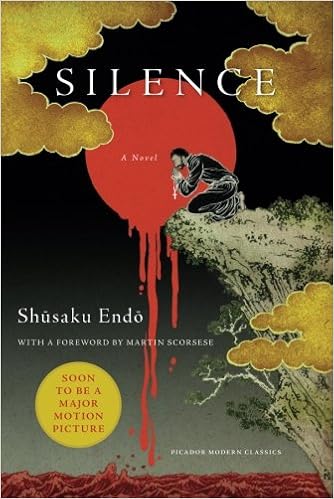
It’s a hard read.  Give it to a priest.  Scare him.

Posted in "How To..." - Practical Notes, Liturgy Science Theatre 3000 | Tagged , , ,
6 Comments

Did Canadian Bishops “sacramentalize” direct killing, euthanasia, assisted suicide?

Did you hear that the Bishops of the Atlantic region of Canada, the Atlantic Episcopal Assembly (Archdioceses and Dioceses of Antigonish, Bathurst, Charlottetown, Corner Brook and Labrador, Edmundston, Grand Falls, Halifax, Moncton, Saint John (NB), St. John’s and Yarmouth) veered towards sacramentalizing euthanasia?

They insinuate in a pastoral letter that people who intend to commit the mortal sin of killing themselves with the help of a medical doctor can be given the “last rites”, Sacrament of Anointing. They adopt the vague but prevalent language of “accompanying”.

My emphases and comments:

[…]

In the pastoral care of those who are contemplating medical assistance in dying, [assisted suicide… euthanasia… objectively a grave sin… one of those moral absolutes that are so under fire for the last few years…] we must remember that the purpose of pastoral care is to communicate the compassion of Christ, His healing love and His mercy. [mercy… at the expense of truth?] Furthermore, we must take into account the suffering person’s emotional, family and faith context when responding to their specific requests for the reception of the Sacrament of Penance and the Sacrament of the Anointing of the Sick, the reception of Holy Communion and the celebration of a Christian Funeral.

The Sacrament of Penance is for the forgiveness of past sins, not the ones that have yet to be committed, and yet [Did you hear the slight whoosh as the door opened?] the Catechism reminds us that by ways known to God alone, God can provide the opportunity for salutary repentance (CCC, no. 2283). The Sacrament of the Anointing of the Sick is for strengthening and accompanying [?] someone in a vulnerable and suffering state. It presupposes one’s desire to follow Christ even in his passion, suffering and death; it is an expression of trust and dependence on God in difficult circumstances (CCC, no. 1520-3). The reception of Holy Communion as one approaches the end of this life [The title of this letter is: “A Pastoral Reflection on Medical Assistance in Dying”.  It is not about just anyone who is dying.] can assist a person in growing in their union with Christ. This last Communion, called Viaticum, has a particular significance and importance as the seed of eternal life and the power of resurrection (CCC, no. 1524).  [Viaticum for those contemplating death by doctor. Riiiiight.  How about the Apostolic Benediction?]

As for the Church’s funeral rites, there are a number of possibilities available. However, in discerning the type of celebration [‘Cause that’s what funerals are for, eh?] most pastorally appropriate to the particular situation, there should always be dialogue with the persons concerned which is caring, sensitive and open. The decree of promulgation of the Order of Funerals states that: “By means of the funeral rites it has been the practice of the Church, as a tender mother, not simply to commend the dead to God but also to raise high the hope of its children and give witness to its own faith in the future resurrection of the baptized with Christ” (Prot. No. 720/69). As people of faith, and ministers of God’s grace, we are called to entrust everyone, whatever their decisions may be, to the mercy of God. To one and all we wish to say that the pastoral care of souls cannot be reduced to norms for the reception of the sacraments or the celebration of funeral rites. Persons, and their families, who may be considering euthanasia or assisted suicide and who request the ministry of the Church need to be accompanied with dialogue and compassionate prayerful support. The fruit of such a pastoral encounter will shed light on complex pastoral situations and will indicate the most appropriate action to be taken including whether or not the celebration of sacraments is proper.

[…]

It is inconceivable to me that such a letter would have gotten past the rest of the Canadian Conference, or the Nuncio, or the CDF, or for that matter the guy who runs the gas station at the corner of Faith St. and Charity and who goes to Mass on Sundays.  What were they thinking?

The Sacrament of Anointing, a “sacrament of the living”, is to be, if the person is compos sui, received in the state of grace.  

Remember that conditions for mortal sin include 1) grave matter, 2) full knowledge, and 3) deliberate consent.

With the full understanding that there are different grades and gravities of mental illness which can be tricky to account for, if a person who is sui compos plans suicide in a concrete way, that person is probably not in the state of grace.  If you are entirely mistaken about the nature of an act you probably aren’t guilty for the sin committed.  If you are truly nuts or so emotionally distraught or fearful or under compulsion from outside that you can’t make proper choices like a human being, you are not culpable for objectively sinful acts.  Moreover, if someone who is sui compos doesn’t have a firm purpose of amendment when making a confession (“Father, I thought about suicide, but I changed my mind. I won’t think about that sin again.”) she cannot be absolved and she cannot receive the Sacrament of Anointing either.  It is entirely irresponsible of a priest about to administer Last Rites to a person who is conscious and sui compos not to provide also the opportunity for sacramental confession even in the briefest way permissible.  The only way a priest should absolve a person is if he is convinced that the person is truly sorry for sins, even if it is impossible for the person to express sorrow clearly in words.  If the person contemplating suicide isn’t sorry for contemplating suicide and isn’t able to say that she won’t do it any more, the person can’t be absolved.

BTW… see Sam Gregg’s piece on moral absolutes over at CWR.

At First Things there is piece about this horrid situation.

It’s an appalling document. In a pastoral letter, ten Catholic Bishops of the Canadian Atlantic Episcopal Assembly shirk their responsibilities as teachers of the faith. The issue is doctor-assisted suicide, which is now legal in Canada.

Readers can’t know to what degree the document’s apparent rubber-stamping of the culture of death was intended by its authors, or to what degree it simply follows from sloppy thinking and careless rhetoric. [True. It could be more that than a “rubber stamp” of the culture of death.] But the bishops’ failure to condemn suicide in plain terms is unmistakable. What’s more, the bishops adopt the circumlocutions of the Canadian government, which instituted the new suicide regime, along with the antinomian clichés of the current pontificate. One is left with the strong impression that the bishops do not merely wish to avoid condemning the practice of doctor-assisted suicide. They want the Church to accommodate herself, smoothing over any conflicts between Catholic teaching and the culture of death.

The bishops adopt the euphemism “medical assistance in dying,” pronouncing it “a highly complex and intensely emotional issue which profoundly affects us all.” It’s so complex, indeed, that we’re to practice “the art of accompaniment” that Pope Francis recommends, which means “prudence, understanding, patience and docility to the Spirit,” and not “judgments about people’s responsibility and culpability.” Suicide? Who am I to judge?

The worst aspect of this document, however, comes in the way the bishops tacitly sanction a grotesque misuse of the sacraments. They observe that a priest administers the Sacrament of the Anointing of the Sick “for strengthening and accompanying someone in a vulnerable and suffering state.” Earlier in the document, the bishops have been keen to stipulate that a person asking for a doctor to end his life is not to be judged culpable, but instead “accompanied” as someone who is “suffering.” The implication is straightforward, even if not explicitly stated: It is permissible, perhaps even desirable, for a priest to anoint a Catholic who is about to receive a deliberate, self-willed, death-dealing dose of medication.

[…]

There are 9 ways to participate in the sin of another person. You can be guilty of the sin committed by another

  1. By counsel (to give advice, one’s opinion or instructions.)
  2. By command (to demand, to order, such as in the military.)
  3. By consent (to give permission, to approve, to agree to.)
  4. By provocation (to dare.)
  5. By praise or flattery (to cheer, to applaud, to commend.)
  6. By concealment (to hide the action, to cover-up.)
  7. By partaking (to take part, to participate.)
  8. By silence (by playing dumb, by remaining quiet.)
  9. By defense of the ill done (to justify, to argue in favor.)

One can argue about how directly you must be involved to be guilty of the sin and also to incur the censure.

Can. 1397 One who commits murder, or who by force or by fraud abducts, imprisons, mutilates or gravely wounds a person, is to be punished, according to the gravity of the offence, with the deprivations and prohibitions mentioned in can. 1336. In the case of the murder of one of those persons mentioned in can. 1370, the offender is punished with the penalties there prescribed.

It’s the age of ambiguity.  Let’s make the whole question of moral absolutes so muddied, so confusing, so shaky that no one really has to struggle against sins and win.  No.  Now the whole concept of a moral absolute has become so obfuscated that people have even less reason NOT to excuse their immoral actions that result from that deadly, but O so human, justification: “I really struggled with this… before I did it.”

These days we are being told through winks and innuendo that a person doesn’t have to have a firm purpose of amendment in regard to sin.  No, no!  You can continue to sin and the Church will accompany you, mercifully.  A word now going out of style in Italian, “accompagnatrice”, means, well…. “escort”, in the bad sense.  So, a priest who did that – who set aside the necessity of a firm purpose of amendment in regard to mortal sin – would be a … what?

I, for one, still believe in Hell.  I won’t go down that sidewalk because I don’t want to go to Hell for leading people astray.  That’s exactly what priests risk if they lead people astray from the truth and Catholic teaching.

The moderation queue is ON.

Posted in Liberals, Our Catholic Identity, Pò sì jiù, You must be joking! | Tagged , , , , , , ,
32 Comments