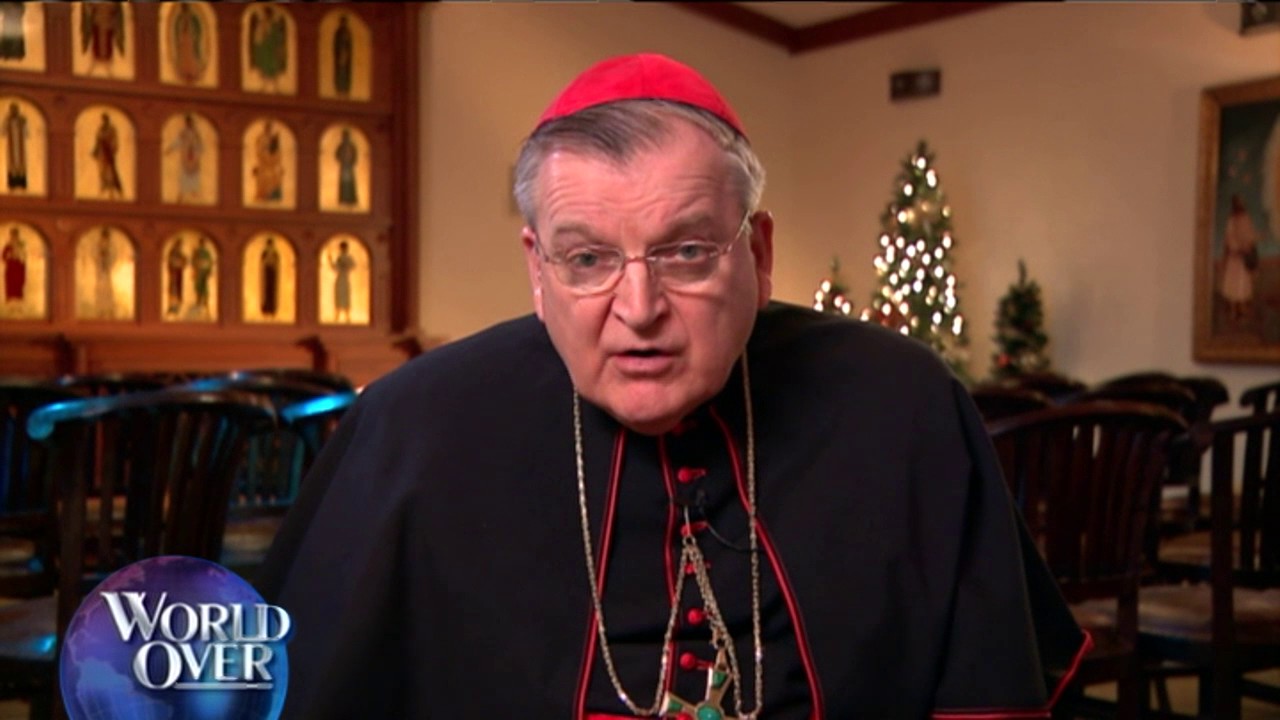
Video interview with Card. Burke about the Five Dubia stemming from ‘Amoris laetitia’

Raymond Arroyo interviewed His Eminence Raymond Card. Burke about the “state of the question” concerning The Questions.  Card. Burke is one of the Four Cardinals who submitted Five Dubia about Ch. 8 of Amoris laetitia to His Holiness Pope Francis.

The letter of The Four is humble and respectful, but clear. They clearly did not want to be adversarial in tone. The Four merely want some clarity about “grave disorientation and great confusion” which has been provoked by now infamous elements of Amoris laetitia.

YouTube thumbnailYouTube icon

The Five Dubia:

1. It is asked whether, following the affirmations of “Amoris Laetitia” (nn. 300-305), it has now become possible to grant absolution in the Sacrament of Penance and thus to admit to Holy Communion a person who, while bound by a valid marital bond, lives together with a different person “more uxorio” (in a marital way) without fulfilling the conditions provided for by “Familiaris Consortio” n. 84 and subsequently reaffirmed by “Reconciliatio et Paenitentia” n. 34 and “Sacramentum Caritatis” n. 29. Can the expression “in certain cases” found in note 351 (n. 305) of the exhortation “Amoris Laetitia” be applied to divorced persons who are in a new union and who continue to live “more uxorio”?

2. After the publication of the Post-synodal Apostolic Exhortation “Amoris Laetitia” (cf. n. 304), does one still need to regard as valid the teaching of St. John Paul II’s Encyclical “Veritatis Splendor” n. 79, based on Sacred Scripture and on the Tradition of the Church, on the existence of absolute moral norms that prohibit intrinsically evil acts and that are binding without exceptions?

3. After “Amoris Laetitia” (n. 301) is it still possible to affirm that a person who habitually lives in contradiction to a commandment of God’s law, as for instance the one that prohibits adultery (cf. Mt 19:3-9), finds him or herself in an objective situation of grave habitual sin (cf. Pontifical Council for Legislative Texts, Declaration, June 24, 2000)?

4. After the affirmations of “Amoris Laetitia” (n. 302) on “circumstances which mitigate moral responsibility,” does one still need to regard as valid the teaching of St. John Paul II’s Encyclical “Veritatis Splendor” n. 81, based on Sacred Scripture and on the Tradition of the Church, according to which “circumstances or intentions can never transform an act intrinsically evil by virtue of its object into an act ‘subjectively’ good or defensible as a choice”?

5. After “Amoris Laetitia” (n. 303) does one still need to regard as valid the teaching of St. John Paul II’s encyclical “Veritatis Splendor” n. 56, based on Sacred Scripture and on the Tradition of the Church, that excludes a creative interpretation of the role of conscience and that emphasizes that conscience can never be authorized to legitimate exceptions to absolute moral norms that prohibit intrinsically evil acts by virtue of their object?


Posted in The Drill | Tagged , , ,
13 Comments

A bishop’s suggestions to families for a holy Advent and Christmastide

bp morlinoThe other days His Excellency Most Reverend Robert C. Morlino, the Extraordinary Ordinary, Bishop of Madison held one of his regular, usually monthly, “staff catechesis” meetings.  He is also generous in forthrightly answering questions about the topic he chooses to address and about any hot topics on our minds.

One of the staff asked for his suggestion about how families with young children might prepare well for Christmas.

He proposed that perhaps the home could be filled, as it were, with more silence, which is so lacking in our times.

He also suggested that parents might go over the lyrics of religious Christmas carols with their children.  There is a lot of good and sound theology in religious carols.  Think about it.

I thought that was a  pretty good suggestion which you, the readership with young children at home, might receive with benefit.

Everyone likes good Christmas music, right?
Try…

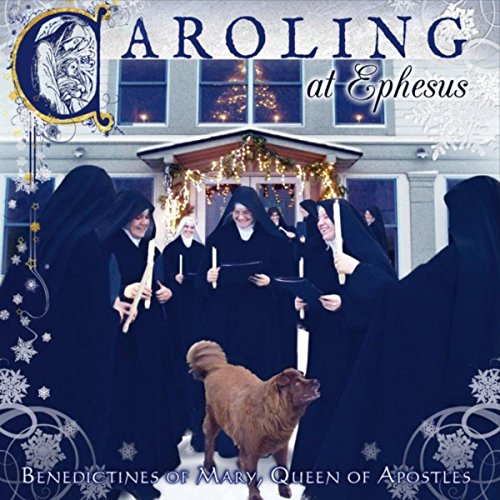
Caroling at Ephesus!

US HERE – UK HERE

St. Paul’s Boys Choir, Christ at Harvard Square

US HERE – UK HERE

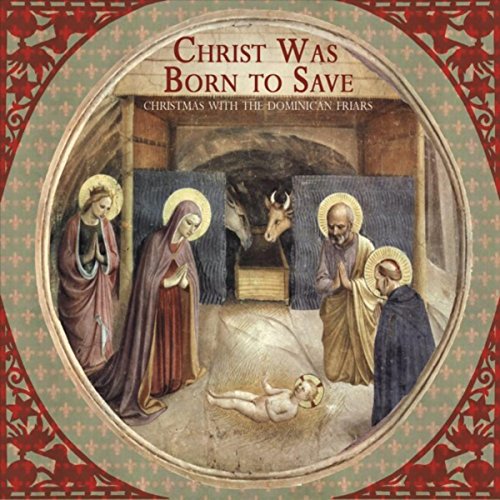
Christ Was Born To Save by the Dominican Friars at the Dominican House of Studies

US HERE – UK HERE

Posted in "How To..." - Practical Notes, One Man & One Woman, Our Catholic Identity | Tagged , , ,
1 Comment

Peters on Popes and Heresy, Personal and Public

Famed canonist Ed Peters today at his exceptional blog In The Light Of The Law has a piece that you will want to peruse.

He doesn’t have an open combox, but I do. Read, re-read, pause to think, think again, discuss.

My emphases and comments.

A canonical primer on popes and heresy

No one in a position of ecclesial responsibility—not the Four Cardinals posing dubia, not Grisez & Finnis cautioning about misuses, and not the 45 Catholics appealing to the College, among others—has, despite the bizarre accusations made about some of them, accused Pope Francis of being a heretic or of teaching heresy. While many are concerned for the clarity of various Church teachings in the wake of some of Francis’ writings and comments, and while some of these concerns do involve matters of faith and morals, [NB] no responsible voice in the Church has, I repeat, accused Pope Francis of holding or teaching heresy.

That’s good, because the stakes in regard to papal heresy are quite high. Those flirting with such suspicions or engaging in such ruminations should be very clear about what is at issue.

First. Heresy is, and only is, “the obstinate denial or obstinate doubt after the reception of baptism of some truth that must be believed by divine and catholic faith.” 1983 CIC 751. Heresy is not, [NB – canonically] therefore, say, the failure to defend effectively specific truths of Revelation (though that might be negligence per Canon 1389); moreover, privately-held heretical views, even if they are leading to certain observable actions, are not in themselves actionable under law (Canon 1330).

US HERE – UK HERE

Second. We can dismiss as impossible—indeed, as unthinkable thanks to the protection of the Holy Spirit—any scenario whereby a pope commits the Church to a heresy. See Ott, Fundamentals (1957) 287 or Catholic Answers tract “Papal Infallibility” (2004). However grave might be the consequences for a pope falling into heresy, the Church herself cannot fall into heresy at his hands or anyone else’s. Deo gratias.

Those two points being understood, the canonical tradition yet recognizes (and history suggests) that a given pope could fall into personal heresy and that he might even promote such heresy publicly, which brings us to some thoughts on those possibilities.

[…]

There is quite a bit more after this, so don’t think that you have it all without going over there.

Fr. Z kudos for posting this.

Posted in Canon Law, Fr. Z KUDOS, Francis, The Drill | Tagged , , , , ,
18 Comments

Tradition = More Fun

The only thing that would make this better is if they also were wearing saturnos.  HERE

I received this from a reader…

The annual firing of the “potato cannon” with the men of Our Lady of Guadalupe Seminary in Denton, Nebraska! [FSSP] With Bishop James D Conley, The Ninth Bishop of the Catholic Diocese of Lincoln.

16_12_16_potato_cannon_01 16_12_16_potato_cannon_02


Posted in Just Too Cool, Lighter fare | Tagged , ,
14 Comments

“Down with Rigid Narcissistic Pelagian Prelaticism!”

Fr. John Hunwicke of the Ordinariate of Our Lady of Walsingham has of late been applying his customary perspicience to matters current over at his fine blog Mutual Enrichment.  

Today he tackles the wifty notions of the libs who yock “Clericalism!” at traditional Catholics at every turn.

Have a look… I’ll cut part out to force you to read over there:

Clericalism? Are the Traddies guilty?

The medieval historian John Bossy used to point out how dominant the laity were in the Church life of the High Middle Ages. Parishes were corporately structured, and dominated by powerful lay Guilds led by pairs of Wardens; for their religious needs they hired and paid clergy, just as, doubtless, for their footwear they employed and remunerated cobblers. Sometimes you can still see the guildswomen or guildsmen pictorially immortalised at the bottoms of the windows they put into their Parish Churches, as at S Neots in Cornwall. There were sacramental things that only the clergy, of course, could do; but it was not the clergy who called the tune. (‘Clericalism’, Dix loved to suggest, is a post-Reformation Presbyterian and Calvinist phenomenon.)

I hope no-one will be offended if I point out that things are rather like the High Middle Ages in Traddiland. [NB] In my experience, the Traditionalist enterprise is forcefully energised and led by well-qualified and determined lay men and women, often if not usually young. For their liturgical needs, they call upon clergy whom they know to be idonei. They are very polite and courteous and grateful and generous; but it always seems clear to me who is in charge. To avoid all misunderstanding, I must make clear that I think this de facto system works extremely well and I am very happy indeed when I am allowed to be part of it. I am not being snide … quite the opposite … and if anybody suggests I am ‘complaining’ I shall strangle them with a printed copy of the Novus Ordo.  [An excellent use for the Novus Ordo that I hadn’t thought of.  For my part, in our Mass Society here in Madison (please make a tax deductible donation TODAY – HERE), of which I am the “prez”, I point in helpful directions but the fantastic lay people get things done.  They have built good relationship with the clergy here and it is a delight to work with them.  They get it.]

It is an amusing paradox that the disorders in the post-Conciliar Church should have led to such a (please forgive my use of this word) empowerment of the traddy Laity. By empowerment I do not refer to anything like the activities of the infantilised laity of the ‘Mainstream Church’. You all know the sort of “lay involvement” that happens there … just before Holy Communion, the celebrant breaks into the sugary mood-music to call out “We’re short of a Eucharistic Minister … can somebody else please come up?” And there is some gruesome little committee which meets weekly with the pp to “arrange the liturgy”. No; I am talking about laity empowered in the sense of possessing adult competence and grown-up self-confidence.  [This is the worst sort of clericalism there is: Father “Just Call Me Bob” smugly allows lays people to do what he can do, in the guise of “empowering” them.  As if they aren’t good enough on their own as baptized Catholics.  No, Father has to give them a veneer of his clerical pulchritude.  Disgusting.]

[… the part I cut to tease you …]

Catholic Traditionalist laity, above all, do not seem to be nearly as scared of bishops as so many Catholic clergy are, the poor trembly things.

Failure to tremble at the knees at the very thought of “The Bishop” or “The Archbishop” or “The Cardinal” is, of course, a healthy feature also of the Anglican Patrimony and so it flourishes also in the Ordinariates. It needs to spread. Down with Clericalism! As the Holy Father would (and probably does) say, Down with Rigid Narcissistic Pelagian Prelaticism!

Do I hear an “Amen!”?

Posted in Mail from priests | Tagged
24 Comments

ASK FATHER: The 100th anniversary of Fatima

16_05_13_OLFatima_200From a priest…

QUAERITUR:

The 100th anniversary of Fatima: I don’t really know anything about the apparition or the message.  I am careful with what I read.  Especially on this topic things can derail into the realm of the kooky fairly quickly.  Can you suggest something for me to read on Fatima so to understand the significance of the 100th anniversary?

This is the ASK FATHER Question Box, not the Ask Everyone Box.  However, this time, I will open up the box for your suggestions.  I know that the readership here is widely read.

I have the moderation queue ON.  I am not going to let everything through.  Pithy, concise, succinct comments which are both short and sweet are to be welcomed.

Provide some titles of books about Fatima if you wish and I’ll have a look.  This could be good for many people.

If someone wants to take a shot at looking at the significance of 100 years and what is going on in the world… have at.  But remember…Pithy, concise, succinct as well as both short and sweet.

Posted in "How To..." - Practical Notes, ASK FATHER Question Box, Mail from priests, Our Solitary Boast | Tagged , ,
40 Comments

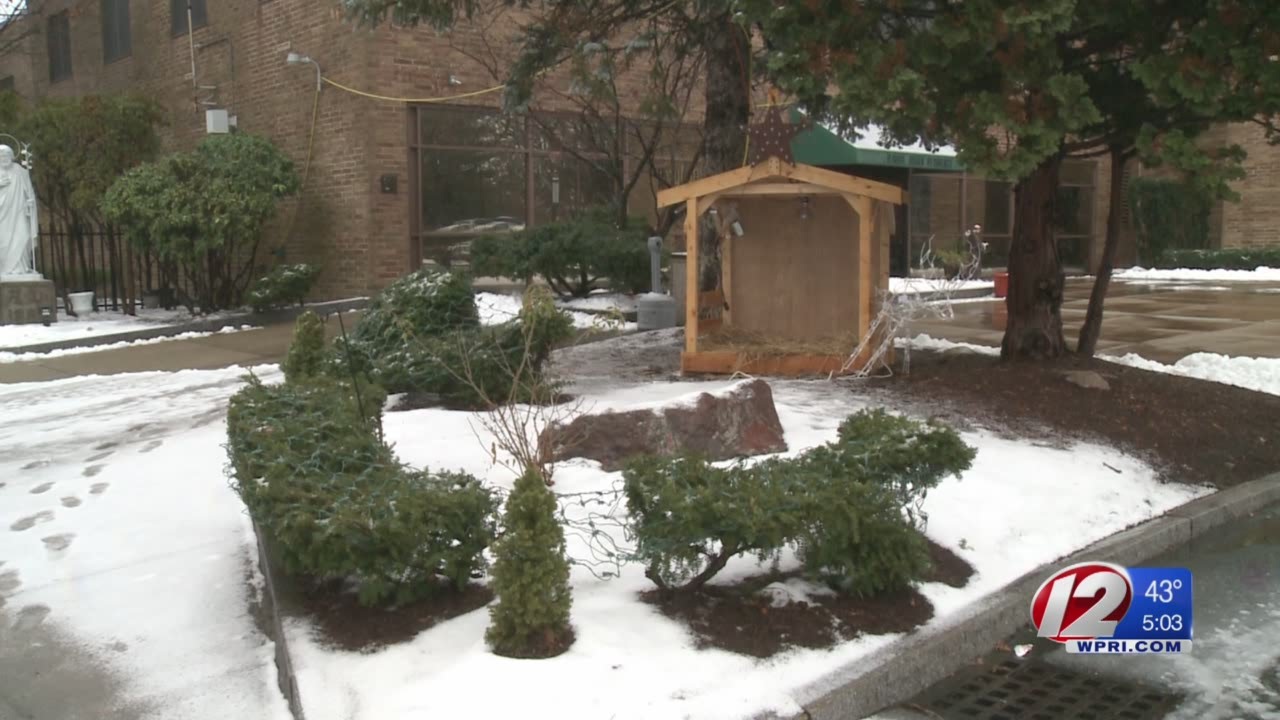
Nativity statues stolen from Little Sisters of the Poor elder care facility

Here is something truly vile.

YouTube thumbnailYouTube icon

Pray to their Guardian Angels.

Posted in SESSIUNCULA | Tagged
8 Comments

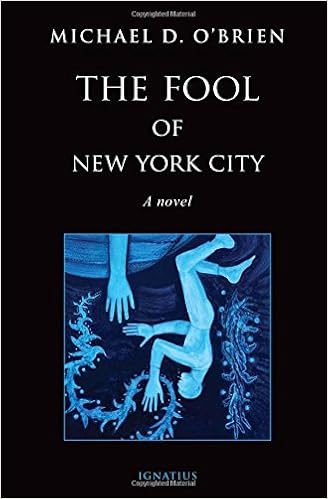
Michael D. O’Brien’s new book: The Fool of New York City

Speaking of Michael D. O’Brien, I just finished reading his newest offering…

The Fool of New York City

US HERE – UK HERE

This could be a good Christmas gift.

No, you tender lib snowflakes out there.  It’s not about Donald Trump.

It is quite touching.  I don’t like spoilers, so I won’t say much about it.  What I can say is that it is about identity and rediscovery.  There is a wounded soul and an unlikely redemptive figure.  It has all the usual poetry and mystic touches for which O’Brien’s books are known.

Another great thing about this new book: It’s only 280 pages long!  For O’Brien that’s like a haiku.  Many of his books could serve as cornerstones of buildings.  Did he listen to his editor?  Is he experimenting with the genre of (Relatively) Short Story?  Whatever the reason, he moves along at a good pace in this one.

Posted in The Campus Telephone Pole | Tagged
22 Comments

It is as if the Church simply caved in before the world and its Prince.

Around the time of the Second Vatican Council some of our sound practices were simply dropped, as if they were no longer needed.  For example, the Leonine Prayers after Low Mass which included the Prayer to St. Michael the Archangel.

QUAERITUR: Does anyone believe that the Devil stopped attacking in the 60’s?

My recollection of the 60’s suggests that the attacks redoubled and with great effect.

Consider how the reformers of the rite of Baptism, approved by Paul VI, dropped the exorcisms despite the teaching of the Church about the Enemy and  the effects of Original Sin.  Consider how the orations of Holy Mass in the Roman Rite were stripped of their clear references to sin, expiation, propitiation, judgment.

It is as if the Church simply caved in before the world and its Prince.

“But Father! But Father!”, you snivelers yammer from behind your Fishwrap, “The Council was lead by the spirit!  The spirit of the Council!  Everything is so much better now! It’s undeniable.  But yoooooou… you and your … your… GAH!  Vatican II didn’t go nearly FAR ENOUGH!   Küng says so!  But yooooou… you can’t see that because you don’t have the spirit of the Council?  And she doesn’t like you at all!  Why?  WHY?!?  Because YOU HATE VATICAN II!”

I love Vatican II so much that I won’t lie about it.

Today at the ever-more-useful Crisis there is a great piece which urges the return to the use of exorcism prayers and other devotions to fight the evil of the Enemy of our souls.

Here is the front part, but be sure to go there to read the whole thing. My emphases and comments.

A Call to Restore Prayers of Exorcism
R. JARED STAUDT

In 1886, Pope Leo XIII added the Prayer to St. Michael the Archangel to the prayers he had already ordered to be said after the Low Mass in 1884. The origin of the prayer is subject to much speculation, particularly about whether or not Leo received a locution with the voices of Jesus and the devil. Regardless of the exact details of this alleged event, which some deny for being unsubstantiated, there are some historical testimonies to the fact that a mystical experience moved the Pope to compose the prayer and to have it said daily throughout the world.  [I believe the accounts about Leo and the locution.]

On June 29, 1972, Pope Bl. Paul VI, who stopped the recitation of the prayer, seemed to confirm an element’s of Leo’s prophecy, stating in his homily in St. Peter’s Basilica that “from some fissure the smoke of Satan has entered the temple of God.” [One source close to Paul VI thought that by the phrase the Pope mean liturgical abuses.  HERE] This built upon Leo’s sense that the devil would have extraordinary influence in the twentieth century, including within the Church. [Which is clearly the state of affairs now.] Paul continued his reflection on the influence of the devil on November 15 of that same year in a general audience entitled “Deliver Us from Evil,” arguing that “one of the major needs [of the Church] is defense from that evil we call the Devil.” Pope Paul, referencing Ephesians 6:11-12, argued that we need to withstand the evil one with the armor of God.

Was a large part of the smoke of Satan entering the Church our denial of his influence and a laying down of our spiritual arms to confront him? [Was it Pius XII who said that the Devil’s greatest victory was getting us to deny his existence?] For too long we have denied or overlooked the influence of the devil on our lives and the Church. Therefore, we have grown lax in seeking the Lord’s power to overcome his opposition. Praying for this deliverance is central to Christian prayer, as we see even at the end of the Our Father, which has been translated, “deliver us from the evil one.” After being tempted, Christ commanded the devil, “away with you Satan!” and cast out many demons in his ministry. Our Lord took spiritual warfare seriously and recognized our need for deliverance, as he brought “freedom to captives.” He also gave power and authority to his disciples to exorcise: “And these signs will accompany those who believe: by using my name they will cast out demons” (Mk 16:17; see Luke 9:1). This power has been overlooked of late, as belief in the influence of the evil one now appears superstitious to many.

Take the example of exorcism prayer in the Rite of Baptism as part of the liturgical reforms following the Second Vatican Council, promulgated in 1969 by Paul VI. It is fascinating that the Associated Press quoted Bl. Paul as questioning the revised prayer in the audience I referenced above (though these lines have been removed from the official text). The AP article reads: “In his speech. Pope Paul appeared to regret that in the new rite of baptism, which he approved three years ago, less emphasis is given to exorcism. This is the part in which the priest orders Satan to get out of the new Christian. ‘I don’t know whether this is realistic,’ he said of the revised exorcism.” In the audience, Paul recognized both the increased influence on the devil and that the Church had softened her response.  [Paul also seemed to lament the loss of Latin in our liturgical worship even as he allowed it to be expunged.  Incredible.]

[…]

This world has its Prince.

We are in a constant state of spiritual warfare.  The Enemy neither lays down arms nor ceases the attack just because we idiots stop defending ourselves.  How stupid is that, anyway?

For the umpteenth time, no initiative we undertake in the Church will succeed without a revitalization of our sacred liturgical worship.  We must reclaim what has been lost and reintegrate it into our regular practices and daily lives.  We need what was won for us and handed down through the centuries of our forebears’ experience.  We need a wide-spread renewal of the older, traditional Roman Rite.

Fathers!  Use the older Rituale Romanum.  Learn the older, traditional Mass.  Say it often.  Turn those altars back towards the Lord.  Don’t be afraid.  Reinstate devotions such as novenas and Exposition with Benediction.  Bring the Church’s language Latin back into your liturgical lives.  Reclaim your patrimony, your identity.

Posted in ¡Hagan lío!, "But Father! But Father!", Be The Maquis, Hard-Identity Catholicism, Our Catholic Identity, Si vis pacem para bellum!, The Coming Storm, The Drill, Vatican II | Tagged , , , ,
29 Comments

Our Rich Traditions of Ember Wednesday of Advent

Do you remember the little mnemonic poems?  “Lenty, Penty, Crucy, Lucy”, or else

Fasting days and Emberings be
Lent, Whitsun, Holyrood, and Lucie.

The Wednesday, Friday and Saturday after St. Lucy are the Advent Ember Days.

In the old Julian calendar before the Gregorian reform, 13 December was the darkest day of the year.  Hence, St. Lucy, whose name is from the Latin lux… “light”, reminds us who dwell in the still darkening Northern Hemisphere that our days will soon be getting longer again. Lucy is depicted in art with a lantern, or with a crown of candles, or with her own eyes on a platter. Some accounts have Lucy slain by having her throat thrust through with sword.  Other accounts say that, to protect her virginity, she disfigured herself by cutting her own eyes out and sending them to her suitor, a plot which most likely discouraged him.  St. Lucy is therefore the patroness of sight.

St. Lucy shows up in important moments in Dante’s great Divine Comedy.  She is first in the Inferno.  It is Lucy who asks Beatrice to help Dante.  In Purgatory the eagle that bears Dante upward in a dream is actually Lucy who is bearing him to the gate of Purgatory.  Eagles, of course, are “eagle-eyed”.  In the Paradiso she is placed directly across from Adam in the Heaven of the Rose.  Lucy can gaze directly at God.  She was something of a patroness for Dante.  He was devoted to her probably because, as we glean from various works, he may have had a problem not just with his eyes but also struggling with sins of the eyes.

The so-called “Golden Mass”, the Missa Aurea, is celebrated today.  The illuminated missals and sacramentaries of centuries past presented the Gospel, or at least its initial capital letters, in gold, whence our nickname Missa Aurea.  There is a strong Marian overtone to today’s Mass formulary.  The Roman Station today is St. Mary Major.  The Gospel is the Annunciation.  The Gospel pericope begins Missus est angelus Gabriel.  It was once celebrated with a solemnity nearly approaching a feast day.  Thus, Missa Aurea also refers to little dramas in medieval times in which the Annunciation was acted out.  It is thus not just “golden Mass” but “the golden sending“, which refers to the moment in which Our Lord becomes incarnate in the womb of the Virgin.  Missa Aurea is used in the terminology of art history for paintings of the Annunciation, which often contain dramatic elements associated with the tableaux struck in the dramatic presentations of the mystery.  Doves would be lowered and an old man would be placed in a loft wearing an alb and cope.  Angels would be vested in dalmatics.  Giotto’s frescoes in the 13th c. Arena or Scrovegni Chapel in Padua echo this tradition as do many paintings of the Annunciation.

Scrovegni Chapel Giotto Annunciation

And, since today is an Ember Day, we who recite the Office according to the Roman Breviary must during Lauds also say the Weekday Intercessions, which don’t come up on all weekdays.

Weekday Intercessions
Lord, have mercy upon us. Christ, have mercy upon us. Lord, have mercy upon us.
Our Father, who art in heaven, Hallowed be thy name. Thy kingdom come. Thy will be done on earth as it is in heaven. Give us this day our daily bread. And forgive us our trespasses, as we forgive those who trespass against us.
. And lead us not into temptation:
. But deliver us from evil.
. I said: Lord, be merciful unto me:
. Heal my soul, for I have sinned against thee.
. Turn thee again, O Lord; how long will it be?
. And be gracious unto thy servants.
. Let thy mercy, O Lord, be upon us.
. As we have hoped in thee.
. Let thy priests be clothed with justice:
. And may thy saints rejoice.
. Let us pray for our most blessed Pope N.
. The Lord preserve him and give him life, and make him blessed upon the earth: and deliver him not up to the will of his enemies.
. Let us pray for our bishop N.
. May he stand firm and care for us in the strength of the Lord, in the might of thy name.
In Rome, the preceding Versicle and its Response are omitted. Elsewhere, the name of the local Ordinary is inserted at the letter N. If the Holy See or the See of the local Bishop is vacant, the appropriate . and ., either or both as the case may be, is omitted.
. O Lord, save our leaders.
. And mercifully hear us when we call upon thee.
. O Lord, save thy people, and bless thine inheritance:
. Govern them and lift them up for eve.
. Remember thy congregation,
. Which thou hast possessed from the beginning.
. Let peace be in thy strength.
. And abundance in thy towers.
. Let us pray for our benefactors.
. O Lord, for thy name’s sake, deign to reward with eternal life all who do us good. Amen.
. Let us pray for the faithful departed.
. Eternal rest grant unto them, O Lord, and let perpetual light shine upon them.
. May they rest in peace.
. Amen.
. Let us pray for our absent brothers.
. Save thy servants, O God, who put their trust in thee.
. Let us pray for the afflicted and imprisoned.
. Deliver them, God of Israel, from all their tribulations.
. O Lord, send them help from thy sanctuary.
. And defend them out of Sion.
. Turn us again, O Lord, God of Hosts.
. Show us thy face, and we shall be whole.
. Arise, O Christ, and help us.
. And redeem us for thy name’s sake.
. O Lord, hear my praye.
. And let my cry come unto thee.
Prayer {from the Proper of the season}
skip second ‘O Lord, hear my prayer’
Let us pray.
Grant, we beseech thee, Almighty God, that the solemn Feast of our redemption, which is now at hand, may both help us in the life which now is, and further us toward the attaining of thine eternal joy in that which is to come.
Through Jesus Christ, thy Son our Lord, Who liveth and reigneth with thee, in the unity of the Holy Ghost, ever one God, world without end.
. Amen.

Where is all this in the Novus Ordo?

(Trick question.)

Posted in Hard-Identity Catholicism, Liturgy Science Theatre 3000, Saints: Stories & Symbols | Tagged , , , , , ,
14 Comments