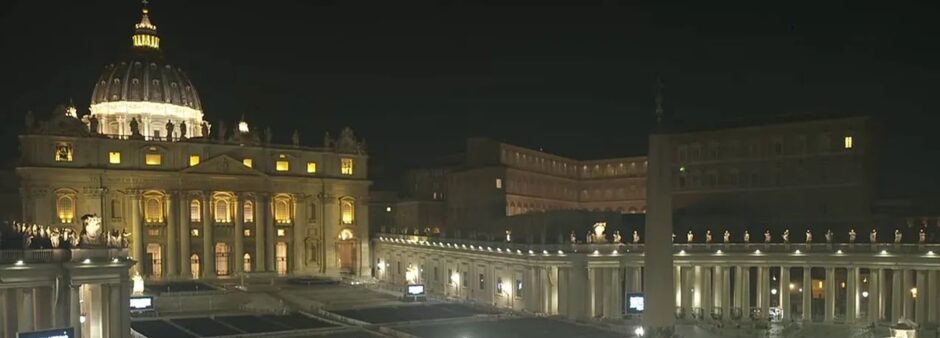
PARIS: Notre Dame gets new bells for her 850th birthday – video

We Catholics love our bells.  Bells are, traditionally, not just blessed but “baptized”.  They are given names as well.

From The History Blog:

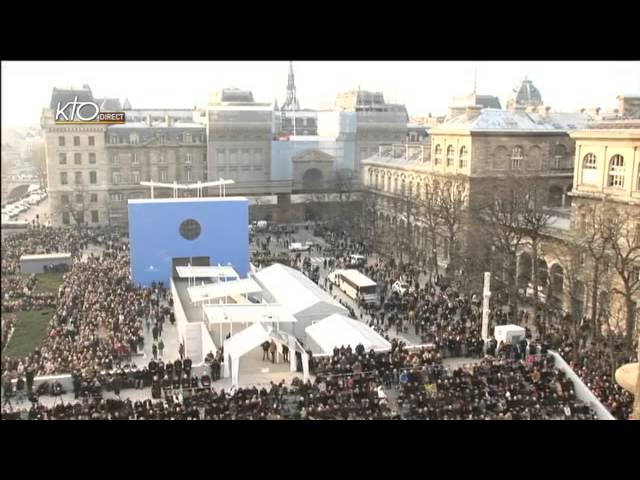
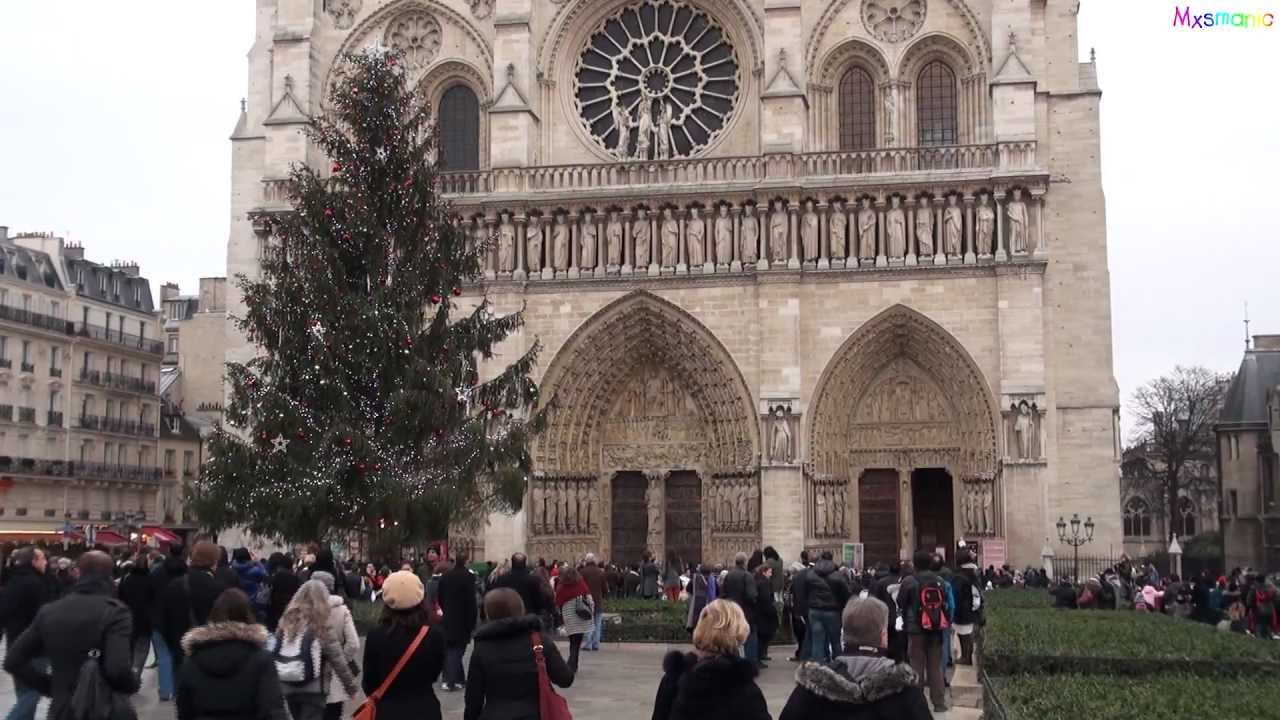
Notre Dame gets new bells for her 850th birthday

Notre Dame de Paris, the Gothic cathedral that is one of the most famous churches in the world, turns 850 years old this year and has gotten a new set of nine bells for a birthday present. The new bells range in size from 767 kilos (1691 lbs) to 1.91 tons. They were blessed in a ceremony at the cathedral on February 2nd (see this YouTube for the full ceremony; the top comment lists the times they were rung), but since they were lined up in the nave, their rings were only heard individually when their clappers were struck against the sides by hand. On Palm Sunday, the new bells rang together with the one surviving old one in all their glory for the first time.

Despite its glamour and celebrity, Notre Dame has been saddled with inferior bells since the French Revolution took down the cathedral’s 20 bells in 1791 and 1792, melted 19 of them down to make cannon. Only one survived the Terror: Emmanuel, the great 13-ton bourdon (the lowest and largest of the bells) in the South Tower. It was first installed in 1685 and its rich deep notes marked the hours of the day and the great events of French history like the coronation of kings and, since Napoleon had it rehung in 1802, the liberation of Paris on August 24th, 1944.
[…]

Read the rest there.

YouTube thumbnailYouTube icon

YouTube thumbnailYouTube icon

A link to the site of Notre-Dame de Paris.

Posted in Just Too Cool | Tagged ,
12 Comments

Robert Spencer on Pope Francis and “dialogue” with Islam

Pope Francis has openly expressed desire for dialogue with Islam. HERE.

Here is a thought provoking piece from Robert Spencer about dialogue with Islam:

Pope Francis: “Intensify” Catholic “dialogue” with Islam

I am all for dialogue between Muslims and Christians when it is honest and not based on false pretenses. [That can be said for all interreligious dialogue and ecumenical dialogue.] There doesn’t seem to be any use to dialogue that ignores difficulties and points of disagreement rather than confronting them. They won’t go away if ignored. I discuss the genuine prospects for dialogue and its pitfalls at length in my book Not Peace But A Sword, which will be published next week by Catholic Answers.  [I’m putting that on my wish list.]

click

One thing that must be recognized is that for many Muslim spokesmen and leaders, dialogue with adherents of other religions is simply a proselytizing mechanism designed to convert the “dialogue” partner to Islam, as the Muslim Brotherhood theorist Sayyid Qutb explained: “The chasm between Islam and Jahiliyyah [the society of unbelievers] is great, and a bridge is not to be built across it so that the people on the two sides may mix with each other, but only so that the people of Jahiliyyah may come over to Islam.” [Of course, from a Catholic perspective, do we not want to convert the whole world?]

In line with this, 138 Muslim scholars wrote to Pope Benedict XVI, inviting him to dialogue. The title of the document they sent to him was A Common Word Between Us and You. [NB] Reading the entire Qur’anic verse from which the phrase “a common word between us and you” was taken makes the Common Word initiative’s agenda clear: “Say: ‘People of the Book! Come now to a word common between us and you, that we serve none but God, and that we associate not aught with Him, and do not some of us take others as Lords, apart from God.’ And if they turn their backs, say: ‘Bear witness that we are Muslims’” (3:64). Since Muslims consider the Christian confession of the divinity of Christ to be an unacceptable association of a partner with God, this verse is saying that the “common word” that Muslims and the People of the Book should agree on is that Christians should discard one of the central tenets of their faith and essentially become Muslims. Not a promising basis for an honest and mutually respectful dialogue of equals.

“‘Intensify’ dialogue with Islam: Pope to Roman Catholic Church,” from PTI, March 22 (thanks to Milad):

Vatican City: Pope Francis on Friday called for the Roman Catholic Church to “intensify” its dialogue with Islam, echoing hopes in the Muslim world for better ties with the Vatican during his reign.
“It is important to intensify dialogue among the various religions and I am thinking particularly of dialogue with Islam,” the new pontiff said in an address to foreign ambassadors at the Vatican.
Francis’s predecessor Benedict XVI was seen by some Muslim leaders as hostile to Islam and the change at the top had been welcomed by the 57-member Organisation of Islamic Cooperation and Al-Azhar, Sunni Islam’s highest seat of learning. Ekmeleddin Ihsanoglu, head of the Saudi-based OIC, said earlier this month that he hoped “the relationship between Islam and Christianity will regain its cordiality and sincere friendship”.
Mahmud Azab, adviser for inter-faith affairs to Al-Azhar imam Ahmed al-Tayyeb in Cairo, also told AFP earlier, “As soon as a new policy emerges, we will resume the dialogue with the Vatican“. Al-Azhar broke off ties in 2011 after Benedict called for the protection of Christian minorities following a suicide bombing at a church in Egypt.

So apparently the new policy that Azab wants is for the pope never to criticize the Muslim persecution of Christians. Then we’ll all be great friends — and what’s a few burnt churches and dead bodies when we’re getting on so famously?

Benedict was also heavily criticised early in his reign when he recounted a Byzantine emperor’s description of the Muslim Prophet Mohammed as a warmonger who spread evil teachings.

In his address on Friday, Francis also called for the Church to dialogue more with non-believers — returning to an effort begun during Benedict’s reign amid rising secularism in the Western world.

“It is also important to intensify outreach to non-believers so that the differences which divide and hurt us may never prevail but rather the desire to build true links of friendship,” he said.

True friendship cannot be built on false pretenses.

Posted in Francis, Our Catholic Identity, The Drill, The future and our choices | Tagged , , , ,
101 Comments

ARMENIA: Islamic rebels demand $250,000 for kidnapped Catholic priest

From Public Radio of Armenia:

Rebels demand $250,000 for the kidnapped Armenian Catholic Priest

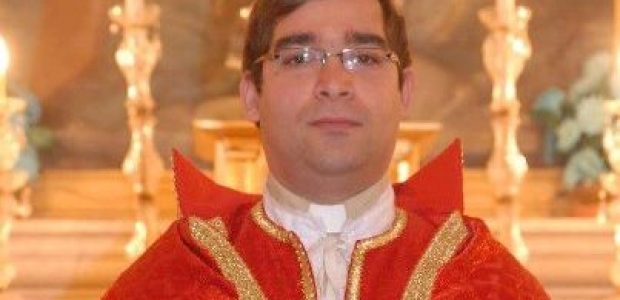
A world wide appeal has been initiated by the Bishop Marayati, Armenian Catholic, of Aleppo for the release of Fr Michael Kayyal who was kidnapped on 9th February 2013 by an Islamic rebel group located some 30 kilometres from the above-mentioned city.

The rebels have made contact with the Archbishop and informed him to mediate with the Syrian authorities with the aim of securing the release of 15 rebel fighters from Syrian prisons. The rebels also made financial demands to the tune of 15,000,000 million Syrian pounds ($250,000 approx).

On February 20, 2013 the rebels allowed Fr Michael to contact his mother for only one minute to prove that he is still alive.

The Armenian Catholic Community of Aleppo urges everyone to forward the feelings to the French and Russian Foreign Ministries and the following Facebook page HERE.

Sts. Nunilo and Alodia, intercede for Fr. Kayyal!


Posted in Mail from priests, Modern Martyrs, Priests and Priesthood, Religious Liberty, The Last Acceptable Prejudice | Tagged , , ,
9 Comments

Of Holy Thursday and the foot-washing rite: problems – solutions

Dr. Peters at In The Light Of The Law, a blog on matters canonical, has this to day.  He doesn’t have an open combox (which I quietly envy sometimes), so we can have the foot-fight food-fight over here.

The annual Lenten foot-fight

The annual Lenten foot-fight is almost upon us. Again.

May I suggest that discussion of this matter begin with what canon and liturgical law actually say (and don’t say) about the Mandatum rite, and that serious attention be given, if not this year then next, to eliminating this ill-conceived and merely optional rite from parish liturgies altogether and instead making it a powerful part of the bishop’s Chrism Mass?

First, let it be remembered that the foot-washing thing during Holy Thursday’s Mass of the Last Supper is an OPTION.  Many problems (and violations of law and good taste and common sense) could be avoided by choosing NOT to do it.  All manner of absurdities are inflicted on God’s people because of this option.

Second, let it be remember that the Church’s legislation allows for the washing of the feet of only men.  MEN = VIRI = MEN.  Not manish women or any other critter.  Even if some claim to have received permission to wash the feet of women, and even if the claims were true, those permissions would in no way change the law for the rest of the world.  Period.  Furthermore, I have never seen a letter or a copy of a letter from the Congregation in Rome granting such a permission.  I doubt anyone else has either.

Third, the rite of washing of the feet of men harks to Christ washing the feet of the Apostles… not just the feet of anyone out there in the highways and byways.

Finally, Dr. Peters would like to see this rite moved out of the evening Mass of the Lord’s Supper and into the Holy Thursday Chrism Mass.  An interesting idea.

Posted in "How To..." - Practical Notes, Liturgy Science Theatre 3000 | Tagged , ,
113 Comments

Rumors of war against the Apostolic Nuncio in Great Britain

In the next year or so, a large percentage of the dioceses in England and Wales will be opening up as their bishops retire.   That means the role of the Apostolic Nuncio in Great Britain is of critical importance.

The present Nuncio, Archbishop Antonio Mennini, has played his role in the appointment of excellent bishops so far, such as Bp. Mark Davies of Shrewsbury and Bp. Philip Egan of Portsmouth.

Now I read on the blog of Damian Thompson, this interesting entry. Keep in mind that this has unattributed information.  Nevertheless, this is Damian’s story, he believes it, and we can give it some attention.  You decide what to think about it.

The plot against the Nuncio

Enemies of Archbishop Antonio Mennini, the newish – and very impressive – Papal Nuncio to Great Britain, are plotting to have him removed from his job. Why? Because he’s doing it too effectively. It’s his responsibility to put forward names of suitable bishops to the relevant Congregation in Rome, which submits a name to the Pope. Recently, Archbishop Mennini secured the appointment of Mgr Philip Egan as Bishop of Portsmouth. This was a historic moment: Bishop Egan is not a slippery, platitude-spouting liberal of the sort traditionally promoted under Cardinal Hume, Cardinal Murphy-O’Connor and Archbishop Nichols. He’s taking an axe to the Left-leaning bureaucracy of Portsmouth. (Read this fascinating Catholic Herald blog post by William Oddie for background.) The word from allies of Cardinal Cormac and Archbishop Vincent is: we must not allow this to happen again. And what better opportunity to plot against the Nuncio than a change of Pope? I just hope that Cardinal Ouellet, Prefect of the Congregation for Bishops, knows this is happening. If not, perhaps some well-connected priest who reads this blog might let him know.

Posted in The Drill | Tagged , ,
19 Comments

You can never really “leave the Church”.

I occasionally get an message from someone who explains in self-righteous high dudgeon that she is leaving the Church because of [INSERT FLIMSY EXCUSE HERE].

Over at his excellent blog, Ed Peters looks at a case of someone who said he left the Church.

This is instructive.

Is Magdi Allam still a Catholic?
by Dr. Edward Peters

Magdi Allam, “a prominent Muslim-born journalist baptized by Pope Benedict XVI” has now blogged about “leaving the [C]hurch because it is too ‘weak with Islam.’” Maybe it’s just me, but this modern proclivity to parade one’s spiritual angst in the blogosphere is wearing pretty thin. [It’s not just you, Ed.] Besides, as Chesterton remarked, there are a thousand reasons to leave the Church and only one reason to stay: It’s true. So, Magdi cited two or three reasons to leave the Church, and not reasons especially high up on the “Top 1000 Reasons To Leave the Catholic Church” list at that. Whatever.
Still I don’t know why some folks are so quick to assume that (a) Allam was not ‘really’ a Catholic, or (b) he was not adequate catechized, or (c) Allam’s abandonment of the Faith must be an embarrassment to Abp. Fisichella who shepherded Allam into the Church. If my sins cannot be laid at the feet of my parents or pastors why should Allam’s be charged to Fisichella? God has no grandchildren.
In particular, because of the indelible character conferred by Baptism (c. 845, and I’m presuming Confirmation, as Allam was baptized as an adult, c. 866), Allam will, for all eternity, be marked as a baptized and confirmed Christian. Now, one’s canonical identity is not easily turned on or off and nothing in the reports I’ve seen so far suffice for, say, schism or even formal defection. All I glean so far is one man expressing contempt for his obligation to conduct himself in accord with the requirements of communion (c. 209). But that does not make one a non-Catholic, that just makes one a bad Catholic.
Ultimately, Allam’s sacramental seal will either be a source of greater joy to him in Heaven (as, hopefully, he will repent of his deed) or of greater suffering for him in Hell (if his act is sufficiently imputable to him, as only God would know), but either way, Allam is, on these facts, still Catholic and should be regarded as a Catholic whose need for prayers is just a little more obvious than is ours.

The Second Vatican Council’s document Lumen gentium at par. 14 has sobering words for those who think they want to leave the Church or who refuse to join it, knowing and believing the Church’s divine origin and claims.

This Sacred Council wishes to turn its attention firstly to the Catholic faithful. Basing itself upon Sacred Scripture and Tradition, it teaches that the Church, now sojourning on earth as an exile, is necessary for salvation. Christ, present to us in His Body, which is the Church, is the one Mediator and the unique way of salvation. In explicit terms He Himself affirmed the necessity of faith and baptism and thereby affirmed also the necessity of the Church, for through baptism as through a door men enter the Church. Whosoever, therefore, knowing that the Catholic Church was made necessary by Christ, would refuse to enter or to remain in it, could not be saved.

“… could not be saved”.

Posted in Our Catholic Identity, The Drill | Tagged , , , , ,
44 Comments

Excellent address by Archbp. Chaput on the attacks on religious liberty

Archbishop Charles Chaput of Philadelphia has some remarks on religious liberty which I found on the site of the Witherspoon Institute.  My emphases and comments.

Our First Right: Religious Liberty

[…]

Simply put, religious freedom is a fundamental natural right and first among our civil liberties. And I believe this fact is borne out by the priority protection it specifically enjoys, along with freedom of expression, in the Constitution’s First Amendment.

I’d like to make four brief points.

Here’s my first point: Religious faith and practice are cornerstones of the American experience. It’s worth recalling that James Madison, John Adams, Charles Carroll, John Jay, George Washington, Alexander Hamilton, Benjamin Franklin, Thomas Jefferson—in fact, nearly all the American Founders—saw religious faith as vital to the life of a free people. They believed that liberty and happiness grow organically out of virtue. And virtue needs grounding in religious faith.

To put it another way: At the heart of the American model of public life is an essentially religious vision of man, government, and God. This model has given us a free, open, and non-sectarian society marked by an astonishing variety of cultural and religious expressions. But our system’s success does not result from the procedural mechanisms our Founders put in place. Our system works precisely because of the moral assumptions that undergird it. And those moral assumptions have a religious grounding.  [The Obama Administration is purposely attacking this foundation.]

When the Founders talked about religion, they meant something much more demanding than a vague “spirituality.” The distinguished legal scholar Harold Berman showed that the Founders—though they had differing views about religious faith among themselves—understood religion positively as “both belief in God and belief in an after-life of reward for virtue, and punishment for sin.” In other words, religion mattered—personally and socially. [NB] It was more than a private preference. It made people live differently and live better. And therefore people’s faith was assumed to have broad implications, including the social, economic, and political kind. [The Obama Administration is trying to change the parameters of religious freedom and our 1st Amendment rights.  Listen for how they shift the language from freedom of religion to freedom of worship.  The former means we have the right to a voice in the public square which includes expression and action according to our faith.  The later means that we have the right to pray, but behind the closed doors of a church or our homes.  To that end, the Archbishop continues…]

That leads to my second point: Freedom of religion is more than freedom of worship. The right to worship is a necessary but not a sufficient part of religious liberty. For most religious believers, and certainly for Christians, faith requires community. It begins in worship, but it also demands preaching, teaching, and service; in other words, active engagement with society. Faith is always personal but never private. And it involves more than prayer at home and Mass on Sunday—although these things are vitally important. Real faith always bears fruit in public witness and public action. Otherwise it’s just empty words.

The Founders saw the value of publicly engaged religious faith because they inherited its legacy and experienced its formative influence themselves. They created a nation designed in advance to depend on the moral convictions of religious believers, and to welcome their active role in public life.

Here’s my third point: Threats against religious freedom in our country are not imaginary or overstated. [OORAH!] They’re happening right now. They’re immediate, serious, and realLast year religious liberty advocates won a significant and appropriate Supreme Court victory in the 9-0 Hosanna-Tabor v. EEOC decision. But what was stunning even to the justices in that case was the disregard for traditional constitutional understandings of religious freedom shown by the government’s arguments [Let’s put a name to “government’s”… “PRES. OBAMA’S”!] against the Lutheran church and school.

Hosanna-Tabor is not an isolated case. It belongs to a pattern of government coercion that includes the current administration’s HHS mandate, which violates the religious identity and mission of many religiously affiliated or inspired public ministries; interfering with the conscience rights of medical providers, private employers, and individual citizens; and attacks on the policies, hiring practices, and tax statuses of religious charities and ministries.

Why is this hostility happening? I believe much of it links to Catholic and other religious teaching on the dignity of life and human sexuality. Catholic moral convictions about abortion, contraception, the purpose of sexuality, and the nature of marriage are rooted not just in revelation, but also in reason and natural law. Human beings have a nature that’s not just the product of accident or culture, but inherent, universal, and rooted in permanent truths knowable to reason.

This understanding of the human person is the grounding of the entire American experiment. If human nature is not much more than modeling clay, and no permanent human nature exists by the hand of the Creator, then natural, unalienable rights obviously can’t exist. And no human “rights” can finally claim priority over the interests of the state.

The problem, as law scholar Gerard Bradley points out, is that critics of religious faith tend to reduce all of these moral convictions to an expression of subjective beliefs. [The phrase “dictatorship of relativism” comes to mind.] And if they’re purely subjective beliefs, then—so the critics argue—they can’t be rationally defended. And because they’re rationally indefensible, they should be treated as a form of prejudice. In effect, two thousand years of moral experience, moral reasoning, and religious conviction become a species of bias. And arguing against same-sex “marriage” thus amounts to religiously blessed homophobia.

There’s more, though. When religious belief is redefined downward to a kind of private bias, then the religious identity of institutional ministries has no public value—other than the utility of getting credulous people to do good things. [Rawls popped into my mind at this point.] So exempting Catholic adoption agencies, for example, from placing children with gay couples becomes a concession to private prejudice. And concessions to private prejudice feed bigotry and hurt the public. Or so the reasoning goes. This is how moral teaching and religious belief end up being branded as hate speech.

Here’s my fourth and final point: From the beginning, believers—alone and in communities—have shaped American history simply by trying to live their faith in the world. We need to realize that America’s founding documents assume an implicitly religious anthropology—an idea of human nature, nature’s God, and natural rights—that many of our leaders no longer really share.

Click to buy.

We ignore that unhappy fact at our own expense. [I would say… at our peril.]

Charles J. Chaput, a Capuchin Franciscan, is the archbishop of Philadelphia and the author of Render Unto Caesar.
Posted in Our Catholic Identity, Religious Liberty, The future and our choices, The Last Acceptable Prejudice | Tagged , , , , ,
10 Comments

Go to the blog of Mulier Fortis

Check out the blog of Mulier Fortis.  Something’s up.

I am particularly happy to review her cats’ kill list.


Posted in The Campus Telephone Pole | Tagged
9 Comments

JUST TOO COOL: Billboards for CONFESSION! Promoted by which bishop?

I think the world of Bp. Slattery of the Diocese of Tulsa. He initiated a liturgical renewal in the diocese, he has been supportive of the Clear Creek Monastery, he sponsored workshops for exorcists. A few more bishops like this and… who knows what we could do?

A reader sent me this.

Bishop Slattery promoted an effort for confessions. He even has billboards. This doesn’t need more explanation.

Doesn’t that Roman collar look a little familiar?

Check out my swag for priests and bishops HERE.

And let’s no forget Bp. Slattery’s fantastic sermon.


Posted in Brick by Brick, Just Too Cool, Liturgy Science Theatre 3000, New Evangelization, Our Catholic Identity, Year of Faith | Tagged , , , ,
43 Comments

Wyoming Catholic College Summer Programs

The right side here is now sporting a spiffy ad from Wyoming Catholic College.  Go look!

They have Summer Programs and Outdoor Learning to explore.

Also, they have a Conventiculum Viomingense for Latin students.

A shot from the booth they had at the Legatus Summit in Phoenix.

(Yes, Fr. Z is taking ads – at his discretion.)


Posted in Linking Back, The Campus Telephone Pole | Tagged
9 Comments