23 April: Talk Like Shakespeare Day!

Drawing from material that I have posted in the past, I warmly remind the readership that today is

Talk Like Shakespeare Day!

Therefore,

I urge you all hence forth to speak in verse.
Pentameter iambic would be best.
O list, gentles! Also strive to use
in thy fair speech some homage to the Bard.

Maybe you could (ehem… coulds’t thou not) use the word “Prithee” a few times today, or, perchance, “perchance”?

Rather than just handing over the cash when the pizza is deliveréd, you could say “Here’s thy guerdon. Go!”.

If a villainous churl would make to steal thy parking spot or cut thee off in traffic, avail thyself not of those usual short epithets common to such occasions. How much more satisfying to lower thy window and exclaim, “Ha! I’ll tell thee what; Thou’rt damn’d as black–nay, nothing is so black; Thou art more deep damn’d than Prince Lucifer: There is not yet so ugly a fiend of hell!”… or words to that effect.

Is some rampallian staring at you at the cafeteria?   Macbeth wouldn’t have stood for that!  You wouldn’t catch Macbeth saying, “Wanna take a photo?”.  Ho hum!  Today, try this: “The devil damn thee black, thou cream-faced loon!  Where got’st thou that goose look?”  Or should you be buying that arabical potion post-haste, a simple “Take thy face hence!”, would suffice.

Gentlemen!  Have you in eager mind the ladies to impress?  Be not afeared!

A would be bard might compare his lass to a summer’s day, rather than just say “Nice sweater”.  If that doesn’t work… and i’ faith it will… there is always the trusty “Wilt thou leave me so unsatisfied?” as a last resort.  Also, a secret, women find strange words mickle alluring … like… like… “gorbellied”.

Art called upon to present thy case?  Give a sales pitch?  Deliver that new all-or-nothing business plan?  Always… always… use lots of words with a final “-éd”.   Never think that thou shalt be banishéd from the firm.  They will gape at thy eloquence, I assure you.

Out with the boss for a power lunch?  Don’t excuse yourself to use the “rest room”… how dull.  Announce that you are headed for the jakes!

Yes, folks, it’s Talk Like Shakespeare Day!   Have at!

And… did Shakespeare really write the plays?

Posted in Lighter fare, Linking Back | Tagged ,
22 Comments

2nd miracle for Bl. John Paul II?

All Popes kiss babies!

Andrea Tornielli reports at Vatican Insider:

The Vatican doctors approve the miracle to make Wojtyla a saint

“A saint now!” The canonisation of Wojtyla is getting closer quickly and it could be celebrated next October. In fact, in the past few days, the medical council of the Congregation for the Causes of Saints has recognized as inexplicable one healing attributed to the blessed John Paul II. A supposed “miracle” that, if it is also approved by theologians and the cardinals (as it is very likely), will bring the Polish Pope, who died in 2005, the halo of sainthood in record time, just eight years after his death.

It all happened in great secrecy, with maximum confidentiality. In January, the postulator of the cause, Mgr. Slawomir Oder, submitted a presumed miraculous healing to the Vatican Congregation for the Saints for a preliminary opinion. As it is known, after the approval of a miracle for the proclamation of a blessed, the canonical procedures include the recognition of a second miracle that must have occurred after the beatification ceremony.

Two doctors of the Vatican council had previously examined this new case, and both gave a favourable opinion. The dossier with the medical records and the testimonies was then officially presented to the Congregation, which immediately included the examination in its agenda. In the past few days it was discussed by a committee of seven doctors, the council (presided over by Dr. Patrick Polisca, Pope John Paul II’s cardiologist), Pope Benedict XVI’s personal physicians and now Pope Francis’s. The medical council also gave a favourable opinion, the first official go-ahead by the Vatican, by defining as inexplicable the healing attributed to the intercession of the blessed Karol Wojtyla.

[…]

Read the rest there.

Keep in mind that in the long process of coming to a reasonable surety that a miracle was worked by God through the intercession of the Blessed or Venerable in question, when it is a matter of a healing miracle, there is a board of medical doctors and experts that look at the evidence to try to determine a) what were the conditions, b) what actually happened and c) whether it is explicable in terms of the normal workings of nature and medicine.

So, the approval of the “consulta medica” is a big step, but not the last step.

Posted in Saints: Stories & Symbols | Tagged , ,
47 Comments

4-10 Aug: very cool summer “Church Latin” workshop – Veterum Sapientia 2013

I bring to your attention a summer Latin workshop from 4-10 August at Belmont Abbey College, Charlotte, NC.

Veterum Sapientia 2013

The teaching faculty includes the legendary Fr. Reginald Foster, Fr. Daniel Gallagher (Foster’s successor at the office of Latin Letters in the Secretariat of State), Dr. Gerald Malsbary of BAC, and Prof. Nancy Llewellyn of WCC.  Outstanding!

Enrollment is not for clergy and religious only, but they are the target students.

You can register online and there are suggestions for lodging. The website has lots of details.

Check it out!   I’d love to do this, but I don’t see how I can this year.

I must get that bilocation thing down again.

Posted in Just Too Cool, The Campus Telephone Pole | Tagged ,
5 Comments

Archbp. Nienstedt on anti-bullying bill, linked to same-sex “marriage”

Archbishop Nienstedt of St. Paul & Minneapolis stands up again!

Catholic Church ramps up opposition to Minnesota anti-bullying bill

By Beth Hawkins

The Archdiocese of St. Paul and Minneapolis has come out strongly against proposed anti-bullying legislation, linking it to the push to legalize same-sex marriage.

Calling it an extension of the push to legalize same-sex marriage in Minnesota, the Catholic Church is urging parishoners to call on lawmakers to reject an anti-bullying law.

According to a column in the Catholic Spirit, the official publication of the Archdiocese of St. Paul and Minneapolis, the proposed Safe Schools legislation is an “Orwellian nightmare” that would “usurp parental rights” and create “re-education camps.”

The column was written by Jason Adkins, executive director of the Minnesota Catholic Conference, which represents all Catholics dioceses in the state.

In addition to imposing burdensome legal mandates on parochial schools, the Roman Catholic Church also has argued in communications to parishioners that the law would unfairly discriminate against students who oppose same-sex marriage and other LGBT rights.

“The bill’s proponents want to require private schools to follow the mandates of the law as well,” an action alert from the Minnesota Catholic Advocacy Network warned. “If a Catholic school refuses to comply, its students could lose their pupil aid, such as textbooks, school nurses, and transportation.”

(While private schools in Minnesota do not receive per-pupil tuition dollars per se, they do receive many of the same ancillary funds as public schools.)

Separate, parallel bills creating and funding the Safe and Supportive Schools Act are in the final stages of going to the floors of the Senate and House of Representatives for a vote by the full membership. Passage roughly along party lines is expected.

At 37 words long, Minnesota’s current anti-bullying statute is frequently described as one of the weakest in the nation. It doesn’t define bullying and harassment or require districts to track or report complaints or mandate efforts toward creating healthy school climates.

The proposed measure is based on the work of a task force appointed by Gov. Mark Dayton in the fall of 2011, after the GOP-dominated Legislature rejected efforts to strengthen the law. A wave of student suicides in the Anoka-Hennepin School District had drawn wide attention to the bullying issue.

Last August, the task force submitted its recommendations, along with a plea for policymakers to act on them with “a strong sense of urgency.”

Among other best practices, the panel looked closely at the terms of a settlement among Anoka-Hennepin, a group of students who filed a civil rights lawsuit in U.S. District Court here and the U.S. departments of Justice and Education. That agreement had been hailed as a potential national model.

The arguments raised by opponents of the Anoka-Hennepin settlement, most of them religious conservatives and proponents of conversion, or “pray away the gay” therapy, mirror those now being advanced by the archdiocese.

The Catholic Church has gone a step further, however, in linking the issue to same-sex marriage. The Archdiocese spent at least $650,000 in 2011 and 2012 campaigning to secure a constitutional ban on gay marriage; numerous dioceses and Catholic groups around the country donated hundreds of thousands of dollars more.

“The redefinition of marriage should not be seen as a stand-alone act,” the Catholic Spirit’s March column explained. “It is the harbinger of broader social change aimed at creating gender and sexual ‘freedom’ and breaking down the supposedly repressive social norm of heterosexual monogamy. And it is accompanied by other significant pieces of legislation working their way through Minnesota’s Legislature that should be resisted just as vigorously as same-sex ‘marriage.’”

Specific language in the bill protecting students from religious harassment and recognizing their constitutional right to free religious speech hasn’t satisfied critics, who have warned that schools will be forced to “teach same-sex marriage.” Both the recognition of same-sex marriage and the Safe Schools legislation will protect select groups of individuals at the cost of the rights and safety of others, the Archodiocesan communications argue.

“If marriage is redefined, the coercion of silence will enter the legal sphere, where real penalties will befall those so-called ‘bigots’ who ‘discriminate’ by clinging to the traditional definition of marriage,” the Catholic Spirit said. “The schools are the ideal place to foster this new regime of ‘tolerance,’ and forcefully suppress any bad thoughts or ‘hate’ speech that may emerge.”  [That sounds right.]

The arguments are buttressed by testimony from Star Tribune columnist Katherine Kersten and from University of St. Thomas professor Michael Stokes Paulsen, described as a nationally recognized constitutional law expert.

[…]

Read the rest there.  It is interesting.

Creeping incrementalism, friends.

Of course now the left, liberals and promoters of unnatural acts will accuse the Church of being in favor of bullying.

Fr Z kudos to Archbp. Nienstedt and the Minnesota Catholic Conference.

Posted in "How To..." - Practical Notes, Dogs and Fleas, Fr. Z KUDOS, Liberals, New Evangelization, One Man & One Woman, Our Catholic Identity, Religious Liberty, The Drill, The future and our choices, The Last Acceptable Prejudice | Tagged , , , , , , , , , , , ,
32 Comments

Former papal MC comes out for same-sex unions, trashes Benedict XVI’s pontificate

The former MC for John Paul II and, briefly Benedict XVI, has publicly come out in favor of same-sex unions.

According to Vatican Insider, Archbp. Piero Marini, head of the office that organizes Eucharist Congresses, was speaking on Costa Rica recently.

“It is necessary to recognize the union of persons of the same sex, because there are many couples that suffer because their civil rights aren’t recognized. What can’t be recognized is that this union is equivalent to marriage”.

And he also commented on Pope Francis.

“It’s a breath of fresh air; it’s opening a window onto springtime and onto hope. We had been breathing the waters of a swamp and it had a bad smell. We’d been in a church afraid of everything, with problems such as Vatileaks and the paedophilia scandals. With Francis we’re talking about positive things”. And, “there’s a different air of freedom, a church that’s closer to the poor and less problematic”.

I take this to be a public trashing of Benedict XVI.

No surprise.  He and his enablers trashed Pope Benedict in the book which the non-English speaking Marini put out in English only: A Challenging Reform: Realizing the Vision of the Liturgical Renewal, 1963-1975. It is co-authored by Keith Pecklers, SJ (who had some problems of his own HERE) and, perhaps Mark Francis, CSV (a tradition-basher now at the ultra-liberal CTU, HERE).

The Marini/Pecklers/Francis book purports to tell the story of the glorious work of the Consilium, the entity established during the Second Vatican Council to implement the liturgical reform mandated inSacrosanctum Concilium.  The Consilium was headed up by Annibale Bugnini and Card. Lercaro.

The authors’ purpose is to defend the fruits of Bugnini’s Consilium and criticize Benedict XVI’s vision.

The authors, however, exposed what the reforms were trying to accomplish through the liturgical reforms.

Look at this passage.  Context: The Consilium has just transitioned from  an informally meeting group to an officially, formally established body.  They have their first plenary session.  And now the money-quote:

“They met in public to begin one of the greatest liturgical reforms in the history of the Western church.  Unlike the reform after Trent, it was all the greater because it also dealt with doctrine.”  (p. 46)

Bugnini and crew were trying to change the Church’s doctrine.  Obvious, no?  Change the way we pray and you change what people believe.

And I am not the only one who took Marini’s remarks to be criticisms of Pope Benedict.  One of the writers for the UK’s Catholic Herald came to the same conclusion.  HERE

The combox is moderated.

CLICK to buy car magnets and stickers


Posted in Benedict XVI, Liberals | Tagged ,
Comments Off on Former papal MC comes out for same-sex unions, trashes Benedict XVI’s pontificate

QUAERITUR: Elderly priest skipped the consecration

From a reader:

This Sunday, I went to “Mass” at a church with an elderly associate pastor who sometimes forgets things (to be expected, I don’t blame him). But what happened on this occasion is an entirely different matter. He went from the first Communicantes to the Doxology, skipping the consecration. He later realized he skipped something and did part of what he missed after the Our Father, but again there were no words of consecration. I was hoping he would realize that and correct it but by the time the Agnus Dei rolled around, I realized that wouldn’t happen. The pastor was outside before Mass so I tried to find him/call him at the rectory but wasn’t able to do so.

I’m going to try to chat with the pastor on Tuesday … and I trust he will deal with it appropriately. But if something like this happens again, what should I do at that moment? I thought about going up and trying to point out where he needs to be in the missal (if it were any old part of the Mass, I wouldn’t. But skipping “This is my Body” and “This is my Blood” like he did is obviously more serious), but I was afraid of causing a scene. I was also hoping the permanent deacon present would have caught it, but no such luck. I don’t blame the priest because he’s in his 80s and I have the deepest appreciation for him, but this is pretty serious.

I am filled with awe at God’s love for us.

He entrusted the most sacred thing in the cosmos to His little wounded creatures.

Just imagine! I, a priest, can do what an angel cannot do. I can consecrate the Eucharist. You, a lay person, can receive Communion. Magnum mysterium!

I remember the summer when, back from Rome and staying at my home parish, one of us (usually the undersigned) had to be present at the afternoon Mass of an old priest who was skipping things. The pastor made the good decision to have the old guy saying Mass, even though there were … problems.  He didn’t really save us work. Rather, he created more work for us, but it was absolutely the right thing to do.

Yes, have a calm and kind chat with the pastor.  Tell him what happened.

Also, I think that deacon should have a kick up the backside. Perhaps the pastor can see to that.  Didn’t notice?  Sheesh.

In the meantime, if Father skips the consecration again, I suggest that you smile, refrain from going up for Communion, and then make sure that Father gets a ride home or get’s back to the rectory.

You might prompt him to share some anecdotes and lore about life in the diocese during his many years of priesthood.

ADDENDUM:

Some have argued in the combox that it would have been better to stop the priest somehow and guide him to say the words of consecration.  They make good points.

I didn’t make that suggestion in the original entry for the simple fact that I don’t want to give people the idea that they can stop Mass and attempt to correct priests when they think some serious problem has occurred.  That would be bad.  Bad, I say.

Posted in "How To..." - Practical Notes, ASK FATHER Question Box, Liturgy Science Theatre 3000, Priests and Priesthood | Tagged , ,
68 Comments

Your Good News

I used to ask every Monday if you had good news.

What is your good news?

I am feeling a better!  Time for phase two: azithromycin.

Posted in SESSIUNCULA |
83 Comments

Wherein Fr. Z provides a health update and feverish ranting on a range of unrelated topics

20130421-170137.jpg

Forward Unto Dawn

Thanks to those of you who wrote with expressions of prayers for my health.  An update is in order.

I have been battling bronchitis.  This has been a problem ever after all those years in Rome, I’m afraid.  I suspect I contracted this bout last Sunday when a sick altar boy coughed all over me me a couple times during the Novus Ordo Mass I took as the second Mass of the day.

The moral of the story: Don’t celebrate the Novus Ordo?  Don’t binate?  Well… maybe not.

This morning I managed to “prevent the dawn” (see photo, above) and drag myself out of bed to drive across town for a Missa cantata.  The incense made me anxious, but I managed not to die.  I gasped out a sermon and managed to sing the orations and readings, etc., by using as little power as possible and by keeping them pitched well high, lest vibration in my chest set off the coughing.  I had given it a try the day before and found that it worked.

I did something quite un-rubrical at Mass and I don’t care.  I purified my hands with hand-sanitizer before distributing Holy Communion.  So there!  No other cleric was around to help with Communion.

The rest of the day has been dedicated to wrapping up in a blanket, watching baseball (GO TWINS – who bested the hated White Sox) and dozing, when not coughing my body into contortions. No cigar tonight, I think.

Netflix provided me with a disk of the new musical version of Les Misèrables.  I detested the musical when I saw it on Broadway, fresh and new.  To this day I can’t summon to mind a tune from the show, which is the problem with most of the musicals these days.  BAH!  Trash!  All trash!  Andrew Lloyd Webber?  You can have him.  BAH!  Several people have persuaded, perhaps it’ll turn out to have been inveigled, me to watch this movie/musical version of “Les Miz”.  We shall see.  Color me skeptical.

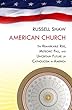
Relevant to nothing that I have heretofore mentioned, I was sent the new book by Russell Shaw American Church: The Remarkable Rise, Meteoric Fall, and Uncertain Future of Catholicism in America.  I am just into it, but he is arguing that we Catholics have given up something essential: our subculture. We are in serious trouble as a Church and as Catholics right now in the USA.  We don’t need a book to tell us that, perhaps, but Shaw is digging at the roots of this pernicious bed of weeds in which we have gotten ourselves tangled.

“You’ll be what we are now, a rather amorphous group, a label for convenience’s sake: ‘the Catholic Church in the U.S.’, but a splintered group in which a very large number of the putative members are not really Catholic in any meaningful sense at all.”

This dovetails with some of the dystopian stuff I have been reading lately, even though the collapse of our Catholic identity hasn’t taken place with the eye-blink speed of a possible CME/EMP event (read: our Catholic collapse started before Vatican II).  Our Catholic TEOTWAWKI has actually been underway for a long time.

I wonder: is it too late?  Has it gone to far?  Our Lord didn’t promise that the Church would prevail against Hell in these USA, did he! In fine, you should give this book some of your time.

For my present case of the marthambles, I have been adequately physiked. There hasn’t been any need for either blue pill or black draught.  Why would there be? So far, I have endured expectorating virtues of the modern equivalent of the “everlasting antimony pill” (read: Musinex – which sounds like a slime-draught, but isn’t).   My antibiotic course starts tomorrow.  Or is it Tuesday?  I’d rather have Shanghai soup dumplings as a remedy, but you can’t have everything in life.  When good, xiao long bao are restorative and roborative, as Dr. Maturin would put it.

Another thing I can’t have tomorrow is participation in my reading group.  Having tackled Dante, Milton, Eliot, Hopkins, Metaphysical Poets, and most recently Yeats, it is time for some of Shakespeare’s Sonnets, which I know well.  I wouldn’t inflict myself – doubtfully but possibly still contagious – on the group for all the world.

So, please… continue the prayers.

If you don’t want to pray for me, send ammo or money instead!  I am happy to take all three.

o{];¬)

Posted in O'Brian Tags, Preserved Killick, What Fr. Z is up to | Tagged
81 Comments

Great new resource for your new Gregorian chant schola! Wherein Fr. Z also comments on pace.

Some people on the traditional side of things are demoralized because Pope Francis has a markedly different liturgical style from that of Benedict XVI. Some might wonder if it is worth trying to promote the provisions of Summorum Pontificum and try to get going celebrations of Holy Mass with the 1962 Missale Romanum.

I respond that Pope Benedict gave us juridical provisions, a great example, a pat on the head, and direction to follow. It is up to you.

You need to be willing to be patient and to work hard and to make some sacrifices. You have to initiate projects and gather people and be persuasive. You have to learn to do things and be self-starters.

For example, you can get a Gregorian chant schola cantorum going. Gregorian chant is not quantum physics or olympic level biathlon. Get some people together, open up the books, and start singing.

Here is useful tool for project.

I received an email announcing that Corpus Christi Watershed, the people who put out the spectacular Saint Edmund Campion Missal and Hymnal for the Traditional Latin Mass (HERE), now have available online the entire Extraordinary Form Graduale Romanum for Sundays.

You will find there, well-organized, the musical notation, videos of the notation with proper chants for every Sunday sung as the notation scrolls down and as English translation is displayed, the organist part (which I dislike – I intensely dislike chant with organ), and many of Sundays have mp3s that can be downloaded.

The creator wrote: “Now that the Sundays are complete, I will start adding the 1962 Holy Days, such as the Purification of the Blessed Virgin Mary, Feast of St. Joseph, etc.”

This will be a great resource for people who want to start a schola cantorum.  

I skipped around a bit and found recordings of the Monks at Trior were featured heavily.  You can’t go wrong imitating their style.  The rest seem to be strongly under the influence of what we might call a middle-period Solesmes style.  For example, in the videos I dipped into I don’t hear any “repercussion” (this is somewhat beyond what beginners need to get into).  Also, some Sundays provide more than one example of the chant being sung.  Pentecost, has three different recordings of the Introit.

It is good to have those examples.  They both help the timid or less experienced and they help the neophyte avoid two mistakes which are deadly to chant… prayerful chant.

We need to apply the Goldilocks principle when singing chant. The pace of our chanting must be neither too slow nor too fast.  It has to be – everybody together please – just right.

Chant is prayer.  It is the Church’s preferred sacred music.  The texts are sacred.  This means that they must be sung as texts and sung as if they were sacred.

If you sing the chant too slowly, you lose the sense of the chant, you lose the meaning because the chant, the text, becomes less and less understandable.  Yes, you have to understand what the text is saying.  You don’t have to be a Latin scholar to know that (though that helps a lot).  People in the pews have books they can follow, that is true.  But singing the chant too slowly risks breaking the integrity of the text’s meaning.  Try listening to an audio book at a really slow rate of reading. As you turn the pace down, it eventually becomes incomprehensible.

If you sing chant too quickly, you tend to retain the meaning of the text, but you put its sacral character at risk.  The texts are sacred.  They deserve respect and time.  They must not be rushed.  They must be savored.  Chant that is rushed has a nervous, jittery quality to it.   It lacks the essential quality: it isn’t prayerful.  The pace of a Mass must not be lugubrious.  Every Mass and every element of Mass must retain a sense of progress, of moving forward towards a goal.   When you tear through a chant, you might be making progress, but you lose the essential sacral sense.  Every word of the chants are the voice of the Church singing with Christ’s own voice.  Christ is the true Actor during Mass.  He borrows us, the baptized, and uses our gestures and song.

Here is an experiment.  I found on the Watershed site the famous Introit for today’s Mass: Iubilate.   I used a program to slow it down and speed it up.  I think you will find that the chant has quite a different sense depending on the pace.  Keep in mind that not all chants are sung exactly the same way.  Much depends on the text, the season, the moment of the Mass itself.  An Introit and a Gradual and a Sequence are different kinds of chants.  My point here is to demonstrate what a change in pace will do to any chant.

If you are wondering, yes, I have heard chant sung that slowly and that quickly.

If you pay attention to the meaning of the text, the moment of the Mass, the season, and the “feeling” of the actual Mass as it is being celebrated, with time you develop a good sense of the proper pace.  There is no exact formula for arriving at exactly the right pace each time.  Personal experience will be a guide, as well as the advice of the experienced.

In any event, Fr Z kudos to Watershed for creating this great new resource.

Novus Ordo… TLM… start making phone calls and get that new schola going!
Posted in "How To..." - Practical Notes, Liturgy Science Theatre 3000, SUMMORUM PONTIFICUM | Tagged , , , ,
23 Comments

Third Sunday After Easter – by John Keble

Third Sunday After Easter
John Keble (a leading figure in the Oxford Movement, but who did not swim the Tiber)

[A woman when she is in travail hath sorrow, because her hour is come; but as soon as she is delivered of the child, she remembereth no more the anguish, for joy that a man is born into the world.–St. John xvi. 21.]

Well may I guess and feel
Why Autumn should be sad;
But vernal airs should sorrow heal,
Spring should be gay and glad:
Yet as along this violet bank I rove,
The languid sweetness seems to choke my breath,
I sit me down beside the hazel grove,
And sigh, and half could wish my weariness were death.

Like a bright veering cloud
Grey blossoms twinkle there,
Warbles around a busy crowd
Of larks in purest air.
Shame on the heart that dreams of blessings gone,
Or wakes the spectral forms of woe and crime,
When nature sings of joy and hope alone,
Reading her cheerful lesson in her own sweet time.

Nor let the proud heart say,
In her self-torturing hour,
The travail pangs must have their way,
The aching brow must lower.
To us long since the glorious Child is born
Our throes should be forgot, or only seem
Like a sad vision told for joy at morn,
For joy that we have waked and found it but a dream.

Mysterious to all thought
A mother’s prime of bliss,
When to her eager lips is brought
Her infant’s thrilling kiss.
O never shall it set, the sacred light
Which dawns that moment on her tender gaze,
In the eternal distance blending bright
Her darling’s hope and hers, for love and joy and praise.

No need for her to weep
Like Thracian wives of yore,
Save when in rapture still and deep
Her thankful heart runs o’er.
They mourned to trust their treasure on the main,
Sure of the storm, unknowing of their guide:
Welcome to her the peril and the pain,
For well she knows the bonus where they may safely hide.

She joys that one is born
Into a world forgiven,
Her Father’s household to adorn,
And dwell with her in Heaven.
So have I seen, in Spring’s bewitching hour,
When the glad Earth is offering all her best,
Some gentle maid bend o’er a cherished flower,
And wish it worthier on a Parent’s heart to rest.

Posted in Poetry | Tagged ,
5 Comments